People
Cary Grant (born Archibald Alec Leach; 18 January 1904 – 29 November 1986)
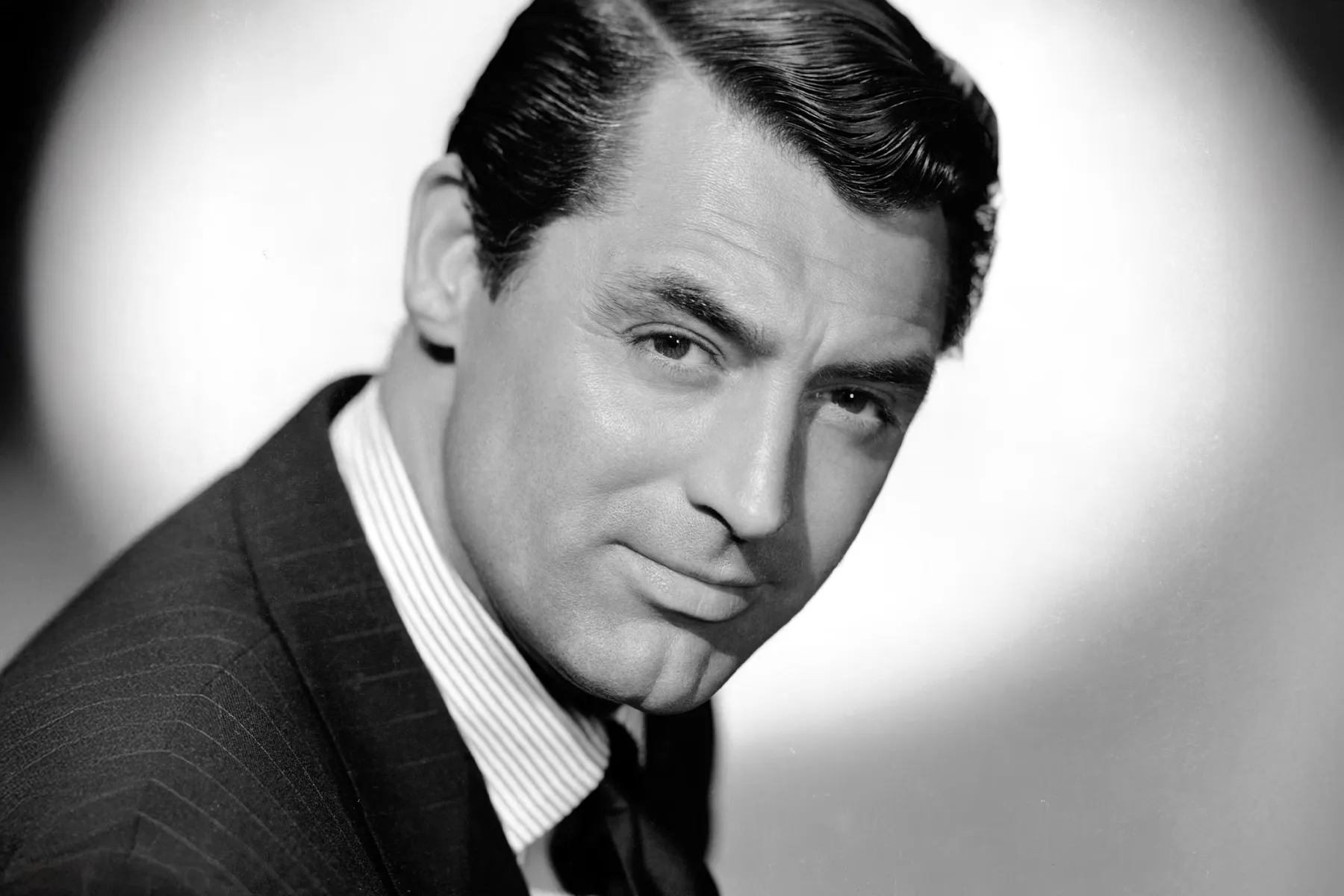
Cary Grant (born Archibald Alec Leach; 18 January 1904 – 29 November 1986) was an English-American actor and one of classic Hollywood's defining leading men, celebrated for his transatlantic accent, effortless comic timing, and, above almost anything else, his style. Best known for Bringing Up Baby (1938), His Girl Friday (1940), The Philadelphia Story (1940), and his run of collaborations with Alfred Hitchcock — including Notorious (1946), To Catch a Thief (1955), and North by Northwest (1959) — he received two Academy Award nominations and an Honorary Academy Award in 1970, but never won a competitive Oscar.
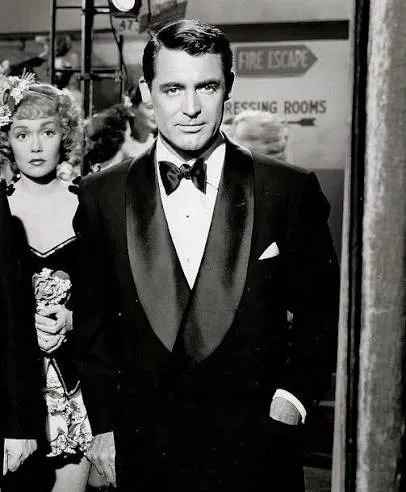
Biography
Archibald Alec Leach was born in Horfield, Bristol, on 18 January 1904, to Elias James Leach, who pressed clothes in a garment factory, and Elsie Maria Kingdon. An older brother, John, had died before Archibald's birth, a loss that left his mother in lasting grief.
When Archibald was about nine or ten, his father had Elsie Leach committed to a mental institution, then told his son she had simply gone away on an extended seaside holiday. Archibald believed his mother was dead, or at least permanently gone, for more than twenty years.
Elias Leach remarried and sent his son to boarding school. Feeling abandoned, Archibald was expelled from Fairfield Grammar School in 1918, at fourteen, and — forging his father's signature and lying about his age — joined Bob Pender's troupe of knockabout comedians and acrobats.
The Pender troupe toured to the United States in 1920. When the two-year tour ended, Archibald Leach chose to stay behind in America rather than return to England, working vaudeville, as a stilt-walker at Coney Island's Steeplechase Park, and in a string of other performing jobs around New York.
Some biographers have written that he lived during this period with the costume designer Orry-Kelly, in what several accounts describe as a romantic relationship, though the record on it is thin.
He made his Broadway debut in the early 1920s performing as Archie Leach, and in 1931 was signed by Paramount Pictures, which insisted he change his name. He kept "Cary" from a role he'd played on stage; the studio supplied "Grant" from its own list of approved surnames.
His film career took off almost immediately.
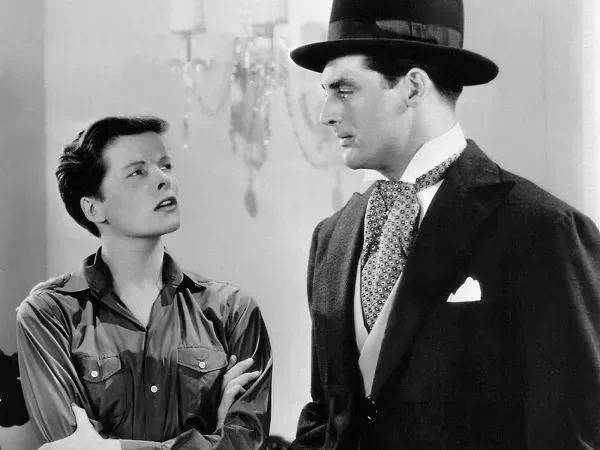
Mae West specifically requested him as her co-star in She Done Him Wrong and I'm No Angel (both 1933), and by the mid-1930s Grant was a genuine star, appearing opposite Katharine Hepburn in the gender-bending comedy Sylvia Scarlett (1935).
In February 1934, Grant married the actress Virginia Cherrill, famous as the blind flower girl in Charlie Chaplin's City Lights. She divorced him within a year, alleging that he had struck her.
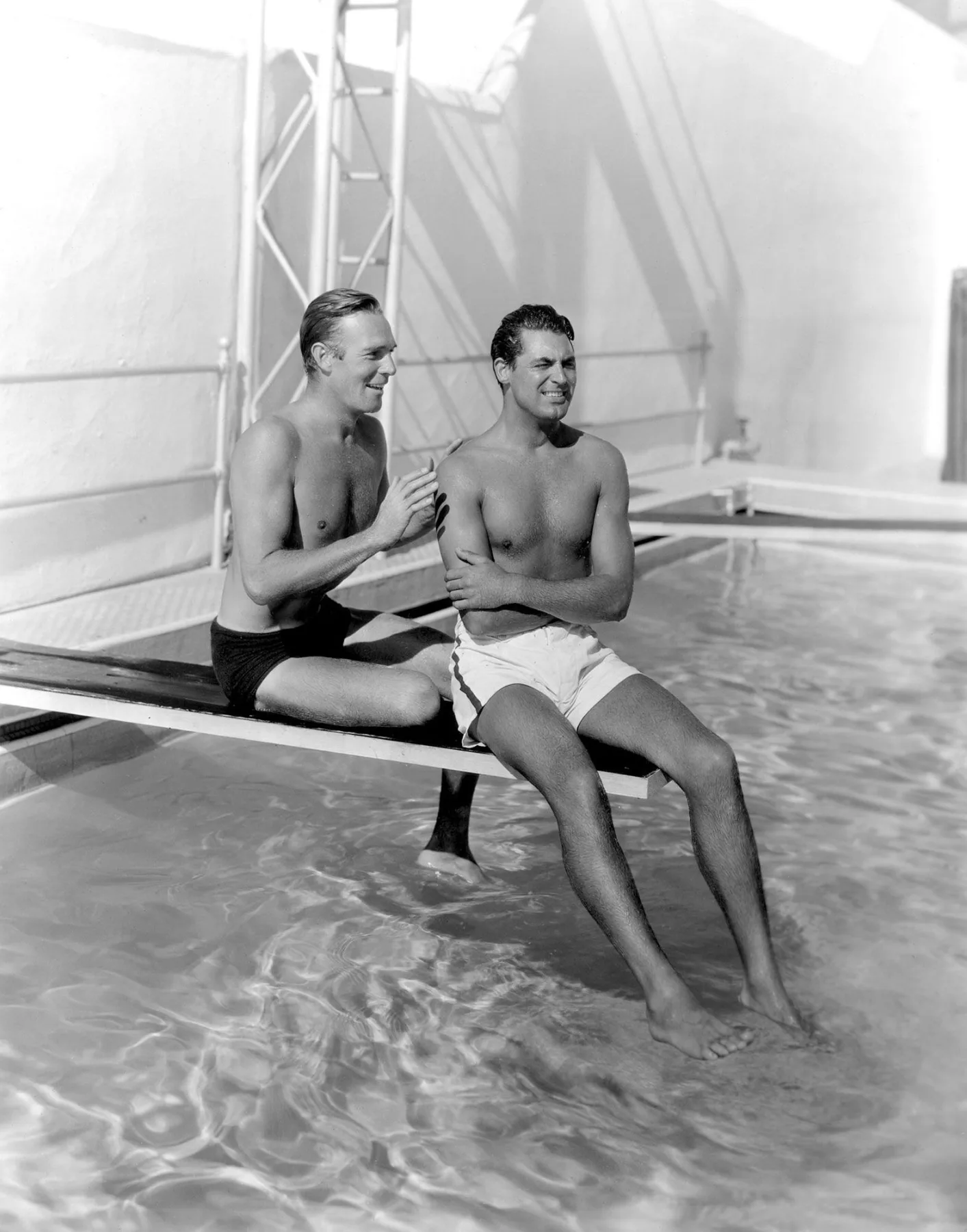
Through much of the 1930s and into the 1940s, Grant shared a Santa Monica beach house nicknamed "Bachelor Hall" with the actor Randolph Scott, on and off, between each man's various marriages.
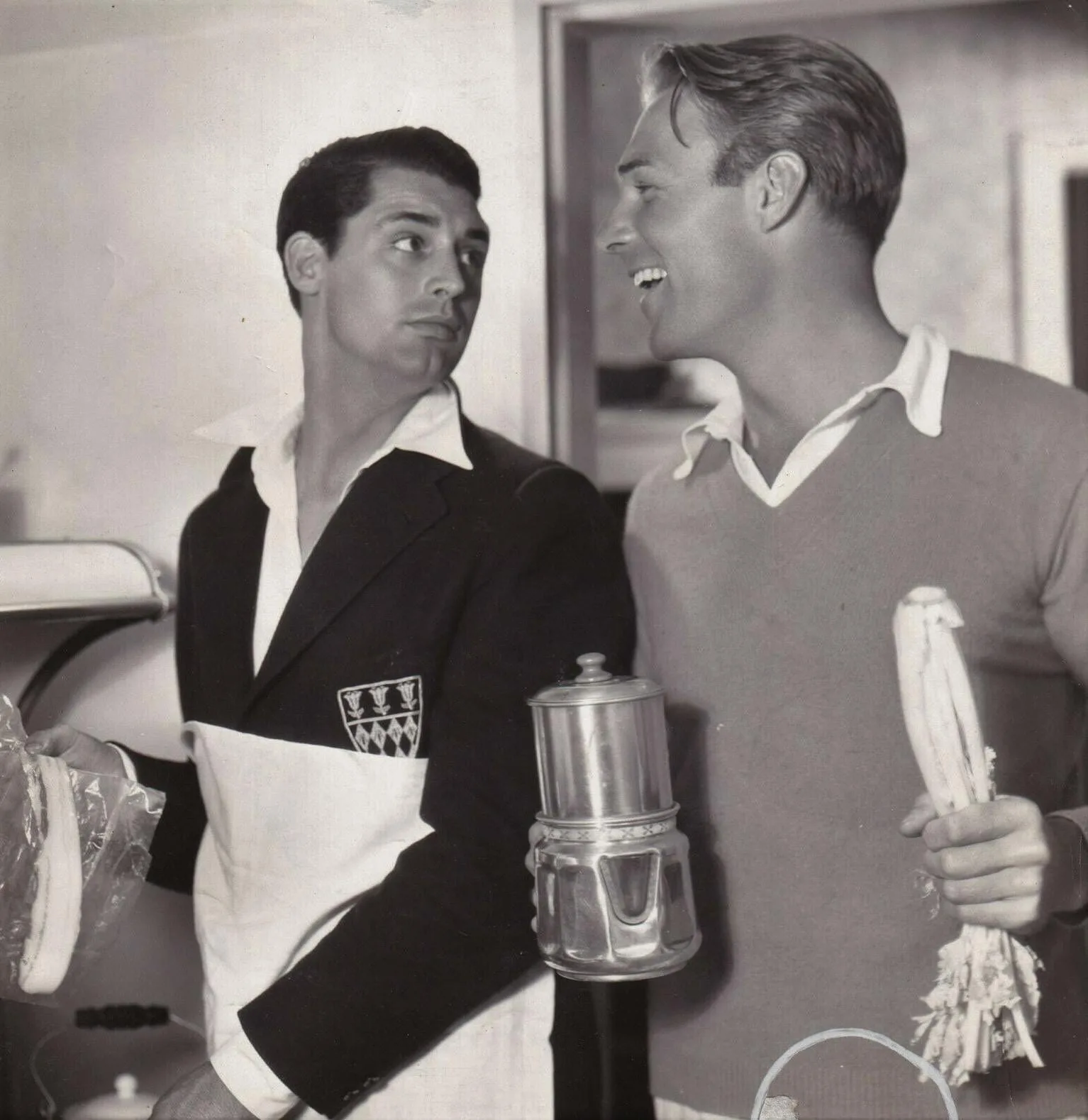
Persistent rumors held that the two were romantically involved; neither man ever confirmed it, and Grant's third wife, Betsy Drake, and his widow, Barbara Harris, both denied it outright. When the comedian Chevy Chase joked publicly, decades later, that Grant was gay, Grant sued him for slander, and the two settled out of court. The true nature of the Grant-Scott friendship has never been resolved.
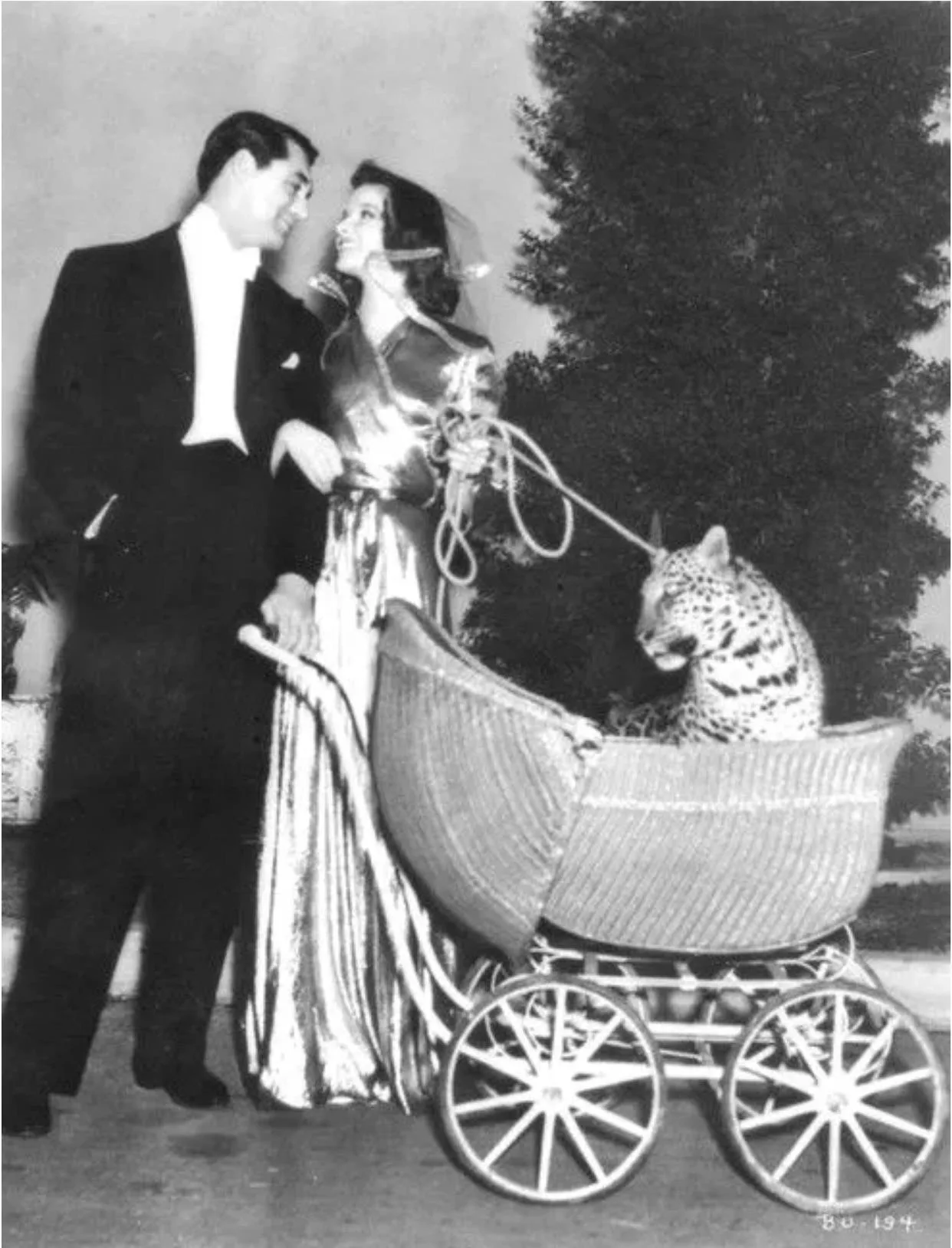
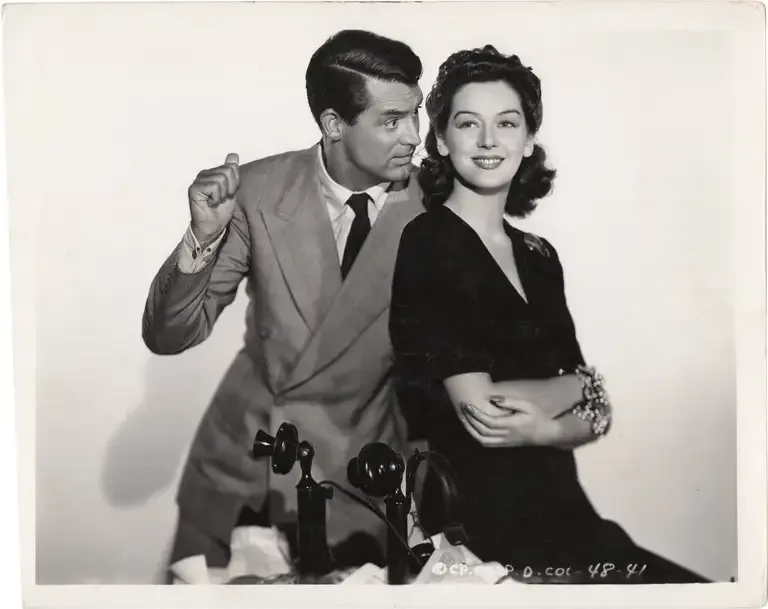
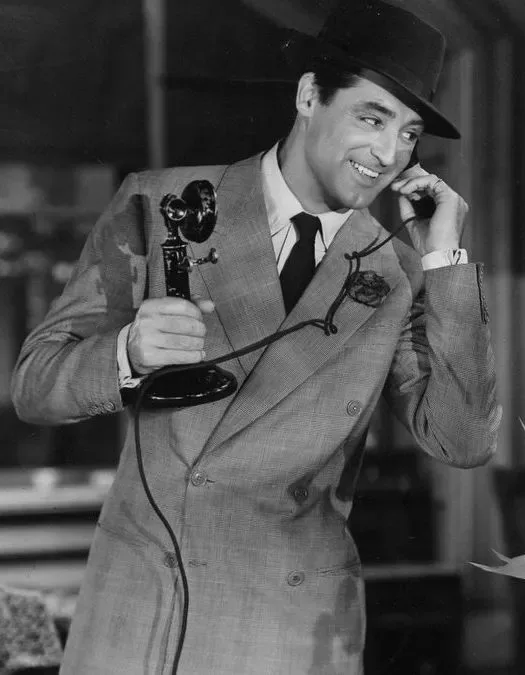
The late 1930s brought the run of screwball comedies that made Grant's name synonymous with a very particular kind of effortless charm: The Awful Truth (1937), Bringing Up Baby (1938), Holiday (1938), Gunga Din (1939), His Girl Friday (1940), and The Philadelphia Story (1940).
Around the same period, Grant made an unusually shrewd business decision for an actor of his era, becoming one of the first major stars to work freelance rather than sign an exclusive long-term studio contract — negotiating profit-sharing deals project by project, decades before that arrangement became standard practice in Hollywood.
In 1941, Grant received his first Academy Award nomination, for Penny Serenade, and began the collaborations with Alfred Hitchcock — starting with Suspicion that same year — that would define his more unsettling, morally ambiguous late-career roles. A second Oscar nomination, for None But the Lonely Heart, followed in 1944.
In 1942, Grant married Barbara Hutton, the Woolworth heiress and one of the wealthiest women in the world. The press mockingly nicknamed them "Cash and Cary," missing the actual joke: Grant had insisted on a prenuptial agreement refusing any financial settlement for himself in the event of divorce, and effectively became a father figure to Hutton's young son, Lance Reventlow, throughout the marriage. It ended in divorce in 1945.
In 1949, Grant married the actress Betsy Drake. It was Drake who, in the late 1950s, introduced him to a then-legal, doctor-supervised course of LSD psychotherapy under Dr. Mortimer Hartman at the Psychiatric Institute of Beverly Hills.
Grant underwent roughly a hundred sessions over several years, working through the unresolved pain of his mother's disappearance and his own difficulty trusting women. He was remarkably candid about it in the press at the time, telling one reporter the treatment had helped him "get pure again" and shed "all the barnacles and misconceptions" he had built up over a lifetime. The marriage to Drake ended in divorce anyway, in 1962.
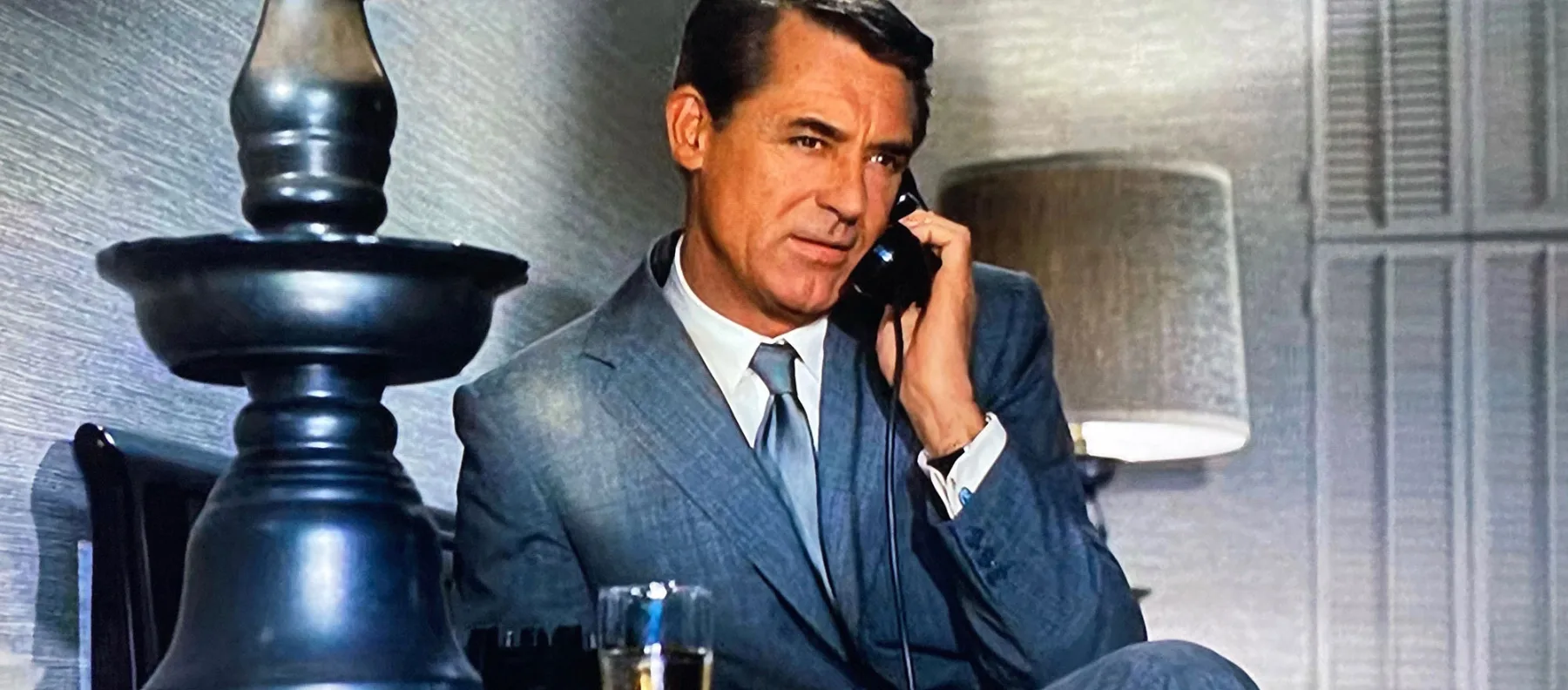
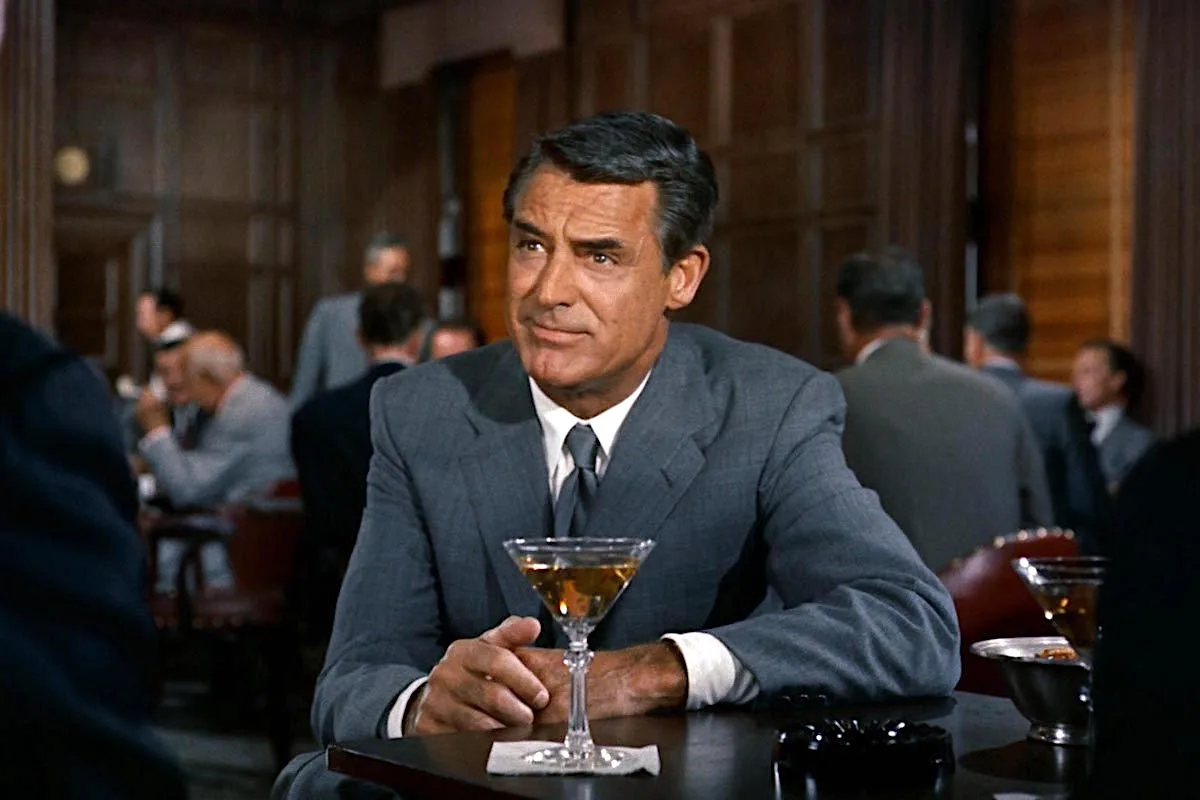
Grant had, by then, finally learned the truth about his mother. In his early thirties he discovered Elsie Leach was alive, arranged her release from the institution, and supported her for the rest of her life, visiting her in Bristol every year until her death in 1973, at ninety-six.
In 1965, Grant married the actress Dyan Cannon. Their daughter, Jennifer Grant, born in 1966, was his only child, arriving when he was sixty-two. The marriage collapsed within three years, ending in a bitter, highly public divorce in 1968, with custody disputes over Jennifer continuing for nearly a decade afterward.
Grant made his last film, Walk, Don't Run, in 1966, and effectively retired from acting soon after, choosing to spend his time raising his young daughter instead. His next act was an unusually successful one for a former movie star: he became a director and spokesman for the cosmetics company Fabergé, and sat on the boards of MGM and Western Airlines.
In 1970, the Academy awarded Grant an Honorary Oscar "for his unique mastery of the art of screen acting" — a quiet acknowledgment that the two competitive nominations he'd received across a four-decade career had never once converted into a win. He received the Kennedy Center Honors in 1981.
That same year, Grant married Barbara Harris, a British hotel public-relations agent forty-seven years his junior — his fifth and final marriage, and the one that lasted until his death.
In his later years, Grant toured the country with a one-man stage show, A Conversation with Cary Grant, screening clips from his films and taking questions from the audience — a low-key, genuinely curious relationship with his own legend.
He was preparing for a performance of the show at the Adler Theatre in Davenport, Iowa, on 29 November 1986, when he fell seriously ill. He died of a massive stroke at St. Luke's Hospital that evening, at eighty-two, with Barbara Harris at his side.
Per his own wishes, there was no funeral; he was cremated, and his ashes were scattered over the Pacific Ocean.
Grant's screen persona — effortless, unbothered, always exquisitely dressed — was, by his own repeated admission, a careful construction built over a childhood defined by abandonment and poverty. Asked once what it was like to be Cary Grant, he offered an answer that has outlived nearly everything else said about him: "Everyone wants to be Cary Grant," he said. "Even I want to be Cary Grant."