People
Carolyn Bessette-Kennedy (born Carolyn Jeanne Bessette; 7 January 1966 – 16 July 1999)
"It was so obvious that she had a great sense of style and stood out from the rest." Susan Sokol, the Calvin Klein executive who discovered her
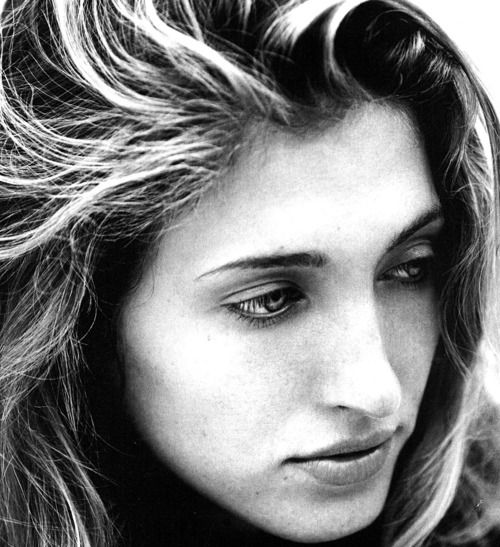
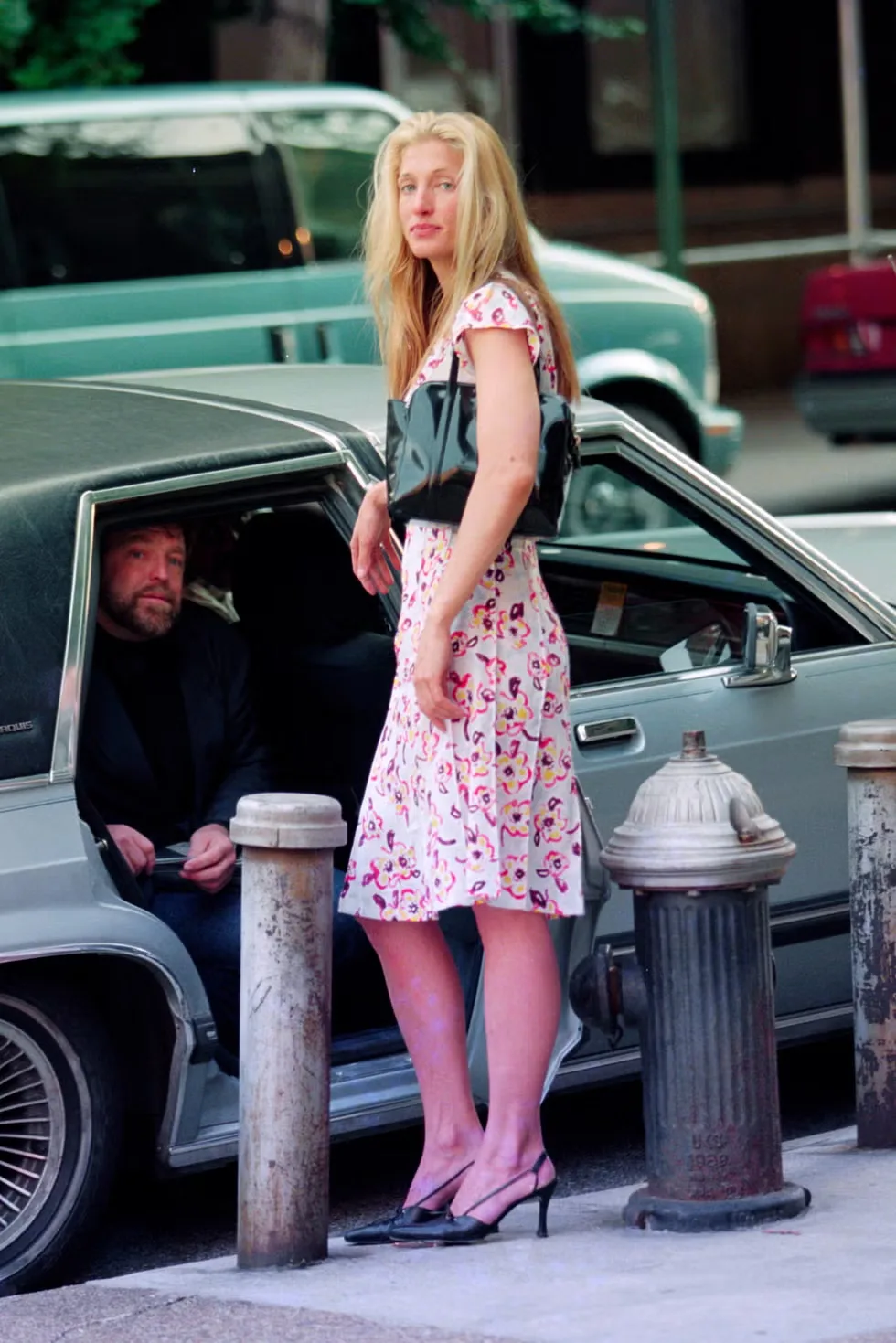
Biography
Carolyn Jeanne Bessette was born on 7 January 1966 in White Plains, New York. She was the youngest of three daughters. Her older sisters, Lauren Bessette and Lisa Ann Bessette, were twins.
Her father, William Bessette, was an American architectural engineer who later worked as a cabinetmaker. Her mother, Ann Messina, was a school administrator. The family was Catholic, of French-Canadian and Italian descent.
Her parents divorced when she was young. Her mother married Richard Freeman, an American orthopedic surgeon, and the girls grew up with them in Greenwich, Connecticut.
Carolyn started at Greenwich High School. Her parents felt she was not taking her studies seriously, and they moved her to St. Mary's High School, a Catholic school. She graduated in 1983.
She studied elementary education at Boston University. She loved children and thought of teaching.
She also tried modeling for a while. She paid a professional photographer for portfolio pictures, and she appeared on the cover of a campus calendar, The Girls of B.U. (calendar, 1988).
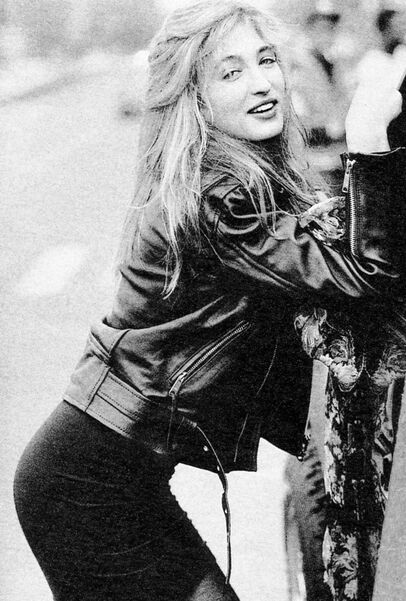
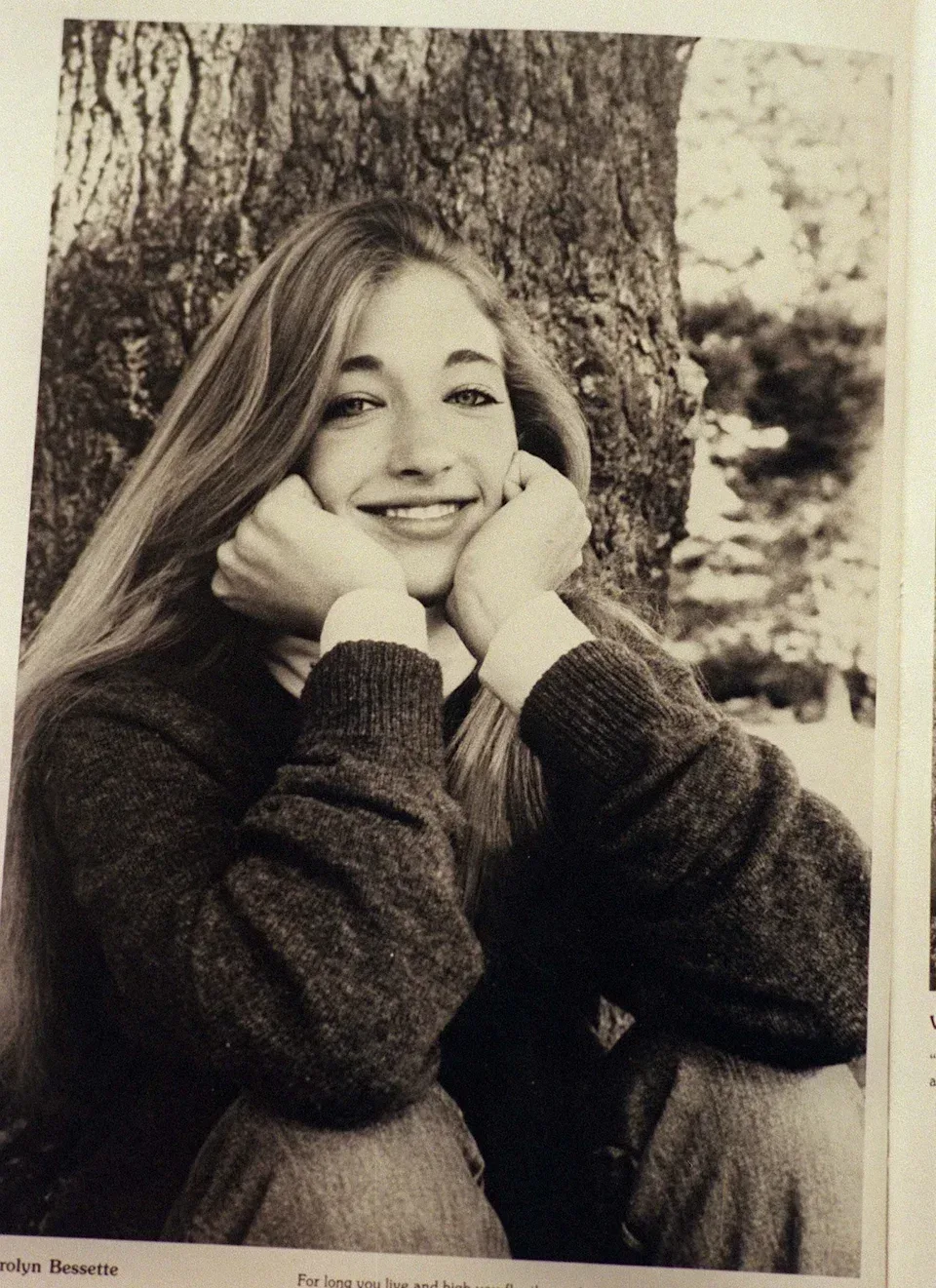
She graduated in January 1988. But fashion pulled harder than the classroom.
After a short time as a nightclub promoter in Boston, she took a sales job at the Calvin Klein store in the Chestnut Hill Mall, in Newton, Massachusetts.
There, she caught the eye of Susan Sokol, then the company's American president of ready-to-wear. "It was so obvious that she had a great sense of style and stood out from the rest," Sokol said later.
Sokol brought her to New York to look after private clients. Among them were the American newscaster Diane Sawyer and the American actress Annette Bening. Carolyn was quietly amazed at how fast famous women could spend thousands of dollars.
She moved to New York in 1989 and shared an apartment in the East Village with a colleague, Stormy Stokes. "We were so broke!" Stokes remembered.
The Calvin Klein look was clean and spare. Even nail polish was said to be banned in the office, because it was off brand.
Carolyn never blew out her hair. Stokes learned her morning trick: wash it, flip it upside down twice, pin it up, and let it slip loose from the bun by the time they reached the office.
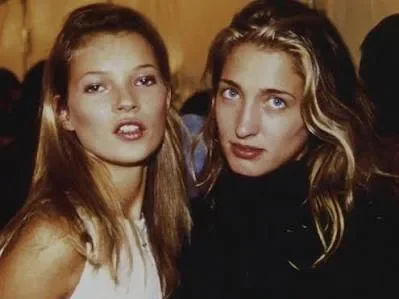
Over seven years, she moved from celebrity sales into public relations and fashion shows. She worked closely with the American designer Calvin Klein and his wife, the American designer Kelly Klein.
By one account, she first met John F. Kennedy Jr., an American lawyer and the son of the American president John F. Kennedy and the former first lady Jacqueline Kennedy Onassis, when he came into Calvin Klein for a fitting. Other stories place the meeting elsewhere, and neither of them ever said.
They began dating in 1994. At once, they became the favorite target of New York's photographers.
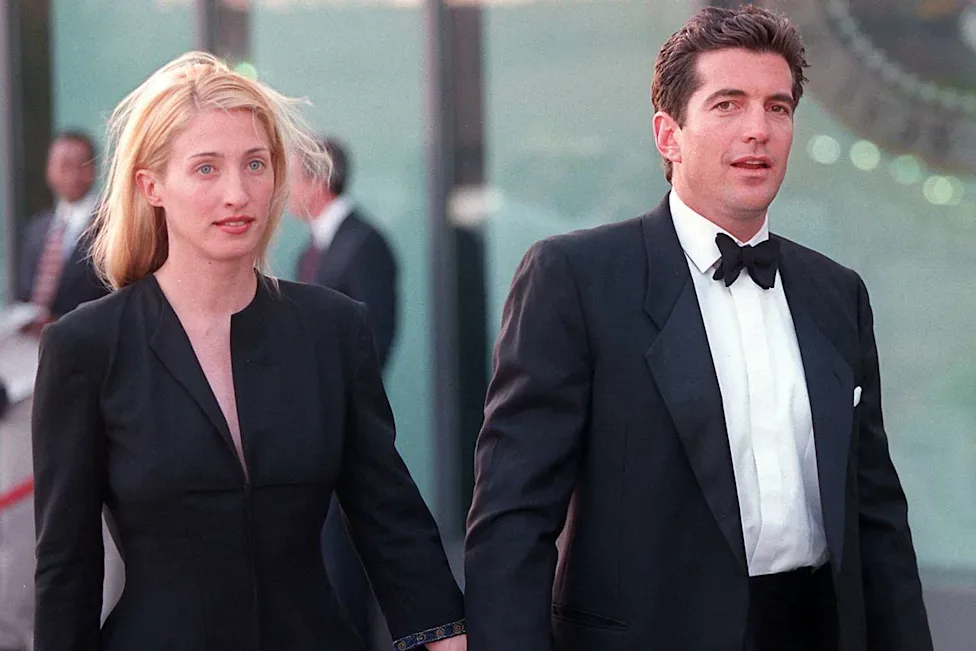
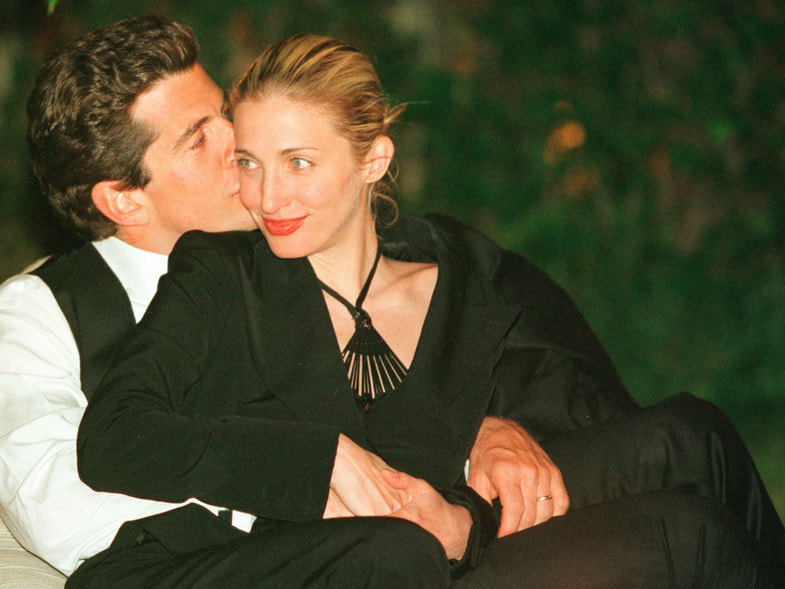
In the summer of 1995, she moved into his loft in Tribeca. Later that year, he proposed.
Her answer was "I'll think about it." Friends said it was a real question, not a game.
She said yes. In the spring of 1996, she left Calvin Klein as director of show production.
The couple planned their wedding in secret for months. On 21 September 1996, about forty guests gathered by candlelight in the First African Baptist Church, a tiny wooden chapel on Cumberland Island, off the coast of Georgia.
Her dress was made by her friend, the American designer Narciso Rodriguez, whom she had met at Calvin Klein. It was a slip dress of pearl-white silk crepe, cut on the bias so it poured over her body, with thin straps and a deep cowl at the back.
The groom's sister, the American lawyer and author Caroline Kennedy, was matron of honor. His cousin, the American television producer Anthony Radziwill, was best man.
Only one photographer was there, the American photographer Denis Reggie. The couple released a single picture to the world: John kissing his bride's hand on the church steps.
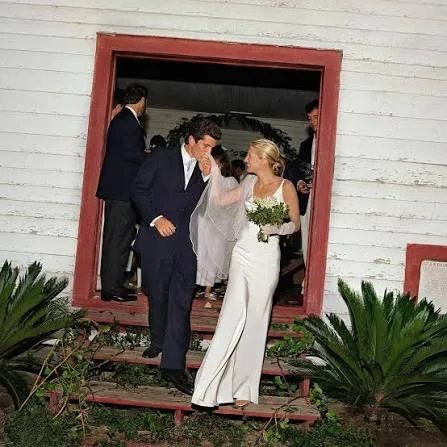
That photograph changed bridal fashion. Within a year, Narciso Rodriguez had his own label.
The newlyweds honeymooned in Turkey and Greece. When they came home to Tribeca in early October, a crowd of reporters was waiting on their doorstep.
John spoke for both of them. "This is a big change for anyone, and for a private citizen even more so," he said. "I ask that you give Carolyn all the privacy and room you can."
The press did not listen. Photographers followed her on errands, to dinner, and on walks with her dog, Friday.
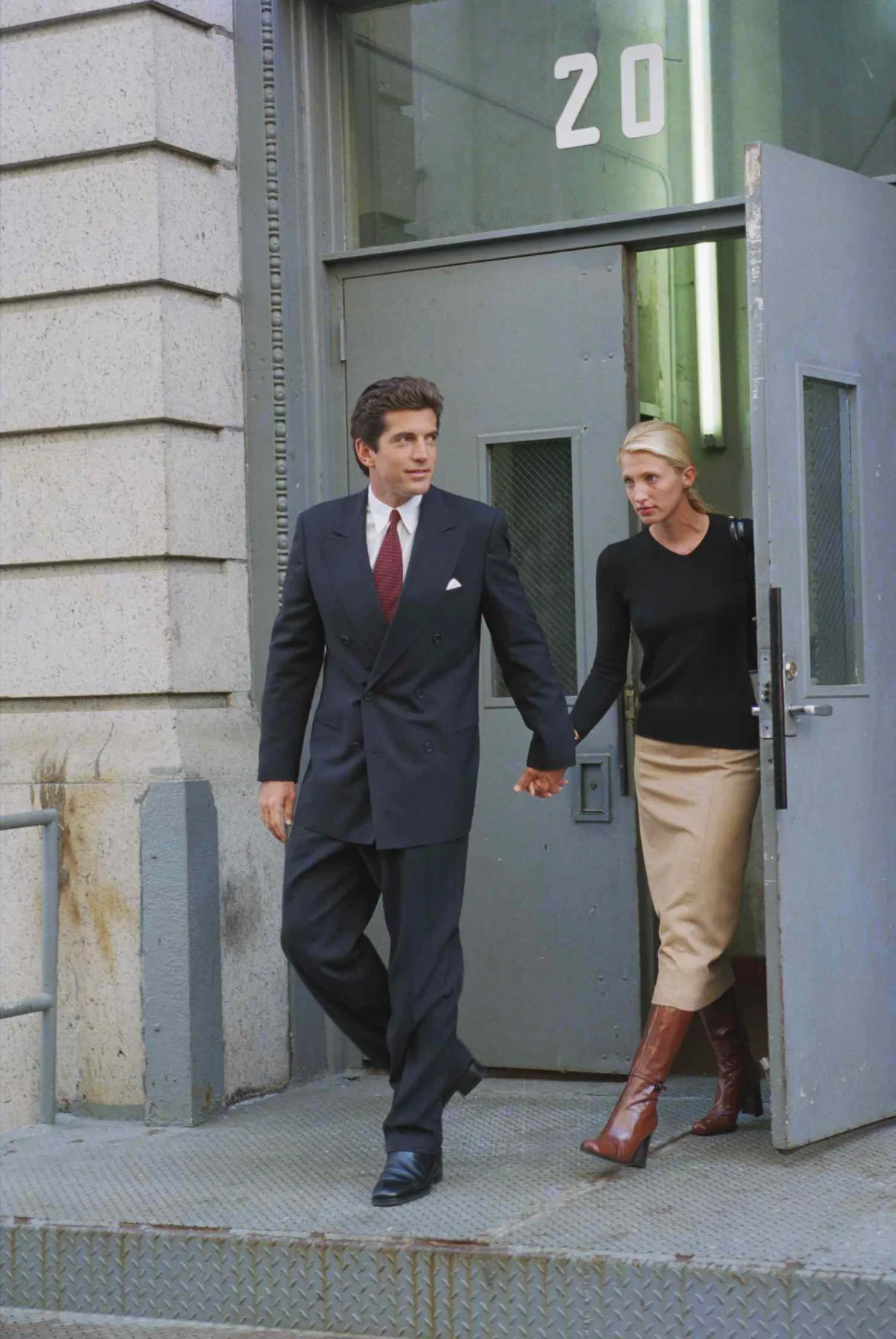
By January 1997, she felt hunted. She refused to smile and wave for the cameras, and the tabloids called her cold.
Friends saw something else. Knowing that people were ready to judge her, one friend said, she "went out of her way to be kind."
She never gave an interview. She had worked in publicity herself, and she was uneasy with the press.
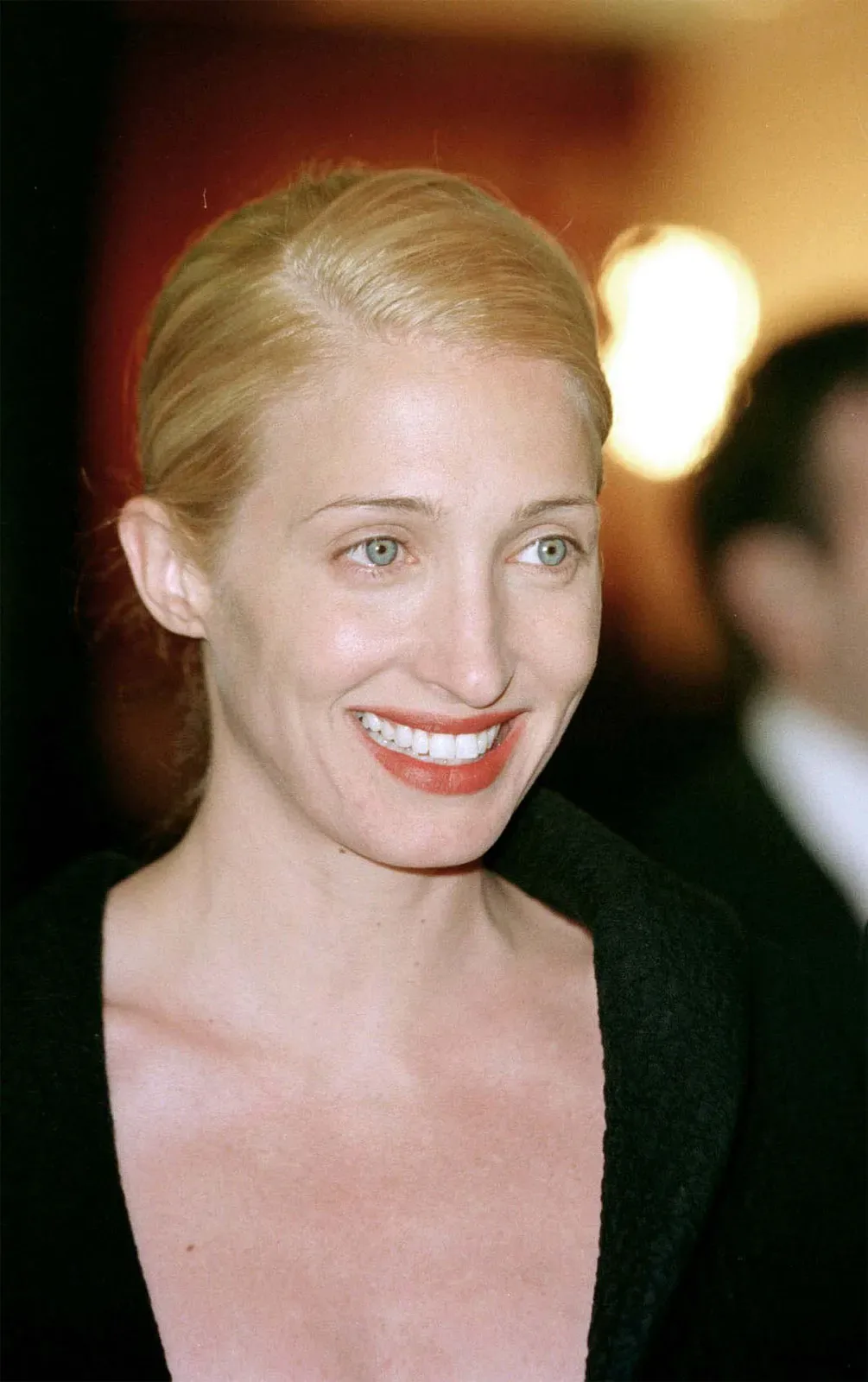
Her clothes spoke instead. By day, she wore blue jeans, a white shirt or a black turtleneck, penny loafers, and a plain black coat, with oval sunglasses and a tortoiseshell headband.
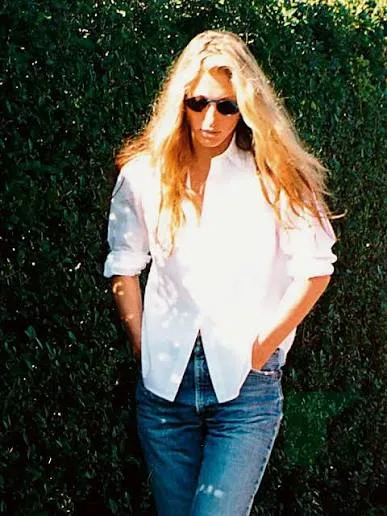
There were no logos and very little jewelry, only small gold hoops. She rarely wore prints, but she owned at least two leopard print coats, believed to be vintage, which she wore in the fall with jeans and a turtleneck.
Her favorite label was Prada. For evenings, she often chose the Japanese designer Yohji Yamamoto and the Japanese label Comme des Garçons, or a strapless little black dress, with slim slingbacks by Manolo Blahnik.
The British-American editor of Vogue, Anna Wintour, admired her "modern style." In 1997, she was nominated for Best Female Personal Style at the VH1/Vogue Fashion Awards.
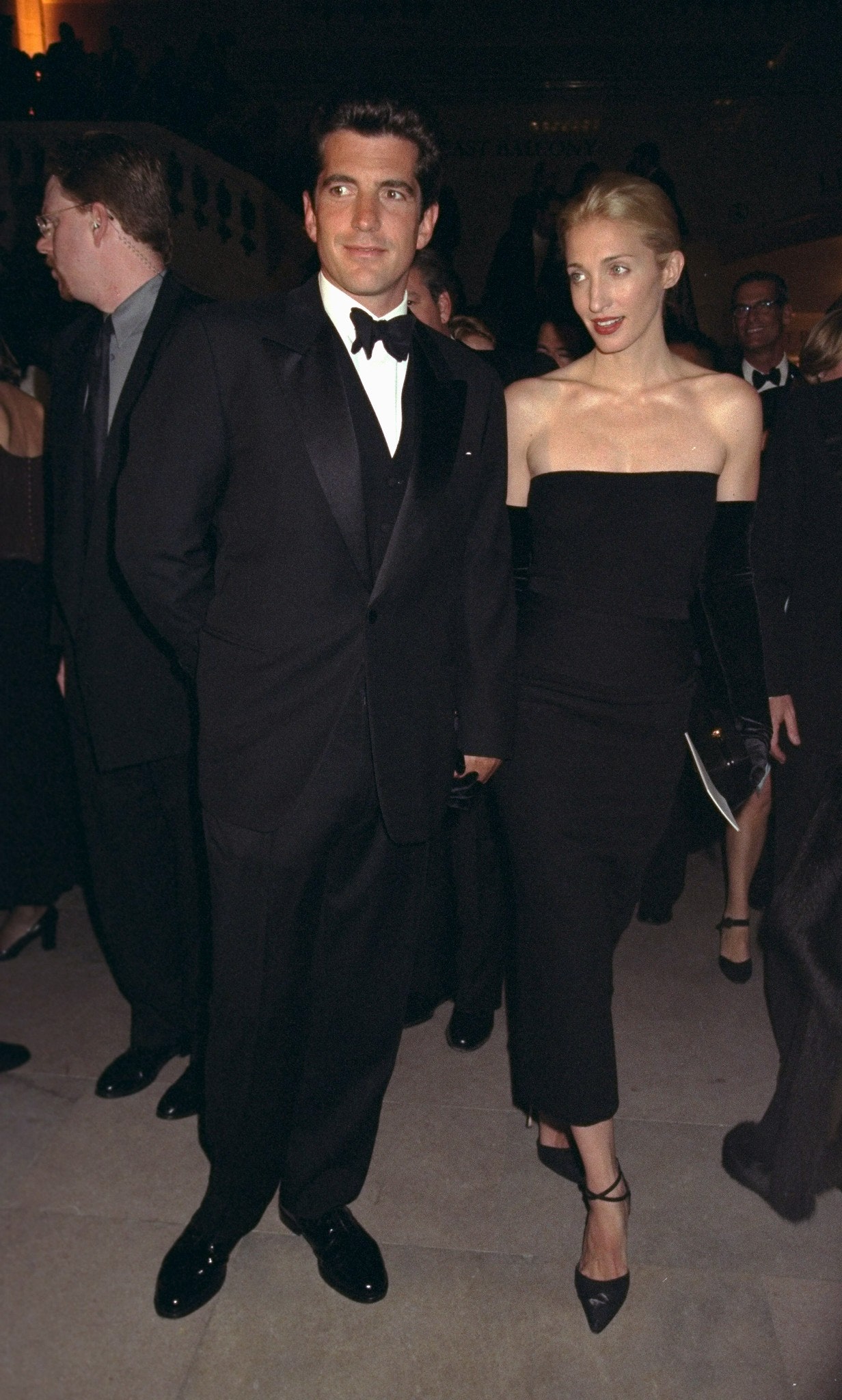
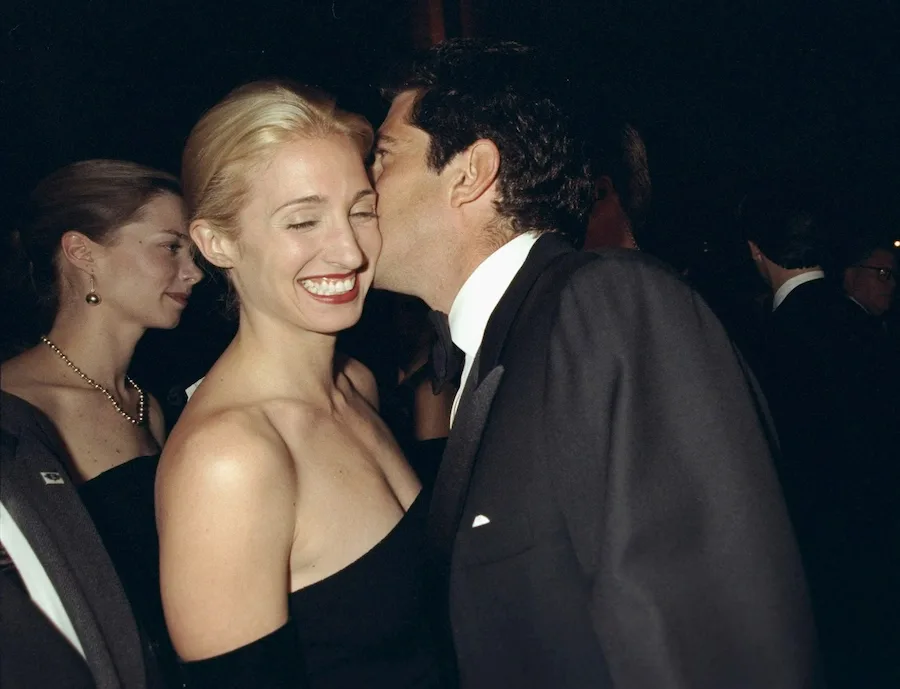
She went with John to benefits, to dinners at the White House, and to parties for George, the political magazine he had founded.
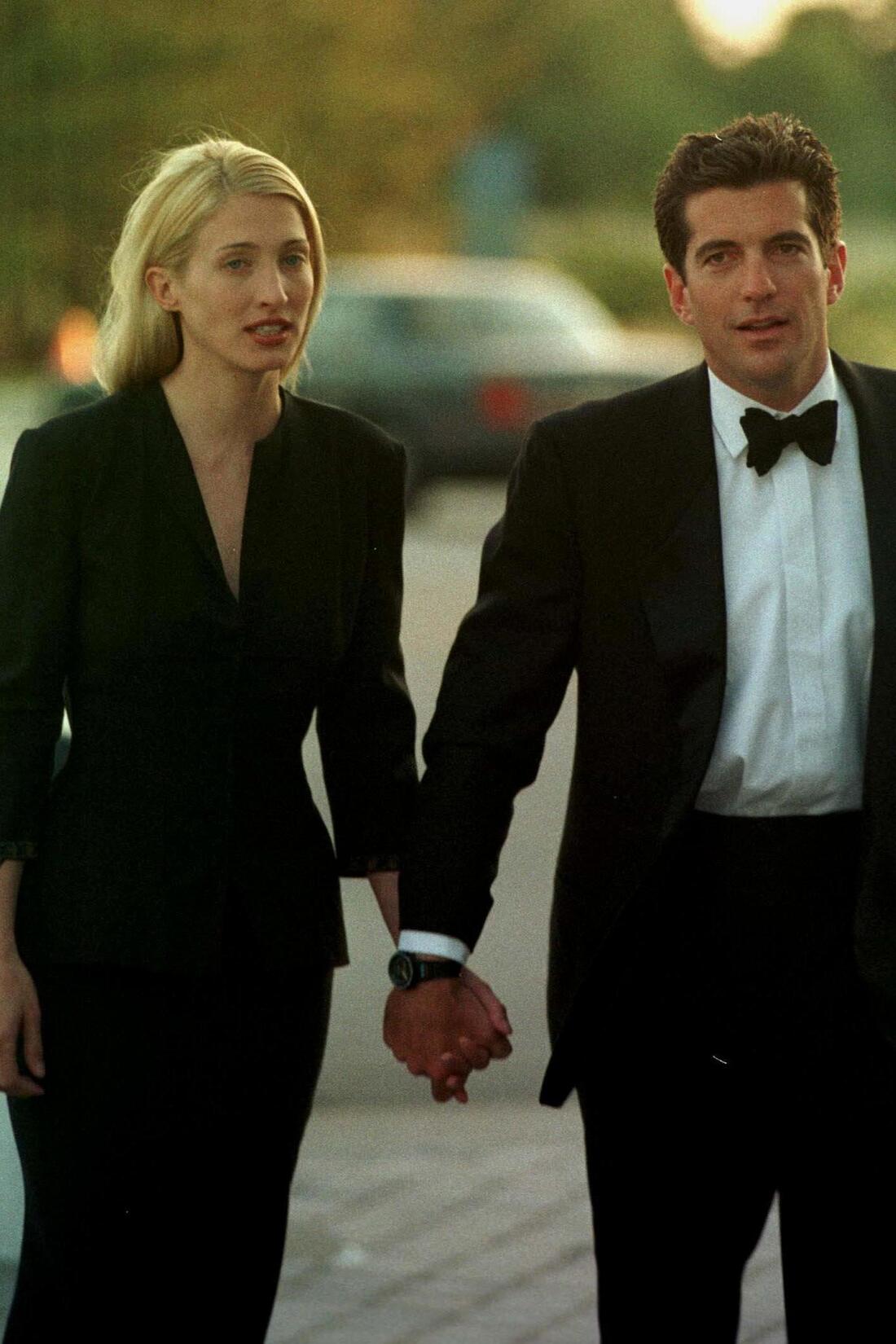
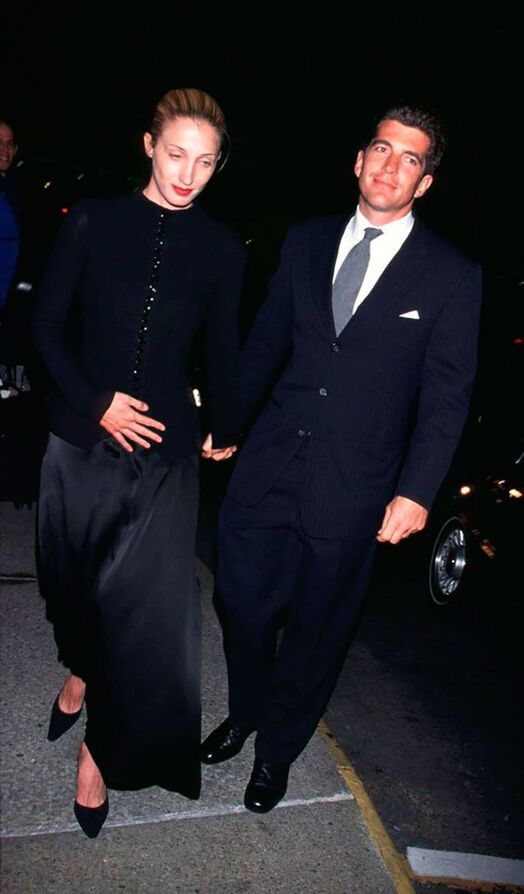
Friends said she missed having her own work. She thought of going back to a job, or of studying film. But with cameras at every corner, it was hard to start anything.
Their marriage had its storms. In March 1999, the couple began seeing a marriage counselor.
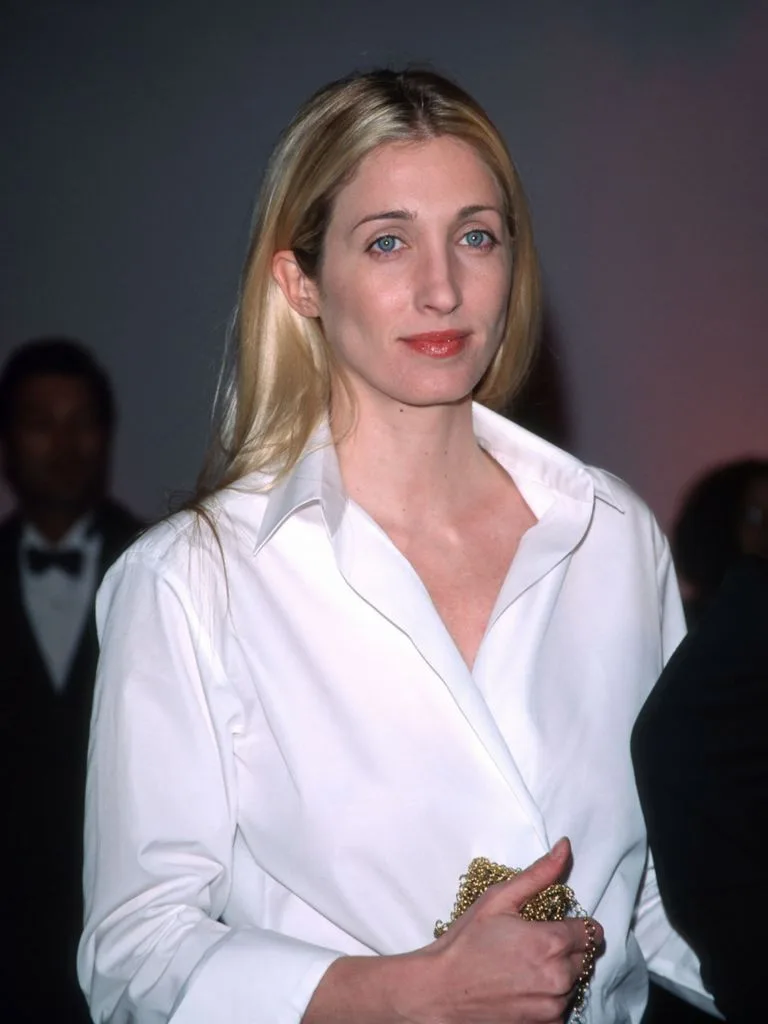
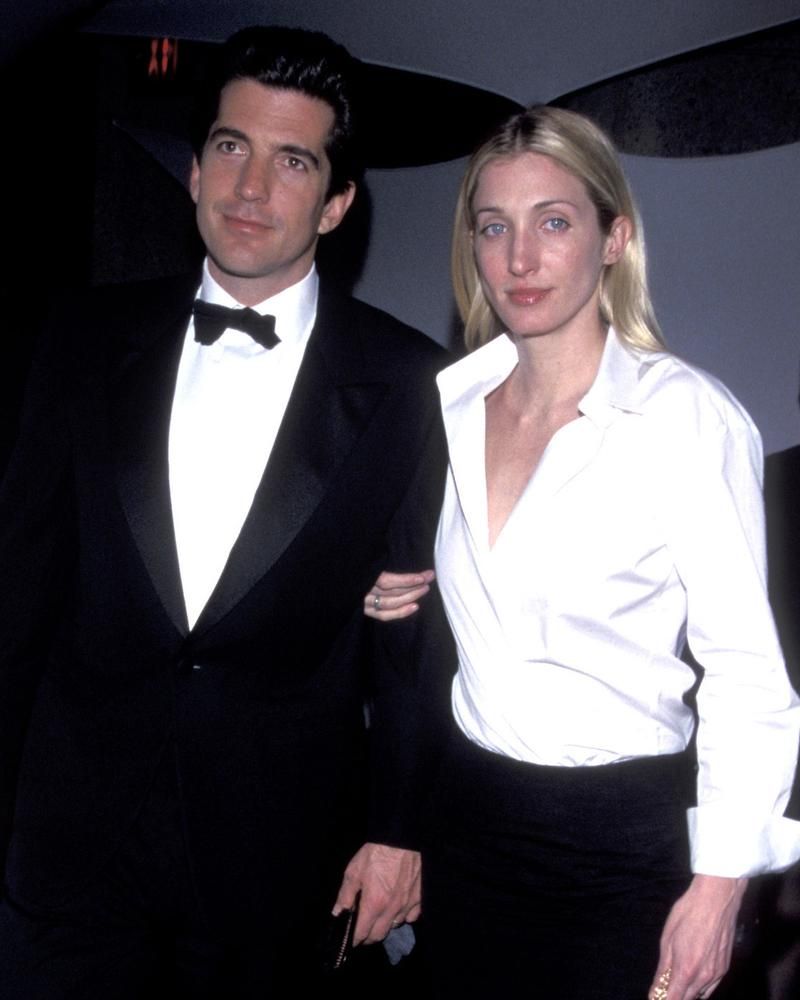
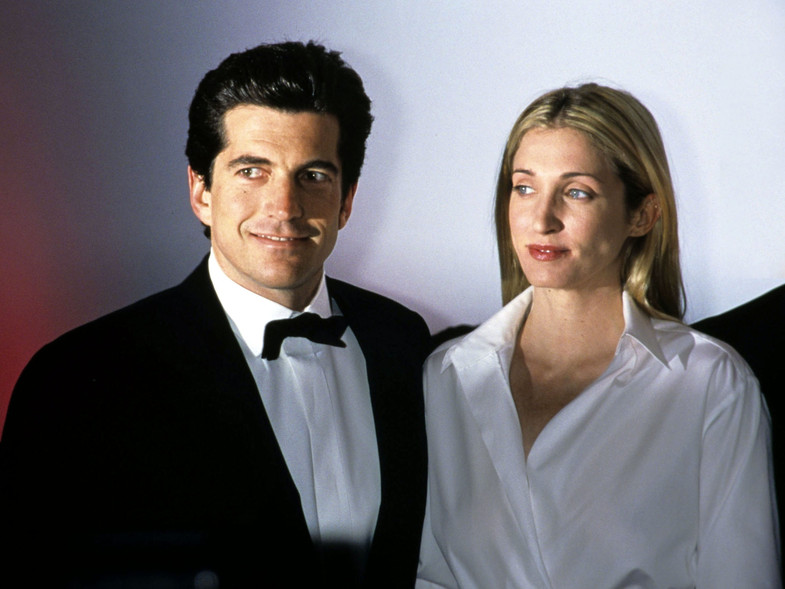
On 9 March 1999, at the Whitney Museum of American Art in New York, she wore a white shirt by Yohji Yamamoto with no buttons. She wrapped it around her body and tucked it into a long black skirt with a ruffled hem, the collar open and the cuffs folded back.
That summer, John's cousin, the American documentary filmmaker Rory Kennedy, was getting married at the Kennedy Compound in Hyannis Port, Massachusetts.
On the evening of 16 July 1999, John took off in his small plane, a Piper Saratoga, from Essex County Airport in New Jersey. Carolyn was beside him. Her sister Lauren Bessette was going to be dropped at Martha's Vineyard on the way.
They had planned to leave in daylight. But Lauren was held up at work, traffic was heavy, and the plane took off after dark, at about 8:38 p.m.
Over the water, in haze and darkness, John lost control. The plane crashed into the Atlantic Ocean off Martha's Vineyard at about 9:41 p.m. Carolyn was thirty-three. Her sister was thirty-four.
Navy divers found the three bodies near the wreckage on 21 July. On 22 July, their ashes were scattered at sea from the Navy ship USS Briscoe, off Martha's Vineyard.
At the memorial service, John's uncle, the American senator Ted Kennedy, remembered his nephew. "For a thousand days, he was a husband who adored the wife who became his perfect soulmate," he said.
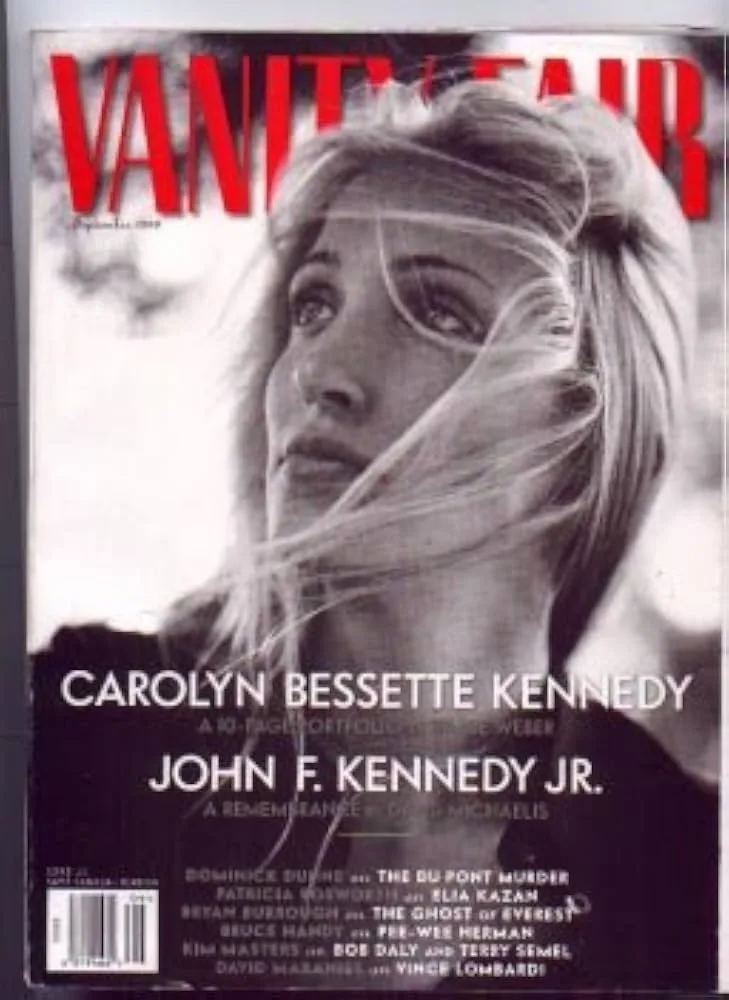
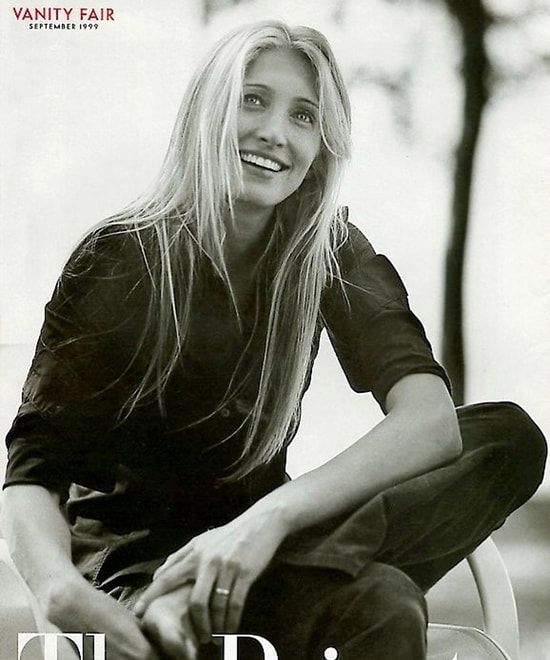
After her death, Vanity Fair published on its cover a photograph of Carolyn by the American photographer Bruce Weber, taken for a small fashion trade magazine. In it, she wears no makeup and a simple shirt. The issue became one of the magazine's bestselling covers of all time.
Her clothes kept their power. At a Sotheby's sale, three pieces she had given to a friend sold for a total of $180,000: a black wool coat by Prada for $78,000, a black wool jacket by Yohji Yamamoto for $66,000, and a vintage faux leopard coat for $36,000.
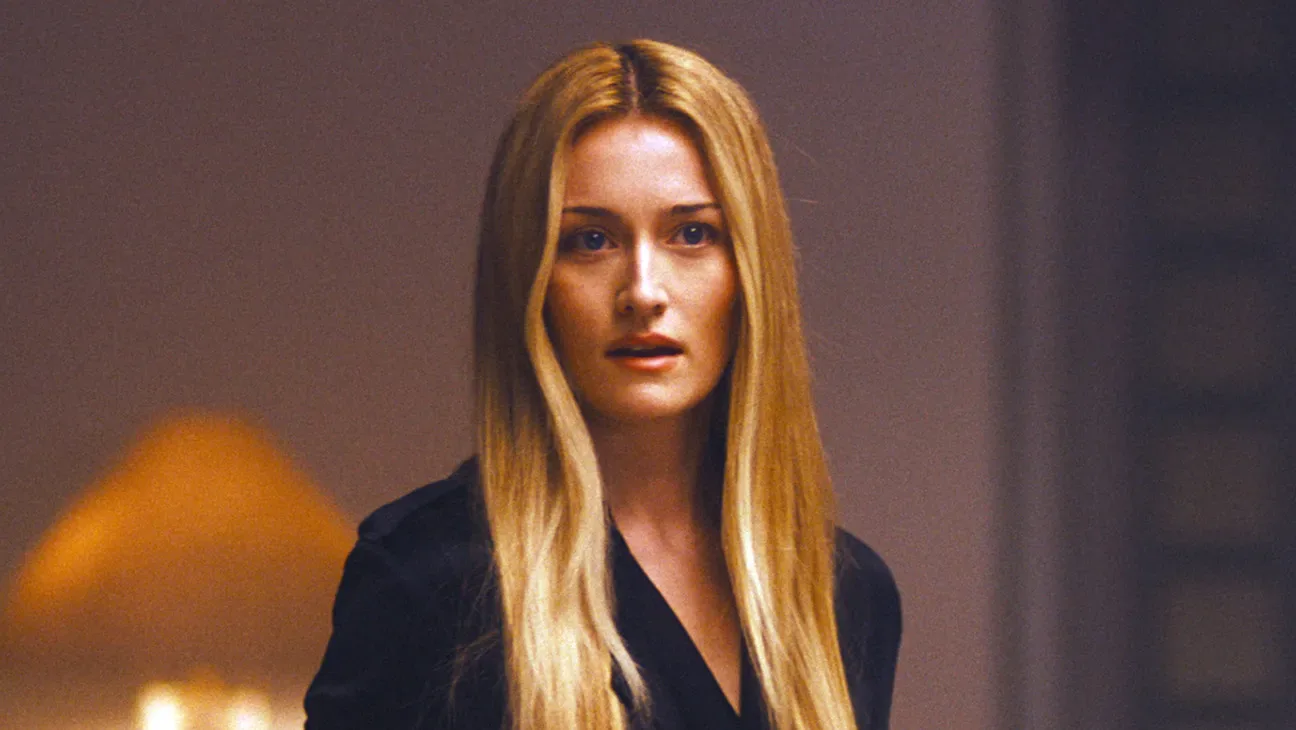
In 2026, the American actress Sarah Pidgeon played her in the television series Love Story: John F. Kennedy Jr. & Carolyn Bessette (television series, 2026). The pearl-white slip dress was made again for the screen, from the same silk.
She never told her own story. She left it in a few photographs: a white shirt, a black coat, a pearl-white dress on a church step.