People
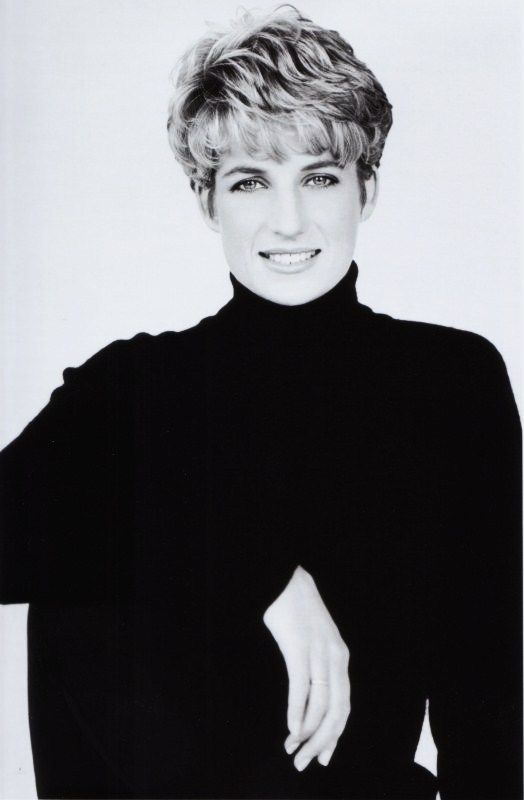
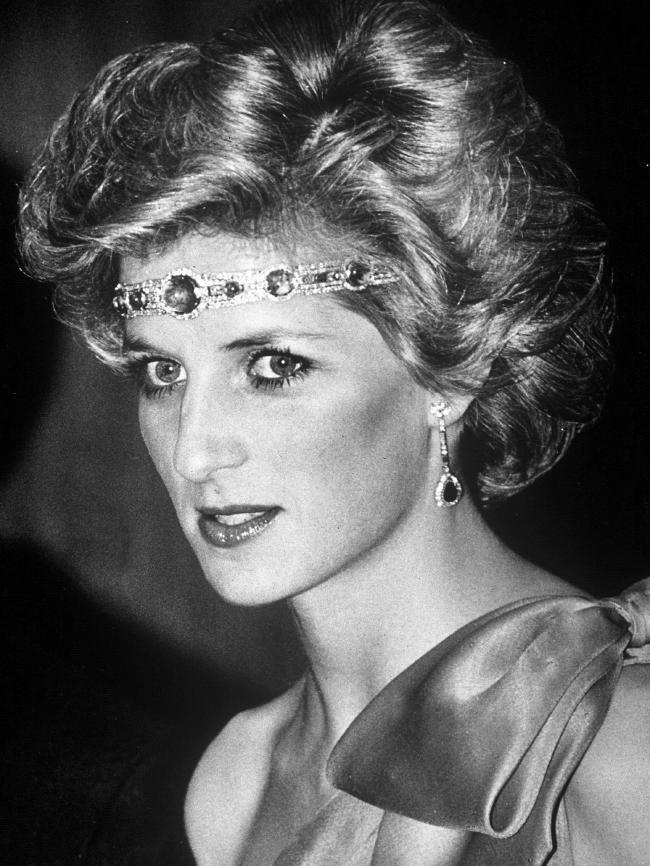
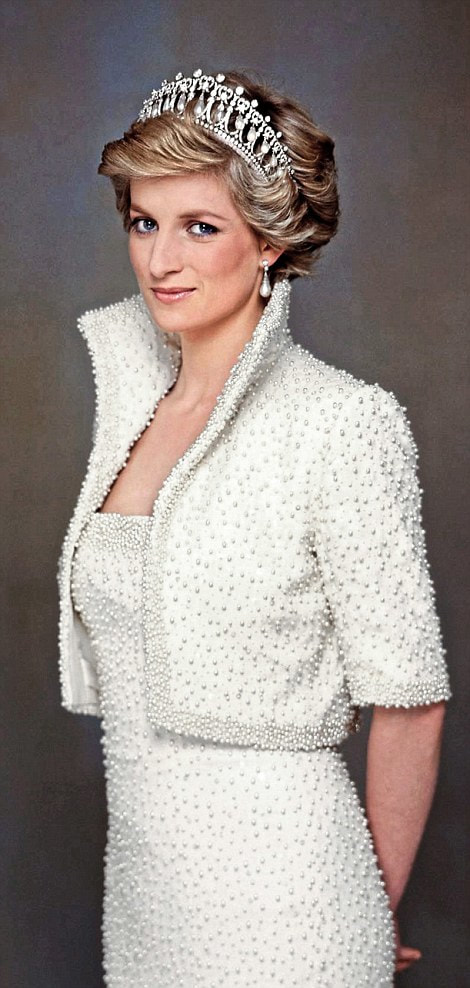
Diana, Princess of Wales (born Diana Frances Spencer; 1 July 1961 – 31 August 1997)
Biography
Diana Frances Spencer was born on 1 July 1961 at Park House, on the Sandringham estate in Norfolk, the third of four surviving children of Edward John Spencer, Viscount Althorp, and Frances Ruth Burke Roche.
A brother, John, had died in infancy the year before her birth; her parents, under pressure to produce a male heir, eventually had the son they wanted, Charles, after Diana. The strain of that pressure, Charles himself later said, lay at the root of her parents' divorce, which came when Diana was six.
Diana attended Riddlesworth Hall and West Heath Girls' School before finishing her formal education at sixteen with a term at a Swiss finishing school.
She became Lady Diana Spencer in 1975, when her father inherited the Spencer earldom, and worked as a nursery school assistant in the years before her engagement.
She first met Charles, Prince of Wales, in 1977, while he was dating her older sister, Sarah. Their own relationship developed later, in 1980, after Diana watched him play polo during a country weekend; Charles invited her sailing aboard the royal yacht Britannia soon after.
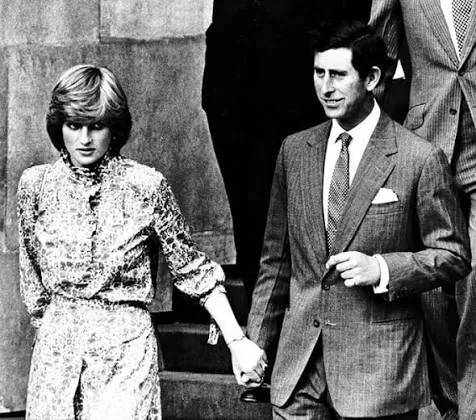
They married at St Paul's Cathedral on 29 July 1981, when Diana was twenty, thirteen years younger than her husband.
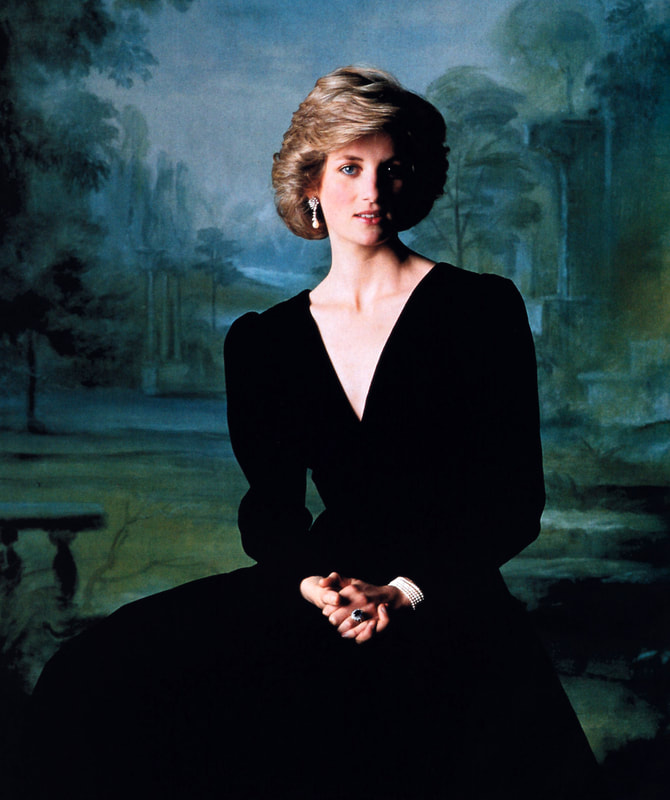
Prince William was born in 1982, and Prince Harry in 1984.
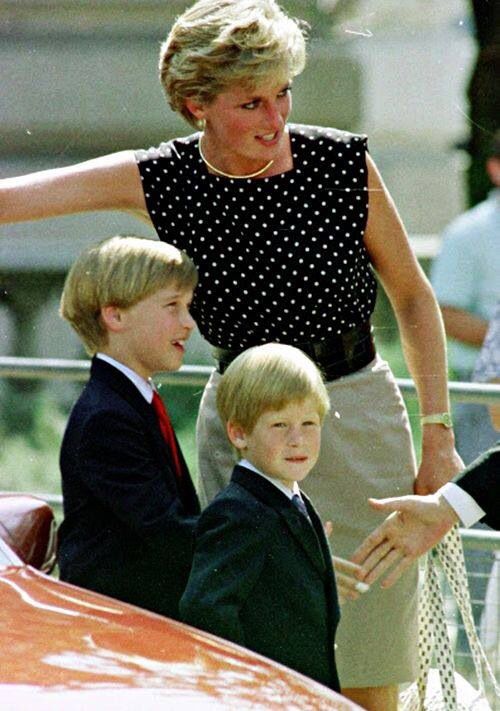
The marriage was troubled almost from the start by Charles's continuing relationship with Camilla Parker Bowles, which had predated the engagement and never fully ended.
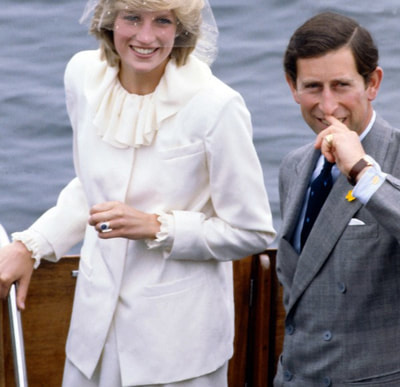

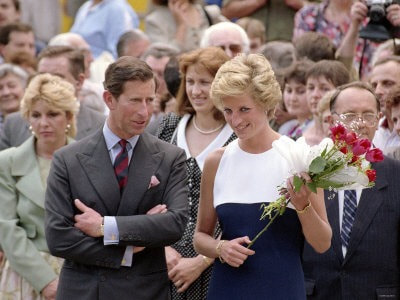
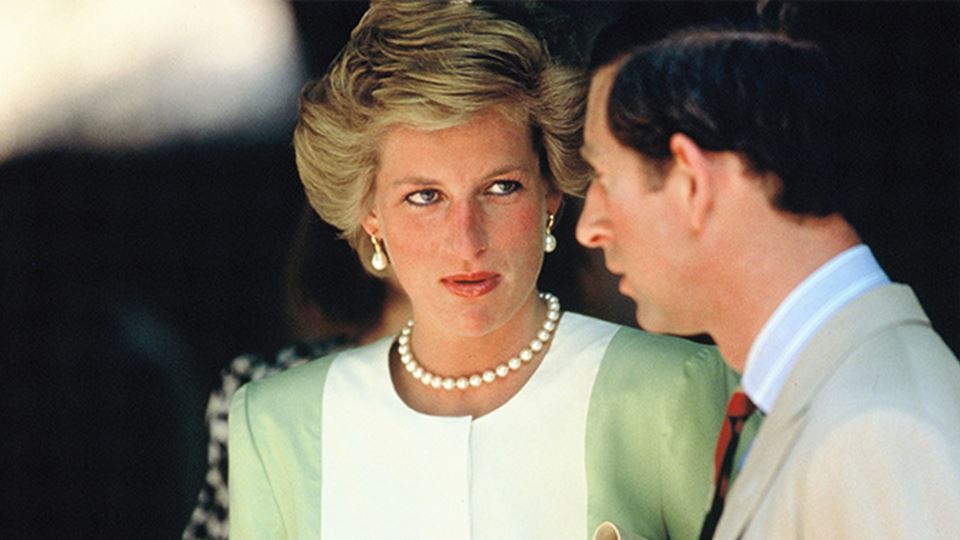
By 1986, the couple kept such separate schedules that Queen Elizabeth II ordered them to appear together in public. The couple separated formally in 1992; Diana, for her part, also had a relationship during these years with the cavalry officer James Hewitt, which she later acknowledged publicly.
On 29 June 1994, Charles gave a televised interview to the broadcaster Jonathan Dimbleby in which he admitted to his infidelity with Camilla Parker Bowles.
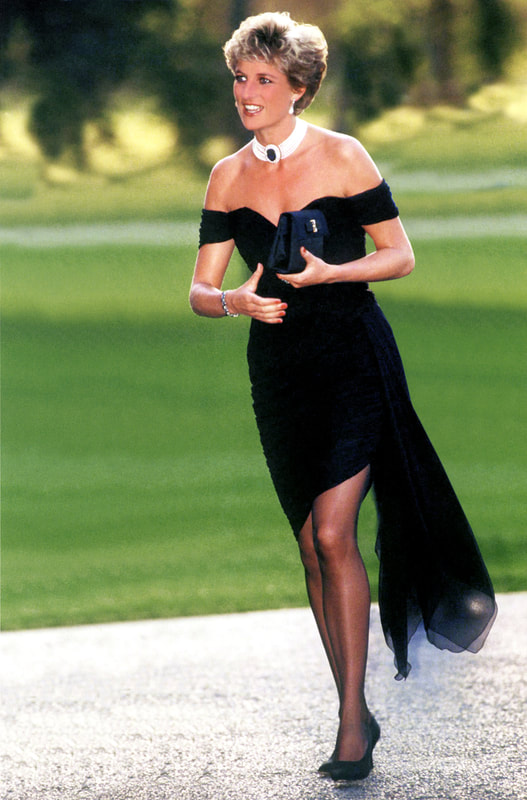
That same evening, Diana appeared at a gala at London's Serpentine Gallery in a black, off-the-shoulder cocktail dress by the designer Christina Stambolian, worn with a pearl choker, after her original planned outfit had been leaked to the press.
The timing made the dress an instant, deliberate statement, and the press quickly named it "the revenge dress," an image still cited today as one of the most talked-about moments in modern royal style.
In November 1995, Diana gave her own televised interview, to the BBC's Panorama, arranged in secret with the journalist Martin Bashir. In it, she spoke candidly about the state of her marriage, famously observing that "there were three of us in this marriage, so it was a bit crowded," and discussed her own struggles with bulimia and depression.
Diana and Charles divorced on 28 August 1996.
Freed from many of the constraints of royal protocol, Diana spent her final years deepening a humanitarian profile that had already begun during the marriage.
In April 1987, she had opened one of Britain's first dedicated HIV and AIDS wards at London's Middlesex Hospital, and shook the bare hand of a patient in front of photographers, a small, deliberate gesture aimed directly at the widespread and false belief that the virus could spread through casual touch.
She went on to visit leprosy patients in Nepal, India, and Zimbabwe, and, in January 1997, walked in protective clothing through a cleared section of an active minefield in Angola to campaign for an international ban on landmines. The images circled the globe; three months after her death, 122 countries signed the Ottawa Treaty banning anti-personnel mines.
In July 1997, Diana auctioned seventy-nine of her own dresses at Christie's to benefit cancer and AIDS charities, among them, eventually, the revenge dress itself.

By the summer of 1997, Diana was in a relationship with the film producer Dodi Fayed, son of the businessman Mohamed Al-Fayed.
In the early hours of 31 August 1997, their car, pursued by paparazzi photographers and driven by Henri Paul, crashed in the Pont de l'Alma tunnel in Paris after striking a support pillar at high speed. Dodi Fayed and Henri Paul were killed instantly.
Diana's bodyguard, Trevor Rees-Jones, the only occupant wearing a seatbelt, survived with severe injuries. Diana was taken to Pitié-Salpêtrière Hospital, where she died of internal injuries in the early hours of the morning, at thirty-six.
A 2007 inquest jury ruled that she and Dodi Fayed had been unlawfully killed, through the combined negligence of Henri Paul's driving and the pursuing photographers.
Diana's funeral was held at Westminster Abbey on 6 September 1997, watched by an estimated 2.5 billion people worldwide. Her brother, Charles Spencer, closed his eulogy with a line that has followed her memory ever since, noting the irony that a girl named after the ancient goddess of hunting had become, in the end, "the most hunted person of the modern age."
Nearly three decades later, her sons have continued the causes she championed; in July 2025, Prince Harry walked through a minefield in Angola with the same charity his mother had worked with, in almost the same spot.
In November 2025, on the thirtieth anniversary of her Panorama interview, a wax figure of Diana wearing the revenge dress was unveiled at the Musée Grévin in Paris, a fitting tribute to a woman whose clothes, even decades later, still speak as clearly as anything she ever said out loud.