E-log
Belle femme, belle lettres: Ninon l'Enclos
20 October 2017
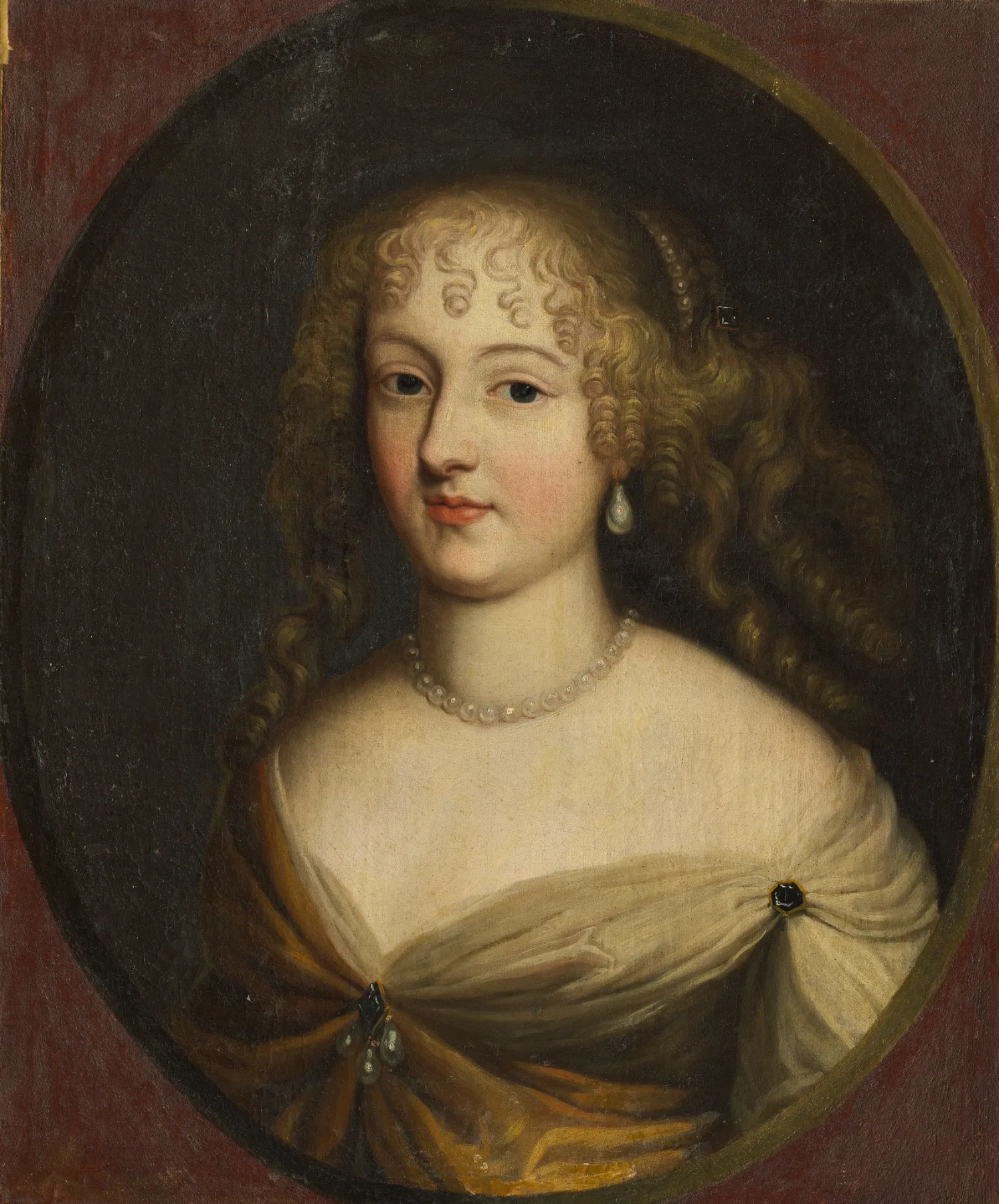
Her name was Ninon l'Enclos(1620 - 1705, another saying was 1615 - 1705), and she was born in 17th century, died in 18th century, lived for an extraordinary and extraordinarly long life. She came from a very humble family(according to Voltaire) or at best a family of middle class, but when she died, she was intimate friend of the most prominent men and women in the court, Madame de Maintenon, the secret second wife of King Louis XIV, and Queen of Sweden Christine among them, even the King himself acclaimed that Ninon de L'enclos was the best treasure of his court.
In her time, she was called "une femme complete" (a complete woman), she had beauty and brain, she was free minded and full of vitality, she loved both men and women and she was loved and even idolized by many, she writed and she writed beautifully. As a prolific letter, she has written many letters to Marquis de Sevigne, her protege, whom she was supposed to make into a real man, part of those letters were edited and translated into the book called Life, Letters, and Epicurean Philosophy of Ninon de L'Enclos by Robinson Overton.
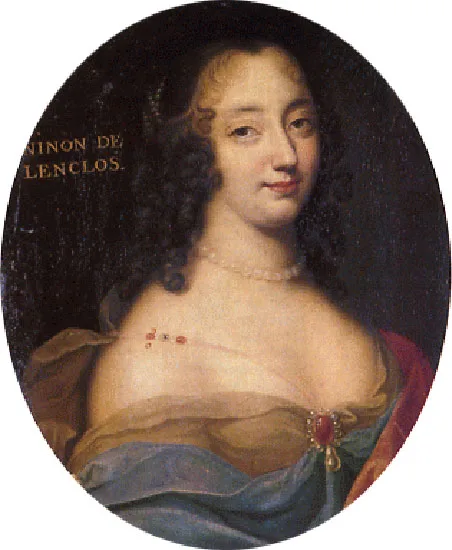
"The very atmosphere which surrounded the young girl, and which she soon learned to breathe in deep, pleasurable draughts, was surcharged with the intoxicating oxygen of freedom of action, liberality, and unrestrained enjoyment.
While still very young she was introduced into a select society of the choicest spirits of the age and speedily became their idol, a position she continued to occupy without diminution for over sixty years.
No one of all these men of the world had ever seen so many personal graces united to so much intellectuality and good taste.
Ninon’s form was as symmetrical,elegant and yielding as a willow; her complexion of a dazzling white, with large sparkling eyes as black as midnight, and in which reigned modesty and love, and reason and voluptuousness.
Her teeth were like pearls, her mouth mobile and her smile most captivating, resistless and adorable.
She was the personification of majesty without pride or haughtiness, and possessed an open, tender and touching countenance upon which shone friendship and affection.
Her voice was soft and silvery, her arms and hands superb models for a sculptor, and all her movements and gestures manifested an exquisite, natural grace which made her conspicuous in the most crowded drawing-room.
As she was in her youth, so she continued to be until her death at the age of ninety years, an incredible fact but so well attested by the gravest and most reliable writers, who testify to the truth of it, that there is no room for doubt.
Ninon attributed it not to any miracle, but to her philosophy, and declared that any one might exhibit the same peculiarities by following the same precepts.
We have it on the most undoubted testimony of contemporaneous writers, who were intimate with him, that one of her dearest friends and followers, Saint-Evremond, at the age of eighty-nine years, inspired one of the famous beauties of the English Court with an ardent attachment."
 "Entre l'amour et l'amitié, mon cœur ne balance jamais"
 And what about her writing? Again, an important man who had lived in her own time, and witnessed her epistolary style, the celebrated Abbe de Chateauneuf, in his Dialogues on Ancient Music expressed it the best: (He refered to Ninon as Leontium, a name given to her by le Marechal de Saint-Evremond)
"The letters of Leontium, although novel in their form of expression, although replete with philosophy, and sparkling with wit and intelligence contain nothing stilted, or overdrawn.
Inasmuch as the moral to be drawn from them is always seasoned with sprightliness, and the spirit manifested in them, displays the characteristics of a liberal and natural imagination, they differ in nothing from personal conversation with her choice circle of friends.
The impression conveyed to the mind of their readers is, that she is actually conversing with them personally."
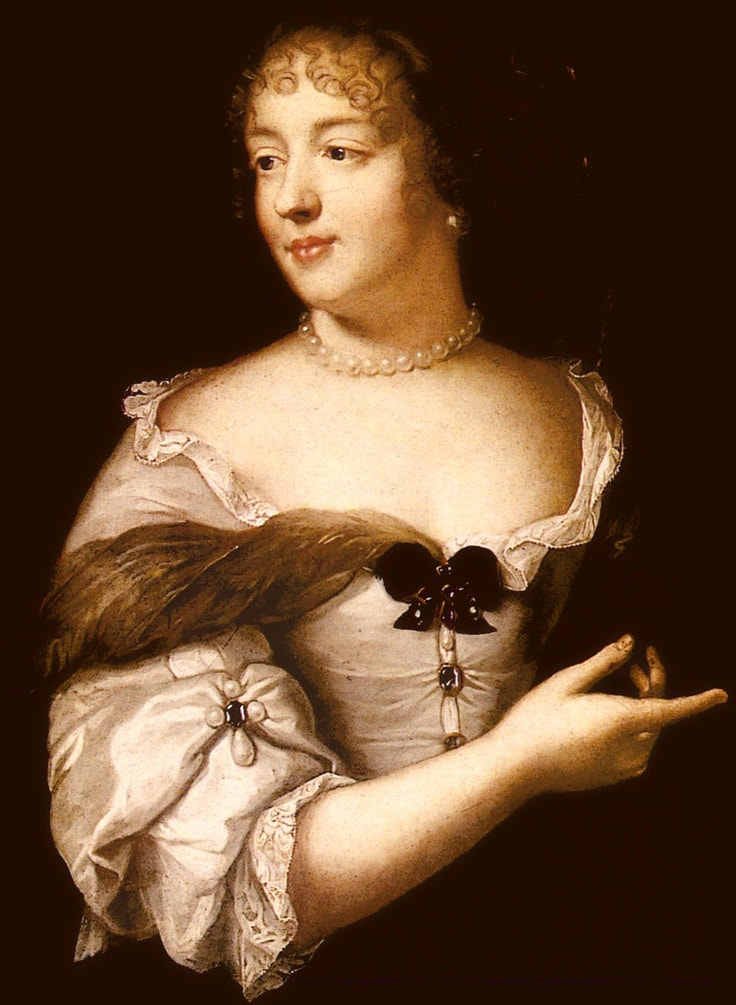 And one of her letters to Marquis de Sevigne, can very well served as a proof of such high complements:
"Since your entrance into the world it has offered you nothing, you say, of what you had imagined you would find there. Disgust and weariness follow you everywhere. You seek solitude, and as soon as you are enjoying it, it wearies you.
In a word, you do not know to what cause to attribute the restlessness which torments you.
I am going to save you the trouble, I am, for my burden is to speak my thoughts on everything that may perplex you; and I do not know but you will often ask me questions as embarrassing for me to answer as they may have been for you to ask.
The uneasiness which you experience is caused only by the void in your heart. Your heart is without love, and it is trying to make you comprehend its wants. You have really what one calls the “need of loving”
Yes, Marquis, nature, in forming us, gave us an allowance of sentiments which must expend themselves upon some object. Your age is the proper period for the agitations of love; as long as this sentiment does not fill your heart, something will always be wanting; the restlessness of which you complain will never cease.
In a word, love is the nourishment of the heart as food is of the body; to love is to fulfill the desire of nature, to satisfy a need. But if possible, manage it so that it will not become a passion.
To protect you from this misfortune, I could almost be tempted to disprove the counsel given you, to prefer, to the company of women capable of inspiring esteem rather than love, the intercourse of those who pride themselves on being amusing rather than sedate and prim. "
Even today, Ninon l'Enclos's writing looked crispy and her philosophy sparkled with wisdom still relevant today. Perhaps God is really unfair afterall, he sometimes would creat some masterpiece which is as perfect as Ninon de L'enclos, to show us that he does, exist.
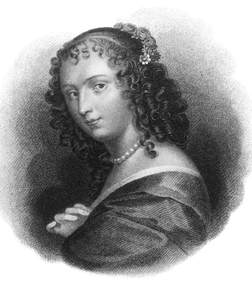 Il est plus difficile de bien faire l'amour que de commander des armées. It's more difficult to make love well than commanding an army