E-log
One dress one story: Jacqueline Kennedy in Versailles
18 December 2017
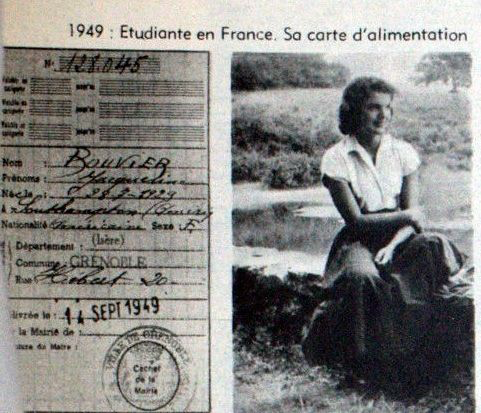
September 1949, Paris, France.
Jacqueline Bouvier was 20 years old, living at 78 Avenue Mozart, studying French history and language at the Sorbonne. She had to study in bed most of the time, wearing all her warm clothes, because her landlady, the widowed Comtesse de Renty — a survivor of a German concentration camp and a member of the French Resistance — could not afford to heat her house.
Only occasionally would Miss Bouvier put on her only fur coat, enjoying a swanky night at the Ritz.
For a girl who came from a privileged family in the peaceful United States, it was a completely new experience. But what she was studying — both the French language and French history — was not new to her.
French had been part of her school curriculum, and Jackie had always been fascinated by French history, more so after she learned of her family's possible French heritage.
And General de Gaulle was one of her French heroes.
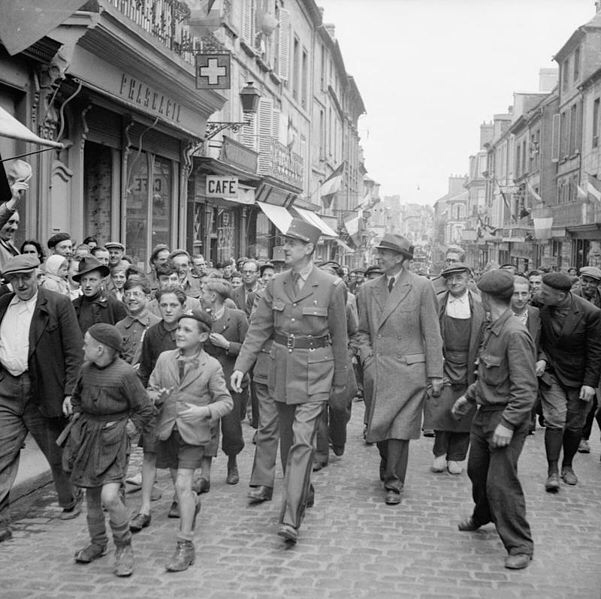
May 1961, Paris, France.
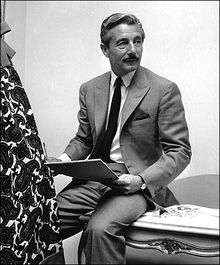
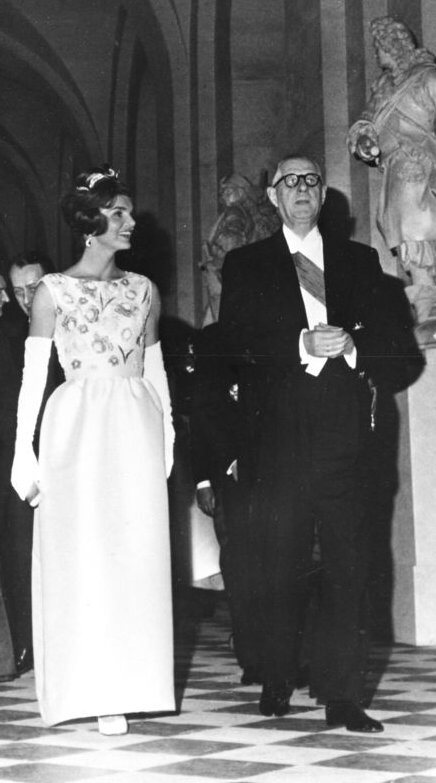
Jacqueline Bouvier had become Jacqueline Kennedy, not yet 32, wife of the 35th American president and mother of two children. She now had a large wardrobe and her own designer, Oleg Cassini, who was responsible for most of her official outfits.
And she was about to meet her childhood hero, Charles de Gaulle, the man who had liberated France.
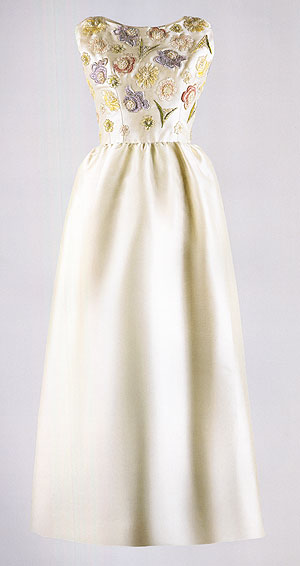
In the year and a half since becoming the youngest First Lady in American history, the fashion-conscious Jacqueline Kennedy had learned to compromise between her love of France — including French couture — and the political need to project a patriotic image to the American public. Her designer, Oleg Cassini, had learned to walk the line between designing and echoing some of her favourite French couturiers, like Hubert de Givenchy or Coco Chanel, including some of the outfits she had brought over in her own suitcases.
 |  |  |

January 1963, Washington, D.C., USA.
The Mona Lisa, the most famous painting by Leonardo da Vinci, arrived at the National Gallery in Washington, in the company of its guardian, André Malraux.
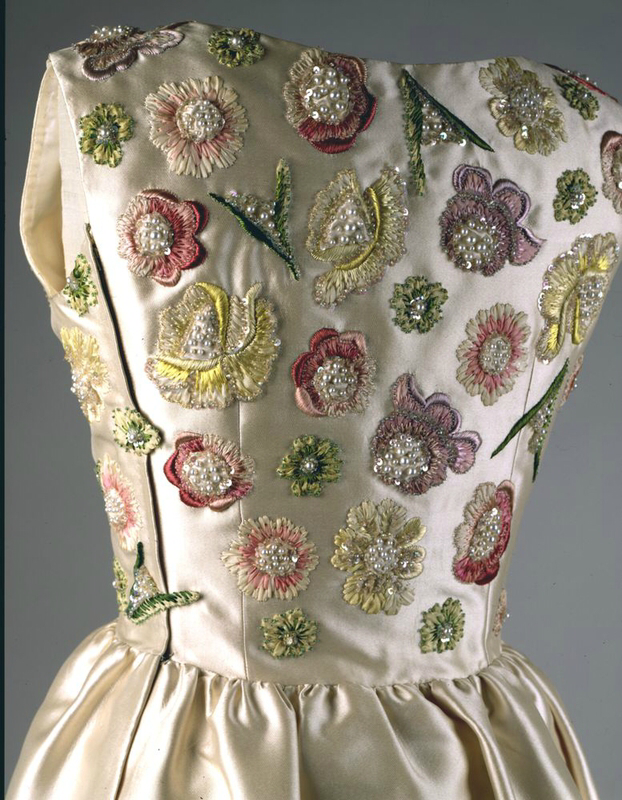
Jacqueline Kennedy, in a dress designed by a French man, touched his whole country, and she changed history.