E-log
One dress, one story: when Gigliola cinquetti first sang "Non ho l'età"
19 October 2017
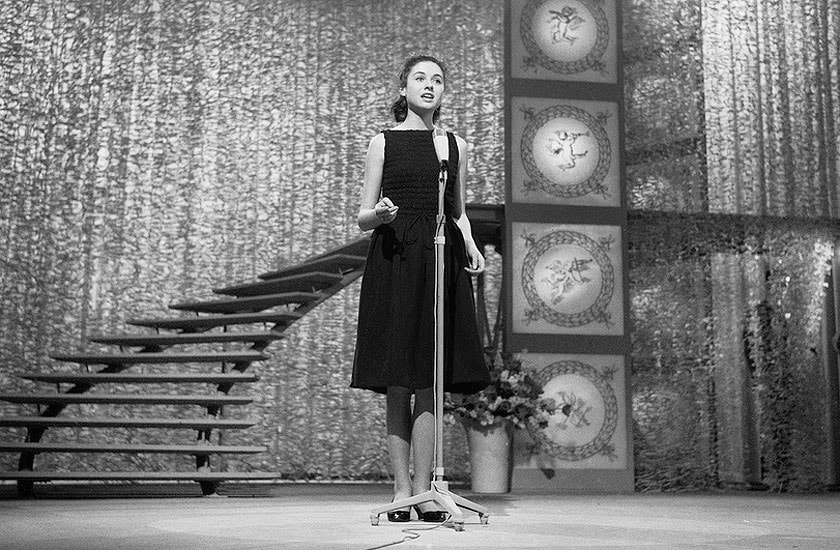
On the stage of the Eurovision Song Contest, an Italian girl, Gigliola Cinquetti (born 20 December 1947), sang the Italian song "Non ho l'età", wearing a dark navy or black sleeveless A-line dress of knee length, with the Sabrina collar (named after Audrey Hepburn's film of the same name, designed by French costume designer Hubert de Givenchy, who created most of Audrey's wardrobe for that film).
 |  audrey hepburn in film Sabrina wearing the dress of Sabrina collar designed by Hubert de Givenchy |
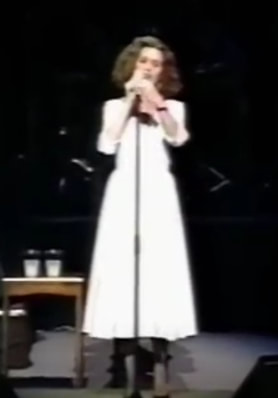
1993, Tokyo, Japan.
On the other side of the world, Gigliola Cinquetti sang this same song, her hair now loose and wavy, her voice much deeper and more mature — she was already a world-famous singer, and no longer young.
Even the dress she wore was completely different, just like she herself was.
Other than the A-line silhouette, everything else had changed: instead of black, it was white; instead of the very high Sabrina collar, it was a deep V-neck; instead of sleeveless, it had 3/4-length sleeves; and it was much longer, falling almost to her ankle.
What did not change, was that she still carried the same subtlety and elegance on stage, as she had almost thirty years earlier.
The song itself was very simple — a teenage girl's chaste philosophy of love — which sounds rare today, in an age when everything needs to happen right now, but which may have seemed just as unusual when Gigliola first sang it, in the era of the miniskirt and sexual freedom.
| Original LYRICS in Italian: Non ho l'età Non ho l'età, non ho l'età per amarti Non ho l'età per uscire sola con te E non avrei, non avrei nulla da dirti Perchè tu sai molte più cose di me Lascia ch'io viva un amore romantico Nell'attesa che venga quel giorno, ma ora no Non ho l'età, non ho l'età per amarti Non ho l'età per uscire sola con te Se tu vorrai, se tu vorrai aspettarmi Quel giorno avrai tutto il mio amore per te Lascia ch'io viva un amore romantico Nell'attesa che venga quel giorno, ma ora no Non ho l'età, non ho l'età per amarti Non ho l'età per uscire sola con te Se tu vorrai, se tu vorrai aspettarmi Quel giorno avrai tutto il mio amore... per te. | My translation: I am not old enough I am not old enough, not old enough to love you I am not old enough to go out with you alone And I would not, I would not have anything to tell you Because you know so much more about me Let me live a romantic love Waiting for that day to come, but not now I am not old enough, not old enough to love you I am not old enough to go out with you alone If you want, if you want to wait for me That day you would have all my love for you Let me live a romantic love Waiting for that day to come, but not now I am not old enough, not old enough to love you I am not old enough to go out with you alone If you want, if you want to wait for me That day you would have all my love... for you. |