Film & TV
Gone with the Wind (film, 1939) starring Vivien Leigh, Clark Gable, Olivia de Havilland and Leslie Howard
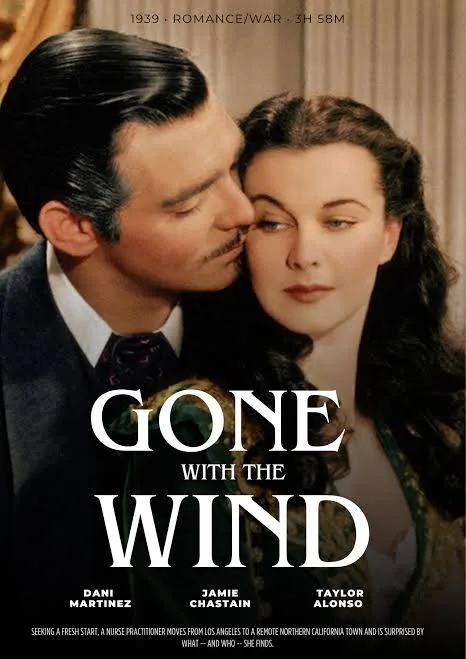
Gone with the Wind (1939) is an American epic historical romance directed by Victor Fleming and produced by David O. Selznick. Adapted from American writer Margaret Mitchell's novel Gone with the Wind (1936), it follows the determined Scarlett O'Hara as the American Civil War destroys the privileged world in which she was raised.
Vivien Leigh and Clark Gable lead a vast cast as Scarlett O'Hara and Rhett Butler, two people equally gifted at survival and disastrously unsuited to surrender. Their turbulent romance unfolds through war, hunger, bereavement, business, marriage, and the long collapse of Scarlett's illusion that she loves Ashley Wilkes.
The film remains one of the defining spectacles of Hollywood's Golden Age. Its color, costumes, music, performances, and enormous scale continue to command attention. Its romantic picture of the Old South and its treatment of slavery have also made it one of American cinema's most enduringly controversial classics.
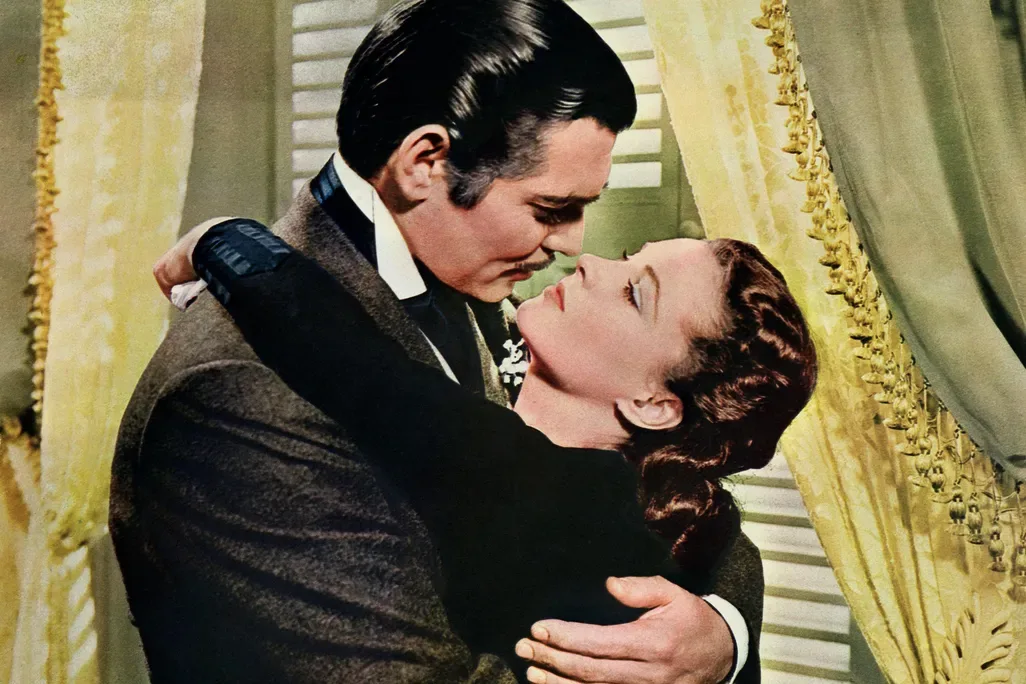
Plot
In Georgia in 1861, sixteen-year-old Scarlett O'Hara lives at Tara, the prosperous cotton plantation of her parents, Gerald O'Hara and Ellen O'Hara. Beautiful, spoiled, and fiercely competitive, Scarlett enjoys the devotion of nearly every young man in the county.
Scarlett wants only Ashley Wilkes, the thoughtful heir to the neighboring plantation of Twelve Oaks. Her confidence collapses when she learns that Ashley Wilkes is to marry his gentle cousin, Melanie Hamilton.
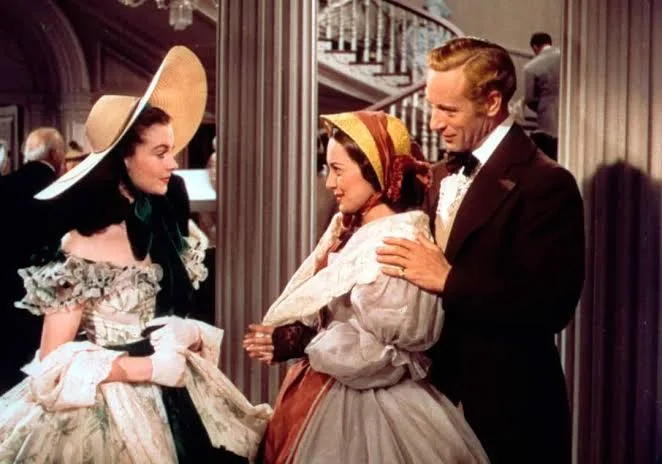
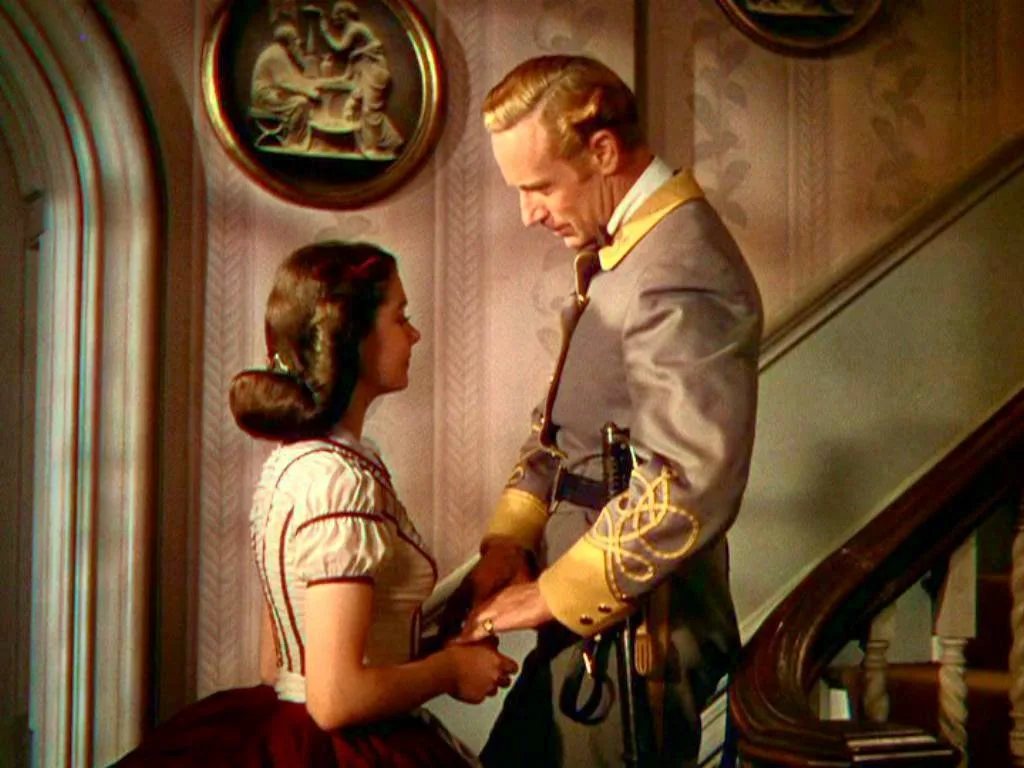
Vivien Leigh with Olivia de Havill and Leslie Howard in film Gone with the Wind(1939)
At a barbecue at Twelve Oaks, Scarlett privately declares her love to Ashley Wilkes. Ashley admits that he cares for her, but insists that they would make each other unhappy. Scarlett strikes him in fury, then discovers that the amused Rhett Butler has overheard the entire exchange.
News arrives that war has begun. The young Southern men rush to enlist, certain that victory will come quickly. Hurt by Ashley Wilkes and hungry for revenge, Scarlett accepts a proposal from Melanie Hamilton's brother, Charles Hamilton.
Scarlett becomes a widow soon after the wedding when Charles Hamilton dies during military service. She gives birth to their son, Wade Hampton Hamilton, but dislikes the restrictions of mourning and feels trapped by a marriage she entered without love.
Scarlett goes to Atlanta to stay with Melanie Hamilton and Sarah Jane Hamilton, known as Aunt Pittypat. There she meets Rhett Butler again. Rhett has become a wealthy blockade runner who sees through Scarlett's performance of grief and delights in provoking her.
At a wartime charity ball, Rhett Butler shocks Atlanta society by paying for the privilege of dancing with the widowed Scarlett. She accepts with delight. Beneath her black mourning dress, Scarlett's appetite for life has never disappeared.
The war turns against the Confederacy. Atlanta fills with wounded soldiers, shortages, fear, and death. Scarlett remains beside the pregnant Melanie because Ashley Wilkes has asked her to look after his wife.
As Union forces close in, Melanie goes into labor. With no doctor available, Scarlett and the terrified Prissy deliver the baby themselves. Scarlett then sends for Rhett Butler and demands that he take Melanie, the newborn child, Prissy, and herself out of the burning city.
Rhett guides them through the flames and chaos. Outside Atlanta, he suddenly decides to join the retreating Confederate army. He leaves Scarlett with a horse, a wagon, and a pistol, forcing her to complete the journey to Tara alone.
Scarlett reaches Tara to find the house standing but stripped of almost everything. Her mother Ellen O'Hara has died of typhoid, her father Gerald O'Hara has lost his reason, and Scarlett's sisters are ill. The fields are ruined, the food is gone, and the surviving family members and former servants face starvation.
The pampered girl begins to disappear. Scarlett works the land, picks cotton, fights hunger, and kills a Union deserter who enters the house. Standing beneath the open sky, she vows that she will never be hungry again, whatever she must do to survive.
After the war, crushing taxes threaten Tara. Scarlett tries once more to persuade Ashley Wilkes to run away with her, but Ashley tells her that she loves Tara more than she understands.
Scarlett travels to Atlanta to ask Rhett Butler for money. She turns green velvet curtains into an elaborate dress so that Rhett will believe she is still prosperous. Rhett notices her rough, work-worn hands and understands the deception, but he cannot help because he is being held in prison.
On her way home, Scarlett meets Frank Kennedy, the older merchant promised to her sister Suellen O'Hara. Learning that Frank has money, Scarlett lies that Suellen has lost interest in him. She marries Frank and uses his resources to save Tara.
Scarlett enters the lumber business and proves more ruthless and capable than the men around her. She persuades Ashley Wilkes to manage one of her mills, keeping him close while convincing herself that he still represents the life she wants.
After Scarlett is attacked while traveling through a dangerous shantytown, Frank Kennedy and Ashley Wilkes join a secret retaliatory raid. Frank is killed. Rhett Butler saves the surviving men from arrest by creating an alibi with the help of Belle Watling, the shrewd and generous owner of an Atlanta brothel.
Rhett soon asks the widowed Scarlett to marry him. He offers wealth, travel, pleasure, and the freedom to be exactly what she is. Scarlett accepts, though she remains emotionally attached to Ashley Wilkes.
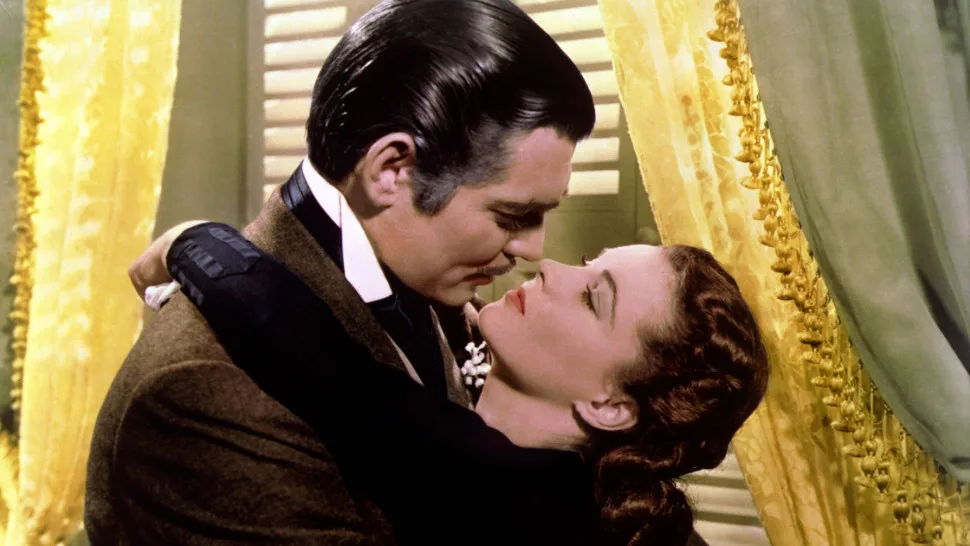
Vivien Leigh and Clark Gable in film Gone with the Wind (1939)
Scarlett and Rhett build a magnificent house in Atlanta and have a daughter, Eugenie Victoria Butler, called Bonnie Blue Butler. Rhett adores Bonnie and tries to give her the social acceptance that Scarlett's conduct has placed at risk.
Their marriage slowly becomes a contest of pride. Rhett knows that Scarlett still dreams of Ashley. Scarlett refuses to recognize how deeply she has come to depend on Rhett.
Scarlett becomes pregnant again, but an angry confrontation ends with her falling down the staircase and losing the child. Before the marriage can recover, Bonnie dies while trying to jump a fence on her pony.
Rhett is destroyed by grief. Melanie Hamilton Wilkes, already weak and pregnant again, comes to comfort him. The effort worsens her condition, and she soon collapses.
On her deathbed, Melanie asks Scarlett to care for Ashley Wilkes and their son, Beau. Melanie also asks Scarlett to be kind to Rhett, revealing that she has always understood more than Scarlett realized.
After Melanie dies, Scarlett finally sees Ashley clearly. His love belonged to Melanie, while Scarlett had spent years pursuing a dream. The man Scarlett truly loves is Rhett Butler.
Scarlett rushes home, but the realization comes too late. Rhett is exhausted by death, disappointment, and the long struggle to be loved. He leaves Scarlett despite her pleas.
Alone on the staircase, Scarlett thinks of Tara. The land has sustained her before, and she believes it can give her strength again. She resolves to return home and find a way to bring Rhett back, because "tomorrow is another day."
Cast
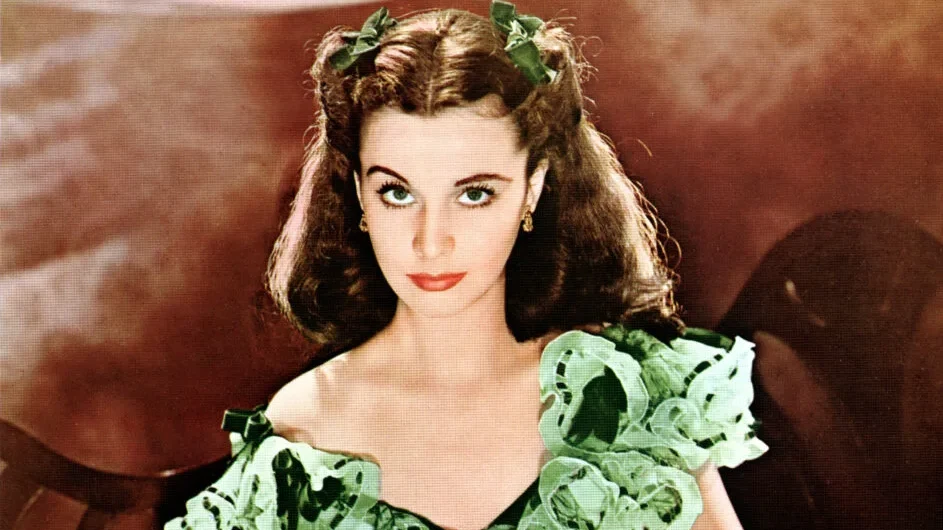
Vivien Leigh as Scarlett O'Hara
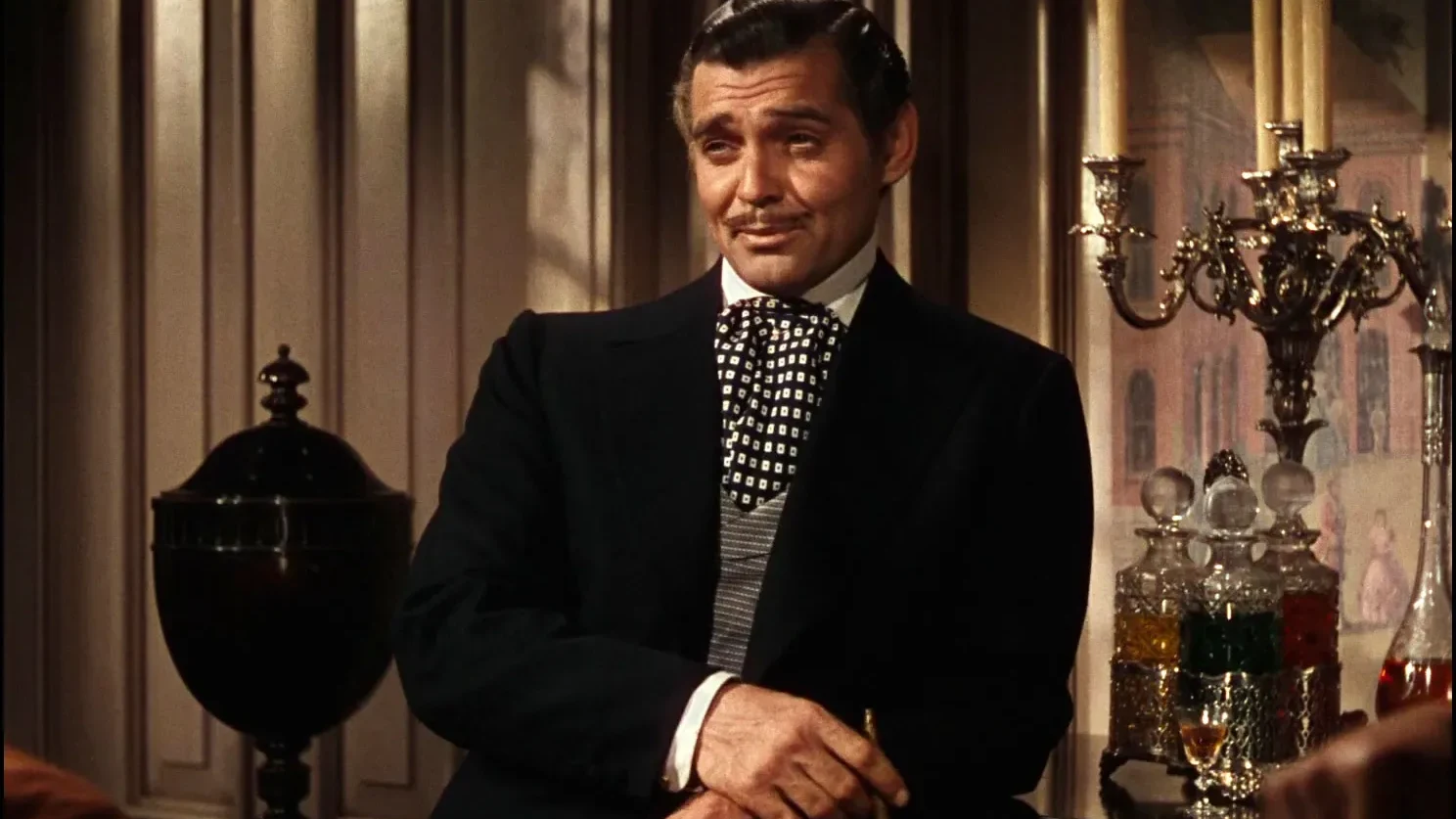
Clark Gable as Rhett Butler
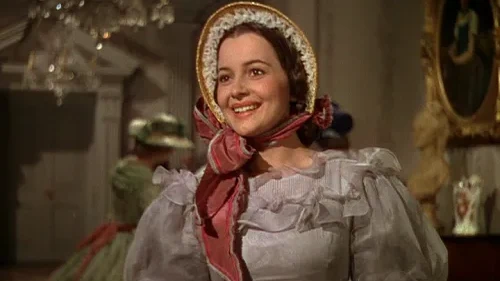
Olivia de Havilland as Melanie Hamilton Wilkes
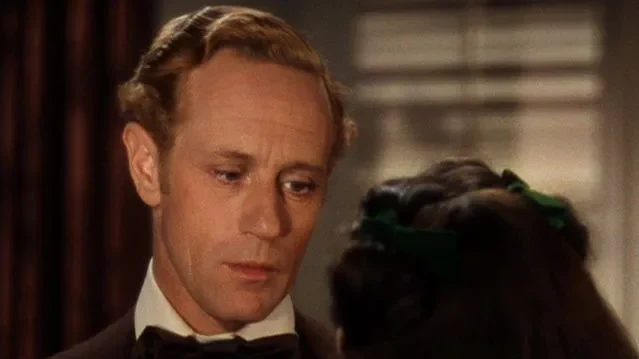
Leslie Howard as Ashley Wilkes
Hattie McDaniel as Mammy
Thomas Mitchell as Gerald O'Hara
Barbara O'Neil as Ellen O'Hara
Evelyn Keyes as Suellen O'Hara
British actress Vivien Leigh carries almost the entire film as Scarlett O'Hara. Her performance moves from flirtatious comedy to fear, hunger, calculation, physical endurance, and belated heartbreak. Scarlett may behave selfishly, yet Vivien Leigh makes her will to live impossible to dismiss.
American actor Clark Gable gives Rhett Butler worldly ease and a dangerous sense of amusement. Rhett observes the myths of Southern society from the outside, but his apparent cynicism hides a deep need for family and acceptance.
British actress Olivia de Havilland plays Melanie Hamilton Wilkes without turning kindness into weakness. Melanie's courage is quiet but decisive. She survives childbirth during a siege, protects Scarlett after a killing, and remains the one person capable of seeing both Scarlett and Rhett with generosity.
British actor Leslie Howard gives Ashley Wilkes the melancholy of a man who belongs to a vanished order. Ashley is less a heroic lover than the beautiful illusion Scarlett refuses to release.
American actress Hattie McDaniel brings authority, humor, and emotional intelligence to Mammy. The role is constrained by the racial stereotypes of its era, but Hattie McDaniel's presence gives the character a force that repeatedly unsettles the household's supposed hierarchy.
Production
Producer David O. Selznick bought the film rights to Margaret Mitchell's novel in 1936. The book had become an immediate sensation, and the proposed adaptation soon grew into a national obsession. Newspapers, radio programs, and readers argued over who could possibly embody Scarlett O'Hara and Rhett Butler.
Clark Gable was the public favorite for Rhett, but he was under contract to Metro-Goldwyn-Mayer. David O. Selznick secured Gable through a costly agreement that brought Metro-Goldwyn-Mayer into the production as financier and distributor.
Scarlett proved far more difficult. Famous actresses including Bette Davis, Katharine Hepburn, Tallulah Bankhead, Joan Crawford, Jean Arthur, and Paulette Goddard were discussed, considered, or tested. Hundreds of unknown women were also interviewed during a search that became publicity on an unprecedented scale.
The production began its most spectacular sequence before Scarlett had been chosen. On 10 December 1938, old studio sets were set ablaze to create the burning of Atlanta. The destruction included the enormous gate built for King Kong (1933).
Every available Technicolor camera in Los Angeles was reportedly used to capture the fire. Stand-ins represented Scarlett and Rhett from a distance, since the leading actress had not yet been cast.
That night, talent agent Myron Selznick brought British actress Vivien Leigh to meet his brother, David O. Selznick. The image has become Hollywood legend: a young actress presented as a possible Scarlett while the false Atlanta burned behind her.
Vivien Leigh was not entirely unknown to the producer, but the encounter gave the story its perfect dramatic entrance. After screen tests, the role that had inspired years of public speculation went to a twenty-five-year-old Englishwoman.
The screenplay created a different crisis. American playwright Sidney Howard had to compress Margaret Mitchell's enormous novel into a film of manageable length. Many writers later worked on revisions, including American screenwriter Ben Hecht, but Sidney Howard alone received screen credit.
The production passed through several directors. American film director George Cukor spent years preparing the film and directed its early scenes, but left after disagreements with David O. Selznick. American film director Victor Fleming took over and received sole screen credit.
When exhaustion forced Victor Fleming to step away temporarily, American film director Sam Wood continued the work. George Cukor's touch did not disappear completely. Some of his footage remained, and Vivien Leigh and Olivia de Havilland privately continued seeking his guidance on their performances.
David O. Selznick supervised every detail through a famous flood of memoranda. The result carries Victor Fleming's name as director, but its final form reflects the competing hands of several filmmakers under Selznick's relentless control.
American production designer William Cameron Menzies planned the film visually before much of it was shot. His watercolor storyboards mapped compositions, movement, lighting, and color. American art director Lyle Wheeler translated that plan into Tara, Twelve Oaks, wartime Atlanta, and the monumental landscapes of ruin.
The sets create two contrasting worlds. Before the war, interiors glow with polished wood, flowers, chandeliers, silver, and ceremonial abundance. Afterward, broken windows, stripped rooms, bare fields, and improvised objects show how quickly grandeur can become hunger.
The camera often makes Scarlett appear small against the forces surrounding her. She stands beneath red skies, crosses a field of wounded soldiers, and walks through architectural remains that dwarf private suffering. The film turns history into spectacle, then places one woman's will at its center.
American costume designer Walter Plunkett began work before the leading actors had been chosen. He designed thousands of garments for principal players, supporting performers, and extras. The clothes had to cover years of war and social upheaval while making Scarlett's changing fortunes visible at a glance.
Scarlett begins in pale fabrics, ribbons, ruffles, and wide skirts suited to a wealthy young belle. War strips away that freshness. Her clothes become darker, leaner, and more purposeful as charm gives way to survival.
The green curtain dress remains the film's most celebrated costume. Scarlett takes velvet draperies from Tara and has Mammy turn them into a fashionable gown, complete with a hat trimmed by curtain cord. The joke is exquisite, but the scene is not merely comic. Scarlett dresses herself in the last beauty of a ruined house and walks into Atlanta wearing desperation as grandeur.
Walter Plunkett later observed that the dress became famous because it makes a story point. It does more than decorate Scarlett. It reveals her imagination, nerve, dishonesty, and refusal to appear defeated.
Scarlett's burgundy dress serves the opposite purpose. Rhett forces her to wear the dangerously vivid gown to Ashley Wilkes's birthday party after a compromising embrace has been witnessed. The dress turns shame into theater. Scarlett enters the room not disguised, but displayed.
Austrian-born American composer Max Steiner wrote a vast orchestral score that gives the story much of its emotional continuity. "Tara's Theme" binds Scarlett to the land more powerfully than any of her romantic declarations. The melody returns as home, memory, loss, and promise.
The score also had to hold together an unusually long and complicated film. Max Steiner used recurring themes for people, places, and emotions, allowing the music to carry connections across years of narrative and nearly four hours of screen time.
The production was expensive, difficult, and often chaotic. It consumed years of preparation, changing scripts, enormous sets, multiple directors, vast crowds, fire effects, matte paintings, and demanding Technicolor photography. The chaos is largely invisible on screen. What remains is an image of absolute control.
Release/Reception
Gone with the Wind received its world premiere at Loew's Grand Theatre in Atlanta on 15 December 1939. The city treated the occasion as a civic festival, with parades, decorations, crowds, and the arrival of Vivien Leigh, Clark Gable, Olivia de Havilland, David O. Selznick, and Margaret Mitchell.
The glamour of the premiere carried an ugly exclusion. Georgia's segregation laws and the decisions surrounding the event kept the film's Black cast members away. Hattie McDaniel, whose performance would soon make history, was not allowed to share the Atlanta celebration.
The film became a major critical and commercial event. Audiences responded to its size, color, romance, performances, and sense of historical upheaval. It continued to draw crowds through repeated theatrical releases and became one of the most commercially successful films ever made.
At the 12th Academy Awards, the film won eight competitive awards, including Outstanding Production, Best Director for Victor Fleming, Best Actress for Vivien Leigh, and Best Screenplay for Sidney Howard. William Cameron Menzies also received a special award for the dramatic use of color.
Hattie McDaniel won Best Supporting Actress and became the first Black performer to win an Academy Award. Even that triumph reflected the segregation of the period. At the ceremony in Los Angeles, Hattie McDaniel and her escort were seated apart from the film's white cast and filmmakers.
The film's technical achievements have retained their power. The burning of Atlanta, the wounded soldiers spread across the railway yard, Scarlett's silhouette against the red sky, Walter Plunkett's costumes, and Max Steiner's music remain part of cinema's visual and emotional memory.
Its view of history demands a different response. The film romanticizes the plantation South, softens the violence of slavery, and presents Black characters through stereotypes created for white audiences. The Civil War becomes a tragedy primarily because Scarlett's social world is destroyed, while the freedom of enslaved people remains outside the emotional center of the story.
That contradiction is inseparable from the film's legacy. Gone with the Wind is both a masterpiece of Hollywood craft and a distorted vision of American history. Its beauty does not erase its mythology, and its mythology does not make its artistry disappear.
The film was selected for the first group of titles added to the United States National Film Registry in 1989. Decades after its premiere, it remains admired, argued over, reinterpreted, and watched. Few films reveal so clearly how cinema can create a magnificent dream, or why a magnificent dream must still be examined when the lights come up.
Where to watch Gone with the Wind online
It is available to rent or purchase digitally through:
Apple TV Store
Rakuten TV
Amazon Video
Streaming availability changes over time and may vary by subscription plan.