People
Madeleine Françoise Basseporte (28 April 1701 – 6 September 1780)
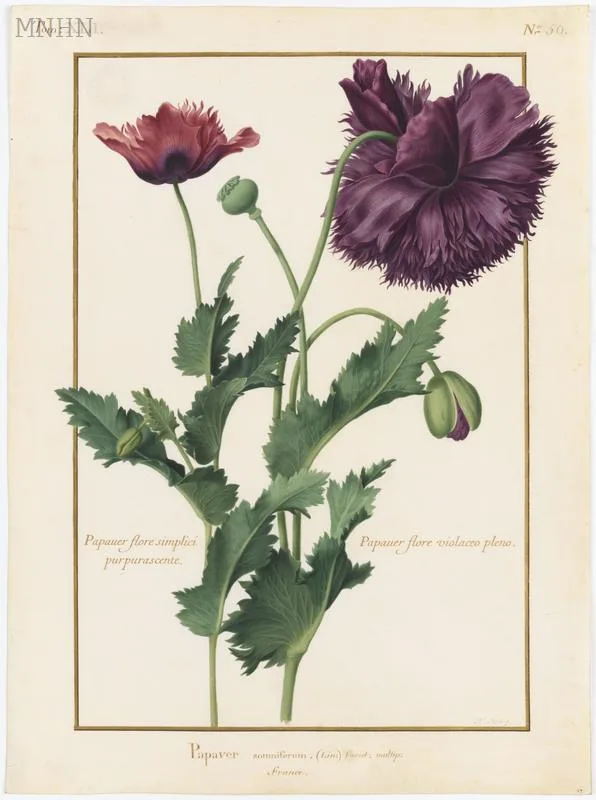
Madeleine Françoise Basseporte (28 April 1701 – 6 September 1780) was a French painter who served for nearly forty years as Peintre du Roi — official painter to the King's Garden and Cabinet, now the Jardin des Plantes — becoming, in 1741, the first woman ever to hold the post. Renowned for the precision of her botanical watercolors, she taught flower painting to the daughters of Louis XV, and is thought to have mentored the future académiciennes Marie-Thérèse Reboul and Anne Vallayer-Coster.
Biography
Madeleine Françoise Basseporte was born on the Île Saint-Louis in Paris on 28 April 1701, the daughter of a wine merchant.
Her father's business failed, and he died not long after. Basseporte was left to support herself and her mother, and turned early to whatever artistic talent she had.
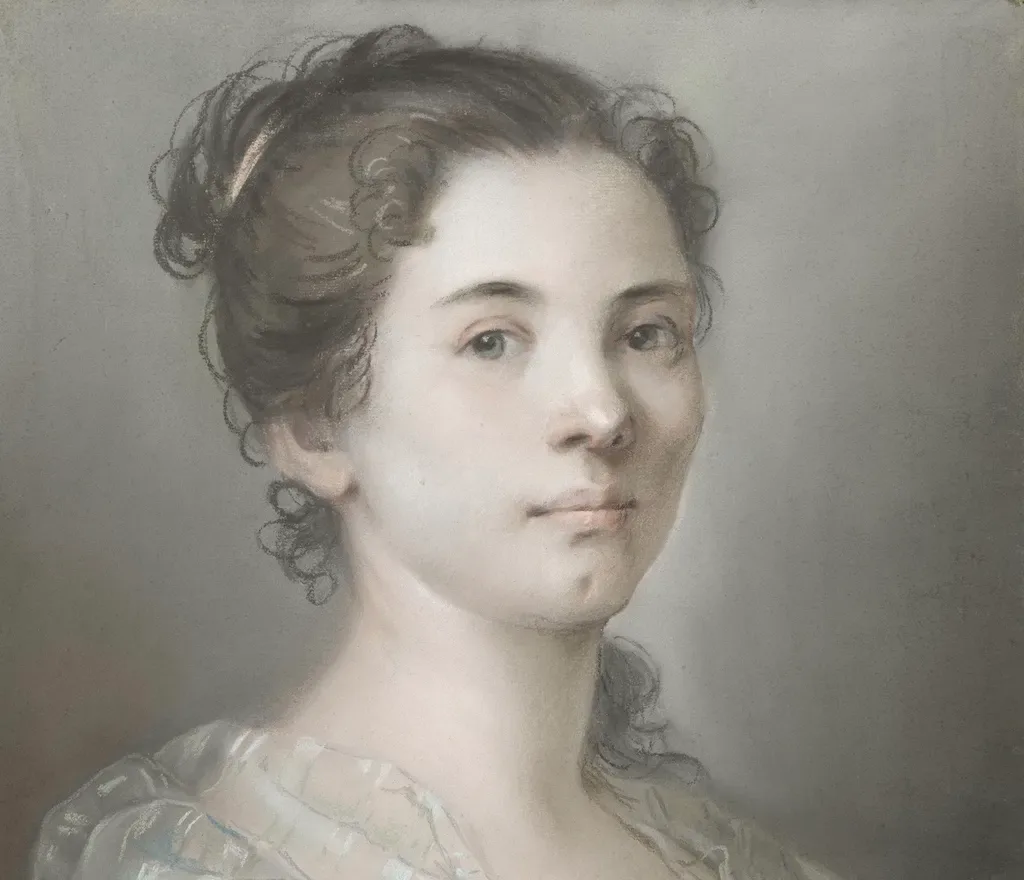
She opened an art school for girls in the Marais and took on portrait commissions, showing real skill in pastel.
Her first teacher, Paul-Ponce-Antoine Robert, enjoyed the patronage of the Cardinal de Rohan, and through him Basseporte gained access to the old masters hanging in the Hôtel de Soubise and the Palais-Royal — an education that left her especially drawn to the work of the Venetian portraitist Rosalba Carriera.
In 1726, after Robert's death, Basseporte began studying under Claude Aubriet, the reigning official painter of the Jardin du Roi.
The move required her to abandon pastel almost entirely for watercolor, and to trade the softness of portraiture for something far more exacting: a precise, near-photographic rendering of plant life, accurate enough to serve science as much as art.
For nearly ten years, Basseporte worked for Aubriet without pay. He signed his own name to pieces that were substantially, sometimes entirely, hers, and kept the money that came with them.
By 1735 Basseporte had secured the right to succeed Aubriet outright. In 1741, as his health failed, she formally took over the post of Peintre du Roy, de son Cabinet et du Jardin — Painter to the King, his Cabinet, and his Garden — becoming the first woman ever to hold it.
When Aubriet eventually died, Basseporte briefly considered pursuing his estate for compensation, then withdrew the claim rather than press the matter further — the only woman employed at the Jardin, and perhaps unwilling to risk the position she had spent a decade earning.
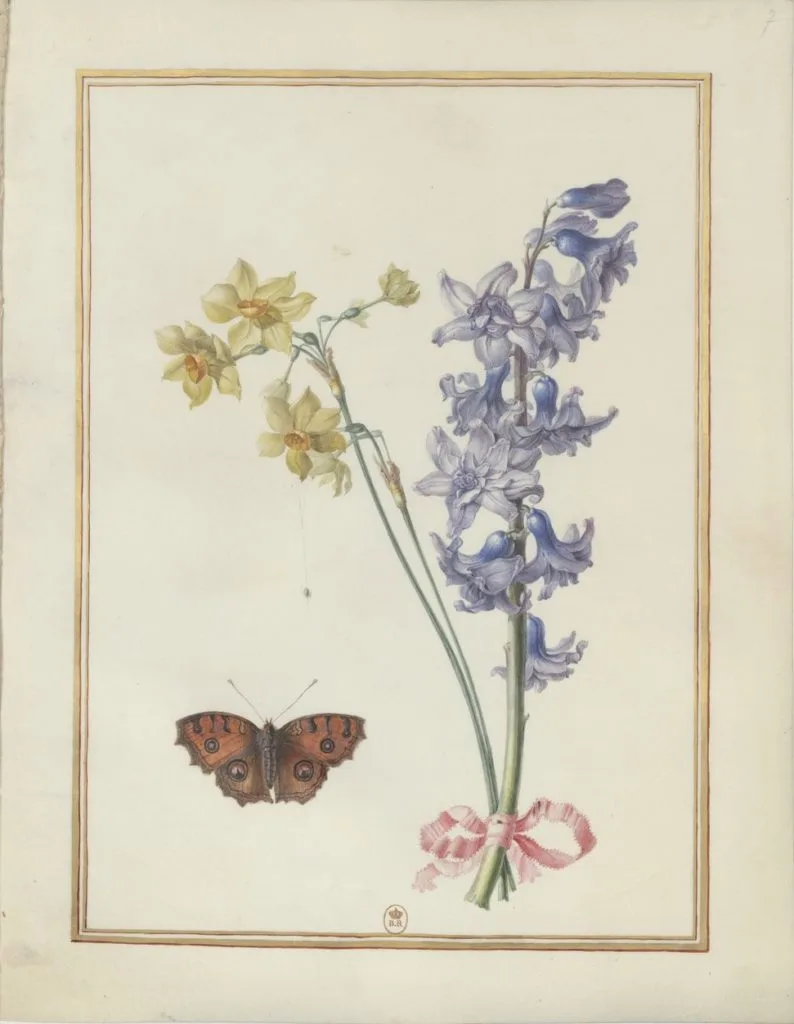
Her particular gift lay in combining scientific exactness with real visual drama. Art historians describe her botanical watercolors as marrying precise anatomical description with what one museum catalogue called "dazzling illusionism": Basseporte didn't just record a flower's outline, she dissected specimens to reveal the structure beneath the petals, then rendered the whole thing with enough light and shadow to make it look almost sculptural on the page.
The philosopher Jean-Jacques Rousseau put the achievement more simply. "Nature gives plants their existence," he said, "but Mademoiselle Basseporte gives them their preservation."
The post required her to deliver twelve finished paintings to the Crown every year, adding continually to Les Vélins du Roi, the centuries-old royal collection of botanical and zoological vellums begun under Louis XIII.
She also traveled regularly to Versailles, Compiègne, Fontainebleau, and Bellevue, to document the plant and animal collections Louis XV and Madame de Pompadour kept at each residence.
Her working life put her in direct contact with the great naturalists of the Enlightenment. She met the Swedish botanist Carolus Linnaeus in the 1730s, studied botany under Bernard de Jussieu, and kept up a correspondence with Georges-Louis Leclerc, Comte de Buffon, for the whole of his directorship of the Jardin.
Basseporte also taught — most notably, the daughters of Louis XV, who kept lifelong interests in both art and botany because of her.
She is believed to have given informal lessons as well to two young women who would go on to become académiciennes in their own right: Marie-Thérèse Reboul, who followed her into natural-history painting, and Anne Vallayer-Coster, whose own precise, light-filled still lifes carry an unmistakable trace of the same discipline Basseporte spent a lifetime perfecting.
Basseporte held the post for nearly forty years, until her death in Paris on 6 September 1780, at seventy-nine. She is said to have died, fittingly, with a paintbrush still in her hand.