Mode
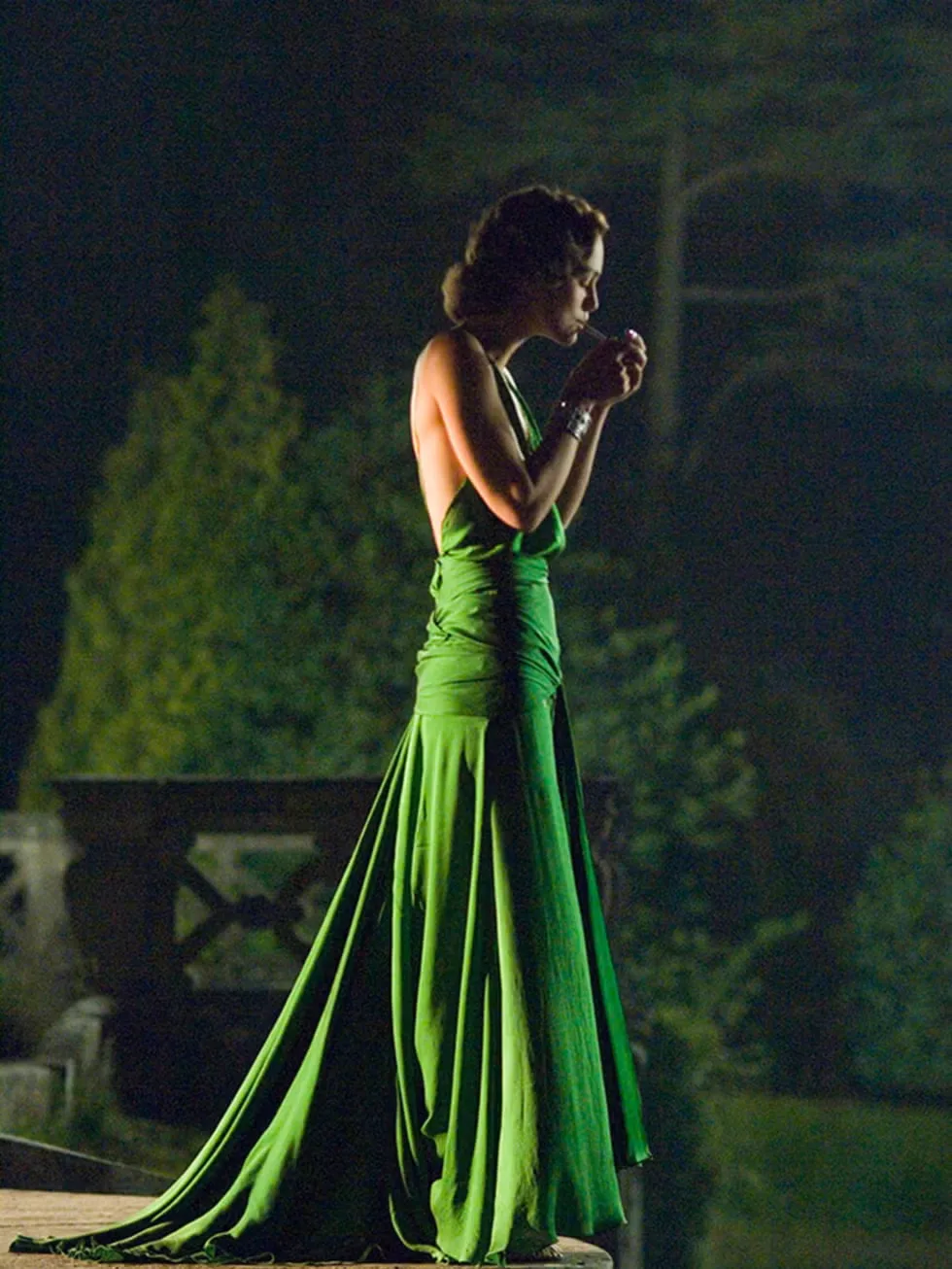
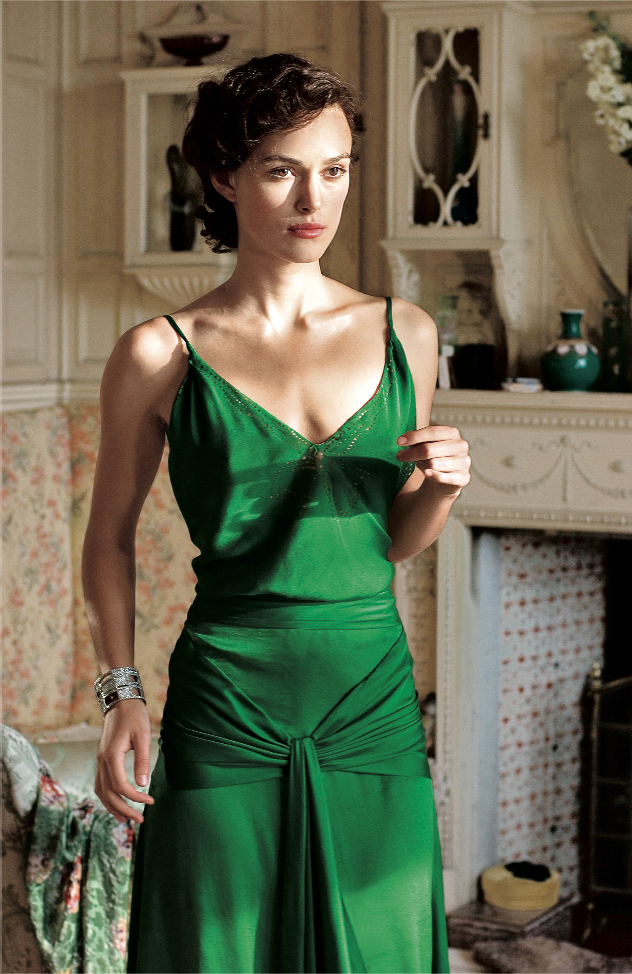
Iconic look: Keira Knightley's green dress in Atonement (film, 2007)
"We wanted the fabric to be as light as possible because it was supposed to be the hottest day of summer." — Jacqueline Durran, costume designer
1935. England.
In Atonement (film, 2007), Keira Knightley, as Cecilia Tallis, came down to dinner on the hottest day of the summer in a backless gown of green silk by the costume designer Jacqueline Durran, with thin straps, a deep neckline, a drape knotted at the hip and a full, flowing skirt.
The film
Atonement (film, 2007) was directed by Joe Wright. It was based on the novel Atonement (novel, 2001) by the British writer Ian McEwan.
On a summer day in 1935, at her family's country house, 13-year-old Briony Tallis, played by Saoirse Ronan, sees her older sister Cecilia with Robbie Turner, the housekeeper's son, played by James McAvoy. She misunderstands what she sees.
That night, she accuses Robbie of a crime he did not commit. He is arrested, and the lovers are torn apart. Briony will spend the rest of her life trying to atone for it.
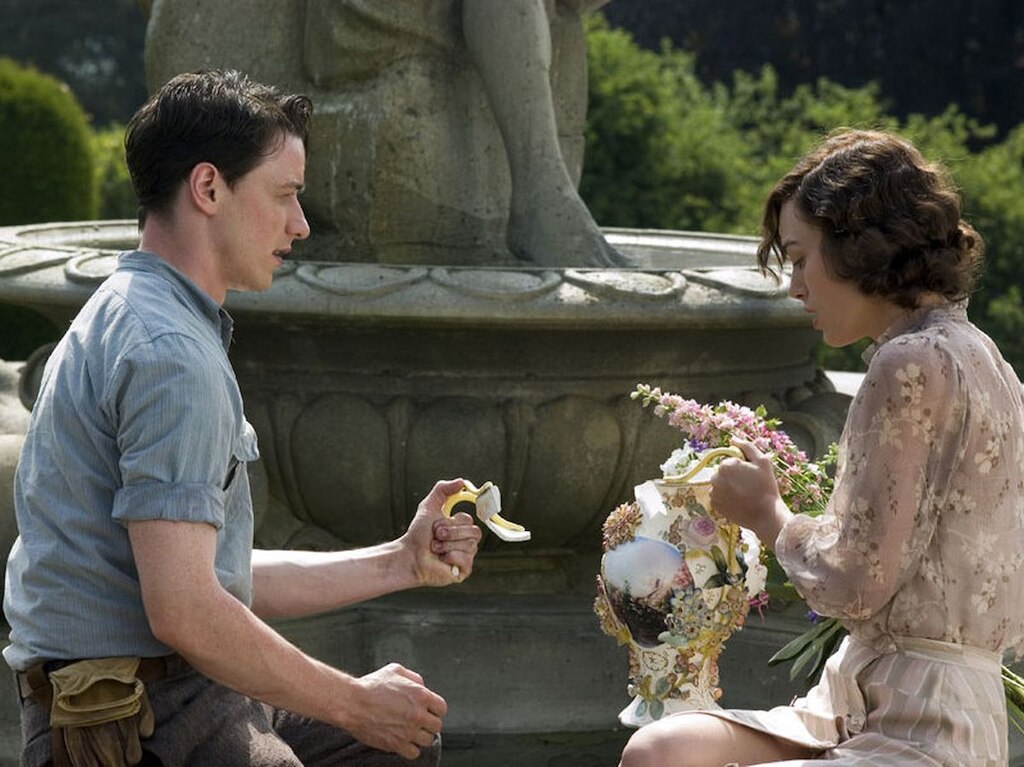
The film won the Golden Globe for Best Motion Picture (Drama), and the Oscar for Best Original Score. Jacqueline Durran was nominated for the Oscar for Best Costume Design.
The dress
Joe Wright asked Jacqueline Durran for a memorable dress for one of the film's turning points: the evening of the dinner, and the scene in the library, where Cecilia and Robbie make love.
He wanted it to be green, full-skirted, with movement at the hem, and right for the hottest day of the year.

"We wanted the fabric to be as light as possible because it was supposed to be the hottest day of summer," Jacqueline Durran said.
She bought the silk in white and had it dyed in different greens. Joe Wright chose three, and the final color was a blend of them.
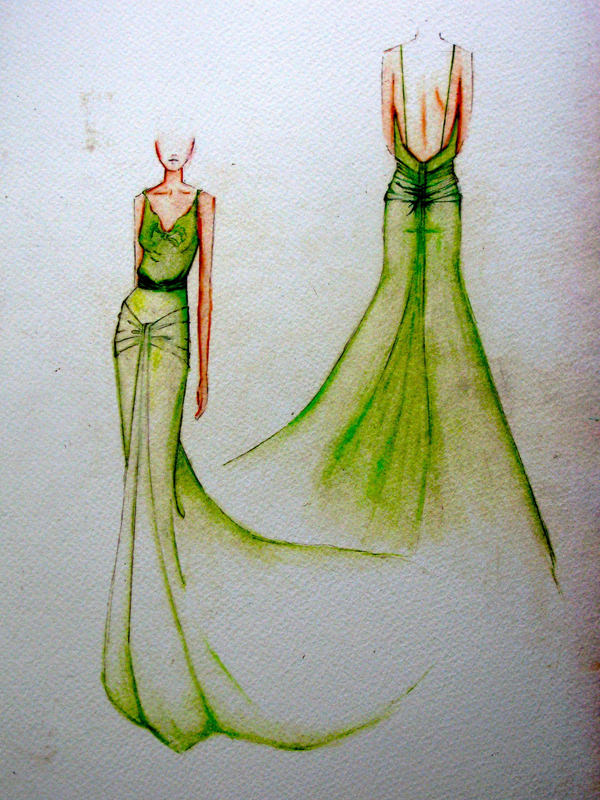
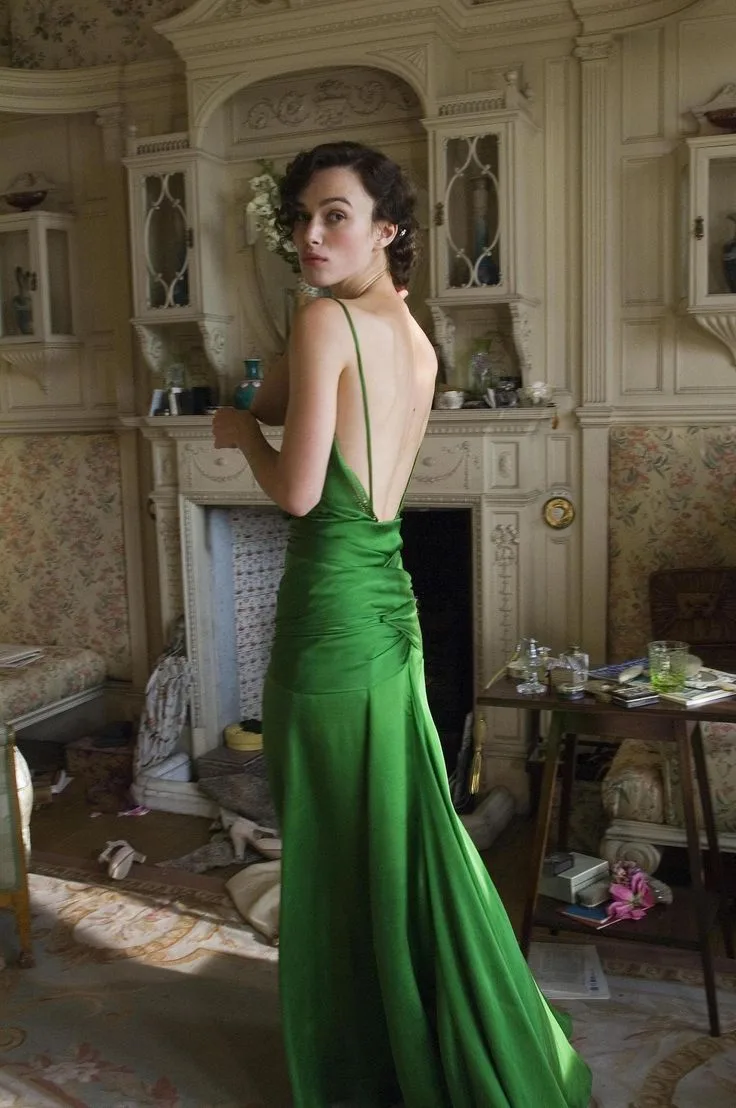
The gown was cut low at the front, with thin straps over bare shoulders. The back dropped very low. A drape of the same silk wrapped around the upper hip and was knotted at the front, above a slit, and the full skirt fell to the floor.

A 1930s dress, or a modern one?
Jacqueline Durran looked through fashion books of the 1920s and 1930s, among them the designs of Coco Chanel. She kept the elements that suited Keira Knightley's figure, and made them more modern.
"The details like the backlessness and the fullness of the skirt exist in a dress in the 30s, but not all together," she said.

The thin straps were perhaps the most modern touch. In the 1930s, such straps were seen more often on a lady's slip than on her evening gown.

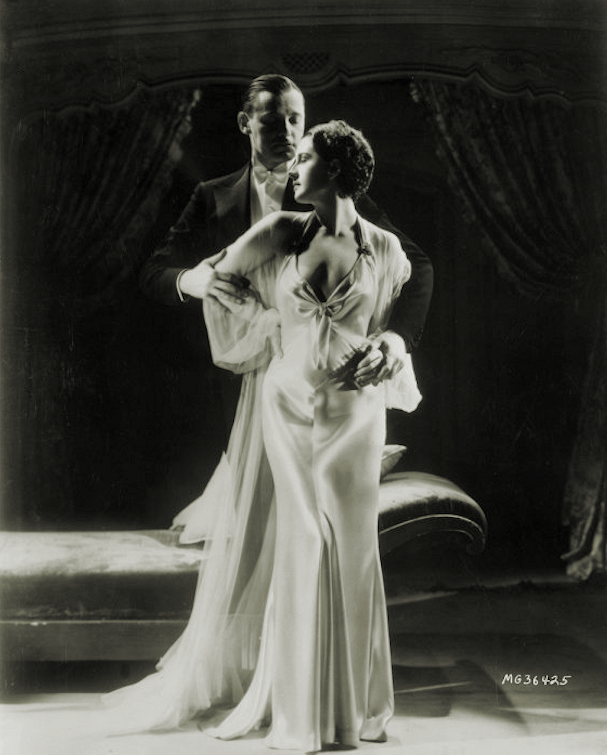
The bare back and the deep neckline, on the other hand, were already there in the 1930s. In Riptide (film, 1934), Norma Shearer played the wife of an English aristocrat. The MGM designer Gilbert Adrian, known simply as Adrian, dressed her in a backless gown with a plunging neckline.


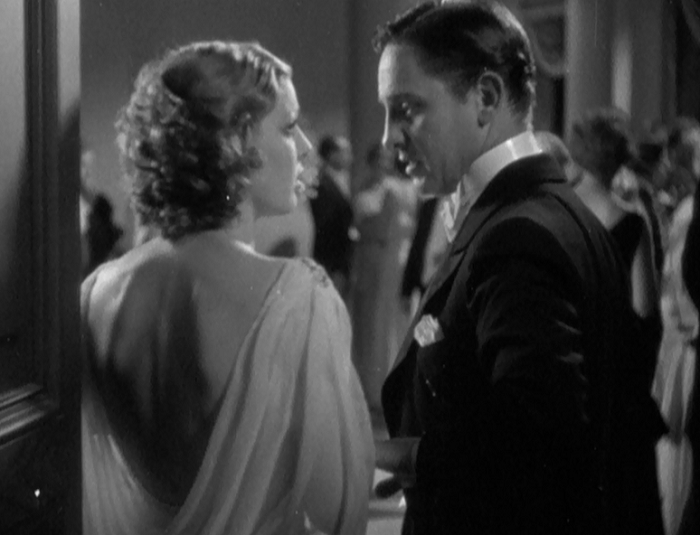
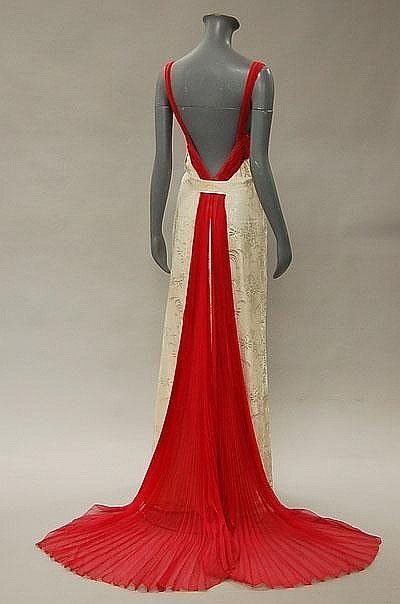
Other films and museum collections of the period show evening gowns with the same bare backs.


The story
After the film's release, the green dress was everywhere. A poll by Sky Cinema and InStyle named it the greatest film costume ever. British Vogue listed it among the most unforgettable green dresses in film, and Vogue Paris called it a cult hit.

Copies of it have sold for more than $30,000. The dresses made for the filming were later sold for tens of thousands of dollars, for charity.
Jacqueline Durran called its success a "perfect storm": Joe Wright's direction, Keira Knightley's performance and Seamus McGarvey's camera. Yet Joe Wright's own favorite costume in the film was another one: Briony's cream organza dress.

Modern and true to its period at the same time, and in that deep green, it was a dress Cecilia would dare to wear, and dare to make love in, to the man she loved.