People
Anne Vallayer-Coster (21 December 1744 - 28 February 1818)
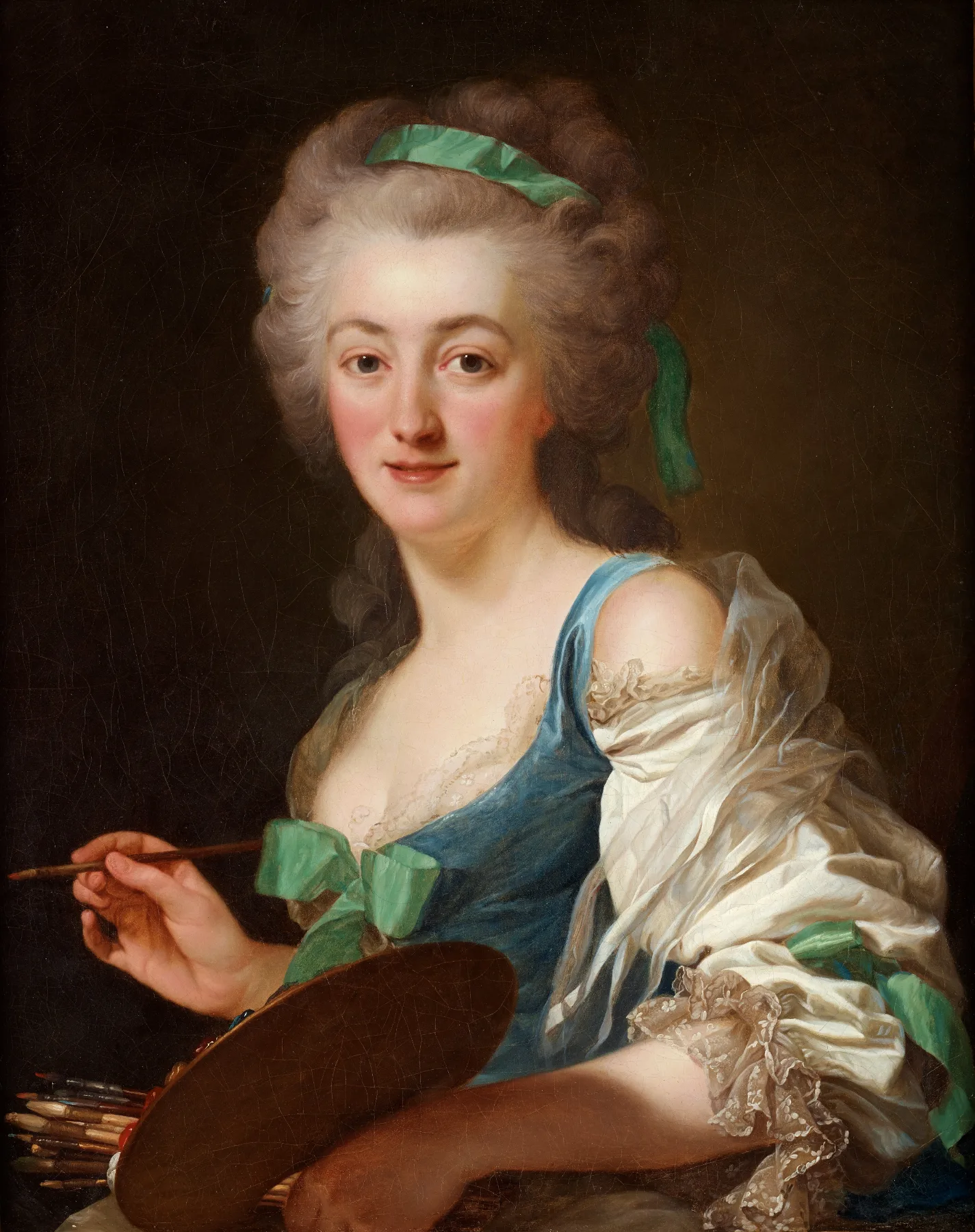
Anne Vallayer-Coster (21 December 1744 – 28 February 1818) was a French painter best known for her still lifes. In 1770, at twenty-six, she was elected to the Académie Royale de Peinture et de Sculpture, becoming one of only four women admitted to the institution before the French Revolution. She served as Painter to Queen Marie Antoinette from 1780, and remains one of the most celebrated still-life painters of eighteenth-century France.
Biography
Anne Vallayer was born on 21 December 1744, on the banks of the Bièvre near the Seine, one of four daughters of the goldsmith Joseph Vallayer.
Her father held a royal privilege as a master goldsmith at the Gobelins tapestry manufactory, decorating the gold enamel boxes the king distributed as gifts to favored officials. Anne spent her first decade growing up inside the Gobelins complex itself, watching the entire operation of a royal luxury workshop up close.
The family moved into central Paris in the mid-1750s. A formal apprenticeship under an unrelated male painter would have been considered improper for a respectable young woman, so Vallayer never entered a professional studio in the ordinary way.
She learned instead, informally: from her father's friend, the celebrated marine painter Joseph Vernet, and from Madeleine Basseporte, the royal court's official botanical illustrator.
In 1770, at twenty-six, Vallayer submitted two paintings, Attributes of Painting, Sculpture, and Architecture and Attributes of Music, to the Académie Royale de Peinture et de Sculpture.
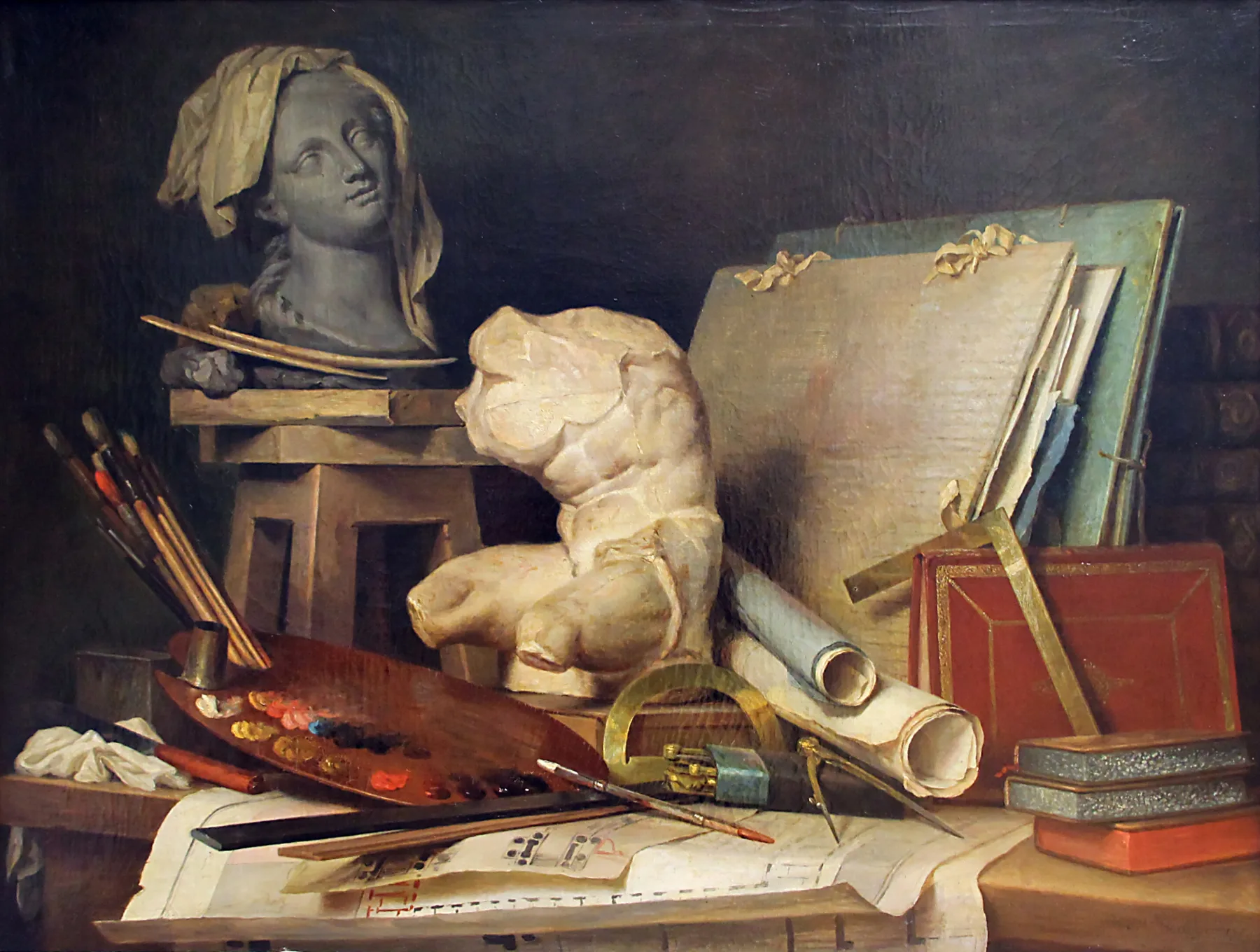
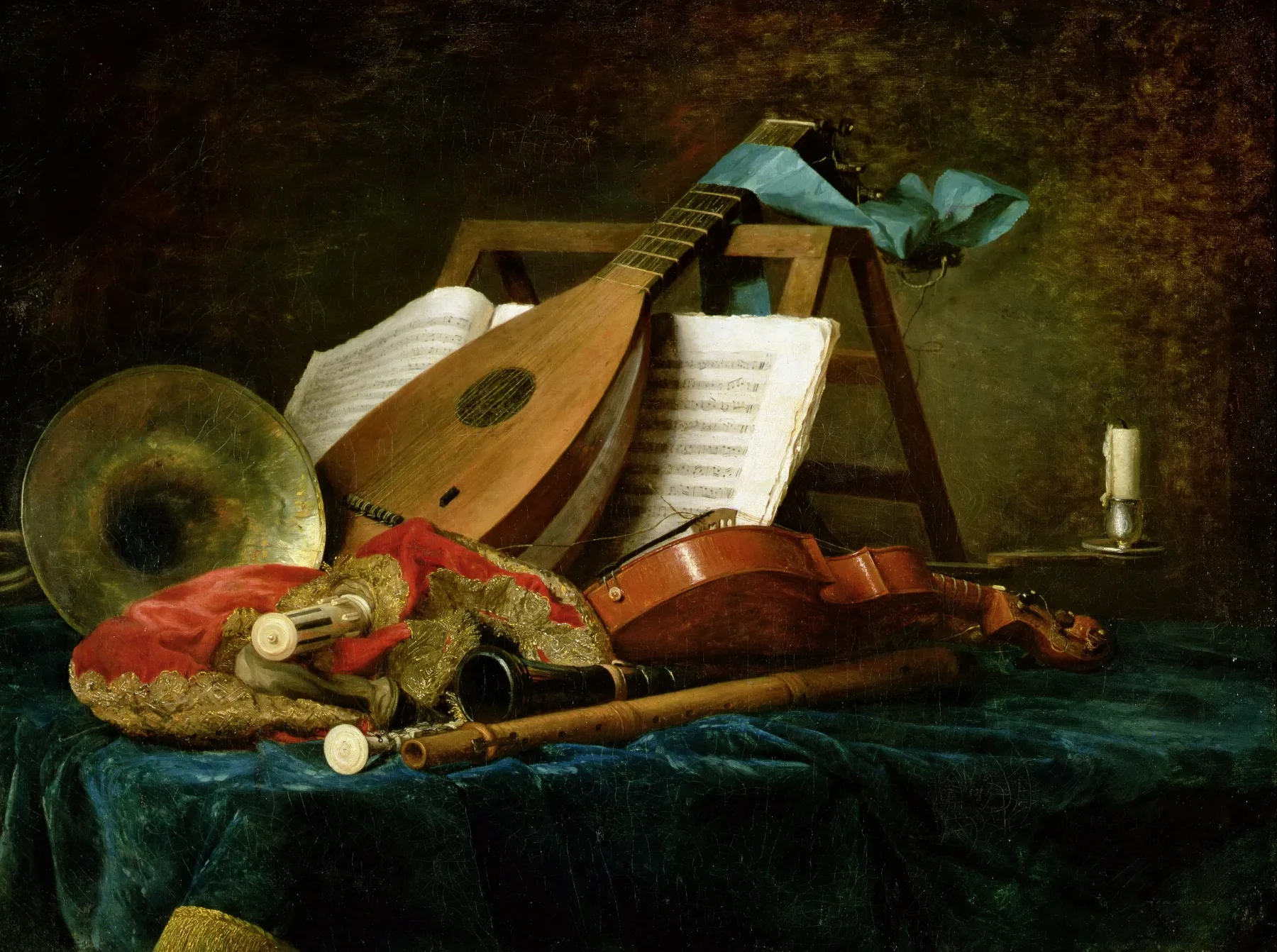
The Academy elected her unanimously — only the second woman ever admitted, after Marie-Thérèse Reboul thirteen years earlier, and one of just four women who would gain entry before the Revolution swept the institution away.
The triumph was overshadowed almost immediately: her father died that same year. Her mother took over the family workshop, and Vallayer kept working to help support the household, even as her name was becoming known across Paris.
She debuted at the Salon of 1771 with eleven paintings. The philosopher and critic Denis Diderot was struck by her work, writing that new Academy members rarely showed as much promise — the Salon, he said, "would look very different" if they all worked to Vallayer's standard.
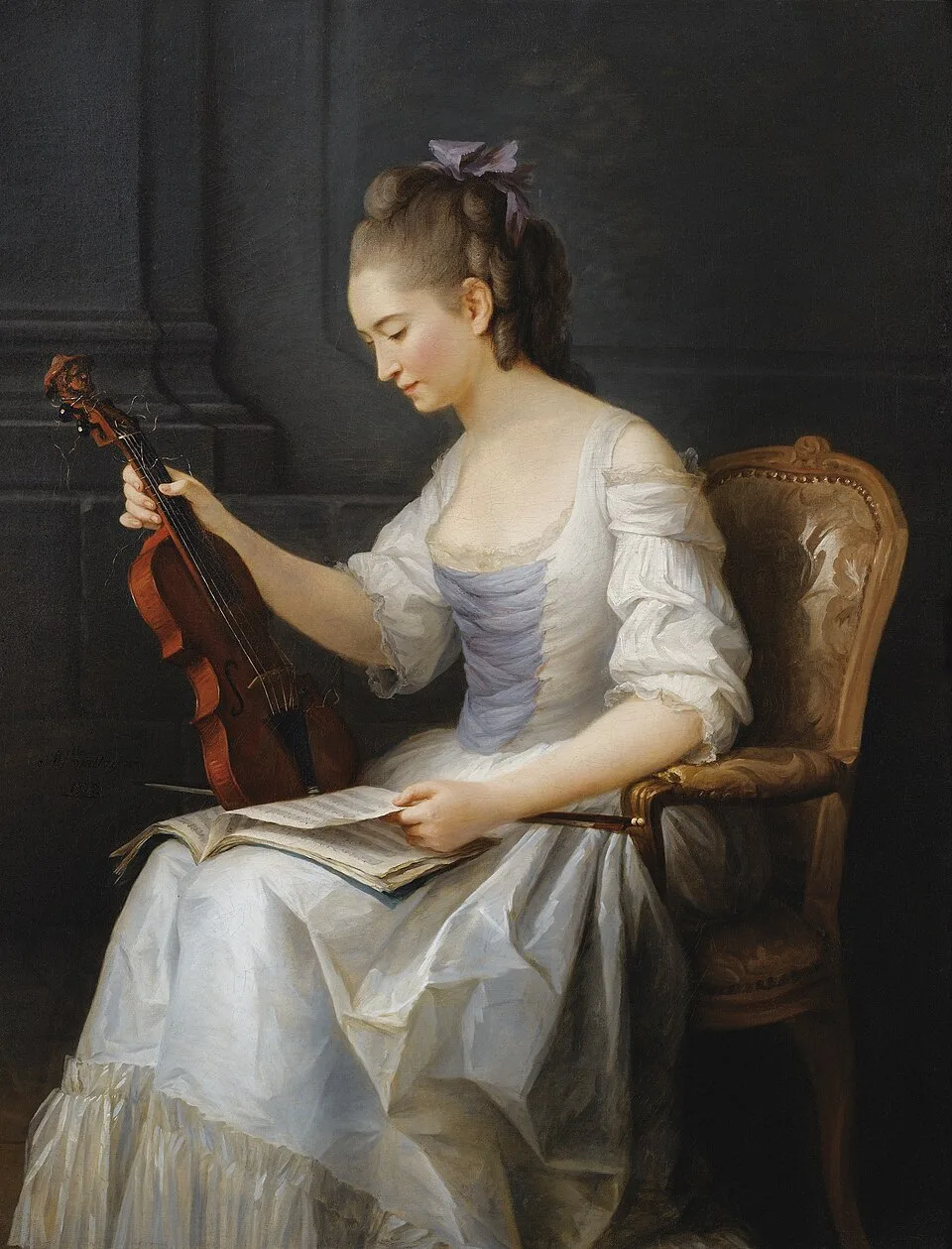
A 1773 portrait of a seated female violinist — possibly one of her own sisters, since Vallayer had no formal portrait clientele yet — showed an early gift for rendering fabric and light that would later define her career.
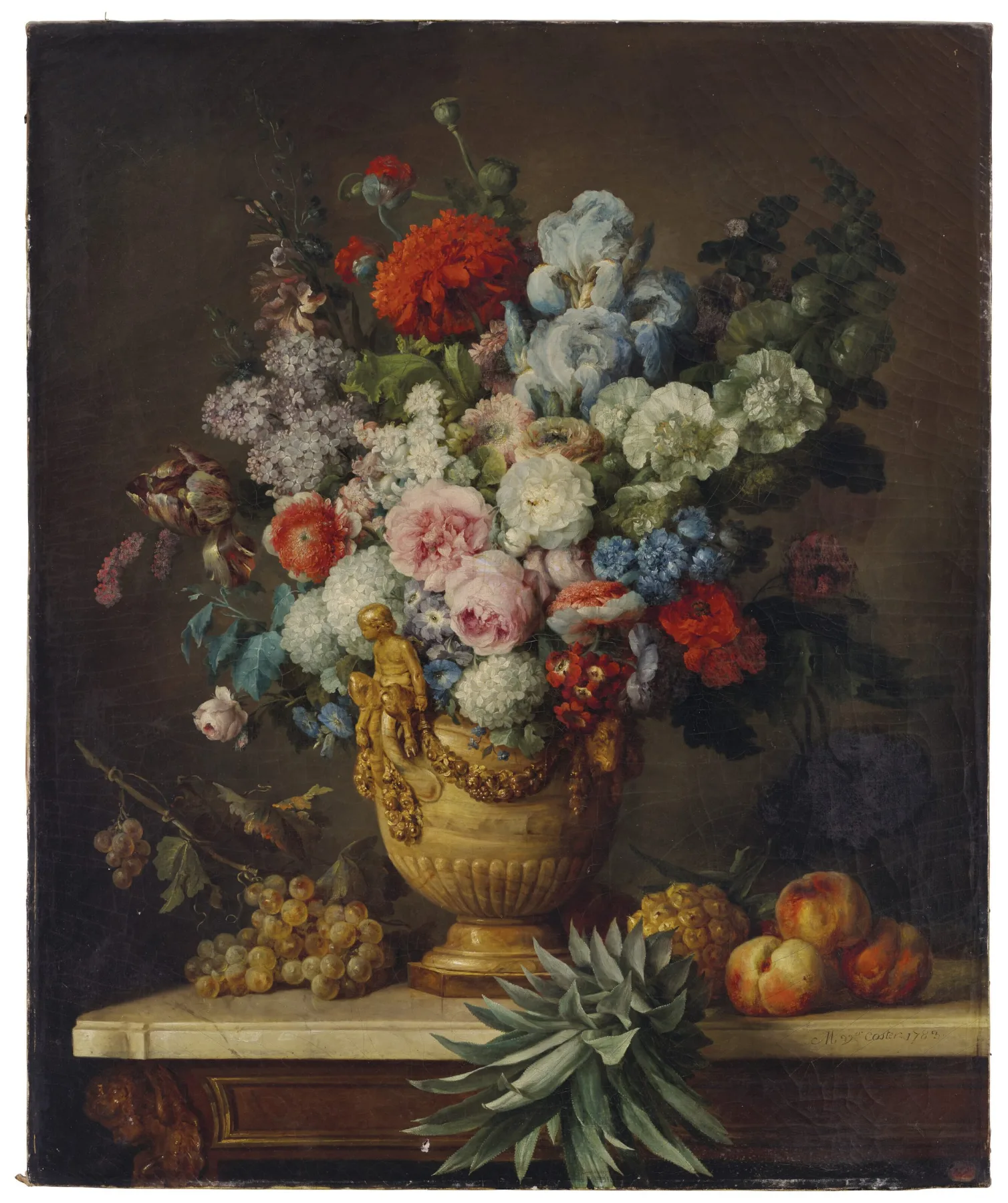
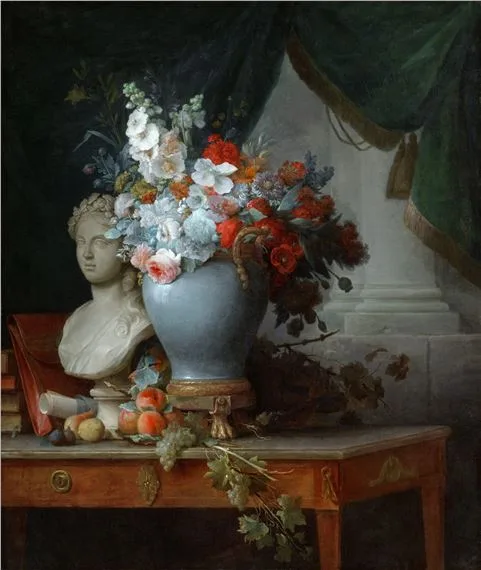
In 1775 she exhibited her first floral still life, and quickly became known above all as a painter of flowers.
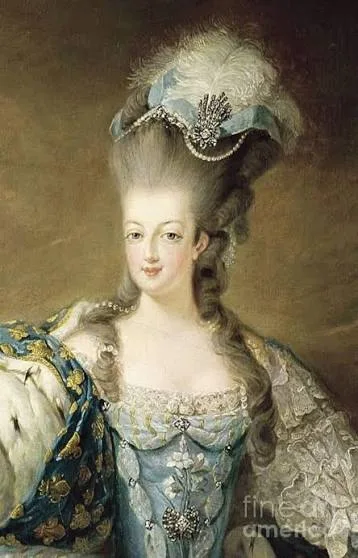
By 1779, Vallayer had caught the attention of Queen Marie Antoinette, who admired her work enough to name her Painter to the Queen the following year.
In 1781 the queen arranged for Vallayer to be given her own working apartment inside the Louvre — an honor no other woman painter of the era received.
That same year, on 21 April 1781, Vallayer married Jean-Pierre-Silvestre Coster, a wealthy lawyer from a powerful Lorraine family, at the court of Versailles. Marie Antoinette herself signed the marriage contract as a witness.
Vallayer-Coster kept painting portraits alongside her still lifes through the early 1780s — including a striking 1785 portrait of the singer Madame de Saint-Huberty in the role of Dido, all sculpted white lace and satin sheen, rendered with a goldsmith's eye for surface.
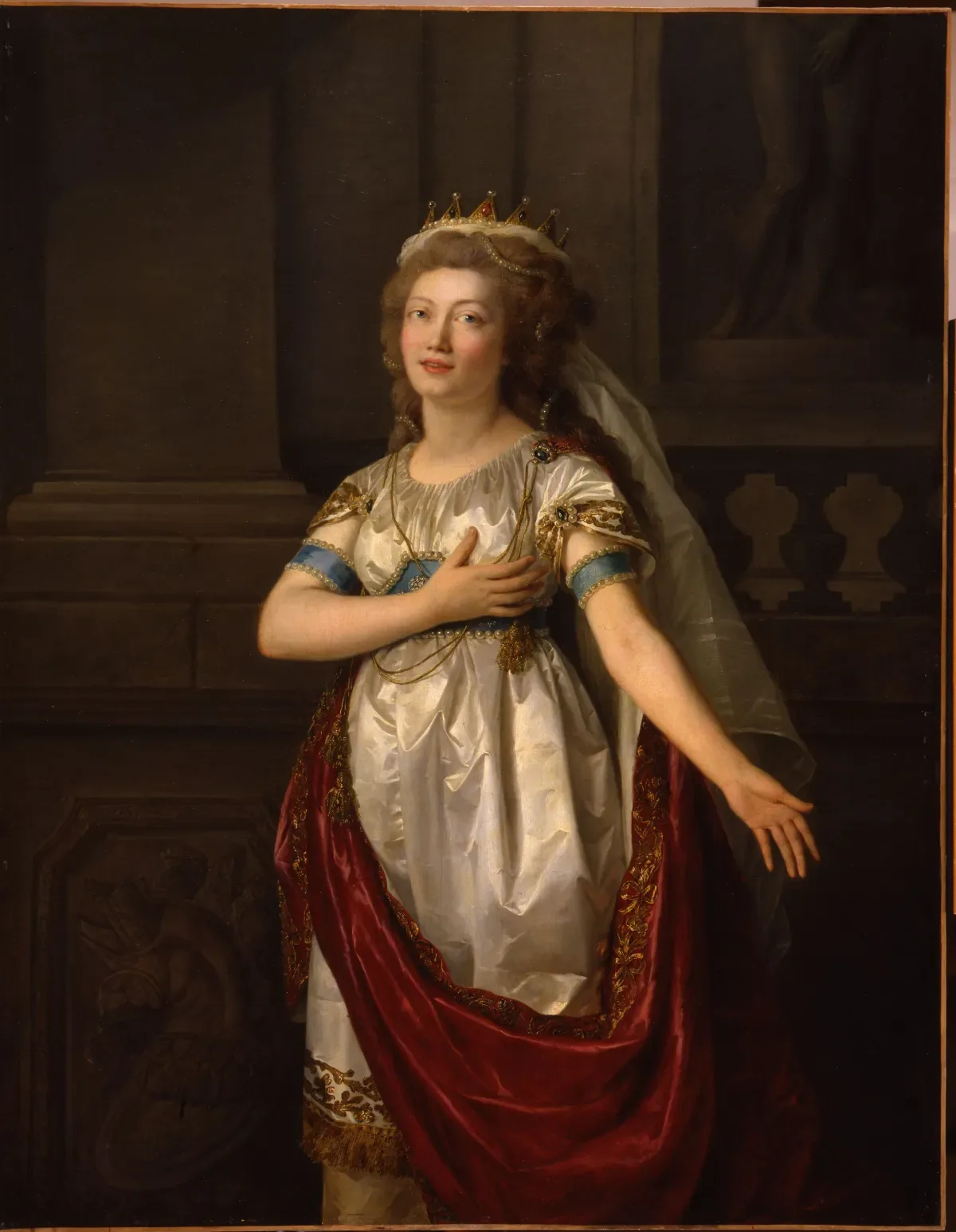
But critics at that same Salon judged her figure painting harshly against the era's most celebrated portraitists, Adélaïde Labille-Guiard and Élisabeth Vigée Le Brun.
Stung, Vallayer-Coster gave up portraiture almost entirely afterward, and returned her full attention to still life.
Her closeness to the queen, once an asset, turned dangerous once the Revolution began; her reputation and her income both suffered as the monarchy that had made her fell.
She survived the Reign of Terror all the same — a fate that eluded many artists and aristocrats with far weaker royal ties than hers — and eventually found a new patron in Napoleon's wife, Empress Joséphine.
Vallayer-Coster kept exhibiting at the Salon almost every year from 1771 until 1817, the year before her death — roughly 450 works in total, ranging from bowls of fruit and dead game to shells, musical instruments, and elaborate flower arrangements.
She died in Paris on 28 February 1818, at seventy-three.
Her market has caught up with her reputation only recently.
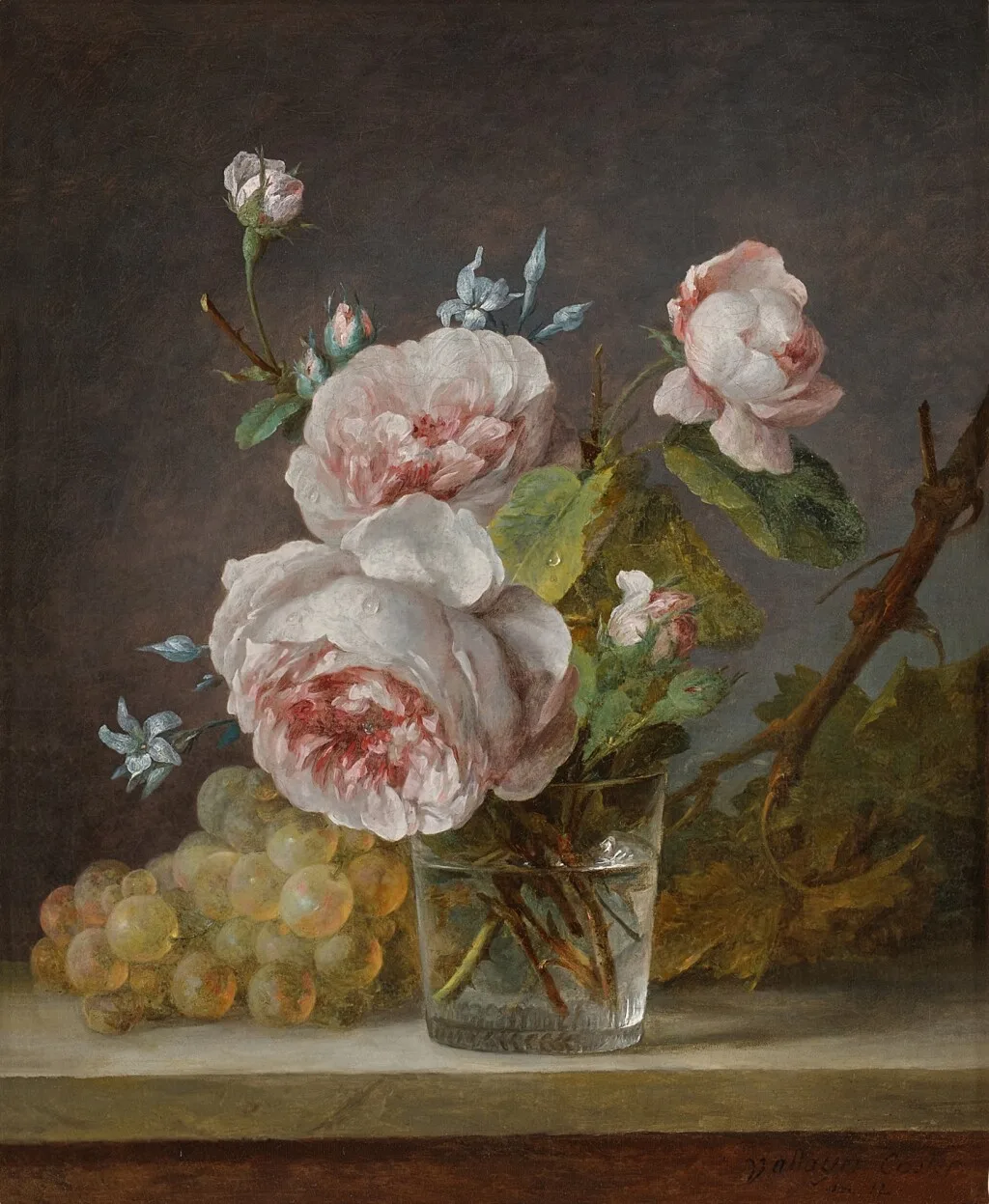
In 2023, a single still life — a glass vase of roses beside a cluster of grapes — sold at Sotheby's in New York for $630,000, more than triple its high estimate, one of several Vallayer-Coster works to sail past expectations in the same sale, nearly two centuries after she stopped painting.