Music
Salut d'Amour (Love's Greeting), Op. 12 by Edward Elgar (1857–1934)
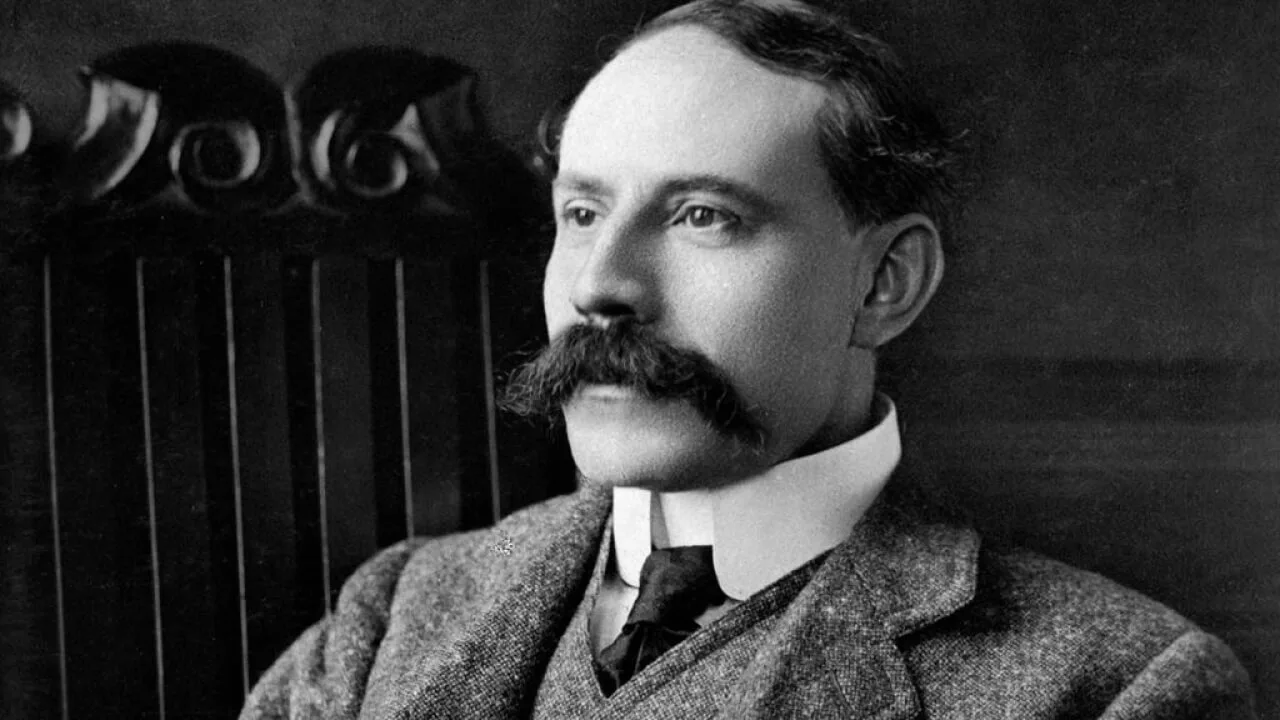
Salut d'Amour is English composer Edward Elgar's small and exquisite musical love letter. Written for the woman he loved, it carries the warmth of a private message yet became one of the most widely loved melodies in English music.
The music
Salut d’Amour is a short lyrical piece originally entitled Liebesgruß, meaning “Love’s Greeting.” The surviving manuscripts identify the violin-and-piano version as the “Original,” although scholars previously debated whether the piece might first have been conceived for solo piano.
The music is built around a restrained, singing melody rather than technical display. A short introduction leads to the principal theme, followed by contrasting material, a return and a quiet conclusion.
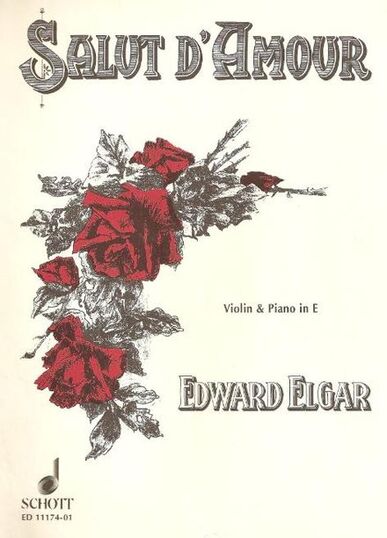
Elgar’s autograph and first edition used the tempo Allegretto, with a metronome indication of 84. The familiar marking Andantino appeared in later Schott reprints, probably as a publisher’s alteration rather than a change authorized by Elgar.
The history
Edward Elgar wrote Salut d'Amour in the summer of 1888, during one of the happiest and most uncertain moments of his life. He was still little known beyond his local musical circle, and his prospects as a composer were far from secure.
The piece was written for Caroline Alice Roberts, a novelist from a well-established family. Caroline Alice Roberts was eight years older than Edward Elgar, and her family did not welcome the prospect of her marrying a young musician without wealth or social position.
Edward Elga dedicated the piece to Caroline Alice Roberts using the name “Carice.” “Carice” combined elements of the names Caroline and Alice. The couple later gave the same name to their only daughter.
He called it Liebesgruss (German for "Love's Greeting."), and Caroline Alice Roberts wrote a short poem to accompany the music, also in German.
The choice of German was not accidental. Edward Elgar admired German musical culture, and the language gave the private gift an air of romance and secrecy. It was a little world made for two people.
Elgar and Alice became formally engaged in September 1888 and married the following year.
The piece is often called an “engagement present.” Its close association with the couple’s courtship and engagement is documented, but it is safer to say that Elgar composed it for Alice during the summer in which they became engaged.
Although Elgar originally called the piece Liebesgruß, its publisher Schott & Co. replaced the German title with the French Salut d’Amour, apparently because they believed a French title would improve its international sales. Thus Liebesgruss became Salut d'Amour, and the private gift began its long public life.
In December 1888, Elgar sold the composition and its copyright to Schott for two guineas. He prepared versions for violin and piano, solo piano and small orchestra, all of which are supported by surviving autograph engraver’s copies.
The first documented public performance was of the orchestral version at the Crystal Palace in London on 11 November 1889. August Manns conducted the Crystal Palace Orchestra.
The piece was first issued in versions for violin and piano, cello and piano, and piano solo. Its gentle melody quickly found an audience. Long before Edward Elgar became famous for Enigma Variations and Pomp and Circumstance, this small declaration of love had already carried his name far beyond Worcestershire.
The structure
Salut d’Amour is in ternary form with a coda: A–B–A′–coda. The principal A section is in E major, the contrasting B section moves to G major, and the returning A′ section restores E major
Introduction and A section
The piece begins in 2/4 time with a two-measure piano introduction. The violin then enters with the principal melody, marked dolce and legatiss.—“sweetly” and “very smoothly”—over the continuing piano accompaniment.
B section
The contrasting middle section moves to G major. Its violin melody initially unfolds over a sustained D in the piano; later, the thematic material passes into the piano part.
Return
The principal E-major melody returns in the A′ section. The melody remains recognizable, while Elgar varies parts of the piano writing, including imitative and countermelodic material.
Coda
A separate coda follows the return. Its markings include stringendo, accelerando, ritardando and Tempo più lento, producing changes of pace before the final quiet measures.
The performance
Elgar’s original Allegretto marking indicates movement and flow; a performance should therefore allow the melody to sing without stretching every phrase beyond the underlying pulse.
A reliable modern performance is Scottish Nicola Benedetti on violin, with Petr Limonov on piano, released by Decca in 2020. It uses the original violin-and-piano scoring and lasts approximately 3 minutes and 8 seconds.
Another authoritative choice is English violinist Tasmin Little with John Lenehan, issued by Warner Classics. Their recording likewise presents the violin-and-piano version and lasts approximately three minutes.
For cello and piano, British cellist Jacqueline du Pré offers a more glowing and deeply sung approach. The cello makes the piece sound less like a shy greeting and more like a remembered declaration of love.
The work is personal enough to make one feel as though Edward Elgar is still addressing Caroline Alice Roberts directly.