Music
"Waltz of the Flowers" from ballet The Nutcracker by Pyotr Ilyich Tchaikovsky (1840–1893)
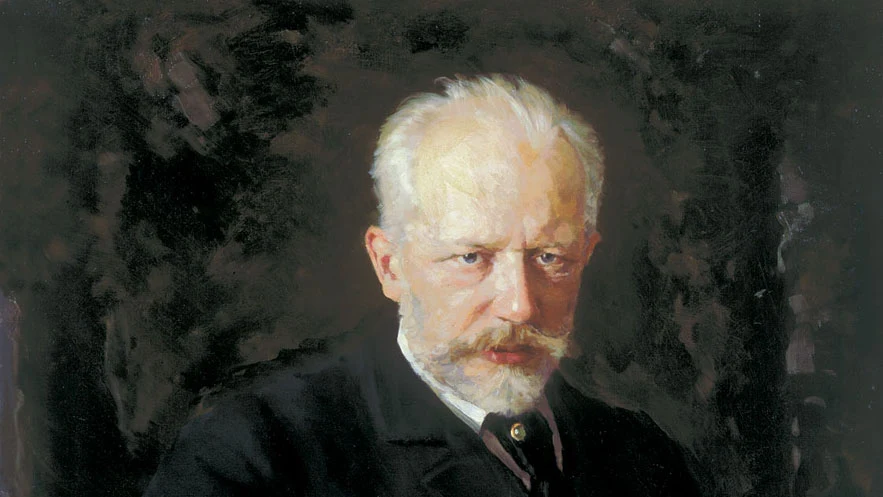
“Waltz of the Flowers” is No. 13 in Act II of Tchaikovsky’s ballet The Nutcracker, Op. 71, and the final movement of The Nutcracker Suite, Op. 71a. In the original ballet scenario, it is danced by the attendants of the Sugar Plum Fairy after the national dances and before the grand pas de deux. Its ceremonial scale comes from a carefully controlled sequence of orchestral colors: an opening for winds, a harp cadenza, a horn theme, broad writing for the strings, lighter exchanges among the woodwinds, and a full orchestral coda.
The music
The waltz does not begin with its familiar dance rhythm. Tchaikovsky first gives the stage to the woodwinds and horns. Their measured phrases lead to an extended harp cadenza, marked with enough freedom to separate the introduction from the dance that follows.s9.
The lower strings then establish the triple-meter accompaniment. Four horns introduce the principal waltz theme, after which the strings take up a longer, sweeping melody. Woodwind replies and changes of orchestral weight keep the repeated material in motion rather than allowing it to settle into a simple sequence of identical strains.
This is ballet music written on a symphonic scale. Tchaikovsky moves themes among instrumental families, alters the density of the accompaniment, and reserves the full force of the orchestra for structural high points. The elegance is not decorative filler laid over a dance beat; it comes from proportion, contrast, and the exact timing of each new color, all of which can be followed in the orchestral score.
The title naturally encourages images of petals and gardens, but the score does not assign individual themes to particular flowers. Any claim that a flute represents one flower, a horn another, or a crescendo depicts a bud opening would be an interpretation, not a documented fact.
History
Ivan Vsevolozhsky, director of the Russian Imperial Theatres, commissioned The Nutcracker after preliminary discussions with Tchaikovsky in late 1890. Ivan Vsevolozhsky and Marius Petipa prepared the libretto from Alexandre Dumas’s adaptation of E. T. A. Hoffmann’s The Nutcracker and the Mouse King (1816).
Tchaikovsky began work on the ballet in February 1891. The process was not effortless. The composer disliked aspects of the proposed scenario, worked during a demanding journey through Western Europe and the United States, and asked for the premiere to be postponed while he completed the score.
Tchaikovsky completed the ballet’s sketches by July 1891, began orchestrating the numbers selected for the concert suite in early 1892, and finished the suite’s orchestration on 20 February 1892. The orchestration of the complete ballet was finished on 4 April.
The music reached the concert hall before it reached the theater. Tchaikovsky selected eight numbers from the unfinished stage production and formed The Nutcracker Suite, ending it with “Waltz of the Flowers.” He conducted the suite at a Russian Musical Society concert in Saint Petersburg on 19 March 1892.
The reception was strong enough for Tchaikovsky to write to Pyotr Jurgenson two days later: “The suite from the ballet was successful. I don’t think it would hurt to print it.” Jurgenson issued the full score in May and the orchestral parts in June.
The complete ballet followed on 18 December 1892 at the Imperial Mariinsky Theatre, sharing the evening with Tchaikovsky’s opera Iolanta. Marius Petipa had prepared the scenario and choreographic plan, but illness forced him to withdraw during the production period. Lev Ivanov took charge of the choreography, and the surviving evidence does not establish precisely how much choreography Marius Petipa had completed before leaving.
The original “Waltz of the Flowers” was considerably larger than many later versions. The Marius Petipa Society’s historical account records twenty-four corps de ballet couples and eight soloists, with a golden vase of golden flowers raised by the ensemble. The flowers were presented as marigolds; the same account links that choice to Marius Petipa’s remembrance of his daughter Evgenia Petipa.
The ballet’s first audience was less enthusiastic than the suite’s concert audience had been. Tchaikovsky later said that the production was lavish and went smoothly, but that the public appeared bored. Contemporary criticism was divided over the scenario and choreography, while the music was generally treated more favorably.
In the ballet
“Waltz of the Flowers” belongs to the Kingdom of Sweets in Act II. Clara and the transformed Nutcracker have arrived at the enchanted palace, where the Prince recounts how Clara saved him from the Mouse King.
A divertissement follows: chocolate appears as a Spanish dance, coffee as an Arabian dance, tea as a Chinese dance, and candy canes as a Russian trepak. The Dance of the Reed Flutes and the episode of Mother Gigogne and the clowns come next.
The flower waltz then gathers the Sugar Plum Fairy’s attendants into a large ensemble dance. It does not end the ballet. The grand pas de deux, final waltz, and apotheosis still follow, so the number functions as the expansive close of the divertissement and the approach to the ballet’s final ceremonial dances.
Modern productions do not all preserve the original stage action. George Balanchine’s version centers the number on Dewdrop, while Peter Wright’s productions use a Rose Fairy. Those characters belong to later choreographic traditions and should not be retroactively placed in the 1892 production.
The structure
Introduction
The score opens with oboes, clarinets, bassoons, and horns rather than with the full orchestra. The harp answers with an extended solo cadenza before the tempo settles into the waltz proper.
First waltz
The lower strings establish the three-beat accompaniment. The horns announce the first principal theme, and the orchestration then expands as clarinets, woodwinds, and strings assume distinct melodic roles.
A broad string melody provides the strongest contrast within this opening span. Tchaikovsky subsequently brings earlier material back with altered scoring, so recurrence is heard through a changing distribution of instrumental color rather than through exact repetition.
Middle section
A contrasting span places greater emphasis on flutes and oboes before darker string writing changes the register and weight of the music. The score then uses a connecting passage to prepare the return of earlier themes.
Return and coda
The principal waltz material returns in the orchestra. Tchaikovsky draws the themes toward a separate coda, increases the rhythmic and dynamic pressure, and closes with the full ensemble rather than returning to the exposed sonority of the opening.
The published score identifies the movement simply as Tempo di Valse. It is in D major and contains 353 measures.
The performance
The "Waltz of the Flowers" is the last number in Nutcracker Suite. It has been arranged for various instruments and for various combinations of instruments.
The opening requires patience and exact ensemble. The wind phrases must remain connected while leaving space for the harp, and the harp cadenza needs freedom without losing its relationship to the pulse that will follow. Harpist Elizabeth Hainen’s professional discussion of the passage stresses both its flexibility and the need for rigorous rhythm.
Once the waltz begins, the conductor must preserve a danceable triple meter without making every bar equally heavy. The horns need enough presence to establish the principal theme, but the orchestral balance must leave room for the later string melody and woodwind exchanges documented in the score.
For a staged introduction to the work, the Royal Ballet performance filmed at the Royal Opera House shows Peter Wright’s production and makes the relationship between music and choreography immediately clear. It is a modern staging, not a reconstruction of the 1892 version.
For the orchestral score alone, Daniel Barenboim’s performance with the Berliner Philharmoniker, recorded at the Berlin Philharmonie on 31 December 2001, offers a clear view of Tchaikovsky’s instrumental exchanges. Herbert von Karajan’s 1967 Deutsche Grammophon recording with the same orchestra provides a more compact alternative lasting just over seven minutes.