Music
Zigeunerweisen (Gypsy Airs), Op. 20 by Pablo de Sarasate (1844–1908)
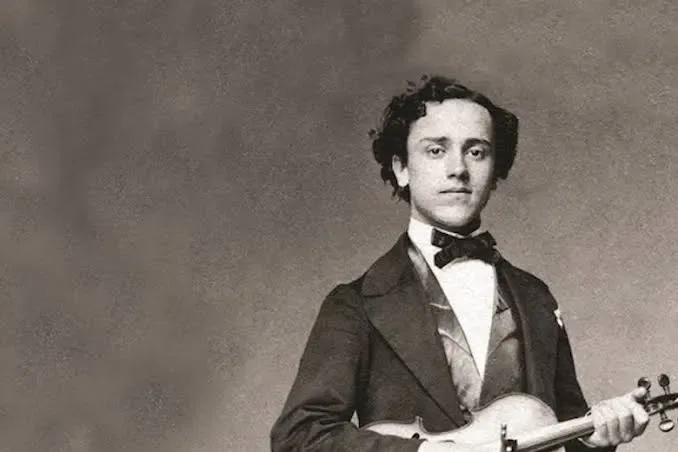
Zigeunerweisen is a continuous single-movement work divided into four connected sections: Moderato, Lento, Un poco più lento, and Allegro molto vivace. The first three sections are principally in C minor, while the final fast section is in A minor.
The opening presents the soloist in a declamatory, rhythmically flexible manner. Slow material alternates with rapid runs and other technically demanding figures before the final section transforms the work into an exceptionally fast virtuoso display.
Sarasate’s own instruction asks the performer to play very freely, almost ad libitum, in imitation of the improvisatory manner associated in his time with Hungarian Romani ensembles. This flexibility is therefore not a modern interpretive invention but part of the work’s documented performance tradition.
The history
Pablo de Sarasate was one of the great violin stars of the nineteenth century. Born in Pamplona, Spain, he began performing as a child and grew into an artist admired across Europe for the purity of his tone, effortless technique, and aristocratic poise.
By 1878, Pablo de Sarasate was already an international celebrity. He had performed for royal courts and fashionable audiences, and composers such as Camille Saint-Saëns, Édouard Lalo, Max Bruch, and Antonín Dvořák wrote works especially for him.
Sarasate composed the violin-and-piano version of Zigeunerweisen in Bonn in August 1877.
On 31 January 1878, he sold the composition to the Leipzig publisher Bartholf Senff for 800 marks; Senff published that version during the same year and issued the orchestral version in 1881.
It quickly became central to the concert repertoire of Pablo de Sarasate.
The work has often been described simply as an imitation of “Gypsy music,” but that description requires historical qualification. Its musical material belongs largely to the nineteenth-century Hungarian popular instrumental tradition—including the verbunkos and csárdás idioms—which European composers and audiences commonly, but imprecisely, equated with Romani music.
One melody was not anonymous folk material. The melody beginning in the third section came from Elemér Szentirmay’s song Csak egy szép lány van a világon; after Szentirmay asserted his authorship, Sarasate acknowledged the melody in later printings.
A surviving letter of apology explains that Sarasate had heard the melody played by Romani musicians and had been told it was popular material. Reprints beginning in the 1880s credited Szentirmay and stated that the melody was used with his permission.
The structure
Moderato
The orchestral or piano introduction establishes C minor before the violin enters in a commanding, recitative-like role. The section is designed to sound flexible rather than metrically rigid, in accordance with Sarasate’s instruction that the work be interpreted freely.
Lento
The second section continues the dark character but places greater emphasis on the violin’s ornamented melodic line. Short phrases are interrupted by runs and difficult bowing figures, making the passage both expressive and technically exposed.
Un poco più lento
The muted violin introduces the melody now known to be by Elemér Szentirmay. This section supplies the work’s most sustained lyrical contrast and must not be described as an original melody by Sarasate.
Allegro molto vivace
The final section moves to A minor and accelerates into a rapid dance-like conclusion. Its momentum and violin writing make it the work’s principal virtuoso climax.
The performance
The score requires more than speed. Its slow sections demand rhythmic freedom and clear differentiation between declamatory, lyrical and dance-like material, while the final section requires precision at a markedly faster tempo.
A valuable historical supplement is Sarasate’s own 1904 recording. It should not be presented as a complete performance, however, because Sarasate omitted much of the Szentirmay section. Of Sarasate's talents as performer and composer, the playwright and music critic George Bernard Shaw said that he "left criticism gasping miles behind him".
A reliable recording for the entry is Itzhak Perlman with the Abbey Road Ensemble conducted by Lawrence Foster, issued by Warner Classics. The recording lasts approximately 8 minutes and 37 seconds and presents the complete orchestral version.
A compelling modern choice is Spanish violinist María Dueñas, whose playing combines a singing sound with fearless energy.
Another excellent choice is Russian-born violinist Maxim Vengerov.