Film & TV
Notorious (film, 1946) Starring Cary Grant, Ingrid Bergman and Claude Rains
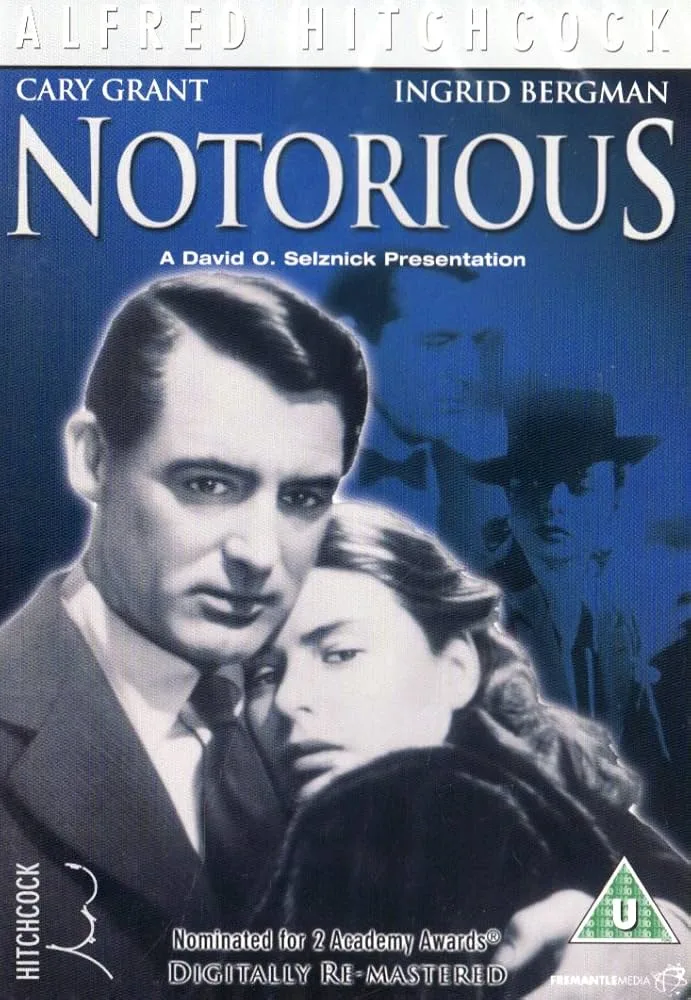
Notorious (1946) is an American espionage romance directed and produced by Alfred Hitchcock, from a screenplay by Ben Hecht. Cary Grant, Ingrid Bergman, and Claude Rains form one of Hitchcock’s most intricate emotional triangles: a government agent, the daughter of a convicted Nazi spy, and the cultivated businessman she is asked to deceive.
Set between Miami and Rio de Janeiro just after the Second World War, the film brings espionage down to a painful human scale. Its suspense comes not only from the Nazi conspiracy at its center, but from the cost of asking a woman in love to marry another man for her country.
Plot
Alicia Huberman is the American-born daughter of a German spy convicted of treason. After her father’s death, she attempts to lose herself in champagne, late nights, and reckless driving.
T. R. Devlin, a reserved American intelligence agent, approaches Alicia with an offer. A group of former Nazis has gathered in Rio de Janeiro, and Alicia’s name, background, and charm may give her access to them.
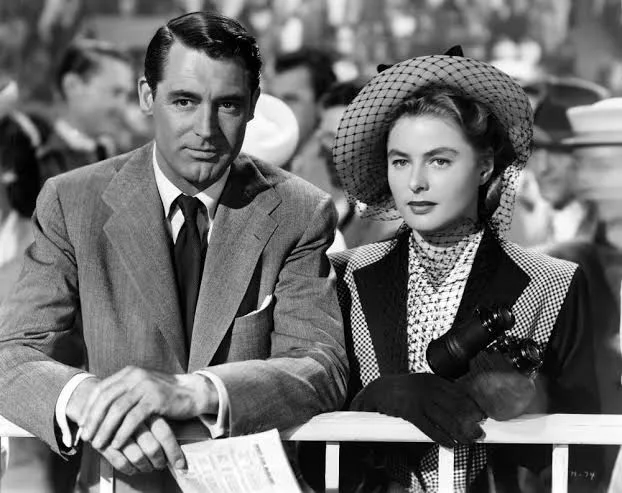
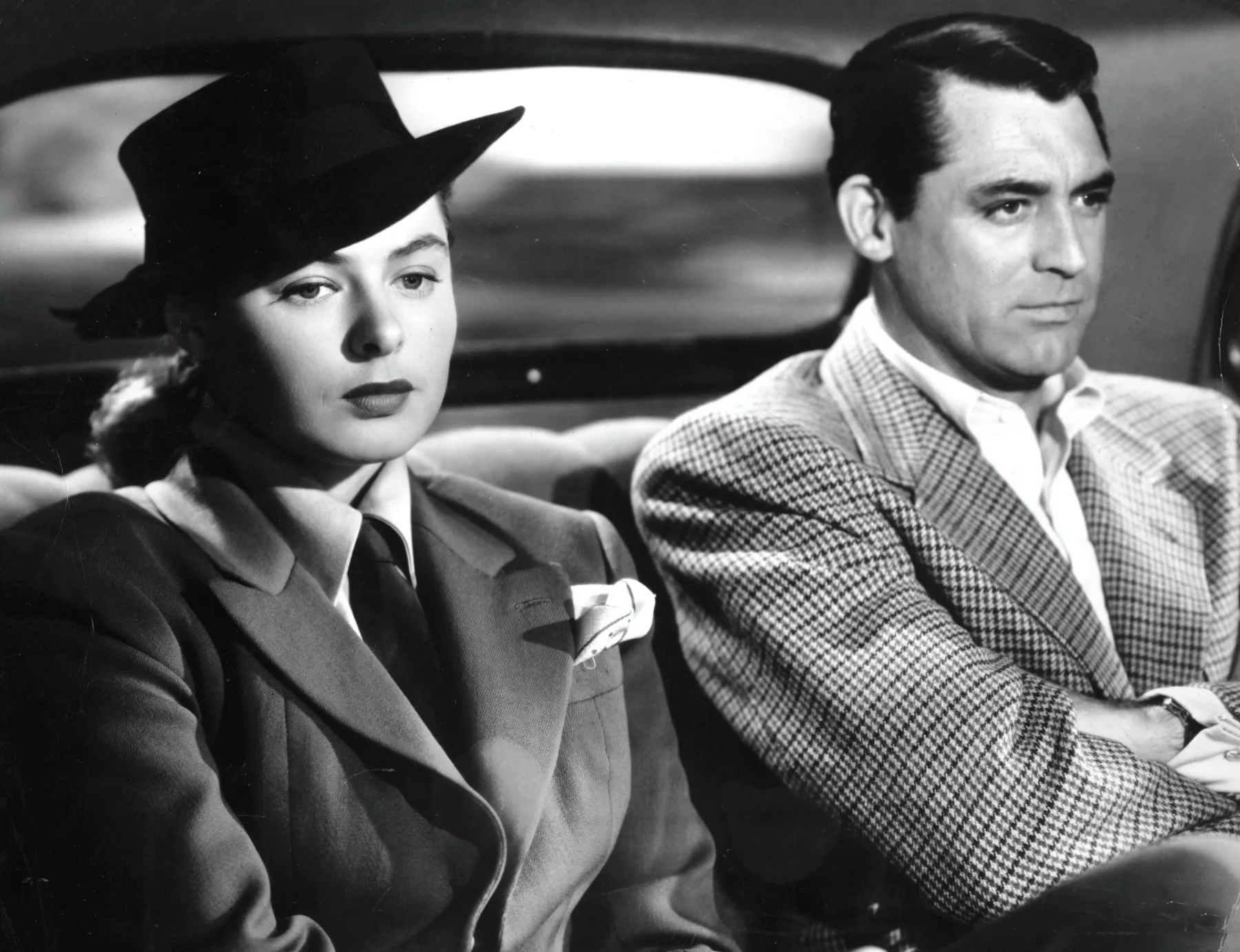
Alicia agrees to go to Brazil. During the journey, she and Devlin fall in love, though Devlin keeps his feelings under lock and key.
In Rio, Alicia attracts the attention of Alexander Sebastian, an old friend of her father and one of the group’s leading figures. When the authorities suggest that Alicia should marry Sebastian in order to penetrate his household, Devlin does not stop her.
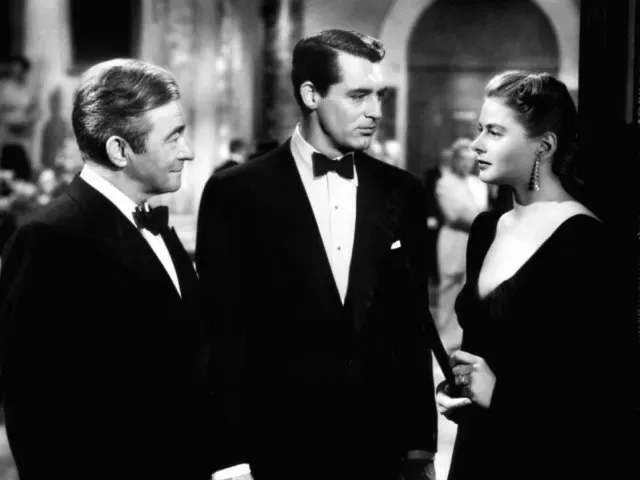
Alicia discovers that the conspirators are hiding uranium ore in wine bottles stored in Sebastian’s cellar. The discovery places her in immediate danger. When Sebastian and his formidable mother realize that Alicia is an American agent, they begin to poison her slowly, hoping that her illness will appear natural.
Cast
- Cary Grant as T. R. Devlin
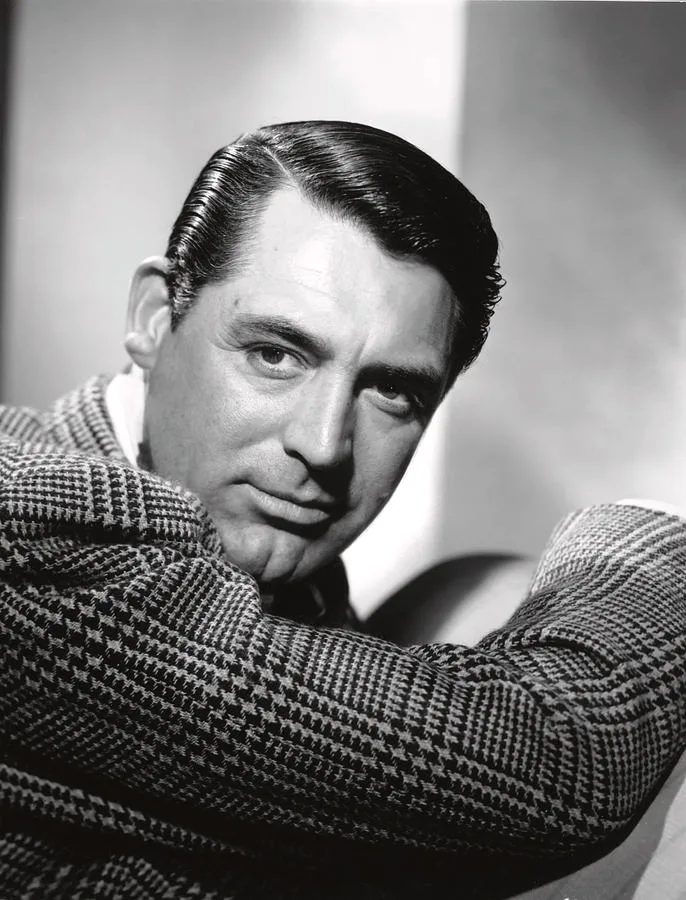
Cary Grant as T. R. Devlin - Ingrid Bergman as Alicia Huberman
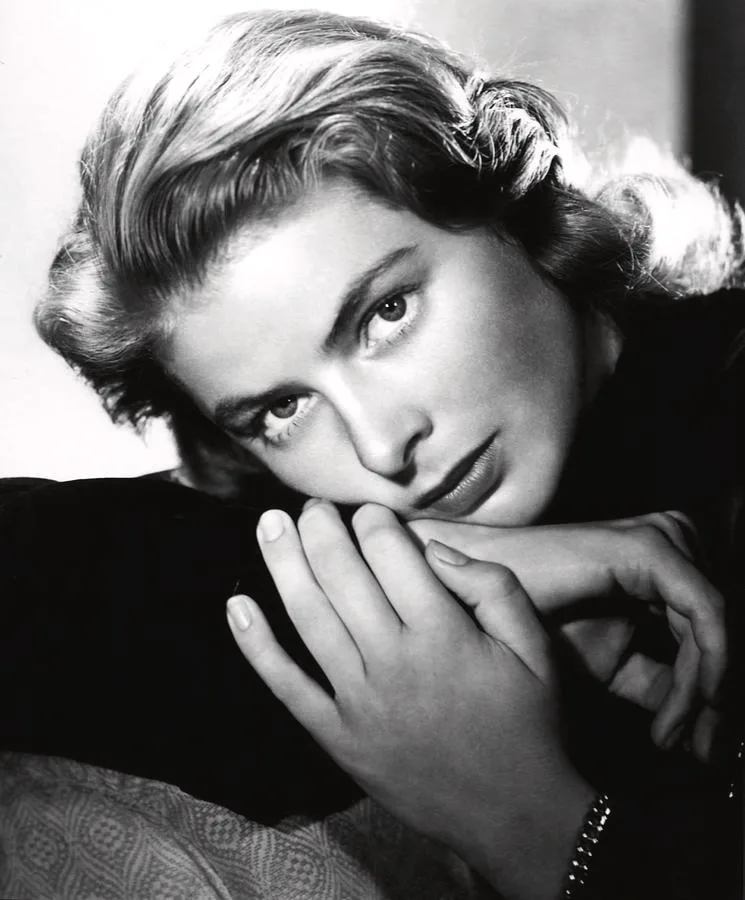
Ingrid Bergman as Alicia Huberman - Claude Rains as Alexander Sebastian
- Louis Calhern as Captain Paul Prescott
- Leopoldine Konstantin as Madame Sebastian
- Reinhold Schünzel as Dr. Anderson
Cary Grant gives Devlin unusual severity. Behind the immaculate suits and controlled voice lies a man undone by jealousy, duty, and his inability to say what he feels.
Ingrid Bergman gives Alicia both radiance and bruised intelligence. She begins as a woman outwardly careless with herself, then becomes the bravest person in the film. Her vulnerability never diminishes her force.
Claude Rains makes Alexander Sebastian more tragic than monstrous. He is a dangerous man, but also a lonely one, and his genuine devotion to Alicia makes the betrayal at the center of the story all the more painful.
Production
The project began with Alfred Hitchcock’s interest in a brief magazine story about a woman who enters the orbit of a former Nazi in South America. Ben Hecht transformed the premise into a love story disguised as a thriller, then sharpened it into something more unsettling: a film in which professional duty is inseparable from emotional cruelty.
Although Notorious appears to travel from Florida to Rio de Janeiro, Hitchcock filmed almost all of it on RKO sound stages. Rear projection, controlled interiors, and carefully selected exterior footage created a Rio that is less documentary reality than an atmosphere of heat, privilege, danger, and concealment.
The mansion of Alexander Sebastian is one of Hitchcock’s great enclosed worlds. Its grand staircase, formal reception rooms, private cellar, and watchful servants make Alicia seem increasingly trapped as the story advances.
Albert S. D’Agostino and Carroll Clark designed these interiors with a deceptive elegance. The Sebastian house is beautiful enough to persuade Alicia’s guests that they are attending civilized parties, yet its proportions and shadowed corners turn it into a place where every room can become a surveillance chamber.
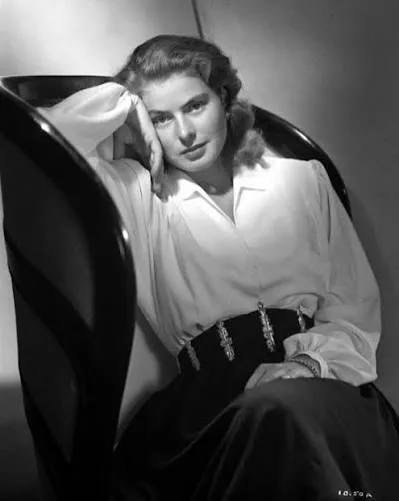
Edith Head designed Ingrid Bergman’s gowns with restraint and extraordinary precision. Alicia’s clothes have the polished femininity expected of a wealthy woman moving through diplomatic society, but never overwhelm the character. Soft blouses, fitted skirts, pale evening gowns, gloves, and jewelry become part of her disguise, while allowing the audience to see how much effort her apparent ease requires.

One of the film’s most celebrated sequences begins high above Sebastian’s crowded party. Hitchcock’s camera slowly descends from the chandelier to Alicia’s hand, where she holds the key to the cellar. The movement turns a small object into the center of the entire room.
Claude Rains was shorter than Ingrid Bergman, a difficulty Hitchcock solved with discreet ramps and raised platforms. Hitchcock encouraged Claude Rains to become accustomed to elevator shoes, reportedly advising him to walk and sleep in them until they felt natural. The visual adjustment allowed Sebastian to retain a poised authority beside Bergman.
Hitchcock also devised the film’s famous prolonged kiss between Cary Grant and Ingrid Bergman. Hollywood’s Production Code limited screen kisses to only a few seconds, so Hitchcock staged their embrace as a series of brief kisses and whispered exchanges. The lovers move through Alicia’s apartment without truly separating, creating a scene of remarkable sensuality while technically remaining within the rules.
Hitchcock makes his customary appearance during Sebastian’s party, accepting a glass of champagne before disappearing from the frame. Cary Grant kept the crucial cellar key after filming. Years later, he gave it to Ingrid Bergman, saying that it had brought him good luck and that he hoped it would do the same for her.
Roy Webb’s score moves with the film’s changing emotional weather. It can be romantic without sentimentality, then suddenly taut and ominous when the private drama begins to reveal its political stakes.
Release/reception
Notorious premiered at Radio City Music Hall in New York on 15 August 1946, with Alfred Hitchcock, Cary Grant, and Ingrid Bergman in attendance. It was released widely by RKO Radio Pictures in September, becoming one of the studio’s major successes of the year.
The film was admired on its first release for the assurance of Ben Hecht’s screenplay, the delicacy of the performances, and Hitchcock’s command of visual suspense. It was also selected for the Cannes Film Festival in 1946.
Over time, Notorious has become one of Alfred Hitchcock’s most highly regarded films. It is often described as the point at which his thrillers achieved an especially complete union of romance, sexual tension, moral ambiguity, and formal control. According to Roger Ebert, Notorious is the most elegant expression of Hitchcock's visual style.
The film’s greatest suspense is not simply whether Alicia will escape Sebastian’s house. It is whether Devlin, who has allowed the woman he loves to sacrifice herself, will find the courage to choose her before it is too late.