Music
Opera Ruslan and Lyudmila (1837–1842) by Mikhail Glinka (1804–1857)
Glinka’s Ruslan and Lyudmila is a spectacular fairy-tale opera of love, magic and adventure. Inspired by Pushkin’s poem, it follows the knight Ruslan as he crosses enchanted landscapes to rescue Lyudmila from the evil dwarf sorcerer Chernomor. Its brilliant overture, lyrical melodies, comic characters and richly coloured dances helped establish the sound of Russian opera.
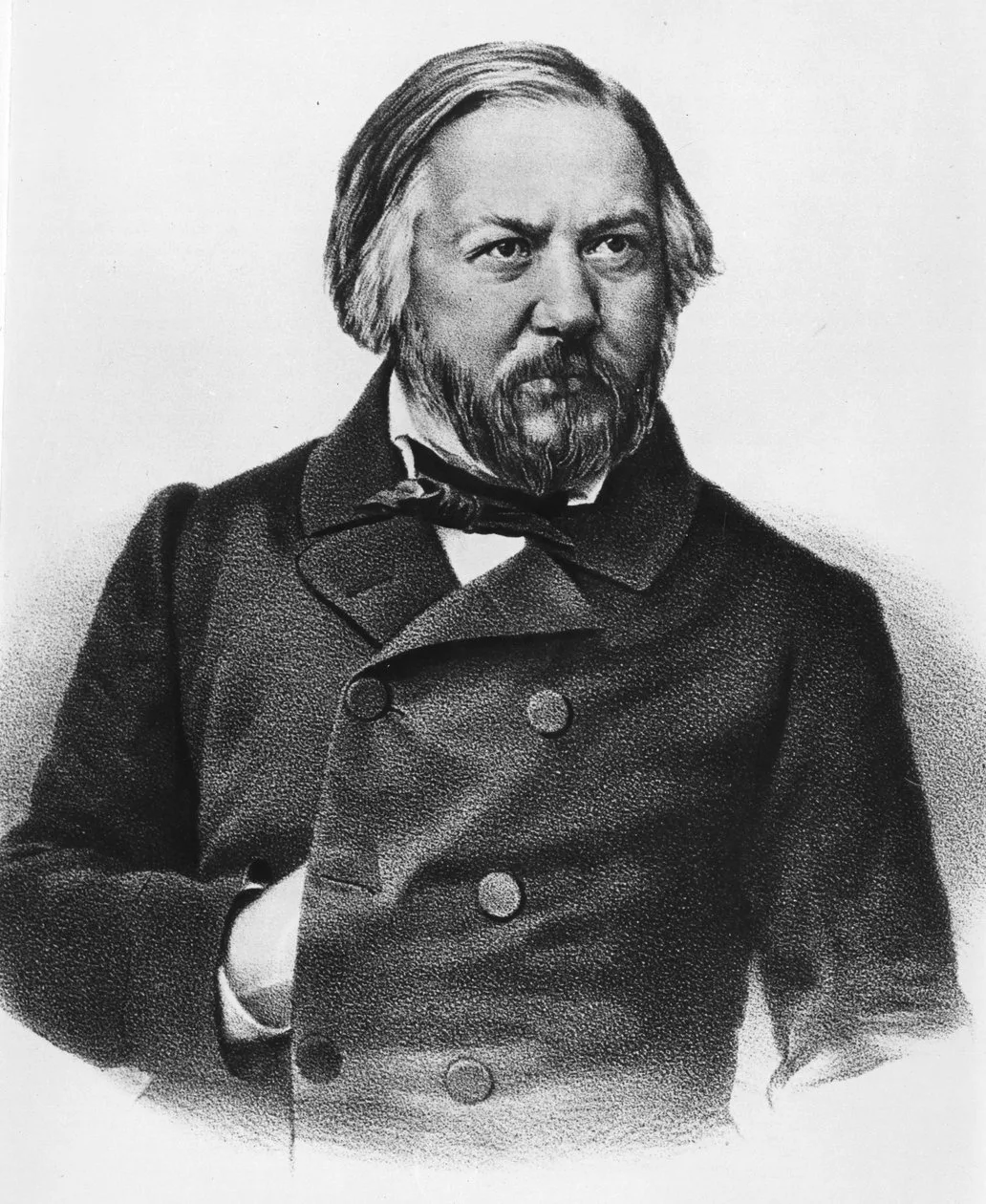
Composer:Mikhail Ivanovich Glinka
Born: 1 June 1804, Novospasskoye, Russian Empire
Died: 15 February 1857, Berlin, Kingdom of Prussia
Composed: 1837–1842
First performed: 27 November 1842, Bolshoi Kamenny Theatre, Saint Petersburg
Libretto: Valerian Shirkov, with contributions by Mikhail Glinka and others, after the poem by Alexander Pushkin
Language: Russian
Genre: fairy-tale opera in five acts and eight tableaux
Duration: approximately four and a half hours, depending on the production
THE MUSIC
Ruslan and Lyudmila is a grand fairy-tale opera filled with love, magic, enchanted gardens, mysterious forces and heroic adventures. It tells the story of Lyudmila, a princess of Kiev who is carried away by the evil sorcerer Chernomor on the very day of her wedding.
The opera moves between the human world of Kiev and a fantastic universe inhabited by magicians, witches, enchanted maidens and supernatural creatures. Its music is equally varied. One moment it sounds noble and ceremonial; the next it becomes playful, mysterious, seductive or terrifying.
Glinka combines the elegance of Italian opera with Russian melodies, folk-like rhythms and brilliant orchestral colour. The result was something new in Russian music: an opera that could be both spectacular and deeply rooted in the sounds and legends of the country.
Among its most celebrated passages are:
- the dazzling overture, with its unstoppable energy;
- Lyudmila’s tender and melancholy scenes;
- Ruslan’s heroic music;
- Finn’s mysterious appearances;
- Farlaf’s comic and cowardly rondo;
- Ratmir’s sensual music and the dances of the enchanted world;
- Chernomor’s ominous march;
- the exotic dances in the sorcerer’s palace;
- the triumphant finale.
The opera’s famous overture is often performed separately. It begins with extraordinary speed and brilliance, immediately creating the impression that a magical story is about to unfold. Its restless movement, sparkling orchestration and sudden changes of colour make it one of the most recognisable openings in the Russian repertoire.
THE STORY
The opera is based on Alexander Pushkin’s poem Ruslan and Lyudmila, published in 1820. Pushkin’s poem was itself a playful and imaginative reworking of Russian legends, fairy tales and heroic traditions.
Glinka admired the poem and intended to turn it into an opera with Pushkin’s help. The poet was expected to contribute to the libretto, but this plan was destroyed by Pushkin’s sudden death in a duel in 1837.
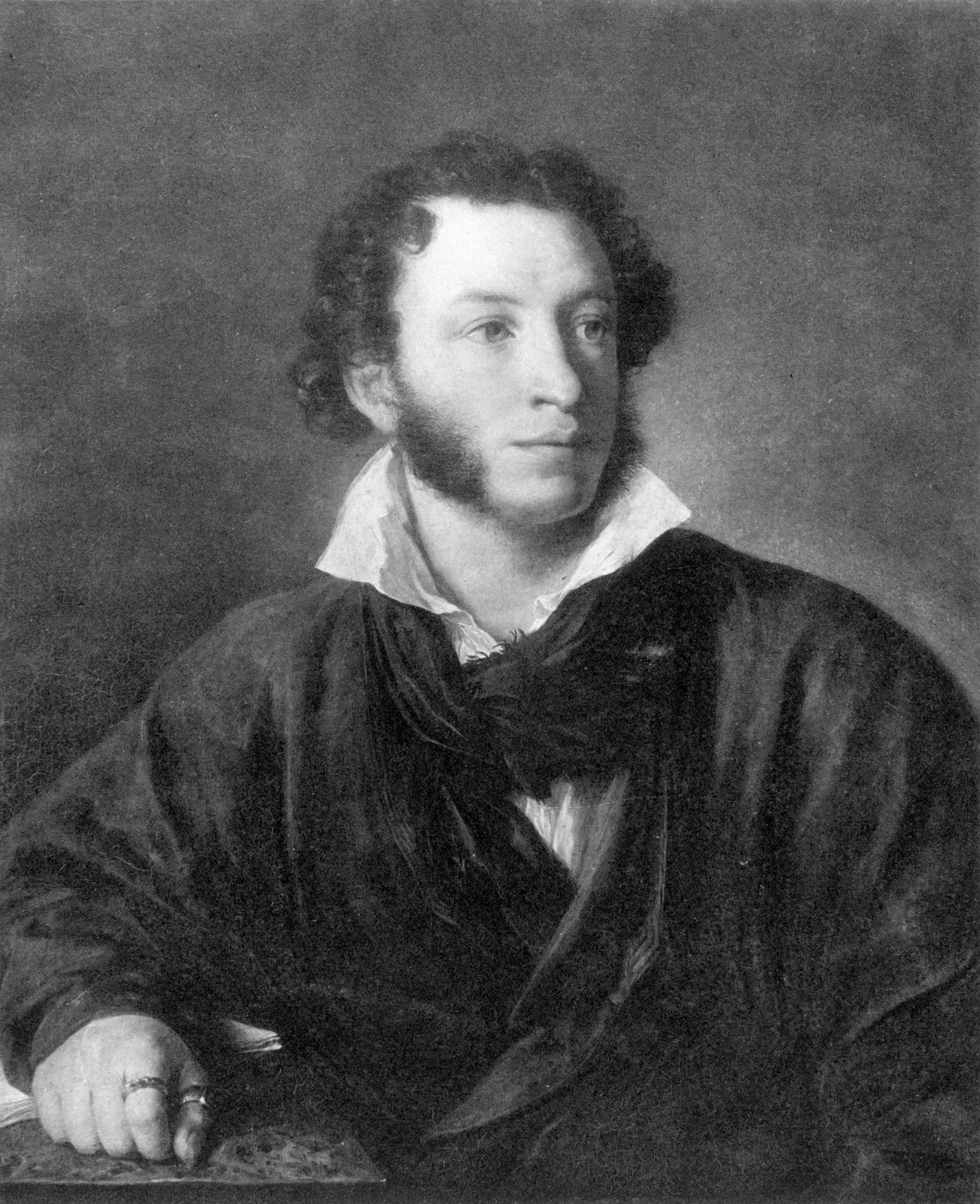
Glinka continued with the project, working with several writers to shape the poem into a stage work.
The opera took approximately five years to complete. Its unusually long gestation allowed Glinka to create an expansive world in which Russian history, folk tradition, romance, comedy and fantasy could exist side by side.
THE OPERA
A wedding interrupted
The story begins in Kiev, at the court of Prince Svetozar. His daughter Lyudmila is about to marry the knight Ruslan. Two other suitors, the Khazar prince Ratmir and the boastful Varangian warrior Farlaf, have also hoped to win her.
At the wedding feast, the minstrel Bayan sings of the trials that await the couple. The celebration suddenly turns into terror: the lights go out, strange noises are heard and, when the darkness lifts, Lyudmila has vanished.
Her father promises her hand—and half his kingdom—to whoever can rescue her. Ruslan immediately sets out. Ratmir also joins the search, while Farlaf, who is less courageous, looks for an easier way to claim the reward.
The sorcerer and the dwarf
Ruslan learns from the kindly magician Finn that Lyudmila has been abducted by Chernomor, an evil dwarf sorcerer whose power lies in his extraordinarily long beard.
Chernomor has carried Lyudmila to his enchanted domain, where she is surrounded by strange splendour but has no freedom. He attempts to charm and frighten her, yet she refuses to surrender her spirit. In one of the opera’s most striking scenes, she is placed under a magical sleep.
Ruslan’s journey is filled with dangers. He encounters the wicked enchantress Naina, who has joined forces with Farlaf, and he comes upon a gigantic talking head in a desolate landscape. The head is revealed to be the brother of Chernomor, betrayed and abandoned by him. It tells Ruslan of a magic sword capable of defeating the sorcerer.
Ratmir and Gorislava
The search also leads Ratmir into a seductive and dangerous world. He is surrounded by enchanting maidens and momentarily forgets the woman who truly loves him, Gorislava.
Gorislava has followed him faithfully, despite his indifference. Her devotion eventually wins him back. With Finn’s help, Ratmir is released from the spell, and he and Gorislava join Ruslan on the journey.
This parallel love story gives the opera a second emotional thread. While Ruslan’s love is tested by magic and violence, Ratmir must overcome his own weakness and learn to recognise the loyalty that has been beside him all along.
Chernomor’s defeat
Ruslan finally reaches Chernomor’s enchanted garden. There he confronts the sorcerer in battle. Chernomor’s magical power is formidable, but Ruslan discovers the secret of his strength: the sorcerer’s long beard.
After defeating him, Ruslan frees Lyudmila—but cannot awaken her. She remains trapped in an enchanted sleep.
Farlaf then arrives, encouraged by Naina. He takes the sleeping Lyudmila back to Kiev and presents himself as her rescuer. Yet the false hero cannot bring her back to consciousness.
Finn gives Ruslan a magic ring. When Ruslan returns to Kiev, the ring breaks the spell. Lyudmila awakens, the deception is exposed and the lovers are reunited. Ruslan and Lyudmila marry, while Ratmir and Gorislava also find happiness.
STRUCTURE
Overture
The opera opens with one of the most exhilarating overtures in the repertory. It does not slowly introduce the characters or explain the plot. Instead, it throws the listener directly into the atmosphere of adventure.
The music races forward with bright strings, energetic rhythms and brilliant orchestral flourishes. It suggests the courage of Ruslan, the excitement of the wedding celebrations and the supernatural energy that will dominate the story.
Act I — The wedding in Kiev
The opera begins with celebrations at the court of Prince Svetozar. Bayan, the court minstrel, sings of Russia’s history and predicts that the lovers will face great trials.
Lyudmila is torn between happiness and sadness as she prepares to leave her father’s home. Ruslan is chosen as her husband, while Ratmir and Farlaf are left disappointed.
The festivities abruptly collapse when Lyudmila disappears. Her father announces the reward for her rescue, and the three men begin their separate journeys.
Act II — Prophecies, magic and the talking head
Ruslan meets Finn, the good magician, who reveals the identity of Lyudmila’s abductor. Finn also warns him about Naina, the dangerous enchantress.
Farlaf encounters Naina and is persuaded to avoid danger while she promises to help him obtain Lyudmila. Ruslan, meanwhile, crosses a lonely battlefield and confronts the gigantic head.
After the encounter, Ruslan discovers the magic sword that will eventually help him defeat Chernomor.
Act III — The enchanted world
Ratmir arrives at a magical castle where he is surrounded by seductive maidens. Gorislava, who loves him, is distraught by his apparent betrayal.
The act is filled with dances, choruses and exotic colours. It is perhaps the most openly sensual and dreamlike part of the opera. Ratmir finally escapes the enchantment, and the lovers are reconciled.
The act ends with the continuing search for Lyudmila.
Act IV — Chernomor’s palace
Lyudmila is held in Chernomor’s fantastic palace. The sorcerer’s power is displayed through music, spectacle and dance.
Chernomor’s march is one of the opera’s most famous numbers. It is deliberately strange and theatrical, presenting the dwarf sorcerer not as an ordinary villain but as an almost grotesque supernatural figure.
The surrounding dances—often described as Turkish, Arabian and Caucasian—create an exotic world of enchantment. Ruslan arrives, defeats Chernomor and frees Lyudmila, but she remains asleep.
Act V — The awakening and the triumph of love
The final act returns to the problem of Lyudmila’s enchanted sleep. Farlaf takes her to Kiev and pretends to have rescued her, but his victory is hollow.
Ruslan returns with Finn’s magic ring. Through its power, Lyudmila awakens. The false hero is exposed, the lovers are reunited and the opera ends with public celebration.
The conclusion restores order after a journey through darkness, temptation and illusion. Kiev becomes a place of reunion, and the fantastic adventures give way to light, ceremony and joy.
THE PERFORMANCE
Ruslan and Lyudmila is one of the great entrances into the world of Russian opera. It offers romance, spectacle, humour and the supernatural, but it is also important as the work through which Glinka helped establish a distinctive Russian musical voice.
The opera was first performed at the Bolshoi Kamenny Theatre in Saint Petersburg on 27 November 1842. The date is sometimes given as 9 December because of the difference between the old Russian calendar and the modern Gregorian calendar.
The premiere was not the triumph Glinka had hoped for. The opera was long, unconventional and unlike the fashionable Italian and French works that dominated the Russian stage. Its mixture of comedy, fantasy, heroic scenes, oriental colour and unusual musical forms puzzled some of its first audiences.
The reaction was disappointing, but the opera’s importance became clearer with time. Franz Liszt was impressed by the originality of the music, and later generations of Russian composers recognised Ruslan and Lyudmila as a foundation of their own national tradition. Glinka’s influence can be felt in the operas of Modest Mussorgsky(1839-1881), Alexander Borodin(1833-1887), Nikolai Rimsky-Korsakov(1844-1908) and Pyotr Ilyich Tchaikovsky(1840-1893).
For a complete staged performance, a particularly attractive choice is the production recorded by the Kirov Opera of the Mariinsky Theatre in 1995, conducted by Valery Gergiev. The cast includes Anna Netrebko as Lyudmila, Vladimir Ognovenko as Ruslan, Larissa Diadkova as Ratmir and Galina Gorchakova as Gorislava.
For the full opera, another reliable option is the Bolshoi Theatre production conducted by Boris Khaikin, recorded in 1961. The production follows the original five-act structure and includes the Bolshoi Theatre Chorus and Orchestra.
For a shorter introduction, the overture is an ideal choice. A recording by the Mariinsky Orchestra conducted by Valery Gergiev offers the music in a performance closely connected with the Russian operatic tradition.