People
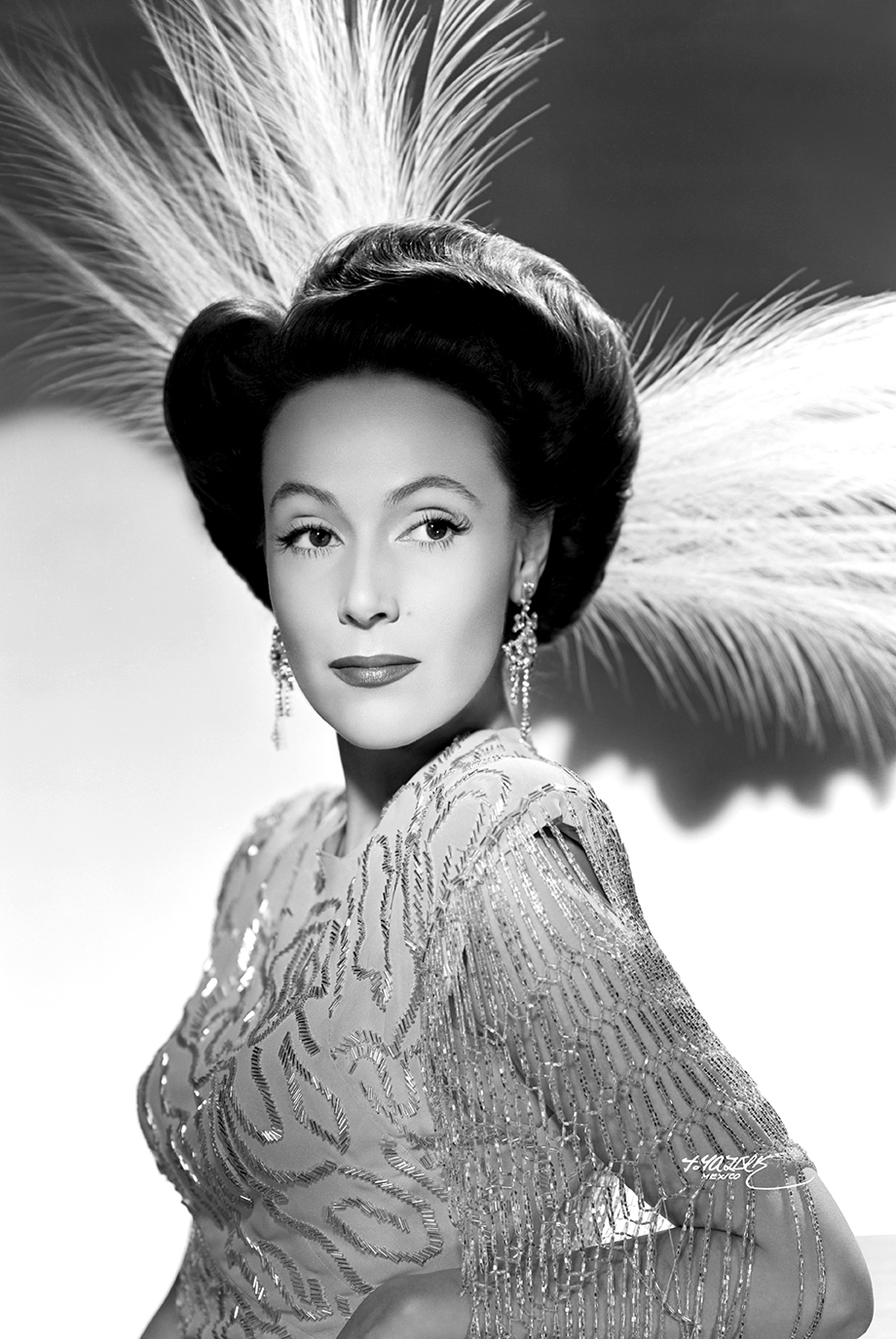
Dolores del Río (3 August 1904 – 11 April 1983)
"Take care of your inner beauty, your spiritual beauty, and that will reflect in your face. We have the face we created over the years. Every bad deed, every bad fault will show on your face. God can give us beauty and genes can give us our features, but whether that beauty remains or changes is determined by our thoughts and deeds." -- Dolores Del Río
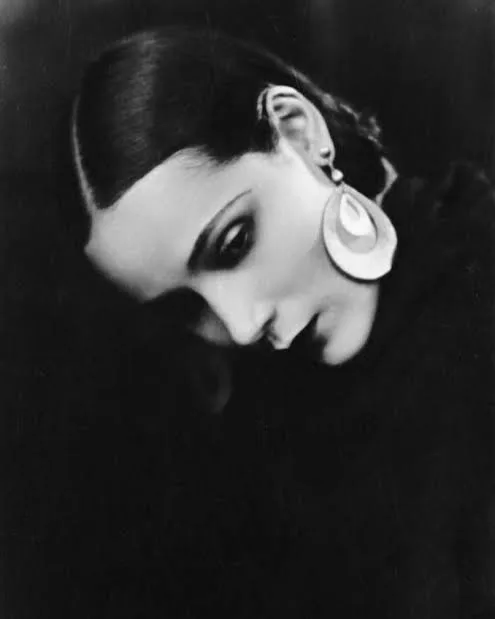
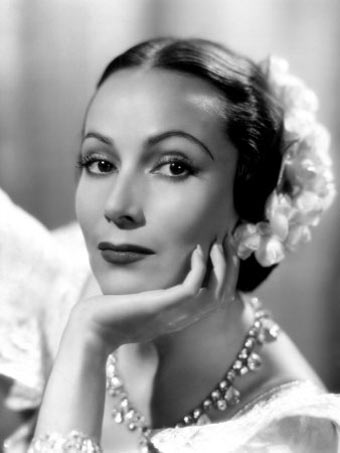
Dolores del Río (3 August 1904 – 11 April 1983) was a Mexican actress and the first Latin American woman to become a major Hollywood star. In the late 1920s and 1930s, her calm, sculpted beauty set the standard for screen glamour. Marlene Dietrich called her the most beautiful woman who ever set foot in Hollywood. In 1943 she gave it all up and went home to Mexico, where she became the leading lady of its Golden Age of cinema. Her career lasted more than fifty years. Painters, photographers, and designers admired her as much as audiences did.

Biography
Dolores del Río was born María de los Dolores Asúnsolo y López Negrete on 3 August 1904 in Victoria de Durango, a city in northern Mexico. Some sources give her birth year as 1905 or 1906, but 1904 is the most widely accepted date.
Her father, the banker Jesús Leonardo Asúnsolo Jacques, directed the Bank of Durango. Her mother, Antonia López Negrete, came from one of the richest families in Mexico, with roots in Spain's colonial nobility.
Her cousins included the Mexican actor Ramón Novarro, who would become one of the silent screen's famous "Latin lovers."
Then the Mexican Revolution swept away the family's fortune. Dolores and her mother fled to Mexico City by train, disguised as peasants. Her father escaped to the United States.
In the capital, the family found protection with the Mexican president Francisco I. Madero, who was her mother's cousin. Dolores never forgot him. She called him the man "quien me sentaría en sus rodillas y me regalaría un enorme globo rojo" ("who would sit me on his knees and give me an enormous red balloon").
At eleven, she sat for a portrait by the Mexican painter Alfredo Ramos Martínez, a favorite of Mexico's high society. Her mother had ordered it for a reason. The shy girl felt like an ugly duckling, and the portrait helped her gain confidence.
She was educated at the Collège Français de Saint-Joseph, a school run by French nuns. As a teenager, she saw the Russian ballerina Anna Pavlova dance in Mexico City. Dolores was spellbound and decided to become a dancer herself.
She persuaded her mother to let her take lessons with the dance teacher Felipa López.
In 1921, at sixteen, Dolores danced at a charity ball for a hospital. There she met Jaime Martínez del Río, a young aristocrat from one of the richest families in Mexico. He had been educated in England and had traveled widely in Europe.
After a two month courtship, they married on 11 April 1921. The celebrations took place at La Hormiga, a Martínez del Río ranch that later became Los Pinos, the official residence of Mexico's presidents. Her stage name, del Río, came from his family.
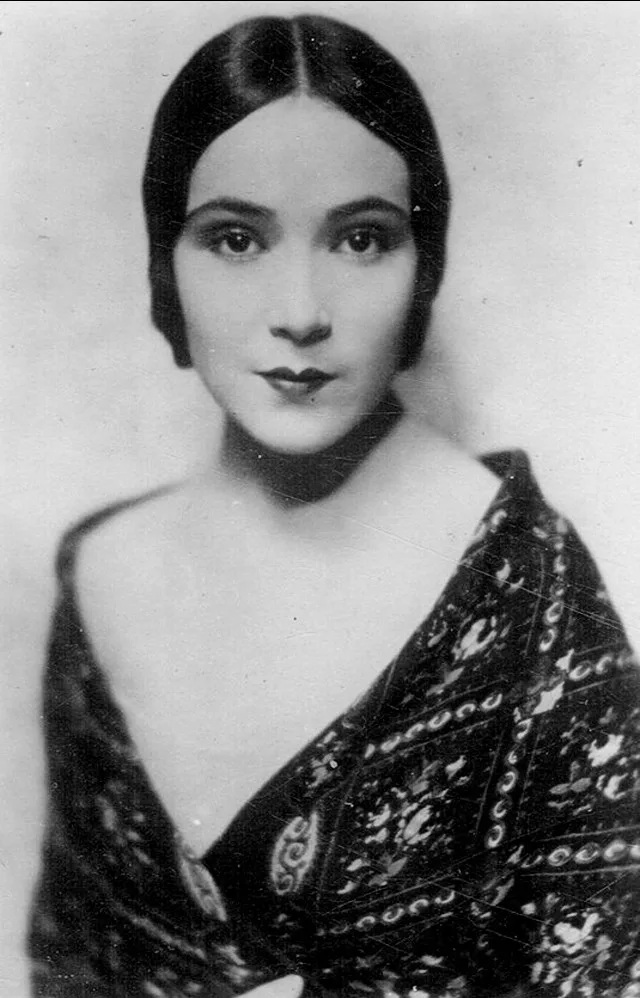
The honeymoon lasted two years and crossed Europe. In Spain, Dolores danced for King Alfonso XIII and Queen Victoria Eugenie. The queen gave her a photograph.
Back in Mexico, the fairy tale cooled quickly. Jaime tried to farm cotton on his family's ranch in Nazas. In 1924, the world cotton market collapsed. The couple moved to Mexico City, and Dolores sold her jewelry to help.
She also suffered a miscarriage. Doctors warned her against trying again, and she never had children.
In early 1925, the Mexican painter Adolfo Best Maugard, a close friend of the couple, brought a visitor to their home. The visitor was the American filmmaker Edwin Carewe, a director at First National Pictures.
Carewe took one look at Dolores and made a promise. He told Jaime he could turn his wife into a star, "the female equivalent of Rudolph Valentino." Valentino was the Italian-born American idol of the silent screen at the time.
Jaime saw a way out of their money troubles. He also dreamed of writing screenplays. Against their families' wishes, the couple took a train to Hollywood. They arrived on 27 August 1925.
Carewe became her agent, manager, producer, and director. He shortened her name to "Dolores Del Rio," with a capital D that was not correct. Then he wrote her introduction to the Hollywood press himself: "Dolores Del Rio, the heiress and First Lady of the High Mexican Society, has come to Hollywood with a cargo of shawls and combs valued at $50,000."
Her debut was Joanna (film, 1925). She appeared for only five minutes, as a vamp. The film is now lost.
Then came What Price Glory? (film, 1926), directed by the American filmmaker Raoul Walsh. It became the second highest earning film of the year.
That same year, Hollywood advertisers named her a WAMPAS Baby Star, one of the year's most promising newcomers. The group included the American actresses Joan Crawford, Mary Astor, and Janet Gaynor, and the Canadian-born actress Fay Wray.
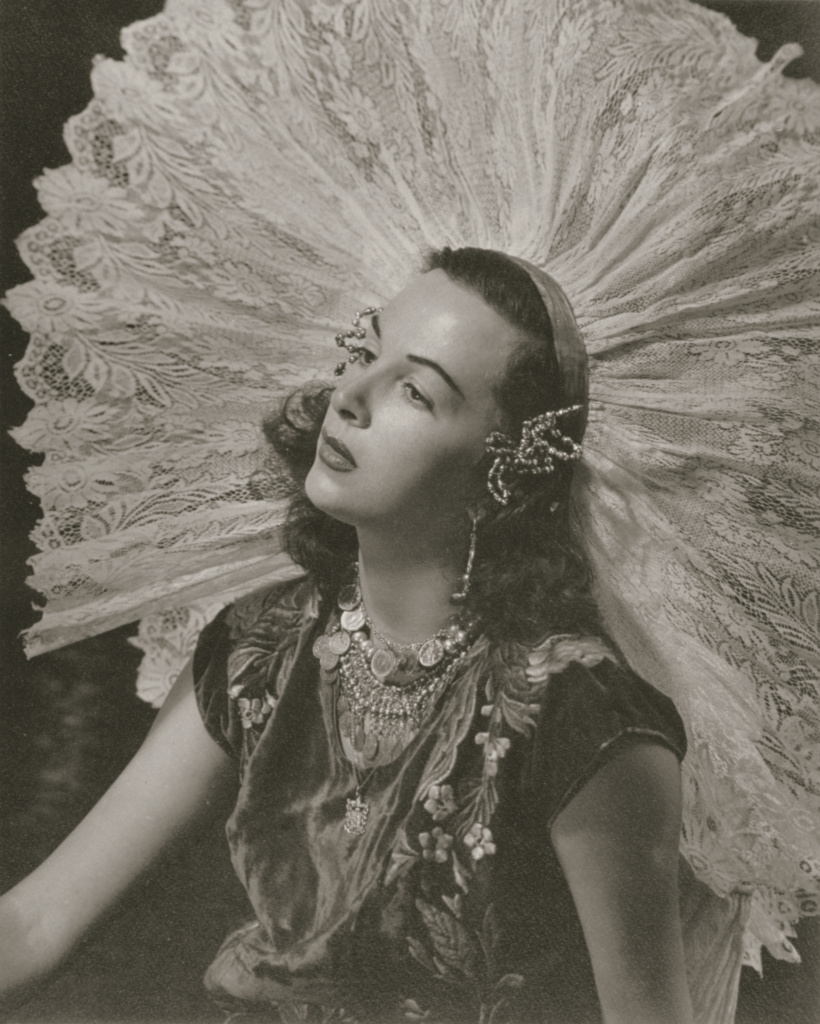
Carewe directed her again in Resurrection (film, 1927) and Ramona (film, 1928). For Ramona, she recorded the title song.
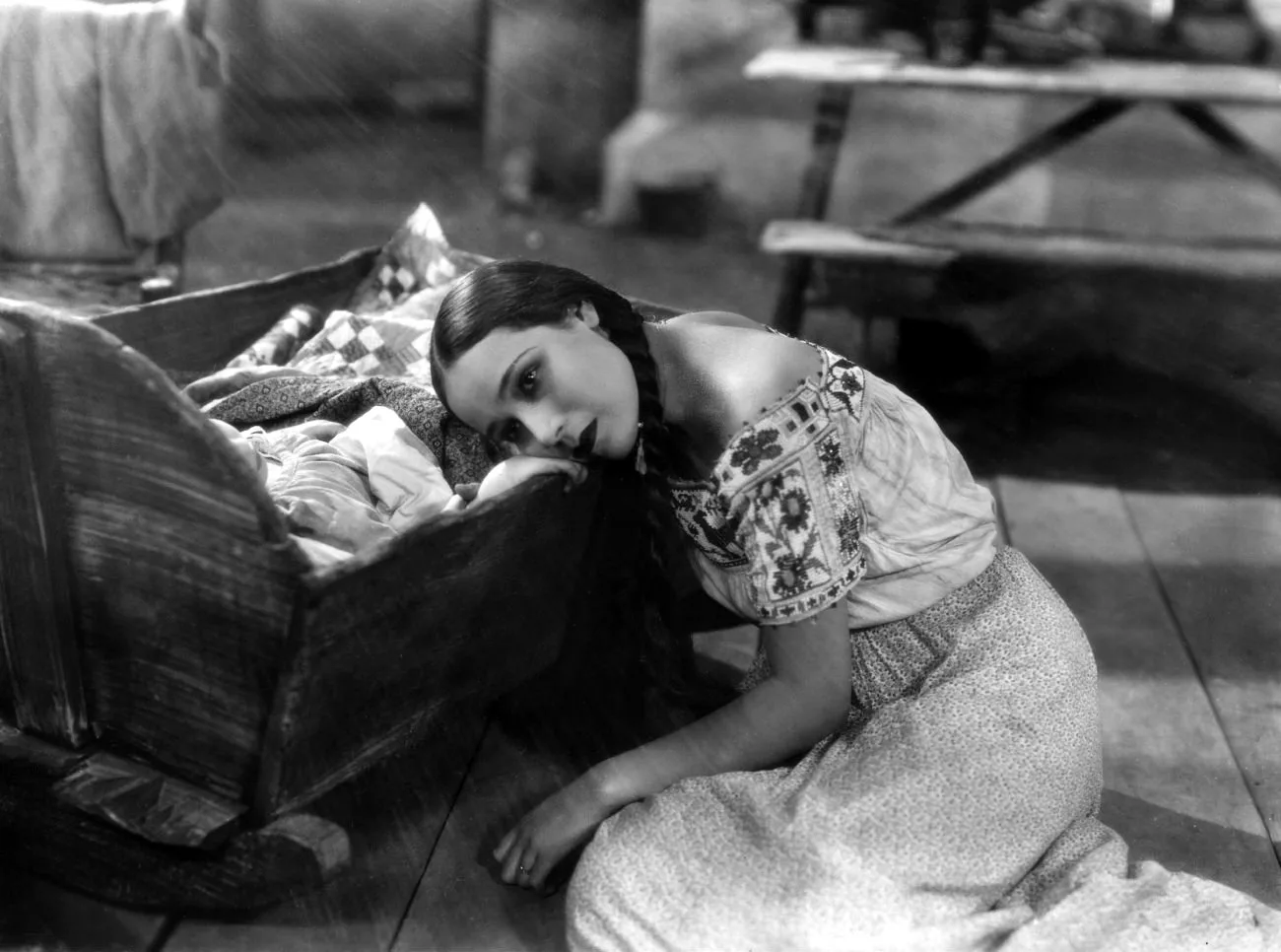
In 1928, she sang "Ramona" on live radio on The Dodge Brothers Hour (radio show, 1928). The broadcast also featured the Canadian-American actress Mary Pickford, the American actor Douglas Fairbanks, and the British actor Charlie Chaplin. Listeners were surprised. Her voice showed that she was ready for talking pictures.
Her private life, meanwhile, was falling apart. In 1928, her marriage to Jaime ended in divorce. Later that year, he died in Germany of blood poisoning.
Carewe, meanwhile, had fallen in love with her, and she did not return his feelings. He spread false rumors of a romance to promote his films. After the New York premiere of Evangeline (film, 1929), she set the record straight with reporters: "Mr. Carewe and I are just friends and companions in the art of the cinema. I will not marry Mr. Carewe."
Soon she canceled her contract with him. Carewe filed criminal charges for breach of contract, and she settled out of court. He then made a new sound version of Resurrection with the Mexican actress Lupe Vélez, hoping to eclipse her. It did not work.
Her first talking film was The Bad One (film, 1930). Critics said she could speak and sing in English with a charming accent.
That year, she met the American art director Cedric Gibbons at a party at Hearst Castle. Gibbons worked at MGM and was one of the most influential men in Hollywood. He had helped design the Oscar statuette.
They married on 6 August 1930.
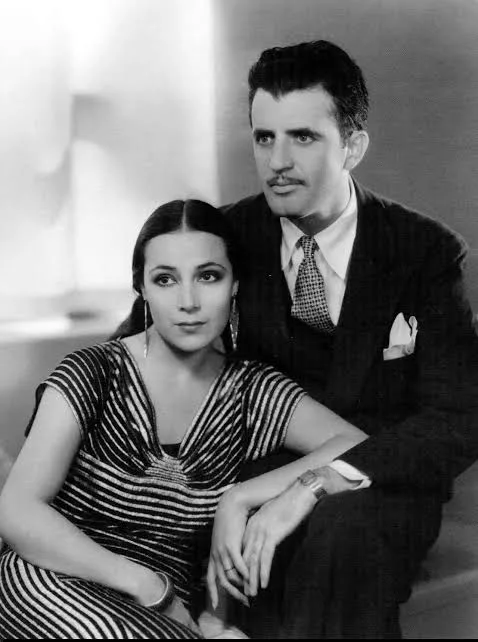
Soon after the wedding, Dolores fell seriously ill with a kidney infection. The long rest ended her contract with United Artists. When she recovered, the American producer David O. Selznick signed her to RKO Pictures.
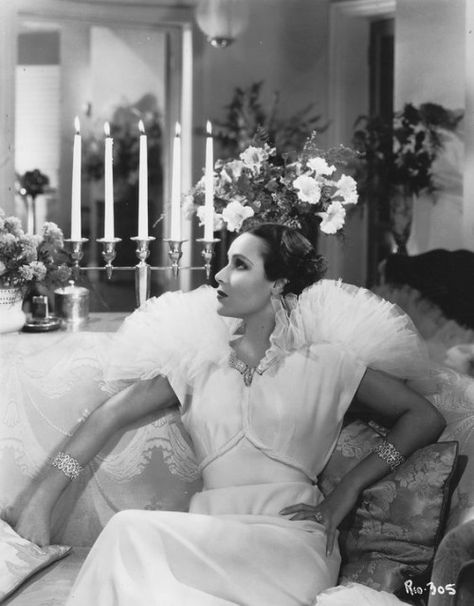
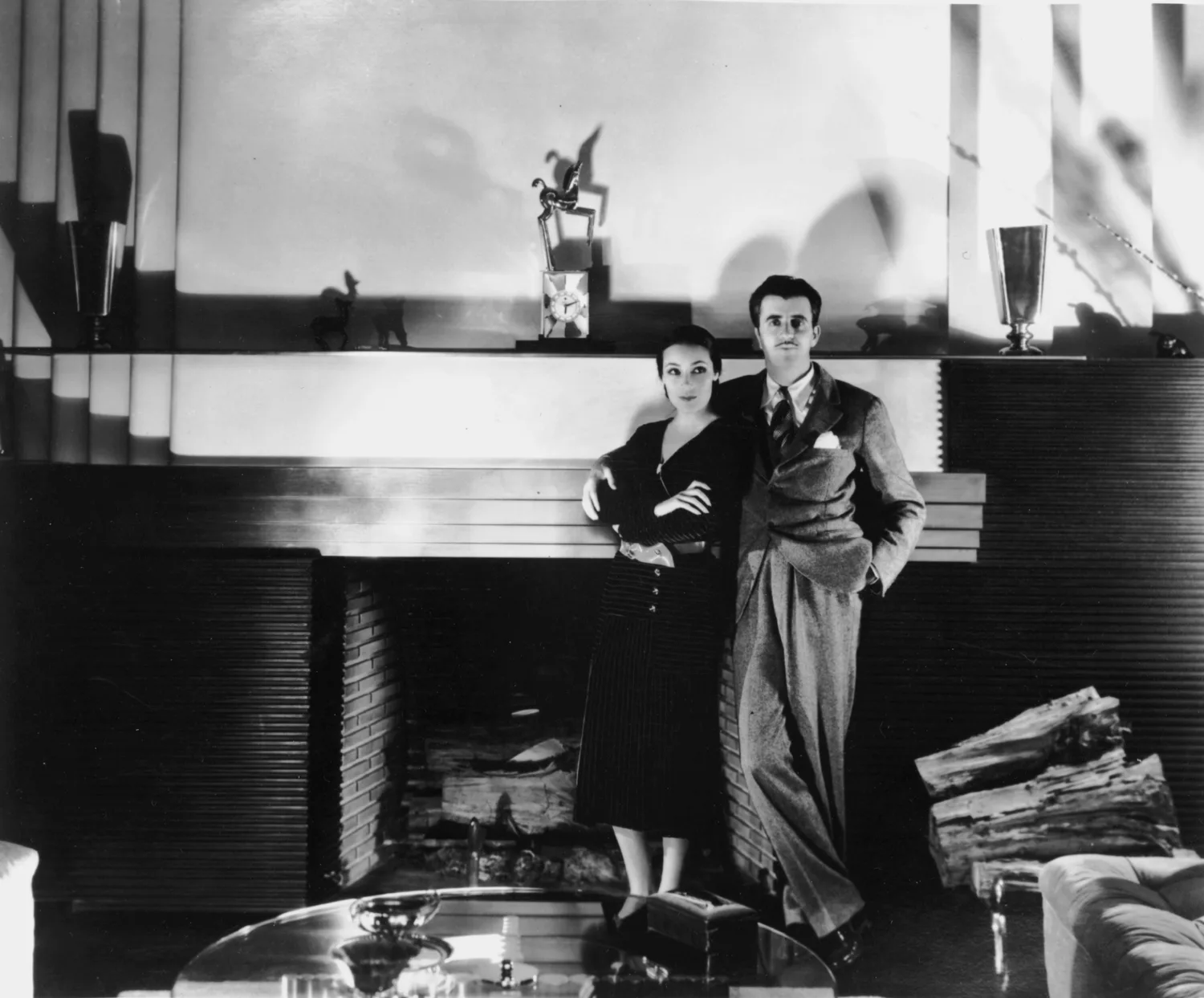
The Gibbonses became one of Hollywood's most admired couples. They lived in an Art Deco house at 757 Kingman Avenue in Pacific Palisades, designed by the architect Douglas Honnold. Gibbons created the interiors, echoing the Art Deco sets he built for MGM.
Mirrors covered the walls and doubled every shiny surface. A fluted stainless steel fireplace anchored one room. The couple kept separate bedrooms on separate floors, joined by a secret staircase between their dressing rooms.
On Sundays, they hosted brunches where guests played tennis or swam in the pool. Among them were the German-American actress Marlene Dietrich, the Swedish actress Greta Garbo, and the American actors Gary Cooper and Cary Grant.
In 1932, Selznick had a plan for her next film. He gave the American director King Vidor his instructions, and he wanted the American actor Joel McCrea as her partner: "I want del Río and Joel McCrea in a love story in the South Seas. I didn't have much of a story for the film, but be sure that it ends with del Río jumping into a volcano."
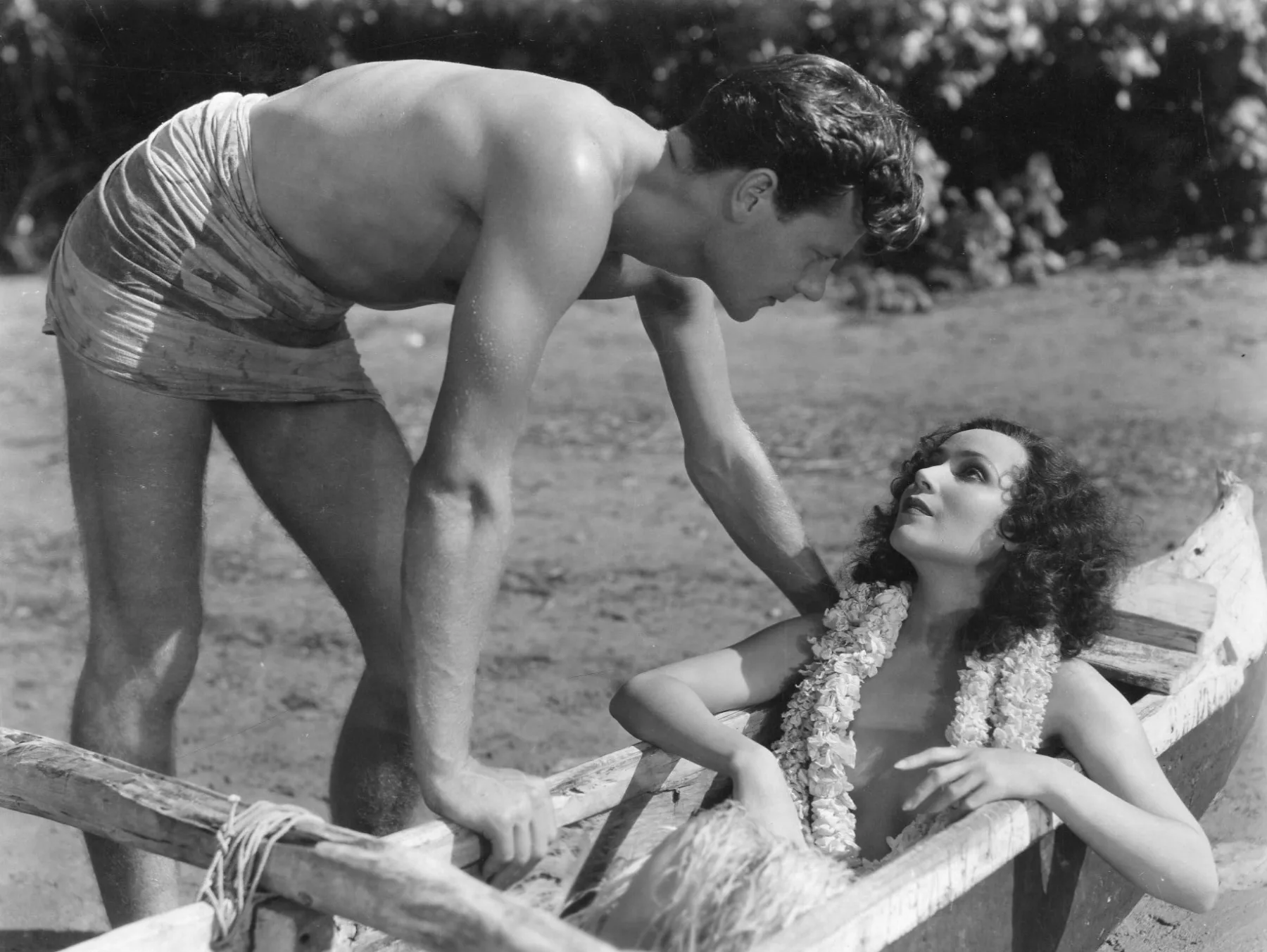
The result was Bird of Paradise (film, 1932), shot in Hawaii. Dolores played a Polynesian island girl opposite McCrea. The film caused a scandal for its revealing costumes and a swimming scene. It was made before Hollywood's Production Code was strictly enforced.
Her next film was the musical Flying Down to Rio (film, 1933). She danced "Orchids in the Moonlight" with the American dancer Fred Astaire. The film is remembered as the first pairing of Astaire and the American actress Ginger Rogers, but Dolores received top billing.
In it, she became the first major actress to wear a two piece bathing suit on screen.
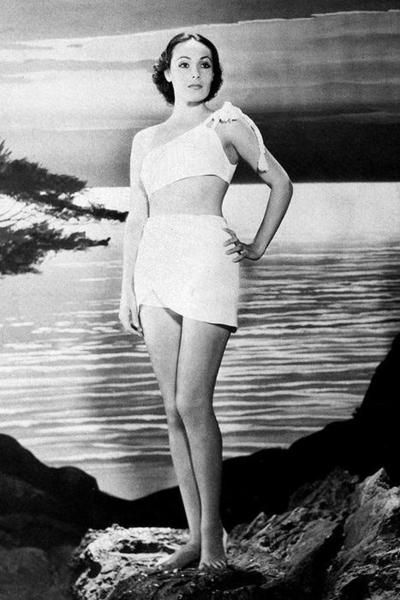
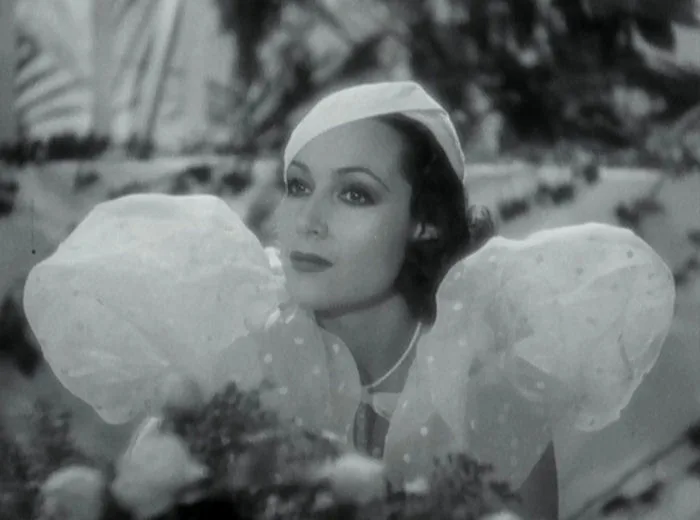

In 1933, Photoplay magazine asked doctors, artists, and designers to find the most perfect female figure in Hollywood. They chose Dolores unanimously. Women copied her clothes and her makeup.
The Austrian-American filmmaker Josef von Sternberg later said that Dolores, Dietrich, the American actress Carole Lombard, and the American actress Rita Hayworth helped him define his idea of Hollywood glamour.
When her RKO contract ended, the studio did not renew it. Warner Bros. offered her two films. The studio hoped she could rival Garbo and Dietrich.
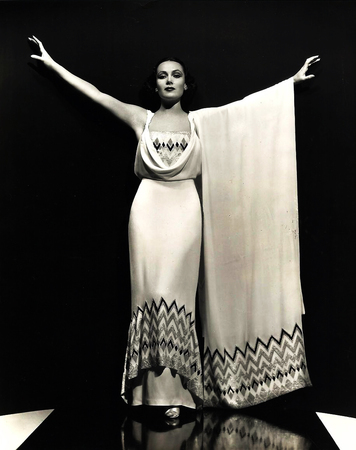
In Wonder Bar (film, 1934), she shared the female lead with the American actress Kay Francis and co-starred with the American singer Al Jolson. Then came Madame Du Barry (film, 1934), a lavish comedy about the mistress of King Louis XV of France.
The Australian-American costume designer Orry-Kelly dressed her. He never forgot their first fitting: "I draped her naked body in jersey. She wanted no underpinnings to spoil the line. When I finished draping her she became a Greek goddess as she walked close to the mirror and said, It is beautiful. Gazing into the mirror, she said in a half-whisper, Jesus, I am beautiful. Narcissistic? Probably yes, but she was right. She looked beautiful."
Censors cut Madame Du Barry heavily. It remained one of her most popular films of the decade.
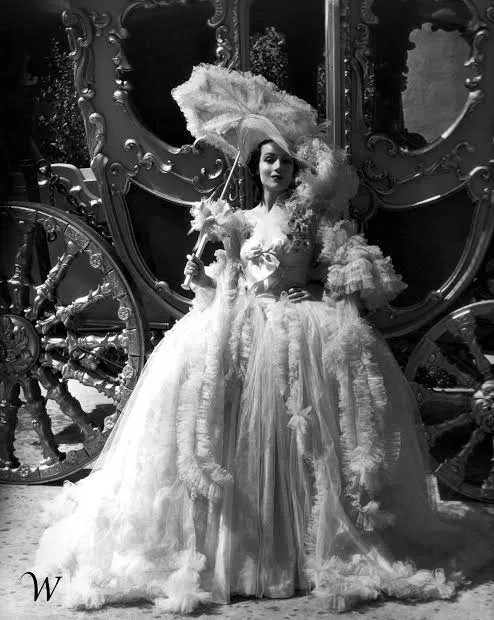
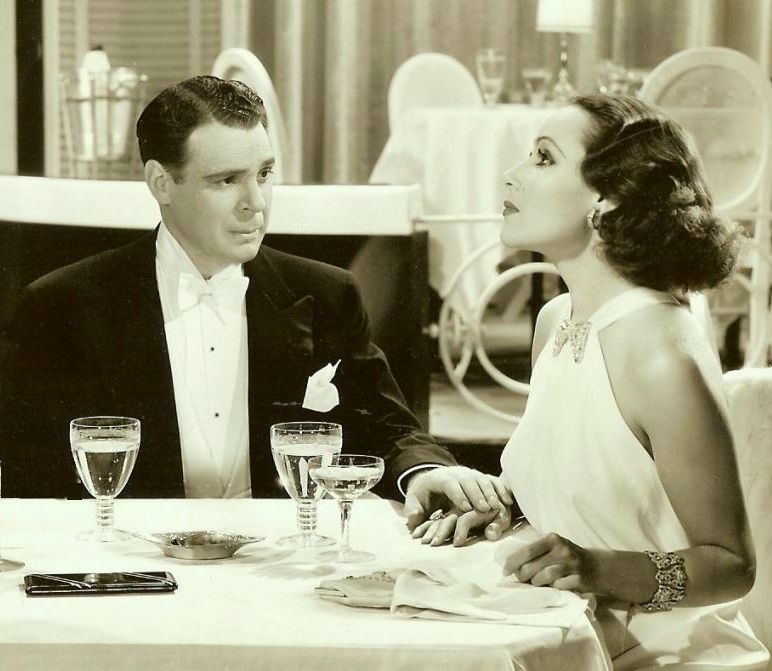
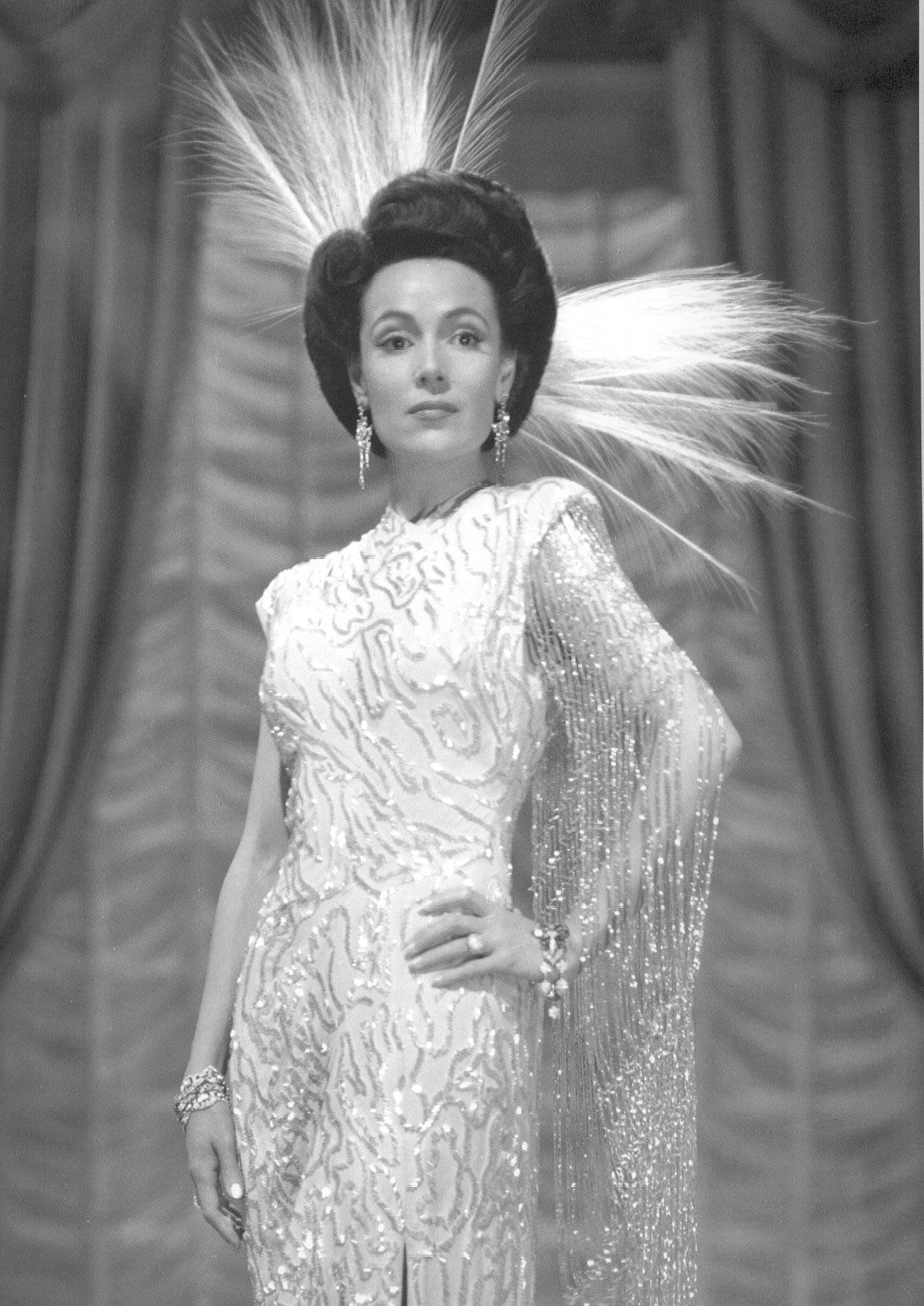
In In Caliente (film, 1935), she played a sultry Mexican dancer opposite the American actor Pat O'Brien. Orry-Kelly put her in cool white and silver gowns.
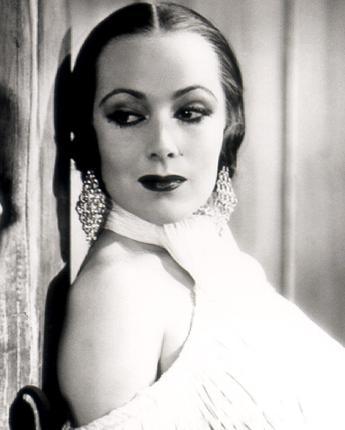
Marlene Dietrich, who knew something about glamour, gave her verdict: "Dolores del Río was the most beautiful woman who ever set foot in Hollywood."
"I have seen many beautiful women in here, but none as complete as Dolores del Río!" -- Italian Fashion designer Elsa Schiaparelli
By the late 1930s, her luck had turned. Her films at Universal and Fox failed at the box office. She turned to advertising and appeared in ads for Lucky Strike cigarettes and Max Factor makeup.

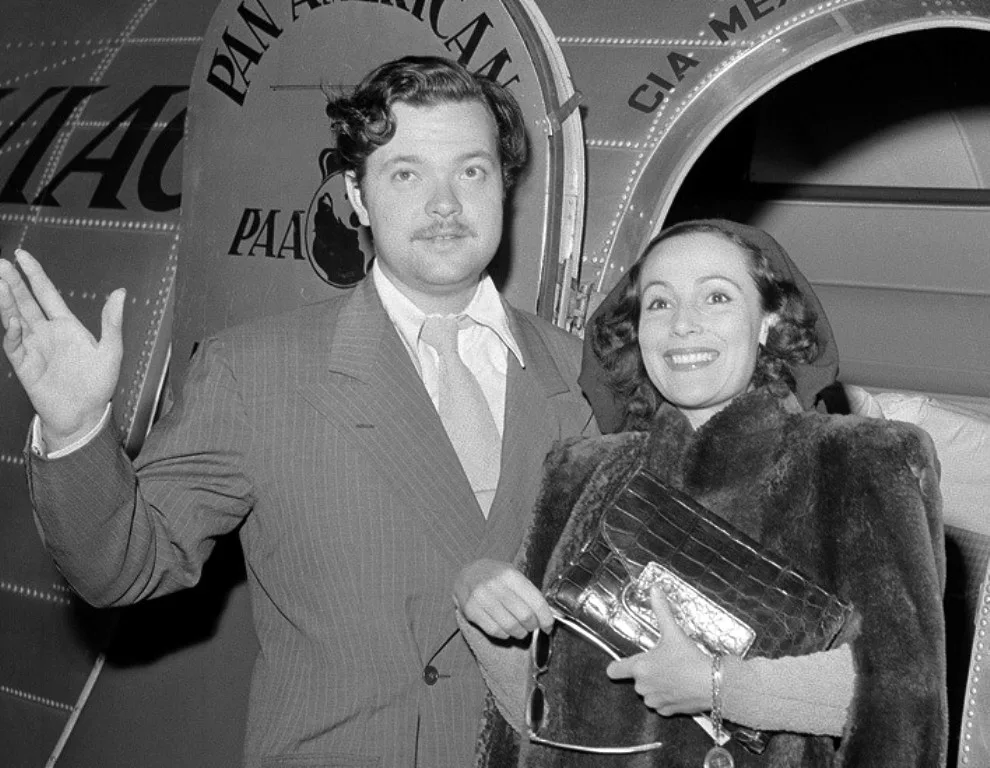
Gibbons used his influence to win her the lead in The Man from Dakota (film, 1940) at MGM. He could not do more. MGM already had its own stars, and Latin actresses had few chances to shine there.
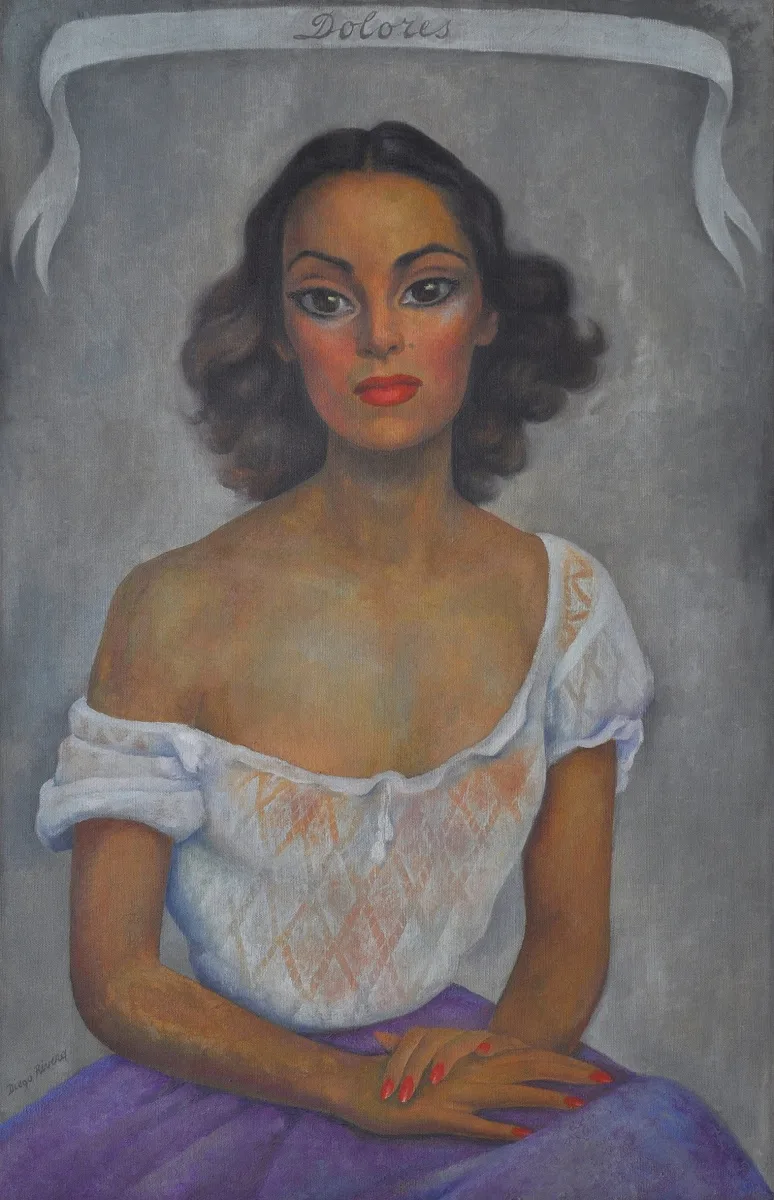
In 1938, her friend, the Mexican painter Diego Rivera, painted her portrait in New York. It became her favorite, and it hung in her Mexican home. Rivera was in love with her image, and he said so in his own way: "La más bella, la más hermosa del oeste, del este, del norte y del sur. Estoy enamorado de ella al igual que cuarenta millones de mexicanos y ciento veinte millones de estadounidenses que no pueden estar equivocados." ("The most beautiful, the most gorgeous of the west, the east, the north, and the south. I am in love with her, like forty million Mexicans and one hundred twenty million Americans who cannot be wrong.")
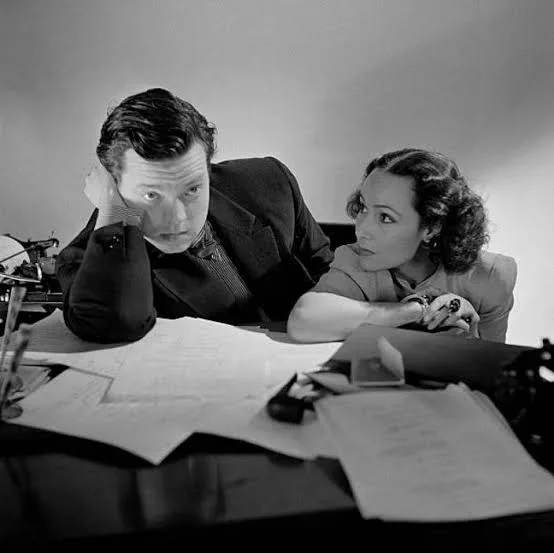
In 1940, at a party given by the American producer Darryl F. Zanuck, she met the American actor and filmmaker Orson Welles. He was ten years younger than she was and already the most talked about young man in Hollywood. He had admired her since he was a teenager.
That year, she left Gibbons. Their divorce became final in January 1941.
Dolores threw herself into Welles's chaotic world. During the making of Citizen Kane (film, 1941), she stayed at his side and calmed him through sleepless nights. Welles was dazzled by her: "She lives so graciously. Everyone around her loves her. She is the one girl you can be with and not feel the need for conversation. She has a mind full of talk, though, when she wants."
He asked the Mexican muralist José Clemente Orozco to paint her portrait. She did not like the result. "¡Él pintó su tragedia en mi rostro!" ("He painted his tragedy on my face!"), she said.

In early 1942, she began Journey into Fear (film, 1943), with Welles as producer. Then Welles left for Brazil on a goodwill tour for the American government. In Rio de Janeiro, he threw himself into Carnival, and the news of his infidelities reached Hollywood.
Dolores ended the affair with a telegram. He never answered. Weeks later, her father died in Mexico.
Her Hollywood career was fading. She decided to go home. "Quería volver a México, un país que era mío y que no conocía" ("I wanted to return to Mexico, a country that was mine and that I did not know"), she said.
Welles soon married Rita Hayworth, whom the press called "the new Dolores del Río of Hollywood." But he never forgot Dolores. Years later, he sent his children to visit her in Mexico, and she received them. His daughter Rebecca Welles said afterward: "My father considered Dolores the great love of his life."
Dolores kept a card from him for the rest of her life. It showed two slanted eyes like her own, a dove, and a banner with the word "always," signed "Orson."
In 1943, the Mexican director Emilio Fernández, known as El Indio, offered her the lead in Wild Flower (Spanish: Flor silvestre, film, 1943). It was her first film in Spanish. Fernández had adored her for years. He said he had even worked as an extra in her Hollywood films just to be near her.
Fernández worked with a close knit team: the cinematographer Gabriel Figueroa, the writer Mauricio Magdaleno, and the actor Pedro Armendáriz. Together they helped create the Golden Age of Mexican cinema.
Their next film was María Candelaria (film, 1944). Dolores played a young Indigenous woman from the lake district of Xochimilco, despised by her own people. Fernández later said he wrote the first version of the story on thirteen napkins in a restaurant. He was in love with her and could not afford a birthday present.
The shoot was tense. Her refusal to return his love made Fernández demanding and at times violent. Dolores threatened to quit several times, but she finished the film. In 1946, María Candelaria shared the top prize at the Cannes Film Festival, the first Latin American film to do so.
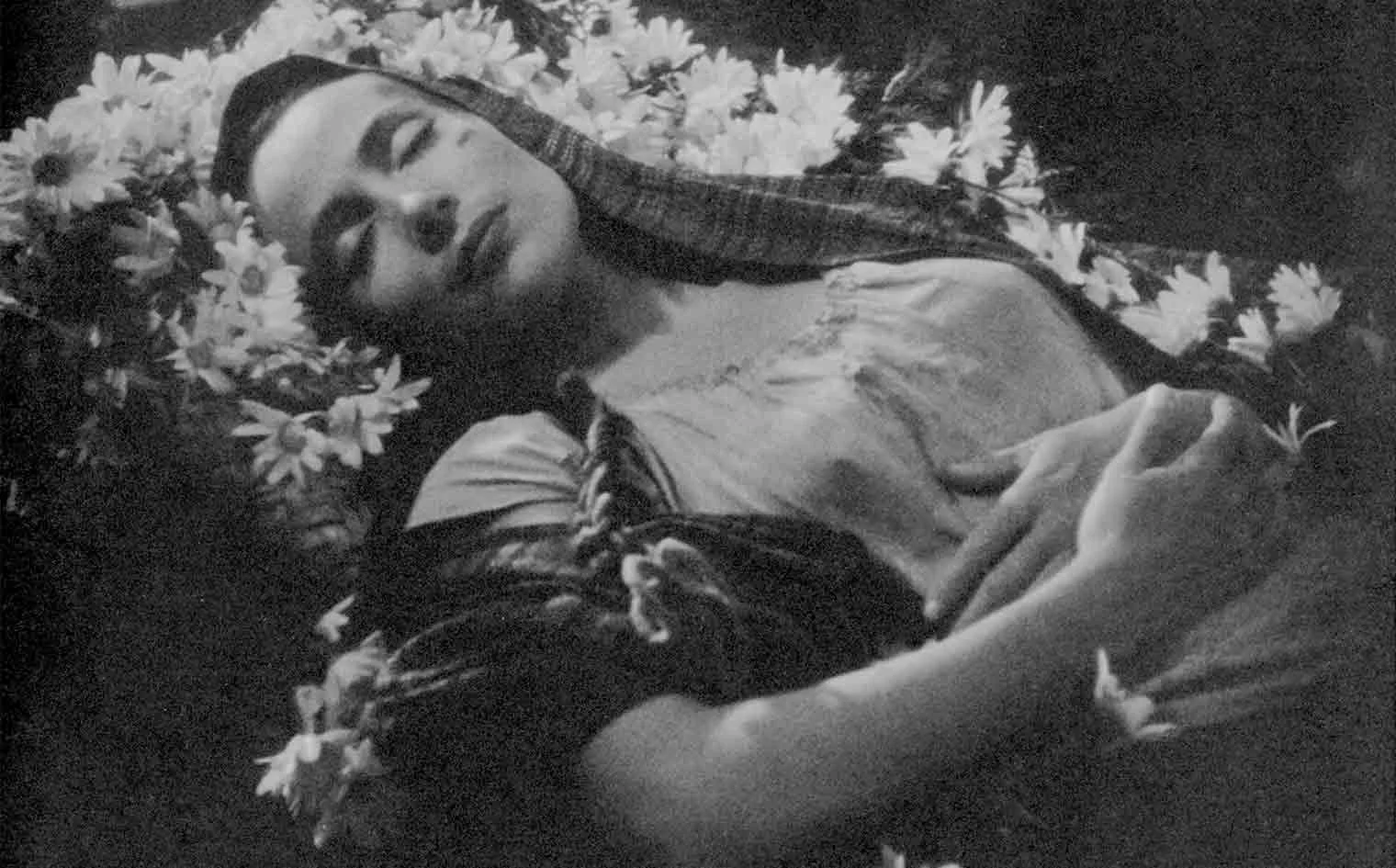
Mexico changed her look. In Hollywood, she had been a figure of furs, satin, and diamonds. Fernández and Figueroa filmed her in simple dresses, with her Mexican features in full view. "Me quité pieles y diamantes, zapatos de raso y collares de perlas; todo lo canjeé por el rebozo y los pies descalzos" ("I took off furs and diamonds, satin shoes and pearl necklaces; I traded it all for the shawl and bare feet"), she said.
The Mexican novelist Carlos Fuentes captured the effect in a phrase: she was "una diosa que se sabía mujer" ("a goddess who knew she was a woman").
"The two most beautiful things in the world are the Taj Mahal and Dolores del Río". -- Irish-British playwright George Bernard Shaw
For Las abandonadas (film, 1945), she played a woman abandoned by her lover and cast out by her father. A famous Hollywood designer made her costly wardrobe, and the budget soared. The authorities banned the film in late 1944. It opened in March 1945, and the scandal helped it succeed. Dolores won the first Ariel Award for Best Actress.
In 1945, a mix up in the mail sent her the script of La selva de fuego (film, 1945). It had been written for the Mexican actress María Félix. At the same time, Félix received the script of Vértigo (film, 1946), written for Dolores. When both women realized the mistake, they kept the scripts. The press began to invent a rivalry.
Dolores enjoyed the change. In La selva de fuego, she wore a daring costume that recalled her years as a Hollywood sex symbol.
In 1947, the American director John Ford invited her to star in The Fugitive (film, 1947), filmed in Mexico. She played an Indigenous woman in love with a hunted priest, played by the American actor Henry Fonda.
That year, she traveled to Buenos Aires to make Story of a Bad Woman (Spanish: Historia de una mala mujer, film, 1948). Eva Perón, Argentina's First Lady, invited her to tea. Dolores declined because of her filming schedule. It is said that the next day, the government ordered the whole film industry to shut down so she could have tea with Mrs. Perón.

In 1949, in Acapulco, she met an American millionaire and theater producer named Lewis A. Riley. Their romance lasted ten years before they married.
She won two more Ariel Awards, for Doña Perfecta (film, 1951) and El niño y la niebla (film, 1953). In 1952, the American store Neiman Marcus gave her its fashion award, and the press called her the best dressed woman in America.
In 1954, the American government refused her a work permit for Broken Lance (film, 1954). It accused her of sympathy with communism, because she had signed a world peace appeal and counted leftist artists among her friends. The Mexican actress Katy Jurado took her role.
Dolores wrote to the American government: "I'm a Catholic woman who only wants to live in peace with God and with men." It took two years to clear her name.
In 1956, she turned to the theater. She trained with the American acting teacher Stella Adler and made her stage debut in July on a summer tour of New England. In 1957, she served as vice president of the jury at the Cannes Film Festival.
With Riley, she founded a theater company. Their first Mexican production was Lady Windermere's Fan (play, 1892), by the Irish writer Oscar Wilde, in 1958. The Mexican poet Salvador Novo translated all her plays.
In 1959, the Mexican director Ismael Rodríguez cast her opposite María Félix in La Cucaracha (film, 1959). The press predicted a war. Instead, filming went smoothly, and the two women became friends.
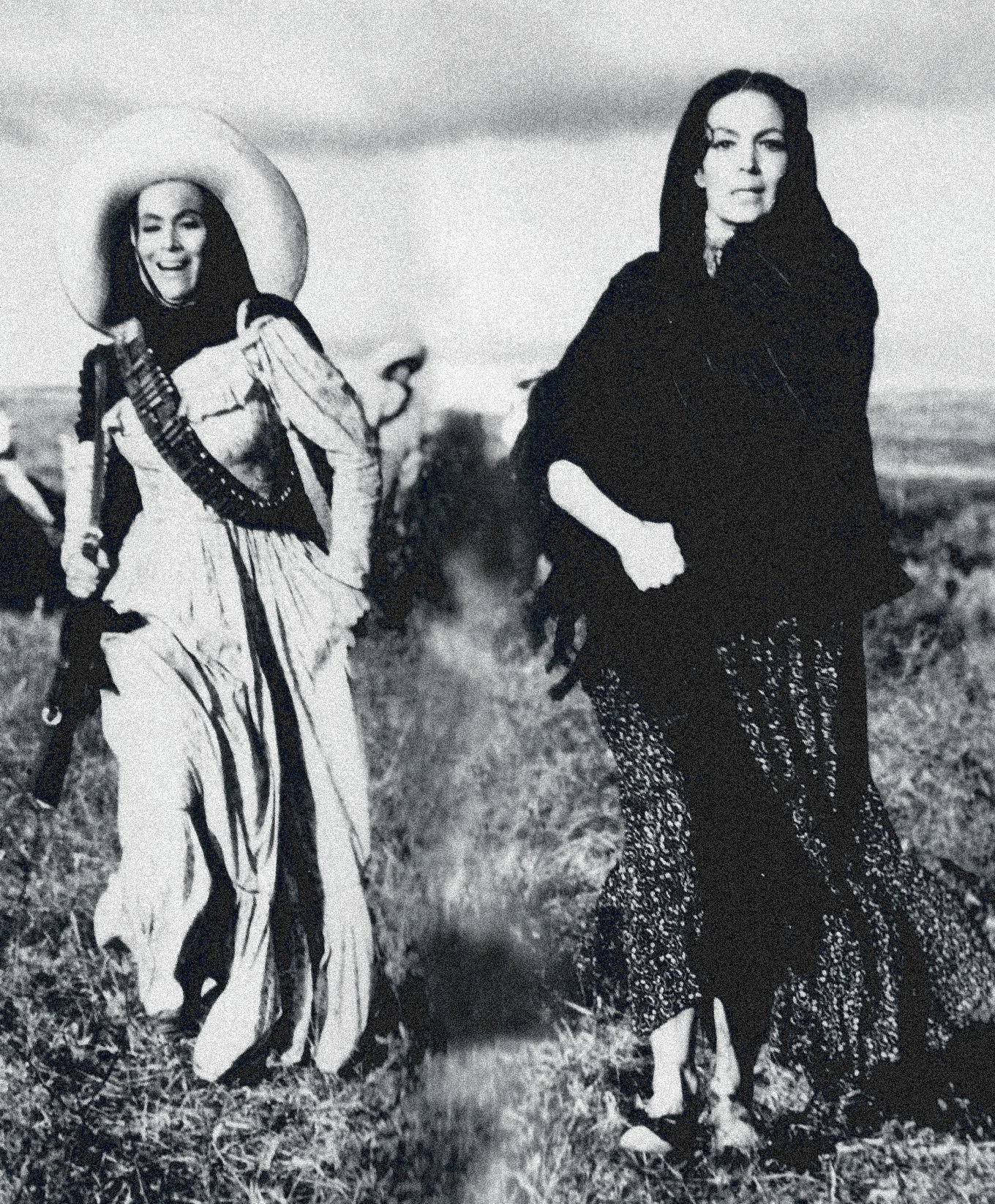
That same year, she and Riley married in a private ceremony in New York.
In 1960, after eighteen years away, she returned to Hollywood. She played the mother of the American singer Elvis Presley's character in Flaming Star (film, 1960).

Actors and crew who had known her since 1925 welcomed her warmly. That year she also received a star on the Hollywood Walk of Fame.
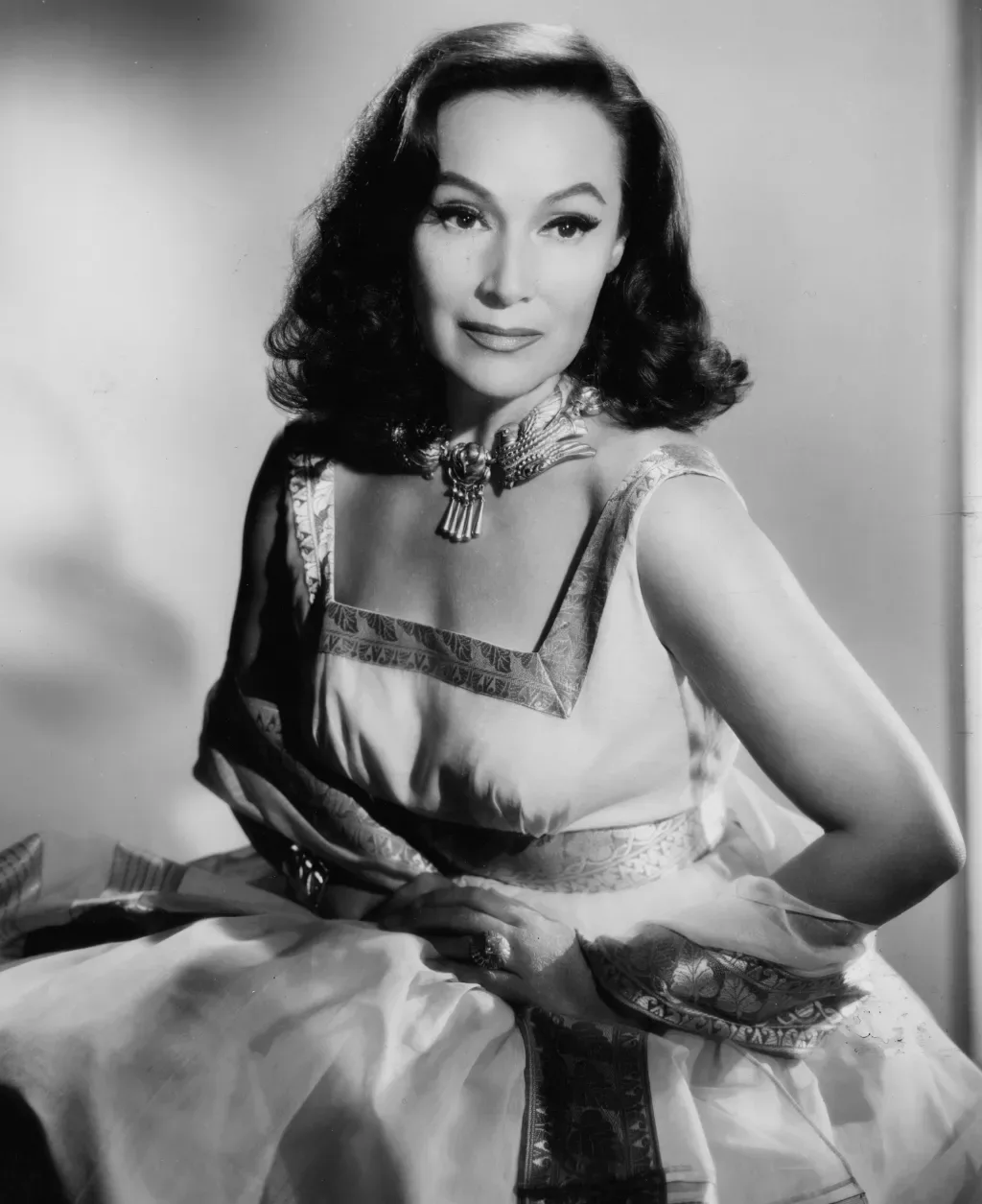
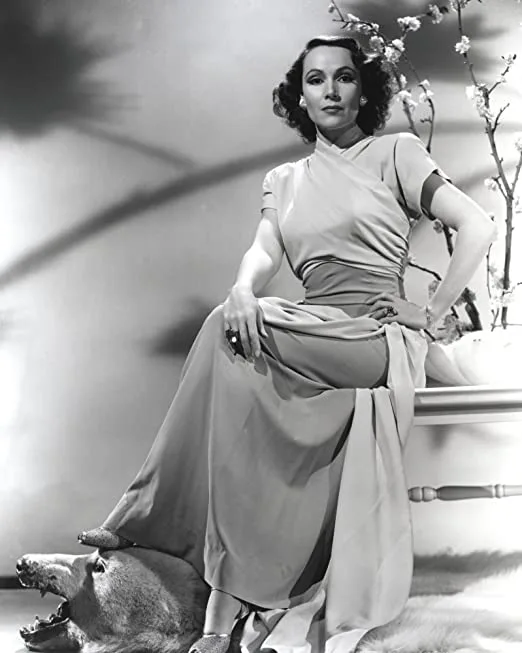
In 1962, she starred in Ghosts (play, 1881), by the Norwegian playwright Henrik Ibsen. Her mother died while she was preparing the play. Dolores refused to cancel the performances, and the public admired her for it.
In 1964, she returned to Hollywood once more for Ford's Cheyenne Autumn (film, 1964). In 1970, she produced and starred in The Lady of the Camellias (play, 1852), the tragic love story by the French writer Alexandre Dumas fils. She was in her mid sixties, and audiences cheered her nerve in playing the young heroine.
She also gave her time to causes. In 1970, she helped found Rosa Mexicano, a group of actresses that created a day nursery for the children of working performers. She led it until 1981. After her death, it was renamed in her honor.
She helped found the Cervantino arts festival in Guanajuato and served as a UNICEF spokesperson in Latin America.
Her last film role was the grandmother in The Children of Sanchez (film, 1978). In 1978, she developed a bone infection. She had long given herself vitamin injections, and one is believed to have been contaminated. She developed hepatitis and later cirrhosis of the liver.
In October 1981, she appeared on stage at a tribute in San Francisco. The American director George Cukor called her one of the "First Ladies of American Cinema." It was her last public appearance. In 1982, she received the George Eastman Award for her contribution to film.
Dolores del Río died on 11 April 1983 in Newport Beach, California, at seventy-eight. It was sixty-two years to the day after her first wedding. She left her art collection to Mexico's national institute of fine arts.

Her ashes were taken to Mexico City. She was later honored with a tomb in the Rotunda of Illustrious Persons, where the country buries its great artists.

Her style outlived her. The French couturier Jean Patou named a dress "Dolores" after her. In 1995, the British designer John Galliano built a collection around her, also called "Dolores."The American actor Vincent Price kept a different kind of promise. After her death, he sometimes signed his autographs "Dolores del Río." When people asked why, he answered: "I promised Dolores on her deathbed that I would not let people forget about her."