People
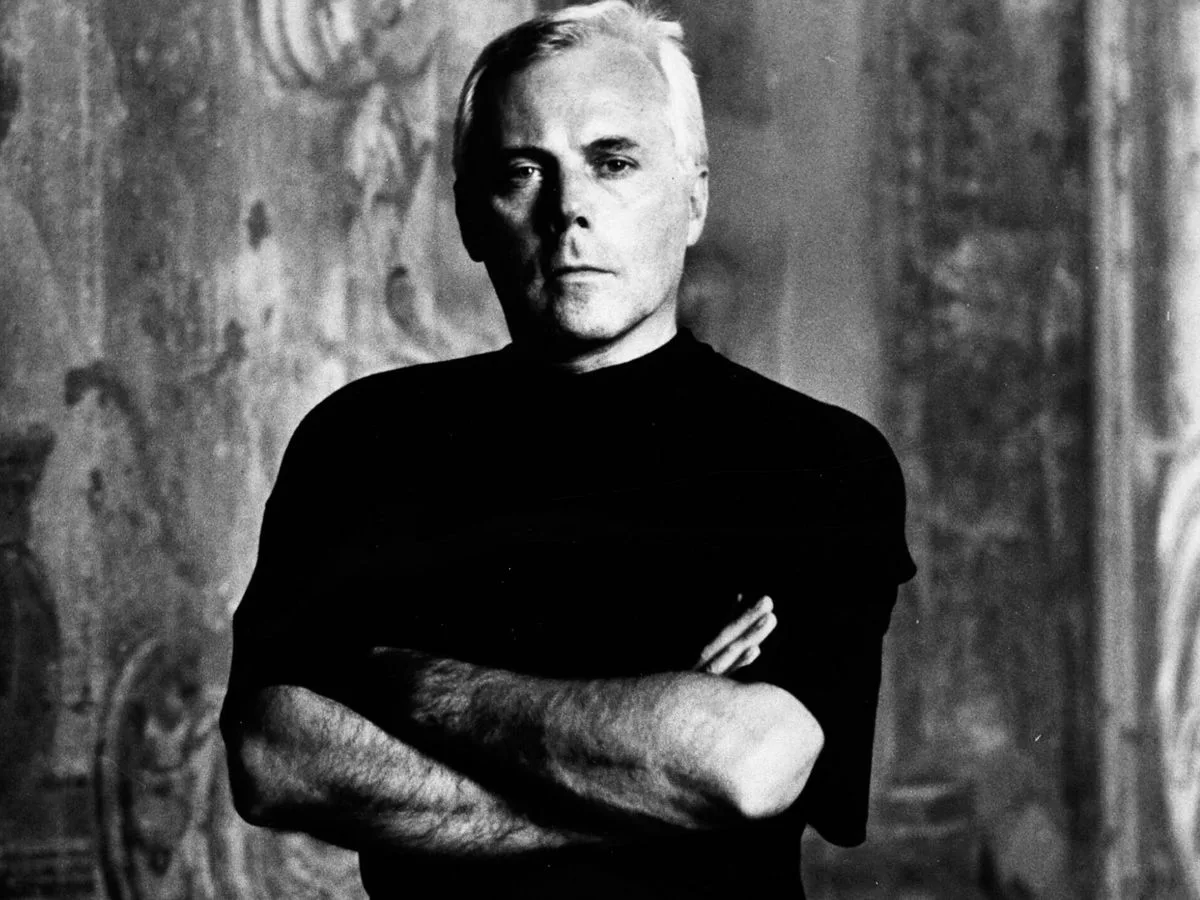
Giorgio Armani (11 July 1934 – 4 September 2025)
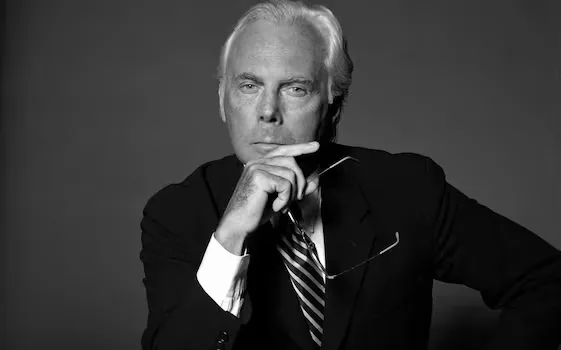
Giorgio Armani (11 July 1934 – 4 September 2025) was an Italian fashion designer and the founder of the Armani fashion house, widely regarded as one of the most influential designers of the twentieth century. He built his reputation on a single radical idea, the deconstructed, unpadded jacket, that quietly rewrote the rules of both men's and women's tailoring, and he ran the company he founded for exactly fifty years without ever selling a share of it to an outsider.
Biography
Giorgio Armani was born on 11 July 1934 in Piacenza, in northern Italy, the middle of three children of an accountant father and a homemaker mother. The Second World War arrived during his childhood, and it was brutal: the family went hungry for long stretches, some of his friends were killed in Allied bombing raids, and Armani had to play in the streets among undetonated artillery shells with the children in his town.
As a boy he was fascinated by the human body, molding small dolls out of mud with a coffee bean hidden inside each one, a habit that later fed a genuine interest in anatomy. That interest led him, after the war, into two years of medical school in Milan.
Compulsory military service interrupted his studies. Stationed at a military hospital in Verona, Armani found himself with enough free time to attend the city's seasonal fashion exhibitions, and the idea of a different career began to take hold.
In 1957 he took a job at La Rinascente, Milan's leading department store, working as a window dresser and clerk and helping introduce emerging design names like Marimekko to Italian shoppers. In the early 1960s, the couturier Nino Cerruti recruited him to design menswear, despite Armani having no formal training in design at all. What he brought instead was years spent handling fabric on a retail floor, watching exactly what real customers responded to.
In 1966, on a short two-day vacation in Forte dei Marmi, Armani met Sergio Galeotti, an architect by training. "I crossed paths with Sergio in a car," Armani recalled decades later. "I immediately liked his Tuscan smile, and we quickly became friends." Galeotti became both his life partner and, before long, his business partner.
To raise the modest capital needed to start their own label, Galeotti convinced Armani to sell his Volkswagen. "We had no idea what we were doing," Armani admitted. "Only that we wanted to do it."
In 1975, the two men founded Giorgio Armani S.p.A. and launched their first collection, with Galeotti running the company's finances and administration while Armani designed. "He gave me courage and confidence," Armani said of him. "He told me, you have significant potential."
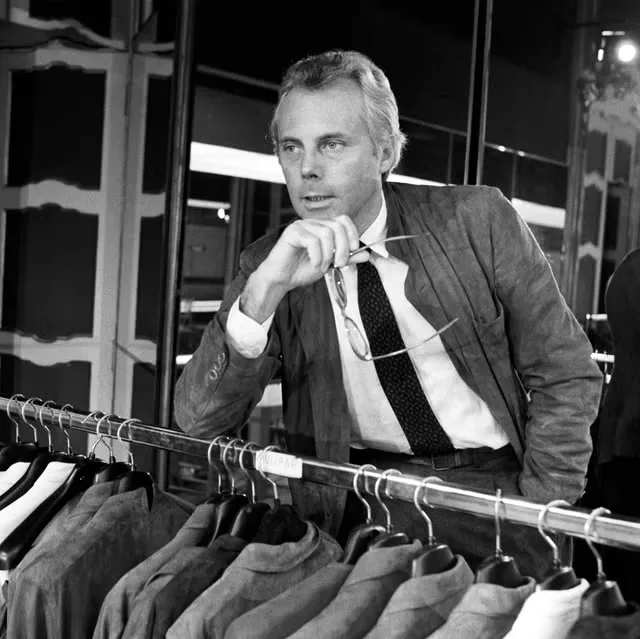
The idea that made Armani's name was deceptively simple: take the heavy interior canvas, padding, and structure out of a traditional jacket, and let the fabric fall the way it actually wanted to fall.
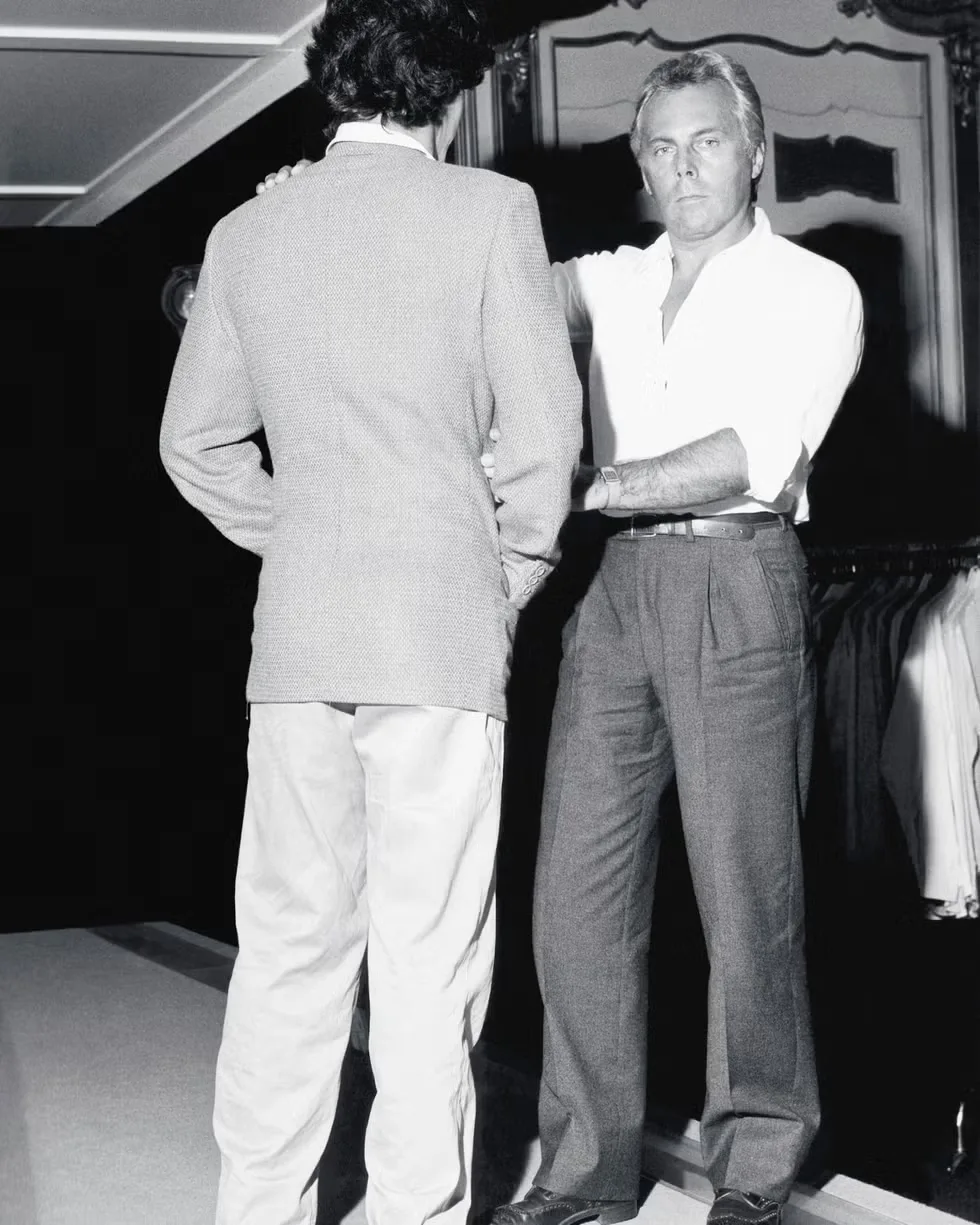
The result looked softer, moved differently on the body, and felt, for the first time in generations of tailoring, genuinely relaxed rather than armored. Armani brought the silhouette to menswear first, then reworked it for women, creating the fluid, wide-shouldered blazer that would come to define an entire decade of female power dressing.
In 1980, Armani dressed Richard Gere in Paul Schrader's American Gigolo, filling the film with his own tailoring until the clothes were nearly a second lead character.
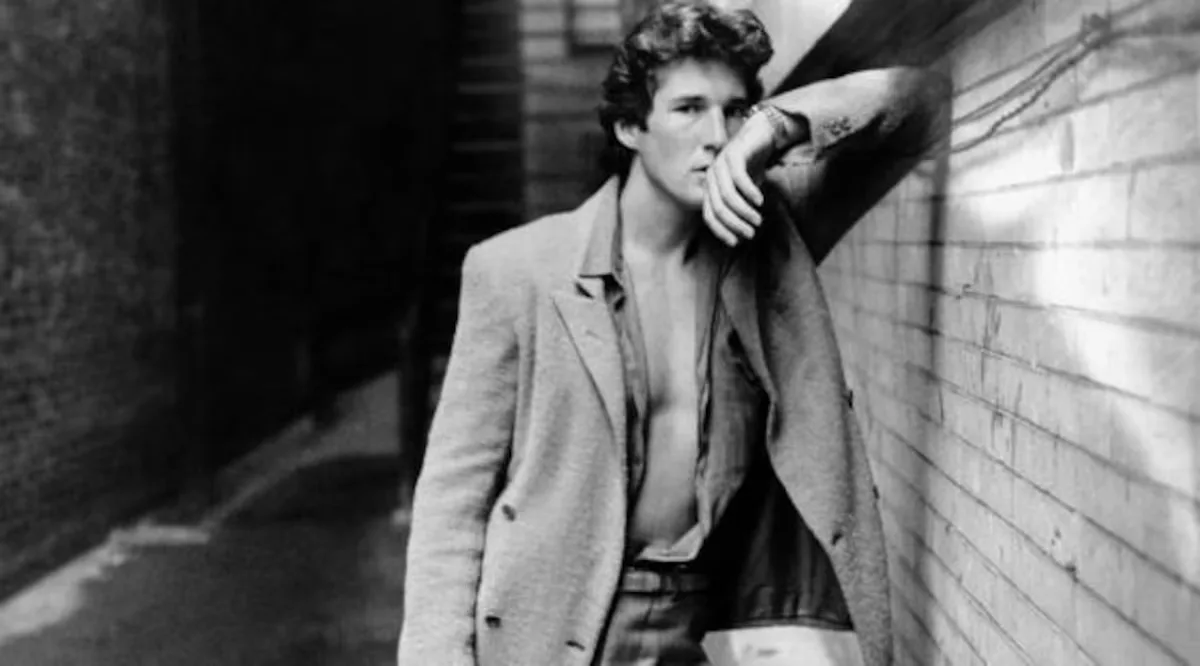
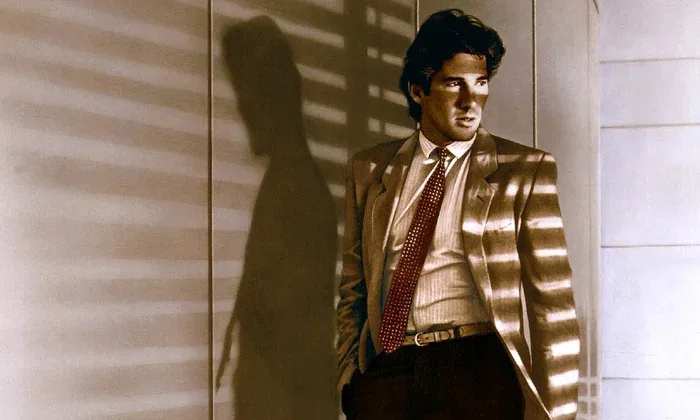
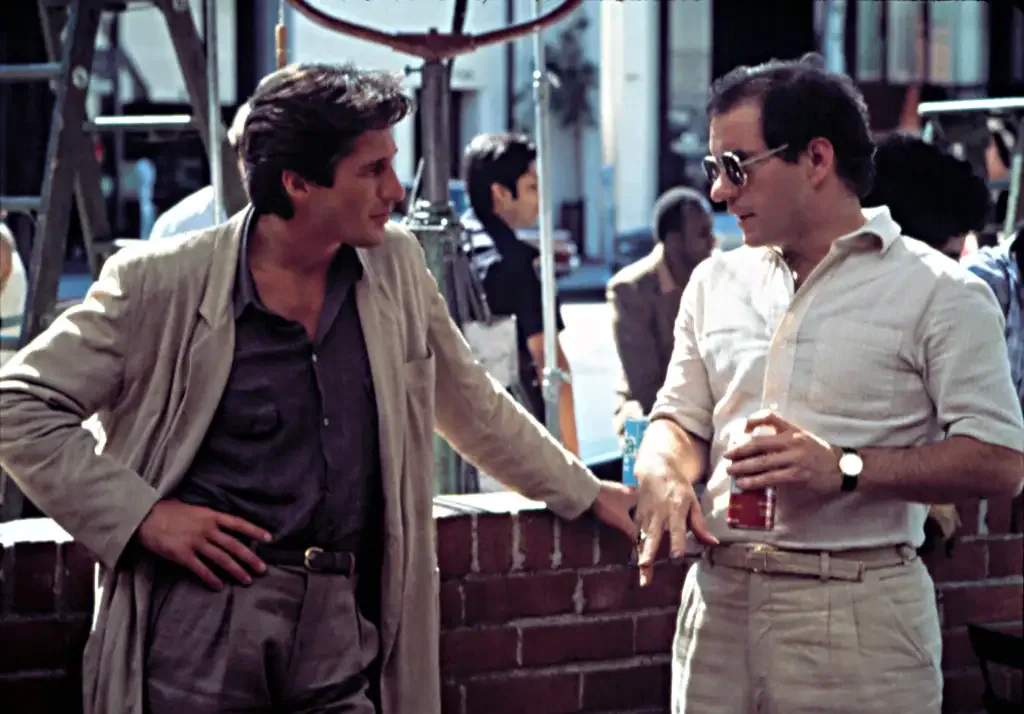
The film made Armani an international name almost overnight, and he went on to design costumes for more than thirty other films, including wardrobes for Cate Blanchett in Truth and Jodie Foster in Elysium.
Of the women's wear that made him famous, Armani later wrote that he had set out to create "a new kind of femininity that forced men to look at women with new eyes." He admired, he said, how women could be seductive "without resorting to an exhibitionism that easily slips into vulgarity and excess," and credited American women as "the first to appreciate my work, and my audacity."
On 14 August 1985, Sergio Galeotti died in Milan at forty. Newspapers at the time reported a heart attack, a discretion typical of the era, but the death was in fact linked to complications from AIDS. "When Sergio died," Armani said years later, "a part of me died."
Armani did not take another public partner for many years, but eventually built a decades-long relationship with Pantaleo "Leo" Dell'Orco, whom he had first met in a Milan park in the 1970s and who had worked inside the Armani company since 1977, eventually rising to head its Men's Style Office. Armani kept the relationship largely private, but in a 2024 interview described Dell'Orco simply as the person closest to him.
Under Armani's singular control, the company grew into a roughly ten-billion-dollar empire spanning three main lines, Giorgio Armani, Emporio Armani, and Armani Exchange, along with later ventures into restaurants and hotels.
In an industry that consolidated aggressively around him for decades, Armani never sold so much as a share of his business to an outside investor, and remained personally involved in every detail of it until the very end. "Every photograph, every font, everything," one longtime colleague said of his attention. "He was involved in every step of the process."
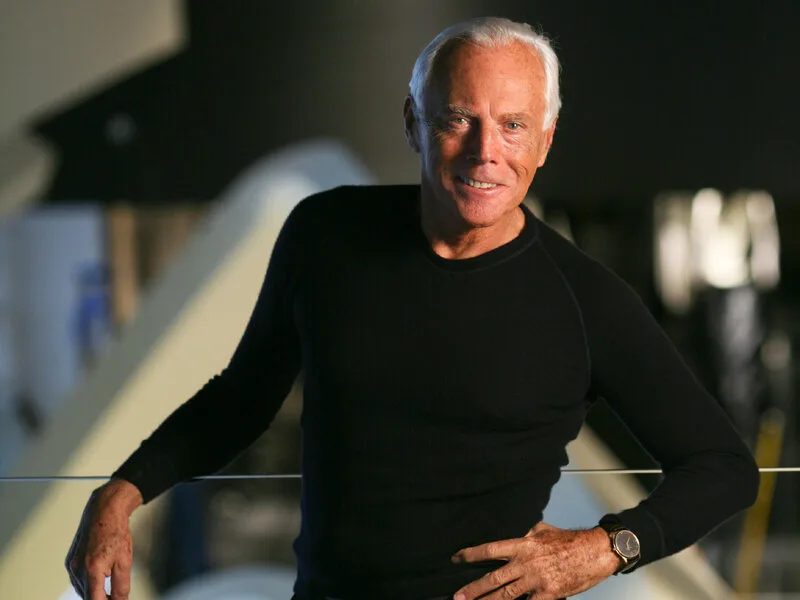
Reluctant for years even to discuss what would happen to the company after him, Armani eventually established a foundation specifically to prevent his businesses from ever being broken up or sold off, and named his creative successors himself: Leo Dell'Orco to lead menswear, and his own niece, Silvana Armani, to lead womenswear, across all three of the house's collections.
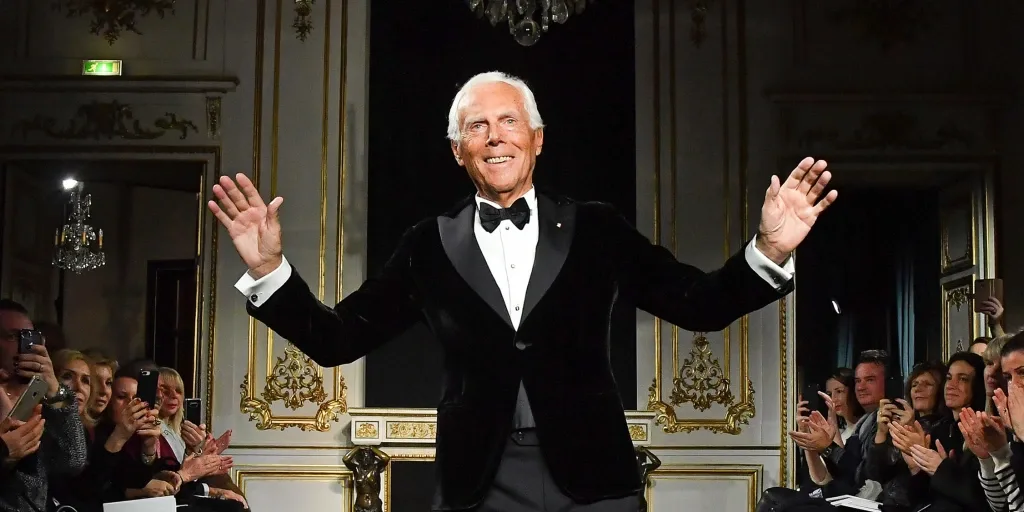
He kept working until his final months, designing the uniforms Italy's athletes would wear at the 2026 Winter Olympics and preparing a final collection to mark his house's fiftieth anniversary.
Giorgio Armani died in Milan on 4 September 2025, at ninety-one. His company said he had passed away peacefully, surrounded by those he loved.