People
Lauren Bacall (born Betty Joan Perske; 16 September 1924 – 12 August 2014)
"You know how to whistle, don't you, Steve? You just put your lips together and blow." Lauren Bacall, in To Have and Have Not (film, 1944)
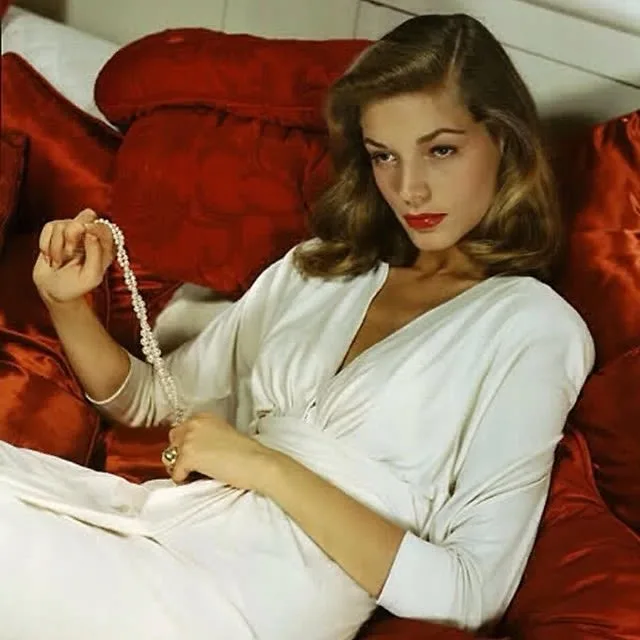
Lauren Bacall (16 September 1924 – 12 August 2014) was an American actress, model, and Broadway star with a low, smoky voice and a gaze that became known as The Look. At nineteen, she walked off a Harper's Bazaar cover and into To Have and Have Not (film, 1944), opposite the American actor Humphrey Bogart. They fell in love on set, married the next year, and became Hollywood's most famous couple, Bogie and Bacall. Widowed at thirty-two, she rebuilt her life on the stage, won two Tony Awards, and kept working for seventy years, always in tailored, easy clothes.
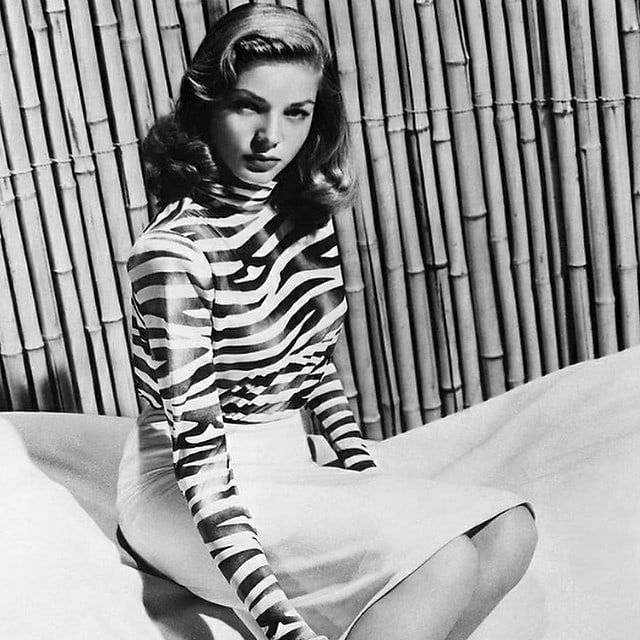
Biography
Betty Joan Perske was born on 16 September 1924 in the Bronx, New York City. She was an only child.
Her father, William Perske, was an American salesman of medical instruments. Her mother, Natalie Weinstein-Bacal, was a Romanian-born secretary who had come to America through Ellis Island. Through her father, Betty was a second cousin of Shimon Peres, the future Israeli prime minister and president.
Her parents divorced when she was six. She lost touch with her father, and her mother became the center of her world.
The family had little money, but wealthy uncles paid for her schooling. She grew up in Brooklyn and went to a girls' boarding school in Tarrytown, New York, and then to Julia Richman High School in Manhattan.
Betty wanted to act. In 1941, she studied for a year at the American Academy of Dramatic Arts in New York, where she dated a fellow student, the American actor Kirk Douglas.
To be near the stage, she worked as an usher at the St. James Theatre. She also worked as a fashion model, for a department store.
In 1942, at seventeen, she made her Broadway debut as a walk-on in Johnny 2 X 4 (play, 1942). The same year, she was crowned Miss Greenwich Village.
One night, at a club in the East 50s, she met Nicolas de Gunzburg, a Paris-born editor at Harper's Bazaar. He asked her to stop by his office the next day.
He passed her on to the magazine's fashion editor, the American Diana Vreeland, who is often wrongly credited with discovering her. Vreeland sent her to the American photographer Louise Dahl-Wolfe, who shot her in Kodachrome color for the cover of March 1943.
On the cover, Betty stands outside a Red Cross blood donation office. She wears a navy suit, a white blouse, black gloves, and a cloche hat over long waves of hair. Her red bag matches her red lipstick.
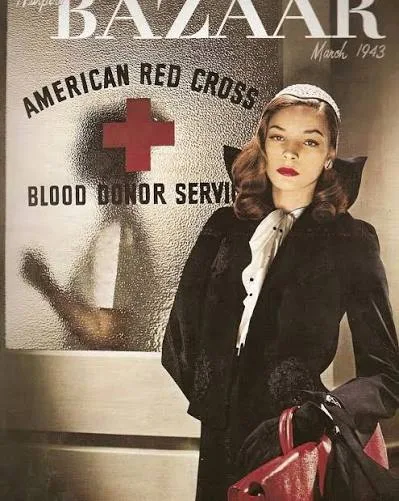
In California, the American socialite Nancy "Slim" Keith, then married to the American director Howard Hawks, saw the cover. She urged her husband to give the girl a screen test.
Hawks asked his secretary to find out more about her. The secretary misunderstood and sent Betty a ticket to Hollywood.
Hawks signed her to a seven-year contract at $100 a week, and he managed her career himself. He changed her first name to Lauren. For her surname, she took her mother's maiden name, Bacal, and added an L.
Slim Hawks took her in hand. She taught the girl from the Bronx how to dress, how to behave, and what good taste looked like.
Her voice was high and nasal, and Hawks wanted it low. A voice coach made her shout verses of the English playwright William Shakespeare for hours every day, until the voice dropped.
She was tall for a young actress of the 1940s, at 1.74 meters. She was even half an inch taller than her future leading man.
In January 1944, she tested for To Have and Have Not (film, 1944), from a novel by the American writer Ernest Hemingway. The test scene was a seduction, with a line about whistling.
She was terrified, and her hands and head shook. To keep still, she pressed her chin down against her chest and looked up at the camera with her eyes.
That nervous trick became The Look. It became her trademark for life, along with her voice.
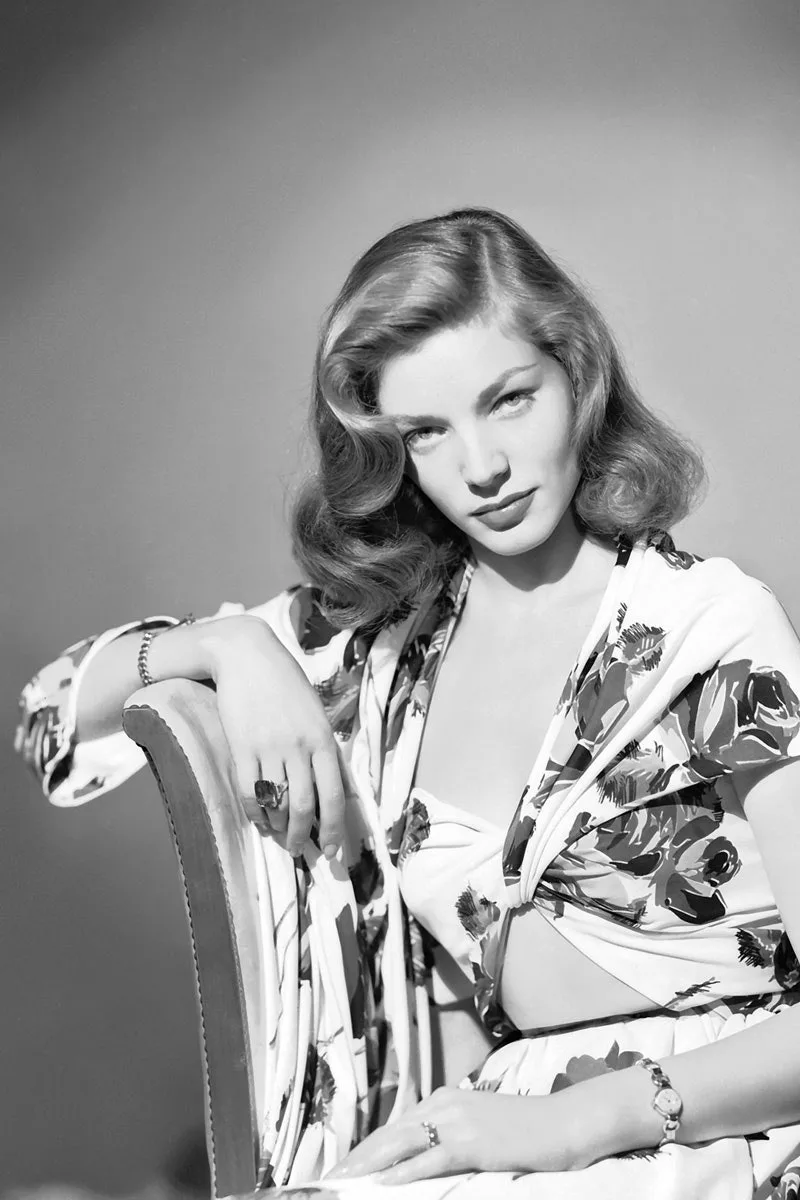
Her leading man was Bogart, a forty-four-year-old star married to his third wife, the American actress Mayo Methot. Bacall was nineteen.
Her character was named Slim, after Slim Hawks. Bogart's character was Steve, the name Slim called her husband. Some of Bacall's lines are said to have come straight from Slim.
The whistle scene had been written only for the test. But the Canadian-born American studio head Jack L. Warner told Hawks to put it in the film.
In the film, Bacall gave Bogart the line that made her famous: "You know how to whistle, don't you, Steve? You just put your lips together and blow."
On set, the chemistry was immediate. Bogart called her "Baby," and a few weeks into shooting, they fell in love.
Hawks saw what was happening on screen and built up her part. He also disapproved of the affair. Two weeks before the end of filming, he told Bacall that Bogart did not love her, and he threatened to send her to Monogram Pictures, a studio for cheap films.
Bacall told Bogart, who was furious. The quarrel held up the production for about two weeks.
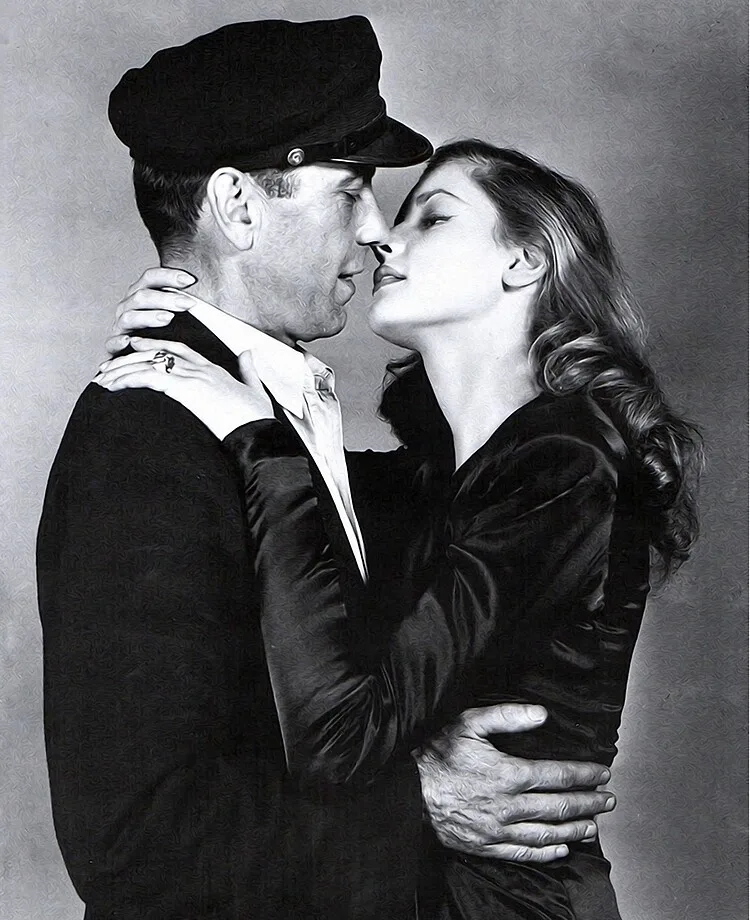
The film opened on 11 October 1944. Bacall became a star overnight.
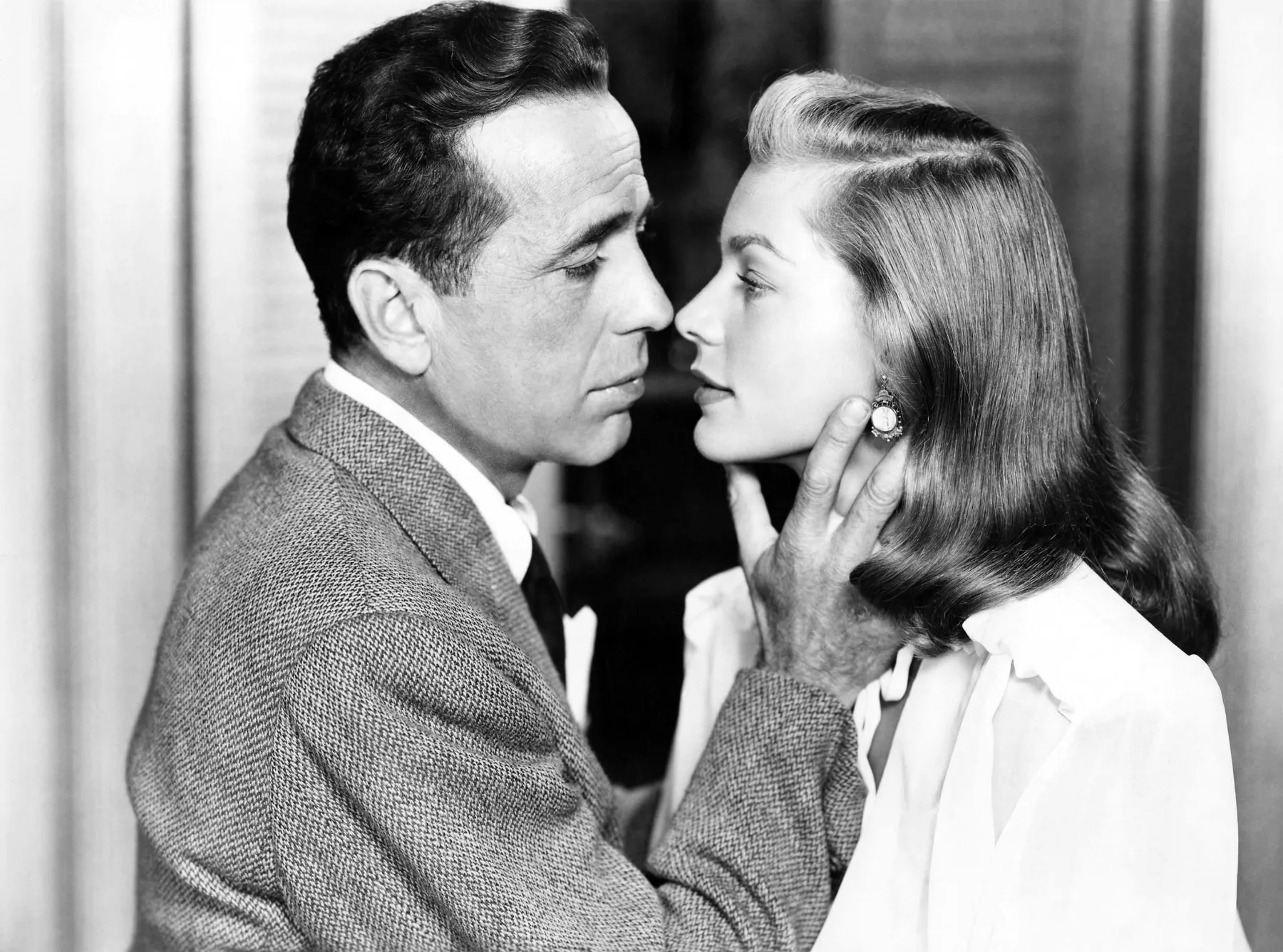
Warner Bros. sent her on a publicity tour. On 10 February 1945, at the National Press Club canteen in Washington, D.C., the studio's publicity chief asked her to sit on top of the piano.
The man playing it was Harry S. Truman, the Vice President of the United States. Two months later, he was president.
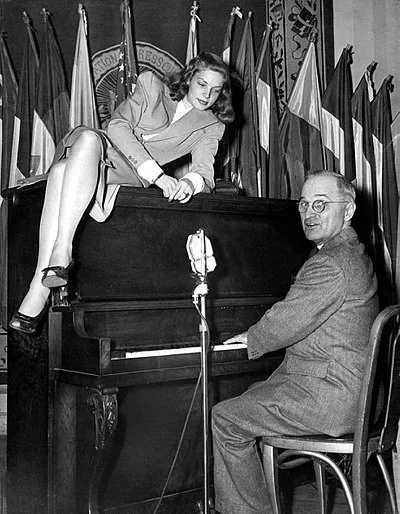
Bogart filed for divorce from Methot that February. Before the wedding, he gave Bacall a charm bracelet with a small gold whistle. It was engraved: "If you want anything, just whistle."
He also set his terms. "When I married Bogie, I agreed to put my career second, because he wouldn't marry me otherwise," Bacall said later.
They married on 21 May 1945 at Malabar Farm in Lucas, Ohio, the country home of the American novelist Louis Bromfield, a close friend of Bogart. She was twenty. He was forty-five.
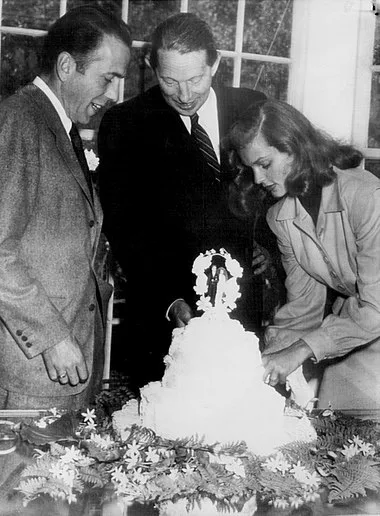
Her next film nearly undid her. Confidential Agent (film, 1945), opposite the French actor Charles Boyer, was poorly received, and Bacall herself thought it could have damaged her career badly.
Hawks rescued her with The Big Sleep (film, 1946), from the novel by the American writer Raymond Chandler. She played Vivian Rutledge, a mysterious woman with a sharp tongue, opposite Bogart's detective Philip Marlowe.
The film made her an icon of film noir. For years afterward, she was cast as variations of Vivian, the independent and sultry femme fatale.
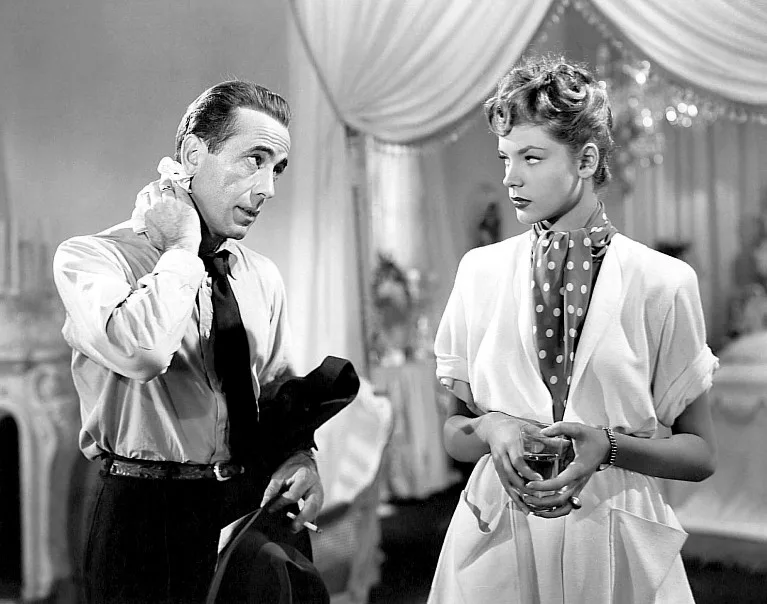
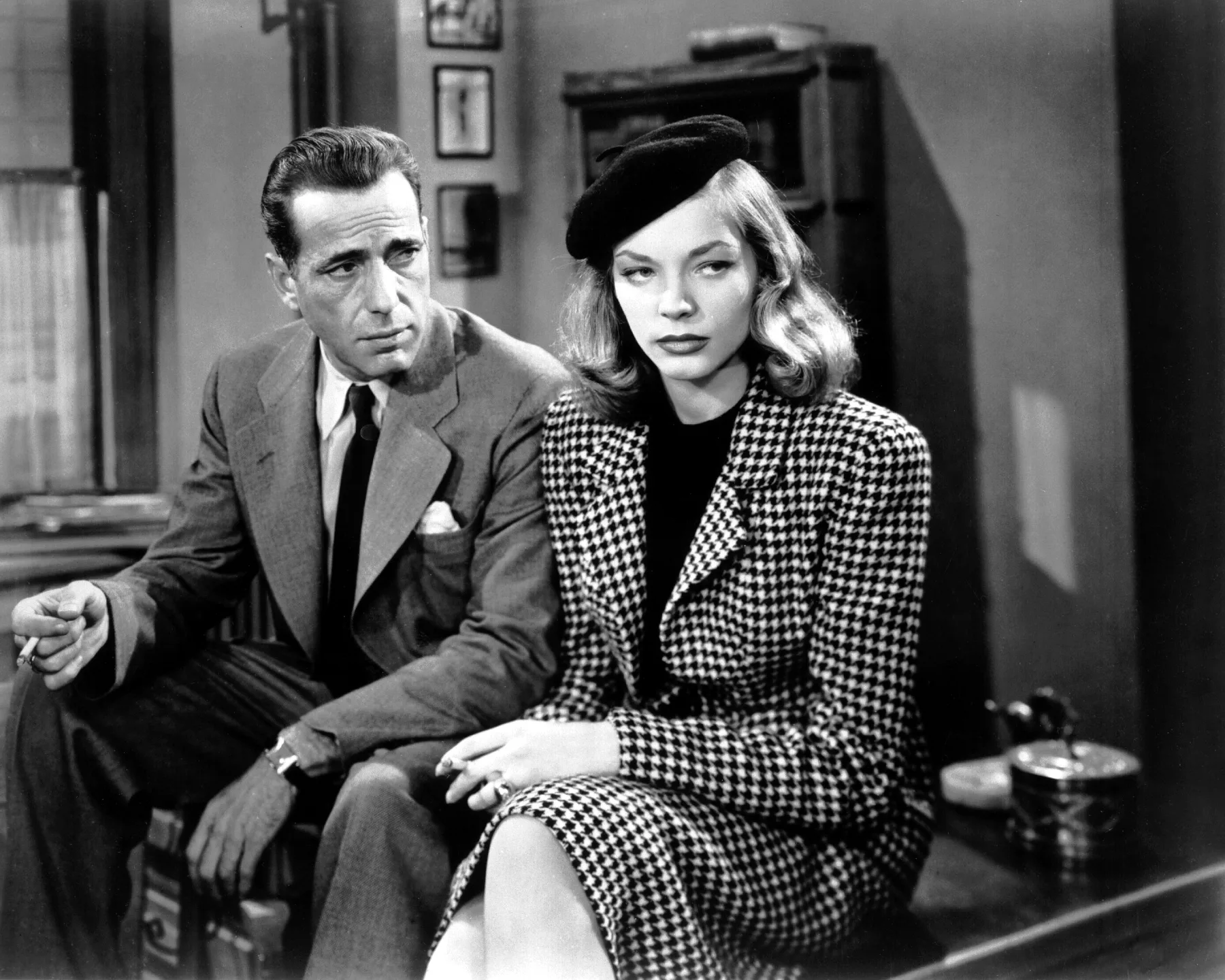
In Dark Passage (film, 1947), she played a mysterious young painter in San Francisco who hides an escaped prisoner, played by Bogart.
That October, the couple flew to Washington with the Committee for the First Amendment, a group of Hollywood figures protesting the congressional hunt for communists in the film industry.
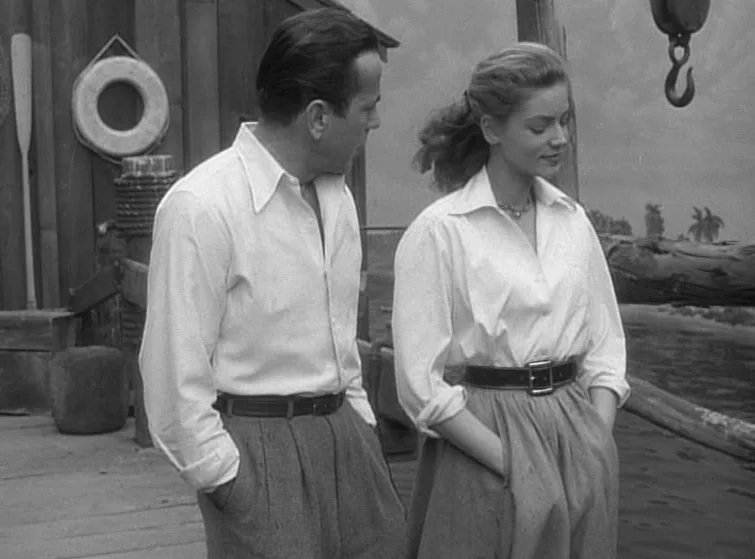
Then came Key Largo (film, 1948), directed by the American filmmaker John Huston. Bacall played Nora Temple, a young war widow in a Florida hotel taken over by gangsters during a hurricane.
For the whole film, she wore a single outfit: a white shirt with rolled sleeves, a full pleated skirt, a wide belt, and espadrilles laced at the ankle. Bogart wore a white shirt to match. It was their fourth and last film together.
The couple lived in a white brick house in Holmby Hills, Los Angeles. On weekends, they sailed on Bogart's yacht, the Santana, though the sea made Bacall seasick.
On 6 January 1949, their son, Stephen Humphrey Bogart, was born. He was named after Steve, Bogart's character in the film where they met.
Bacall's career went on. She played a two-faced femme fatale opposite her old classmate Kirk Douglas in Young Man with a Horn (film, 1950), and she starred with the American actor Gary Cooper in Bright Leaf (film, 1950).
She also turned down scripts that did not interest her, and she earned a reputation for being difficult.
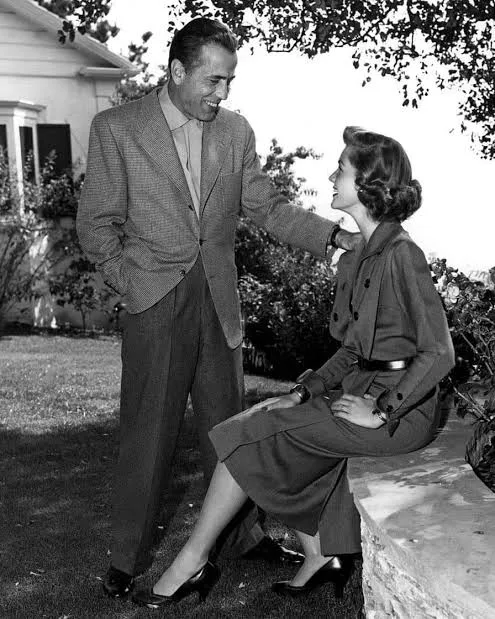
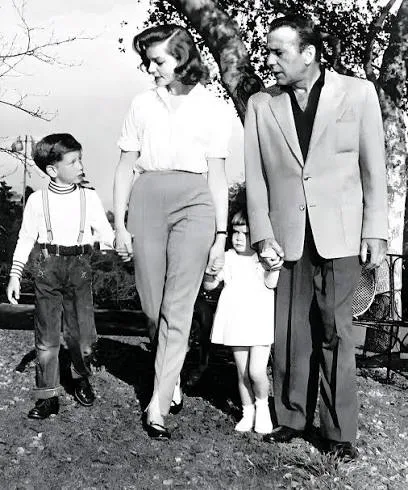
Lauren Bacall and Humphrey Bogart at home, 1950
From 1951 to 1952, she and Bogart starred together in the radio series Bold Venture (radio series, 1951–1952).
On 23 August 1952, their daughter, Leslie Howard Bogart, was born. She was named after the English actor Leslie Howard.
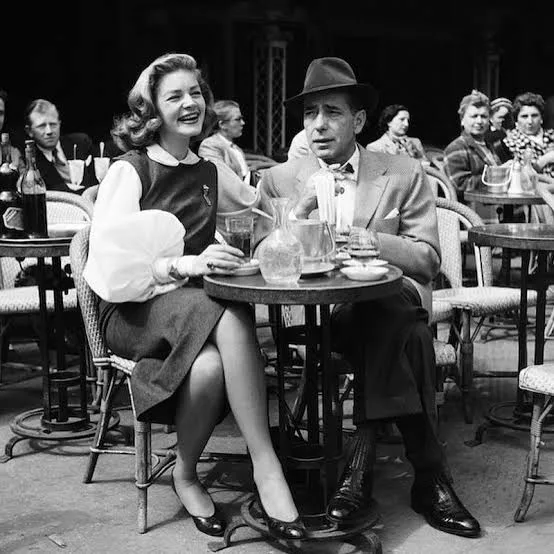
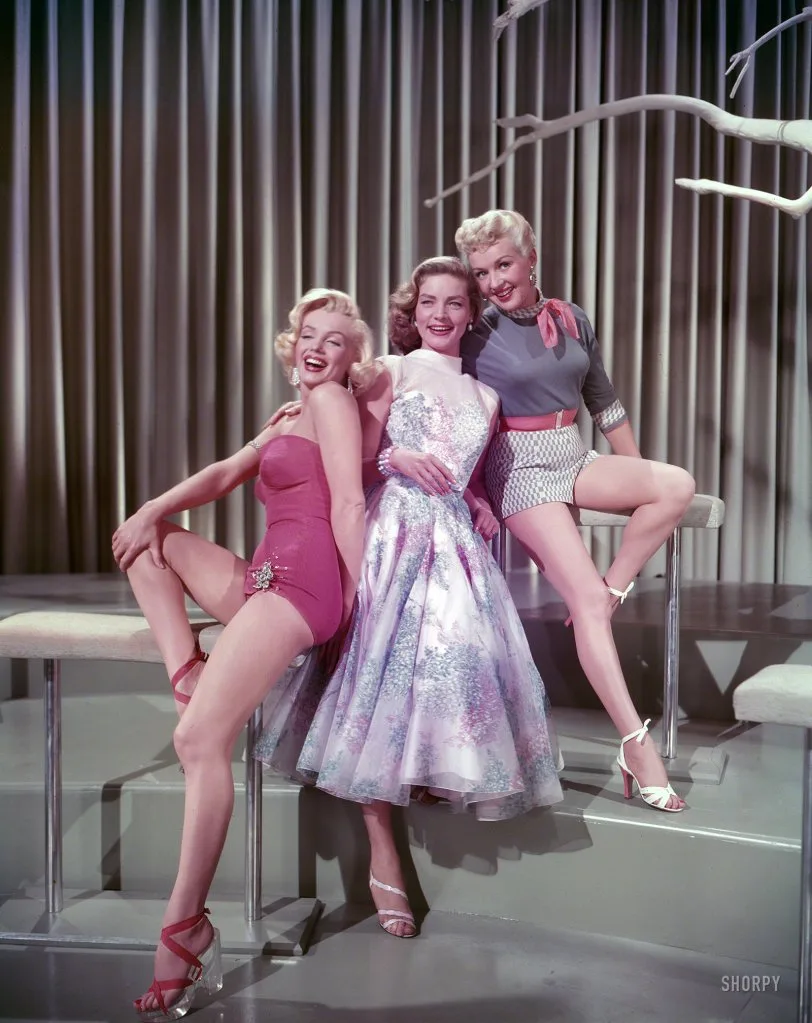
In How to Marry a Millionaire (film, 1953), she played Schatze Page, the most resourceful of three Manhattan models hunting for rich husbands. Her co-stars were the American actresses Marilyn Monroe and Betty Grable.
The director was the Romanian-born American filmmaker Jean Negulesco, and the costumes were by the American designer William Travilla. It was the first film 20th Century-Fox shot in CinemaScope, and one of the biggest hits of the year.
After that success, Grauman's Chinese Theatre invited her to press her hands and feet in its cement forecourt. With Bogart's support, she said no. "I want to feel I've earned my place with the best my business has produced," she said.
The couple's circle of friends included the American singer and actor Frank Sinatra. In the spring of 1955, after a long party in Las Vegas, Bacall surveyed the wreckage. "You look like a goddamn rat pack," she said.
The name stuck, and Bacall became the den mother of the Rat Pack. Asked what the group was for, she answered: "To drink a lot of bourbon and stay up late."
She worked for the German-born American director Douglas Sirk in Written on the Wind (film, 1956).
Then, in January 1956, she persuaded Bogart to see a doctor about his cough. It was cancer of the esophagus, and he had surgery on 1 March.
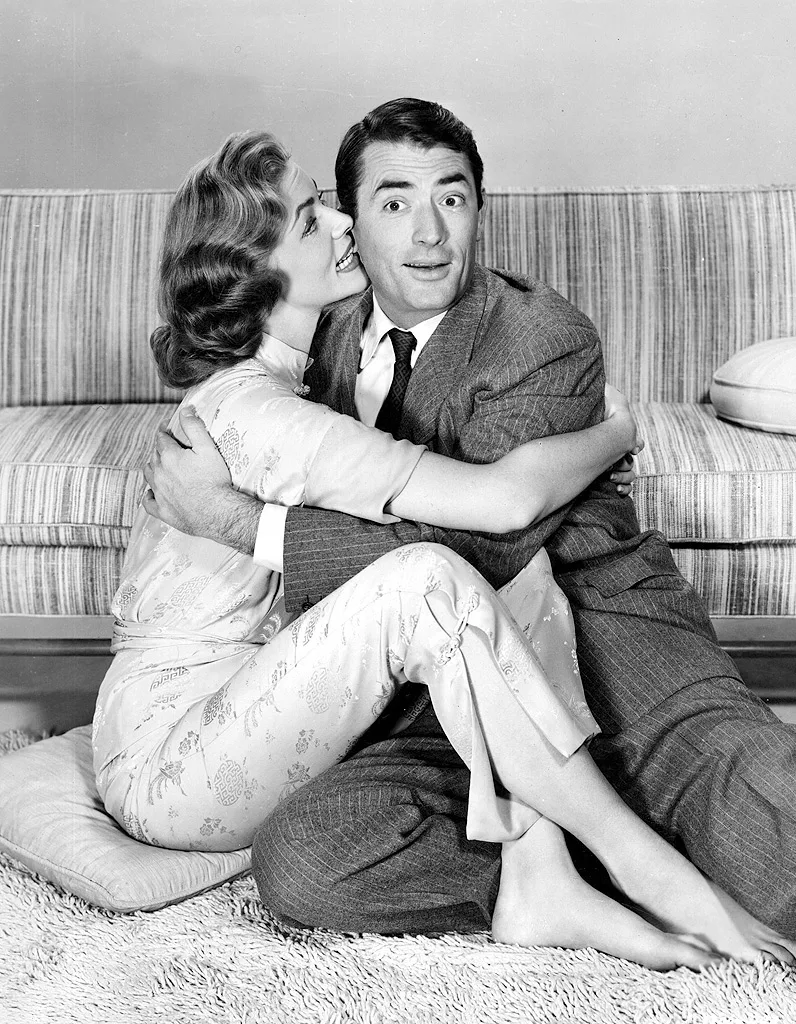
While she cared for him at home, Bacall starred with the American actor Gregory Peck in Designing Woman (film, 1957), directed by the American filmmaker Vincente Minnelli.
She played Marilla Hagen, a fashion designer married to a sportswriter. The American costume designer Helen Rose dressed her in dozens of gowns.
Bogart never recovered.
According to Bacall, Bogart's last words to her were "Goodbye, kid." He died on 14 January 1957, at fifty-seven. She was thirty-two.
He was cremated. The little gold whistle from her charm bracelet went into his urn.
Designing Woman opened on 16 May 1957, four months later, to solid reviews.
Bacall and Sinatra became a couple, and he proposed. But news of the engagement reached the press through the American talent agent Irving "Swifty" Lazar, and Sinatra blamed her. He ended it abruptly.
Years later, Bacall wrote that Sinatra had done her a favor.
She turned to the stage in New York. In 1959, she starred on Broadway in Goodbye, Charlie (play, 1959).
There she met the American actor Jason Robards, a married man with a drinking problem. They planned to marry in Vienna on 16 June 1961, but the Austrian authorities refused them a license. Las Vegas refused them too.
On 4 July 1961, they drove across the border and married in Ensenada, Mexico.
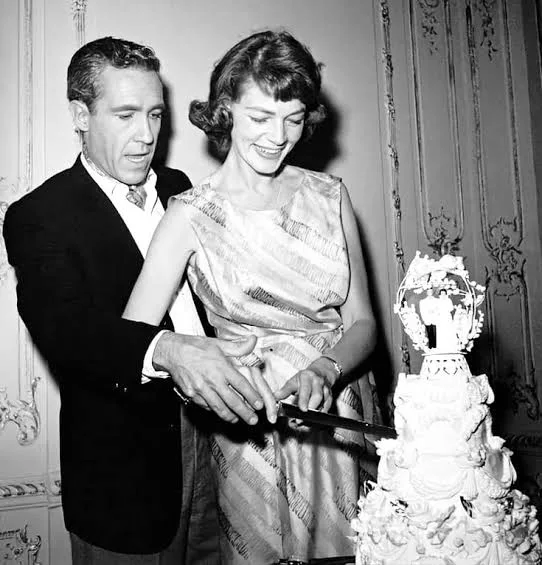
On 16 December 1961, their son, Sam Robards, was born.
In the 1960s, she made only a few films, mostly with large casts, such as Sex and the Single Girl (film, 1964) and Harper (film, 1966). The stage became her center.
She starred in Cactus Flower (play, 1965) on Broadway. In 1969, she divorced Robards. In her memoir, she said his drinking was the main reason.
In 1970, she opened in Applause (musical, 1970), playing an aging stage star, in a musical version of All About Eve (film, 1950). The American critic Walter Kerr wrote: "Take your breath away? Indeed. What's more, she never gives it back."
After one performance, the American actress Bette Davis, who had played the role in the original film, came backstage. "You're the only one who could have played the part," she told Bacall.
Bacall won the Tony Award for Best Actress in a Musical. She also took the show to London, for her West End debut.
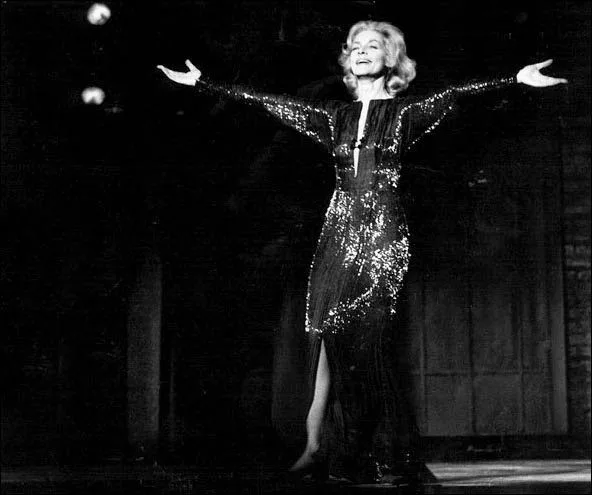
Her own wardrobe matched her temperament. She liked tailored clothes that moved easily, wide trousers above all, and very little decoration. "What I like most, clothes that are tailored but easy," she said in 1978.
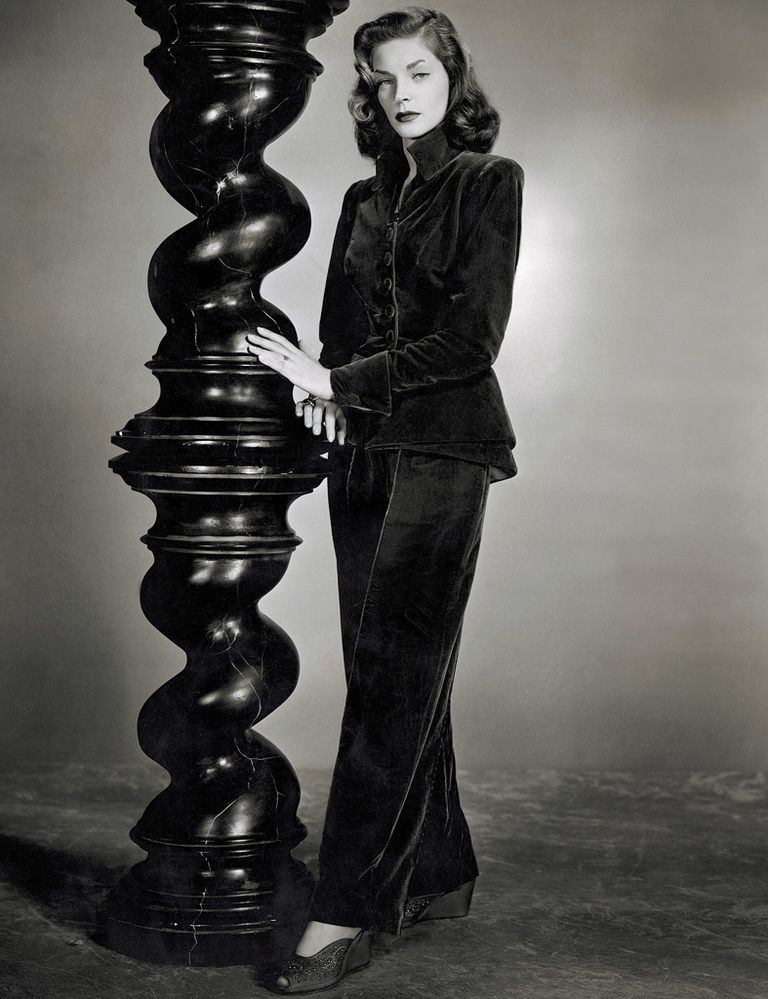
She was a loyal client of the great designers, and sometimes their muse. In her closet hung a silk damask pantsuit by the French designer Emanuel Ungaro, from around 1973, with wide trousers and a peplum blouse tied with a bow at the collar.
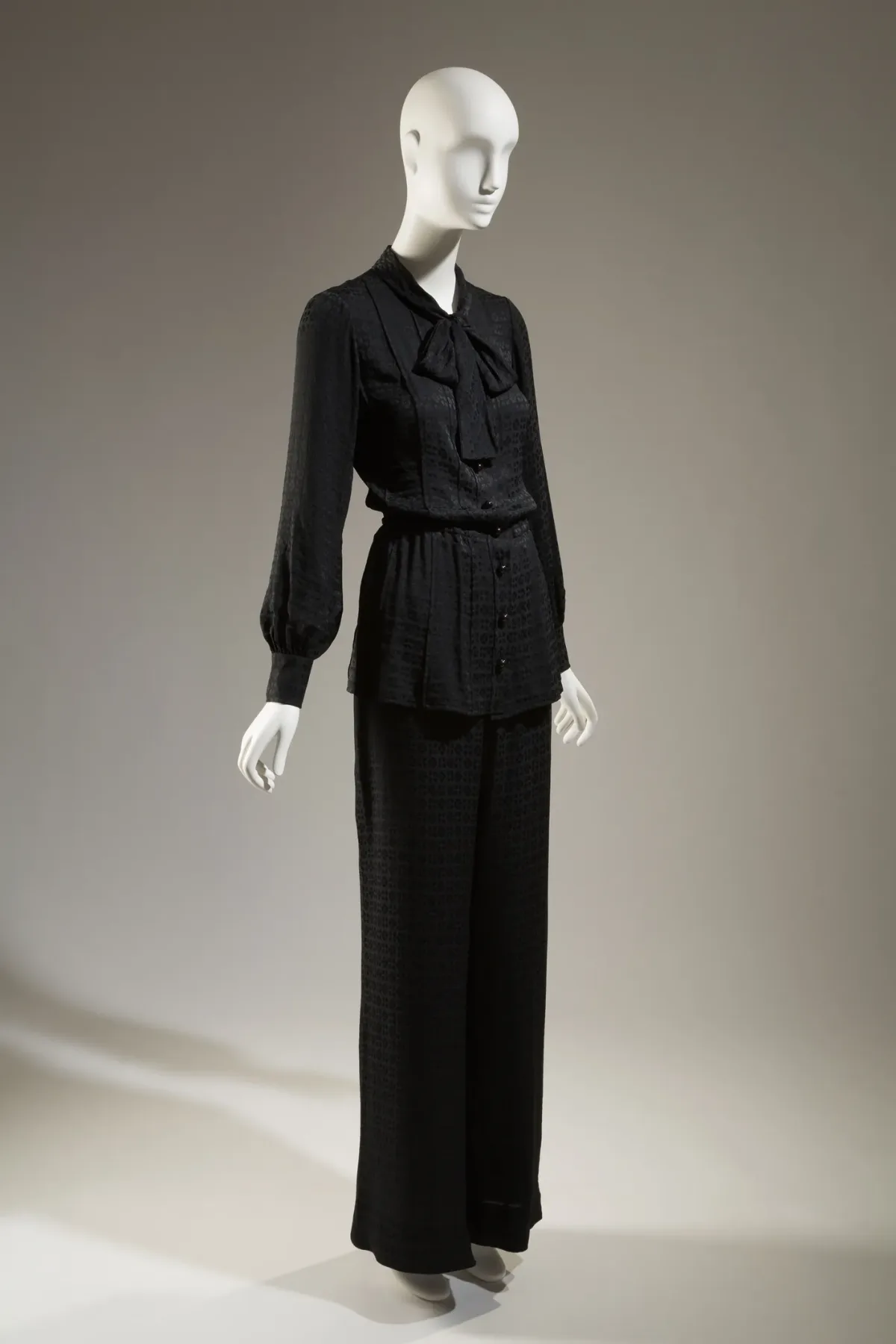
For Dior, the French designer Marc Bohan made her a slim, dark silk jersey evening dress in 1968, trimmed with ostrich feathers. Both pieces are now in the Museum at the Fashion Institute of Technology in New York.
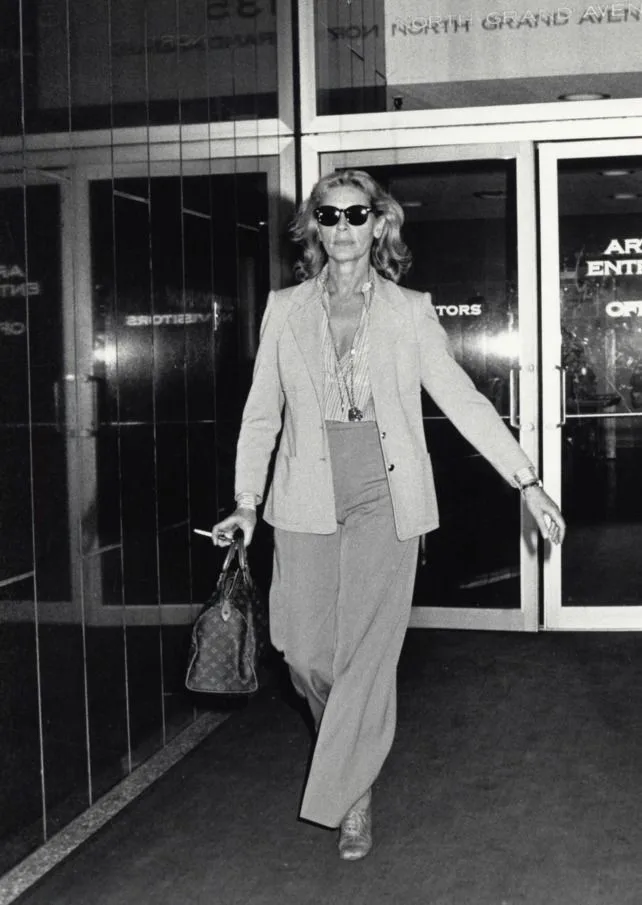
On screen, she joined the all-star cast of Murder on the Orient Express (film, 1974). Then the American actor John Wayne asked for her personally to co-star in The Shootist (film, 1976), his last film.
In 1978, she published her memoir, Lauren Bacall by Myself (book, 1978), which won a National Book Award. Of her years with Bogart, she wrote: "No one has ever written a romance better than we lived it."
In 1981, she won a second Tony Award, for Woman of the Year (musical, 1981).
She published a second memoir, Now (book, 1994), and kept working in film. In 1995, the Council of Fashion Designers of America gave her its Fashion Icon Award.
In The Mirror Has Two Faces (film, 1996), directed by the American singer, actress and director Barbra Streisand, she played Streisand's mother. She won the Golden Globe and was nominated for an Academy Award, her first nomination after more than fifty years on screen.
Everyone expected her to win. On Oscar night, the award went to the French actress Juliette Binoche for The English Patient (film, 1996).
She received the Kennedy Center Honors in 1997. In 1999, the American Film Institute named her the twentieth greatest female star of classic Hollywood.
In her seventies and eighties, she worked with young directors, the Danish filmmaker Lars von Trier in Dogville (film, 2003) and the English filmmaker Jonathan Glazer in Birth (film, 2004).
On 14 November 2009, the Academy finally gave her an honorary Oscar, "in recognition of her central place in the Golden Age of motion pictures."
Her bluntness was famous. "The world doesn't owe you a damn thing," she had said in 1996.
On 12 August 2014, Lauren Bacall suffered a massive stroke at her longtime apartment in the Dakota, on the Upper West Side of Manhattan, by Central Park. She was pronounced dead at New York-Presbyterian Hospital. She was eighty-nine, a month short of ninety.
Her three children, Stephen Humphrey Bogart, Leslie Howard Bogart, and Sam Robards, survived her.
At nineteen, she had lowered her chin to hide her trembling. It became The Look, and the world never stopped looking back.
