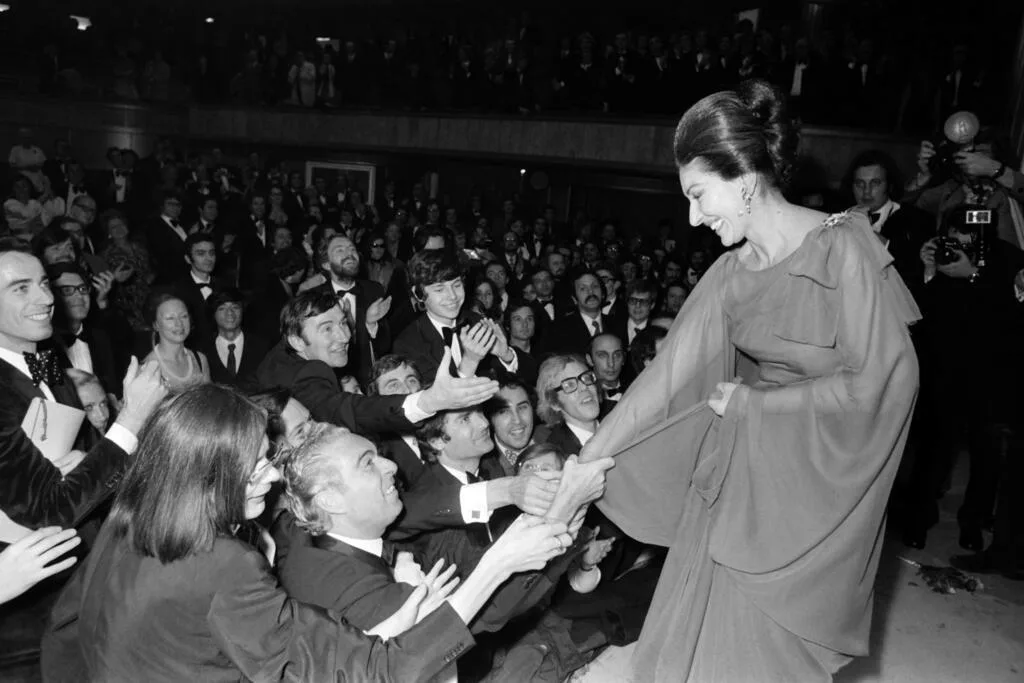
People
Maria Callas (born Maria Anna Cecilia Sophia Kalogeropoulos; 2 December 1923 – 16 September 1977)
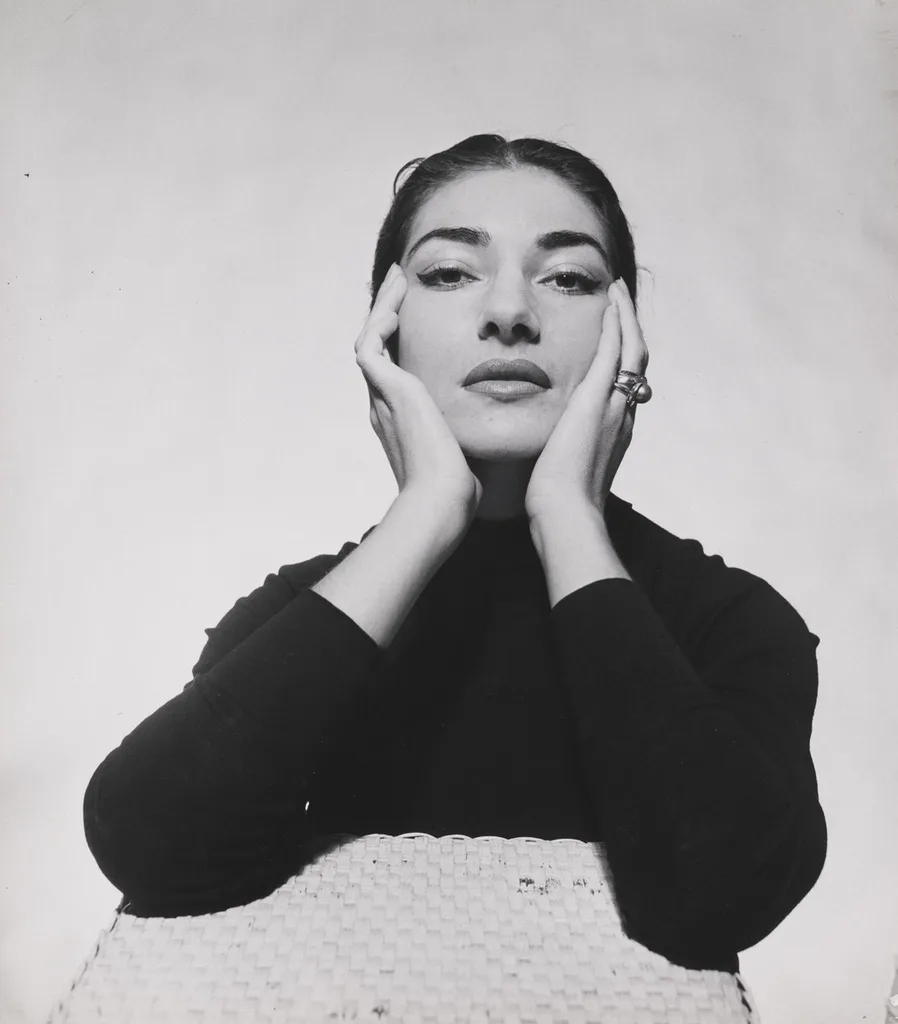
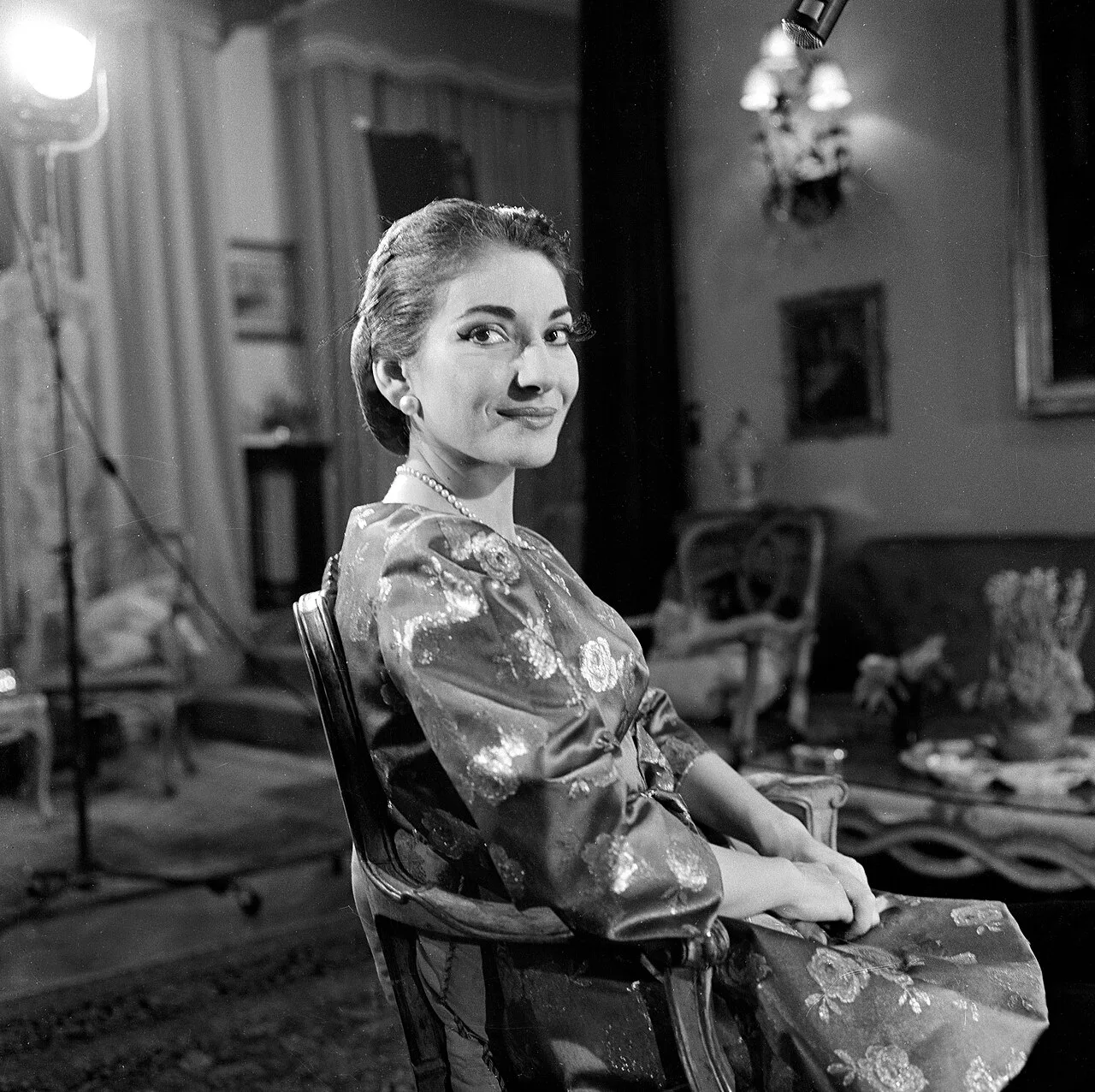
Nicknamed "La Divina," she was as celebrated for her onstage art as for a private life lived under relentless publicity, including her a dramatic weight loss and equally dramatic long affair with the shipping magnate Aristotle Onassis, and became one of the world's most photographed women, a full-blown celebrity and a style icon. She died in Paris at the age of fifty-three.
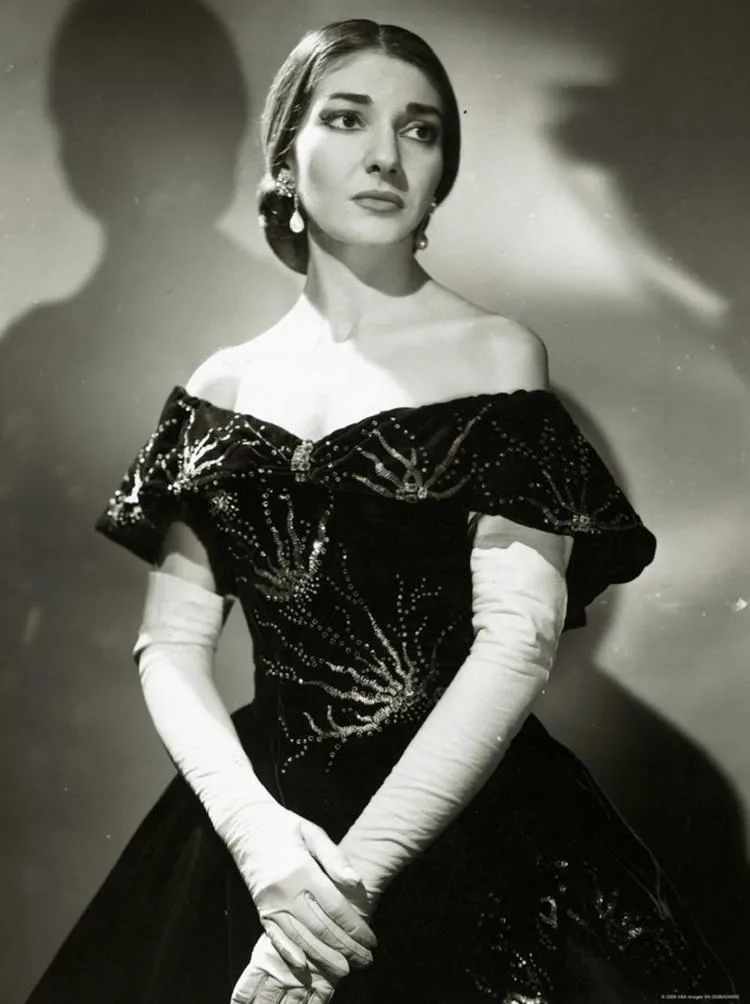
Biography
Maria Callas was born Maria Anna Cecilia Sophia Kalogeropoulos on 2 December 1923 at the Flower and Fifth Avenue Hospital in Manhattan.
Her parents were newly arrived Greek immigrants. Her father, George Kalogeropoulos, was a pharmacist. Her mother, Evangelia Dimitriadou, was known as Litsa. Their first daughter Yakinthi Kalogeropoulos was born in 1917, called Jackie by the family.
The family had left Greece grieving. Their young son, Vasilis Kalogeropoulos, had died of meningitis in 1922, and Maria was born partly to replace him.
Litsa had wanted another boy. The story runs that she refused to look at her newborn daughter for four days and never fully forgave her for arriving a girl instead.
At five, Maria was struck by a car and spent twenty-two days in a coma. She recovered fully, and threw herself into piano lessons soon after.
Maria grew up feeling like the plain one, because Jackie In their mother's eyes, Jackie was the beautiful, favored child.
To ease into American life, George Kalogeropoulos shortened the family name, first to Kalos and later to Callas.
The household was not happy. George Kalogeropoulos and Litsa quarreled over money and his infidelities, and the family moved often through Manhattan as finances rose and fell.
Litsa fastened onto her younger daughter's musical gift early. Maria was made to sing, and later resented that her childhood had been given over to her mother's ambition.
In 1937 Litsa left George Kalogeropoulos and took both daughters back to Athens, Greece. Maria was thirteen.
And it was there, at the Athens Conservatoire, that Maria's real training began. She trained first with Maria Trivella at the Greek National Conservatory, then with the Spanish coloratura soprano Elvira de Hidalgo, who had sung alongside Enrico Caruso.
De Hidalgo shaped her. She recognized a large, unruly voice and drilled the young Callas in the agility and legato of the bel canto tradition, the foundation of everything that followed.
She won a prize for her stage debut in Cavalleria Rusticana in 1939, made her professional debut two years later, in a small part in Franz von Suppé's Boccaccio (1879) at the Greek National Opera.
In August 1942 she sang her first leading role, the title character in Giacomo Puccini's Tosca (1900). During the war years in Athens she also took on heavy roles, including Leonore in Ludwig van Beethoven's Fidelio (1805).
Maria returned to the United States in 1944, and was offered a contract by the Metropolitan Opera almost immediately. She turned it down. One of the roles on offer was Cio-Cio-San in Madama Butterfly, a fragile fourteen-year-old geisha, and Maria, by then a heavyset young woman well over two hundred pounds, believed she was simply too large to be convincing in the part. Friends thought she'd lost her mind, refusing the Met while still completely unknown. And for a time she found herself adrift.
She sang briefly in Chicago instead, then went back to Europe where her true breakthrough came in Italy. In August 1947 she sang the title role in Amilcare Ponchielli's La Gioconda (1876) at the Arena di Verona, under the conductor Tullio Serafin. That event in Verona would change everything, both her career and her personal life.
Serafin became her guide and champion. Under him she began the extraordinary run of roles that made her name across Italy.
In Verona she also met Giovanni Battista Meneghini, a wealthy industrialist nearly thirty years her senior and a passionate opera lover, who took over managing her career almost as soon as they met.
They married in 1949. Since then, Meneghini traveled with her everywhere for a decade.
Under Meneghini's management, Maria's career caught fire. She made her debut at Milan's Teatro alla Scala in 1950, as Aida in Giuseppe Verdi's Aida (1871). By 1951 La Scala had become the center of her world, and she reigned there as prima donna assoluta.
Then she did something matching her new status. She decided to lose weight.
Maria Callas had always been self-conscious about her weight and years ago when she was still unknown she used to refuse a role from Metropolitan Opera because she thought herself too fat. She later said she had wanted to look like Audrey Hepburn, whose film Roman Holiday (1953) she loved.
Between 1953 and 1954 she lost approximately 30–36 kilograms and became almost unrecognizable: A slender, striking woman with her large eyes and classically Greek features suddenly visible. She lined her eyes in the dramatic winged shape that became, alongside the voice itself, her most instantly recognizable signature.
Once the weight was gone, the Maria Callas called the Milanese couturière Elvira Leonardi Bouyeure, known professionally as Biki. The two met around 1951 to 1952, at first through Meneghini, who ordered gowns for his wife.
Biki was a granddaughter of Puccini by adoption, and legend had it that she had at first declined to dress the heavy, carelessly styled young singer until she lost weight, and she was the reason behind Maria Callas's dramatic decision to change her figure.
Biki built an entirely new wardrobe for the new Maria, and created the offstage image the world came to know as Callas.
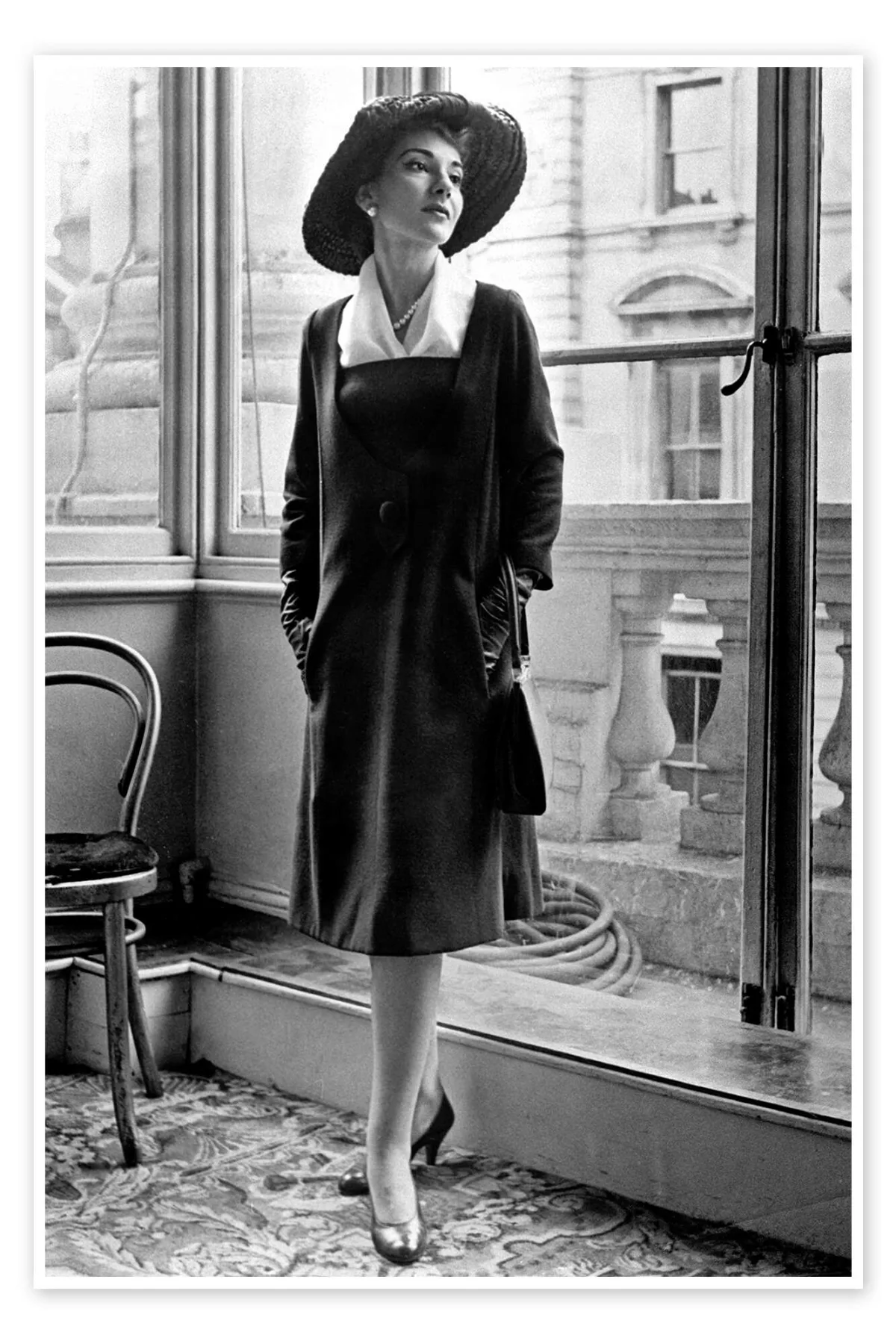
The look Biki built was one of severe modern simplicity. She stripped away fuss and ornament, favoring clean architectural lines, tailored midi-length silhouettes, wide bateau necklines, and heavy silk crepe that fell in sculptural folds.
Then she added drama for the soprano's wardrobe . There were oversized collars and cuffs, dramatic capes, and gloves that ran to the elbow, and the color palette leaned toward deep, saturated tones and disciplined black.
For Callas's international tours Biki produced garments by the hundred. Over the years the wardrobe grew to include something on the order of twenty-four fur coats, two hundred dresses, some forty suits, around one hundred fifty pairs of shoes, and roughly three hundred hats, many of which Maria discarded after wearing them only a handful of times.
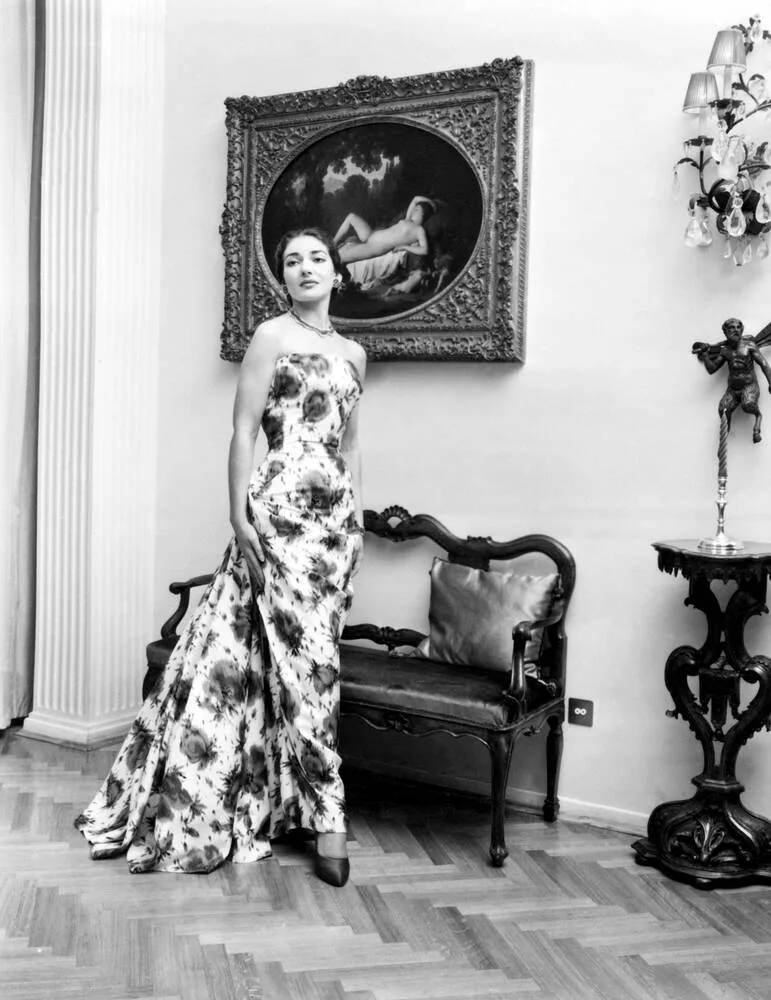
Biki organized all of it like a stage manager. Each dress and accessory was fitted with a numbered label, and detailed instructions specified exactly which shoes, gloves, and hat belonged with each outfit, so the singer could assemble a flawless look without hesitation.
Biki's son-in-law, Alain Reynaud, worked alongside her, and the two even coached Callas on gesture and posture.
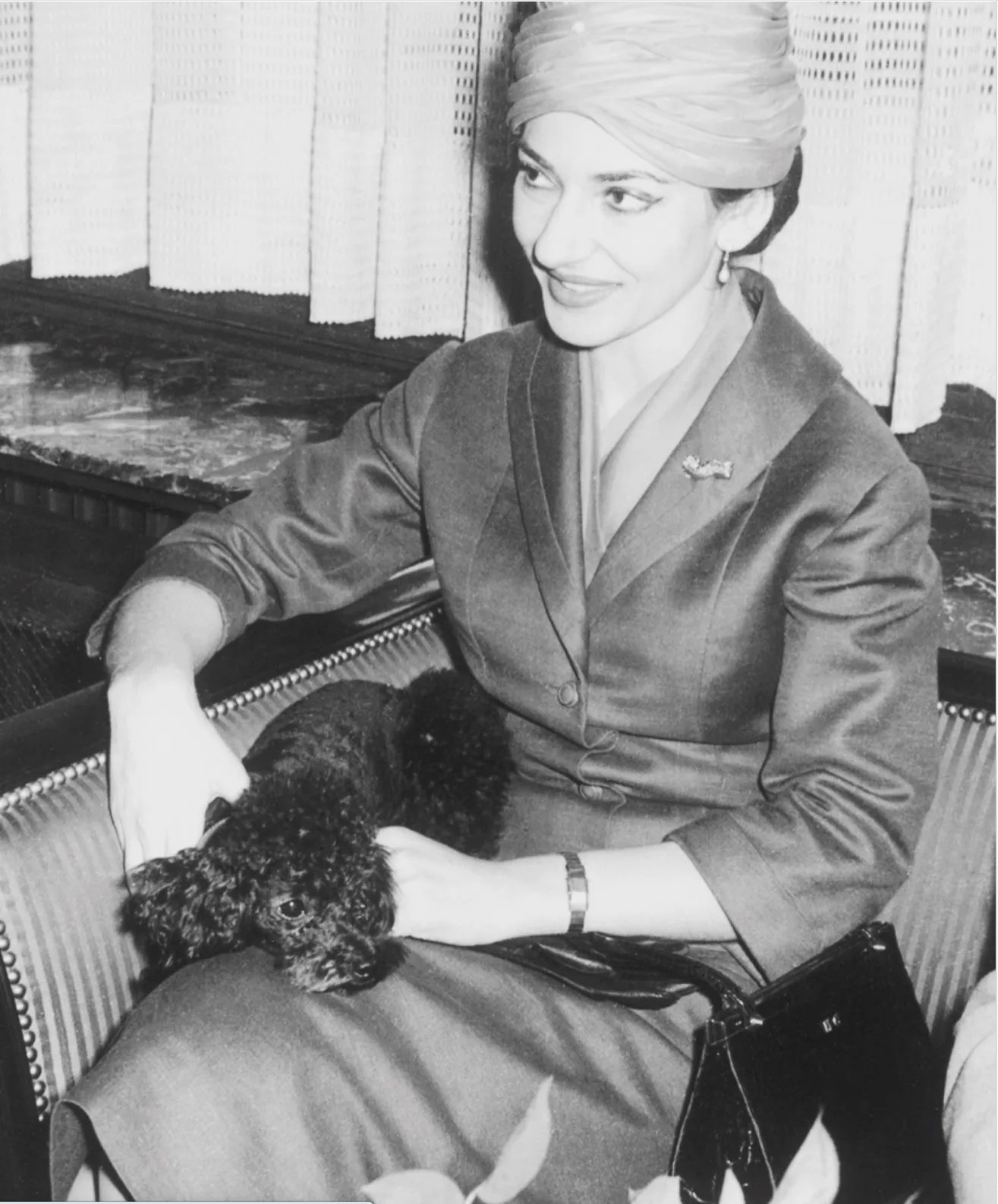
The finishing touches were extravagant. Callas wore diamonds and pearls, furs and chinchilla, wide-brimmed hats veiled across the face, and often a turban with her chiffon evening gowns, and she was said never to wear the same pair of gloves twice.
Yet the governing principle was restraint. As one account of the partnership put it, the silk, the collars, and the accessories "never competed with her presence; they merely framed it," which is the whole secret of the Callas look.
A few months after her complete transformation, Maria Callas started working with Luchino Visconti, the famed Italian film and theatre director, a partnership that produced some of the most celebrated evenings in operatic history. Visconti said he began directing opera only because of Callas, and between 1954 and 1957 he built lavish new La Scala productions around her.
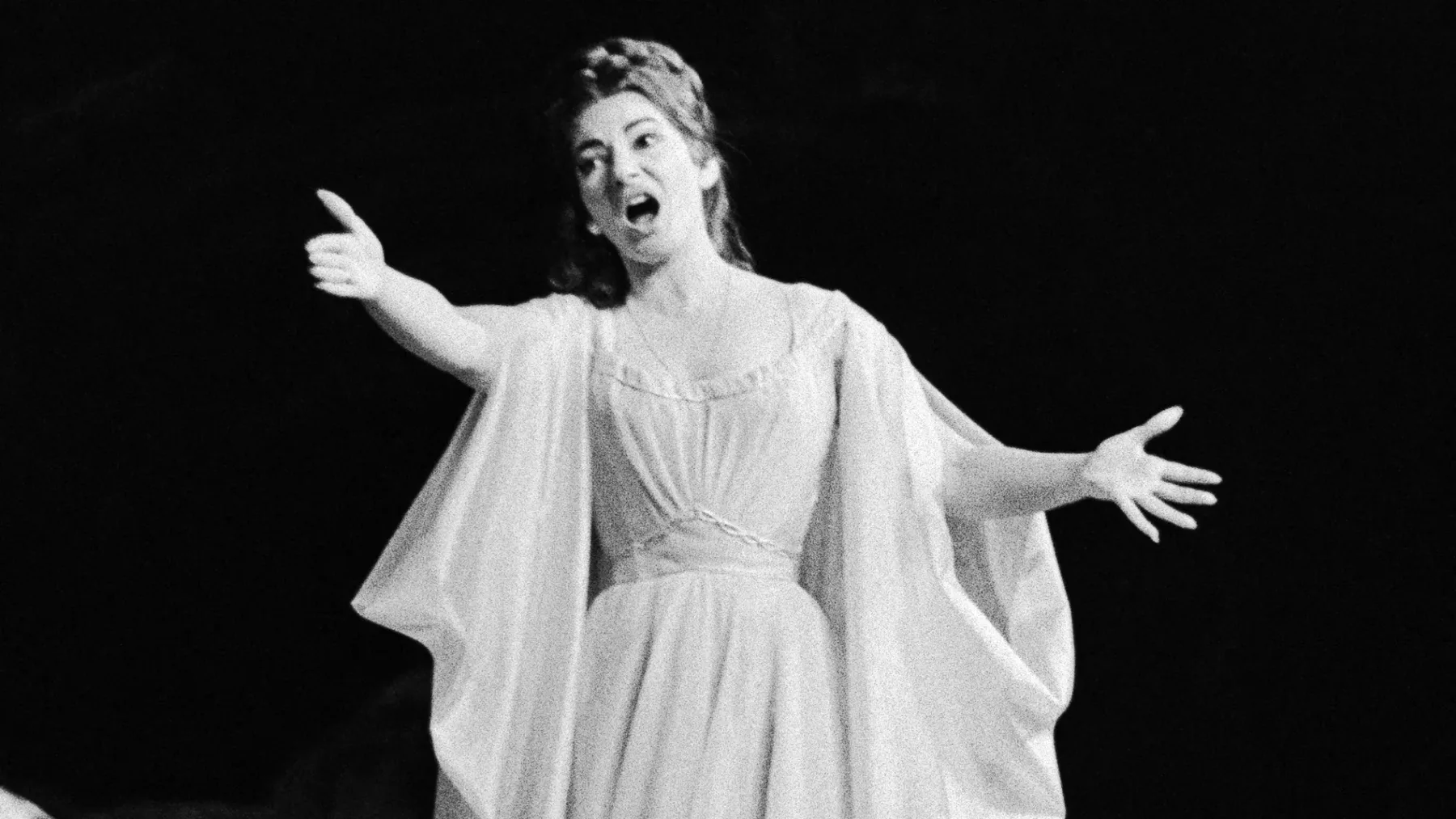
There were rumors that Visconti urged Callas to change her appearance by losing weight, otherwise he would not work with her, and even gave her a “30-kilogram ultimatum”, but it was not true. By the time Visconti started working with Callas at the end of 1954, she had already finished her weight loss ordeal.
Visconti mounted Gaspare Spontini's La vestale (1807), Bellini's La sonnambula (1831), Verdi's La traviata (1853), Donizetti's Anna Bolena (1830), and Christoph Willibald Gluck's Iphigénie en Tauride (1779). To sharpen her stage presence, Visconti had her study images of great actresses of the past, among them Eleonora Duse and Sarah Bernhardt.
The 1955 La sonnambula, conducted by the young Leonard Bernstein, showed her fragile and luminous. That same year the Visconti La traviata, conducted by Carlo Maria Giulini, became legendary, still spoken of as one of the greatest nights the opera stage has known.
She learned how to wear clothes from Biki, and working with Luchino Visconti taught her how to wear a role rather than merely being clothed in it.
Other conductors of the first rank stood in her pit at La Scala, among them Herbert von Karajan, who led her acclaimed Lucia di Lammermoor in Berlin in 1955. The young Franco Zeffirelli also directed her, and would remain devoted to her for the rest of her life.
In 1956 Callas made her Metropolitan Opera debut in New York, as Norma in Bellini's Norma (1831), the role closest to her heart.
Critics who heard her sing in these years struggled to describe what made her so different: not the purest voice on any given stage, but by far the most dramatically truthful, bringing real psychological weight to roles that other sopranos had, for a generation, been content simply to sing beautifully. She didn't so much perform bel canto heroines as inhabit them, using the specific color, roughness, and vulnerability of her own voice as an expressive tool rather than smoothing it into pure prettiness.
The voice itself defied easy description. It was large and unusual in color, sometimes called ugly by those who resisted it, and spread across nearly three octaves with a distinct break between its registers.
It came with real flaws. Long notes were hard for her to hold with perfect steadiness, her highest notes could turn unruly, and her diction was not always clean, faults she countered through the mid-1950s with fierce discipline.
What she offered instead was meaning. She read a score for the point of its smallest markings, joined singing and acting into a single dramatic act, and could make a familiar aria sound newly and dangerously alive.
By the late 1950s, Maria's temperament had become nearly as famous as her voice, walkouts and dismissals piling up alongside the triumphs. Her temperament and her fame made her a magnet for scandal. The most notorious episode came on 2 January 1958 at the Rome Opera, at a gala performance of Norma attended by Giovanni Gronchi, the President of Italy.
Callas had woken with a bad throat, and no understudy had been engaged. Rattled by jeers from the gallery, she sang the first act and then refused to continue, and the performance was canceled.
The uproar was immediate. Italian newspapers savaged her, a crowd gathered outside ready to confront her, and she escaped through an underground passage to her hotel. She said only, "As you could see, I could no longer speak." Years later, in 1965, the courts found the opera house at fault for having no substitute.
In 1957 Callas met the American gossip columnist and party-giver Elsa Maxwell, who drew her into international café society.
Through that world she met Aristotle Onassis, the Greek shipping magnate. Onassis cared nothing for opera but everything for fame, and he pursued her with flowers signed "The Other Greek."
Two years later, Onassis invited Callas and Meneghini aboard his yacht, the Christina, for a Mediterranean cruise in the summer of 1959.
Biki and her son-in-law designed an entire wardrobe in advance for Callas, and when she was uncertain about a detail she wired Milan by telegram for a ruling.
By the end of the cruise she and Onassis were lovers, and the affair ended her marriage entirely. She left Meneghini that November and, for the first time in her life, gave herself over to passion.
Onassis's own wife, Athina Livanos, known as Tina, divorced him once she learned of it.
During her years with Onassis, Callas dressed in black a lot, plain and severe against the memory of everything she'd left behind. Onassis never proposed to Callas.
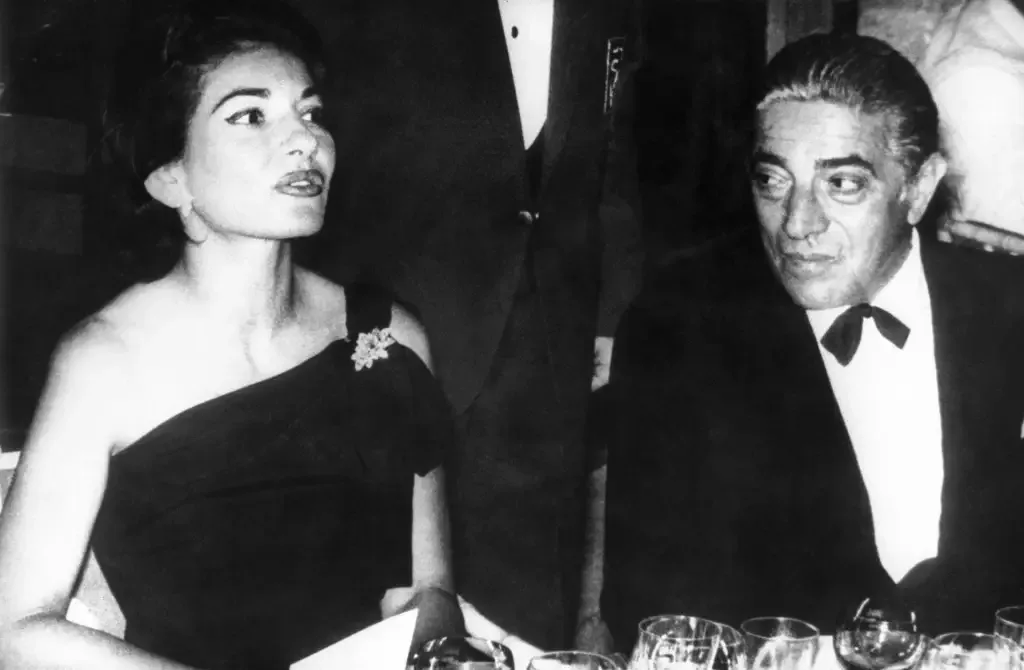
The affair cost her at the height of her powers. Her performances grew fewer, her voice more fragile, and her art suffered from a restless life spent between Onassis's yacht, Monte Carlo, Paris, and his private island of Skorpios.
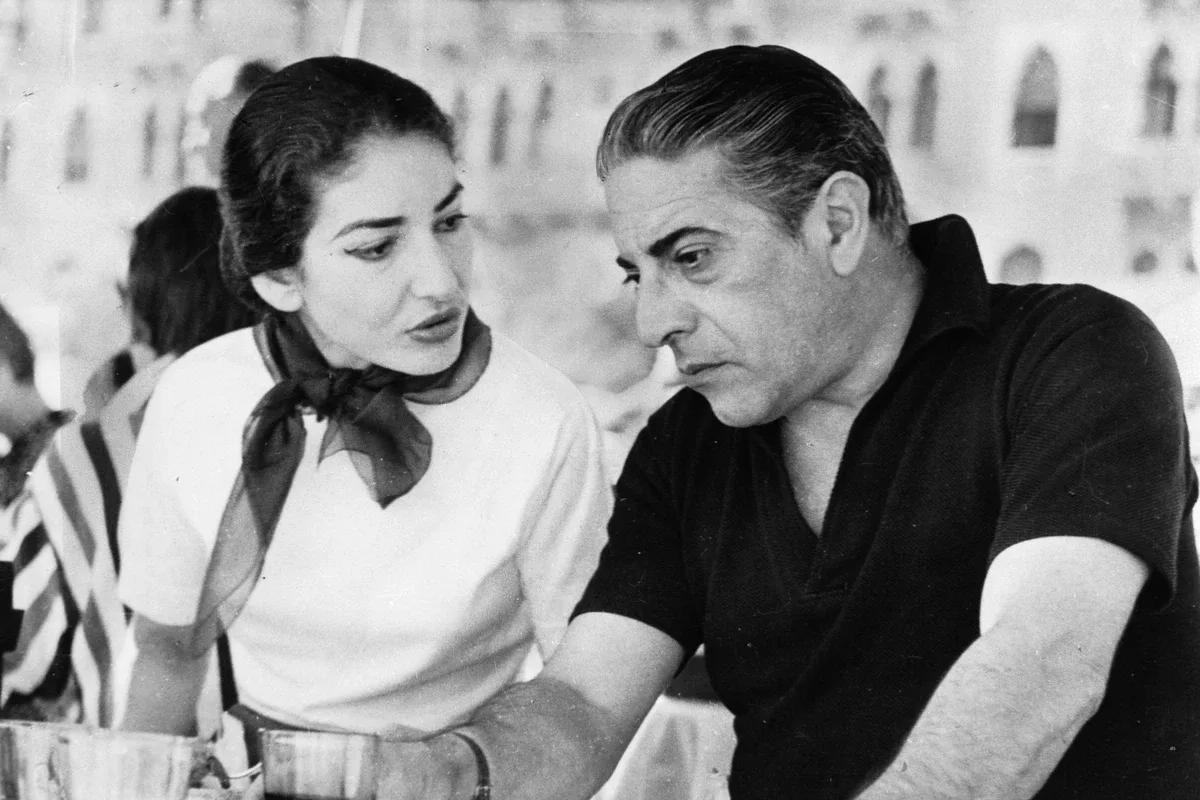
Then Callas became pregnant and wished to keep the child. Onassis insisted otherwise, and the pregnancy did not survive, a wound that never fully healed.
Her voice was failing her, too. She gave her final staged operatic performance in July 1965, as Tosca at London's Royal Opera House, at only forty-one.
But the real blow came in 1968.
On 20 October 1968, Aristotle Onassis married Jacqueline Kennedy, the widow of President John F. Kennedy on his private island of Skorpios. Callas is said to have learned of it from the newspapers.
Maria's wardrobe changed again, almost overnight, into something closer to armor: interviews from this period show her in bright, embroidered brocade kaftans, a deliberate, visible refusal to disappear quietly. Asked once why she sometimes burned pieces from her own closet, she said simply that they represented a past she no longer wanted.
Soon after his marriage, however, Onassis started seeing Callas again and he kept seeing her openly as married man. A friend of his later put their real bond more bluntly than either of them ever did in public: "She was his true wife, though they never married."
In 1969 she made her only film in life, a film in which she did not need to sing. The director Pier Paolo Pasolini cast her in the non-singing title role of Medea (1969) , and the two formed a deep friendship.
In 1971 and 1972 she gave master classes at the Juilliard School in New York, passing on her exacting standards to a new generation.
In 1973 and 1974 she attempted a return to the concert platform, touring Europe, North America, and Japan with the tenor Giuseppe di Stefano, who had partnered her so often in her great years. The voice was a shadow of its old self, and the tour was her farewell.
Aristotle Onassis died in March 1975. Maria Callas, by most accounts, never really recovered from the loss, despite everything that had come before it.
Later that year, Pasolini was murdered. The two men who had shaped her final decade were gone.
It was in that same year that she was diagnosed with dermatomyositis, an autoimmune disease that weakens the muscles and might have played a part in the early loss of control over her voice.
Her last years were spent largely as a recluse in her Paris apartment at 36 Avenue Georges-Mandel. She struggled with insomnia and depression, and relied increasingly on sedatives.
Maria Callas died in her Paris apartment on 16 September 1977, at the age of fifty-three, in an apartment increasingly emptied of the friends and colleagues who had once filled her life. The cause was officially recorded as a heart attack, though speculation about an overdose of sedatives has never entirely faded.
One biographer's theory has stayed with her legend ever since: that Maria Callas died, quite literally, of a broken heart. "There are only so many pills you can take," a friend said afterward. "Her body gave up."
Her funeral was held on 20 September, and her body was cremated at the Père Lachaise cemetery in Paris. Her ashes were kept there for two years before being scattered, as she had wished, over the Aegean Sea, in June 1979, returned at last to the water off the coast of the country whose language she'd first learned to sing in.
A stretch of avenue near her old home in Paris now bears her name.
Maria Callas had lived barely two decades at the summit of her art, and left behind a way of singing that fused voice, drama, and image into something no recording quite contains. As with the finest of her Biki gowns, the effect was never about ornament. Everything served the woman at the center.