People
Oleg Cassini (born Oleg Aleksandrovich Loiewski; 11 April 1913 – 17 March 2006)
“Fashion anticipates … elegance is a state of mind.” -- Oleg Cassini
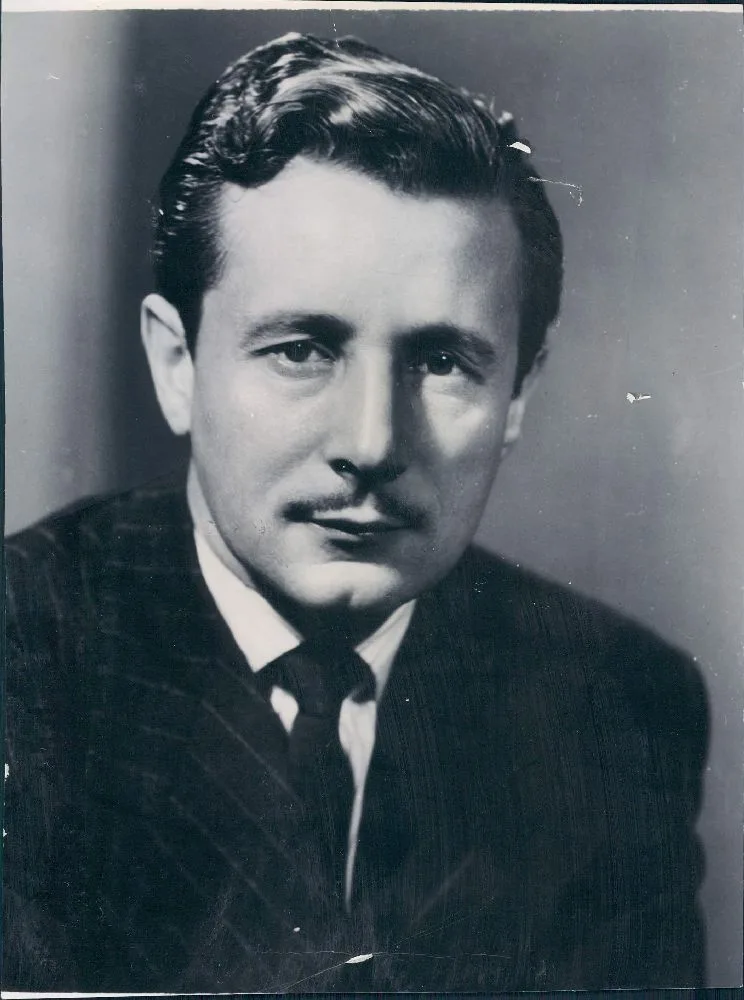
Oleg Cassini (born Oleg Aleksandrovich Loiewski; 11 April 1913 – 17 March 2006) was a French-born American fashion and costume designer whose career extended across Hollywood in Los Angeles, Seventh Avenue in New York, the White House in Washington, D.C., and mass-market licensing all over the United States. He dressed actresses including Gene Tierney and Grace Kelly, but became most closely associated with Jacqueline Kennedy, for whom he created about three hundred ensembles during her years as First Lady of the United States. Cassini translated her preference for clean lines into a distinctly American public wardrobe of architectural coats, sleeveless sheaths, A-line dresses in bold colors, and restrained evening gowns. His talent for joining glamour to commerce made him one of the earliest modern celebrity designers and turned his name into a brand encompassing women's and men's clothing, bridal wear, fragrance, accessories, and furnishings.
Biography
Oleg Aleksandrovich Loiewski was born in Paris on 11 April 1913, into a family that carried Russian rank and Italian polish with equal confidence.
His father, Count Alexander Loiewski, was a Russian diplomat. His mother, Countess Marguerite Cassini, descended from an Italian and Russian diplomatic family and possessed the practical imagination that would later preserve them.
Cassini liked to describe the hour of his birth as a scene already arranged for him. According to his own recollection, the doctor arrived after midnight in a carriage, dressed in white tie, tails, gloves, and spats.
His younger brother, Igor Cassini Loiewski, was born in Sevastopol in 1915. The brothers would eventually adopt their mother's more recognizable surname, Cassini, and build very different American careers from it.
The Russian Revolution destroyed the ease into which they had been born. The Loiewski family fled Russia in 1917, leaving property, possessions, and inherited certainty behind.
After a period in Denmark, the family intended to continue toward Greece. Political unrest altered the journey again, and they settled instead in Florence, Italy.
Marguerite Cassini opened a dressmaking business and developed a clientele among European aristocrats and affluent American travelers. Her sons watched a title become less useful than a well-cut dress delivered on time.
Oleg Cassini began sketching clothes as a boy and helped in his mother's salon. Twice-yearly visits to Paris exposed him to the new collections, where he studied the way fabric was controlled over the body and then copied what he had seen in rapid drawings.
He was equally drawn to sport. Riding came naturally, and he competed in skiing and track, played soccer, and pursued tennis with particular intensity.
A tennis court offered him an early definition of elegance: white clothing, formal manners, precise movement, and violence disciplined by rules. He became an Italian junior champion and later carried tennis rackets almost as readily as sketchbooks.
At the University of Florence, Cassini studied political science. He also attended the Accademia di Belle Arti, where he studied drawing under the Italian metaphysical painter Giorgio de Chirico.
The contrast was useful. Political science taught him systems and persuasion; de Chirico taught him the expressive force of a clean silhouette, an unexpected proportion, and an image stripped of unnecessary incident.
Cassini also studied fashion in Paris with the French designer Jean Patou, whose modern sportswear had already demonstrated that ease and luxury did not have to oppose each other. The young designer learned to respect movement, even when his own clothes would later cling closely to the figure.
In 1934, Cassini won five first prizes in an international fashion competition in Turin, Italy. He opened a small salon and dressed wealthy women who valued his charm almost as much as his sketches.
His early designs were already body-conscious. He preferred a clear waist, a close bodice, a decisive neckline, and a line that acknowledged the body rather than hiding it beneath an intellectual shape.
He also cultivated the image of a young count at large in Florence. There were horses, tennis matches, nightclubs, romances, and even a duel over a woman, settled when Cassini lightly wounded his opponent.
Fascist Italy offered little future to a restless designer with an international temperament. In December 1936, Cassini sailed for the United States.
He later reduced his luggage to a perfect inventory: a tuxedo, two tennis rackets, a title, and talent. The line was characteristic Cassini, half memory and half self-advertisement.
New York was not impressed. He stayed at a YMCA, carried a portfolio of sketches, and found temporary work while trying to enter the fashion business.
Tennis opened doors for Cassini more quickly than his portfolio. At the West Side Tennis Club in Forest Hills, Cassini, together with his brother Igor Cassini, established himself as an accomplished player and entered a society that understood introductions, clubs, and good clothes.
Cassini worked for several fashion houses and opened a short-lived studio. He married the wealthy and unconventional American heiress Merry Fahrney in 1938, but the marriage ended in divorce by 1940.
Hollywood offered him a new beginning. Cassini moved west and, after a tennis connection led to an introduction at Paramount Pictures, talked his way into costume design.
The studio system suited his dramatic instincts. A film costume had to establish a woman's character at first sight, survive intense lighting, and make its point from every seat in the theater.
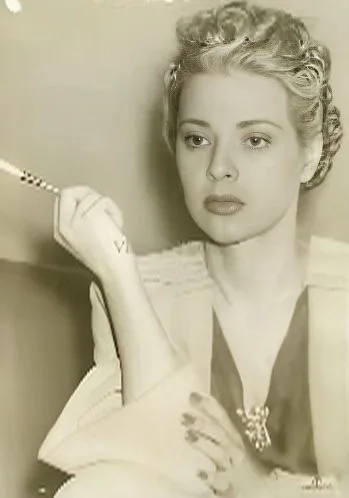
Cassini designed for American actresses Claudette Colbert, Dorothy Lamour, and Veronica Lake, often without screen credit. He learned to remove details that disappeared on camera and enlarge the gesture that remained.
In 1941, Cassini met American actress Gene Tierney, a dark-haired beauty whose fine features and reserved manner gave even dramatic clothes an air of composure. He designed her costumes for The Shanghai Gesture (1941), directed by the Austrian-American filmmaker Josef von Sternberg.
Gene Tierney's parents opposed the relationship. Cassini and Tierney eloped on 1 June 1941 and, in one of the stories they later told about the hurried wedding, used her earrings in place of wedding rings.
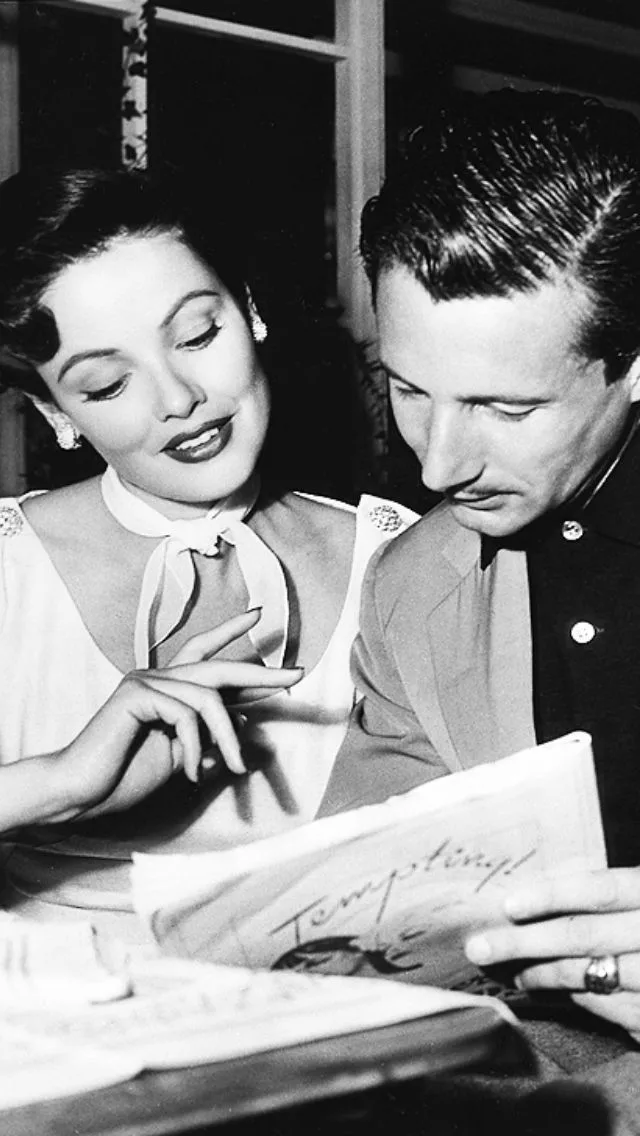
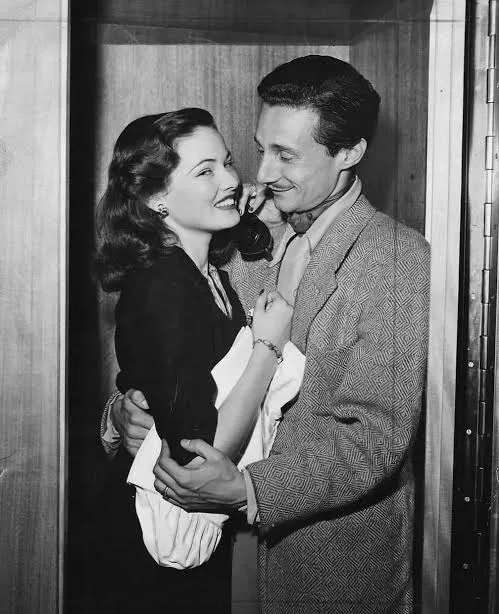
The marriage joined two exceptionally beautiful people and two forceful ambitions. Hollywood sometimes joked that Cassini had become "Mr. Gene Tierney," a position his vanity did not naturally enjoy.
After the United States entered World War II, Cassini became an American citizen in 1942. He enlisted first in the Coast Guard and transferred to the United States Army Cavalry, which accepted foreign-born officers.
His childhood horsemanship served him well at Fort Riley, Kansas. Cassini attended Officer Candidate School and rose to first lieutenant, exchanging the legal title of count for American citizenship and military rank, while maintaining his Hollywood connections.
In 1943, while pregnant with their first child, Gene Tierney contracted rubella after exposure to an infected admirer. Antoinette Daria Cassini was born prematurely on 15 October with profound disabilities affecting her sight, hearing, and development.
Daria Cassini's condition brought grief and financial strain to the young couple. She required lifelong care, and the pain surrounding her birth remained central to both parents long after their marriage ended.
After the war, Oleg Cassini returned to costume design, now with the authority of experience and the visibility of his marriage.
His work for Gene Tierney brought his preferred silhouette to the screen. In The Ghost and Mrs. Muir (1947), That Wonderful Urge (1948), Whirlpool (1950), Where the Sidewalk Ends (1950), The Mating Season (1951), and On the Riviera (1951), clothes followed the actress's narrow torso and elegant carriage rather than burying them beneath decoration.
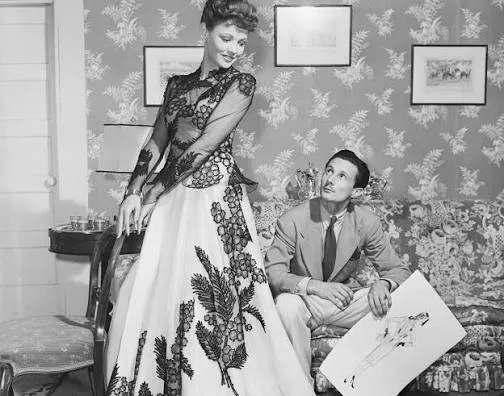
For Where the Sidewalk Ends (1950), Cassini devised a red velvet evening gown held by fine straps and cut daringly low across the chest. The dress was so close to the body that Gene Tierney reportedly complained she could walk only a few steps in it.
That limitation reveals both the attraction and the weakness of his Hollywood manner. Cassini understood impact instantly, but comfort could become secondary when a camera, an entrance, or a beautiful woman offered him a scene.
The couple's second daughter, Christina Cassini, was born on 19 November 1948. By then the marriage had entered a cycle of separations and reconciliations.
In 1950, Cassini established his own label in New York. The move from studio costume to Seventh Avenue required him to translate individual glamour into clothes that could be manufactured, sold, and worn beyond a film set.
His early New York collections retained a highly defined figure. Dresses narrowed at the waist, followed the hips, and used low necklines, fitted sleeves, or bare shoulders to frame rather than disguise the body.
Cassini's maxim was direct: "Do not tamper with the anatomy of a woman's body, do not camouflage it." He believed design should clarify a woman's proportions, not replace them with a designer's theory.
Within the propriety of the 1950s, his clothes could be frankly sensual. Smooth wool, silk crepe, satin, velvet, and crisp taffeta held a controlled hourglass line, while a bow, a jeweled fastening, or a sudden exposed back supplied the final note.
Gene Tierney and Cassini divorced in 1952, although affection and shared responsibility for their daughters continued. Tierney still wore his clothes, and Cassini remained part of her life after the marriage's bitterness had faded.
In 1953, Cassini became fascinated by the American actress Grace Kelly after seeing her in Mogambo (1953). When he encountered her in New York, he thought her reserved clothes concealed too much of her beauty.
His courtship was staged with a designer's sense of repetition. He sent red roses to Grace Kelly day after day, signed only "the friendly florist," before finally identifying himself.
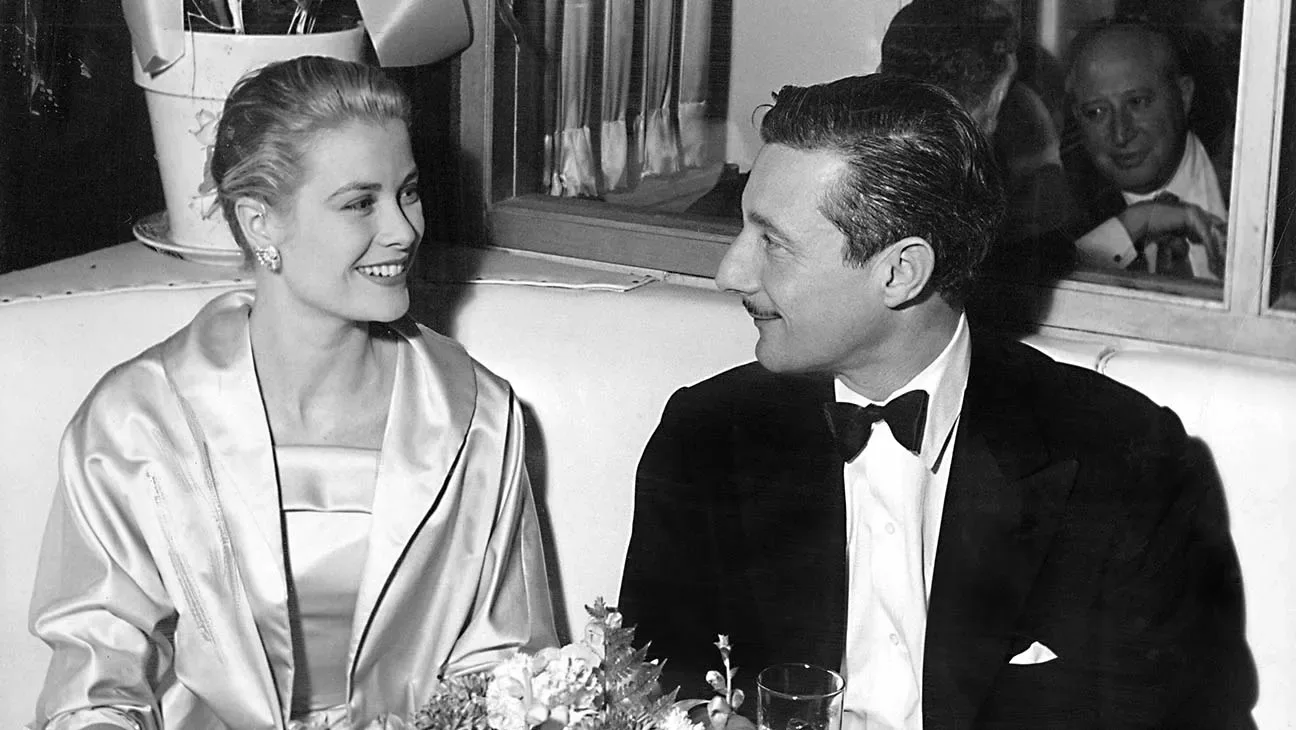
Cassini encouraged Kelly to exchange schoolmistress neatness for clothes with closer waists, open necklines, and quieter sensuality. He later claimed too much authorship over what became known as the Grace Kelly look, but his eye did help reveal how little embellishment her beauty required.
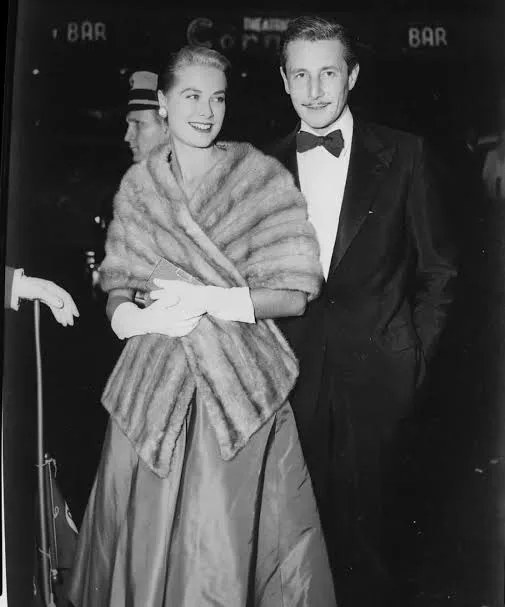
They became engaged, but Grace Kelly's parents distrusted Cassini's divorces, reputation, and foreign glamour. The engagement ended, and Kelly married Prince Rainier III of Monaco in 1956.
Cassini turned romantic disappointment into work. Through the middle and late 1950s, his ready-to-wear business grew, and he began licensing his name for coats, ties, accessories, and other products.
He resisted the loose chemise when Paris promoted it. Cassini preferred a shoulder, waist, and hip that remained legible, even as his line became cleaner and less overtly voluptuous.
His gift was not radical invention in the European couture sense. It was the ability to edit fashion into a persuasive American image: polished, photogenic, youthful, and available at more than one price.
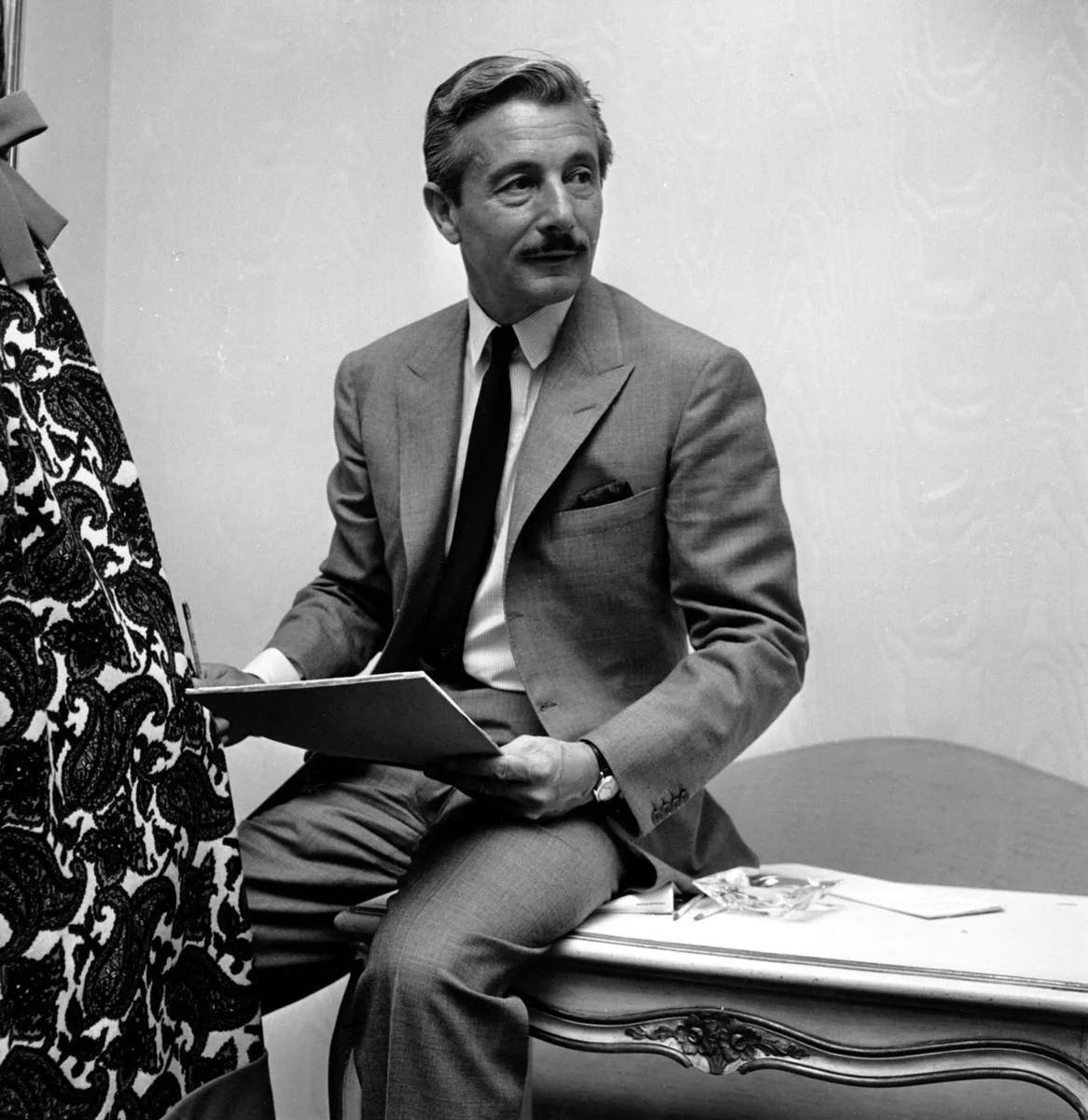
Cassini also designed his own image carefully. Slim tailoring, dark suits, narrow ties, polished shoes, a clipped mustache, and an erect sportsman's posture made him an advertisement for the social world his name promised.
During the 1950s, he became friendly with Senator John Fitzgerald Kennedy and the Kennedy family. The connection would give Cassini the role that fixed his place in fashion history.
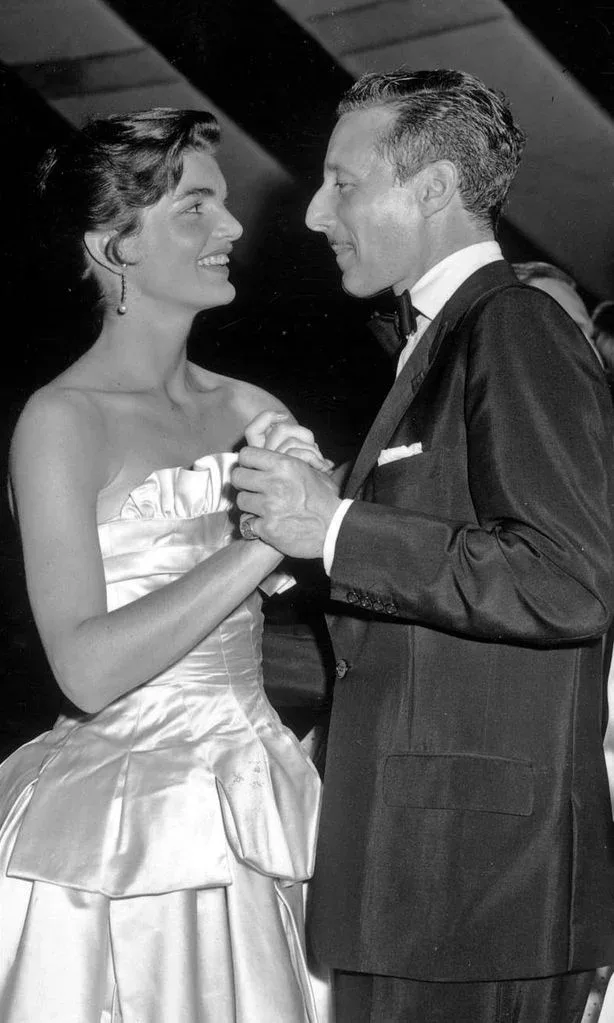
After John Kennedy won the presidential election in November 1960, Jacqueline Lee Bouvier Kennedy needed an American wardrobe equal to an international stage. Her earlier preference for Paris couture had already drawn political criticism.
Jacqueline Kennedy asked Cassini to become her principal designer. In Cassini's much-polished telling, he initially said no because he wanted authority over the complete image rather than occasional orders mixed among many designers.
He proposed a coherent scenario for the First Lady, not a sequence of unrelated dresses. Jacqueline Kennedy understood the distinction and gave him unusual access to her schedule, preferences, and public obligations.
The collaboration was close, but it was not the solitary creation Cassini sometimes presented in later years. Jacqueline Kennedy arrived with a highly developed eye, sent sketches and magazine clippings, specified colors and necklines, and continued to draw inspiration from French couture.
Cassini's achievement was to convert those preferences into an American-made wardrobe with visual continuity. He removed the overt seduction of his Hollywood clothes and preserved their exactness.
"I put a little water in my wine," Cassini later said. The First Lady required clarity rather than display.
For the inaugural celebrations in January 1961, he made an ivory evening gown in double-faced silk satin twill. A wide bateau neckline exposed the collarbones, the sleeveless bodice followed the torso, and a narrow column fell to the floor with a simple sash at the waist.
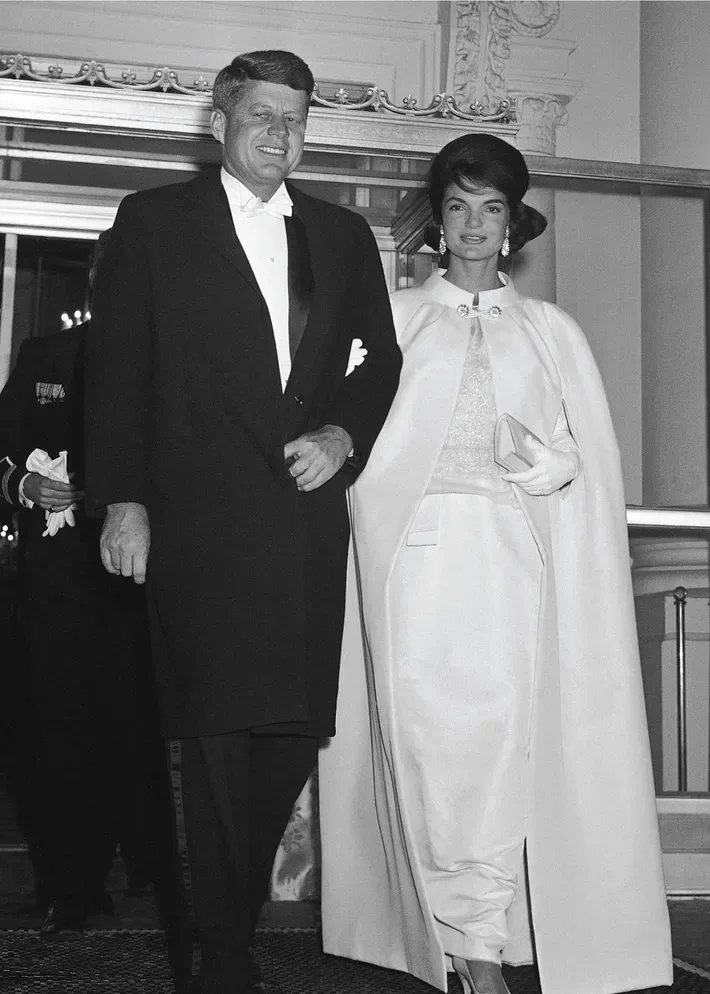
The Inauguration Day ensemble he designed for the First Lady included a fawn-colored wool dress and matching coat with a sable collar. The coat's straight body, clean shoulders, and large buttons looked composed in the severe Washington cold while many other guests appeared engulfed in fur.
The pillbox hat Jacqueline Kennedy wore that day was made by the American milliner Roy Halston Frowick, professionally known as Halston. Its compact geometry completed the Cassini line so perfectly that all the elements in her outfit became inseparable in public memory.
Across the next thousand days, Cassini produced approximately three hundred ensembles for Jacqueline Kennedy. Day dresses, suits, coats, state gowns, gloves, and accessories were considered as parts of a single public identity.
The day silhouette was young and architectural. Sleeveless or three-quarter-sleeved dresses skimmed the torso, waist seams were controlled rather than pinched, and A-line skirts stopped near the knee.
Coats were often cut like clean shells, with bracelet-length sleeves, oversized buttons, shallow collars, and pockets integrated into the geometry. Their smooth surfaces registered immediately in news photographs and from the far side of a crowd.
For official evening wear, Cassini favored long, uninterrupted columns. Bateau necklines, bare shoulders, narrow waists, and skirts with little bulk allowed Jacqueline Kennedy's height and erect posture to provide the drama.
Decoration was concentrated rather than scattered. A field of sequins could create one luminous surface; a sash might carry the color; raffia lace, silk chiffon, or a restrained bow could soften a form whose underlying structure remained severe.
Color was strategic. Ivory and black gave solemnity to state dinners, while shell pink, celadon, vivid red, turquoise, and clear yellow allowed the First Lady to remain visible in a reception line or across a ceremonial space.
For the Kennedys' 1961 visit to Paris, Cassini made a pink-and-white raffia lace evening dress with a fitted waist and straight skirt. The textured surface was feminine without appearing fussy, and the pale palette answered Parisian refinement without imitating a heavily constructed couture gown.
For a White House dinner honoring Peruvian president Manuel Prado Ugarteche and First Lady Clorinda Málaga de Prado in September 1961, Cassini designed a floor-length gown of mustard gold and black for Jacqueline Kennedy. A sleeveless black bodice descended into a narrow column, while the strong gold accent made the dress readable across the state rooms.
Cassini worked at speed because diplomatic schedules changed and Jacqueline Kennedy often wanted choices. He later summarized the period as nerves and telephone calls from the First Lady insisting that she had nothing to wear.
The pressure produced discipline. Sketches had to be legible, fittings efficient, and fabrics selected not merely for beauty but for climate, travel, flash photography, and the symbolism of an occasion.
In March 1962, Jacqueline Kennedy wore an apricot silk ziberline Cassini dress and coat during a boat ride on Lake Pichola in Udaipur, India. The rigid, lustrous fabric kept its shape in the heat, while the saturated color made her visible against water, stone, and distant crowds.
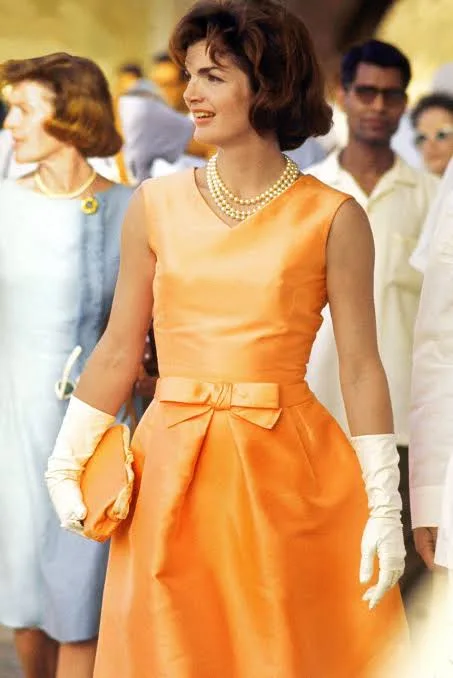
That outfit shows Cassini at his most intelligent. Its straight coat, simple dress, and absence of surface clutter allowed fabric and color to perform the work that embroidery or jewels might otherwise have done.
During the same period, Jacqueline Kennedy wore a Cassini leopard-skin coat that caused an enormous demand for copies. The fashion helped intensify the killing of leopards for their pelts, a consequence Cassini later regretted and answered by supporting synthetic fur.
The Kennedy wardrobe influenced manufacturers almost immediately. Copies of the coats, sleeveless dresses, restrained suits, and formal gowns appeared at many prices, spreading the clean "Jackie look" far beyond the women who could order from Cassini.
Cassini understood the publicity value without embarrassment. He had dressed Jacqueline Kennedy as though she were the leading woman in a major production, but the performance served diplomacy, national optimism, and modern American design.
President John Kennedy's assassination on 22 November 1963 brought the collaboration between Jacqueline Kennedy and Cassini to an abrupt end. The clothes that had represented youth and order became inseparable from the brevity of the administration.
Cassini closed his Seventh Avenue couture and ready-to-wear operation soon afterward and concentrated increasingly on licensing. The decision was commercially shrewd, although it shifted his name away from the intimacy of fabric, fitting, and construction.
He called the arrangement the "Oleg Cassini Seal of Approval." His signature appeared on hosiery, shoes, gloves, jewelry, sunglasses, swimwear, fragrance, luggage, sheets, towels, and other goods intended for a much broader public.
Cassini moved into menswear with the same appetite for visibility. He promoted colored dress shirts in raspberry, pink, and other emphatic shades, along with turtlenecks and versions of the Nehru jacket.
Some experiments were more memorable than durable. Yet Cassini grasped earlier than many designers that a fashion name could signify a way of living even when the designer had not cut every object carrying it.
His sportswear explored synthetic materials that still seemed novel. Polyester, acrylic, and velour appeared in zippered jackets, fitted tops, dresses, and coordinated leisure pieces, often with frog fastenings or detachable collars and cuffs.
The clean femininity of the Kennedy years did not define everything that followed. Cassini could move toward Western details, bright men's shirts, gleaming evening fabrics, or unabashedly commercial glamour whenever the market offered an opening.
In 1971, Cassini married Marianne Nestor. The marriage was kept so private that many friends, colleagues, and members of his family remained unaware of it for decades.
Through the 1970s, licensing extended the Cassini name into fragrance, beauty products, household goods, and even automobile interiors. He became less a conventional couturier than an early architect of the designer lifestyle brand.
He continued to sketch with speed and assurance. A Cassini drawing often began with a tall, narrow woman, a sweeping line at the hip, a small head, and one decisive detail, enough to sell both garment and fantasy.
His personal legend expanded alongside the business. Cassini encouraged stories of noble ancestry, duels, actresses, tennis matches, and presidential friendships, because he understood that clients were buying proximity to a life as well as a dress.
In 1987, he published his autobiography, In My Own Fashion (1987). The book treated recollection as another form of design, smoothing chronology and arranging episodes for maximum effect.
By then, the Oleg Cassini name was more visible in licensed merchandise than in influential seasonal collections. His importance to contemporary fashion had diminished, but the wardrobe created for Jacqueline Kennedy had entered museums and historical memory.
Cassini revisited that collaboration in A Thousand Days of Magic: Dressing Jacqueline Kennedy for the White House (1995). He presented their work as the creation of a national style, giving himself the central role while preserving valuable details about fittings, fabrics, and the demands placed upon a First Lady's clothes.
During his later years, Cassini advocated for animal welfare and promoted alternatives to natural fur. The conversion did not erase the leopard-coat episode, but it acknowledged that glamour could be separated from the material cost of producing it.
In 2001, at eighty-eight, he introduced Oleg Cassini Sport, a collection of silk warm-up suits, satin-lined hooded tops, and short dresses. He still preferred motion and visibility to dignified retirement.
Bridal wear became one of the most enduring commercial branches of his name. In 2005, the year before his death, Cassini was still designing wedding dresses for David's Bridal.
He made his final public appearance early in 2006 at a design awards event at the Whitney Museum of American Art in New York. The trim figure, formal manners, and practiced charm remained intact even as his health failed.
Oleg Cassini died on 17 March 2006 at a hospital in Manhasset, New York, following complications from a cerebral aneurysm. He was ninety-two.
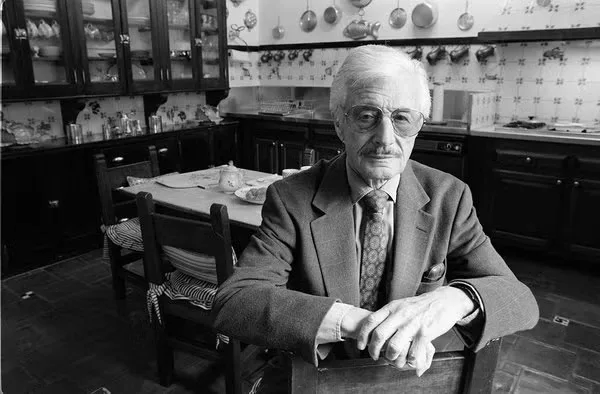
Cassini's career lasted seven decades because he was willing to change the scale of fashion without surrendering its promise. He could design one red velvet gown for a film star, three hundred ensembles for a First Lady, or place his signature on an object intended for thousands of households.
His finest designs depended on control. A luminous fabric, a visible collarbone, a clear waist, an uninterrupted column, or a coat reduced to line and color could make a woman recognizable before her face came into focus.
Oleg Cassini did not invent Jacqueline Kennedy's taste, nor create every garment associated with her. What he gave her was coherence: a wardrobe whose silhouettes, proportions, and colors could carry one woman through the White House and into the visual memory of an era.