People
Stéphane Boudin(28 October 1888-18 October 1967)
Biography
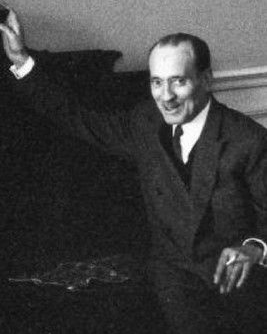
Stéphane Boudin was born on 28 October 1888.
His father, Alexandre Boudin, ran a family business supplying passementerie — the elaborate trims, tassels, and braids used in fine upholstery — and one of his clients was Maison Jansen, the Paris decorating house founded in 1880 by Jean-Henri Jansen.
Jansen had built the firm into a favorite of European royalty almost from the start, picking up commissions for King William III of the Netherlands and King Alfonso XII of Spain after they noticed his work at the 1883 International Exhibition.
By the early 1920s, Jansen was childless and looking for a successor. He turned to his old supplier and friend Alexandre Boudin, who had two sons, and asked whether one might be groomed to take over. Alexandre sent Stéphane.
Boudin took to the trade immediately, and with a peculiar kind of discipline: he sent artists traveling across Europe to sketch architectural details from the seventeenth, eighteenth, and nineteenth centuries, building a private reference library he would draw on for the rest of his career. It gave Jansen's work — and soon, Boudin's own — a quality of historical exactness that few rival decorators could match.
He rose to become the firm's director, and from 1936 to 1961 served as its president.
By the 1930s, much of his most celebrated work was in England.
For the politician and diarist Henry "Chips" Channon, Boudin designed a rococo fantasy room in 1934, inspired by the pale-blue-and-silver Amalienburg Pavilion at Nymphenburg Palace near Munich; a mirrored table and thirty matching chairs alone cost Channon roughly £6,000 — half a million dollars today. Channon, delighted, called him "the greatest decorator in the world."
For Elsie de Wolfe, the pioneering American decorator, Boudin designed a tented pavilion for one of her legendary parties, along with her Paris house, her country house, and another in the Bois de Boulogne — work glamorous enough to earn him the nickname "the decorator's decorator."
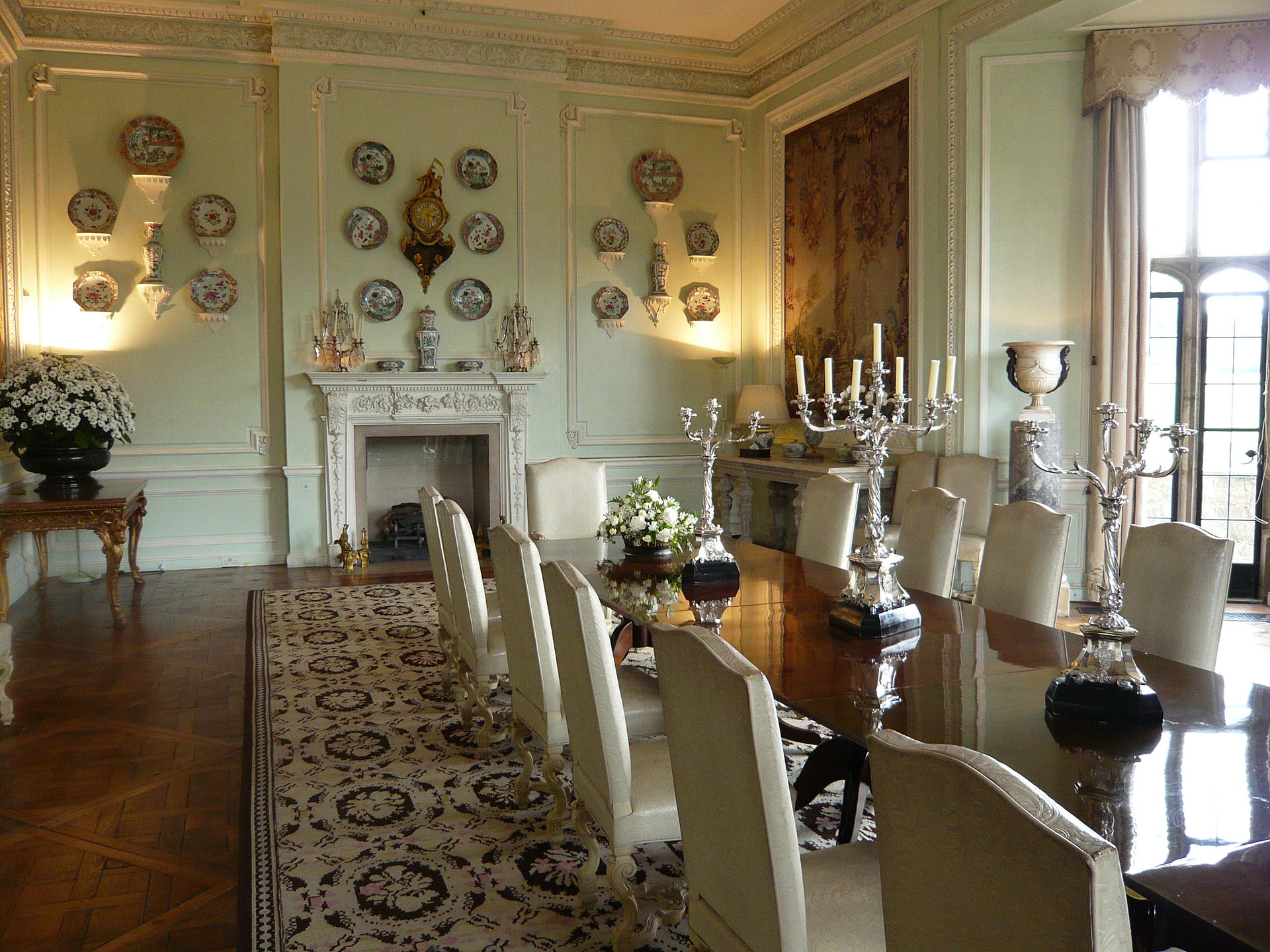
Around 1935, he designed the dining room at Leeds Castle in Kent for its last private owner, Olive, Lady Baillie.
His client list kept expanding, and it makes for a strange assortment in hindsight: the royal families of Belgium, Iran, and Yugoslavia; the Duke and Duchess of Windsor; Hattie Carnegie; the financier Robert Goelet; William and Babe Paley — and, during the Nazi period, the German Reichsbank, an uncomfortable line on an otherwise glittering résumé.
It was another client, the oil tycoon Charles Wrightsman, who indirectly changed the course of Boudin's career. After decorating Blythedunes, the Wrightsmans' house in Palm Beach, Boudin was introduced by Jayne Wrightsman to Jacqueline Kennedy, who was searching for someone to help restore the White House.
In 1961 he joined the effort alongside Henry Francis du Pont of the Winterthur Museum and the decorator Sister Parish. Mrs. Kennedy was so taken with his first work, in the Red and Blue Rooms, that she began handing him more and more authority over the project — a shift that did not sit well with du Pont or Parish, both of whom had assumed a larger role themselves.
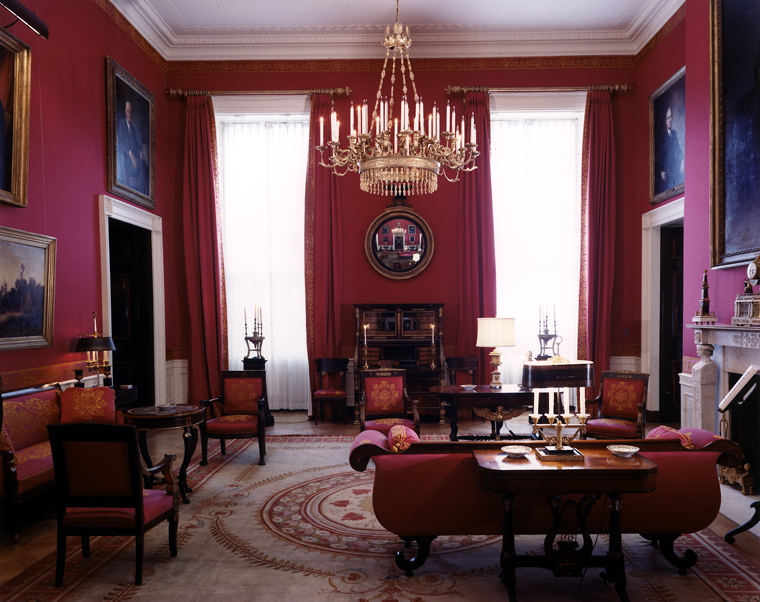
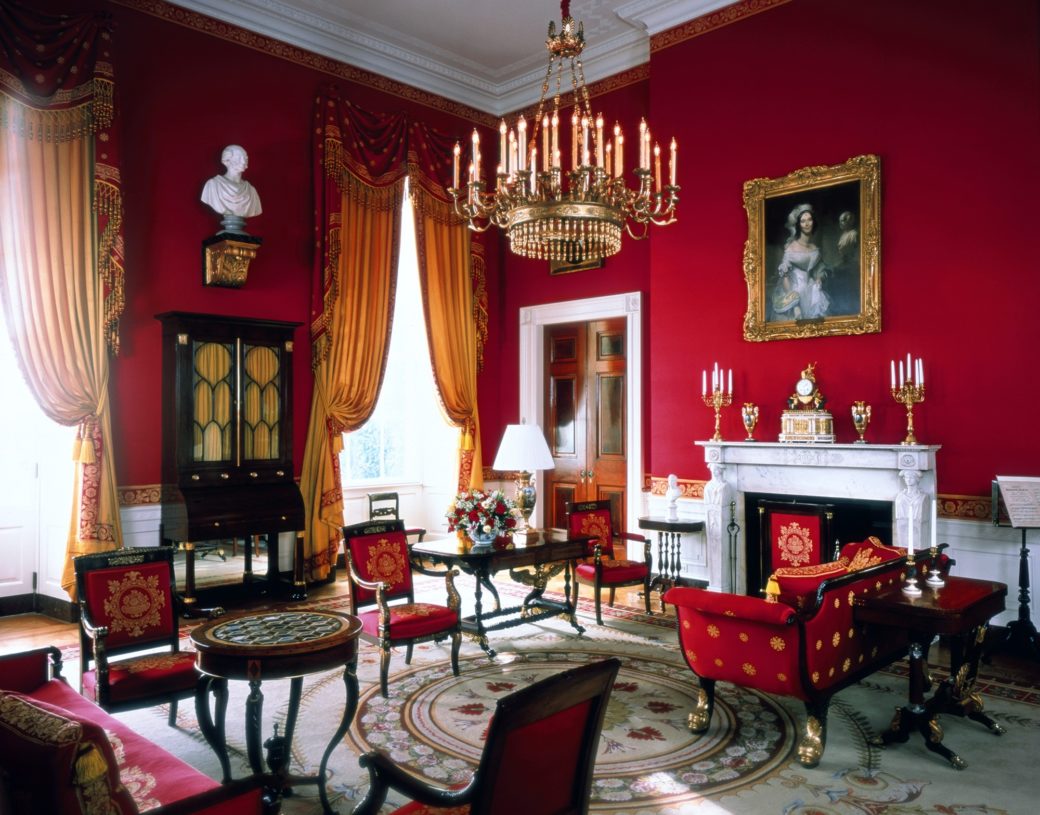
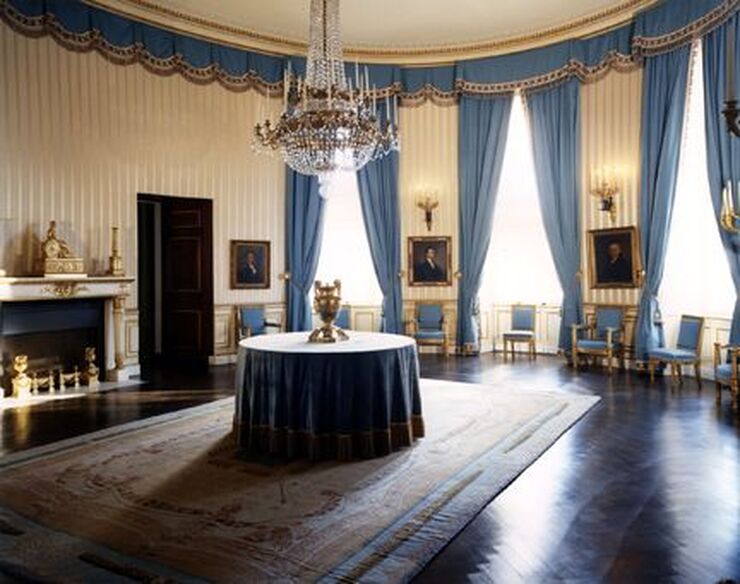
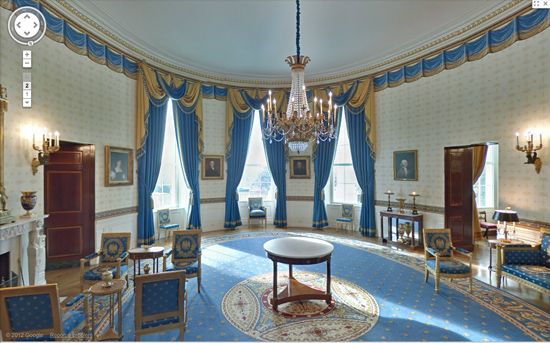
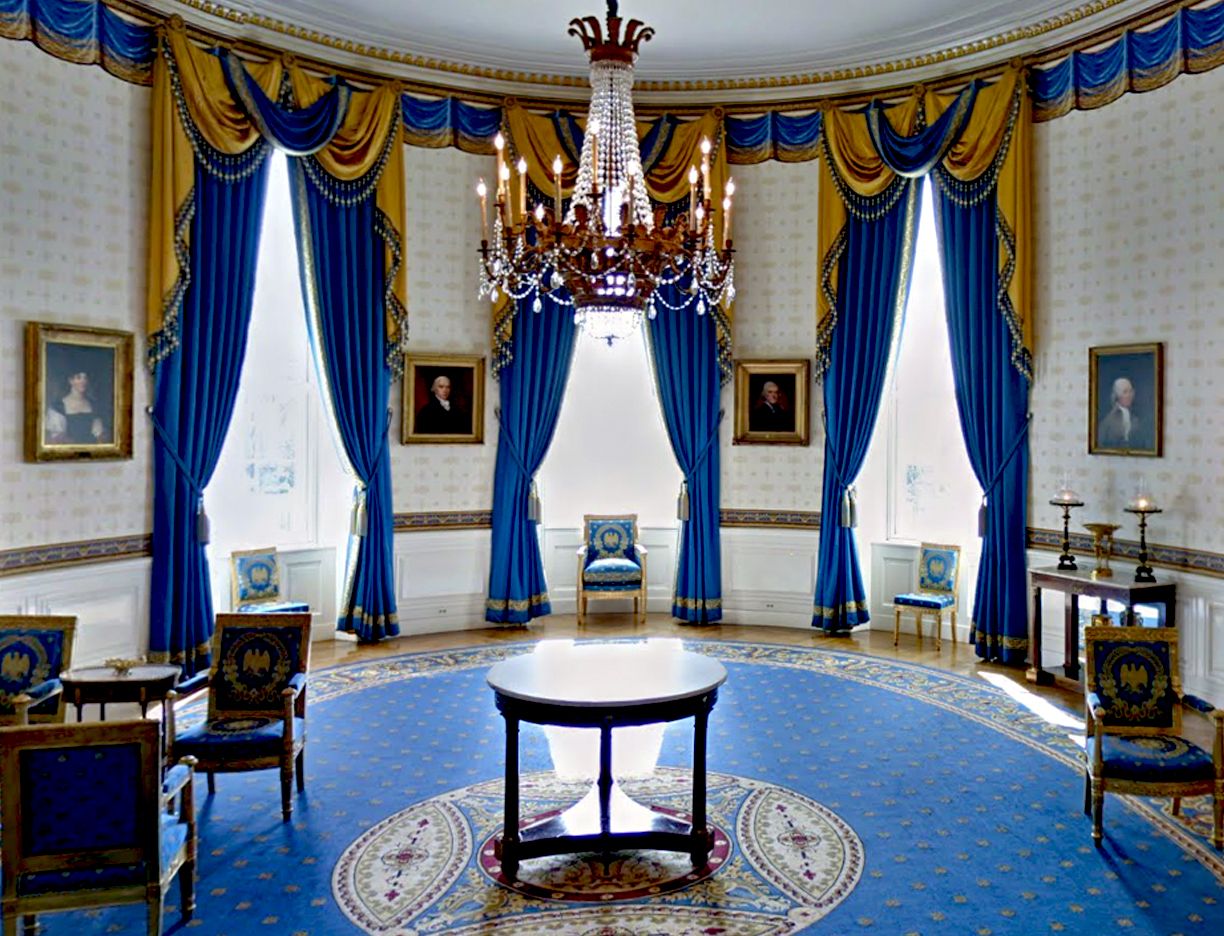
There was one complication: using a French decorator to remake the American President's house was not something Mrs. Kennedy wanted publicized. Boudin's role was kept quiet until a Washington Post article in September 1962 exposed it — and, in the same story, revealed that a desk featured in Mrs. Kennedy's famous televised tour of the White House was a reproduction, not the antique it had been presented as.
Mrs. Kennedy herself was unmoved by critics who called the project mere decorating. "It must be restored," she said at the time, "and that has nothing to do with decoration." The restoration was essentially complete by 22 November 1963 — the day President Kennedy was assassinated, and the day Jacqueline Kennedy's residence at the White House came to an end.
Boudin's work reached Washington by another route as well: he decorated Les Ormes, known as The Elms, the home of Perle Mesta, the U.S. ambassador to Luxembourg, and her sister, Marguerite Tyson.
The house and its furnishings were later bought by Lyndon B. Johnson, who had the designer Genevieve Hendricks work a touch of Texas into Boudin's very French interiors. As Johnson explained to Time magazine, "Every time somebody calls it a château, I lose 50,000 votes back in Texas."
Boudin kept working into his late seventies — among his last projects was the interior of a yacht, the Chambel IV, later renamed Northwind II.
He died on 18 October 1967, ten days short of his seventy-ninth birthday, and was succeeded at Maison Jansen by his longtime collaborator, Pierre Delbée.
Few decorators of his era left so little of a public persona and so much of a visible legacy: rooms in a Renaissance castle, a rococo fantasy in a London townhouse, and the state rooms of the White House, still substantially his, more than sixty years on.