People
Rosalba Carriera (7 October 1675 – 15 April 1757)
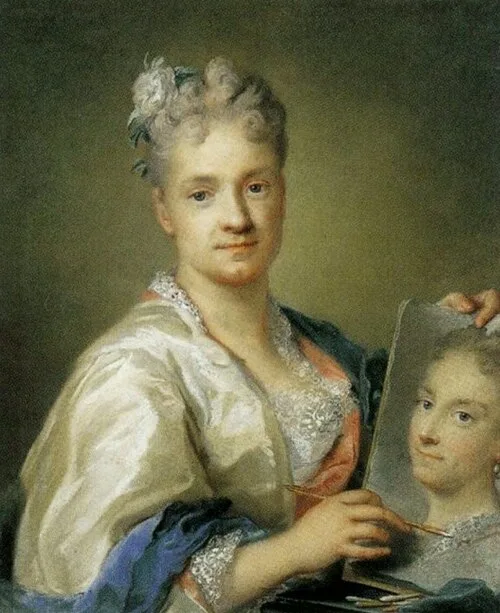
Rosalba Carriera (7 October 1675 – 15 April 1757) was a Venetian painter, celebrated as the artist who single-handedly elevated pastel from a medium used for quick sketches into a serious, independent art form. In October 1720, following a triumphant year in Paris, she was elected by acclamation to the Académie Royale de Peinture et de Sculpture — the first foreign-born woman ever admitted, and the precedent that, decades later, opened the door for Madeleine Basseporte's own students, Marie-Thérèse Reboul and Anne Vallayer-Coster, to follow.
Biography
Rosalba Giovanna Carriera was born in Venice on 7 October 1675, the daughter of a minor government official, Andrea Carriera, and Alba Foresti, an embroiderer and lacemaker.
She learned lacemaking first, from her mother, and might have stayed in that trade if the Venetian lace industry hadn't been in steep decline by the time she came of age.
Encouraged instead to try miniature painting, Carriera began decorating snuffbox lids with tiny portraits and mythological scenes on ivory — she was the first artist to use ivory rather than vellum for the purpose — meant as souvenirs for the wealthy foreigners passing through Venice on the Grand Tour.
The miniatures made her name. By September 1705, not yet thirty, Carriera had already been admitted to the Accademia di San Luca in Rome, a rare honor for an artist working so far from the city.
She had, by then, begun experimenting with pastel — a medium mostly reserved, until Carriera got hold of it, for quick preparatory sketches rather than finished work.
She painted directly onto the paper in pastel, with no preliminary drawing underneath, trusting the medium completely rather than treating it as a rehearsal for something else. Nobody had really done that before.
Contemporaries eventually named the softer, more decorative style she pioneered the goût moderne — the modern taste — before a neoclassical painter, decades later, renamed it, less admiringly, the Rococo.
In 1713, the future King Augustus III of Poland sat for her while still a young prince. He went on to acquire more than a hundred Carriera pastels for his collection in Dresden, which remains, to this day, the largest gathering of her work anywhere in the world — and which later became the first pastel collection ever opened to the public.
In March 1720, at the invitation of the French banker and collector Pierre Crozat, Carriera traveled to Paris with her mother and her two sisters, taking up residence in Crozat's own house on the Rue de Richelieu.
Paris fell for her almost instantly. She painted the young King Louis XV, the painter Antoine Watteau, and, in short order, most of the city's aristocracy — thirty-six portraits' worth, by one count, in barely a year.
On the evening of 25 November 1720, the Regent of France, Philippe d'Orléans, arrived at her lodgings entirely unannounced, and stayed more than half an hour simply to watch her work.
On 26 October 1720, on a nomination from the painter Antoine Coypel, Carriera was elected to the Académie Royale de Peinture et de Sculpture by acclamation — an institution that had, by then, grown distinctly reluctant to admit more women, and made an exception anyway. She was the first foreign-born woman ever to receive the honor.
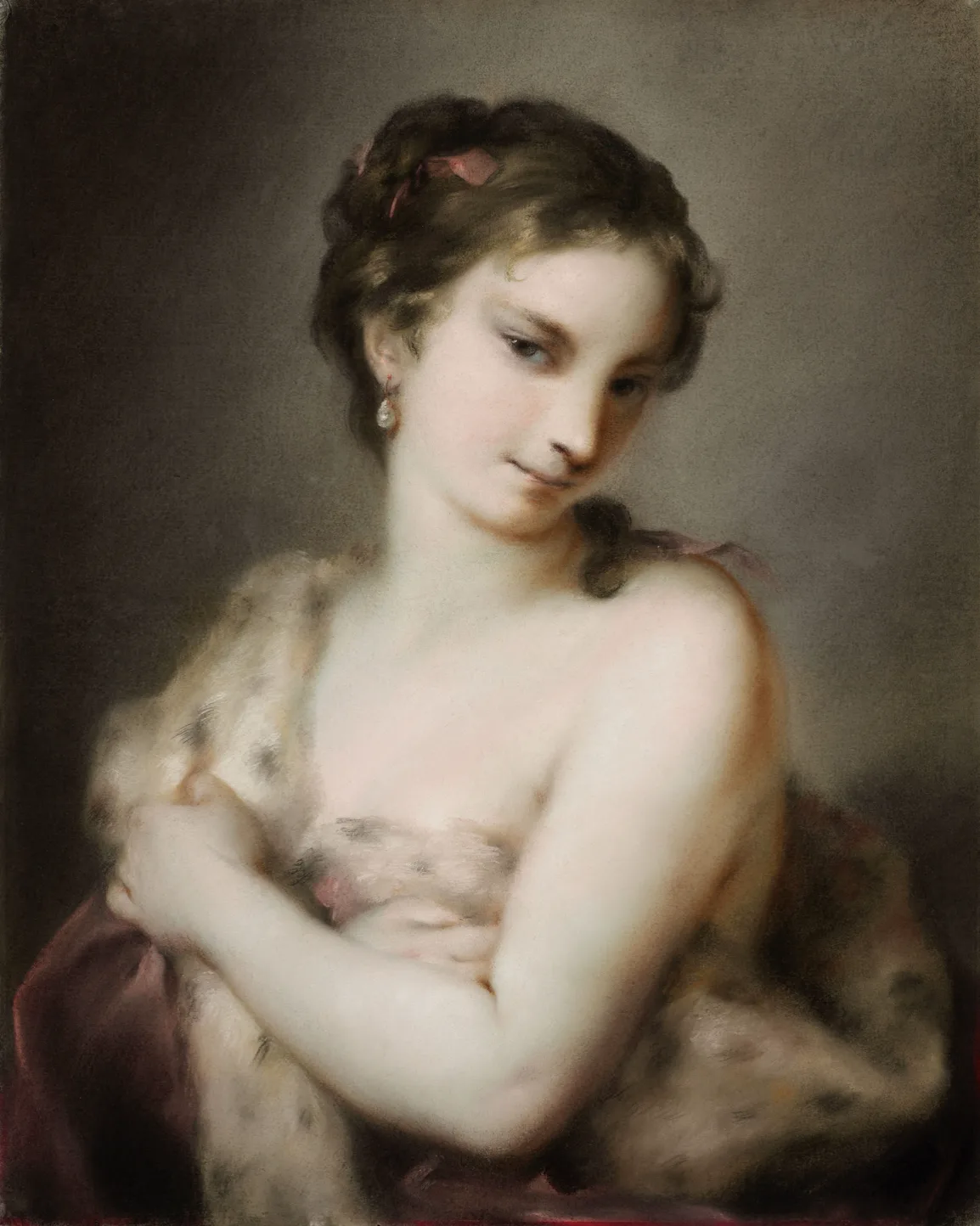
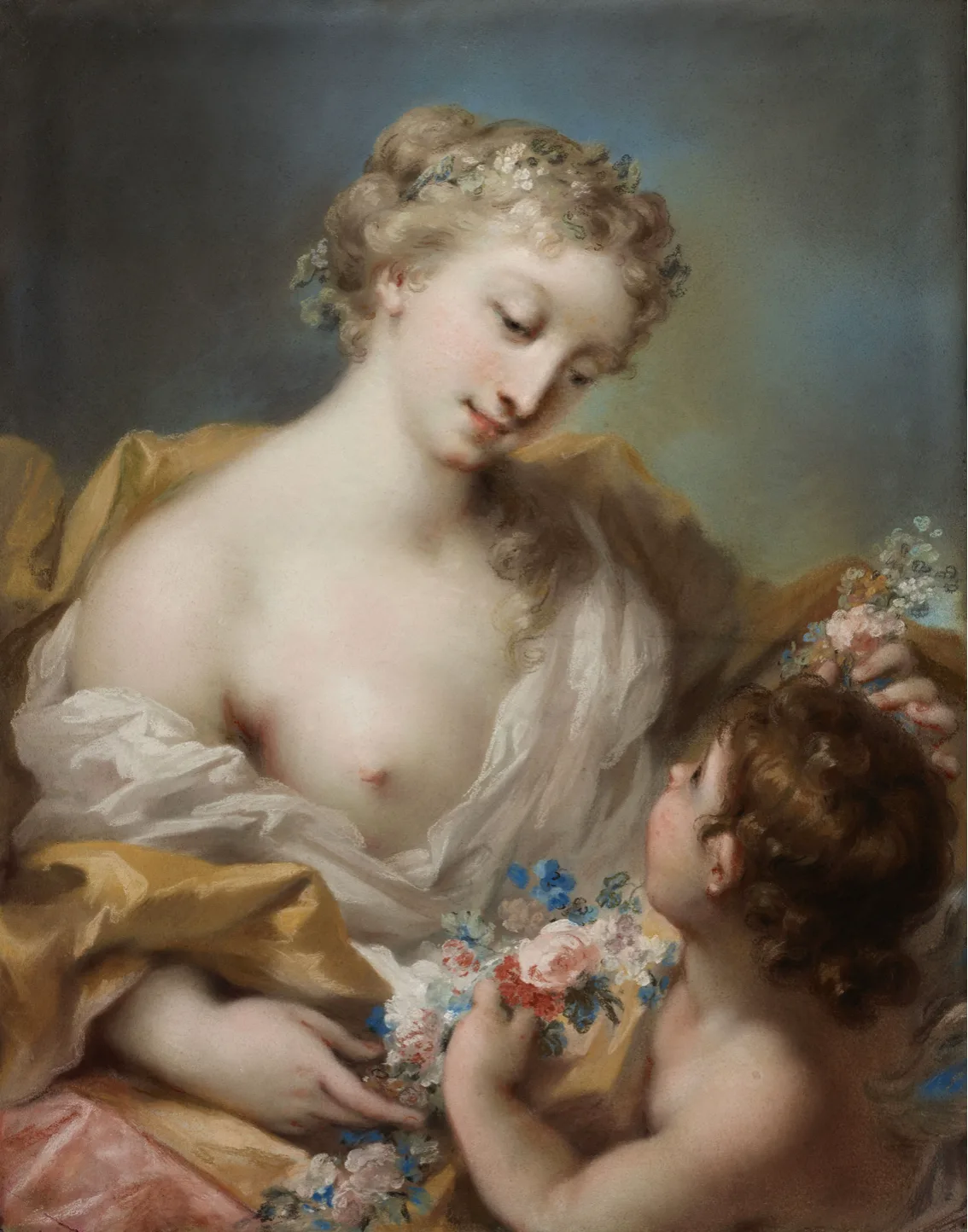
What made her work so persuasive, art historians have since argued, was the particular blend it struck: technically exacting enough to satisfy demanding sitters, but light-handed enough to look effortless on the page.
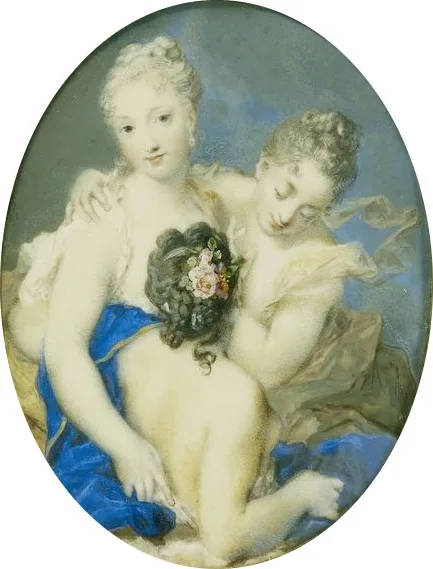
One scholar described a Carriera pastel as appearing "effortlessly elegant and decorative" while still conveying "the complex physicality and psychology of its subject" — a free, almost impressionistic touch in service of a very exact likeness.
Carriera returned to Venice in 1721 and resumed her studio on the Grand Canal, which quickly became an obligatory stop for European nobility making the Grand Tour.
She went on to work for Rinaldo III d'Este in Modena and, from 1730, for the Empress Wilhelmine Amalie in Vienna — never marrying, and remaining, unusually for a woman of her century, the sole head of her own household for the whole of her adult life.
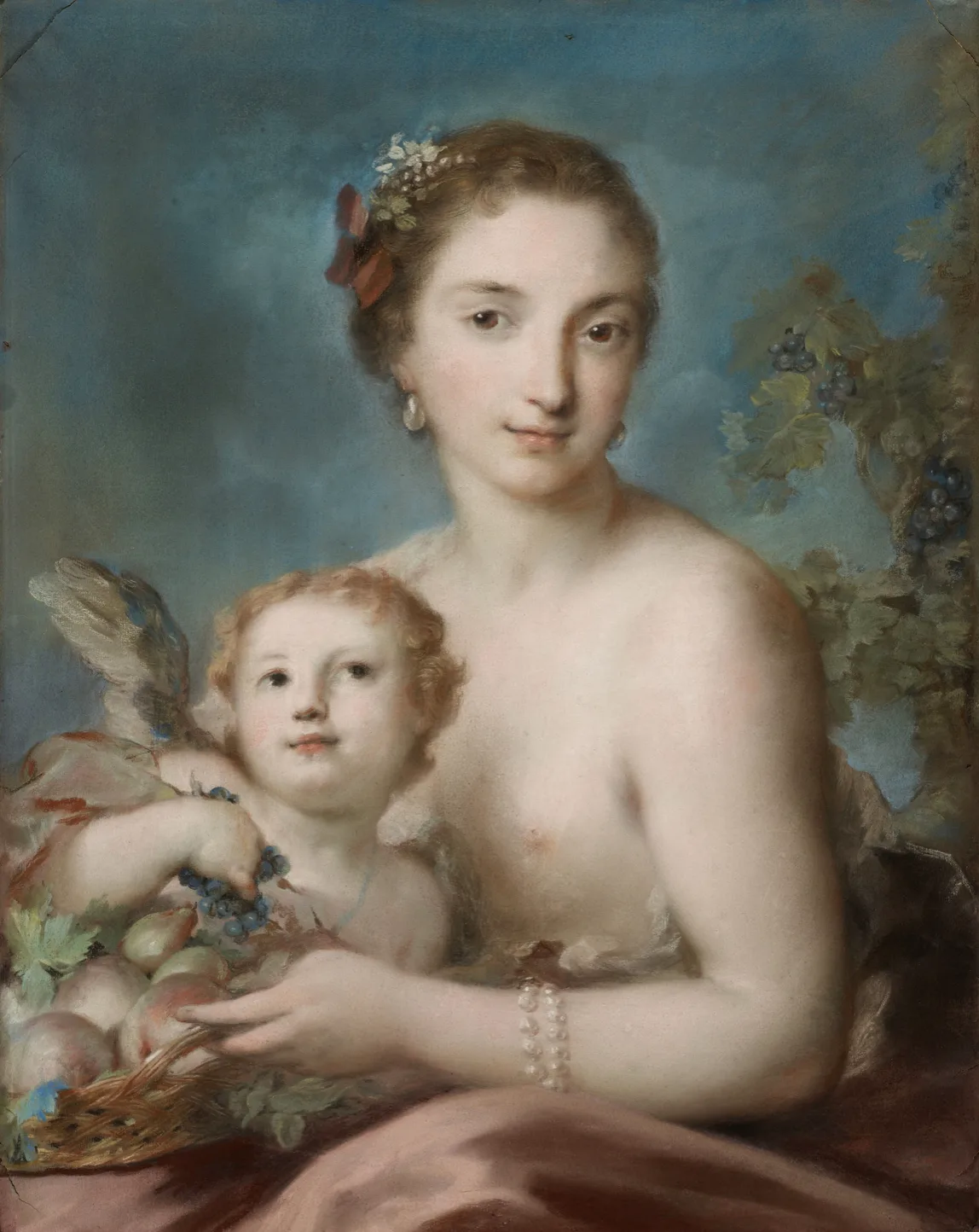
In 1737, her sister Giovanna, who had also worked for years as her studio assistant, died. Carriera fell into what contemporaries described as a deep depression.
A few years earlier, she had painted a self-portrait wearing a garland of leaves. Asked what it meant, she answered simply that it was Tragedy — and that she expected to end tragically herself. Her biographers would later note, with the benefit of hindsight, how right she turned out to be.
Her eyesight, already strained by decades of close pastel work, began failing badly around 1746. A cataract operation in 1749 briefly restored some of her vision; within a year she was completely blind again, and stayed that way for the rest of her life. "As though I were in the darkness of the night," she wrote of the years that followed.
Contemporary biographers disagreed sharply about what those final blind years actually did to her. One claimed she had descended into total madness. Others who knew her firsthand insisted otherwise — that whatever sadness she carried, she went on dictating clear-headed letters and legal documents almost to the end, "deprived of the bodily light," as one put it, but "just as much enlightened in her mind."
Carriera died in her small house in Venice's Dorsoduro district on 15 April 1757, at eighty-one, having outlived every member of her family.
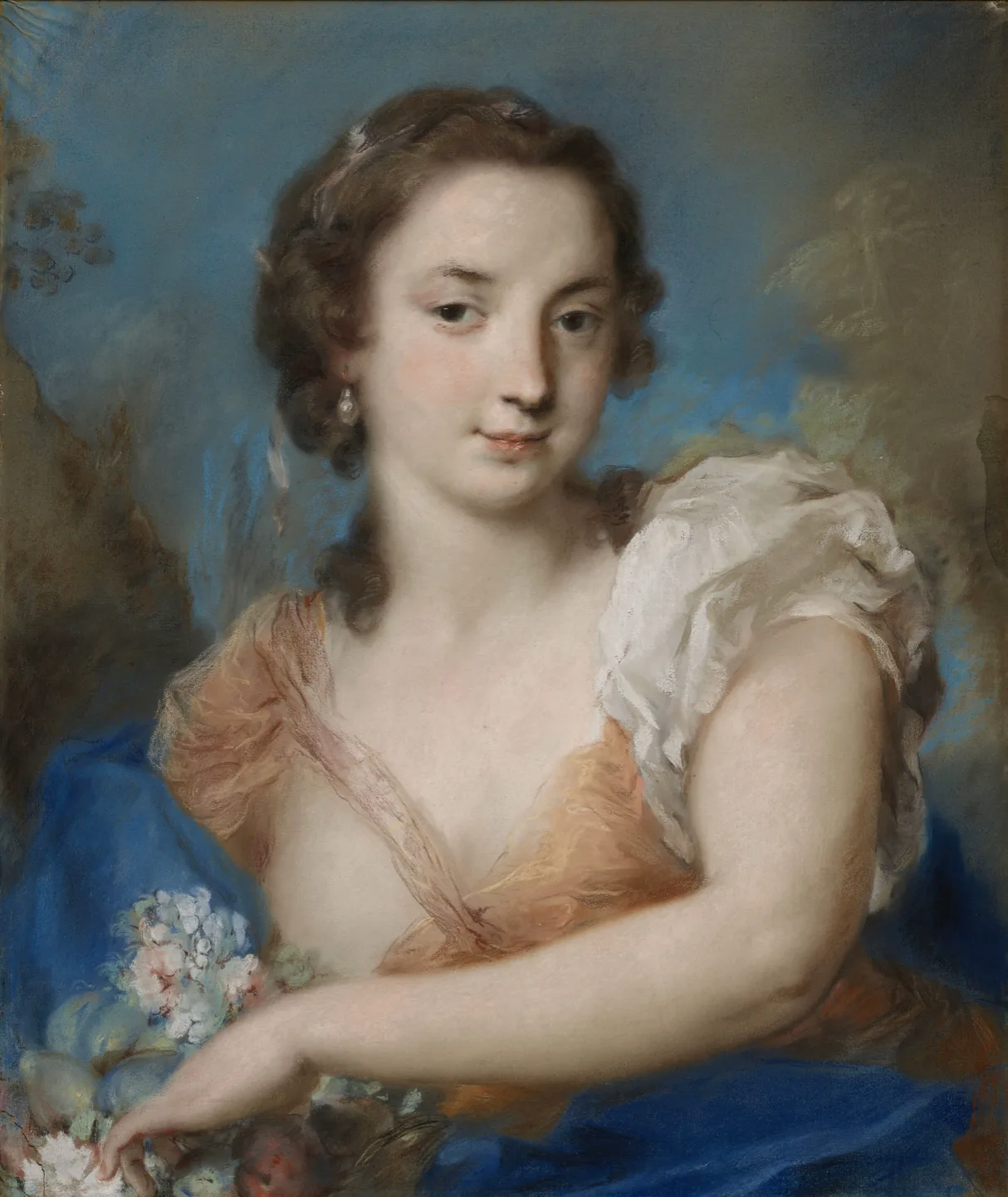
Decades later, when Madeleine Basseporte was still a young portraitist finding her way in Paris, it was Carriera's pastels — and Carriera's example, an unmarried woman running her own studio and answering to no one — that she found herself looking to first.