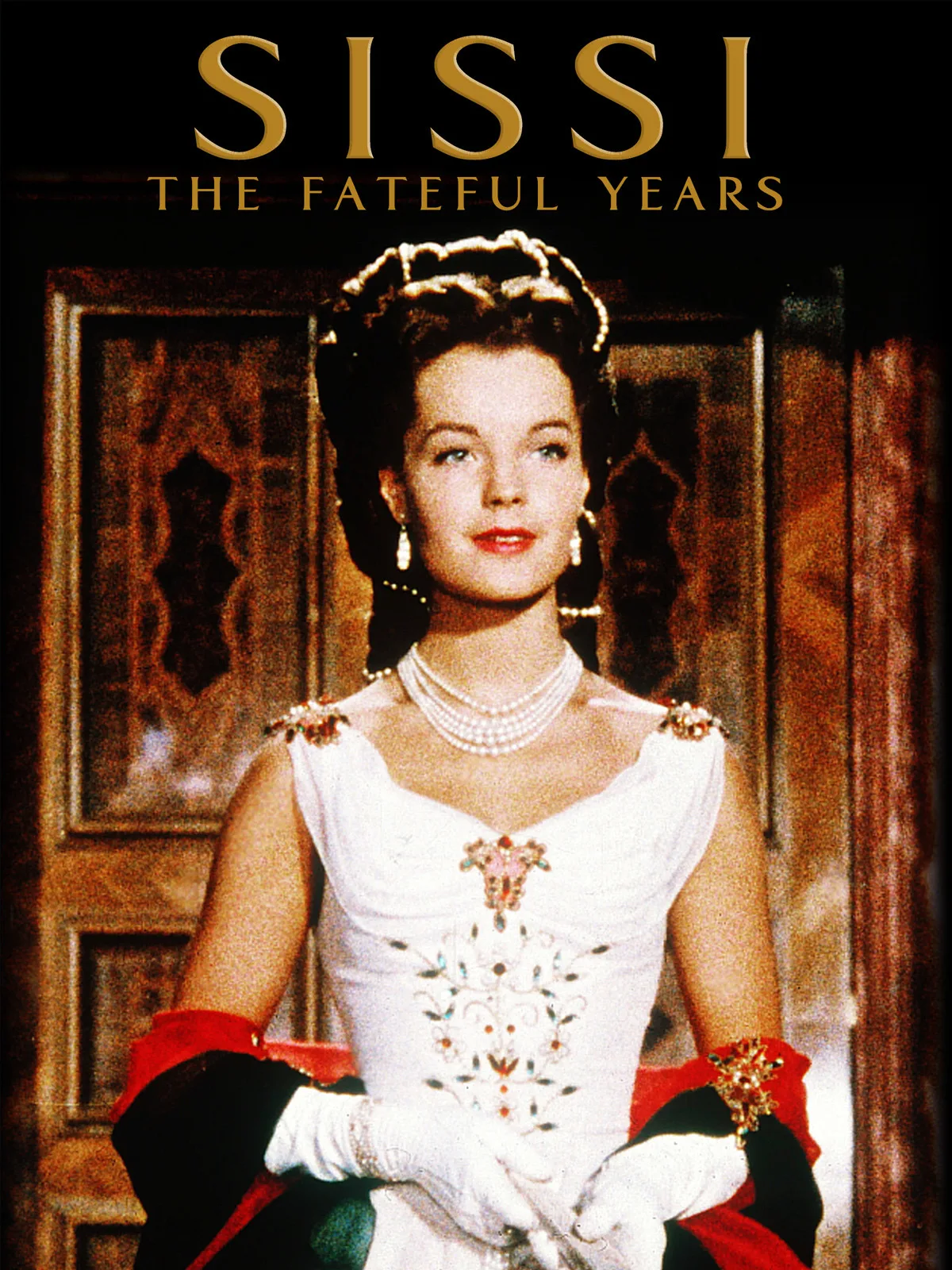
Sissi – Fateful Years of an Empress (film, Sissi – Schicksalsjahre einer Kaiserin, 1957) Starring Romy Schneider, Karlheinz Böhm, Magda Schneider and Gustav Knuth
Sissi – Fateful Years of an Empress (Sissi – Schicksalsjahre einer Kaiserin, 1957) is the third and final part of Ernst Marischka's trilogy, following Sissi (1955) and Sissi – The Young Empress (Sissi – Die junge Kaiserin, 1956). Romy Schneider was nineteen when she played the role for the last time.
It is the darkest and the most expensive of the three. Empress Elisabeth of Austria falls seriously ill, is sent abroad to recover, and returns to face a hostile Italy, and the film ends not with a wedding or a coronation but with a crowd deciding, slowly and in silence, whether to forgive her.
Plot
Hungary. Elisabeth has withdrawn to Gödöllő with her small daughter and a handful of attendants, riding through the woods and living without the Viennese ceremonial she detests.
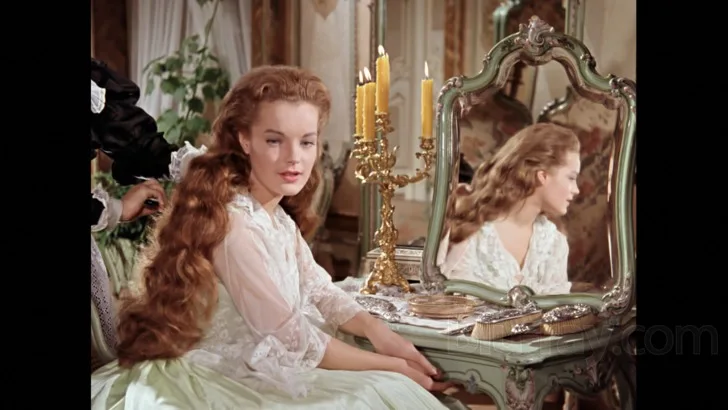
Romy Schneider as Empress Elisabeth of Austria in film Sissi – Fateful Years of an Empress(1957)
Count Gyula Andrássy is her constant companion, and the court in Vienna talks. Franz Joseph swallows his jealousy at his desk, then sets off for Hungary to bring his wife home after Princess Helene in Bavaria, the sister he was once meant to marry, confesses that she has always loved him.
At a party in Andrássy's castle, Elisabeth wins over one of the fiercest remaining enemies of the Habsburgs. Then a sharp pain doubles her over, and Andrássy takes her outside for air.
There, without warning, he tells her he is in love with her. Elisabeth answers that she values him as her closest friend, that she loves Franz Joseph, and that she will not deceive him.
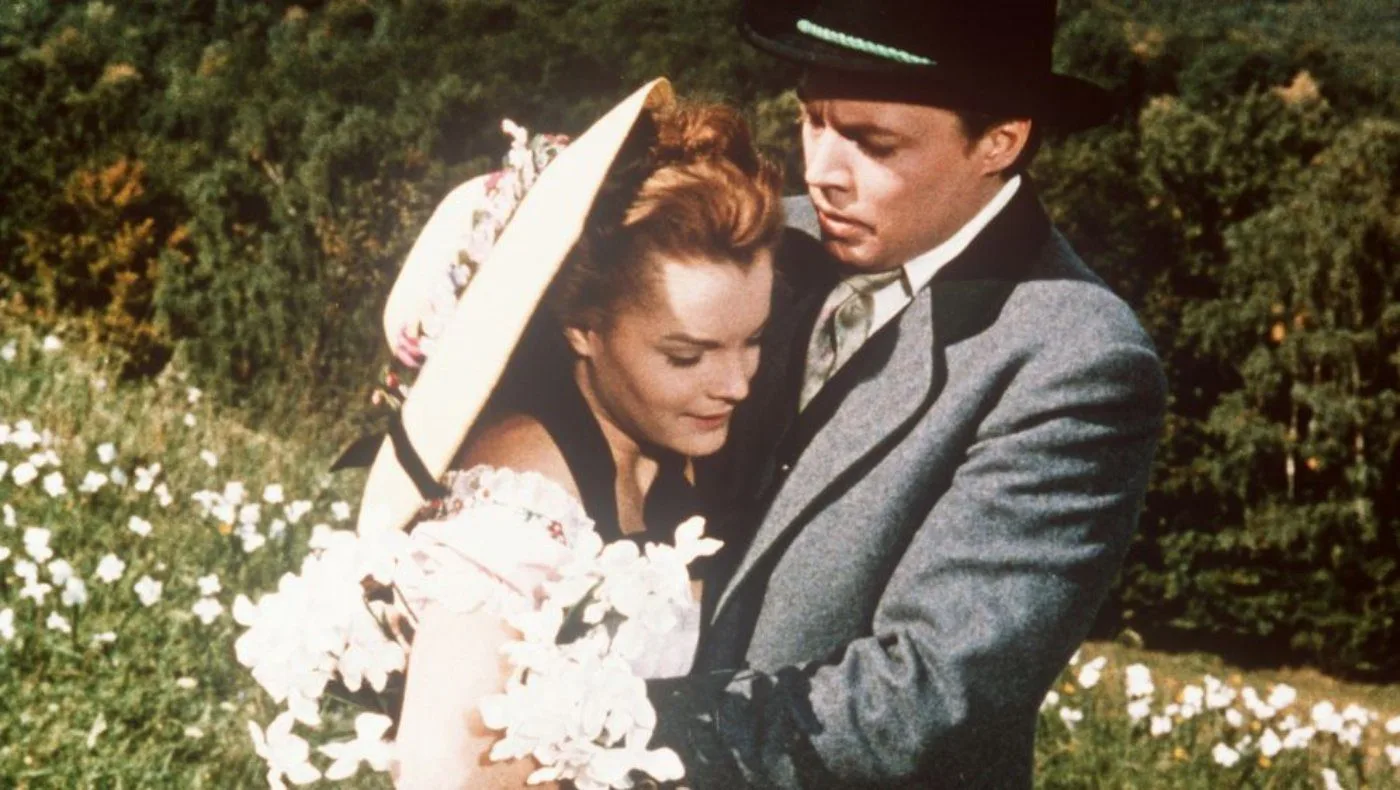
She leaves Hungary with her daughter. Halfway to Vienna she meets her husband coming the other way, and the two of them decide to steal a few days in the mountains together.
Romy Schneider and Karlheinz Böhm in film Sissi – Fateful Years of an Empress(1957)
The pain returns. Franz Joseph takes her straight back to Vienna, where the imperial physician, Dr. Seeburger, diagnoses a grave disease of the lungs and holds out little hope of her surviving the winter.
Archduchess Sophie of Austria suggests to her son that he begin considering a second wife. Franz Joseph's reply is the angriest moment in the whole trilogy.
The doctors order a warmer climate, and the child is once again removed to Sophie's care. Elisabeth sails for Madeira, then Corfu, and the illness does not lift, because what is failing is not only her lungs but her will to go on.
Duchess Ludovika in Bavaria travels out to Madeira after her daughter. She takes her walking, makes her climb, talks her back into wanting to live, and months later Dr. Seeburger examines the empress on Corfu and finds her well.
The ministers see an opportunity. Elisabeth charmed Hungary, so she is sent with her husband on a state visit to Lombardy and Venetia, the empire's bitterly resentful Italian possessions.
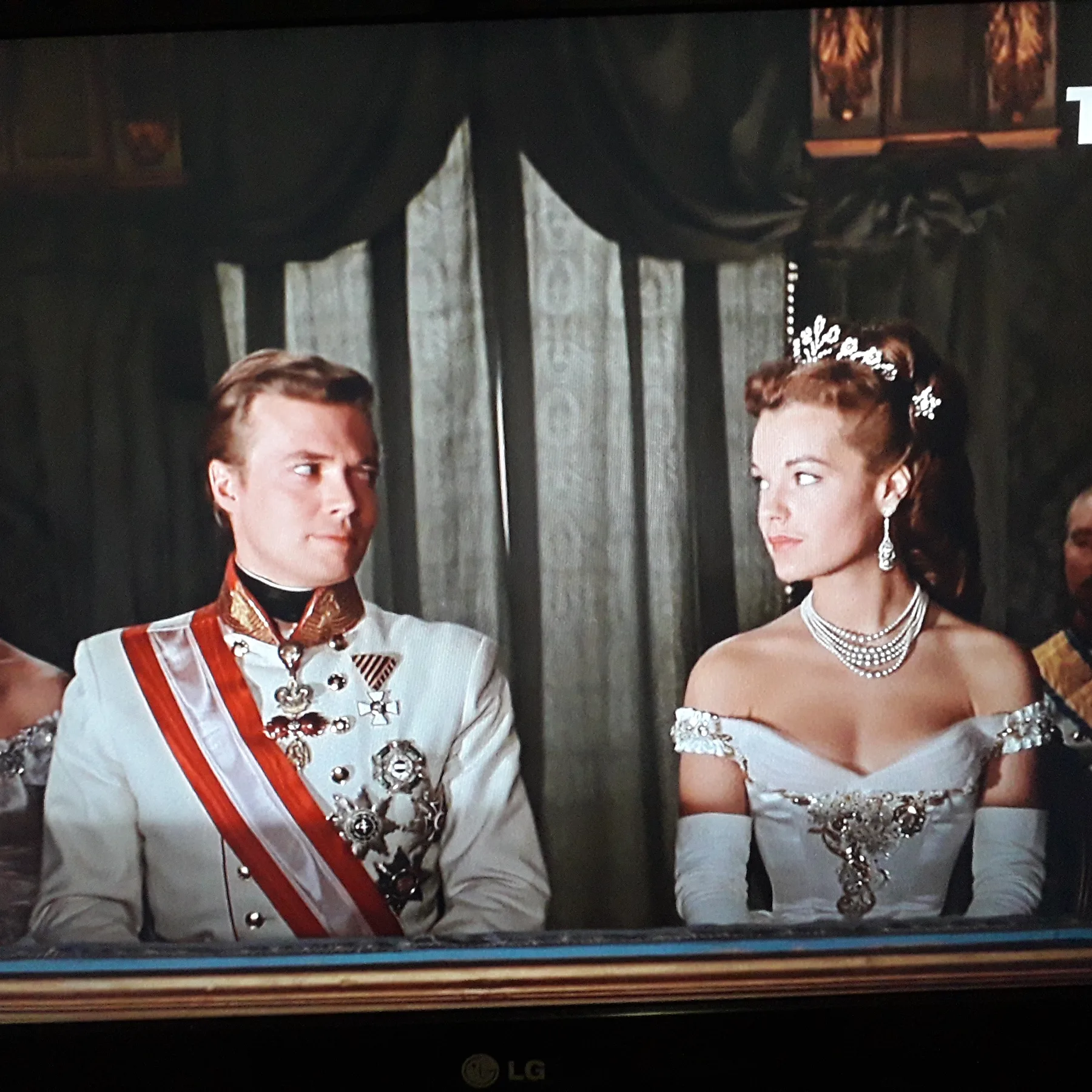
Romy Schneider and Karlheinz Böhm in film Sissi – Fateful Years of an Empress(1957)
Milan has prepared an insult. The aristocracy refuse to attend the gala at La Scala and send their servants in borrowed finery instead, and when the imperial couple enter the orchestra begins the Austrian anthem and slides deliberately into Verdi's Va, pensiero from Nabucco (1842), which the house then sings.
Elisabeth defuses it by applauding the chorus. At the reception afterward, the servants are presented one by one under their masters' names, and the real nobility, learning of it, are left shrieking at the thought of who has represented them.
Venice is worse: silence. Crowds line the canal for the imperial barge and say nothing, and nationalist colors appear as the procession passes.
In the Piazza San Marco, Elisabeth's daughter is brought to her, and the mother and child meet in front of the whole city after months apart. The silence breaks, and the film ends with the imperial anthem and a reconciliation that history never granted.
Cast
Romy Schneider as Empress Elisabeth of AustriaRomy Schneider as Empress Elisabeth of Austria in film Sissi – Fateful Years of an Empress(1957)
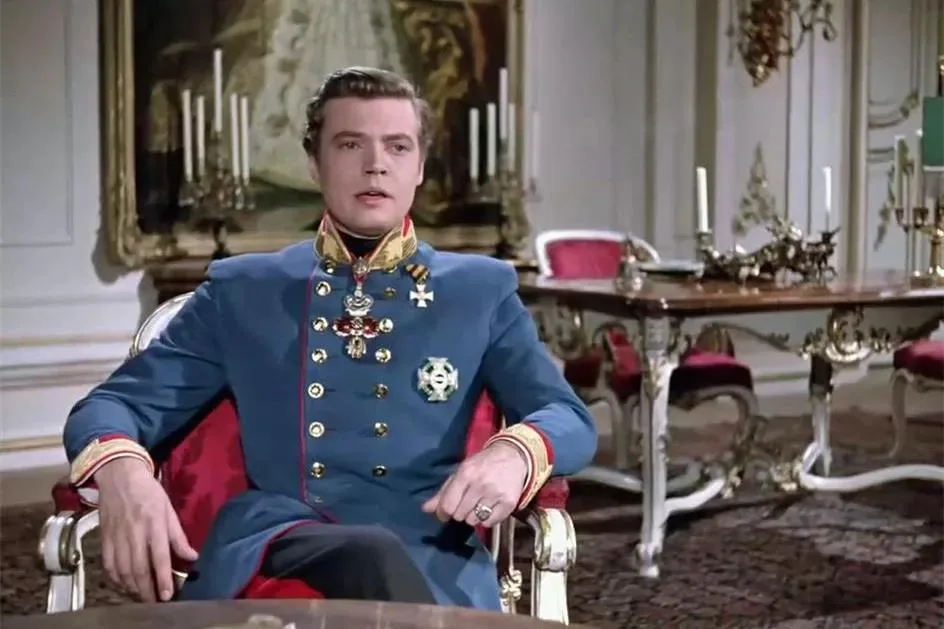
Karlheinz Böhm as Emperor Franz Joseph I of AustriaKarlheinz Böhm as Emperor Franz Joseph I of Austria in film Sissi – Fateful Years of an Empress(1957)
Magda Schneider as Duchess Ludovika in Bavaria
Gustav Knuth as Duke Maximilian Joseph in Bavaria
Walther Reyer as Count Gyula Andrássy
Vilma Degischer as Archduchess Sophie of Austria
Uta Franz as Princess Helene in Bavaria
Josef Meinrad as Lieutenant Colonel Böckl
Hans Ziegler as Dr. Seeburger
Romy Schneider plays the illness without vanity, hollowed out and listless on Madeira in a way that goes beyond what the genre required of her. She was nineteen, unhappy in the part, and some of that exhaustion reads straight through the character.
Karlheinz Böhm has his best scenes here, an emperor genuinely frightened of losing his wife and unable to say so to anyone. Magda Schneider takes over the middle of the film, and her Ludovika's brisk, unsentimental warmth is the mechanism by which the empress is brought back.
Walther Reyer keeps Count Gyula Andrássy just the right side of propriety. Vilma Degischer's Archduchess Sophie remains implacable, and Josef Meinrad's Böckl, promoted again, provides the comedy the story now badly needs.
Production
Erma-Film in Vienna produced once more, with Ernst Marischka and Karl Ehrlich, and the trilogy's regular team returned: Bruno Mondi photographing, Anton Profes composing, Alfred Srp cutting, Fritz Jüptner-Jonstorff on the sets, and the costumes by Gerdago, born Gerda Gottschlich, with Leo Bei.
The finale was mounted as the grandest of the three, and it is the only one shot substantially outside Austria. Interiors were built at the Rosenhügel studios in Vienna, with exteriors at Schönbrunn Palace, and the rest was filmed in Italy.
Hungary was again out of reach. The uprising of 1956 and the Soviet reassertion of control made shooting there impossible, so the Hungarian sequences were staged in Austria.
Madeira and Corfu were both played by Campania. Ravello on the Amalfi coast stood in for the islands, with the gardens of the Villa Cimbrone and the Villa Rufolo doing much of the work, and the temples at Paestum supplying antiquity. The Venetian sequences were filmed in Venice itself, in the Piazza San Marco and on the water.
Marischka signals the change of register in the credits. Instead of the painted title card of the first two films, the name Sissi is formed by live birds arranged on a square, which then scatter into the air.
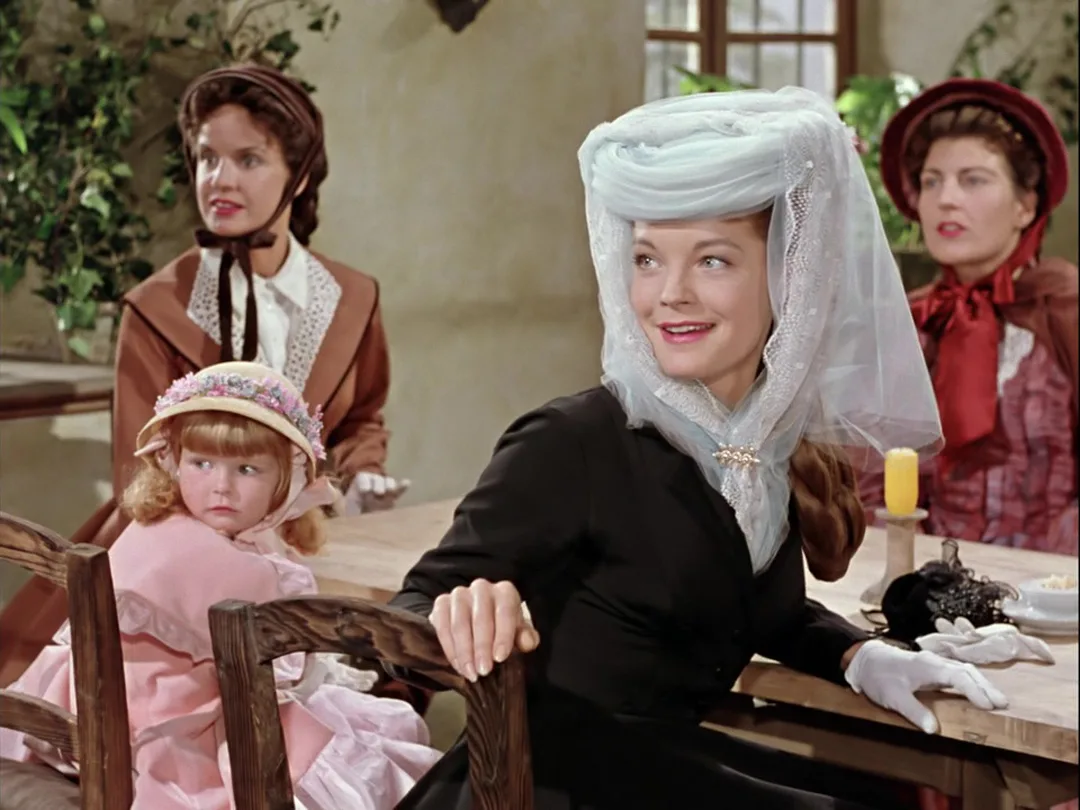
Gerdago's costumes follow the empress geographically. Braided Hungarian riding habits and a plumed hat for Gödöllő, then pale unstructured muslins and wide straw hats for the convalescence in the south, loose hair, a shawl over the shoulders, nothing tight against the chest. For La Scala she is armored again: a court gown with a wide skirt, opera gloves, diamonds, a fan, the full apparatus of an occupying power on display.
Anton Profes worked with borrowed music at the two dramatic peaks, setting Joseph Haydn's imperial anthem against Giuseppe Verdi in the La Scala sequence and closing the film on the anthem in Venice.
The trilogy's habitual liberties with fact reach their limit here. Elisabeth's long stay at Gödöllő actually came after her Italian convalescence, her tuberculosis was largely rumor and is discounted by many historians, and the daughter restored to her in the Piazza San Marco, Sophie, had in reality died as a small child in Hungary. The state visit to Venice took place in 1856, a decade before the coronation that ended the previous film.
A fourth film was planned and announced. Romy Schneider refused it, and Karlheinz Böhm was no more willing, both of them determined to escape the images the trilogy had built for them.
Release/reception
The film opened on 19 December 1957, in time for the Christmas season, and took around 2.8 million Deutsche Marks. It was entered in the Cannes Film Festival in 1958.
German-language critics were unkind, and their verdicts have become almost as famous as the films. One handbook of Catholic film criticism dismissed it as tinsel popular entertainment for viewers over about fourteen, and the Lexikon des internationalen Films summed it up as high-grade kitsch for simple souls, "Edelkitsch für schlichte Gemüter."
Audiences across Europe ignored all of it. The three films together became one of the most successful German-language productions ever made, and the trilogy still runs on television every Christmas in Austria, Germany, Hungary, and Italy. A condensed English-language version of all three appeared in 1962 as Forever My Love.
Romy Schneider went straight from this film into Christine (1958), a remake of Liebelei (1933), which had starred her mother, and then to France, to Alain Delon, and to a career built on refusing everything the empress stood for. She played Elisabeth once more, at thirty-four, in Luchino Visconti's Ludwig (1973), and that performance reads like a reply to these three.
Historians have spent decades pointing out that the real Elisabeth's later life ran toward obsessive exercise, starvation diets, endless travel, the suicide of her only son at Mayerling in 1889, and her own assassination in Geneva in 1898. The trilogy stops a lifetime short of all of it, and that is precisely why it has never lost its audience.