Film & TV
Sissi (film, 1955) Starring Romy Schneider, Karlheinz Böhm, Magda Schneider and Gustav Knuth
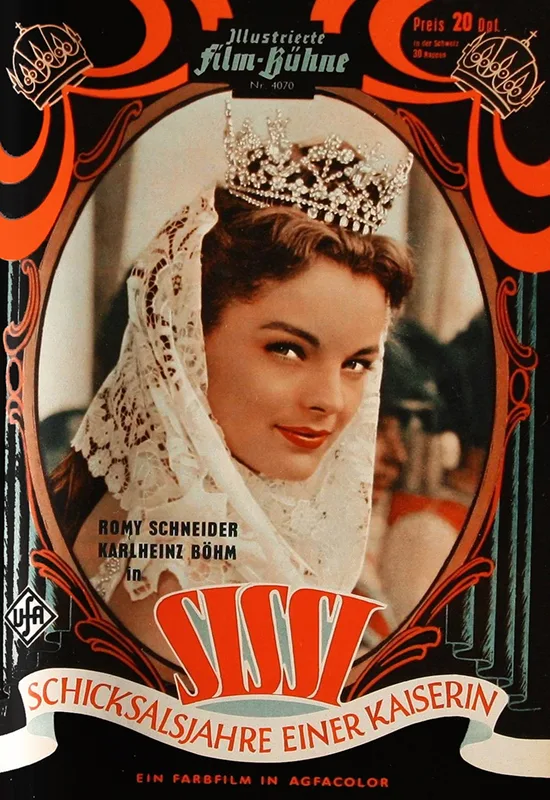
Sissi (1955) is an Austrian historical romance written and directed by Ernst Marischka, telling the story of how Elisabeth in Bavaria, a duke's daughter raised half wild beside a lake, became Empress of Austria at sixteen. Romy Schneider, seventeen when the film opened, plays her opposite Karlheinz Böhm as Emperor Franz Joseph I of Austria.
Filmed in Agfacolor at Schönbrunn and at the imperial villa in Bad Ischl, it was the most successful German-language film of its era and the first part of a trilogy. It also made Romy Schneider a star so completely that she spent the rest of her career trying to get out from under it.
Plot
Bavaria, 1853. Elisabeth in Bavaria, called Sissi, is fifteen and the second daughter of a large, informal, unbothered ducal family living beside Lake Starnberg.
Her father, Duke Maximilian Joseph in Bavaria, would rather fish, hunt, and play the zither than attend to anything ceremonial, and Sissi is his favorite because she is the same.
Her mother, Duchess Ludovika in Bavaria, receives a letter from her sister in Vienna, Archduchess Sophie of Austria, who has arranged a match. Sophie's son, Emperor Franz Joseph I of Austria, is to be engaged to Sissi's elder sister, Princess Helene in Bavaria, known as Néné.
Ludovika and Néné travel to Bad Ischl for the meeting, and Sissi is brought along almost as an afterthought, on the condition that she stay out of the way.
She does not stay out of the way. Out walking with a fishing rod, she meets a young man in a hunting coat who turns out to be the emperor, and neither of them has the least idea what to do with the fact.
At the birthday reception where the engagement is to be announced, Franz Joseph asks Sissi to dance instead, then announces his intention to marry her. Néné is humiliated, Ludovika is appalled, and Archduchess Sophie is furious, having arranged everything herself.
The betrothal stands. Sissi is taken from a household where nobody minded muddy boots into a court that measures the angle of a curtsy, and Archduchess Sophie sets about correcting her niece's every instinct.
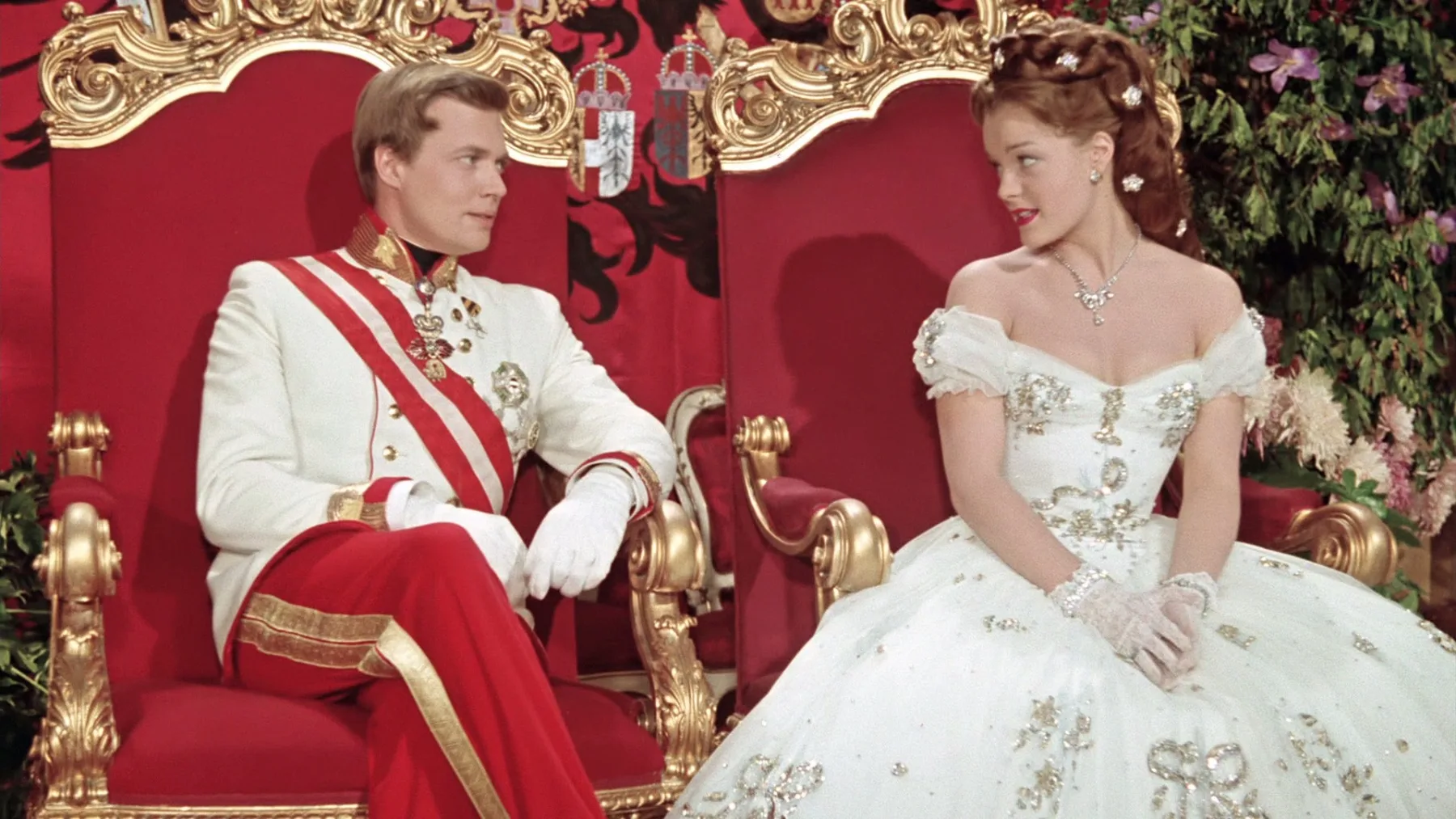
Vienna, meanwhile, adores her. The wedding procession moves through crowds who have decided, before she has done anything at all, that the girl from the lake belongs to them.
Cast
- Romy Schneider as Elisabeth in Bavaria, called Sissi
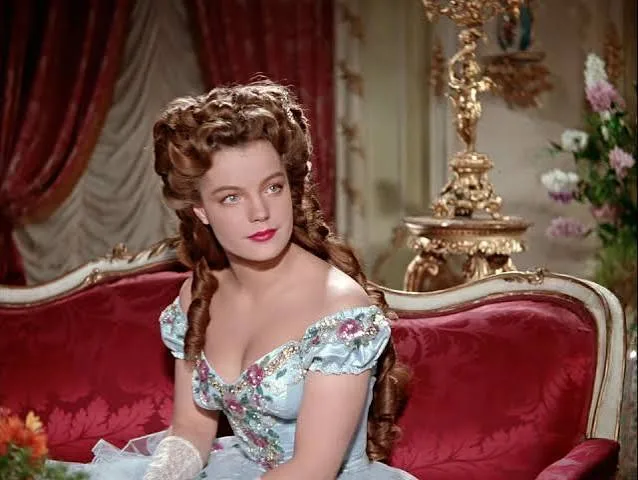
Romy Schneider as Elisabeth in Bavaria, called Sissi in film Sissi (1955) - Karlheinz Böhm as Emperor Franz Joseph I of Austria
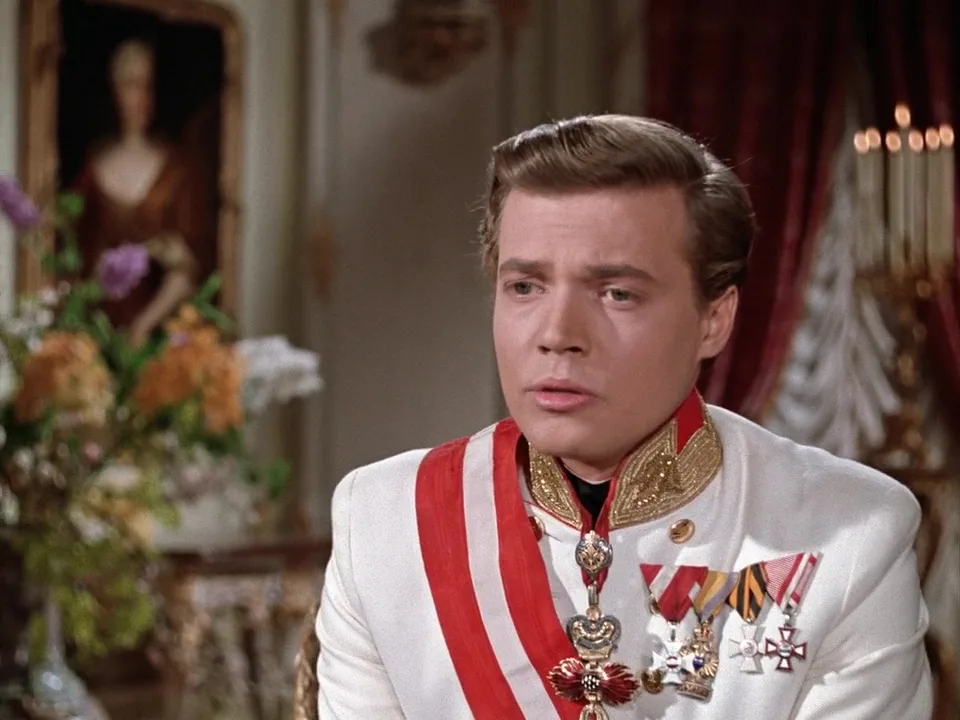
Karlheinz Böhm as Emperor Franz Joseph I of Austria in film Sissi (1955) - Magda Schneider as Duchess Ludovika in Bavaria
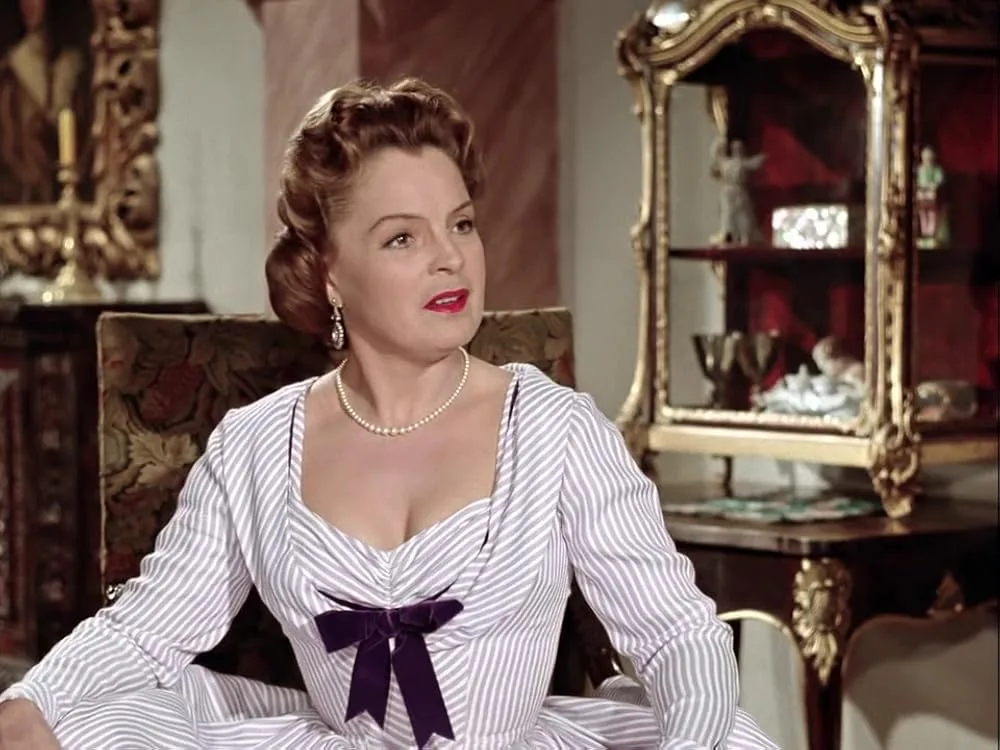
Magda Schneider as Duchess Ludovika in Bavaria in film Sissi (1955) - Gustav Knuth as Duke Maximilian Joseph in Bavaria
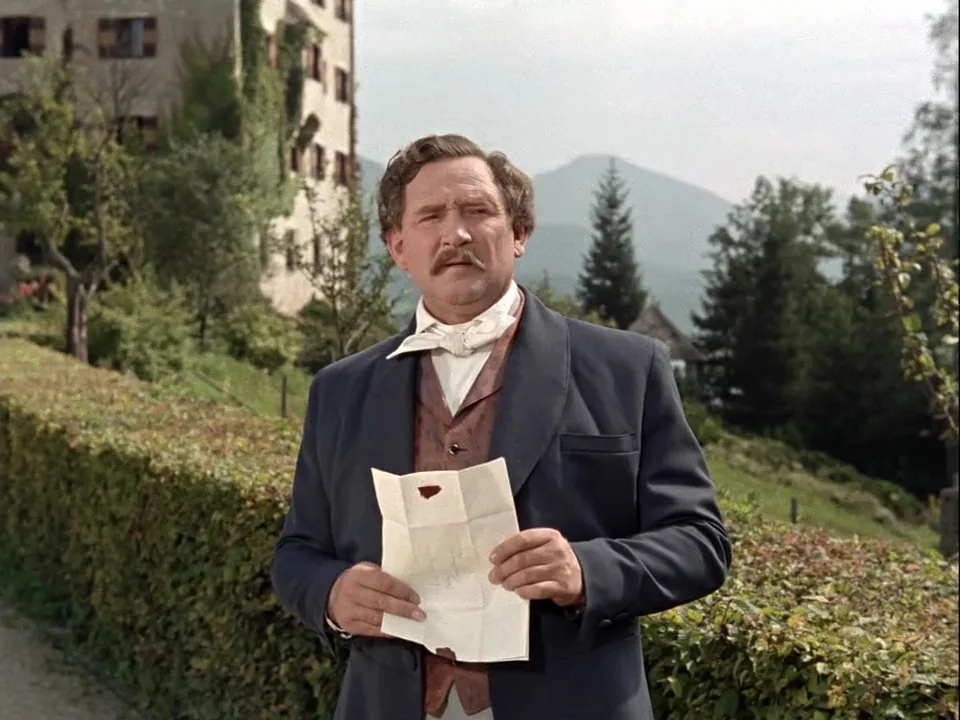
Gustav Knuth as Duke Maximilian Joseph in Bavaria in film Sissi (1955) - Vilma Degischer as Archduchess Sophie of Austria
- Uta Franz as Princess Helene in Bavaria
- Josef Meinrad as Major Böckl
- Peter Weck as Archduke Karl Ludwig of Austria
Romy Schneider's performance is the entire reason the film survived its own genre. She plays Sissi without any of the coyness the part invites, laughing too loudly, walking too fast, and going quiet in exactly the way an adolescent does when adults are deciding her life in the next room.
Karlheinz Böhm gives Franz Joseph a gentle, slightly helpless charm, an emperor who is most convincing when he is out of uniform. Vilma Degischer's Archduchess Sophie is the film's genuine antagonist, and she plays her not as a villain but as a woman entirely certain she is doing her duty.
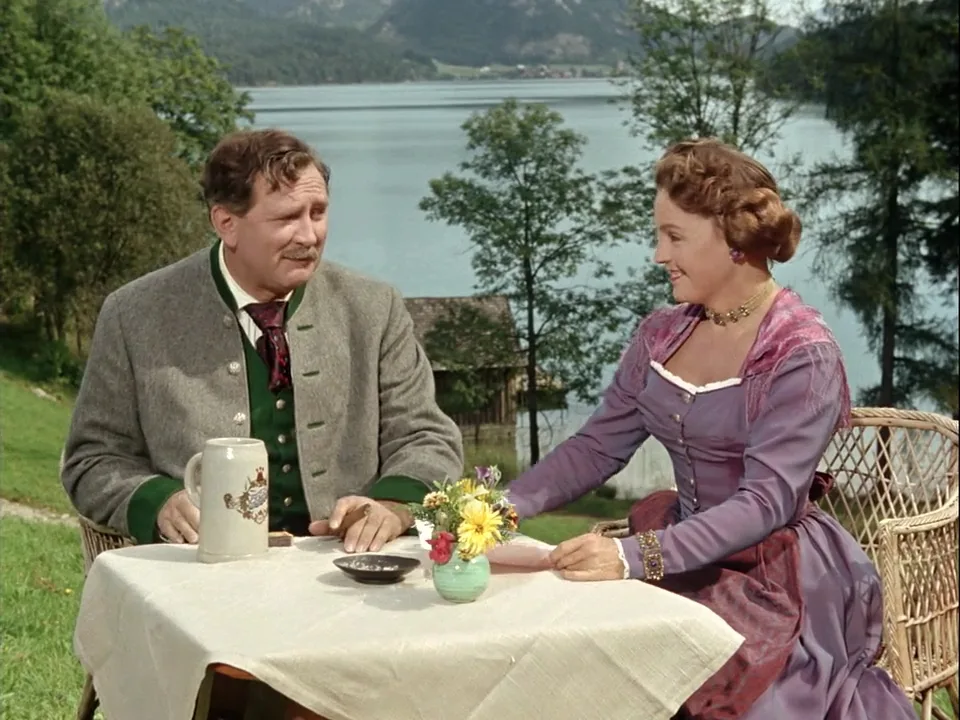
Magda Schneider brings a warm practicality to Duchess Ludovika, and Gustav Knuth is delightful as the duke who keeps escaping his own family. Josef Meinrad's Major Böckl supplies the comedy, a provincial gendarme forever saluting the wrong person.
Production
Ernst Marischka came to the subject through the theater. He had wanted to film the operetta material on Empress Elisabeth of Austria, and when that proved impossible he dropped the music, moved away from the libretto, took Marie Blank-Eismann's 1952 novel as his basis, and called the film simply Sissi.
For the title role he cast Romy Schneider, who was sixteen when shooting began and had already worn a crown convincingly as the young Queen Victoria in The Story of Vickie (Mädchenjahre einer Königin, 1954). She had the required prettiness and, more usefully, a streak of willfulness that matched the Sissi Marischka had in mind.
Magda Schneider played her daughter's mother, as she had before. The two Schneiders were already an established screen pair, and the domestic ease between them in the Bavarian scenes is not acting.
Marischka filmed in the empress's own places wherever he could. Schönbrunn Palace and the Kaiservilla at Bad Ischl appear as themselves, and the wedding was shot at St. Michael's Church in Vienna. Possenhofen, the family house on Lake Starnberg, was too dilapidated to use, so Fuschl Castle on Lake Fuschl in the Salzkammergut stood in for Sissi's childhood home.
Bruno Mondi photographed all of it in Agfacolor, with the lake scenes in clear alpine light and the Viennese interiors in gilt and candle-warm reds. The look is deliberately reassuring, an Austria of clean linen and flowering meadows offered to audiences in a country ten years out of war and still under occupation when the film went into production.
The costumes were built by Leo Bei, Gerdago, and Franz Szivats: layered crinolines, embroidered dirndls for the Bavarian scenes, sprigged muslins, and for the court sequences a procession of ball gowns in pale silk with bare shoulders and tight bodices, set against Archduchess Sophie's black. The famous Winterhalter look, the loose ropes of pearls threaded through the empress's hair, is quoted but softened.
Romy Schneider found the imperial hair a genuine ordeal. She wrote in her diary that the empress's wig was so unfamiliar and so exhausting to wear that it gave her a stiff neck, as though she were sitting in the front row at the cinema.
Anton Profes composed a score in the Viennese idiom, waltzes, marches, and a zither for the duke, written to be hummed on the way out of the theater.
Release/reception
Sissi premiered in Vienna on 21 December 1955 and opened in Munich the following day. It took around 5.4 million Deutsche Marks and was seen by an estimated twenty to twenty-five million people in cinemas, which makes it one of the most successful German-language films ever released.
Two sequels followed, Sissi – The Young Empress (Sissi – Die junge Kaiserin, 1956) and Sissi – Fateful Years of an Empress (Sissi – Schicksalsjahre einer Kaiserin, 1957). A condensed English-language version of the trilogy went out in 1962 as Forever My Love.
Ernst Marischka planned a fourth film. Romy Schneider refused it, reportedly turning down an enormous fee, and Karlheinz Böhm was equally determined to escape. She said later that the decision had been right at the time, but that one day she simply did not want to be the princess anymore, and that the role stuck to her like semolina pudding.
She went instead to Christine (1958), a remake of Liebelei (1933), the film that had made her mother's name, and then to France, to Luchino Visconti, and to the harder, sadder work of her maturity. Fifteen years after refusing a fourth Sissi, she played Empress Elisabeth again in Ludwig (1973), this time as a restless, ironic woman with nothing girlish left about her.
Critics have always been clear that the trilogy is a sweetened, largely invented Austria, and that the real Elisabeth's life ran toward anorexia, flight, mourning, and assassination in Geneva in 1898. The films end long before any of that.
That has not dented their hold. The trilogy is shown every Christmas on television in the German-speaking countries and regularly in Hungary and Italy, and for several generations it has been the first image of the empress anyone acquires, a girl in a dirndl with a fishing rod who does not yet know what is coming.