People
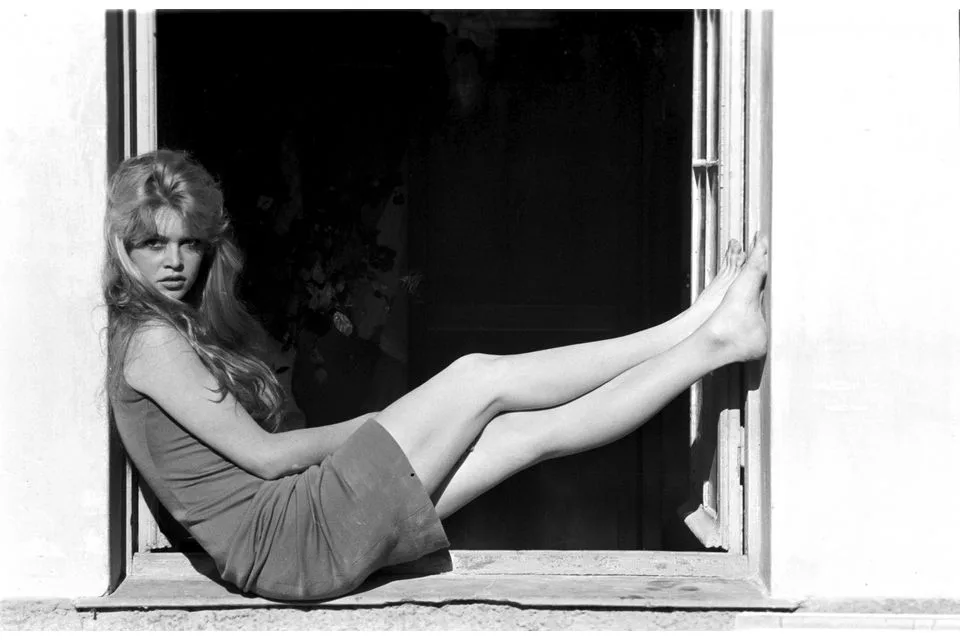
Brigitte Bardot (born Brigitte Anne-Marie Bardot; 28 September 1934 – 28 December 2025)
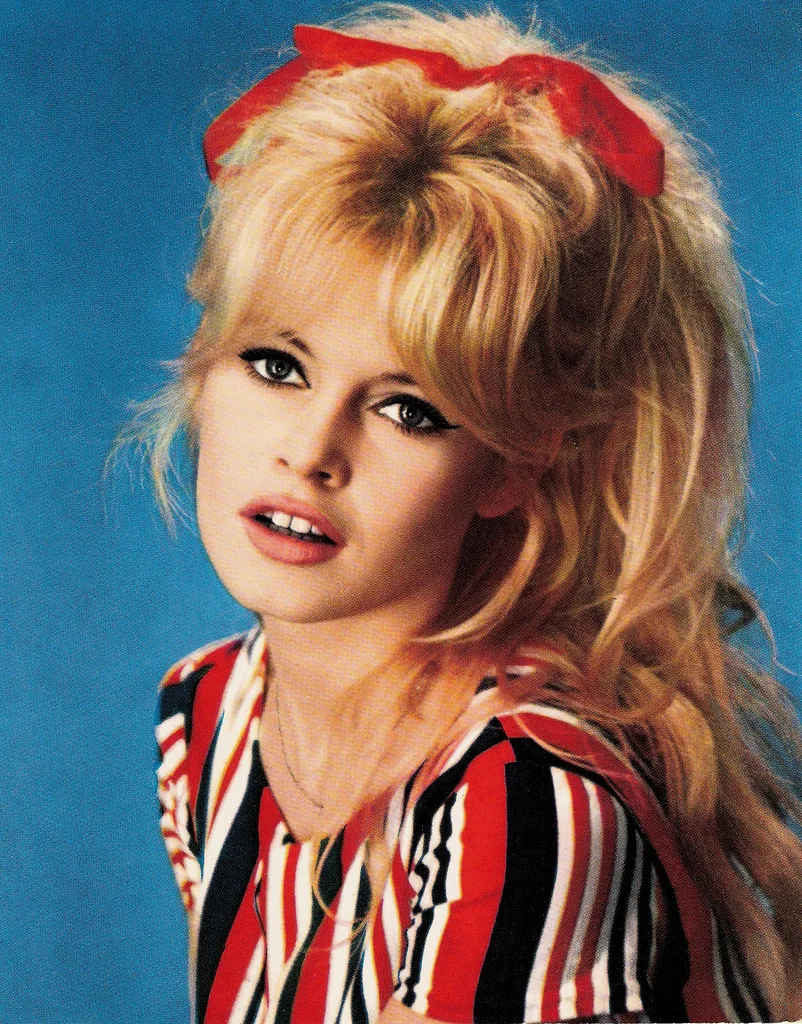
Brigitte Bardot (born Brigitte Anne-Marie Bardot; 28 September 1934 – 28 December 2025) was a French actress, singer, and animal rights activist, and one of the defining sex symbols of twentieth-century cinema. Her performance in And God Created Woman (1956) made her an overnight global phenomenon. She retired from acting in 1973, at the height of her fame, to devote the rest of her long life to animal welfare.
Biography
Brigitte Bardot was born on 28 September 1934, at her parents' home on Place Violet in Paris's 15th arrondissement. Her father, Louis Bardot, owned an industrial firm later absorbed into the company Air Liquide. Her mother, Anne-Marie Mucel, was a frustrated artist and the daughter of an insurance company director.
Bardot's childhood was shaped by a strict Catholic upbringing and by amblyopia, a lazy eye that limited the vision in her left eye for years. She often felt her parents favored her younger sister, Marie-Jeanne, known as Mijanou, born in 1938, and later said she used to wonder, as a girl, why she was even alive.
She discovered ballet early, taking her first classes at seven with the Cours Bourgat. In 1949 she entered the Paris Conservatoire and won a first commendation there.
That same year, Hélène Lazareff, who ran Elle and Jardin des Modes, hired the fifteen-year-old Bardot to model junior fashion. Bardot became the magazine's mascot, appearing on its cover before the year was out.
The director Marc Allégret noticed Bardot's photograph on the cover dated 8 May 1950 and asked to meet her. At the audition, she read a scene opposite his assistant, a young Roger Vadim. The film itself was never made, but Bardot and Vadim fell in love. Although her parents strongly opposed the relationship, Bardot married Vadim in 1952.
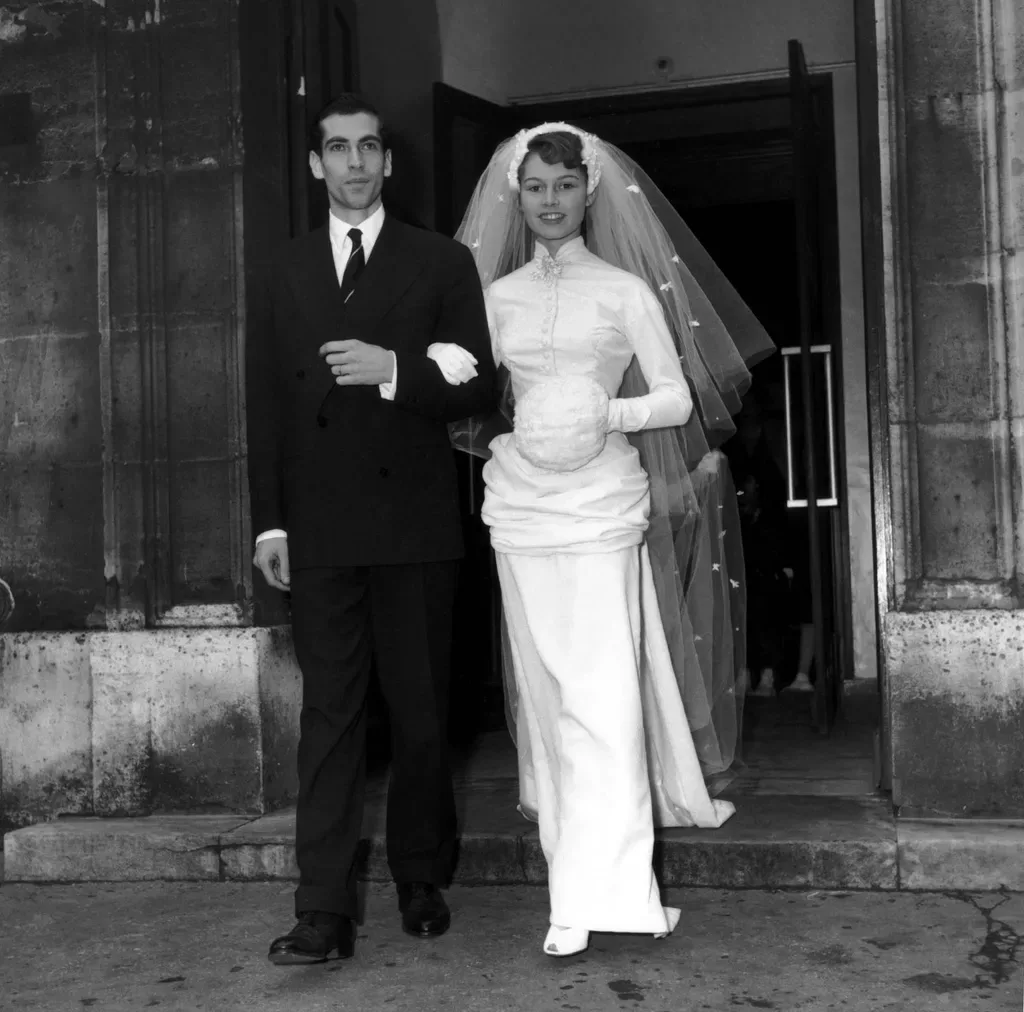
Bardot's first film role came soon after, from the director Jean Boyer, who cast her in Le Trou normand (1952) alongside the comedian Bourvil(real name:André Raimbourg). She was not especially enthusiastic about the part but accepted it for the 200,000 francs she was promised.
Two years later, when the director Sacha Guitry needed an inexpensive actress for a small role in Si Versailles m'était conté, playing one of Louis XV's mistresses opposite Jean Marais, Bardot took the offer eagerly.
She then travelled to Rome chasing further work and landed a role in Robert Wise's American production Helen of Troy (1956). Her English, by her own account, was barely functional. "My English was pathetic and my stage fright was tremendous," she said. "I learned my role by heart. I didn't even know what I was saying, but I said it with such confidence that I was chosen."
Back in France, she took a smaller part opposite Michèle Morgan and Gérard Philipe in René Clair's Les Grandes Manœuvres (1955). She said she preferred a small role in a very good film to a large role in a bad one.
Around this time, Roger Vadim and the producer Raoul Lévy wrote a script called Et Dieu... créa la femme. The project nearly collapsed for lack of money before finally being shot in Saint-Tropez.
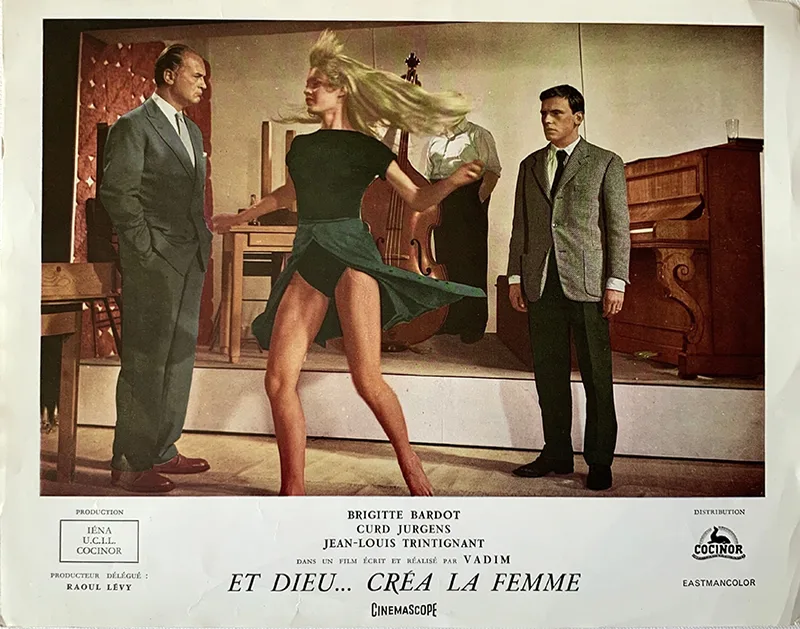
French critics greeted the finished film coolly, and conservative circles were openly hostile. Lévy and Vadim released it abroad instead, retitled And God Created Woman, where it triumphed, especially in the United States.
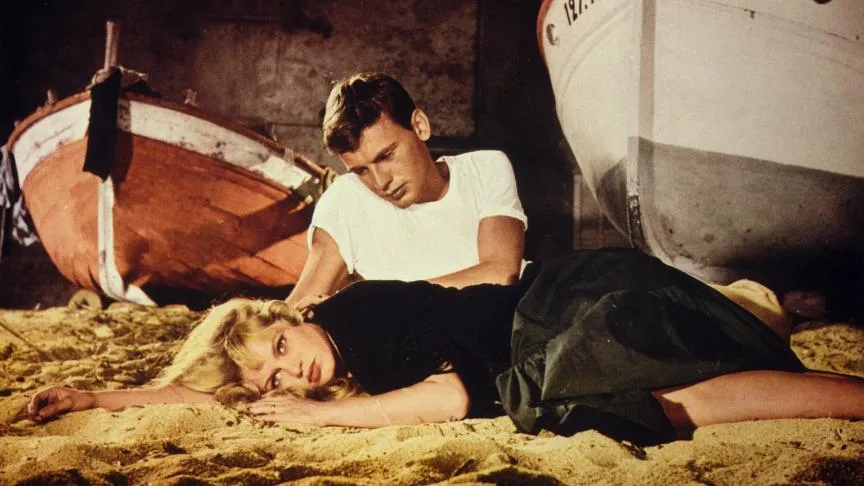
Bardot became one of the best-known French women in America almost overnight. The film then returned to French cinemas and succeeded there too.
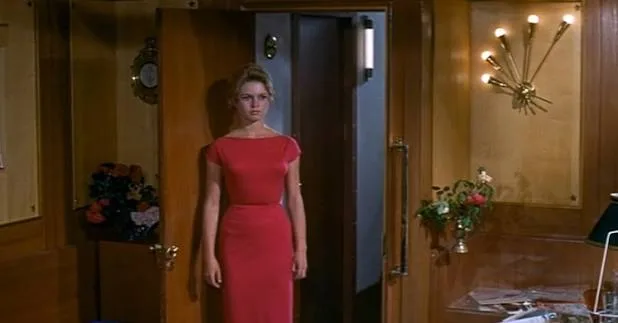
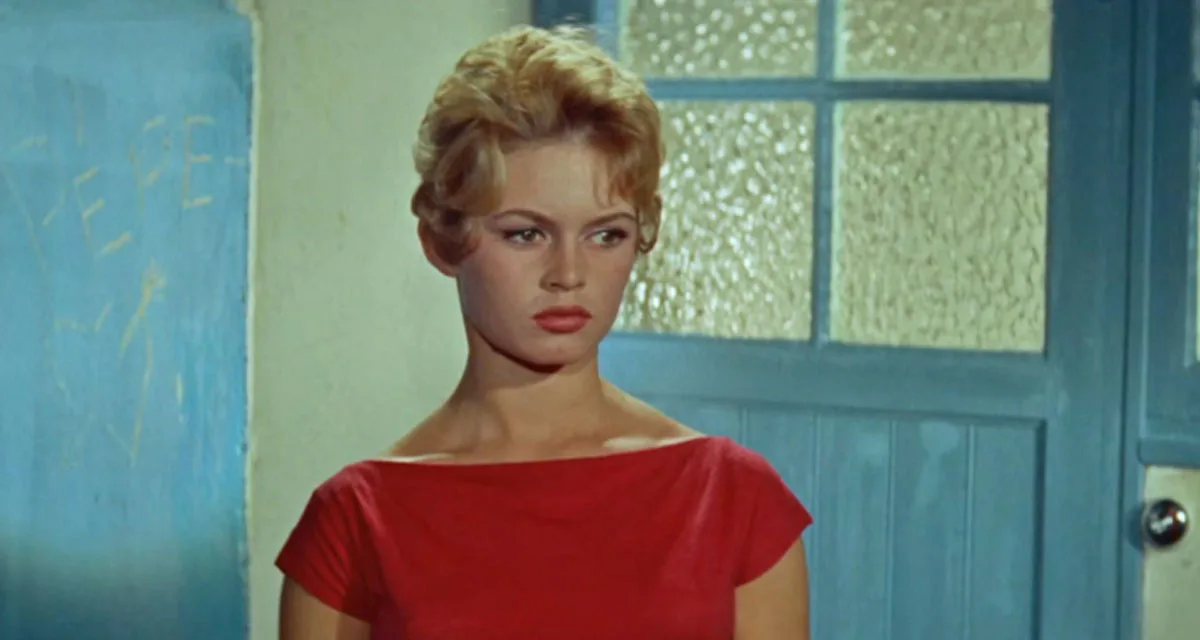
Film offers poured in afterward, and Bardot said yes to nearly all of them, and her marriage with Vadim did not survive her sudden fame. The two divorced in 1957.
In the same year she starred in Michel Boisrond's Une Parisienne, a comedy she called fine and witty, full of humor and love. It was a major hit. Another film from 1957 where appeared in En cas de malheur, opposite Jean Gabin, would be one of her personal favorites, alongside La Vérité, Viva Maria!, Et Dieu... créa la femme, and The Bear and the Doll.
By 1958, Bardot had become the highest-paid actress in French cinema. The volume of fan mail and phone calls grew so heavy that she hired a secretary, Alain Carré, who would later sell many of her private secrets to the press.
In 1959 Brigitte Bardot married the actor Jacques Charrier. Their son, Nicolas-Jacques Charrier, her only child, was born the following year.
That same year, 1959, she also starred in Babette s'en va-t-en guerre, a hit that launched the gingham dress, long blonde hair, and ballet flats as an international fashion trend.
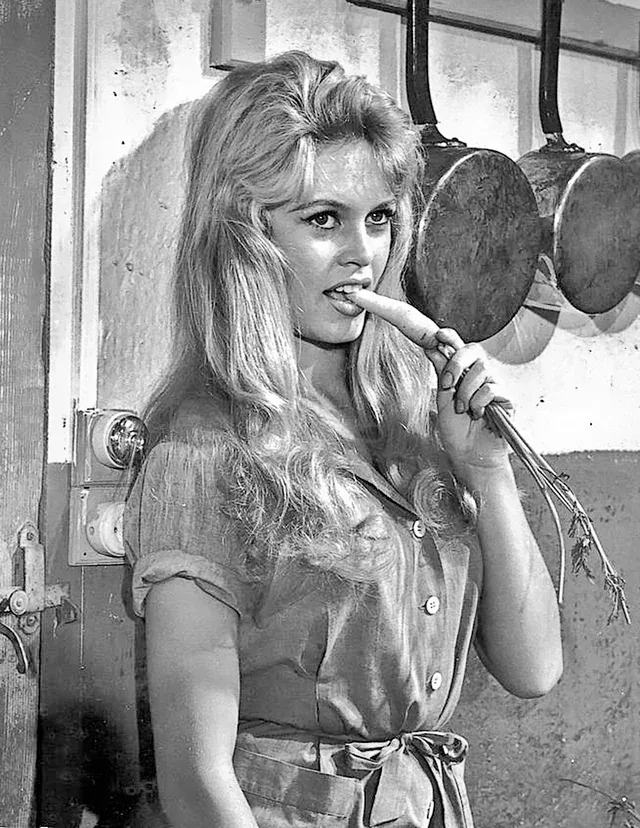
Filming La Vérité for the director Henri-Georges Clouzot, proved difficult on every front for Bardot. Her husband Jacques Charrier objected to much of what Clouzot proposed;Bardot, meanwhile, was caring for a newborn son and struggling under an exhausting shoot. But what was more, Alain Carré sold his memoirs of her private life to the magazine France Dimanche, putting her secrets on public display. After firing Carré, Bardot negotiated an arrangement with the press to remove what she found unacceptable.
Bardot started a secret relationship with the actor Sami Frey, but her husband Charrier found out, and so did the press, which pursued her relentlessly afterward.
On 28 September 1960, her twenty-sixth birthday, Bardot attempted suicide. A child found her in time. She regained consciousness two days later in a hospital in Nice, and spent her recovery in Saint-Tropez, where her mother never left her side.
La Vérité opened in Paris that November. Despite Bardot's absence from the premiere, the film was a critical and commercial triumph, earning an Academy Award nomination for Best Foreign Language Film and, abroad, naming her actress of the year.
In 1961 she starred in Louis Malle's Vie privée, a film drawn directly from episodes of her own life. The next year, her marriage to Charrier ended in divorce.
In 1966 she married the German photographer Gunter Sachs after a brief, headline-grabbing courtship; the marriage ended in divorce in 1969.
In the late 1960s, Bardot became the model for a new sculpted bust of Marianne, the female personification of the French Republic displayed in town halls across the country. She was the first actress ever given that honor. The sculptor Alain Gourdon, known professionally as Aslan(real name: Alain Gourdon), created the piece.
On the set of her final film, The Edifying and Joyous Story of Colinot, Bardot caught sight of herself in a mirror, dressed in costume, and found the whole thing absurd. Everything about it, she said later, suddenly seemed pointless and ridiculous.
It was then that she decided to stop acting for good. The last shot of her forty-eighth and final film shows her holding a dove, a quiet symbol of the life she was about to take up instead.
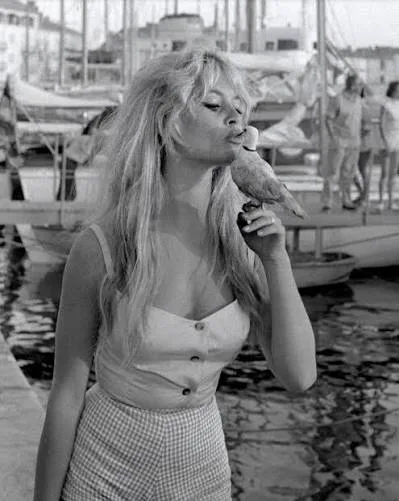
On 6 November 1973, Bardot made herself a promise: that her name, her fame, her fortune, and her strength would go toward helping animals for the rest of her life. She founded the Fondation Brigitte Bardot in Saint-Tropez in 1986, auctioning off her old jewelry, dresses, and photographs to help fund it, and donating her own property, La Madrague, to the cause. The French Council of State granted the foundation official public-interest status in 1992.
Her activism sometimes came with real wit attached. In 1994, she asked the designer Jean-Paul Gaultier to stop using fur, pointing out that one of his coats alone had required two foxes. He wrote back that it hadn't taken two. It had taken three.
Bardot's influence on fashion outlasted her acting career by decades. Working with the designer Arlette Nastat from 1956 onward, she developed the vichy check dresses and cropped trousers that became her signature look, a partnership the two women eventually turned into their own clothing line, La Madrague, in the 1970s.
From 1964, for seven years, she also championed the hippie-inflected designs of Jean Bouquin, based in Saint-Tropez, wearing his clothes both on screen and off and helping bring him to prominence among Paris's fashionable set.
In 1992, Bardot married Bernard d'Ormale, a political adviser on the French far right. It was her fourth and final marriage, and it lasted until her death. From the 1990s on, Bardot's own public statements on immigration and religion drew sharp criticism and several convictions in French courts for inciting racial hatred.
Brigitte Bardot died before dawn on 28 December 2025, at La Madrague in Saint-Tropez, at ninety-one, with Bernard d'Ormale at her side. A representative of her foundation said she whispered a word of love to him, and then she was gone.
Decades after she last appeared on screen, her image remained instantly recognizable: the tousled hair, the gingham, the bare feet, the sulky half smile that a generation of women copied without ever quite matching. Few actresses have shaped how an era wanted to look as thoroughly as Brigitte Bardot did, and fewer still walked away from that fame entirely on their own terms, to spend the rest of their life on something else.