People
Isadora Duncan (26 May 1877 or 27 May 1878 – 14 September 1927)
Biography
Isadora Duncan's own birth date was never entirely settled.
She herself claimed 27 May 1878. A baptismal certificate that surfaced decades later gives 26 May 1877 — a full year earlier, which suggests she simply preferred to seem younger.
She was born in San Francisco, the youngest of four children of Joseph Charles Duncan, a banker, mining engineer, and art collector twice her mother's age, and Mary Isadora Gray, a music teacher.
Duncan's father's bank collapsed the same year she was born. Her parents divorced soon after, and Mary Duncan moved the four children to Oakland, supporting them by giving piano lessons in what Isadora later called genteel poverty.
Isadora Duncan had no formal training to speak of. She said her earliest idea of movement came simply from watching the rhythm of the waves on the beach, and by her early teens she and her sister Elizabeth were already teaching improvised dance to neighborhood children to help pay the bills.
In 1895 Duncan and her mother went to Chicago, and from there to New York, where Isadora briefly joined the touring company of the producer Augustin Daly and took formal ballet lessons — the only extended stretch of technical training in her career.
She hated it.
"The real American type can never be a ballet dancer," Duncan wrote later. "The legs are too long, the body too supple and the spirit too free for this school of affected grace and toe walking."
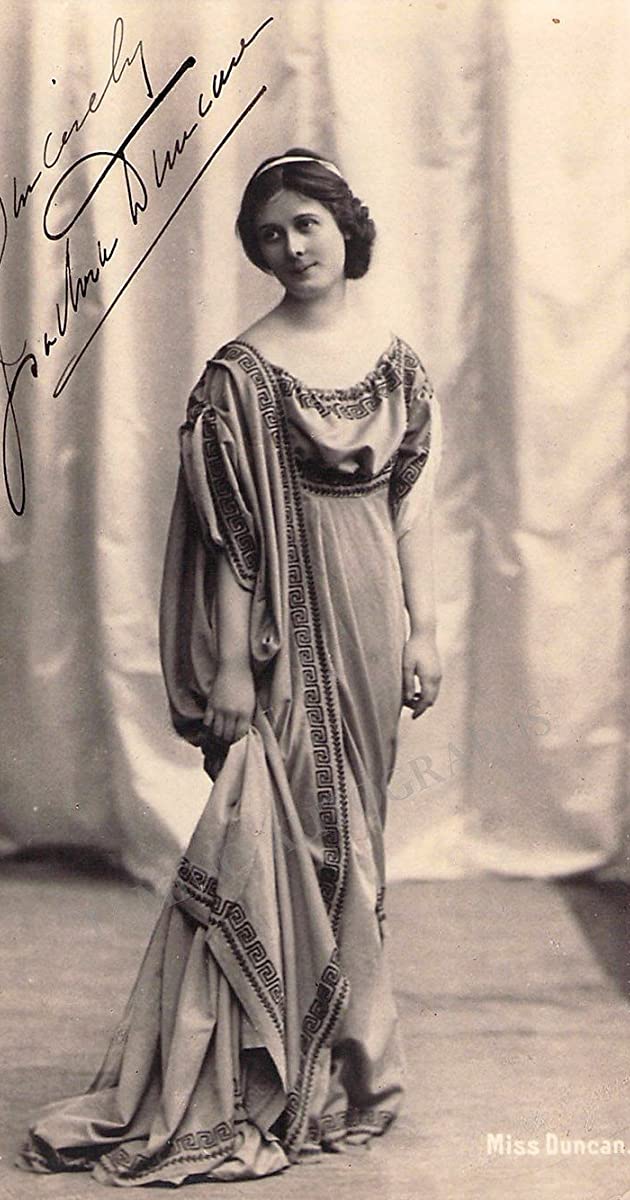
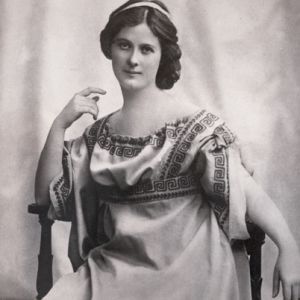
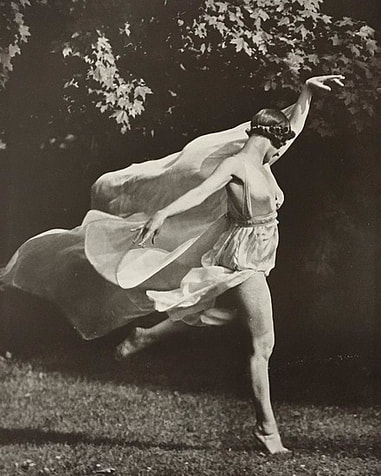
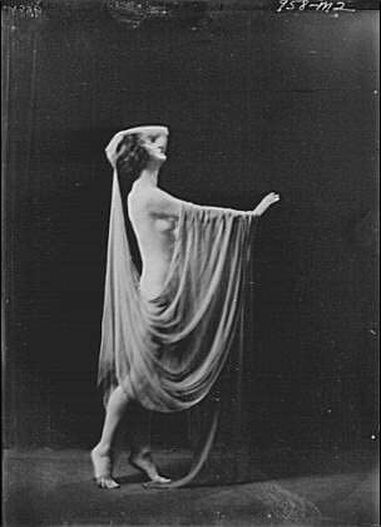
She danced barefoot, in loose, near-transparent Greek-inspired tunics, with none of the corsetry or pointe shoes that defined fashionable dress and ballet technique in equal measure. Critics and society hostesses alike were scandalized and captivated, often at the same performance.
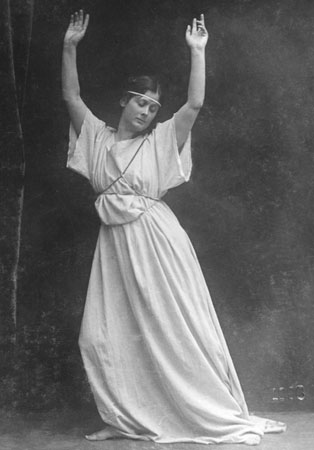
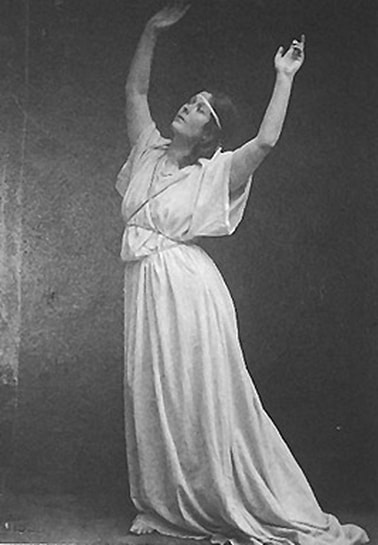
Of her own aims, Duncan wrote simply that she sought "that dance which might be the divine expression of the human spirit through the medium of the body's movement."
In 1904, she met the stage designer Edward Gordon Craig in Berlin. Their affair — she called him, in her memoirs, "the flesh of my flesh, the blood of my blood" — produced a daughter, Deirdre, born in September 1906.
Craig shared Duncan's contempt for marriage as an institution, and the two never wed, though they remained friends for the rest of her life.
Duncan's next great romance was with Paris Singer, one of the many sons of the sewing-machine magnate Isaac Singer — and a half-brother, as it happened, of Winnaretta Singer, the future Princess Edmond de Polignac.
Singer bankrolled a Duncan dance school outside Paris and fathered her second child, a son named Patrick, born in 1910.
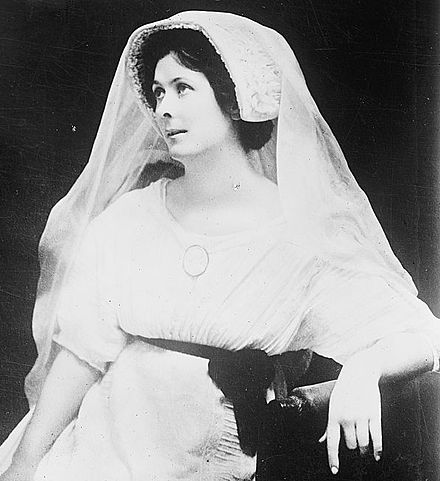
It was, characteristically, an on-and-off affair. By the end of 1912, Paris Singer had broken with Isadora Duncan over her open flirtation with a French playwright.
Duncan also had a relationship with the American poet and playwright Mercedes de Acosta — self-declared lover of Marlene Dietrich, and sister of the socialite Rita de Acosta Lydig. The two women's romance survives today mostly in the numerous, quite revealing letters they wrote each other.
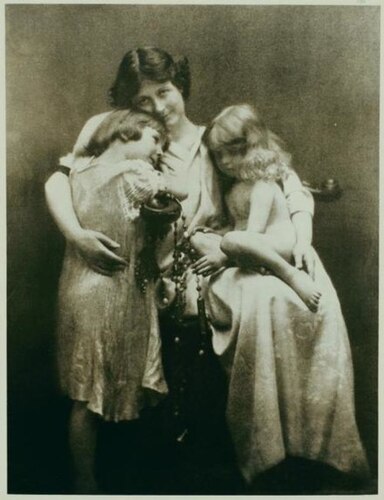
On 19 April 1913, Deirdre, Patrick, and their nanny were being driven through Paris when the car's steering failed on a bridge and it rolled into the Seine. All three drowned.
Isadora Duncan, by every account, never fully recovered. Those who knew her before and after described the tragedy as leaving what one friend called "a hole in her heart" that explained everything reckless she did afterward.
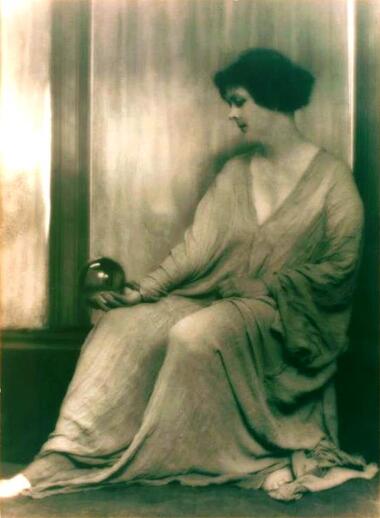
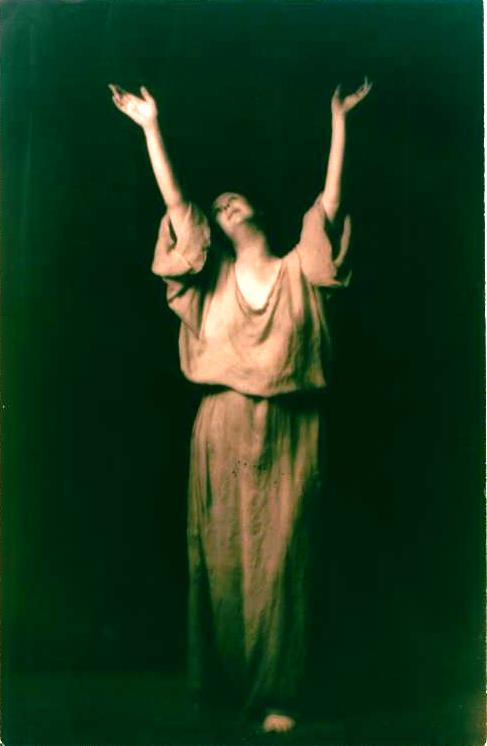
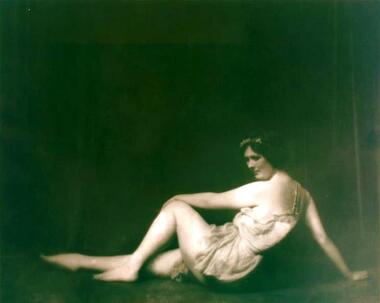
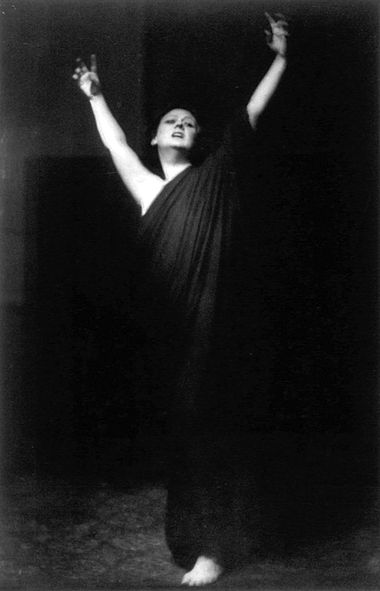
She poured some of the grief into two dances of her own, Mother and Marche Funèbre, set to Scriabin and Chopin.
A third child, born to her not long after, lived only a few hours.
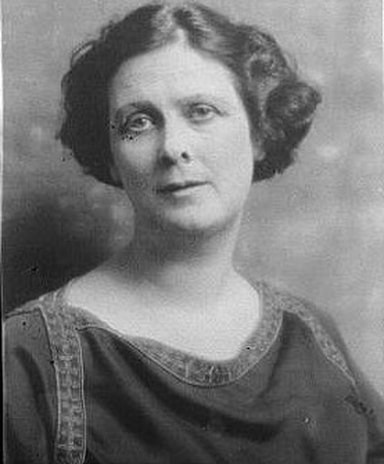
The First World War scattered what remained of Duncan's plans for a European school, and by the early 1920s her once-formidable earning power had thinned considerably.
In 1921, of all places, an invitation arrived from the new Soviet government to found a school in Moscow. The revolutionary temper of the regime suited her own, and she went.
In Russia, Isadora Duncan met the poet Sergei Yesenin, eighteen years her junior. The two married in May 1922, largely so she could bring him along on an American tour, since neither much believed in the institution otherwise.
The marriage soured quickly outside Russia. Yesenin, who spoke no English and resented being introduced everywhere as merely "Isadora Duncan's husband," drank heavily and grew violent.
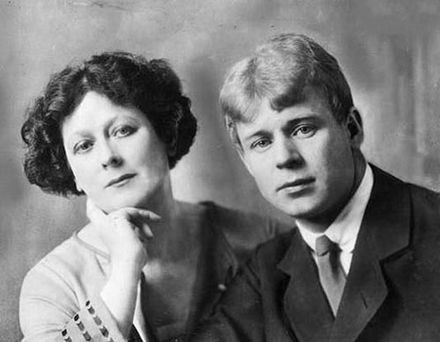
He returned to Russia without her in 1923. They divorced the following year, and in December 1925 he took his own life in a Leningrad hotel room.
Whatever else was said about her, Duncan's rejection of the corset, the fitted bodice, and the pointe shoe outlived every scandal attached to her name.
The loose, columnar, body-skimming dress that would come to define so much of twentieth-century fashion owes at least some of its permission to exist to a barefoot dancer in a Greek tunic, decades before that silhouette had a name.
Isadora Duncan spent her last years largely in Nice — increasingly broke, drinking heavily, living mostly on the legend of who she had once been.
On the night of 14 September 1927, she climbed into an open-topped Amilcar roadster driven by a young mechanic named Benoît Falchetto. Around her neck was a long silk scarf, hand-painted in bold colors by the Russian émigré artist Roman Chatov, a gift from her friend Mary Desti.
As the car pulled away, Duncan is said to have called out to the friends seeing her off: "Adieu, mes amis, je vais à la gloire!" ("Farewell, my friends, I am off to glory!")
The friend who first reported the line later admitted, privately, that what Duncan actually said was rather less poetic: "Je vais à l'amour" ("I am off to love").
Seconds later, the scarf caught in the car's open spoked wheel and axle. Duncan was thrown from her seat and killed instantly, her neck broken. (Popular memory has long insisted the car was a Bugatti; contemporary accounts agree it was an Amilcar.)
As The New York Times noted in its obituary, "Duncan was hurled in an extraordinary manner from an open automobile in which she was riding and instantly killed by the force of her fall to the stone pavement." Other sources at the time went further, reporting that she had very nearly been decapitated by the sudden, violent tightening of the scarf around her neck.
Even Gertrude Stein, hearing how she'd gone, could not resist the obvious, faintly cruel line: affectations, she said, can be dangerous.
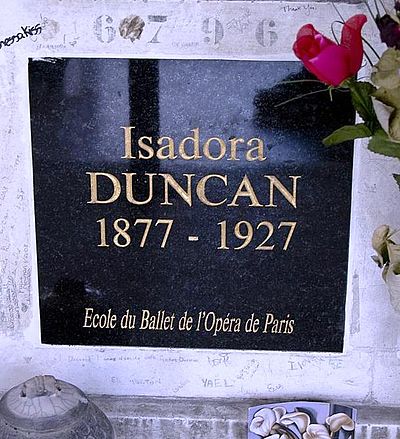
Isadora Duncan was cremated. Her ashes were placed beside those of Deirdre and Patrick in the columbarium at Père Lachaise Cemetery in Paris. Her headstone bears the inscription École du Ballet de l'Opéra de Paris — "Ballet School of the Paris Opera."
She had been writing her own account of it all, an autobiography titled simply My Life, and was still correcting its proofs when she died. It was published within weeks of her death. The Australian composer Percy Grainger called it a "life-enriching masterpiece."
Duncan was cremated, and her ashes were placed next to those of her children in the columbarium at Père Lachaise Cemetery in Paris. On the headstone of her grave is inscribed École du Ballet de l'Opéra de Paris ("Ballet School of the Opera of Paris").
Further interest
Audios French: Isadora Duncan (1877-1927) ou l'art de danser sa vieIsadora Duncan a été un objet de fascination totale pour ses contemporains. Venue de l’autre côté de l’océan, cette danseuse aux pieds nus, sans corset, a sidéré le public de la Belle époque par son audace, sa manière de danser, sa soif de liberté et son esprit révolutionnaire.
- The Isadora Duncan Archive- a repository of historical and scholarly reference materials; artistic and archival collections; repertory lists with music; and videos of Duncan choreography. Created by Duncan practitioners, the IDA envisions many dancers, researchers, scholars, students and artists will greatly benefit from this continually expanding and non-commercial resource.