People
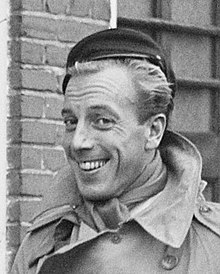
Jacques Fath(6 September 1912-13 November 1954)
birth place: Yvelines France
birth date: 6 September 1912
zodiac sign: Virgin
death place: Paris France
death date: 13 November 1954
birth date: 6 September 1912
zodiac sign: Virgin
death place: Paris France
death date: 13 November 1954
Jacques Fath (6 September 1912 in Maisons-Laffitte, France – 13 November 1954 in Paris, France) was a French fashion designer who was considered one of the three dominant influences on postwar haute couture, the others being Christian Dior and Pierre Balmain.
Jacques Fath came from a creative family. His paternal great-grandparents, Caroline and Georges Fath, were fashion illustrators and writers, and his paternal grandfather, Rene-Maurice Fath, was a landscape painter.
Fath presented his first collection in 1937, working out of a two-room salon on Rue de la Boetie.
Two years later in 1939, Jacques Fath married Geneviève Boucher. The bride was a photographer's model who had been Coco Chanel's secretary. They had one son, Philippe (born 1943). According to Fath's friend Princess Giovanna Pignatelli Aragona Cortés, Geneviève Fath, who directed the business side of her husband's firm during his lifetime, was a lesbian
Fath´s studio was later moved to a second location on Rue Francois Premier in 1940 before settling into a third location at 39 Avenue Pierre 1er de Serbie in 1944. Among his models was Lucie Daouphars (1921 or 1922–1963), a.k.a. Lucky, a former welder who eventually became the top house model for Christian Dior.
Fath presented his first collection in 1937, working out of a two-room salon on Rue de la Boetie.
Two years later in 1939, Jacques Fath married Geneviève Boucher. The bride was a photographer's model who had been Coco Chanel's secretary. They had one son, Philippe (born 1943). According to Fath's friend Princess Giovanna Pignatelli Aragona Cortés, Geneviève Fath, who directed the business side of her husband's firm during his lifetime, was a lesbian
Fath´s studio was later moved to a second location on Rue Francois Premier in 1940 before settling into a third location at 39 Avenue Pierre 1er de Serbie in 1944. Among his models was Lucie Daouphars (1921 or 1922–1963), a.k.a. Lucky, a former welder who eventually became the top house model for Christian Dior.

Jacques Fath with his wife Geneviève Fath, 1950
A self-taught designer who learned his craft from studying museum exhibitions and books about fashion, Fath hired a number of young designers as assistants and apprentices, some of which later went on to form their own houses, including Hubert de Givenchy, Guy Laroche, and Valentino Garavani.
A popular and occasionally innovative designer known for dressing "the chic young Parisienne", Fath utilized such materials as hemp sacking and sequins made of walnut and almond shells. His 1950 collection was called Lily, and its skirts were shaped to resemble flowers. For eveningwear, he advocated velvet gowns. During World War II, Fath was known for "wide fluttering skirts" which, The New York Times explained, "he conceived for the benefit of women forced to ride bicycles during gasoline rationing". His clients included Ava Gardner, Greta Garbo, and Rita Hayworth, who wore a Fath dress for her wedding to Prince Aly Khan.
A popular and occasionally innovative designer known for dressing "the chic young Parisienne", Fath utilized such materials as hemp sacking and sequins made of walnut and almond shells. His 1950 collection was called Lily, and its skirts were shaped to resemble flowers. For eveningwear, he advocated velvet gowns. During World War II, Fath was known for "wide fluttering skirts" which, The New York Times explained, "he conceived for the benefit of women forced to ride bicycles during gasoline rationing". His clients included Ava Gardner, Greta Garbo, and Rita Hayworth, who wore a Fath dress for her wedding to Prince Aly Khan.
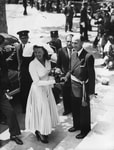
Rita Hayworth on her wedding in outfit designed by Jacques Fath, 27 May 1949
Rita Hayworth on her wedding in outfit designed by Jacques Fath, 27 May 1949

Rita Hayworth on her wedding in outfit designed by Jacques Fath, 27 May 1949
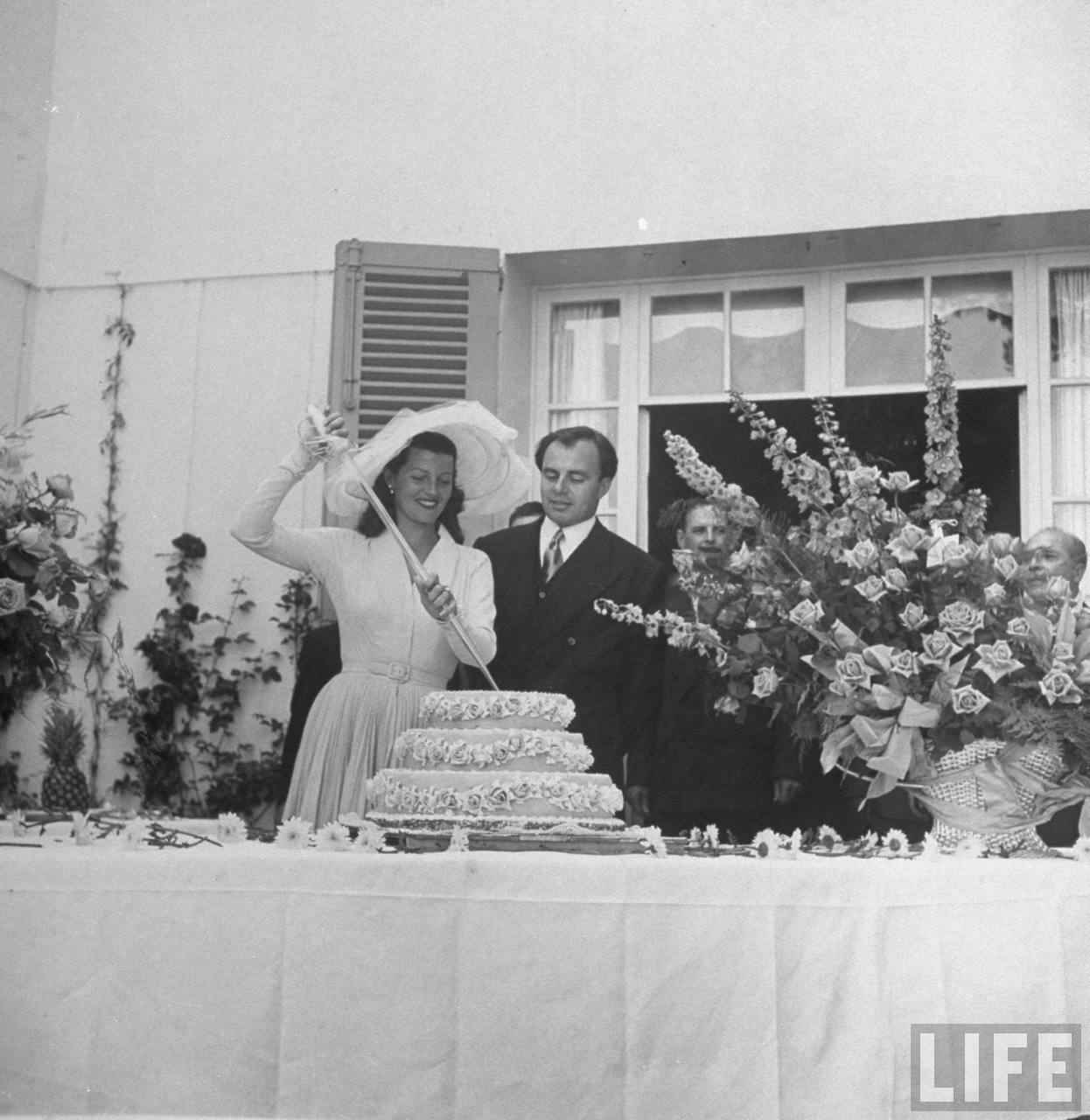
Rita Hayworth on her wedding in outfit designed by Jacques Fath, 27 May 1949
Jacques Fath also dressed Eva Perón. In one of the few remaining paintings of the 1940s/ 1950s not destroyed by the Revolución Libertadora in 1955 (3 years after Evita's death), when Perón was outsted from power, Evita is depicted beside General Perón wearing a white evening dress designed by Fath.
Besides designing for his own fashion house, Jacques Fath also designed costumes for several films:
Entre onze heures et minuit (1948, directed by Henri Decoin)
Quai des orfèvres (1947, directed by Henri-Georges Clouzot)
The Red Shoes (1948, costumes for Moira Shearer)
La minute de vérité (1952)
Genevieve (1953, costumes for Kay Kendall)
Abdullah the Great (1955)
Entre onze heures et minuit (1948, directed by Henri Decoin)
Quai des orfèvres (1947, directed by Henri-Georges Clouzot)
The Red Shoes (1948, costumes for Moira Shearer)
La minute de vérité (1952)
Genevieve (1953, costumes for Kay Kendall)
Abdullah the Great (1955)

Jacques Fath in his studio with his favourite model Bettina Graziani in the background, 1950
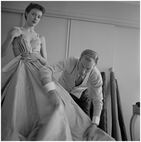
Jacques Fath in his studio with his favourite model Bettina Graziani in the background, 1950
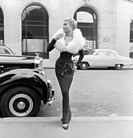
Stella Tenbrook in Jacques Fath Evening Dress, photo by Willy Maywald, 1951
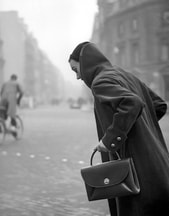
Sophie Malgat Litvak in Jacques Fath Coat, photo by George Dambier for ELLE, 1953

Ivy Nicholson in Jacques Fath Dress, photo by Georges Dambier for Nouveau Femina, 1954
1954: Death
Jacques Fath died of leukemia on 13 November 1954. Approximately 4,000 people attended his funeral at St. Pierre de Chaillot Church in Paris.

Jacques Fath was diagnosed with leukemia in 1952 and died two years later in 1954. His fashion house was operated in its last days by his widow Geneviève Fath, who presented her firstwell-regarded collection for the fashion house in 1955, but The Fath design house closed in 1957, and after the company's haute couture operations ceased, it went into business producing perfumes, gloves, hosiery, and other accessories.
Relaunched by the France Luxury Group in 1992, Jacques Fath was purchased and sold several times over the next decade.
In 2002, the firm became part of the Alliance Designers Group, but the company was sold again in 2006.
Relaunched by the France Luxury Group in 1992, Jacques Fath was purchased and sold several times over the next decade.
In 2002, the firm became part of the Alliance Designers Group, but the company was sold again in 2006.
0 Comments