Music
"Casta diva" from Norma by Vincenzo Bellini (1801–1835)
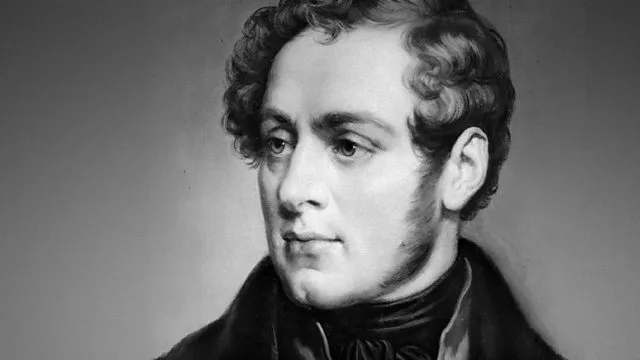
"Casta diva" is Norma's prayer to the moon goddess in Act I of Vincenzo Bellini's opera Norma. The Gallic people are demanding war against their Roman occupiers. Norma, their high priestess, restrains them and calls instead for peace.
The words were written by Italian librettist Felice Romani. Their public message is one of calm and patience, while Norma privately carries a dangerous secret: she is in love with the Roman proconsul Pollione and has borne him two children.
The music
"Casta diva" unfolds at a slow, measured pace. The orchestra and chorus establish the religious ceremony before the soprano begins the prayer.
Vincenzo Bellini gives Norma long melodic lines that must remain steady across a wide vocal range. The phrases are ornamented, but the ornamentation is part of the melody rather than a separate display of agility.
The melody rises gradually and reaches its highest point near the end. This controlled ascent gives the aria its sense of growing intensity without disturbing its measured pace.
Norma's solo line remains central while the chorus answers her in short passages. The contrast is clear: the people are waiting for permission to fight, while Norma continues to command patience.
The aria requires exceptional breath control, evenness of tone, and precision in its ornamented passages. Its difficulty comes not from speed, but from sustaining Bellini's long phrases while keeping the words clear.
The history
In 1831, Teatro alla Scala commissioned Vincenzo Bellini to compose a new opera for the opening of its Carnival season. Italian poet and librettist Felice Romani based Norma on French playwright Louis-Alexandre Soumet's tragedy Norma, or The Infanticide (Norma, ou L'infanticide, 1831).
Vincenzo Bellini took an active role in shaping the libretto. The text of "Casta diva" passed through several revisions before reaching its final form.
Bellini wrote the title role for Italian soprano Giuditta Pasta, one of the leading dramatic singers of her time. Giuditta Pasta had already created the title role in Bellini's La sonnambula earlier in 1831.
The autograph score places "Casta diva" in G major. During rehearsals, Bellini transposed it down to F major to suit Giuditta Pasta's voice. F major became the customary performing key, although the original G-major version has also returned in modern productions and recordings.
Norma received its premiere at Teatro alla Scala on 26 December 1831. Giuditta Pasta sang Norma, Italian soprano Giulia Grisi sang Adalgisa, Italian tenor Domenico Donzelli sang Pollione, and Italian bass Vincenzo Negrini sang Oroveso. Italian composer and conductor Alessandro Rolla directed the performance.
The opening night was poorly received, and Vincenzo Bellini described it as a fiasco in a letter written immediately afterward. The response changed during the following performances, and the opera was presented repeatedly during its first La Scala season.
G. Ricordi published the first vocal score in Milan in 1832. "Casta diva" soon circulated beyond the complete opera in separate editions and arrangements.
The performance
American soprano Rosa Ponselle recorded "Casta diva" with the Metropolitan Opera Orchestra and Chorus under Italian conductor Giulio Setti in 1928 and 1929. The recording preserves the interpretation of one of the twentieth century's most celebrated Normas and was selected for the United States National Recording Registry.
Greek American soprano Maria Callas recorded the complete opera with the Chorus and Orchestra of Teatro alla Scala under Italian conductor Tullio Serafin in 1960. This version places the aria within its full dramatic scene, including the public ceremony and the reactions of the chorus.
Maria Callas sings "Casta diva" Bellini's Norma, live at the Palais Garnier on the 19th of December 1958, this concert marked the soprano's debut at the Paris Opera.
Australian soprano Joan Sutherland recorded Norma with the Welsh National Opera Chorus and Orchestra under Australian conductor Richard Bonynge in 1988. The recording offers another complete theatrical context and includes the recitative that prepares Norma's entrance into the prayer.