Film & TV
Death in Venice (film, Morte a Venezia, 1971) Starring Dirk Bogarde, Björn Andrésen and Silvana Mangano
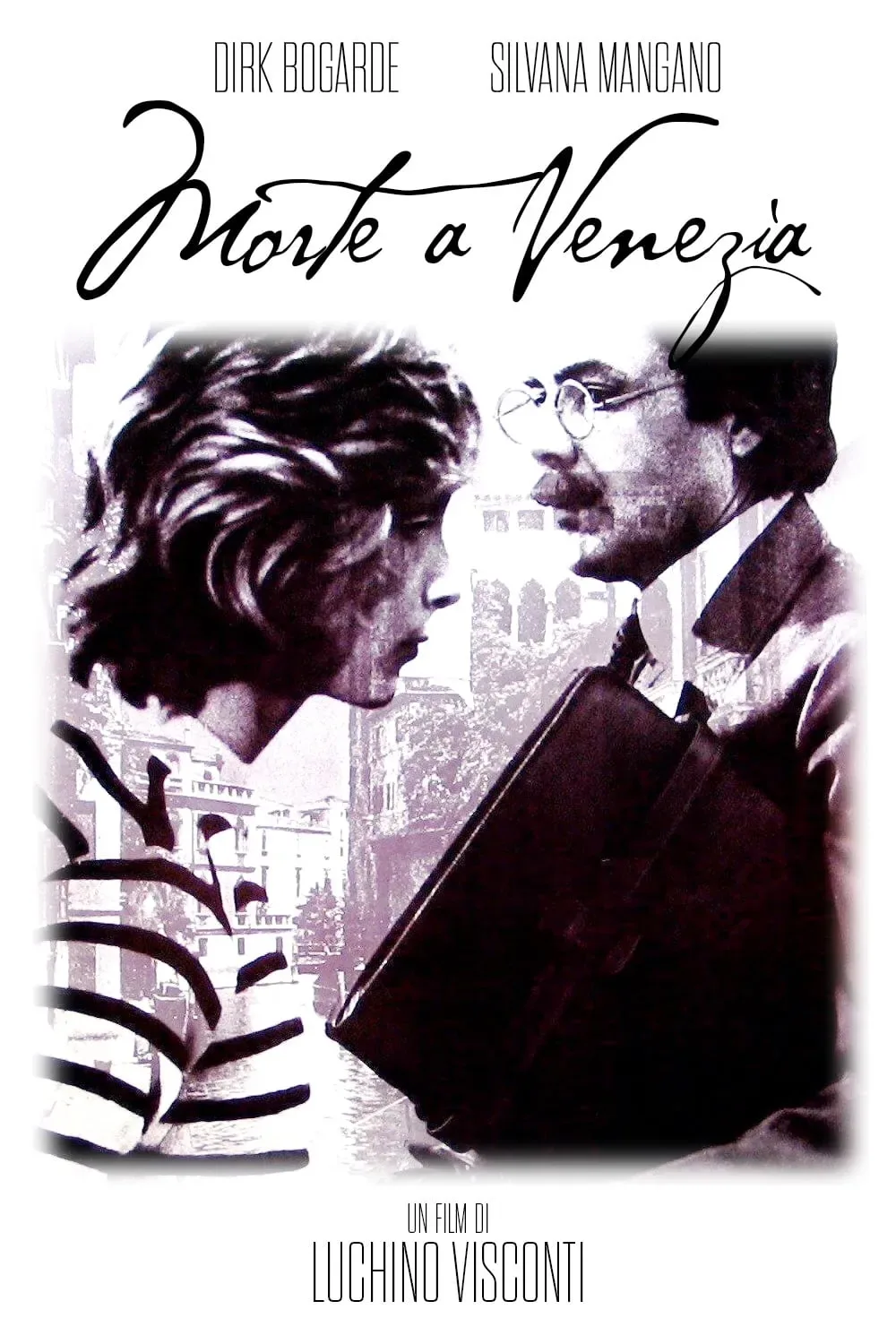
Death in Venice (Morte a Venezia, 1971) is an Italian historical drama directed and produced by Luchino Visconti, adapted with Nicola Badalucco from the 1912 novella by Thomas Mann. Dirk Bogarde plays Gustav von Aschenbach, an exhausted composer who arrives at the Venice Lido for a rest cure and instead becomes fixated on the beauty of a Polish adolescent staying at his hotel.
Visconti changed Thomas Mann's writer into a composer, which allowed the film to be scored almost entirely with the music of Gustav Mahler. Filmed largely at the Grand Hôtel des Bains, it is a study of a man losing his composure by degrees while a cholera epidemic is quietly concealed from the city's guests.
Plot
A steamer glides toward Venice through gray morning haze. Gustav von Aschenbach sits on deck, ill and depleted, traveling for his health after a public failure and a collapse.
He takes rooms at the Grand Hôtel des Bains on the Lido, where the hotel manager receives him with elaborate deference and the dining room fills each evening with wealthy northern Europeans.
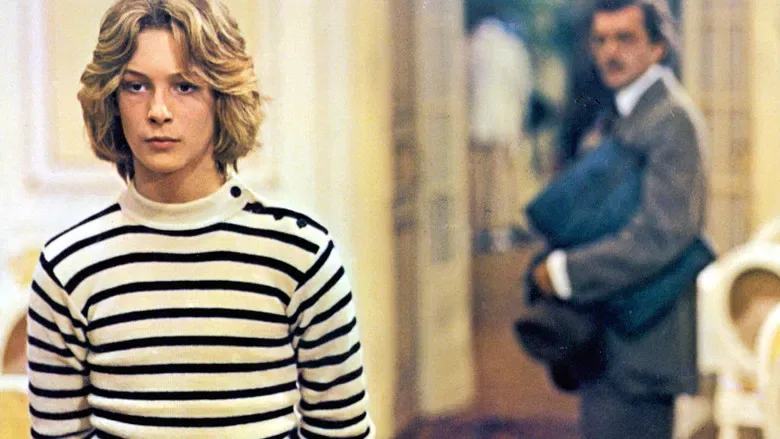
Among them is a Polish family: a composed, beautifully dressed mother, her daughters in stiff convent dress, their governess, and a son of about fourteen called Tadzio.
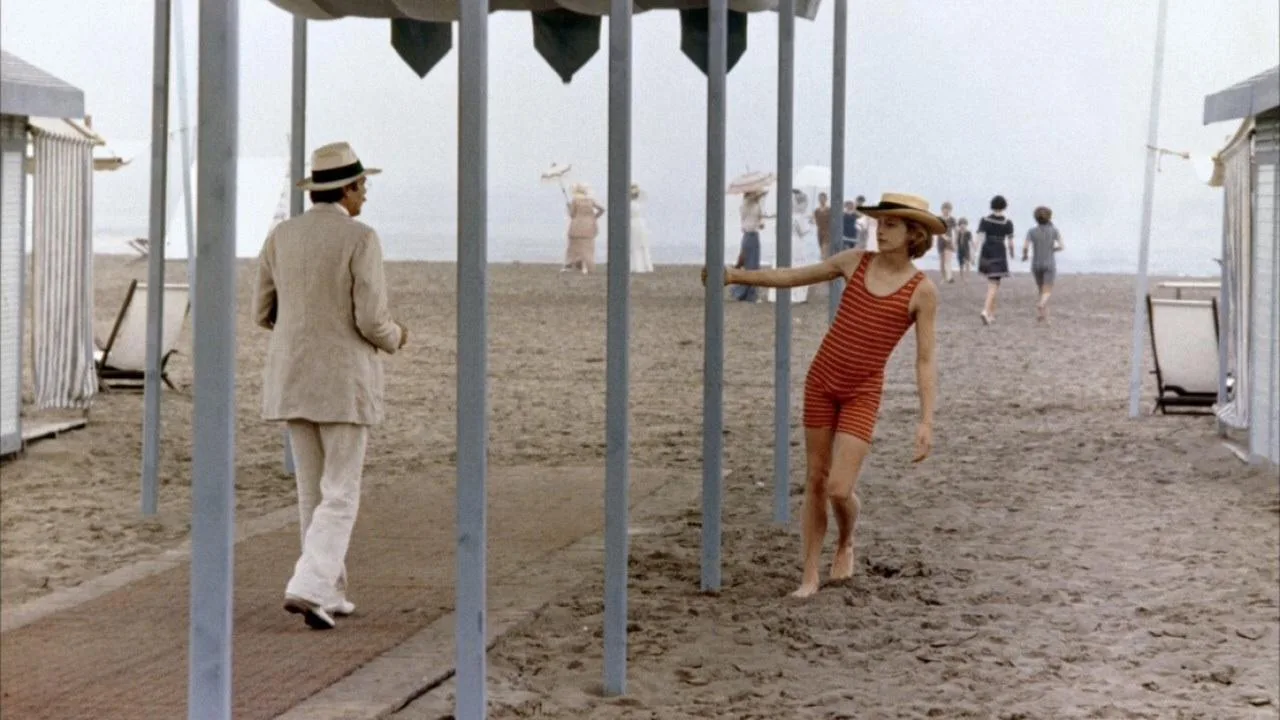
Aschenbach notices the boy and cannot stop noticing him. Nothing is said between them, and almost nothing happens. The film's drama is a sequence of glances across a dining room, a beach, a hotel lobby, an elevator.
Memories interrupt the present. Aschenbach argues with his friend Alfried about whether beauty can be reached through discipline and labor, or whether it simply arrives. He remembers his wife, their small daughter, a grave in a mountain orchard, and the night an audience jeered his new work.
The sirocco sickens him and he decides to leave. When his luggage is misdirected, he seizes the accident as permission and returns to the hotel with something close to joy.
The city smells of disinfectant. Notices go up about sanitary precautions, while hotel staff and officials insist there is nothing wrong, and Aschenbach, who has begun to understand, says nothing that might send the Polish family away.
A traveling English clerk finally tells him the truth about the Asiatic cholera and advises him to leave at once. Aschenbach stays, submits to a barber who dyes his hair and paints his face young, and follows the family through the emptying streets.
On a nearly deserted beach, under a heavy sun, he watches Tadzio wade out toward the horizon while his cosmetics run down his cheeks in the heat.
Cast
- Dirk Bogarde as Gustav von Aschenbach
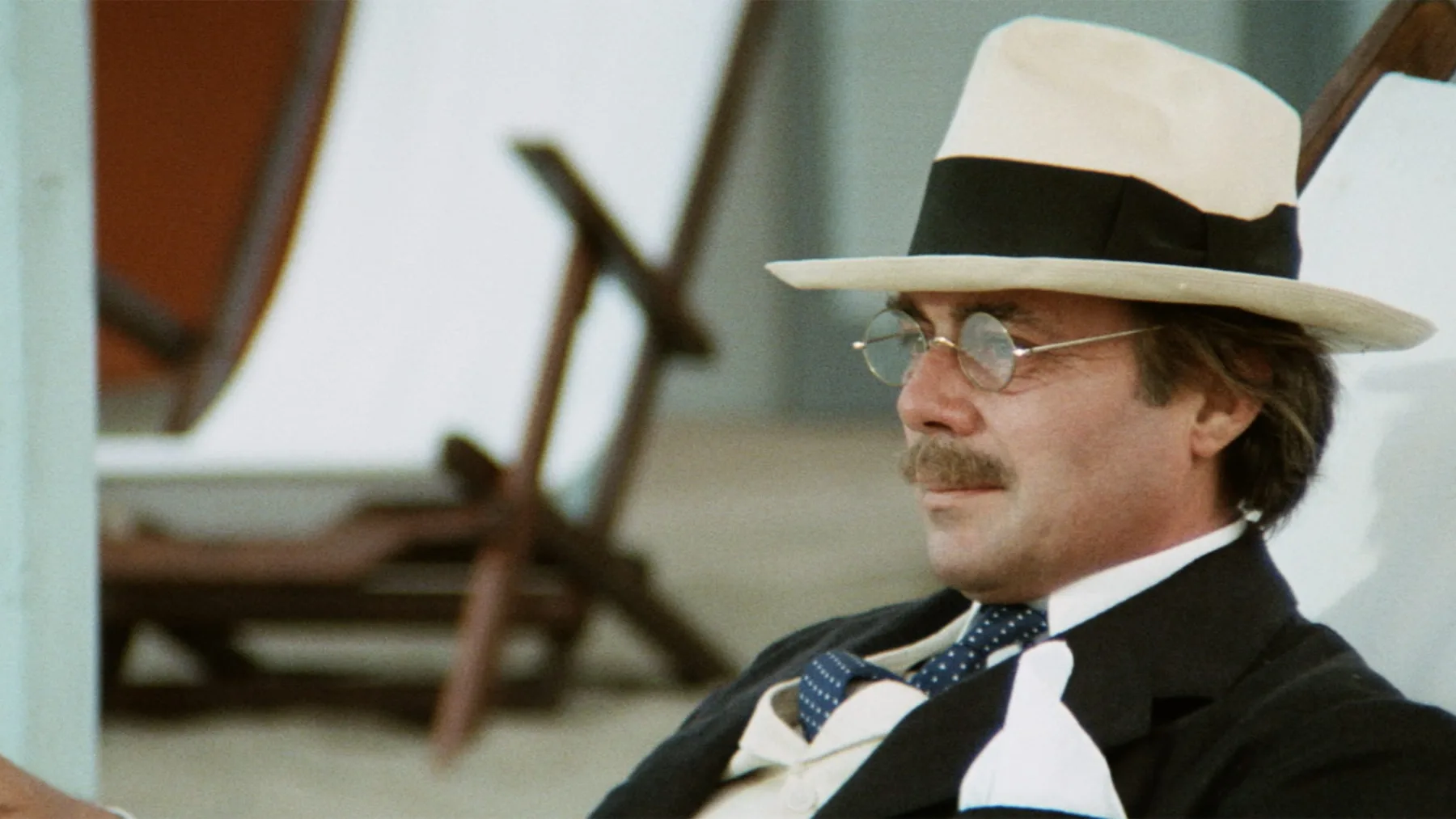
Dirk Bogarde as Gustav von Aschenbach in film Death in Venice (Morte a Venezia, 1971) - Björn Andrésen as Tadzio
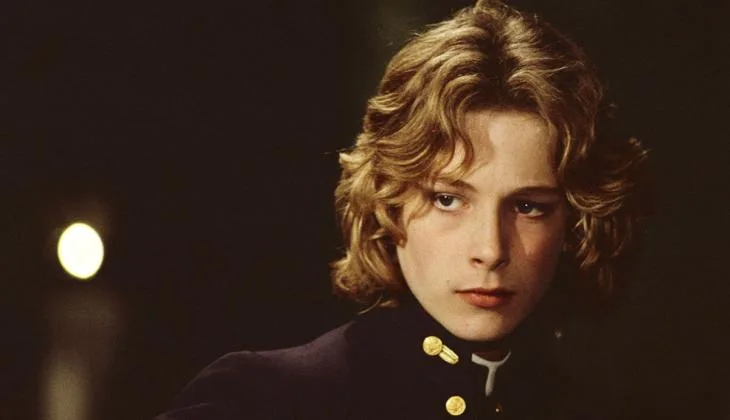
Björn Andrésen as Tadzio in film Death in Venice (Morte a Venezia, 1971) - Silvana Mangano as Tadzio's mother
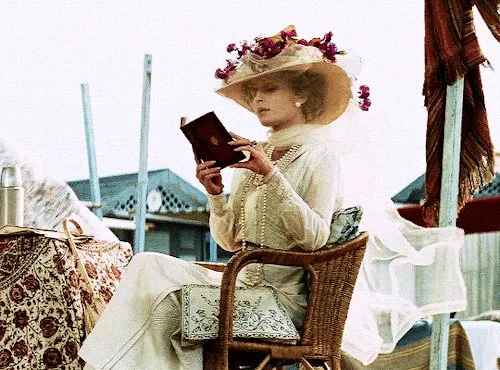
Silvana Mangano as Tadzio's mother in film Death in Venice (Morte a Venezia, 1971) - Romolo Valli as the hotel manager
- Mark Burns as Alfried
- Marisa Berenson as Frau von Aschenbach
- Nora Ricci as the governess
- Carole André as Esmeralda
Dirk Bogarde built the performance almost entirely without dialogue. Aschenbach's disintegration registers in the set of his shoulders, the twitch of a hand adjusting a collar, the small hopeless smile when he thinks no one is looking.
Björn Andrésen plays Tadzio as a surface rather than a person, which is the point: the boy is barely characterized, and the camera treats him as an object of aesthetic contemplation rather than a participant in the story.
Silvana Mangano gives the mother an immense, still authority in about a dozen lines. Romolo Valli's hotel manager is one of the great small comic portraits in Visconti's work, a man whose bows and reassurances grow more lavish as the death toll rises.
Production
Luchino Visconti had wanted to film Thomas Mann's novella for years, and the Mann family estate supported his claim to it. Warner Bros. put up around $1,600,000 of the budget, with the remainder from the French company P.E.C.F. Films.
Alec Guinness, John Gielgud, and Burt Lancaster were all considered for Aschenbach. Visconti chose Dirk Bogarde, and when American backers pressed for a more bankable British name, he refused to replace him.
The same backers proposed a more radical fix: make Tadzio a girl, which they believed American audiences would find less objectionable. Visconti asked whether Americans did not mind child molestation, and was told that in America they did not envisage that kind of problem. Tadzio remained a boy.
Visconti went looking for him himself. Dirk Bogarde described the director setting out in an immense fur hat and sealskin boots to search the northern capitals, and Italian television broadcast a documentary about the hunt, In Search of Tadzio (Alla ricerca di Tadzio, 1970).
In Stockholm he found Björn Andrésen, then fifteen, who had appeared in one Swedish film, A Swedish Love Story (En kärlekshistoria, 1970). The surviving audition footage, in which the boy is told to smile, turn, and undress to his underwear while adults discuss his looks in languages he does not speak, is now the most uncomfortable document attached to the film. Andrésen spent the rest of his life saying so, and Visconti's decision to parade him at the premiere as the most beautiful boy in the world followed him for decades.
During filming Andrésen was kept out of the sun, away from sports, and away from the water, and the crew was told to keep its distance. Dirk Bogarde wrote in An Orderly Man (1983) that the boy bore it all remarkably well, and that his one irritating habit was chewing black bubble gum until the bubbles burst on his face.
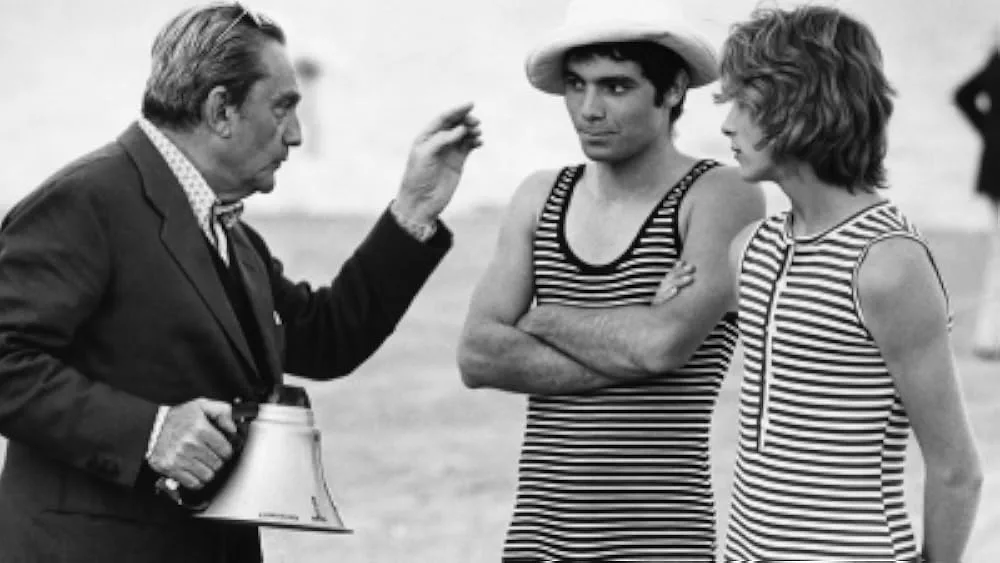
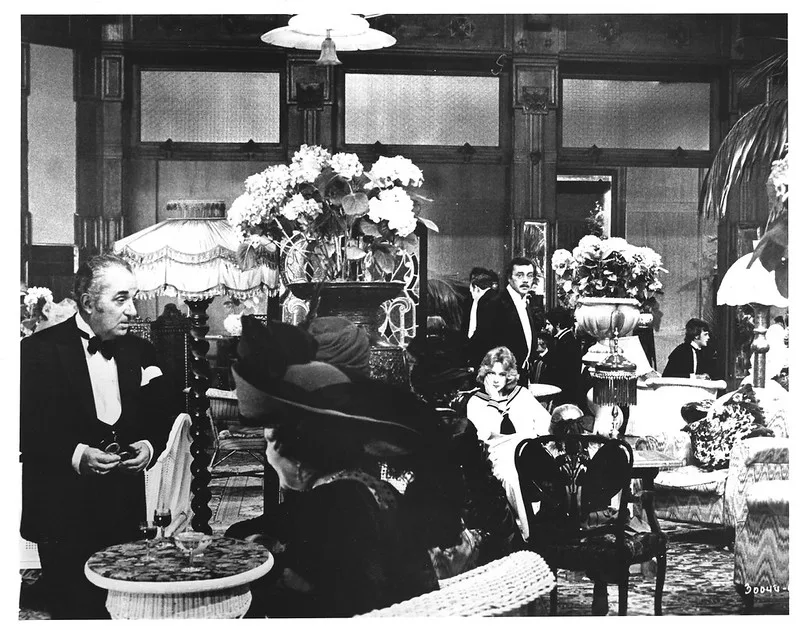
The budget was tight enough that Visconti took no fee. Silvana Mangano also worked without salary, covering only her hotel expenses, and Dirk Bogarde and much of the cast and crew accepted substantial cuts.
Shooting took place on the Lido at the Grand Hôtel des Bains and its beach, in the Piazza San Marco, and in the alleys behind the Teatro La Fenice, with interiors completed at Cinecittà in Rome. The flashbacks to Aschenbach's marriage were filmed in a plum orchard near Bolzano in the Dolomites. Visconti, a count, filled the hotel salons with Venetian countesses and marchesas playing themselves.
Ferdinando Scarfiotti's interiors are dense with brocade, potted palms, ferns, gilt mirrors, and flower arrangements, a Grand Hotel world so upholstered that it feels short of air. Pasqualino De Santis shot the beach scenes in a cool diffused haze, with gray shadows and wind snapping at the striped bathing huts, and saved full sunlight for the last sequence, where it flattens Aschenbach into the sand.
Piero Tosi's costumes, executed by the Tirelli workshop with Gabriella Pescucci assisting, are the film's other great performance. For Silvana Mangano he built white linen and lawn day dresses with panels of lace insertion, enormous veiled straw hats trimmed with taffeta flowers, long pearl sautoirs, and evening gowns in pink satin and beaded chiffon, one of them an original garment of 1908. He said the white summer look came from the way his own mother had dressed.
For Dirk Bogarde there were pale tailored suits, stiff collars, a Homburg, and the silk scarf that becomes a shroud in the heat. For Björn Andrésen, a narrow striped bathing costume and a sailor suit that turned into one of the most imitated silhouettes of the decade. Silvana Mangano's tulle-wrapped hats and pale pinks later prompted Karl Lagerfeld's Chanel cruise collection for 2009 and 2010.
Visconti wanted Dirk Bogarde to resemble Gustav Mahler and had a false nose made. It kept coming loose and froze his face, so it was abandoned in favor of a mustache and a pince-nez, with the result that Bogarde ended up looking rather more like Thomas Mann.
The makeup for Aschenbach's final scenes caused real damage. Bogarde recounted in Snakes and Ladders (1978) that after various creams smeared, one was found that held, and that his face began to burn as they shot. The tube read: keep away from eyes and skin.
The score draws on the Adagietto from Gustav Mahler's Fifth Symphony, which opens and closes the film, and passages from the Third Symphony, played by the Orchestra dell'Accademia Nazionale di Santa Cecilia under Franco Mannino. Music by Ludwig van Beethoven, Modest Mussorgsky, and Franz Lehár is performed within scenes, Lehár most memorably by the hotel's small salon orchestra while cholera moves through the city outside.
Release/reception
The world premiere was a royal gala in London on 1 March 1971, attended by Elizabeth II and Princess Anne, given as a benefit for the restoration of Venice. Warner Bros. executives had wanted to write the film off after an American screening, fearing an obscenity ban, and the royal evening was what changed their minds.
It went to the Cannes Film Festival in May 1971, where Luchino Visconti received a special Twenty-fifth Anniversary Prize for the film and for his career as a whole. At the same festival he made jokes to reporters about Björn Andrésen having aged since the casting, with the sixteen-year-old sitting beside him, not understanding.
Reviewers praised the photography, the settings, and the clothes almost without reservation. The film won BAFTA awards for cinematography, art direction, costume design, and soundtrack, and Piero Tosi received an Academy Award nomination for costume design.
Opinion on the film itself has always been divided between those who find it a slow, airless exercise in decor and those who consider it Visconti's most concentrated work. Its admirers tend to describe the experience as closer to listening than to watching.
The Adagietto's modern fame belongs largely to this film, which turned a movement of concert repertoire into shorthand for beauty and mortality. The Grand Hôtel des Bains named one of its salons the Sala Visconti, then closed in 2010.
Björn Andrésen made almost no films afterward and spent his life resisting the label Visconti hung on him, returning to the subject in the documentary The Most Beautiful Boy in the World (2021). He died on 25 October 2025, at seventy.