People
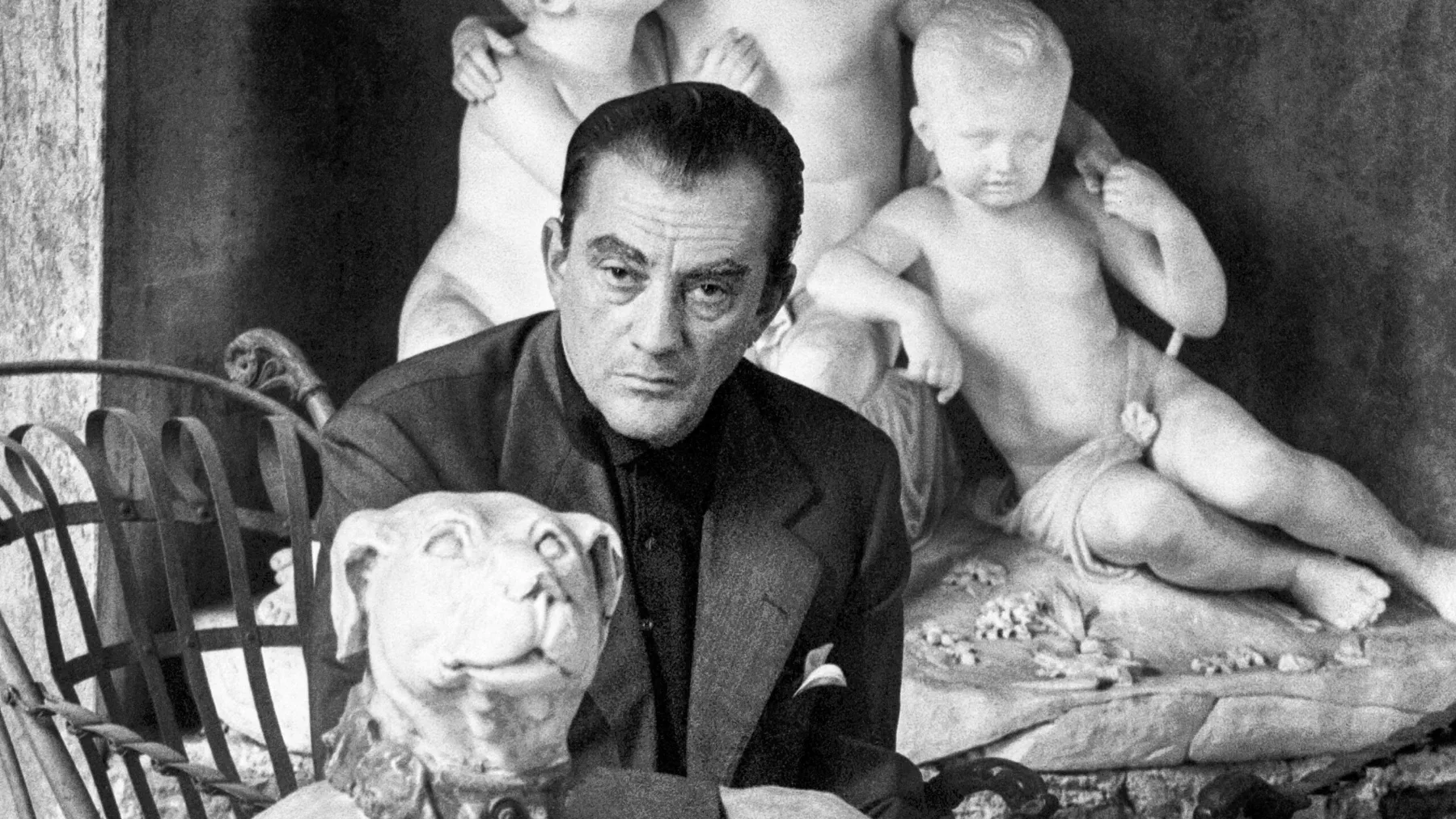
Luchino Visconti (Luchino Visconti di Modrone, Count of Lonate Pozzolo; 2 November 1906 – 17 March 1976)
C’est l’homme le plus élégant et le plus cultivé que j’aie jamais rencontré.(He is the most elegant and most cultivated man I have ever met." — Claudia Cardinale on Luchino Visconti
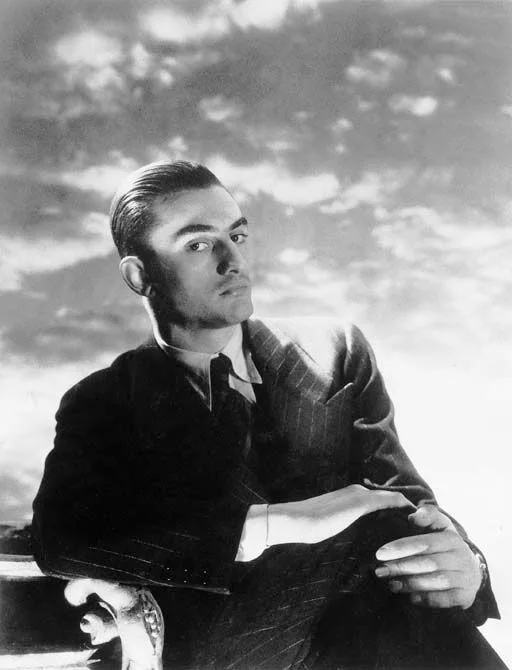
Luchino Visconti di Modrone, Count of Lonate Pozzolo (2 November 1906 – 17 March 1976), known as Luchino Visconti, was an Italian film director, theater director, opera director, and screenwriter.
Born into one of Milan's oldest aristocratic families, he began his career as an assistant to Jean Renoir in France before directing Ossessione (1943), generally regarded as the first neorealist film. He went on to direct some of the most celebrated films in European cinema, including Senso (1954), Rocco and His Brothers (1960), The Leopard (1963), The Damned (1969), Death in Venice (1971), and Ludwig (1973). He won the Palme d'Or for The Leopard and the Golden Lion for Sandra (1965). He was also one of the most influential opera directors of the twentieth century, staging celebrated productions at La Scala, the Royal Opera House, and the Vienna State Opera with Maria Callas, Leonard Bernstein, and Carlo Maria Giulini. Critic Jonathan Jones wrote that "no one did as much to shape Italian cinema as Luchino Visconti."
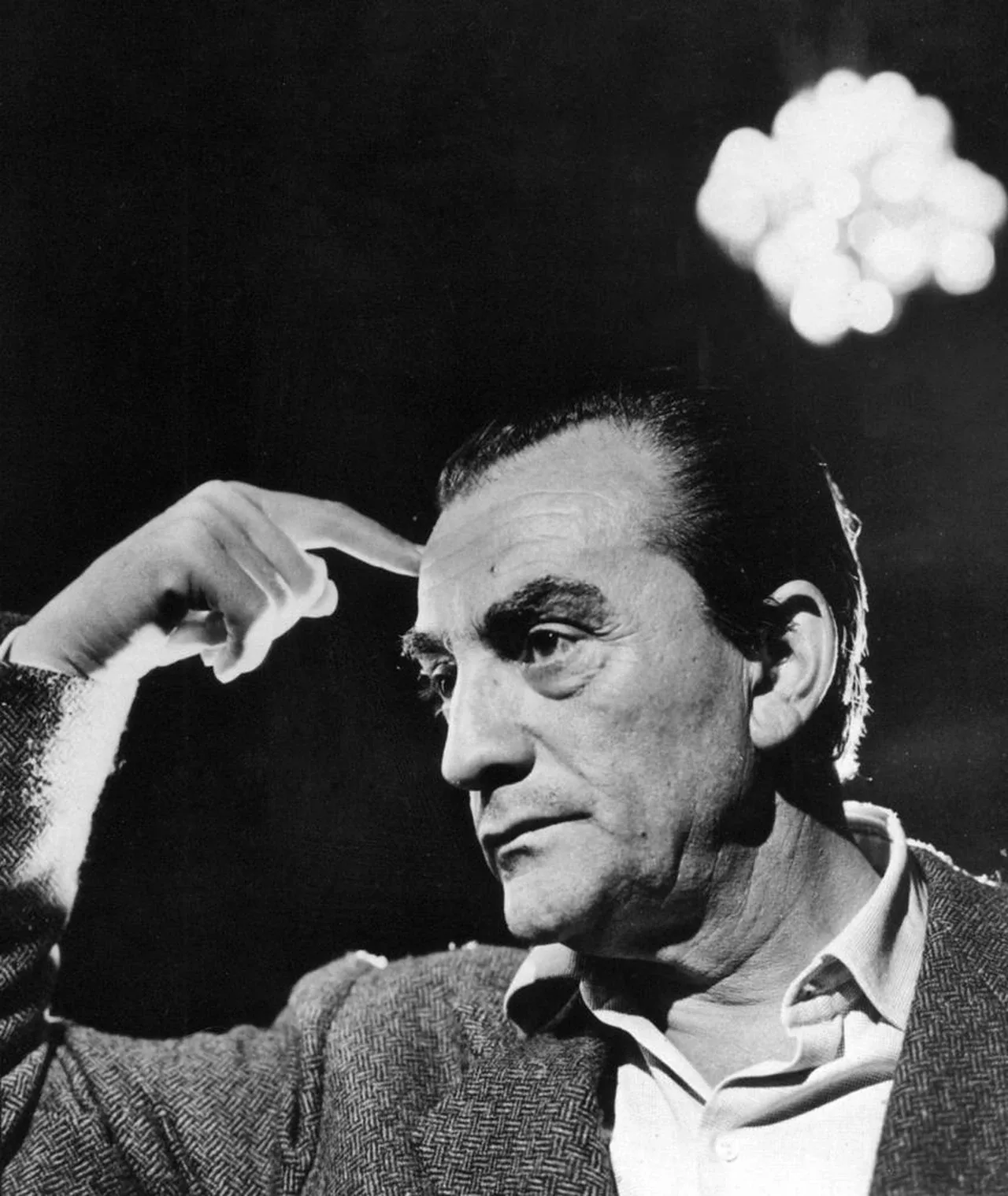
Biography
Luchino Visconti di Modrone was born on 2 November 1906 in the family's ancestral palazzo in Milan.
His father, Giuseppe Visconti di Modrone, was Duke of Grazzano Visconti and Count of Lonate Pozzolo, and served as chamberlain to King Victor Emmanuel III of Italy. His mother, Carla Erba, was an heiress to the Erba pharmaceuticals fortune. The Visconti di Modrone family was a collateral branch of the Visconti of Milan, who had ruled the city as lords and dukes from 1277 to 1447.
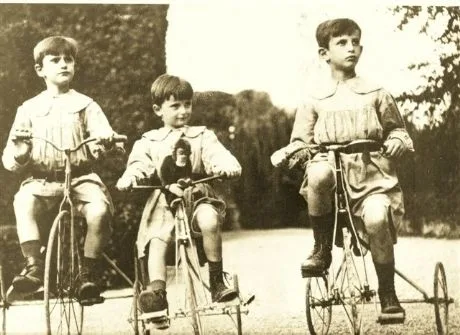
Luchino was one of seven children. After his parents separated in the early 1920s, Carla Erba moved with her younger children, including Luchino, to her own house in Milan and to Villa Erba, her summer residence in Cernobbio on Lake Como.
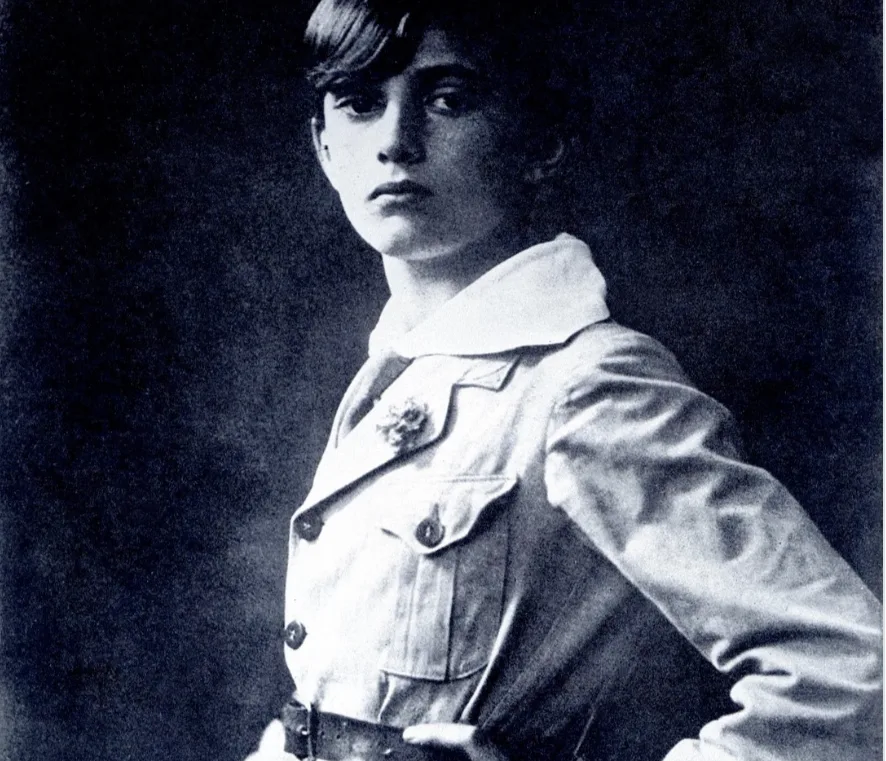
The family also owned Grazzano Visconti Castle near Vigolzone and a villa in Rome. The Palazzo Visconti di Modrone in Via Cerva had its own small private theater, and the children participated in performances there. The family kept a box at La Scala as well to enjoy more theater there.
Visconti grew up surrounded by art, music, and theater. He studied cello with the Italian cellist and composer Lorenzo de Paolis. Through his family's connections, he met Giacomo Puccini, Arturo Toscanini, and Gabriele D'Annunzio.
He read Marcel Proust's In Search of Lost Time (À la recherche du temps perdu, 1913–1927), which became a lifelong obsession. Adapting it for the screen was a project he never realized.
According to Visconti's autobiography, he and Umberto II of Italy(the last king of Italy) had a romantic relationship during their youth in the 1920s.
Before his film career, Visconti was passionate about training racehorses and kept his own stable. He was engaged to Princess Irma of Windisch-Graetz, but her father raised concerns. Visconti broke off the engagement in 1935.
His entry into cinema came through Gabrielle Coco Chanel, a mutual friend who interceded to place him as a set dresser on Jean Renoir's Partie de campagne (1936). The experience was transformative. Renoir became a mentor and a profound influence on Visconti's developing aesthetic.
That same year, Visconti began a three-year relationship with the photographer Horst P. Horst. It remained discreet because of the prejudices of the time.
After a short tour of the United States, including a visit to Hollywood, Visconti returned to Italy and worked as Renoir's assistant again on Tosca (1941). The production was interrupted by the war and later completed by the German director Karl Koch.
Visconti's directorial debut came in 1943 with Ossessione (1943), an unauthorized adaptation of James M. Cain's novel The Postman Always Rings Twice (1934). Visconti had discovered a French translation of the novel, which Renoir had given him during his years in France.
Ossessione premiered at a festival hosted by Vittorio Mussolini, son of Benito Mussolini, who edited the Milanese film magazine Cinema. According to the critic Aldo Scagnetti, Vittorio Mussolini stormed out of the screening, exclaiming: "This is not Italy!"
The Fascist government banned Ossessione after the September 1943 armistice and destroyed the prints. Visconti had preserved a duplicate negative, from which all surviving copies were later made. The film is now generally regarded as the first neorealist film.
During World War II, Visconti joined the Italian Communist Party, which he considered the only effective opponent of Italian Fascism. He had initially been impressed by the aesthetic spectacle of Fascist parades, the marching columns, the boots and uniforms, but he later came to hate the Mussolini regime.
After the September 1943 armistice, Visconti worked with the Italian resistance. His villa in Rome became a meeting place for oppositional artists. When the Germans occupied Rome in autumn 1943, he went into hiding in the mountains at Settefrati, using the nom de guerre Alfredo Guidi. He helped escaped English and American prisoners of war hide and sheltered partisans in his Roman house with the help of the actress María Denis.
In April 1944, Visconti was arrested by the anti-partisan Pietro Koch and sentenced to execution by firing squad. He was saved at the last moment by María Denis's intervention. After the war, Visconti testified against Koch, who was convicted and executed.
The first public showing of Ossessione in Rome took place in May 1945, after the liberation. From 1946 to 1960, Visconti directed many performances of the Rina Morelli–Paolo Stoppa theater company, with the actor Vittorio Gassman. He also directed numerous celebrated opera productions, maintaining a close association with La Scala in Milan.
His second film, La terra trema (1948), earned a Special International Award at the Venice Film Festival. Visconti wrote the scenes nightly, handing his roughly sketched Italian lines to his assistant director Franco Zeffirelli, who translated them into the Sicilian dialect the non-professional actors were to speak. Visconti rejected even minor variations from his actors, requiring exact repetition of both lines and body language.
With Senso (1954), shot in vivid Technicolor, Visconti moved away from neorealism toward a fusion of realism and romanticism. The film opens with scenes from the fourth act of Giuseppe Verdi's Il trovatore (1853), filmed at the Teatro La Fenice in Venice.
Visconti's opera career reached its peak through his collaboration with Maria Callas. In December 1954, he directed La vestale (1807) by Gaspare Spontini at La Scala, with Callas, Franco Corelli, and Ebe Stignani. In 1955, he directed Callas in La traviata (1853) by Giuseppe Verdi, conducted by Carlo Maria Giulini, and in La sonnambula (1831) by Vincenzo Bellini, conducted by Leonard Bernstein.
In 1957, he directed Callas in Anna Bolena (1830) by Gaetano Donizetti and in Iphigénie en Tauride (1779) by Christoph Willibald Gluck, both at La Scala. That year he also directed Le notti bianche (1957), which earned a Silver Lion at the Venice Film Festival.
In 1960, Visconti returned to neorealism with Rocco and His Brothers (1960), starring Alain Delon and Claudia Cardinale. The film earned a Special Prize at the Venice Film Festival and the FIPRESCI Prize. It also launched Delon's international career.
The Leopard (1963), based on Giuseppe Tomasi di Lampedusa's novel The Leopard (1958), won the Palme d'Or at the Cannes Film Festival. The film starred Burt Lancaster as Don Fabrizio Corbera, Prince of Salina, with Delon as his nephew Tancredi and Cardinale as Angelica.
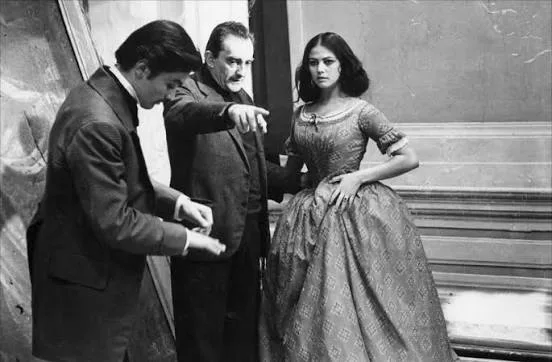
Visconti had wanted to cast the Russian actor Nikolay Cherkasov, whom he had admired in Sergei Eisenstein's films, but Cherkasov refused. When the producers insisted on an American star, Visconti was given a choice of Anthony Quinn, Spencer Tracy, Gregory Peck, or Burt Lancaster. Visconti reportedly said: "Oh, no! A cowboy!" He chose Lancaster after seeing Judgment at Nuremberg (1961).
The tension between Visconti and Lancaster during the first weeks of filming was intense. Visconti treated Lancaster harshly until the actor confronted him publicly on the set. Visconti was so impressed by Lancaster's passion and sincerity that the two developed a close friendship that lasted for the rest of Visconti's life. Lancaster later called Visconti "the finest director I've ever worked with."
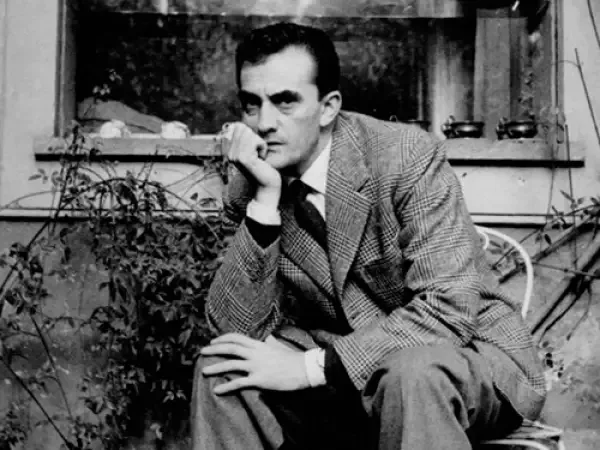
The film's climactic ball sequence, shot at Palazzo Valguarnera-Gangi in Palermo, runs for more than forty-six minutes. Hundreds of candles served as the ostensible light source, but the heat from the lighting rig above the chandeliers melted them rapidly, requiring constant replacement. Visconti also insisted that the guests' sweat-stained white gloves be replaced. A laundry room was set up nearby for this purpose.
Cardinale's period corset was so narrow that Lancaster could encircle her waist with his hands. The corset bruised her flesh badly. She showed the bruising to Visconti, presumably to gain his sympathy.
Twentieth Century Fox released a shortened English-language version that cut the film from 185 to 161 minutes and replaced Visconti's Technicolor with inferior DeLuxe Color. Visconti said: "I don't feel it's my film at all." He disavowed the English version and refused to accept any responsibility for it.
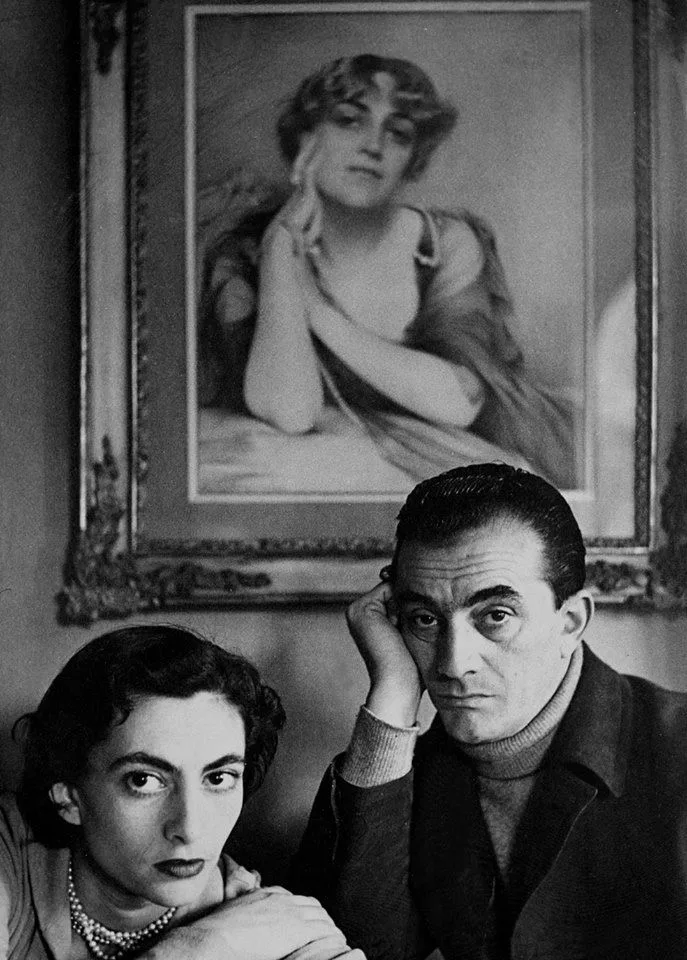
Visconti was hostile to the student protests of 1968. He believed the protesters sought change for the sake of destruction without building something new, and he feared the emerging radical-left terrorism in Italy as the rise of a new fascism.
The Damned (1969) concerned the disintegration of a German industrialist family during the Nazi consolidation of power. Its frank depictions of homosexuality, pedophilia, rape, and incest earned it an X rating in the United States. The avant-garde filmmaker Rainer Werner Fassbinder called The Damned his favorite film.
The film also marked the beginning of Visconti's relationship with the Austrian actor Helmut Berger, whom Visconti cast as Martin. Berger became Visconti's last lover.
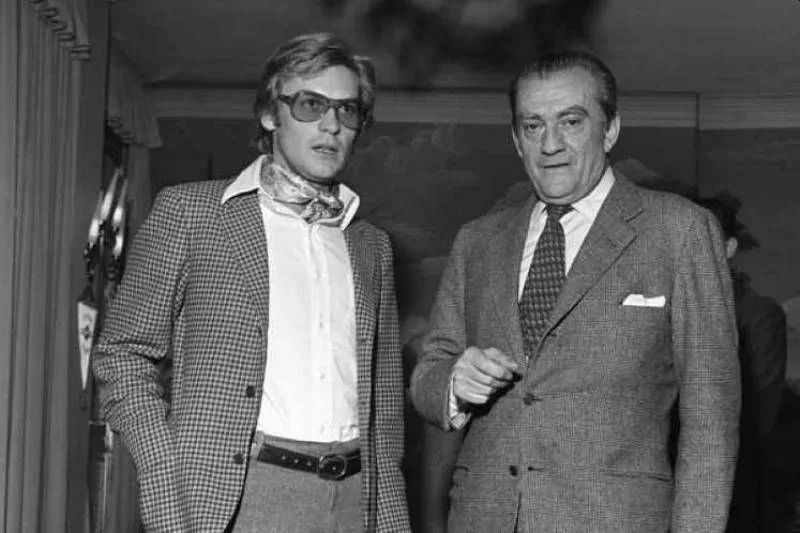
Despite his homosexuality, Visconti remained a devout Catholic. In 1971, he said: "I am a Catholic, I was born a Catholic, I was baptized a Catholic. I cannot change what I am, I cannot easily become a Protestant. My ideas may be unorthodox, but I am still a Catholic."
Death in Venice (1971), adapted from Thomas Mann's novella Death in Venice (1912), starred Dirk Bogarde as the composer Gustav von Aschenbach and Björn Andrésen as the boy Tadzio. Visconti changed Aschenbach's profession from author to composer, allowing the music of Gustav Mahler to represent his artistic work. The Adagietto from Mahler's Fifth Symphony (1902) opens and closes the film.
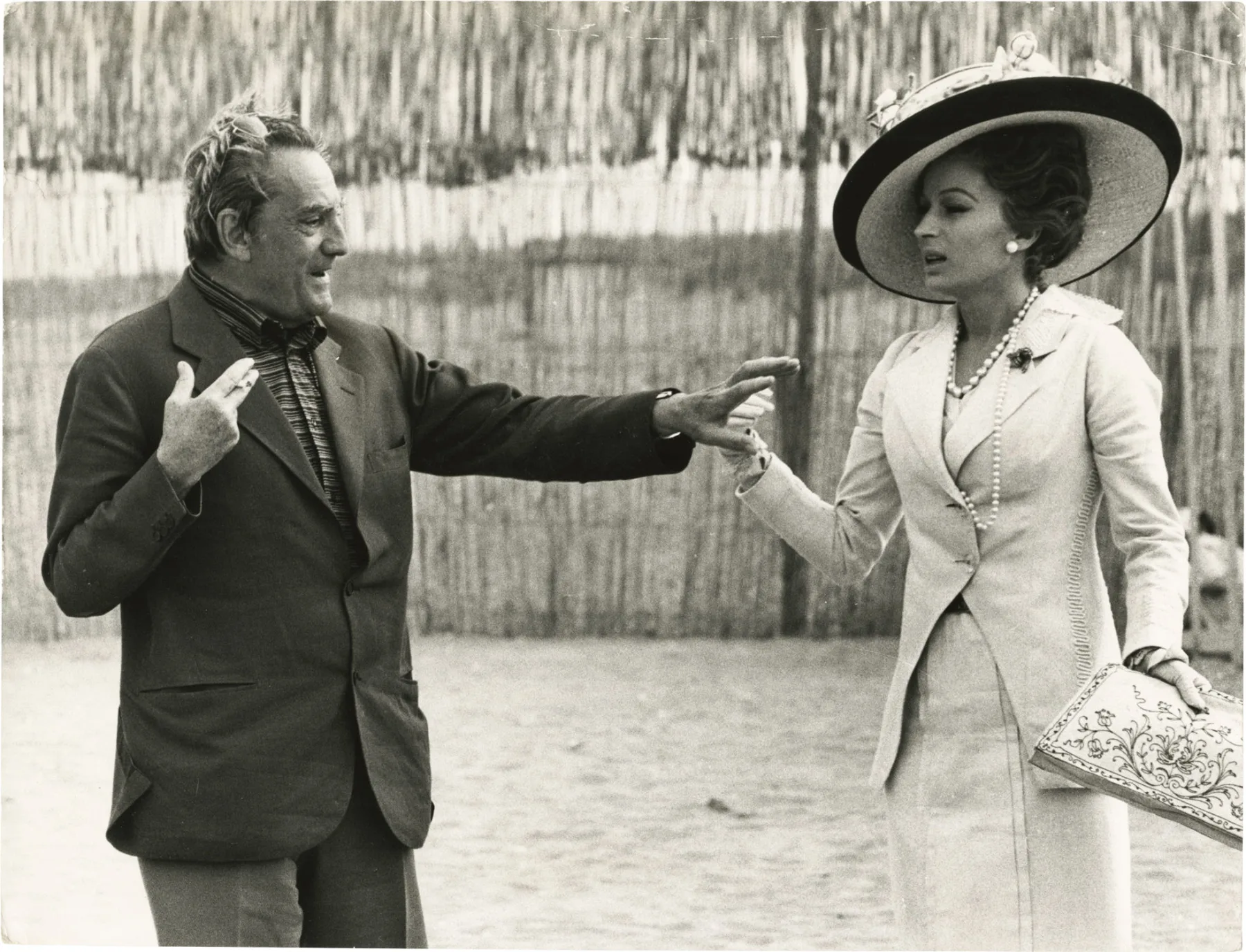
The costumes were designed by Piero Tosi, who was nominated for an Academy Award. The production design was by Ferdinando Scarfiotti. The film won BAFTA awards for Best Cinematography, Best Production Design, and Best Costume Design.
For the final beach sequence, the makeup department needed to create Aschenbach's deathly white skin. After trying various face paints that smeared, a cream was found that appeared suitable. The tube carried the warning: "Keep away from eyes and skin." Visconti ignored it. After the cream was applied, Dirk Bogarde recalled that his face began to burn terribly.
Visconti smoked 120 cigarettes a day. He suffered a serious stroke in 1972 but continued to smoke heavily.
He also continued working after the stroke, making Ludwig (1973), the third film in what became known as his"German Trilogy," starring Helmut Berger as King Ludwig II of Bavaria and Romy Schneider as Empress Elisabeth of Austria.
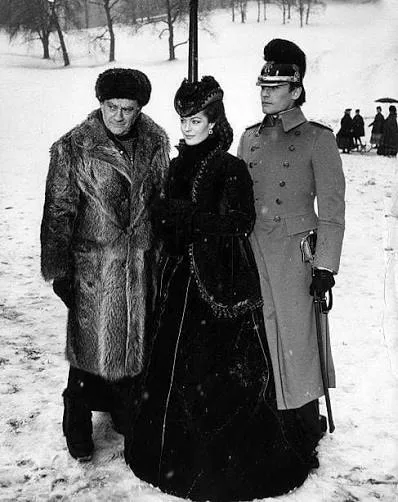
Burt Lancaster also appeared in the film as well as Visconti's another film Conversation Piece (1974).
Visconti's final film, The Innocent (1976), returned to his recurring interest in infidelity and betrayal. He completed it shortly before his death.
Visconti's creative style evolved dramatically across his career, but its foundations remained constant. As one of the founding fathers of Italian neorealism, his early films, Ossessione and La terra trema, discarded studio sets in favor of real locations and non-professional actors, shooting in the raw environment of postwar Italy. He used long, ponderous shots, depth of focus, and spatially complex compositions in which multiple actions could occur within the frame. He treated sets, scenery, and landscape as active components of the visual field, not backdrops.
From Senso onward, his visual language became more personal and opulent. His later films are characterized by a sumptuous, baroque beauty: vivid Technicolor, lavish costumes by Piero Tosi, meticulously detailed production design, and an operatic use of music. The cinematographer Giuseppe Rotunno, who shot The Leopard, was praised for work described as "baroque and elegiac."
Visconti's films reflected the tension between his aristocratic origins, his communist convictions, and his social analysis. He said he felt he came from "a world long ago, that of the previous nineteenth century."
His films from the 1960s onward addressed the decline of old social orders and the rise of modernity, the decay of the nobility and the bourgeoisie. He did not regard his opulent historical reconstructions as escapism but as the deciphering of signs, the identification of profound historical changes that would only become visible later. When accused of decadence, he recalled Thomas Mann and Mann's way of creating art.
His work influenced Francis Ford Coppola and Martin Scorsese. Six of his films are included on the list of 100 Italian films to be saved by the Italian Ministry of Culture.
Luchino Visconti died of another stroke in Rome on 17 March 1976, at the age of sixty-nine.
His church funeral was held at Sant'Ignazio di Loyola in Campo Marzio, Rome, on 19 March 1976. Those present included the Visconti family, Italian President Giovanni Leone, Burt Lancaster, Claudia Cardinale, Laura Antonelli, Vittorio Gassman, and Helmut Berger.