People
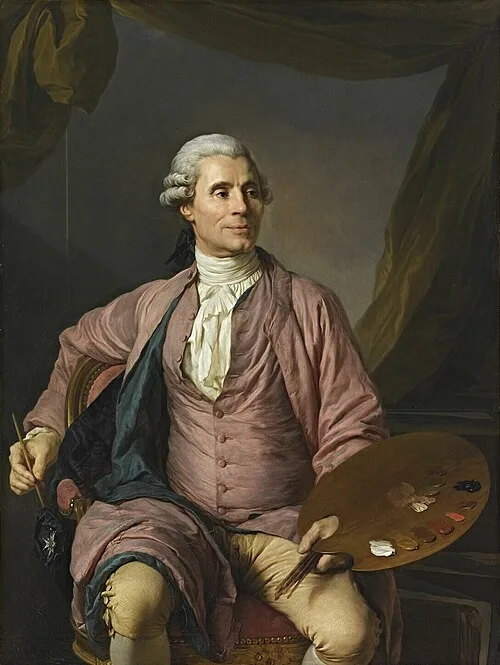
Joseph-Marie Vien (18 June 1716 – 27 March 1809)
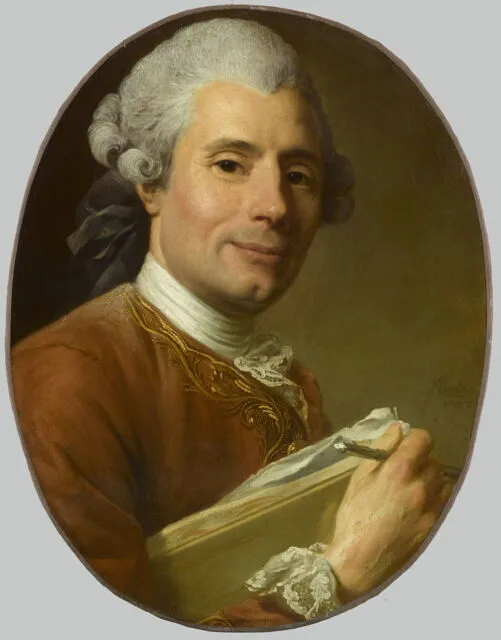
Joseph-Marie Vien (18 June 1716 – 27 March 1809) was a French painter, teacher, and the last holder of the post of Premier peintre du Roi — First Painter to the King — serving Louis XVI from 1789 until the position was abolished during the French Revolution. Often credited as a transitional figure between Rococo and Neoclassicism, he is best remembered today as the teacher of Jacques-Louis David, the movement's leading figure. He was married to the painter Marie-Thérèse Reboul from 1757 until her death in 1805.
Biography
Joseph-Marie Vien was born in Montpellier on 18 June 1716.
He caught the attention of the connoisseur and collector the Comte de Caylus while still young, and became his protégé.
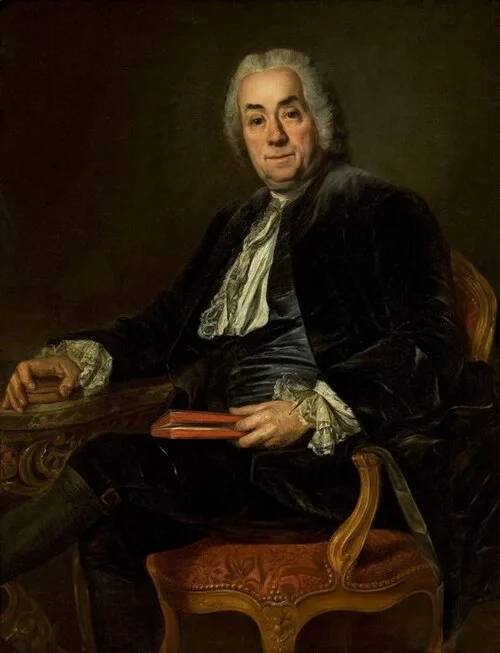
Caylus placed him in the Paris studio of Charles-Joseph Natoire, one of the leading decorative painters of the day.
In 1743, Vien won the Prix de Rome for a biblical history painting, earning several years of study in Italy.
He arrived in Rome the following year and stayed until 1750 — years that happened to coincide almost exactly with the first great excavations at Herculaneum and, eventually, Pompeii. Vien, along with much of the European art world, was captivated.
In 1748, during Carnival, Vien and his fellow pensionnaires at the French Academy staged a Mascarade Turque — a costumed parade through Rome got up in imagined Ottoman dress, turbans, sashes, and all, a favorite fantasy costume of eighteenth-century Europeans who had never actually been anywhere near Istanbul.
When Vien returned to Paris, his growing fascination with antiquity put him almost entirely out of step with the reigning Rococo taste.
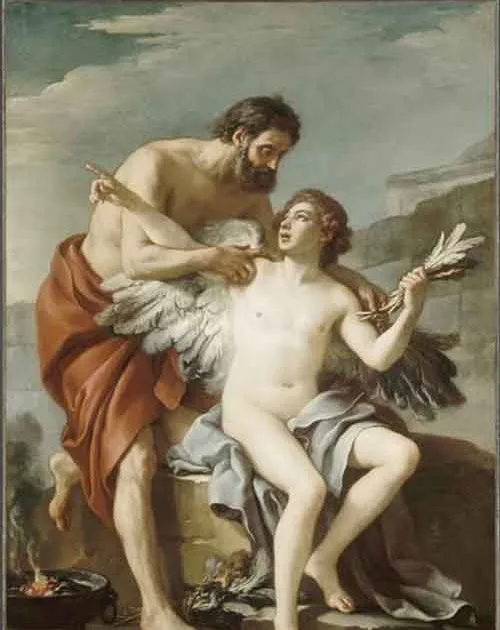
His reception piece, Daedalus and Icarus, very nearly failed to secure him admission to the Académie at all — he owed his place there, in the end, to the indignant protests of François Boucher, the single painter most identified with the very Rococo style Vien's own work was quietly starting to argue against.
In 1757, at the urging of Comte de Caylus, Joseph-Marie Vien married the young painter Marie-Thérèse Reboul, who was admitted to the Académie herself that same year.
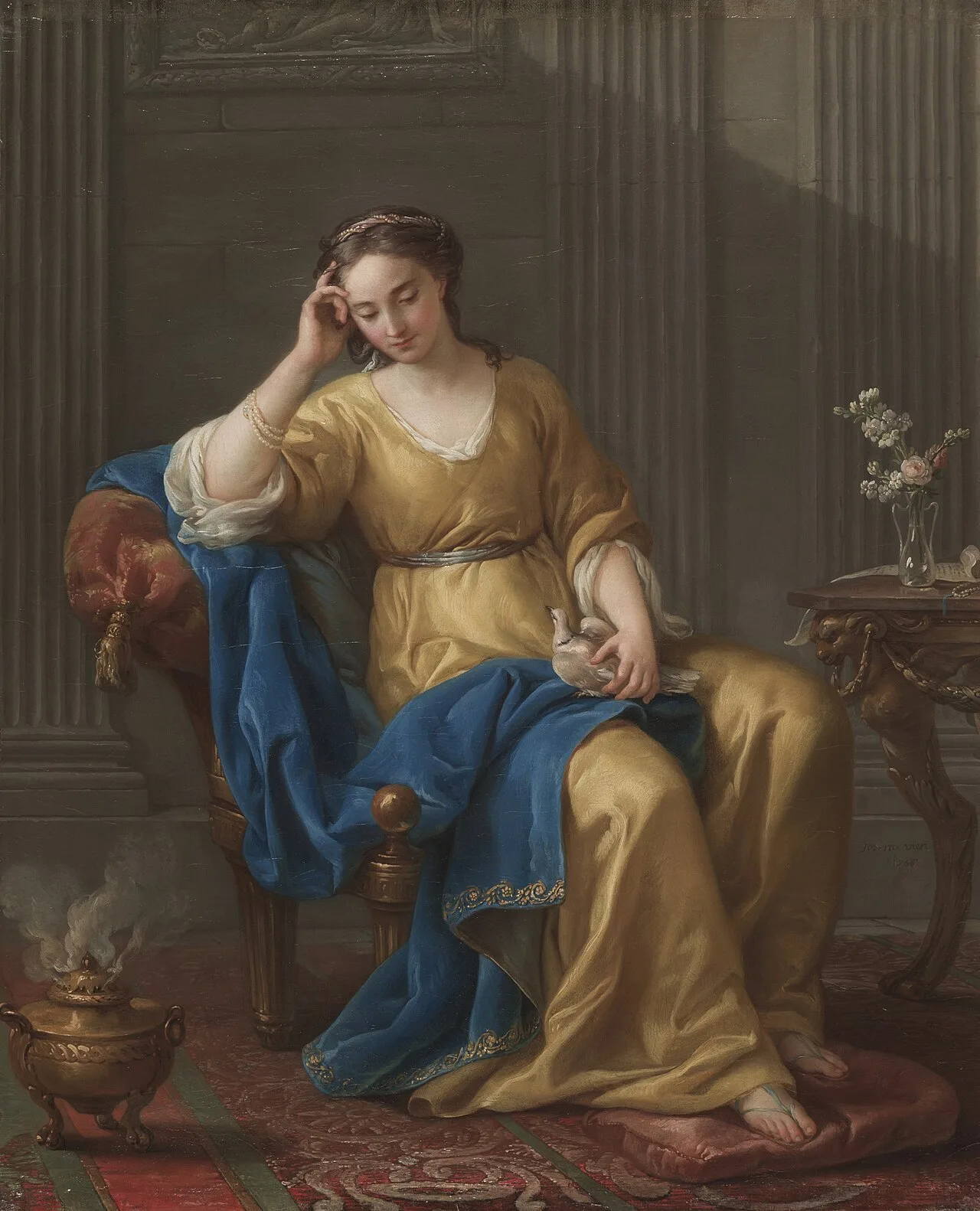
Their son, Joseph-Marie Vien the Younger, born in 1761, grew up to become a painter and engraver in his own right.
Vien's own painting settled into a style critics have since described as classicism of a fairly superficial kind — sentimental, decorative scenes dressed up in what one Oxford art historian called "pseudo-antique trappings."
His best-known work, The Cupid Seller (1763), now at the Château de Fontainebleau, shows exactly that instinct: a coyly staged ancient marketplace scene, indebted more to the theories of the German antiquarian Johann Winckelmann than to any deep engagement with actual classical form.
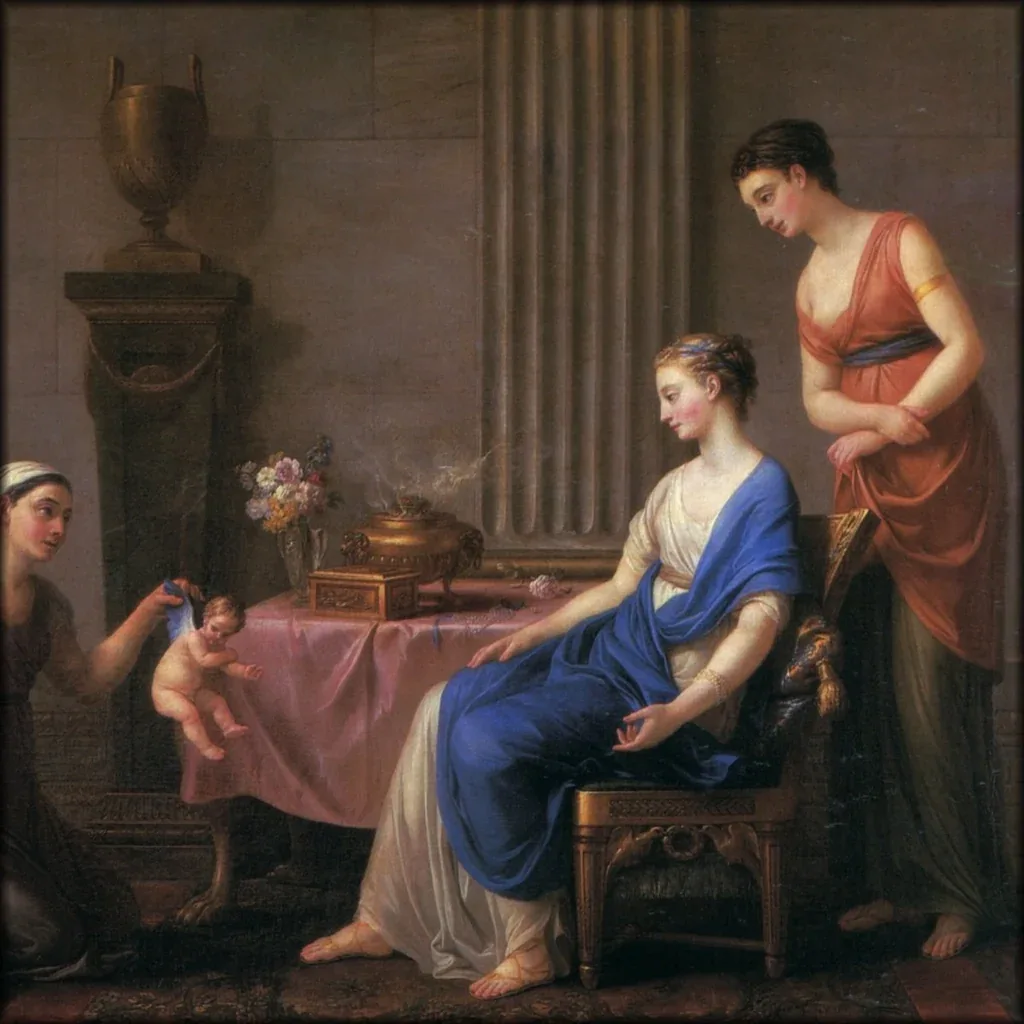
It was not visionary painting, but it was extremely well-timed painting. Vien had, as one historian put it, "gauged the taste of the time" precisely.
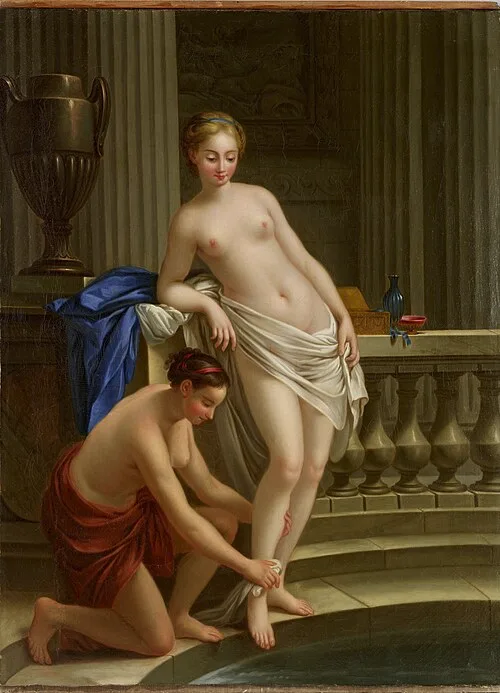
His real importance turned out to lie less in what he painted than in whom he taught. When Vien was named director of the French Academy in Rome in 1775, he brought along his most promising student, a young painter named Jacques-Louis David, and used his own connections to help secure David his first major commission.
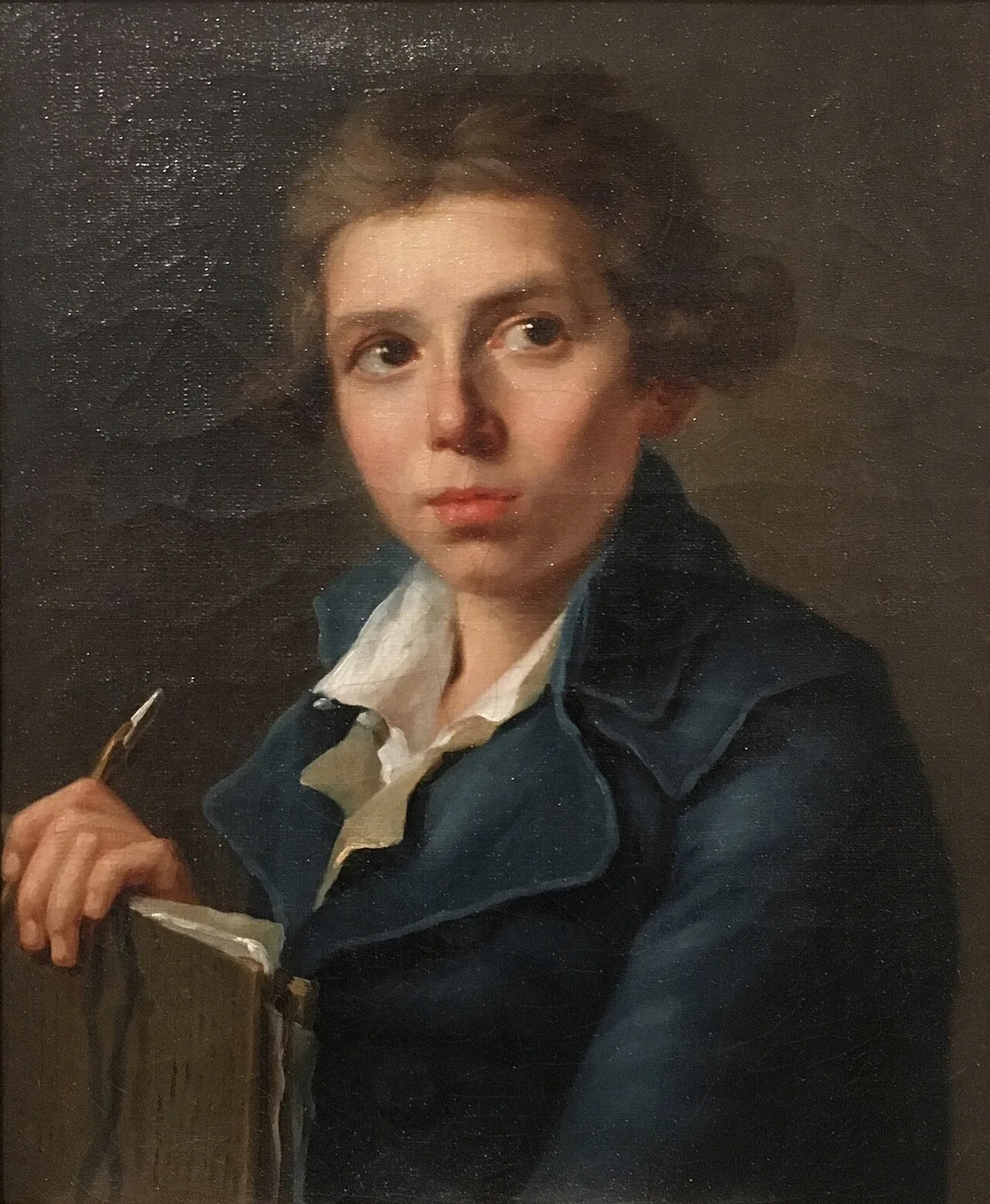
David would go on to become the defining painter of French Neoclassicism — and, eventually, far more famous than the teacher who trained him.
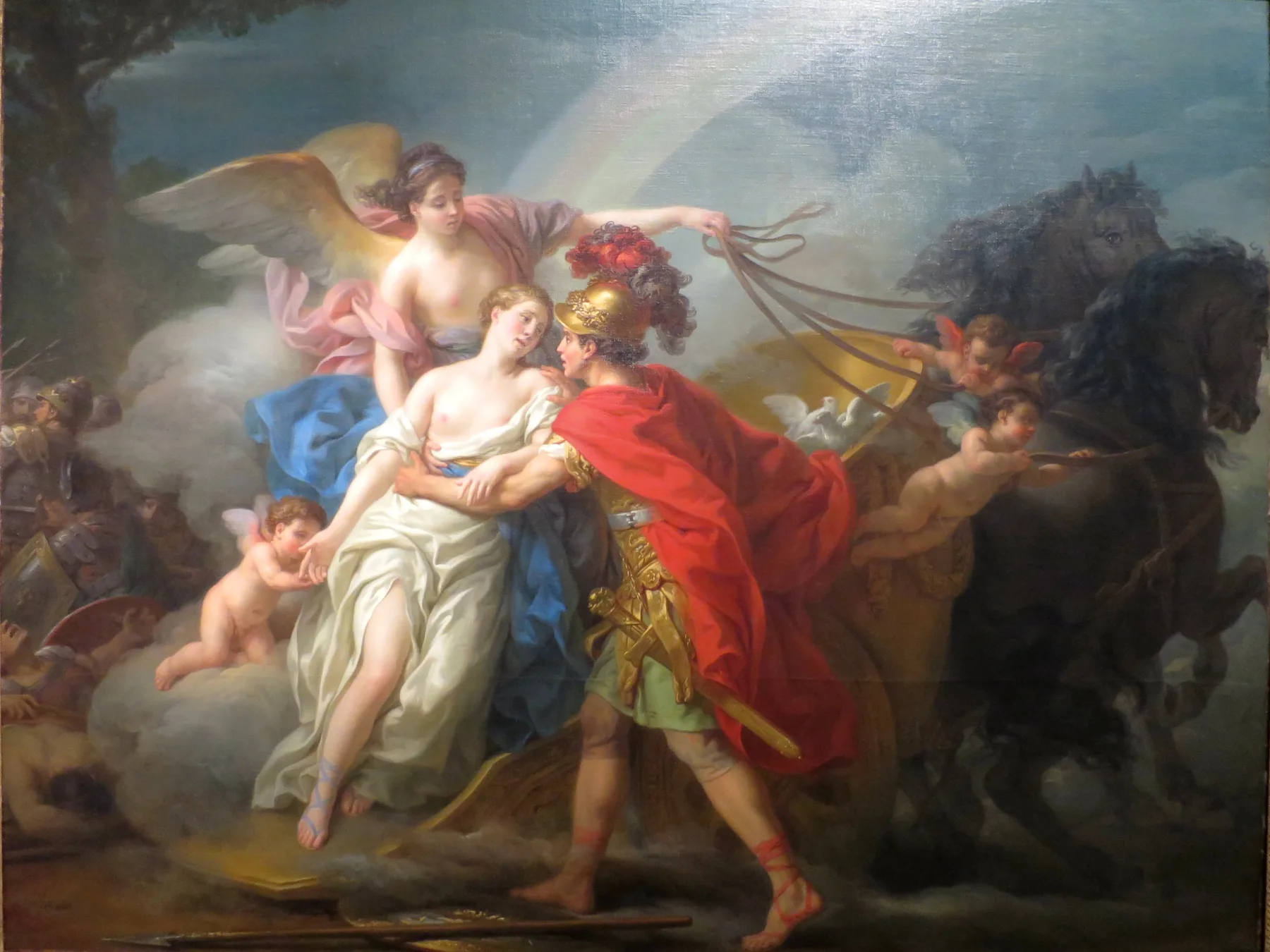
Other students passed through Vien's studio too, including François-André Vincent and Guillaume-Joseph Roques, who later taught in Toulouse, where one of his own pupils was a young Jean Auguste Dominique Ingres. The line from Vien's classroom, it turned out, ran considerably further than Vien himself ever painted.
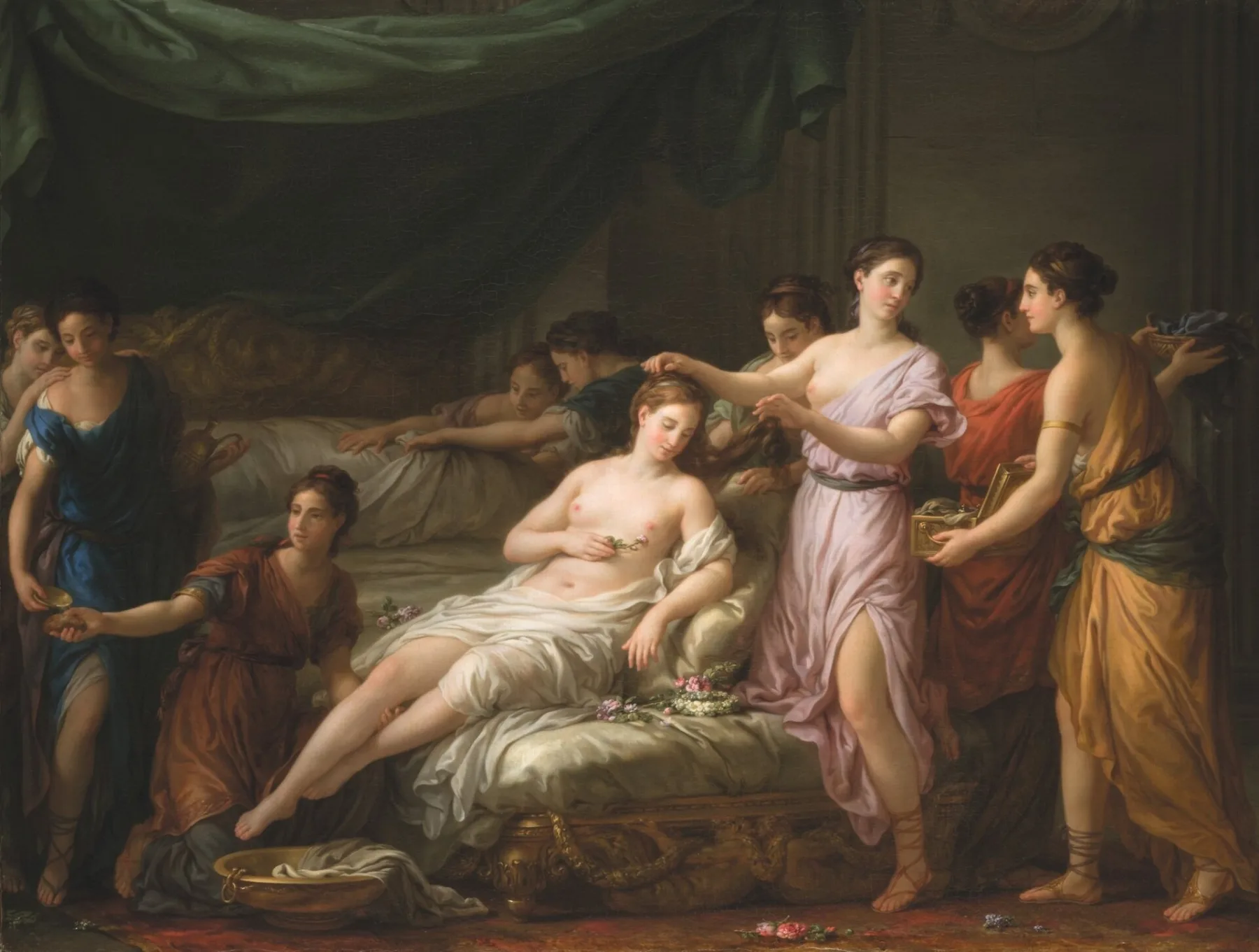
In 1789, Vien was named Premier peintre du Roi — First Painter to the King — the last person ever to hold the position before it was abolished two years later, along with the monarchy that had created it.
Remarkably, given the title he'd just been handed, Vien survived the Revolution largely unscathed. His wife died in December 1805; three years later, in 1808, Napoleon made Vien a Count of the Empire and a senator — a court painter of the old regime, comfortably absorbed into the new one.
Joseph-Marie Vien died in Paris on 27 March 1809, at ninety-two, having lived through the reigns of two kings, a revolution, and an empire.
He was buried in the Panthéon — an honor his wife, and nearly every other painter of her generation, never received.