People
Bettina Graziani/Simone Micheline Bodin (8 May 1925 – 2 March 2015)

Bettina Graziani wearing Christian Dior, 1952
original name: Simone Micheline Bodin
birth place: Laval, France
birth date: 8 May 1925
zodiac sign: Taurus
death place: Paris France
death date: 2 March 2015
Occupation: Model, socialite
Height: 170cm
Languages: French
birth place: Laval, France
birth date: 8 May 1925
zodiac sign: Taurus
death place: Paris France
death date: 2 March 2015
Occupation: Model, socialite
Height: 170cm
Languages: French
Profile of Betina Graziani

Bettnia Graziani in dress and jacket by Christian Dior from his Autumn/Winter Collection of 1952, Photo Frances McLaughlin-Gill
Simone Micheline Bodin (8 May 1925 – 2 March 2015), known professionally as Bettina or Bettina Graziani, was a French fashion model of the 1940s and 1950s and an early muse to the fashion designer Hubert de Givenchy. She was a designer of knitwear and, later, a poet and composer.
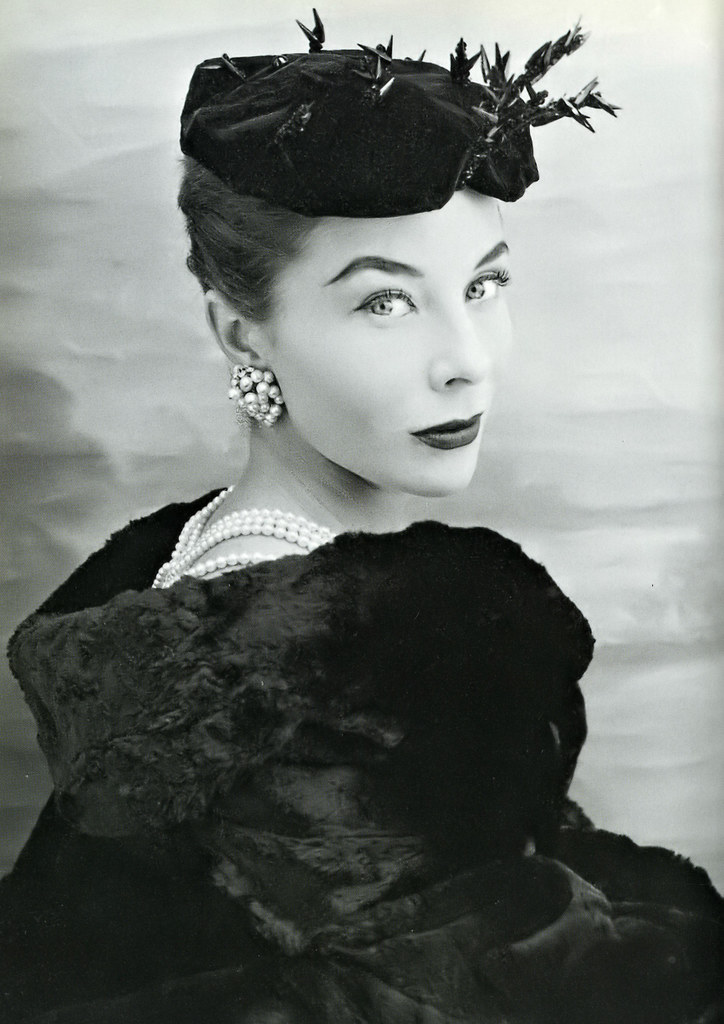
Bettina Graziani in Jaques Fath
Life of Bettina Graziani

Bettina Graziani in 1951 photo by Arik Nepo
Born in Britanny and grew up in Normandy in North-West France, Simone Micheline Bodin
was from a humble family. Her father, a railway worker abandoned the family, and she was raised by her mother together with her elder sister. Simone Bodin learned drawing as a teenager and wanted to become fashion designer one day.
After the end of World War II, Simone Bodin went to Paris with her fashion sketches. There she met the young Parisian designer Jacques Costet hoping for a job, but Jacques took a look at her, put her into a green velvet dress and an haute couture model was born.
If one Jacques had decided her fate, another Jacques would make her immortal.
While working for Jacques Costet, Simone Bodin met Gilbert "Benno" Graziani (1922-2018), a French photographer and reporter, and one of the cofounders of Paris Match, it was love at first sight, she ran away from the designer studio and her career and went to live with Benno Graziani in the south of France. They got married in Paris in 1946. Simone Bodine became Simone Graziani, she was 21.
The marriage went sour the same year, however, and the fashion house of Jacques Costet was closed.
Simone Bodin then went to work for Lucien Lelong, but quickly got bored because of the strict ambience there, and applied job in Maison Jacques Fath who engaged her immediately and her salary multiplied 5 times. But what Jacques Fath gave her, was much more than a significant increase of income, he gave her a new name, a new identity.
Shortly after she joined Jacques Fath, he told her, "We already have a Simone; you look to me like a Bettina.", thus another Simone would disappear, and the Bettina would walk onto the stage and into history.
was from a humble family. Her father, a railway worker abandoned the family, and she was raised by her mother together with her elder sister. Simone Bodin learned drawing as a teenager and wanted to become fashion designer one day.
After the end of World War II, Simone Bodin went to Paris with her fashion sketches. There she met the young Parisian designer Jacques Costet hoping for a job, but Jacques took a look at her, put her into a green velvet dress and an haute couture model was born.
If one Jacques had decided her fate, another Jacques would make her immortal.
While working for Jacques Costet, Simone Bodin met Gilbert "Benno" Graziani (1922-2018), a French photographer and reporter, and one of the cofounders of Paris Match, it was love at first sight, she ran away from the designer studio and her career and went to live with Benno Graziani in the south of France. They got married in Paris in 1946. Simone Bodine became Simone Graziani, she was 21.
The marriage went sour the same year, however, and the fashion house of Jacques Costet was closed.
Simone Bodin then went to work for Lucien Lelong, but quickly got bored because of the strict ambience there, and applied job in Maison Jacques Fath who engaged her immediately and her salary multiplied 5 times. But what Jacques Fath gave her, was much more than a significant increase of income, he gave her a new name, a new identity.
Shortly after she joined Jacques Fath, he told her, "We already have a Simone; you look to me like a Bettina.", thus another Simone would disappear, and the Bettina would walk onto the stage and into history.
"Jacques Fath was a star. He was full of life, and he loved life. He loved everything that was 'glamour.'"
--Bettnia Graziani on Jacques Fath

Bettina Graziani in Jacques Fath red shoe for Vogue 1950, photo by Irving Penn
"Fashion always survives. I think it's necessary. Look what happened to the women during the war, here in France. They created fashion with nothing." |

Jacques Fath with Bettina Graziani in his studio photo by Louis Dahl Wolfe
In the next four years, the new created Bettina became the muse of Fath, and she also worked with fashion magazines, posing for fashion houses of Madame Grès, Pierre Balmain, or Christian Dior.
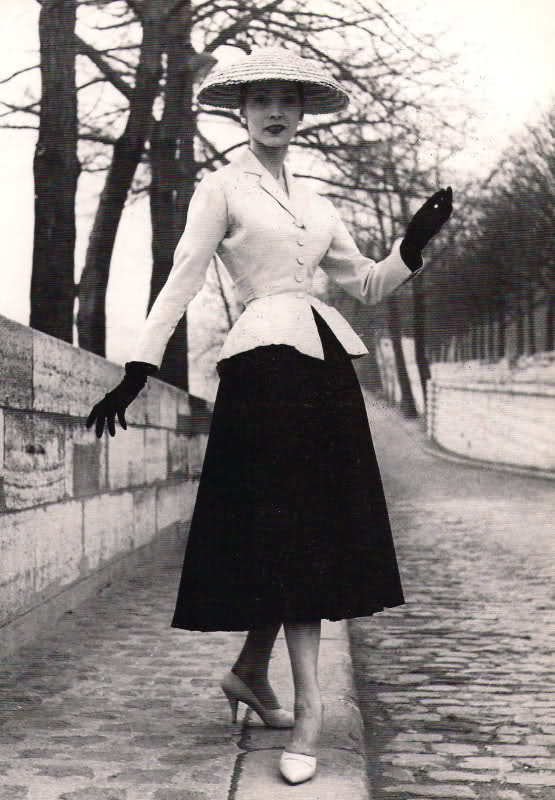
Bettina Graziani in Christian Dior´s new look barsuit, 1947
Bettina´s photo wearing the New Look bar suit of Christian Dior is perhaps one of the most iconic fashion photoes in the history, but she represented the elegant and modern Parisian woman, younger than those created by Christian Dior or Pierre Balmain. In late 1940s she became one of the century's first supermodels, rivalled only by Barbara Goalen.
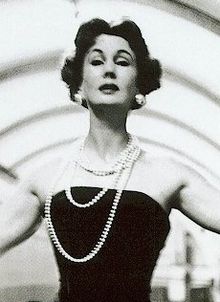
Barbara Goalen photo by John French
Around 1950, Bettina decided to leave Jacques Fath and dedicated herself to being magazine model. While travelling to the United States for Vogue photo shooting, Bettina joined Eileen Ford model agency. Not long after, she divorced Benno Graziani.
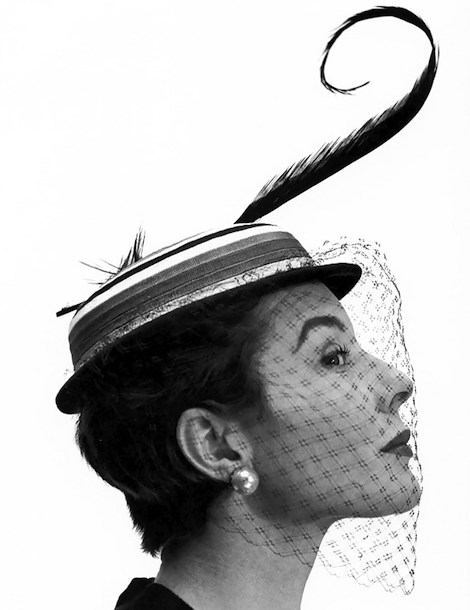 Bettina Graziani in 1951 |  Bettina Graziani in 1951 photo by Arik Nepo |
In 1952, When Hubert de Givenchy (who had worked as the assistant of Jacques Fath) launched his own fashion house in Paris, Bettina joined him, as his muse, model and directrice, organizing Givenchy´s first collection, asking her friends like Suzy Parker, Ivy Nicholson and Sophie Litvak, some of the most famous models of the time to walk the runway.
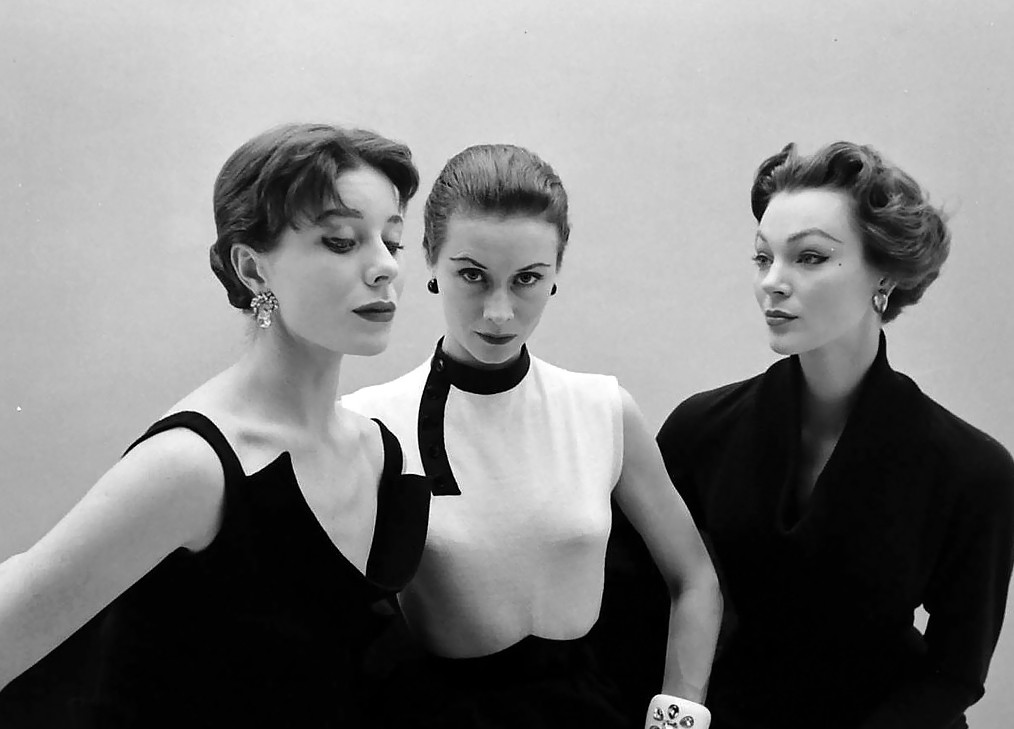
Bettina Graziani, Sophie Malgat Litvak & Ivy Nicholson (all in Givenchy) photoed by Nat Farbman - February, 1952 for Givenchy´s first collection
And Givenchy named one of designs of his first collection after her, naming a Byronesque white blouse "Bettina blouse", which would later inspire the design of the bottle for Givenchy´s best-selling perfume "Amarige".

Bettina Graziani in Hubert de Givenchy Bettina Blouse
« Bien sûr, c'était Bettina qui symbolisait peut-être le plus le style de la maison à ses débuts. Elle a été une précieuse collaboratrice, surtout au moment du lancement de la maison, et un fabuleux mannequin, qu'elle était déjà avant de venir chez moi. Elle était différente des autres par son style, et incarnait une image très forte de ces années là. » |

Bettina Graziani in Givenchy´s winter dress 1955
Bettina stayed with Hubert de Givenchy for two years, devoting her time and energy to helping the aristocratic couturier, at times walking on runway as model and times working for the public relations of the fashion house.
But her life was going to change dramatically yet again. After the short marriage to Benno Graziani ended, Bettina became the companion of Peter Viertel, the American screenwriter who has written movies like The African Queen and The Sun Also Rises.
Then she met Prince Aly Khan, and gave up her modeling career overnight. She lived with him and later became his fiancée.
But her life was going to change dramatically yet again. After the short marriage to Benno Graziani ended, Bettina became the companion of Peter Viertel, the American screenwriter who has written movies like The African Queen and The Sun Also Rises.
Then she met Prince Aly Khan, and gave up her modeling career overnight. She lived with him and later became his fiancée.

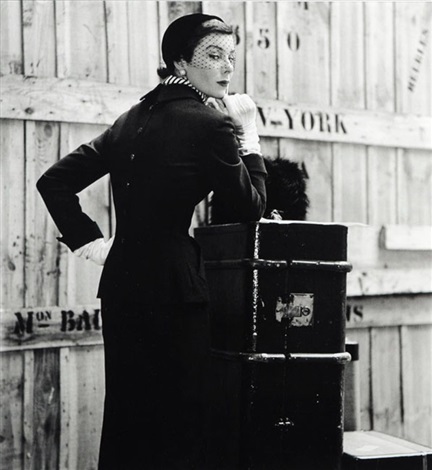
Bettina Graziani for French Vogue photo by frances mclaughlin-gill
During her career, Bettina has appeared in almost all fashion magazines, on covers of some of them, including Elle français, L'Officiel de la mode, de l'Album du Figaro, Vogue français and American Vogue, with the only exception of Harper's Bazaar, the biggest rival of Vogue.
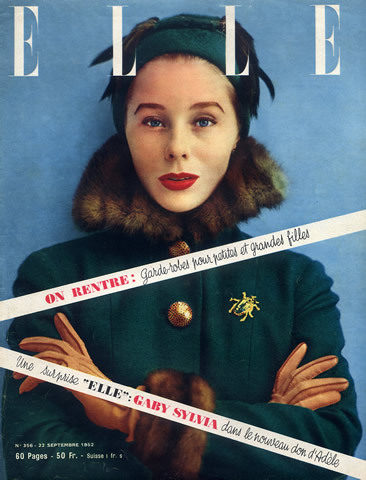
Bettina Graziani on cover of Elle Francais wearing schiaparelli, 1952
 Bettina Graziani in 1958 photo by Frank Horvant | 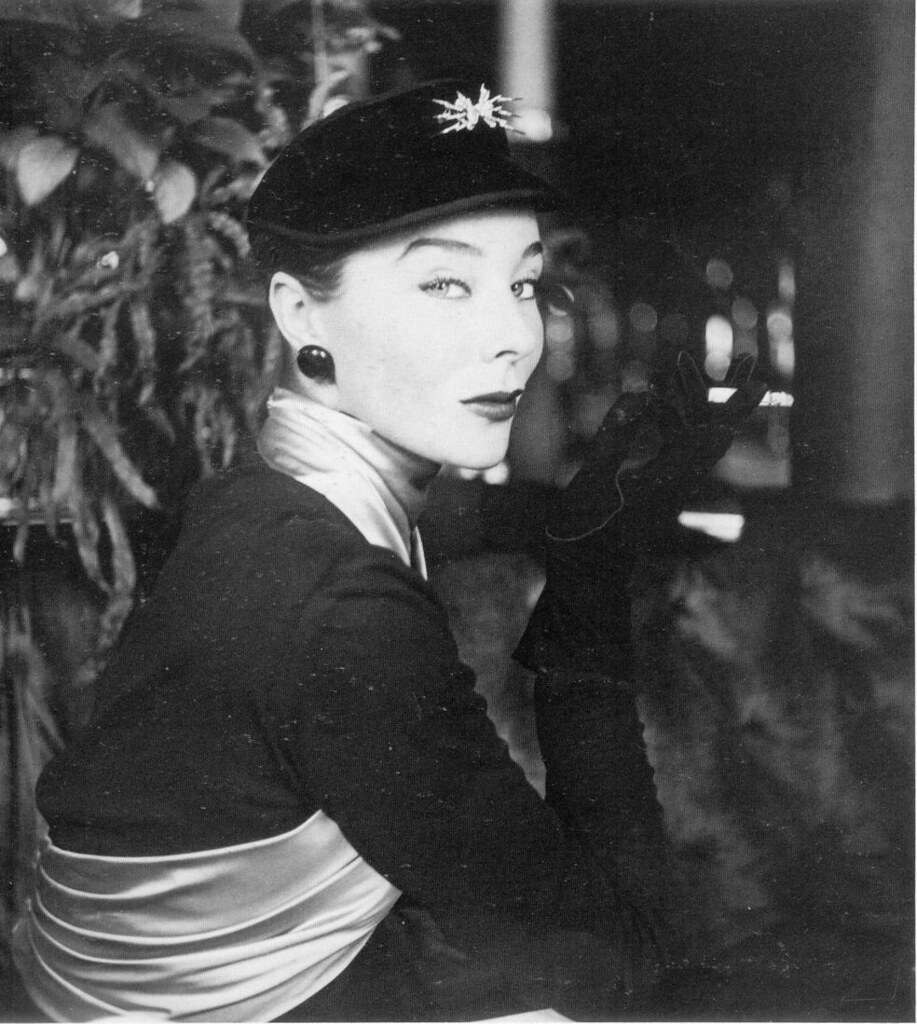 Bettina Graziani in 1958 photo by Frank Horvant |
As a model, She worked with all the greatest fashion photographers at the time such as Henry Clarke, Horst P. Horst, Erwin Blumenfeld, Norman Parkinson, Irving Penn, Georges Dambier, Mark Shaw, Willy Maywald, Jean-Philippe Charbonnier and Gordon Parks.
In one of the photo sessions, she was photoed with Pablo Picasso wearing a blouse decorated by the artist.
In one of the photo sessions, she was photoed with Pablo Picasso wearing a blouse decorated by the artist.

Bettina Graziani photo by Henri Cartier-Bresson, 1959.
In 1960, Bettina was traveling with Aly Khan when they suffered a car accident that took the life of the prince, Bettina survived but lost their child she was carrying.
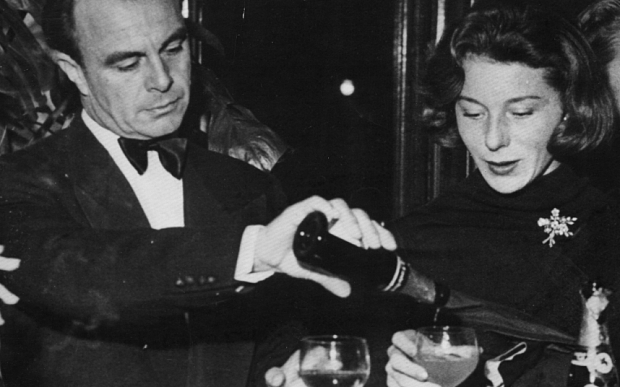
After Aly Khan´s death, Bettina lived quieter life, she took some acting jobs, worked in public relations for some fashion houses like Valentino, and wrote poetry in her spare times, and wrote an autobiography, Bettina par Bettina in 1964.
Then in 1969, Coco Channel asked her to model for her new collection, and later she became attachée de presse of French desinger Emmanuel Ungaro in U.S.
In 1972, French writer Françoise Sagan wrote an article, L'éminence rousse for Vogue Paris, paying Bettina, paying her the ultimate tribute.
In 2010, Bettina Graziani was awarded Commandeur des Arts et des Lettres by French government.
In her later years, Bettina was closest to Franco-Tunisian designer Azzedine Alaïa who dressed her regularly, and to whose foundation she donnated her photograph collection.
In 2015, Bettina died in Paris at 89.
Then in 1969, Coco Channel asked her to model for her new collection, and later she became attachée de presse of French desinger Emmanuel Ungaro in U.S.
In 1972, French writer Françoise Sagan wrote an article, L'éminence rousse for Vogue Paris, paying Bettina, paying her the ultimate tribute.
In 2010, Bettina Graziani was awarded Commandeur des Arts et des Lettres by French government.
In her later years, Bettina was closest to Franco-Tunisian designer Azzedine Alaïa who dressed her regularly, and to whose foundation she donnated her photograph collection.
In 2015, Bettina died in Paris at 89.

Bettina Graziani photo by Gordon Parks
1 Comment