People
Carole Lombard (born Jane Alice Peters; 6 October 1908 – 16 January 1942)
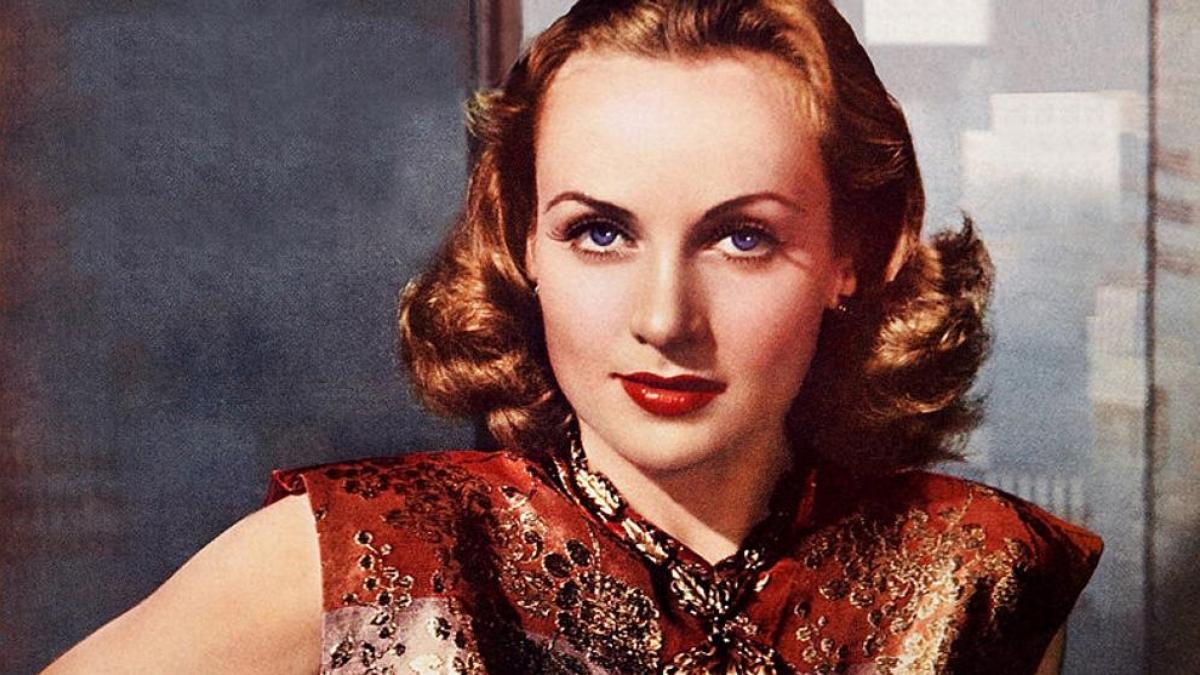
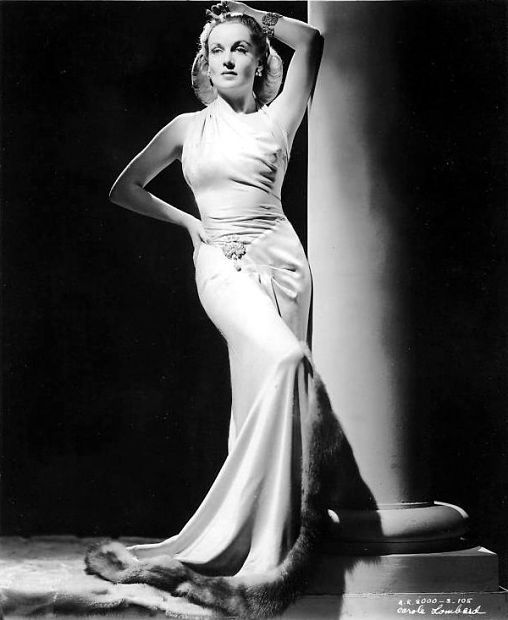
Carole Lombard (born Jane Alice Peters; 6 October 1908 – 16 January 1942) was an American actress whose beauty, athletic energy, and quick, irreverent humor made her one of the defining stars of screwball comedy. In the late 1930s, she was the highest-paid star in Hollywood. Behind the polished gowns and glamorous studio portraits was a former tomboy and athlete who could turn wild behavior into precise comic timing. Her best-known films include Twentieth Century(film, 1934), My Man Godfrey (film, 1936), Nothing Sacred (film, 1937), and To Be or Not to Be (film, 1942). She died in a plane crash at thirty-three, on her way home from a war bond tour.
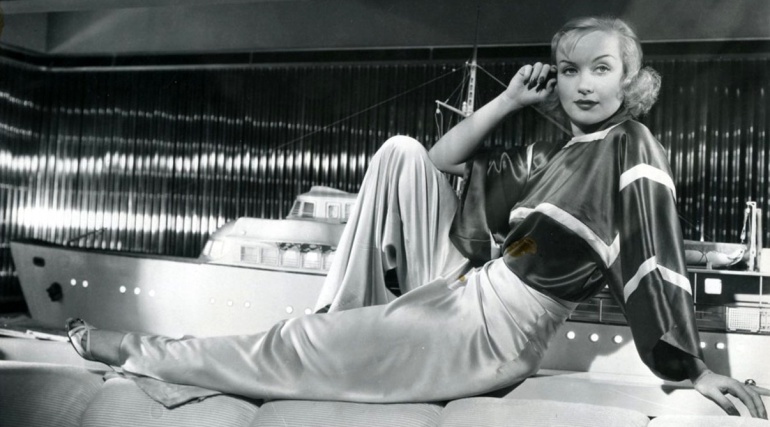
Biography
Jane Alice Peters was born on 6 October 1908 in Fort Wayne, Indiana. She was the youngest child and only daughter of Frederic Christian Peters and Elizabeth Jayne Knight Peters, known as Bessie. Both were from wealthy families
She had two older brothers, Frederic Charles Peters and John Stuart Peters, and she stayed close to both of them all her life.
The marriage of Jane's parents was strained. In October 1914, Bessie Peters took the children to Los Angeles. The couple never divorced, but the separation was permanent.
Southern California suited the energetic girl. At Virgil Junior High School, Jane played tennis, took part in volleyball and swimming, and won trophies in athletics.
At twelve, she was playing baseball in the street when the Canadian-born American filmmaker Allan Dwan noticed her. He needed a tomboy for his film, and he later recalled that she was playing better baseball than the other children.
Dwan cast her as the sister of the American actor Monte Blue in A Perfect Crime (film, 1921). She was on set for two days. Dwan later said, "She ate it up."

The film was not widely seen. But the experience made Jane and her mother look for more film work, and at first they found none.
At fifteen, while she was queen of Fairfax High School's May Day carnival, an employee of the English filmmaker Charlie Chaplin offered her a screen test for The Gold Rush (film, 1925). She did not win the role.
In October 1924, sixteen-year-old Jane signed a contract with the Fox Film Corporation and left school to pursue her new career. Fox did not like her surname, so she became Carol Lombard, after a family friend.
Most of her Fox roles were bit parts in low-budget Westerns and adventure films. Away from the studio, she loved the flapper life and won several Charleston contests at the Cocoanut Grove nightclub in Los Angeles.
In March 1925, she won a leading role opposite the American actor Edmund Lowe in Marriage in Transit (film, 1925). But the studio doubted she was leading-lady material, and her contract was not renewed.
In 1927, she joined the company of the Canadian-born American comedy producer Mack Sennett. His short films demanded falls, chases, water, speed, and a willingness to give up dignity for a joke.
Lombard was reluctant about slapstick at first. But the work became valuable training, and she later called her Sennett years the turning point of her acting career.
On 9 September 1927, Lombard was seriously injured in a car accident on Santa Monica Boulevard. She was on a date when the driver hit another car. The windshield shattered, and glass cut her face from her nose across her left cheek to her eye.
She had reconstructive surgery and a long recovery. She feared the accident would end her career, but Sennett promised to help her. For the rest of her career, she hid the scar with makeup and careful lighting.
Later stories claimed the scar was the reason Fox had dropped her. In fact, the accident happened nearly two years after her Fox contract ended. Lombard later sued the driver Harry Cooper asking for $35,000 in damages, settled with him out of court, and received $3000.
She kept making comedies for Sennett until early 1929. Publicity called her one of the Sennett Bathing Beauties, but the lasting value of those years was her training in physical comedy.

Pathé, which distributed Sennett's films, also began casting her in features. Sound brought a new chance. Lombard appeared in High Voltage (film, 1929), directed by the American filmmaker Howard Higgin, and in Big News (film, 1929), opposite the American actor Robert Armstrong.
In 1930, she returned to Fox for a single role in the Western The Arizona Kid (film, 1930). Its success led Paramount Pictures to sign her for $350 a week.
In her second Paramount film, Fast and Loose (film, 1930), the studio mistakenly credited her as Carole Lombard. She liked the spelling and kept it.
Paramount first cast her mainly in dramas. Her look was shaped by the studio's head costume designer, the American designer Travis Banton, who dressed her in slinky, glamorous gowns made from fine fabrics.
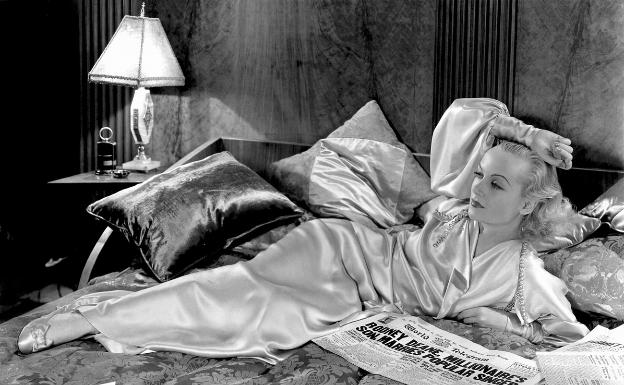
Lombard trusted Banton so much that she asked for him when she worked at other studios. He designed her costumes for films including My Man Godfrey, Nothing Sacred, and Made for Each Other (film, 1939).
In Man of the World (film, 1931), she appeared opposite the American actor William Powell, Paramount's top male star. She was twenty-two, carefree, and famously foul-mouthed. He was thirty-eight, intellectual, and sophisticated.


Lombard had been a fan of Powell before they met. They married on 26 June 1931 at her Beverly Hills home.
The two were very different people, and their marriage ended in divorce in August 1933.
The separation was unusually friendly. “I must like the man, or I wouldn't have married him in the first place,” Lombard told reporters, and the former couple remained close friends for the rest of her life.
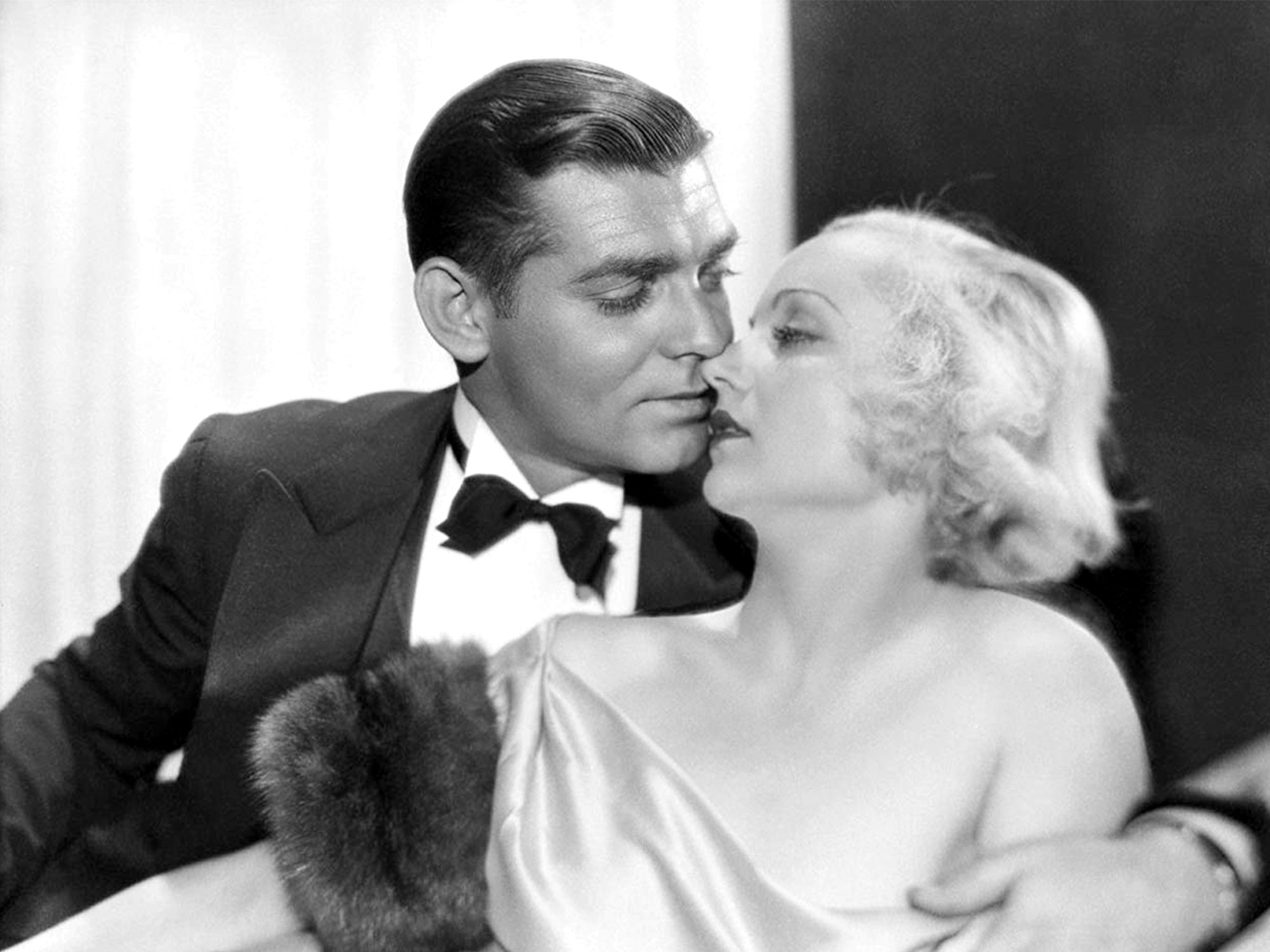
During the marriage, Lombard made No Man of Her Own (film, 1932) opposite the American actor Clark Gable. She played the wife of a con artist. The film was a critical and commercial success.
It was the only film Gable and Lombard made together. At the time, there was no romance between them.

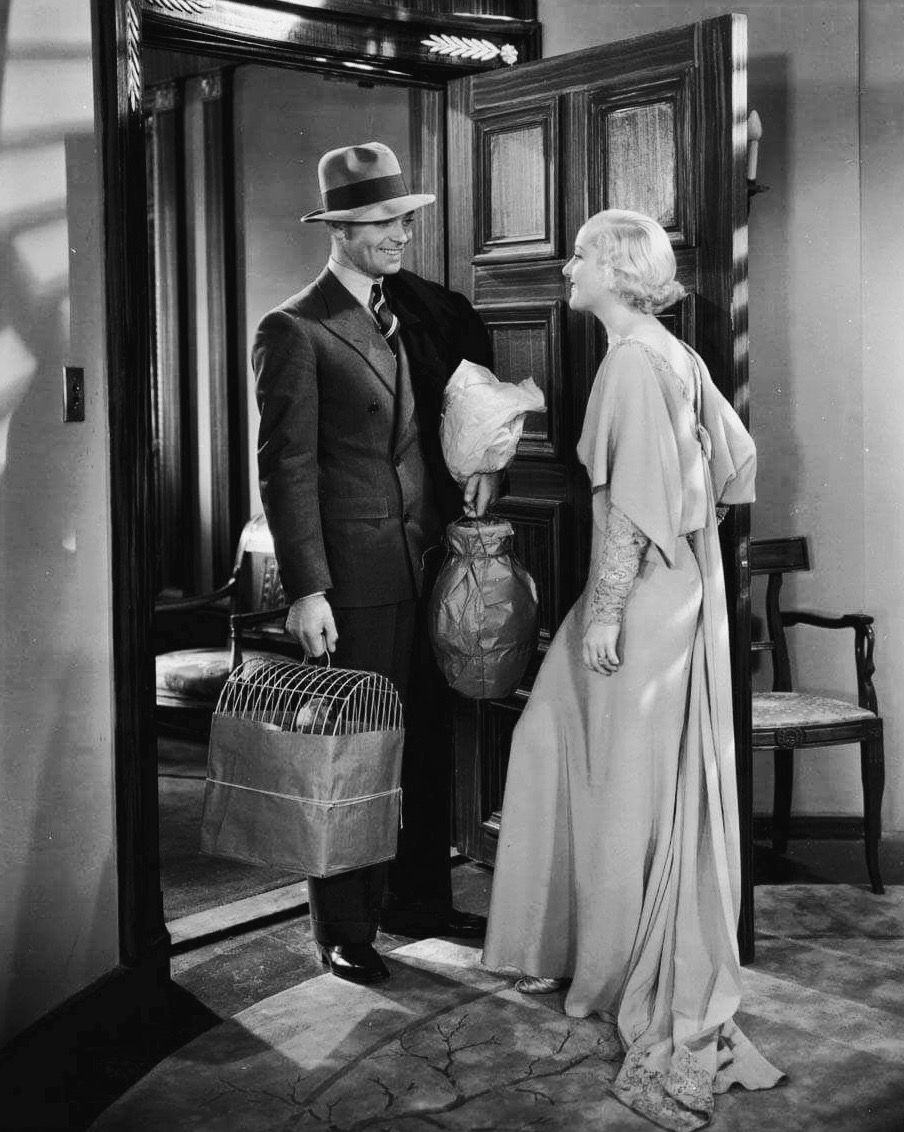
She worked steadily, sometimes making several films a year. Virtue (film, 1932), opposite the American actor Pat O'Brien, was well received and gave her a harder-edged role as a streetwise woman trying to build a respectable life.
In The Eagle and the Hawk (film, 1933), Lombard appeared briefly opposite the American actor Fredric March and the British-American actor Cary Grant. She also danced with the American actor George Raft in Bolero (film, 1934) to French composer Maurice Ravel's famous tune "Boléro”.
Her career changed with Twentieth Century (film, 1934), directed by the American filmmaker Howard Hawks. Lombard played Lily Garland, an actress pursued by her former mentor, a flamboyant Broadway impresario played by the American actor John Barrymore.
Hawks had seen Lombard at a party and found her hilarious and uninhibited, exactly what the part needed. In rehearsals, though, he and Barrymore thought she was acting too hard and sounded stiff.
Hawks told her to relax and be herself. She did, and critics noticed a fiery talent they had not seen from her before.
Twentieth Century helped define screwball comedy, a form built on speed, conflict, social disorder, and romantic combat. It also revealed Lombard's true screen personality: an elegant woman with the energy of a street fight.
She continued in this vein in Hands Across the Table (film, 1935), directed by the American filmmaker Mitchell Leisen, opposite the American actor Fred MacMurray. Lombard played a manicurist looking for a rich husband.
Critics praised the film, and it is remembered as one of her best. The pairing worked so well that Lombard and MacMurray made three more films together: The Princess Comes Across (film, 1936), Swing High, Swing Low (film, 1937), and True Confession (film, 1937).
Lombard and Gable had not liked each other when they first met on No Man of Her Own. In January 1936, they met again at a party Lombard hosted.
That night, Lombard insulted Gable, and the next morning she regretted it. She sent him doves as a peace offering, and a romance began early in 1936.
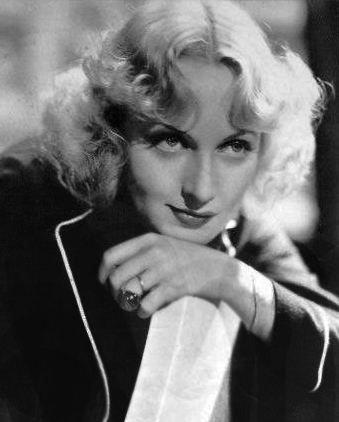
At the time Gable was separated from his second wife, Maria Franklin Prentiss Lucas Langham Gable, known as Ria. But Ria did not want to grant him a divorce.
They played practical jokes together, called each other “Ma” and “Pa,” and refused to treat stardom with reverence. The press followed the romance closely and often asked whether they would marry.

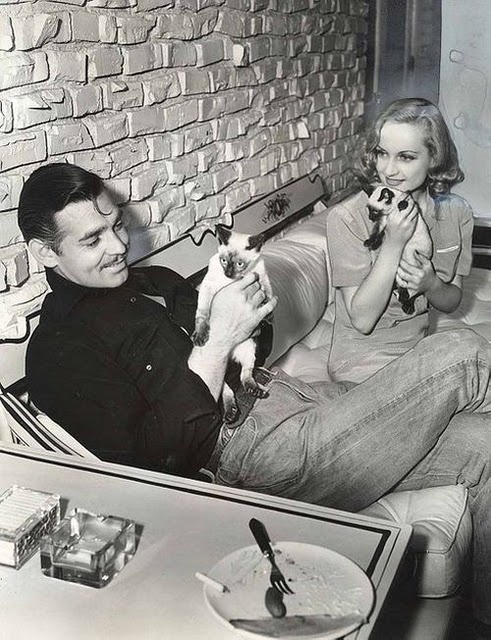

That year, Universal Studios recruited Lombard for My Man Godfrey (film, 1936). William Powell, who played Godfrey, insisted that she play the female lead, and the former couple stayed friendly on set.
The film was directed by the American filmmaker Gregory La Cava, who knew Lombard personally. He advised her to draw on her eccentric nature for the role of Irene Bullock, a zany heiress who hires a "forgotten man" from a charity scavenger hunt as the family butler.
Lombard worked hard on the performance, especially on Irene's facial expressions. Banton dressed her in slinky, glamorous gowns, and Lombard let the clothes join the comedy instead of becoming its victim.
My Man Godfrey was a box-office hit. It received six Academy Award nominations, including Lombard's only nomination for Best Actress. Biographers often call it her finest performance.
Lombard was known as one of the smartest-dressed women on screen, yet she did not think clothes mattered as much off screen. In a 1936 Photoplay article, Banton described how she would rush into fittings, ripping off her blouse in her impatience to try on a new gown.
By 1937, Lombard was the highest-paid star in Hollywood. A deal negotiated with Paramount by her agent, the American talent agent Myron Selznick, brought her $450,000, more than five times the salary of Franklin D. Roosevelt, the U.S. President at the time.
Swing High, Swing Low, her third film with MacMurray, was a critical and commercial success. It was mainly a drama, with only moments of comedy.
For her next film, she returned to screwball. The American producer David O. Selznick (brother of Myron Selznick) was impressed by My Man Godfrey and hired the American screenwriter Ben Hecht to write an original screenplay for her.
The result was Nothing Sacred (film, 1937), directed by the American filmmaker William A. Wellman and co-starring Fredric March. Lombard played Hazel Flagg, a small-town girl who pretends to be dying, and finds her story exploited by a New York reporter.
The film satirized journalism and the public's hunger for other people's suffering. It was Lombard's only Technicolor feature, and she later praised it as one of her favorites.
Banton designed Lombard's costumes for the film. Her blonde hair, pale skin, and clothes gained unusual richness in color.


In True Confession, she played a compulsive liar who wrongly confesses to murder. She loved the script, which reunited her with Barrymore, and it was her last film with MacMurray.
It was also the last film she made under her Paramount contract. Lombard stayed independent for the rest of her career, and she became one of the first stars of the studio era to freelance.
Her fame did not make her stiff on set. She was famous for her blunt language and her warmth toward the crews who worked with her.
Fools for Scandal (film, 1938), directed by the American filmmaker Mervyn LeRoy and made at Warner Bros., co-starred the Belgian-born French actor Fernand Gravey. It was a critical and commercial failure.
By then, Lombard was devoted to her relationship with Gable. She was also eager to win an Academy Award, and she began moving toward more serious roles.
In Made for Each Other, directed by the American filmmaker John Cromwell, she played Jane Mason opposite the American actor James Stewart. The film followed a young couple through money problems, family strain, and fear for a sick child.
Reviews were highly positive, and critics praised her dramatic effort. But the film was a financial disappointment.
Gable settled's divorce from Ria became final in March 1939 after he settled with her for half a million dollars. On 29 March, Gable and Lombard eloped to Kingman, Arizona.
The couple bought a twenty-acre ranch in Encino, California, where they kept barnyard animals and went on hunting trips. Lombard hoped to start a family, but after two miscarriages she was unable to have children.
She returned to romantic drama in In Name Only (film, 1939), opposite Cary Grant and the American actress Kay Francis. She played a woman in love with a married man whose wife refuses to divorce him.
At the Academy Awards in February 1940, Gable lost the Best Actor award for playing Rhett Butler in Gone with the Wind (film, 1939). Lombard comforted him by saying, "Don't worry, Pappy. We'll bring one home next year."
She chose her next project, Vigil in the Night (film, 1940), directed by the American filmmaker George Stevens, hoping it would win her an Oscar. As a nurse who takes the blame for her sister's fatal mistake, Lombard gave a sober performance almost entirely free of her usual abandon.
The performance was praised, but the film's gloomy mood turned audiences away. Lombard did not get a nomination.
They Knew What They Wanted (film, 1940), opposite the British-American actor Charles Laughton, was mildly successful. Lombard accepted what she had suspected: "my name doesn't sell tickets to serious pictures."
She returned to comedy in Mr. & Mrs. Smith (film, 1941), directed by the English filmmaker Alfred Hitchcock. Lombard played opposite the American actor Robert Montgomery, in a story about a couple who learn that their marriage is not legally valid.
Lombard helped bring Hitchcock to the project. She knew him through David O. Selznick. The film was one of Hitchcock's most unusual, and it was a commercial success.
For nearly a year afterward, Lombard made no new film and focused on her home and marriage.
Then she heard about the German-born American filmmaker Ernst Lubitsch's next project. To Be or Not to Be (film, 1942) was a dark comedy that mocked the Nazi occupation of Poland.
Lombard had long wanted to work with Lubitsch. She accepted the role of Maria Tura, a celebrated Polish actress married to the vain actor Joseph Tura, played by the American comedian Jack Benny.
It was a smaller part than she was used to, but she was given top billing over Benny. Filming took place in the fall of 1941, and it was reportedly one of the happiest experiences of her career.
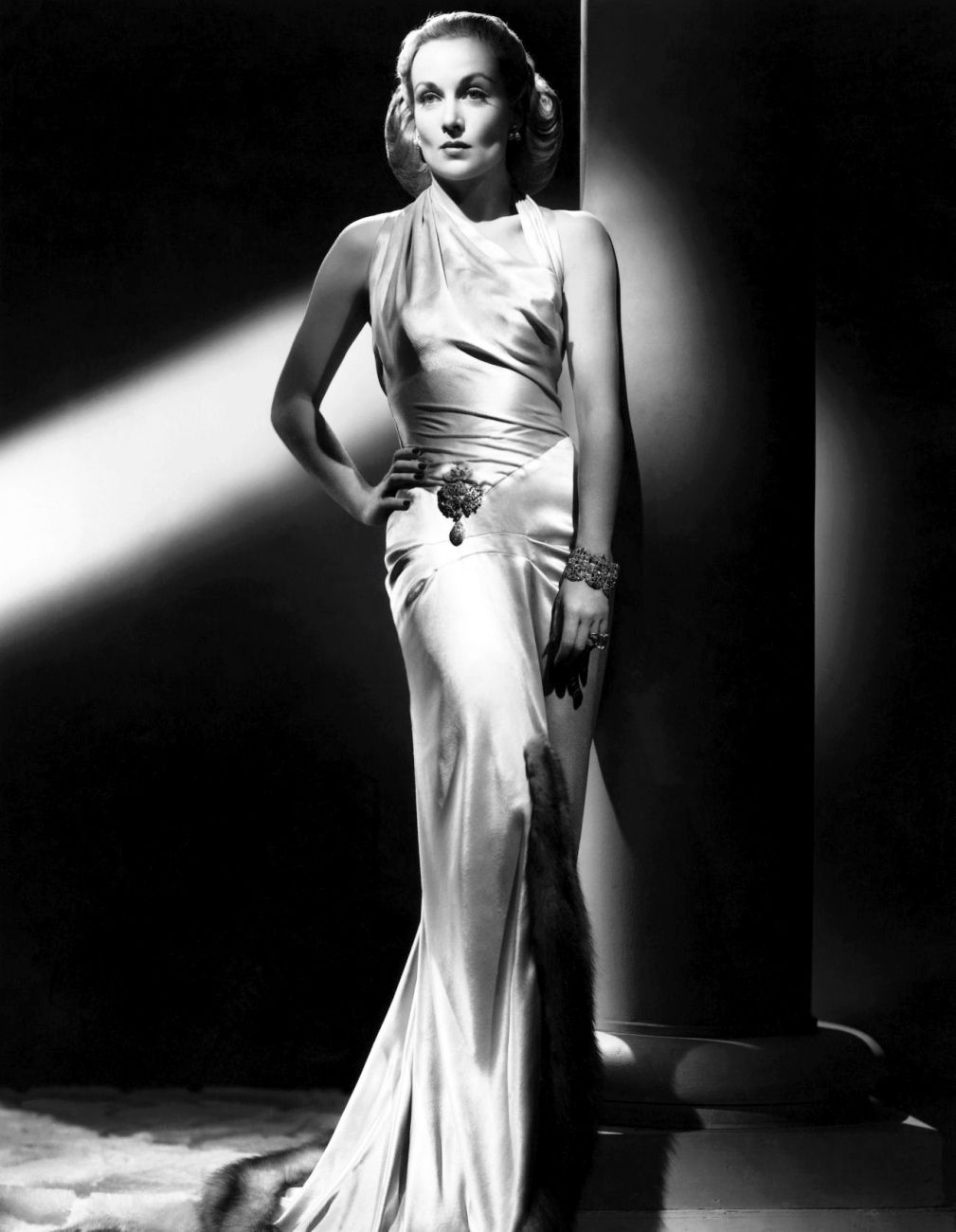

In January 1942, after the United States entered the Second World War, Lombard traveled to her home state of Indiana for a war bond rally. She went with her mother and Otto Winkler, the Metro-Goldwyn-Mayer publicity executive who was Gable's press agent.
On 15 January, Lombard raised more than two million dollars in bonds in a single evening. Speaking to the crowd, she ended with a call of “V for Victory!”
The three had planned to return to Los Angeles by train. Her mother and Winkler were afraid of flying, and they wanted to keep to the original plan. But Lombard wanted to get home faster. So she suggested that they flip a coin and she won the toss.
In the early hours of 16 January 1942, Lombard, Bessie Peters, and Winkler boarded Transcontinental and Western Air Flight 3. After refueling in Las Vegas, the airplane took off at 7:07 p.m.
It crashed into Potosi Mountain, southwest of Las Vegas. All twenty-two people aboard were killed, including Lombard, her mother, Winkler, and fifteen United States Army soldiers.
Carole Lombard was thirty-three. Gable traveled to Nevada as recovery teams worked on the mountain.
Her funeral was held on 21 January at Forest Lawn Memorial Park in Glendale, California. She was buried beside her mother. When Gable died in 1960, he would be buried beside her.
Lombard had been scheduled to star in They All Kissed the Bride (film, 1942). The American actress Joan Crawford took her place and gave her entire salary to the Red Cross, which had helped recover the bodies from the crash.
To Be or Not to Be was in post-production when Lombard died, and it was released after her death. Out of respect, the producers of the film cut the scene where Lombard's character asks, "What can happen on a plane?".
Its mix of danger and comedy at first unsettled some viewers, but the film came to be recognized as one of Lubitsch's finest works and one of Lombard's most complete performances.
In 1944, a Liberty ship was named the SS Carole Lombard in her honor. Gable attended its launch on 15 January 1944, the second anniversary of her war bond rally.
Her career lasted barely two decades, yet it covered silent comedy, early sound, romance, melodrama, satire, and sophisticated farce. Her comedy depended on courage. She accepted noise, speed, humiliation, and physical disorder, but placed each within an exact rhythm.
Her close friend, the American comedian Lucille Ball, later said that Lombard appeared to her in a dream and urged her to take a chance on television. Ball went on to star in I Love Lucy (television series, 1951–1957).
Lombard could wear a glamorous gown with perfect conviction and then destroy its dignity with one sudden movement. She could be beautiful without asking a scene to stop and admire her.
Carole Lombard made sophistication move quickly, speak plainly, and laugh at itself. That combination remains her signature: beauty without solemnity, glamour without distance, and comedy played with the nerve of an athlete.