Music
Sonata No. 1 in D minor, Op. 75 by Camille Saint-Saëns (1835–1921)
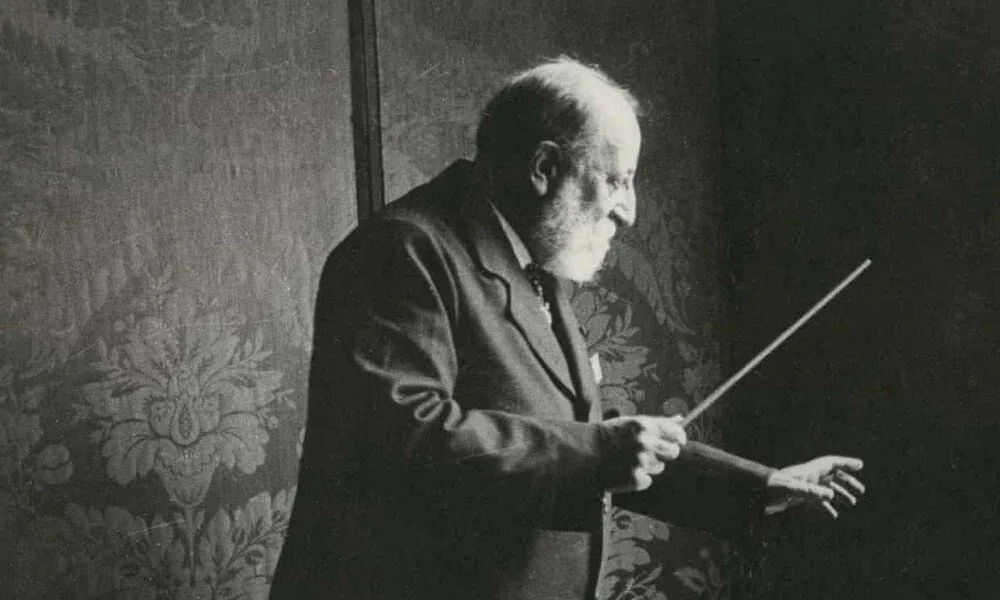
Music: Sonata No. 1 in D minor, Op. 75
Composer: Camille Saint-SaënsBorn: 9 October 1835, Paris, France
Died: 16 December 1921, Algiers, French Algeria
Composed: October 1885
First performed: 9 January 1886, La Trompette, Paris, France
First performers: Camille Saint-Saëns, piano; Martin-Pierre Marsick, violin
Dedicated to: Martin-Pierre Marsick
Published: 1885 by Durand, Schoenewerk et Cie., Paris
Duration: approximately 22 minutes
Genre: sonata for violin and piano
Original key: D minor
THE MUSIC
Camille Saint-Saëns’s Sonata No. 1 in D minor, Op. 75 is music of urgency, elegance and dazzling control. Written for violin and piano, it often feels larger than a chamber work. The piano does not simply accompany the violin. The two instruments pursue, interrupt, console and challenge one another with the dramatic intensity of two vivid characters.
The sonata begins in a state of agitation. The violin enters with a nervous, impassioned line, while the piano creates a restless background beneath it. Soon the atmosphere changes. A more expansive melody emerges, noble and warm, with the violin singing above rippling figures in the piano.
Saint-Saëns gives the work a rare mixture of French clarity and romantic intensity. Nothing is heavy for long. Even when the music grows dark, it remains elegant, sharply outlined and mobile. The violin is asked to be brilliant, tender, impetuous and intimate, sometimes within only a few minutes.
The final pages are especially memorable. After so much tension and shifting emotion, the music breaks into a brilliant, sunlit conclusion in D major. It has the exhilaration of a curtain being thrown open after a storm.
This is not a sentimental work. Its beauty lies in its poise. Saint-Saëns allows passion to appear, but he gives it shape, proportion and an almost effortless finish.
THE STORY
Camille Saint-Saëns wrote his First Violin Sonata in October 1885, by which time he was already an internationally admired composer, pianist and traveler. He had written three violin concertos and the beloved Introduction and Rondo Capriccioso, Op. 28, in 1863, but this was his first full-scale sonata for violin and piano.
The piece was dedicated to the Belgian violinist Martin-Pierre Marsick, who taught at the Paris Conservatoire and later counted Jacques Thibaud among his pupils. Saint-Saëns and Martin-Pierre Marsick had toured Switzerland together in 1884, and the dedication is generally understood as a tribute to that musical partnership.
The work seems originally to have been intended as a smaller piece for violin and piano. It expanded rapidly into a sonata of substantial ambition, one that makes exacting demands on both players, especially in its final section. Later accounts suggest that some early violinists found its difficulties formidable.
Saint-Saëns and Martin-Pierre Marsick performed the sonata in Paris on 9 January 1886 at La Trompette, a chamber-music society associated with the composer. Unlike many works that require years to establish themselves, the sonata was warmly received almost immediately. It became one of Saint-Saëns’s most enduring chamber works and remains a favorite of violinists today.
Its success was no accident. Saint-Saëns had found a way of making a formally ingenious work sound natural and spontaneous. The architecture is clever, but the listener first hears a story of conflict, tenderness, nervous laughter and final release.
STRUCTURE
Saint-Saëns arranged the sonata in four connected sections, grouped into two larger halves. There is no pause between the first and second sections, nor between the third and fourth. The effect is unusually fluid: the music seems to change mood in real time, as though one thought were giving birth to the next.
I. Allegro agitato
The opening is unsettled from the first bars. The violin brings a tense, urgent melody, and the piano answers with restless movement. It feels like the beginning of a difficult conversation, full of feeling but without calm.
A second melody soon changes the emotional light. It is broader and more affectionate, a moment of warmth within the surrounding turbulence. Saint-Saëns returns to this melody throughout the sonata, allowing it to become a kind of emotional memory.
The contrast between the two ideas gives the opening its character: anxiety on one side, confidence and lyricism on the other.
II. Adagio
Without a break, the agitation softens into an Adagio. The violin now seems to speak more quietly, while the piano creates a gentle and luminous space around it.
This is one of the most intimate moments in the sonata. The music does not try to impress. It pauses, breathes and sings.
Yet the earlier tension has not disappeared entirely. Even at its most serene, the Adagio has a sense of something remembered. The violin’s lyricism feels precious partly because it seems temporary.
III. Allegretto moderato
After the first pair of movements comes the sonata’s lightest and most elusive passage. The violin and piano move with a quick, graceful rhythm that can suggest a waltz heard from another room.
There is elegance here, but not innocence. The music has a flicker of irony and instability, as though the dancers are moving too quickly for complete comfort.
Saint-Saëns keeps the texture transparent. The writing is brilliant without being showy, and the conversation between the instruments remains finely balanced.
IV. Allegro molto
The final section arrives without pause. It is a display of speed, confidence and virtuosity, but its brilliance is not empty. Earlier ideas return, especially the lyrical melody from the opening, now transformed by everything that has happened since.
The violin’s writing becomes increasingly daring, while the piano drives the music forward with energy and precision. Saint-Saëns creates the feeling of a chase, an escape and a triumph at once.
The change from D minor to D major at the close is one of the work’s great pleasures. After the sonata’s shadows, doubts and flashes of nervous energy, the ending feels radiant and decisive.
THE PERFORMANCE
A particularly beautiful choice is the recording by Janine Jansen and Itamar Golan. Janine Jansen brings intensity and a finely drawn singing line to the violin part, while Itamar Golan gives the piano writing its full emotional and rhythmic presence.
Another excellent choice is Renaud Capuçon with Frank Braley. Renaud Capuçon’s playing has a silvery refinement that suits Saint-Saëns’s French clarity, and Frank Braley gives the work a supple, alert pulse.
For a more classic French approach, Augustin Dumay and Maria João Pires offer an especially elegant partnership. Augustin Dumay’s violin combines warmth with restraint, while Maria João Pires makes the piano part sound both delicate and alive.
The following video clip is Camille Saint-Saëns's Violin Sonata No. 1 in D Minor: I. Allegro agitato performed by Renaud Capuçon and Bertrand Chamayou.