People
Federico Forquet (born 1931)
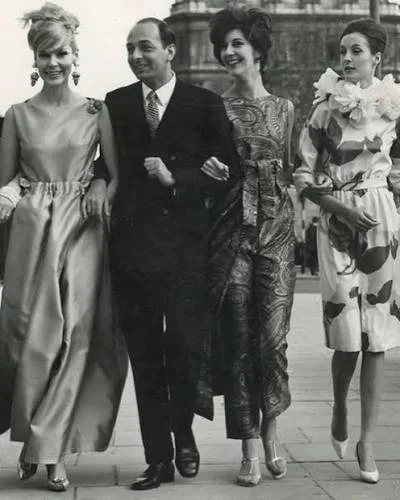
Federico Forquet (born 1931) is an Italian fashion designer, interior decorator, and garden designer, once dubbed "the Italian Dior" by Harper's Bazaar Italy for the decade he spent dressing the country's aristocracy and international jet set. Trained under Cristóbal Balenciaga and known for a bold, architectural use of color and geometry, Federico Forquet closed his couture house at the height of its acclaim and spent the following five decades reinventing himself as one of Italy's most sought-after designers of interiors and gardens.
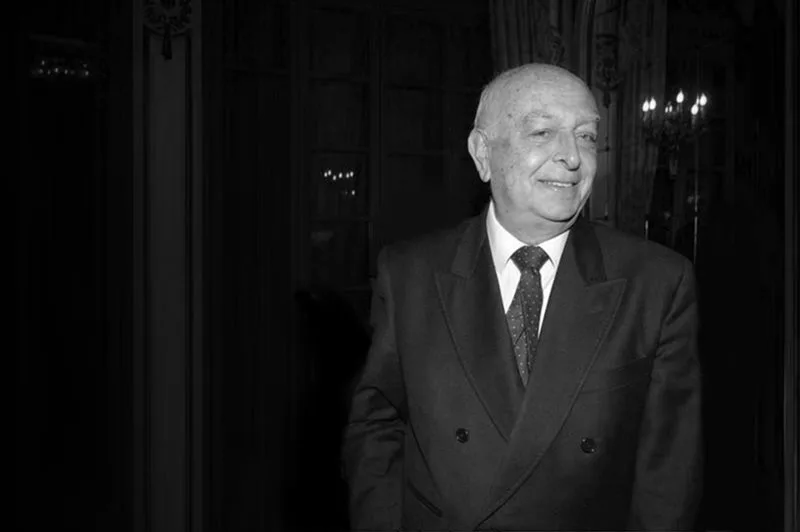
Biography
Federico Forquet was born in 1931 in the Posillipo district of Naples, into a wealthy family of French descent. He spent his childhood divided between the family's palace in Naples and their castle in Forino, both frequented by artists, musicians, and members of the Italian royal family.
Musically gifted as a boy, Forquet studied piano at the Naples Conservatory and once imagined a career as a concert pianist, amusing himself in the meantime by designing costumes inspired by the operas playing around Italy at the time.
In 1953, on the island of Ischia, Forquet happened to meet his idol, the couturier Cristóbal Balenciaga, after a friend who was supposed to keep the appointment got stuck in Rome and sent Federico in his place.
Months later, Forquet traveled to Balenciaga's Paris atelier with more than a hundred of his own drawings. Balenciaga set aside a dozen of them, told the young Neapolitan he could see real potential, and asked him to put together a small collection.
Forquet produced 120 pieces in eight days. Balenciaga hired him on the spot, and Federico spent the next several years at his side, learning haute couture from the ground up alongside another young apprentice, André Courrèges.
Back in Rome, Forquet worked first for the couturier Alberto Fabiani, then for the Russian-born princess Irene Galitzine, who had launched her own fashion line in the city.
Together they created the "Pyjama Palazzo" in 1959, a wide-legged, flowing evening trouser suit made of silk, designed to be worn, quite literally, while lounging in an actual palazzo.
The style became an overnight sensation among aristocratic Italian and international women alike, and made Federico's name before he had even opened a house of his own.

Federico Forquet founded his own atelier in Rome in 1962, debuting to immediate acclaim from the press. His clothes were known for bold color combinations, sharp geometric patterning, and ingeniously engineered seaming that gave his garments an almost architectural precision, qualities distinctive enough that examples of his work are now held in the collection of New York's Metropolitan Museum of Art.


He worked largely alone, designing and personally fitting each garment himself with the help of a single assistant, a level of hands-on control unusual even among couturiers of his era. His clients included Diana Vreeland, Jacqueline Kennedy, Sophia Loren, and his close friend Marella Agnelli.
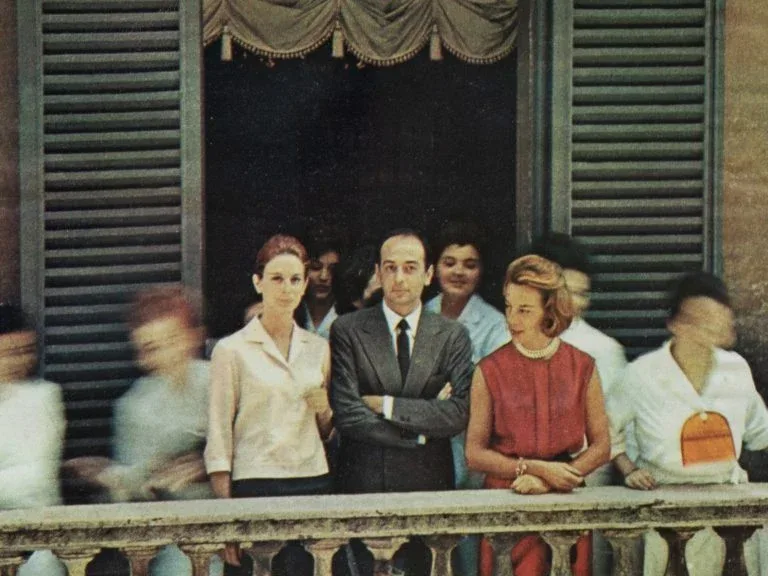
At the height of his acclaim, in the early 1970s, Forquet closed his couture house entirely and walked away from fashion.


He turned instead to interior and garden design, creating opulent, classically inspired interiors and gardens for a small circle of clients, many of them close friends, including Marella Agnelli herself.


Looking back on the full arc of that life in a 2020 monograph devoted to his work, Federico Forquet offered a verdict as understated as any of his own best designs: "Mine has been a long life," he wrote, "and a very lovely one too."