People
Marella Agnelli (born Donna Marella Caracciolo di Castagneto; 4 May 1927 – 23 February 2019)
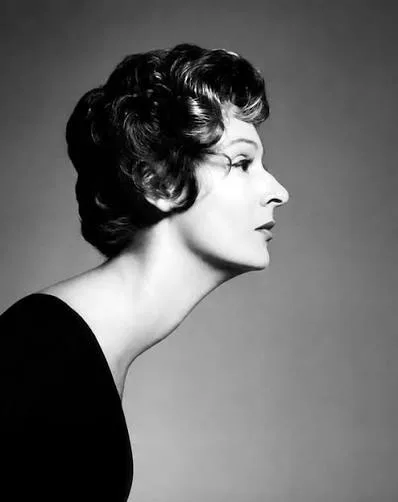
Marella Agnelli (born Donna Marella Caracciolo di Castagneto; 4 May 1927 – 23 February 2019) was an Italian noblewoman, art collector, and garden designer, and for half a century, one of the most photographed women in the world. Nicknamed "The Swan" after a 1953 portrait by the photographer Richard Avedon, she was, in Truman Capote's own words, "the European swan numero uno" among his circle of society beauties, which also included Babe Paley, Gloria Guinness, C.Z. Guest, Slim Keith, and Pamela Harriman. She was married to the Fiat chairman Gianni Agnelli for fifty years.
Biography
Marella Caracciolo di Castagneto was born in Florence on 4 May 1927, into one of southern Italy's oldest noble families. Her father, Filippo Caracciolo, was the 8th Prince of Castagneto and 3rd Duke of Melito; her mother, Margaret Clarke, was an American from Peoria, Illinois. Her brother, Carlo Caracciolo, later became one of Italy's most influential newspaper publishers.
Marella studied art in Paris at the Académie Julian before moving to New York, where she worked as an apprentice to the photographer Erwin Blumenfeld and occasionally modeled, appearing in dresses by the designer Gabriella di Robilant and by the Fontana Sisters.
She also became a muse to the Italian designer Federico Forquet, and contributed to and appeared regularly in Vogue through the 1950s and 1960s.
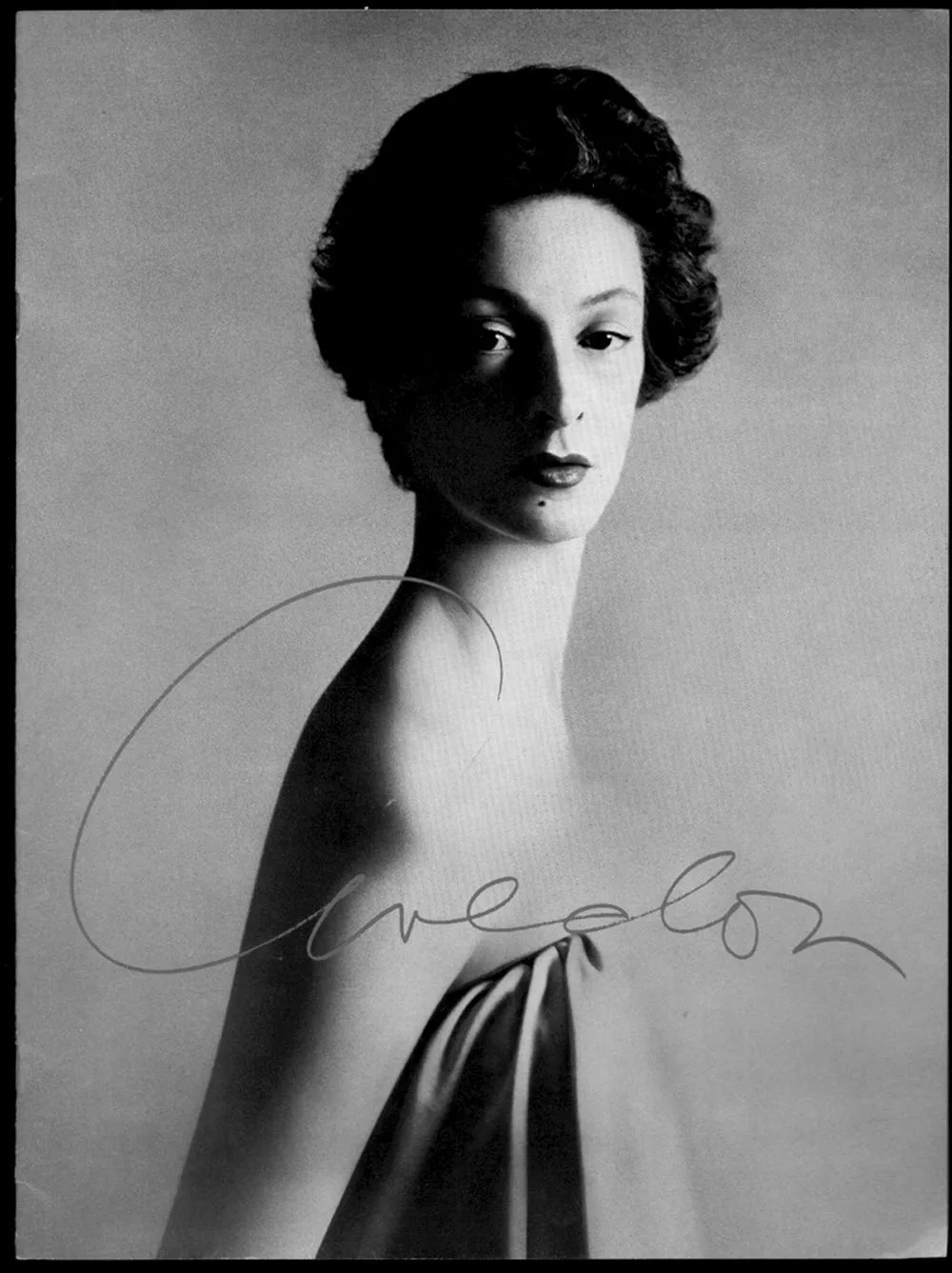
In 1953, Richard Avedon photographed Marella in a pose that turned her long, graceful neck into the whole subject of the image, a silhouette critics likened to a portrait by Amedeo Modigliani. The picture earned her a nickname that outlasted every other title she would later hold: "The Swan."
Marella married Gianni Agnelli, heir to the Fiat automobile empire, on 19 November 1953. The marriage lasted fifty years, until Gianni's death in 2003, and produced two children, Edoardo Agnelli and Margherita Agnelli.
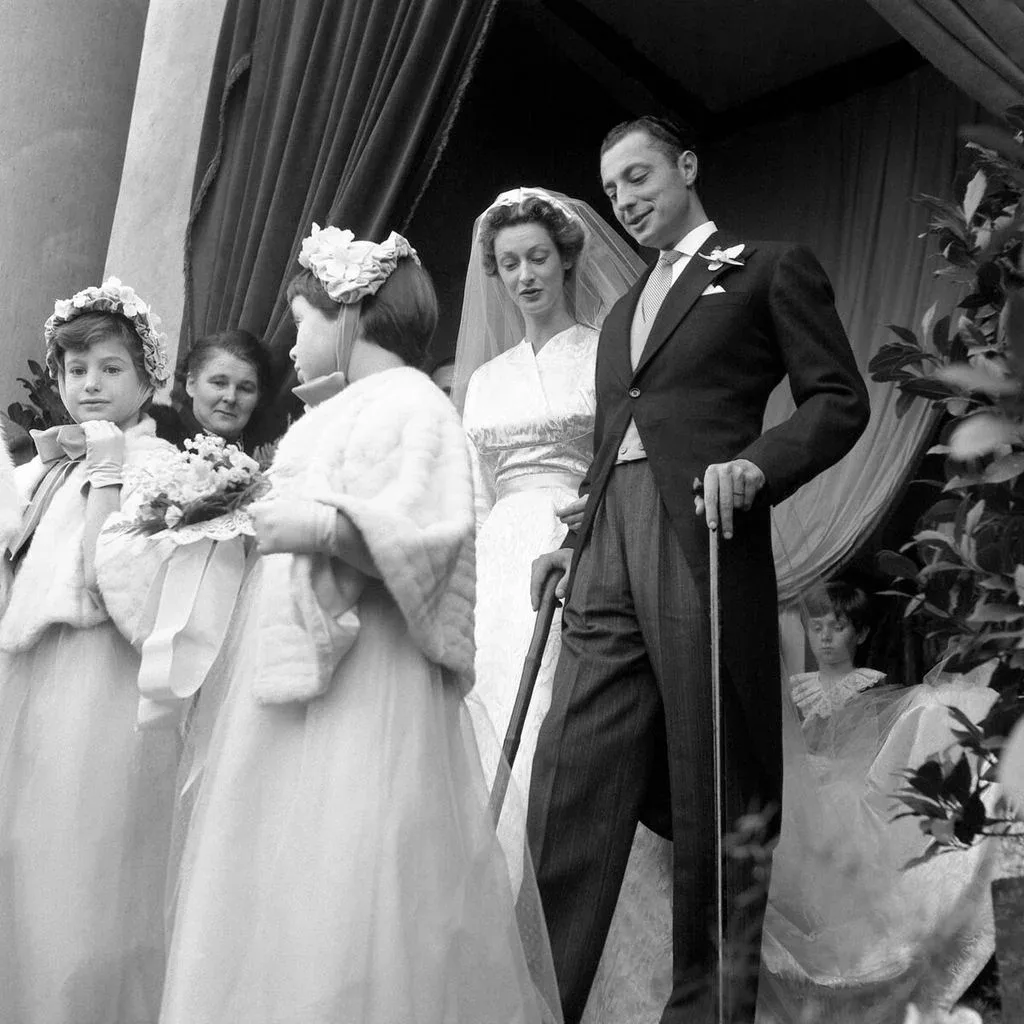
As Truman Capote's social circle crystallized around him in the 1950s and 1960s, Marella became one of his celebrated Swans, the youngest member of a group he adored precisely because, like him, they had each "created themselves." She attended his legendary Black and White Ball in 1966 among only five hundred invited guests.
Marella considered clothing something closer to armor than decoration. She once described fashion as a form of expression, but also as a kind of screen, a shield capable of transforming the person wearing it into someone else entirely.
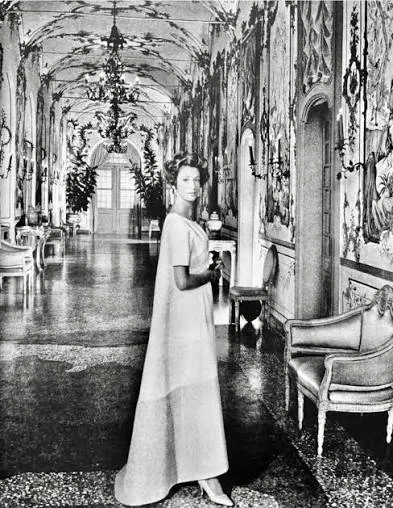
In one of the most reproduced images of her, taken by the photographer Horst P. Horst in 1967 inside the painted salon of her Piedmont villa, she wears a silk pajama-style palazzo suit by Federico Forquet, its fluid trousers and tunic photographed against frescoed walls in a composition as considered as any portrait sitting.
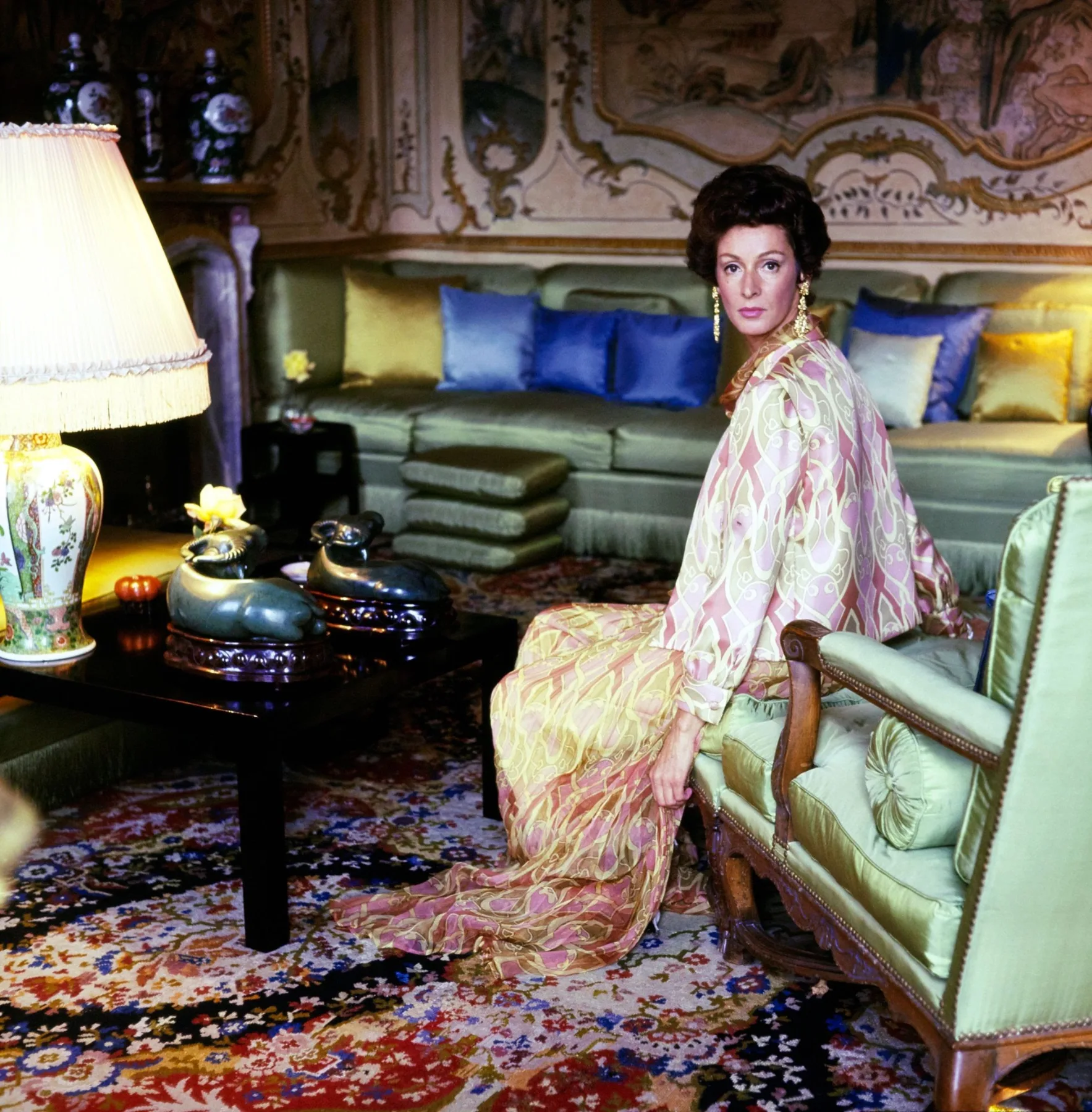
Over the decades she was photographed as well by Irving Penn, Henry Clarke, and Robert Doisneau, among many others, and was inducted into the International Best Dressed List Hall of Fame in 1963.
In her later decades, Marella turned her eye for composition toward landscape rather than clothing, becoming an accomplished garden designer, photographer, and author.
She wrote and photographed The Gardens of Ninfa (1999) and The Agnelli Gardens at Villar Perosa (1998), the latter devoted to the grounds of the Agnelli family's own ancestral estate in Piedmont.
She also oversaw the opening of the Pinacoteca Giovanni e Marella Agnelli, an art gallery designed by the architect Renzo Piano atop the former Lingotto Fiat factory in Turin, built to house the art collection she and Gianni had spent decades assembling together.
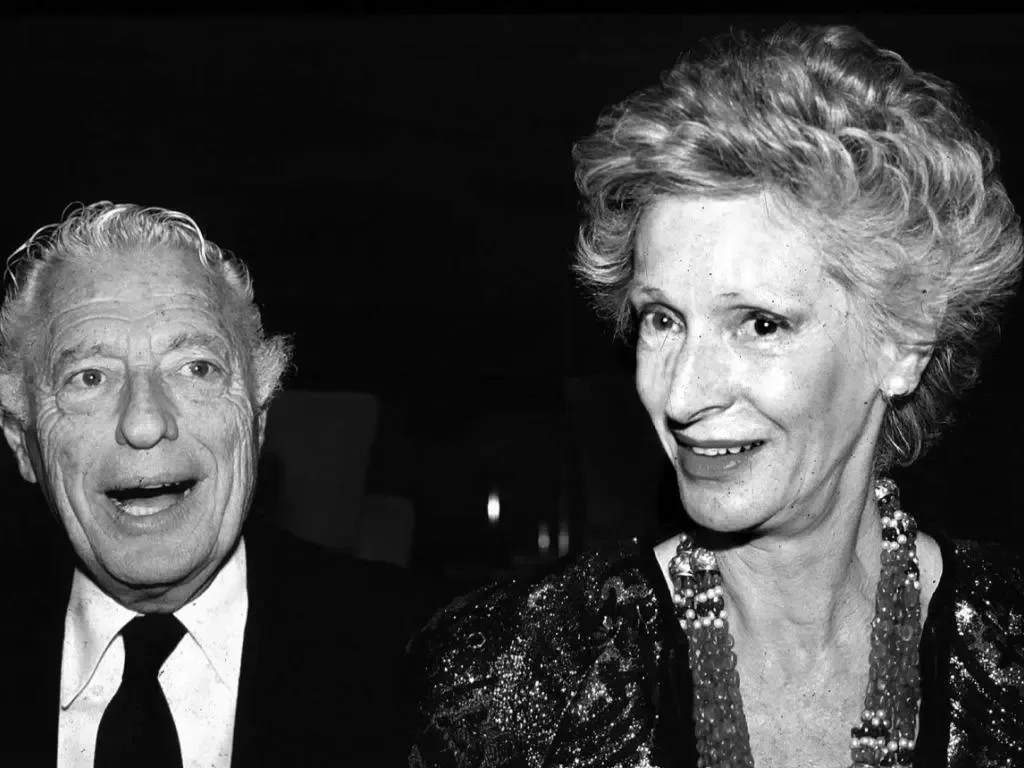
Considering a traditional memoir too personal to write alone, Marella instead collaborated with her niece and namesake, Marella Caracciolo Chia, on an illustrated account of her life told through her homes and gardens, published in 2014 as Marella Agnelli: The Last Swan.
Marella Agnelli died in Turin on 23 February 2019, at ninety-one, having outlived her husband by sixteen years and, by then, having spent longer as one of the twentieth century's defining images of restrained, aristocratic style than almost anyone else photographed alongside her.