People
C.Z. Guest (born Lucy Douglas Cochrane; 19 February 1920 – 8 November 2003)
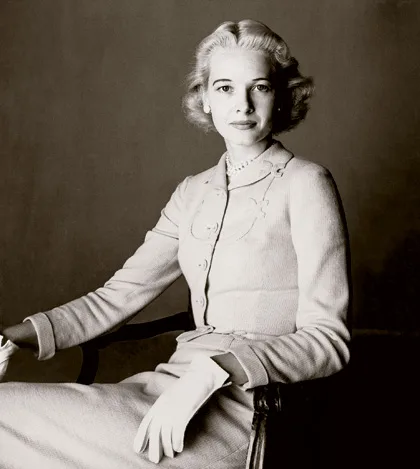
C.Z. Guest (born Lucy Douglas Cochrane; 19 February 1920 – 8 November 2003) was an American socialite, author, and horticulturist, remembered as one of the twentieth century's most enduring style icons. A member of Truman Capote's inner circle of "Swans," alongside Babe Paley, she was elected to the Fashion Hall of Fame for a look so consistent and so unfussy, tall, tanned, barely made up, in simple couture and pearls, that designers including Ralph Lauren still cite it today as a founding reference for American sportswear.
Biography
Lucy Douglas Cochrane was born in Boston on 19 February 1920, one of five children of the investment banker Alexander Lynde Cochrane and Vivian Wessell Cochrane, members of the Boston Brahmin elite. Her brother, Alexander Lyman Cochrane, struggled as a small child to say "Sissy," and the mangled version that came out, C.Z., stuck for the rest of her life.
She grew up trailing the family gardener around the grounds of the Cochranes' Beacon Hill home, asking questions, a habit that planted the seed of a lifelong passion. From the age of six she also trained with champion riders and competed in national horse shows.
After private tutors and the Fermata School in Aiken, South Carolina, Guest made her society debut in 1937 at the family home, a Paris themed ball for which she wore a Lanvin gown. Two years later, she was named glamour girl of the Massachusetts North Shore.
A brief detour into performing followed: a wartime cabaret show, a Broadway stint as a showgirl arranged by the producer Lee Shubert, and a seven year contract with 20th Century Fox that led nowhere in particular. When Hollywood stalled, Guest went to Mexico instead.
There, at twenty two, she met the muralist Diego Rivera, who painted her lying nude among flowers in a canvas titled In Vino Veritas. It hung for years over a bar in Mexico City's Hotel Reforma before her future husband's family quietly bought it and took it out of public view. Guest herself never seemed embarrassed by any of it. "He was very nice," she said later. "And I became famous."
In 1947, she married Winston Frederick Churchill Guest in a private ceremony at Ernest Hemingway's home in Havana, with Hemingway serving as best man. Winston Guest, born in England to the British politician Frederick Guest and the American steel heiress Amy Phipps, was a godson and second cousin of Sir Winston Churchill and a champion polo player.
The Duke and Duchess of Windsor became godparents to the couple's two children, Alexander Michael Guest and Cornelia Guest.
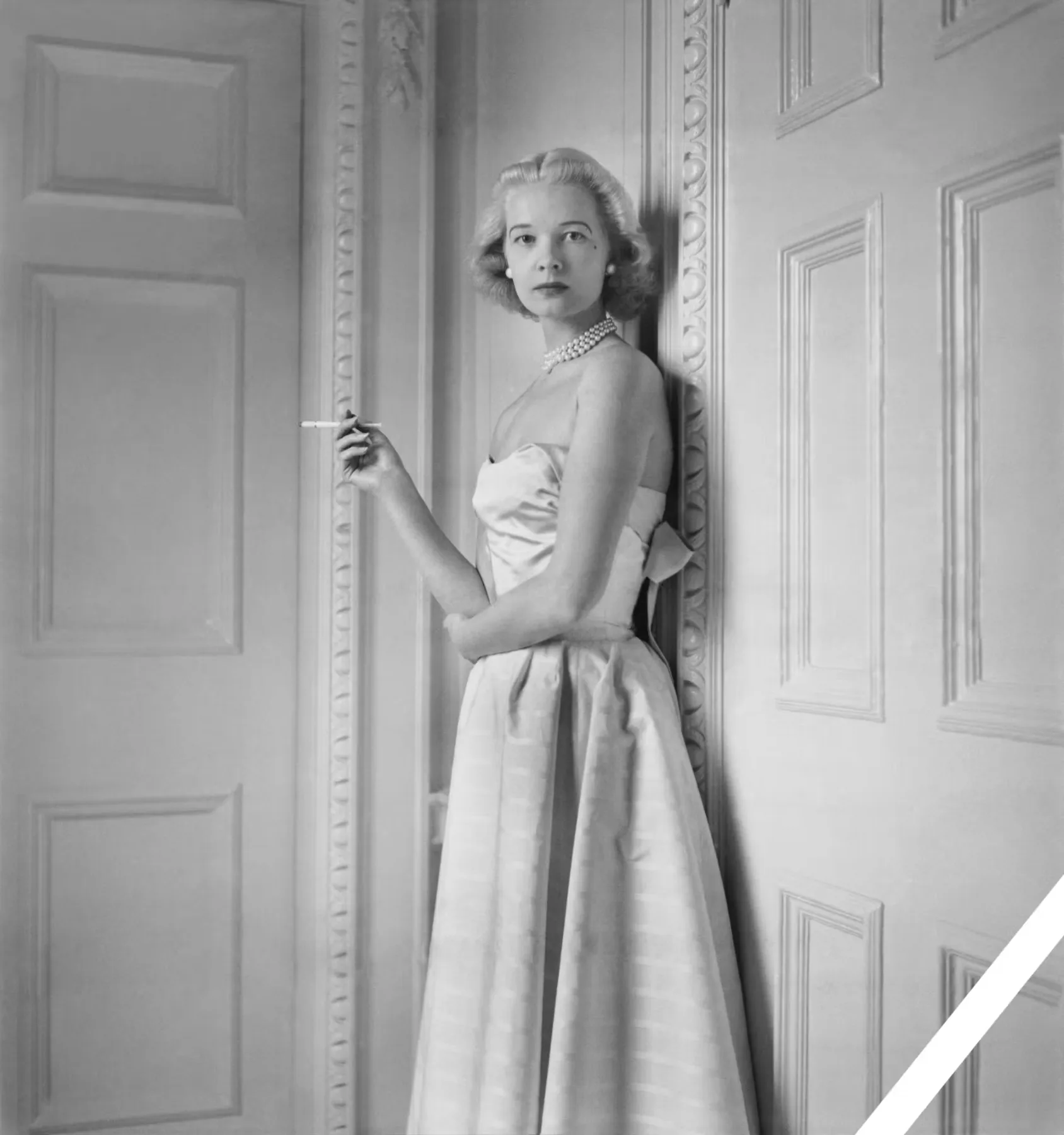
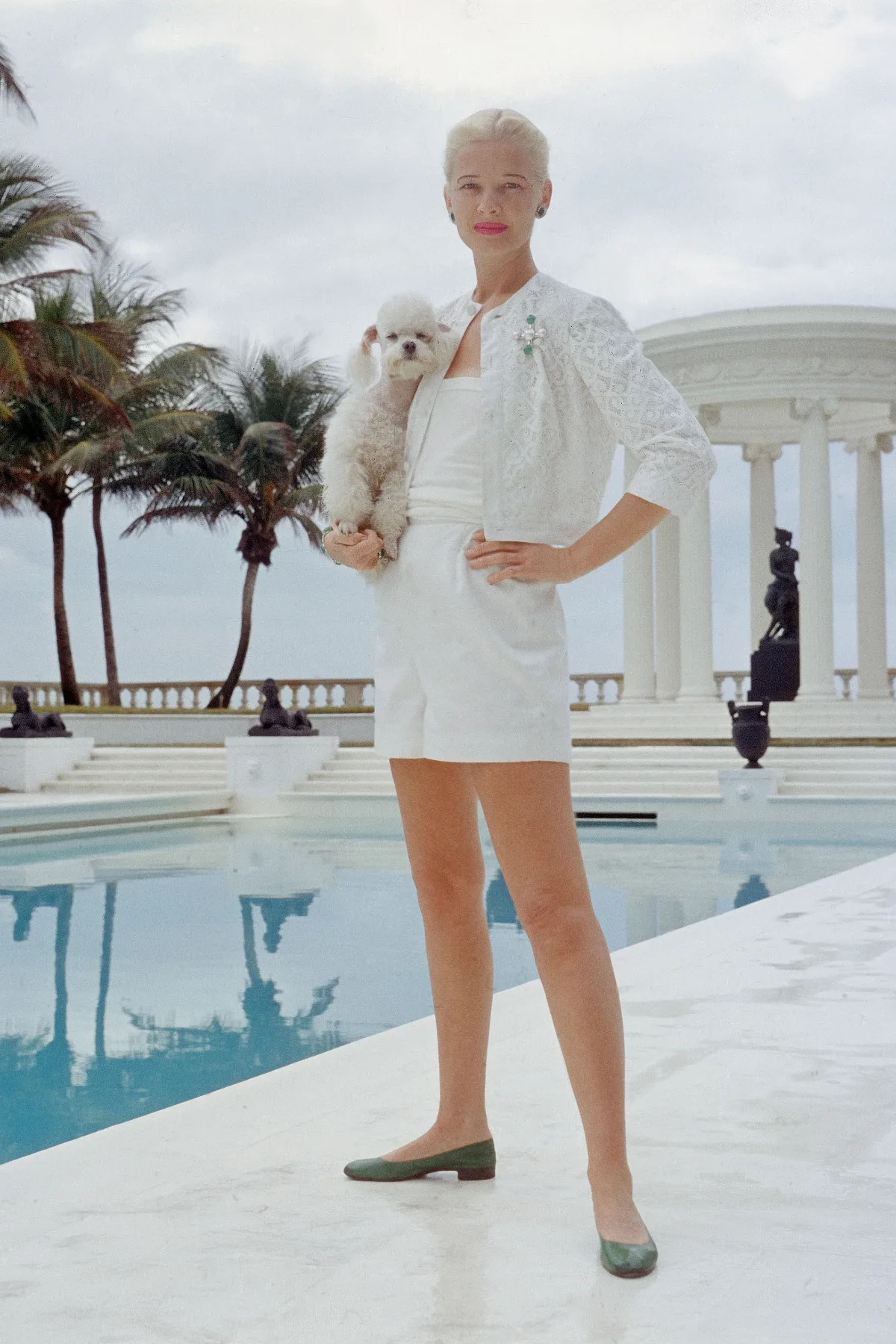
From then on, Guest's own look became something close to a fixed institution. British Vogue called her face "the face of a flower." Truman Capote called her, more simply, "the incarnation of understated elegance." A later admirer described her as handsome in an Ivy League way: erect, tall, dressed in simple couture and pearls with almost no makeup, her voice throaty and faintly accented in a manner that gave away her Boston origins at once.
She favored Mainbocher and Hubert de Givenchy above nearly everyone else, and for her Long Island home she hired the Paris decorator Stéphane Boudin, of the firm Jansen, the same decorator later entrusted with restoring the White House.
Artists kept returning to her as a subject. Salvador Dalí painted her in 1958, seated in a flowered red dress before a dreamlike landscape with two white horses. Kenneth Paul Block sketched her for the fashion press for decades. Andy Warhol, a close friend in her later years, painted her too.
At Capote's legendary Black and White Ball in 1966, he watched C.Z.Guest cross the room in the blue evening light and borrowed a line from Raymond Chandler to describe her: there are blondes, he said, and then there are blondes.
Guest was, notably, one of the few Swans who stayed loyal to Capote after his 1975 Esquire story exposed the private lives of the whole circle. Their friendship survived intact.
In 1976, a riding accident left her briefly bedridden, and her husband lost a substantial part of the family fortune in a failed airline venture bearing his own name. Rather than retreat, Guest built an entirely new career.
She began writing a syndicated weekly gardening column that ran in roughly 350 American newspapers, and published her first book, First Garden, the same year, illustrated by Cecil Beaton with an introduction by Capote himself. He described her at work in it: "There, with her baskets and spades and clippers, and wearing her funny boyish shoes, and with her sunborne sweat soaking her eyes, she is a part of the sky and the earth, possibly a not too significant part, but a part."
More books followed: C.Z. Guest's Five Seasons of Gardening in 1992, the children's book Tiny Green Thumbs in 2000, and Garden Talk: Ask Me Anything in 2001.
In the 1990s she also launched her own bug repellent, C.Z.'s Bug Spray, joking that she had become "the Estée Lauder of the garden world."
She kept riding almost every day for the rest of her life, always correctly turned out for it, and remained on international best dressed lists into old age.
C.Z. Guest died on 8 November 2003, at eighty three, after a battle with ovarian cancer.
The fashion critic Cathy Horyn put the scale of what had passed into a single line, written for The New York Times the day after her death: pity the poor socialite of today, she wrote, who will never know what it was like to be painted in the nude by Diego Rivera, and to spend the sixty years afterward looking exactly, effortlessly like herself.