People
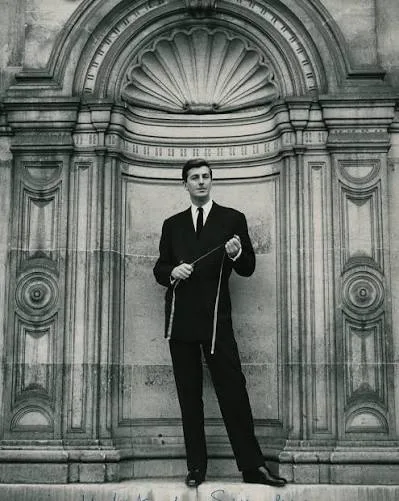
Hubert de Givenchy (born Count Hubert James Marcel Taffin de Givenchy; 20 February 1927 – 10 March 2018)
“You must, if it’s possible, be born with a kind of elegance. It’s part of you, of yourself.” -Hubert de Givenchy THE LIFE AND DESIGN 1927 Hubert de Givenchy was born to a French aristocratic family , and his maternal…
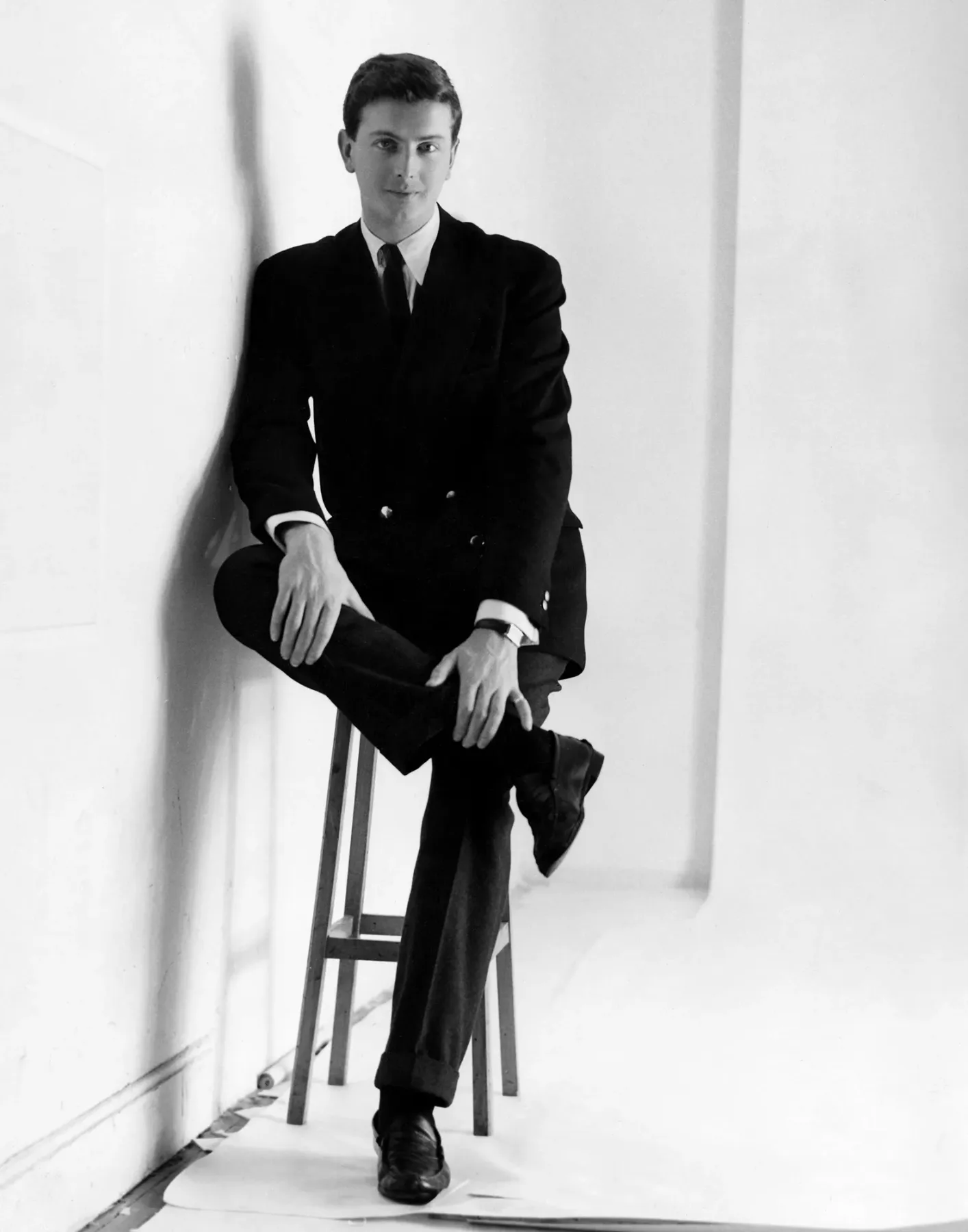
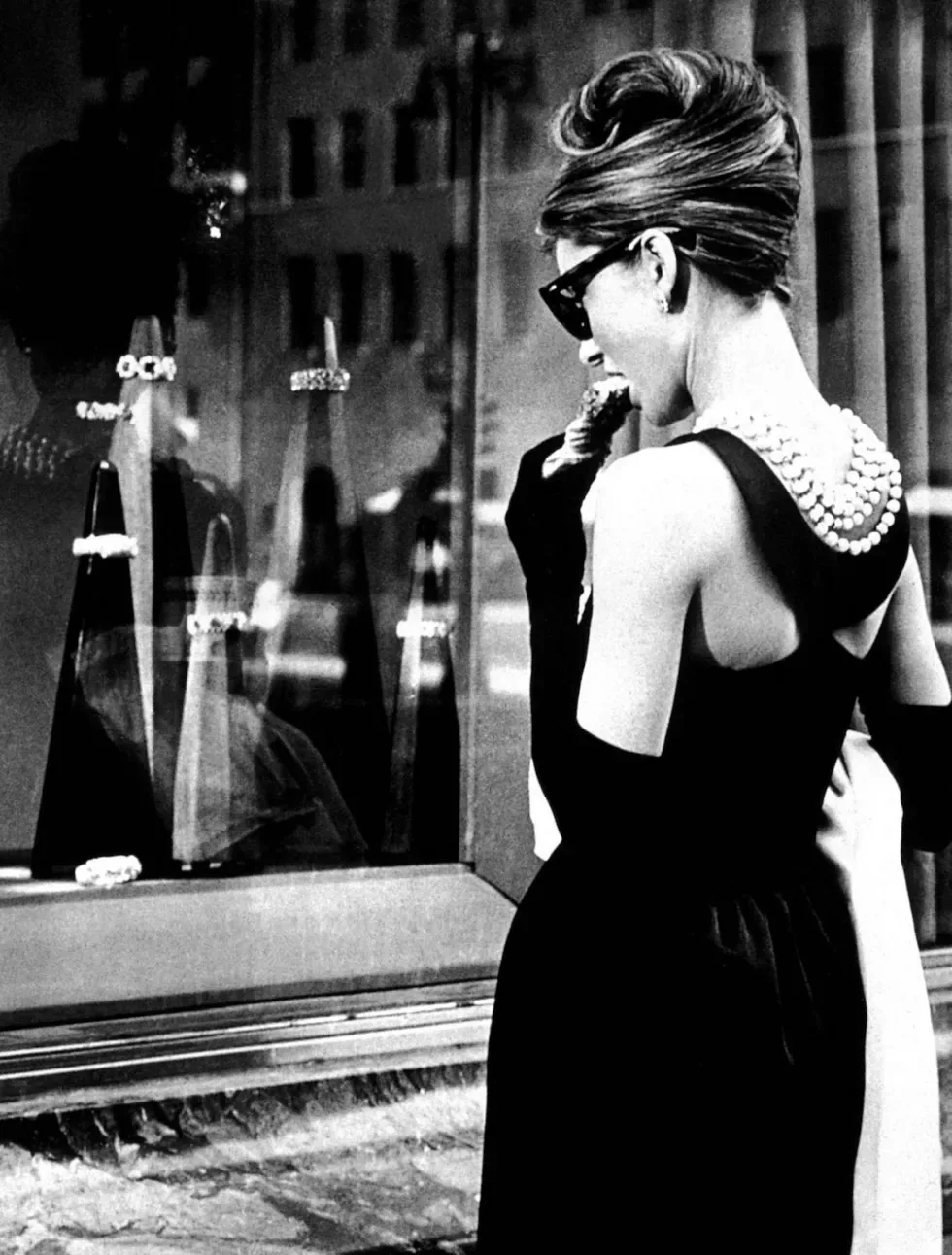
Hubert de Givenchy (born Count Hubert James Marcel Taffin de Givenchy; 20 February 1927 – 10 March 2018) was a French aristocrat and fashion designer who founded the House of Givenchy in 1952. He is best remembered for the little black dress he designed for Audrey Hepburn in Breakfast at Tiffany's (1961) and for the forty-year friendship the two maintained until Hepburn's death — a partnership between designer and muse still cited as one of the defining relationships in the history of fashion.
Biography
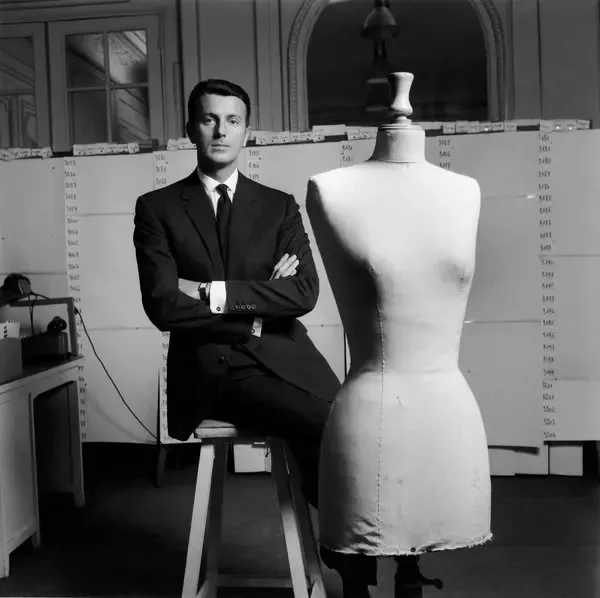
Hubert James Marcel Taffin de Givenchy was born on 20 February 1927 in Beauvais, a cathedral town north of Paris, into old French nobility; his father, Lucien Taffin de Givenchy, held the title of Marquis de Givenchy.
His father died in 1930, when Hubert was three, and he was raised afterward by his mother, Béatrice, and his maternal grandmother, alongside his older brother, Jean-Claude.
The family expected him to become a lawyer. Givenchy had other plans, having decided, after seeing the 1937 Paris World's Fair as a boy, that he wanted to work in fashion.
He studied at the École des Beaux-Arts in Paris and, by his late teens, was already tall enough — he would eventually reach six feet five inches (196cm) — to be unmistakable in any room he entered.
In 1945, the couturier Jacques Fath hired him on the strength of his sketches. Over the next several years Givenchy trained under a remarkable run of houses: Robert Piguet, the atelier of Elsa Schiaparelli, and, in 1946, Lucien Lelong, where he worked alongside two other young, still-unknown assistants named Pierre Balmain and Christian Dior.
Givenchy opened his own house in 1952, at twenty-five. His debut collection introduced a genuinely new idea to Paris couture: separates, tops and skirts designed to be mixed and matched, rather than the fixed, head-to-toe looks most houses still insisted on.
In 1953, Givenchy met the designer he would later call, without irony, "my religion".
"Since I'm a believer," Givenchy said, "for me there's Balenciaga and the good Lord." Cristóbal Balenciaga became his mentor and closest friend for the next fifteen years, and their two ateliers ended up facing each other across the Avenue George V. The Spanish designer nicknamed the much taller, much younger French designer mon petit.
The year 1953 also brought a meeting even more consequential for Givenchy's public legacy.
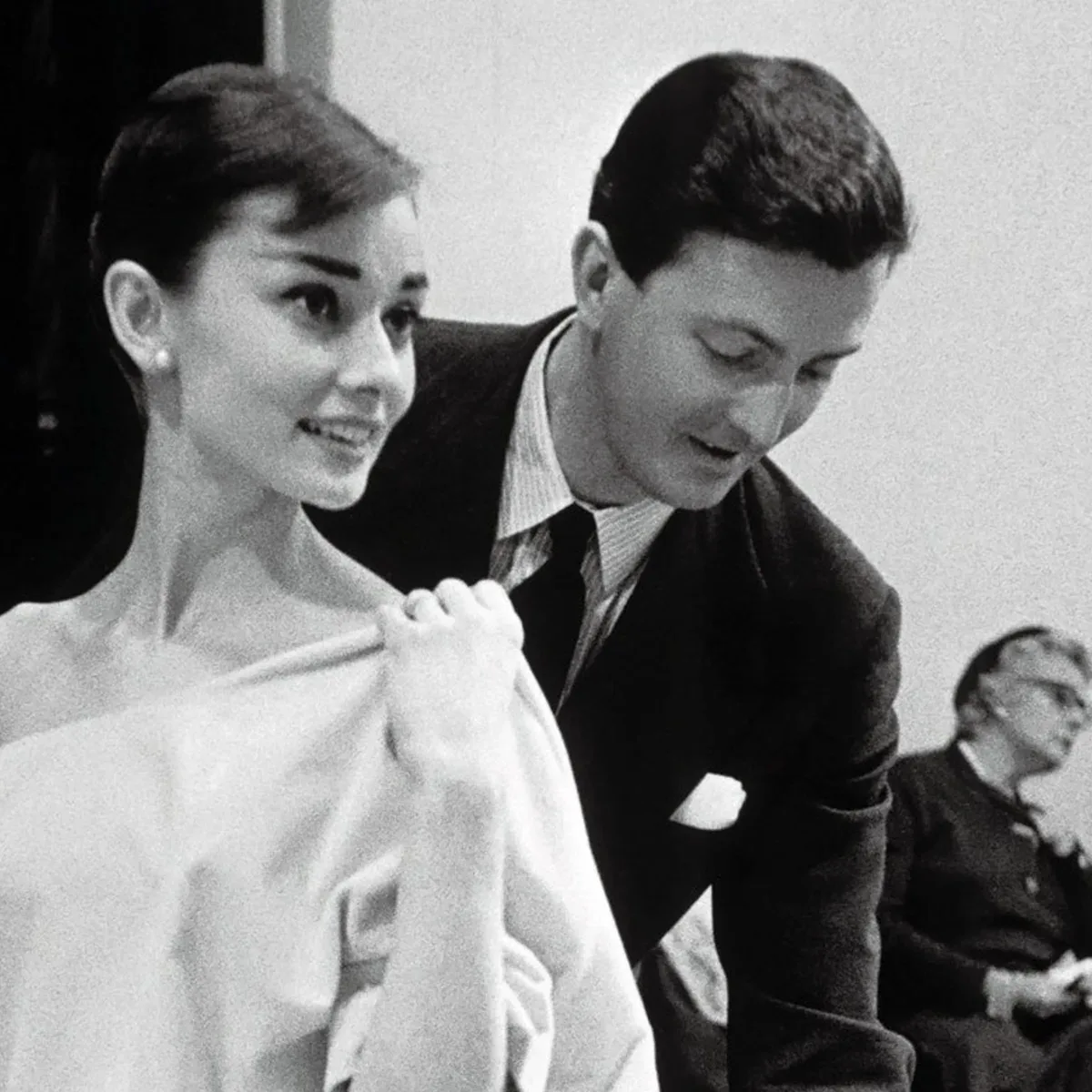
Called in to fit costumes for a young actress starring in Billy Wilder's Sabrina, Givenchy assumed his appointment was with the established star Katharine Hepburn. Instead, a far less famous Audrey Hepburn walked in. The mix-up hardly mattered: a friendship began that day that lasted until Hepburn's death forty years later, in 1993.
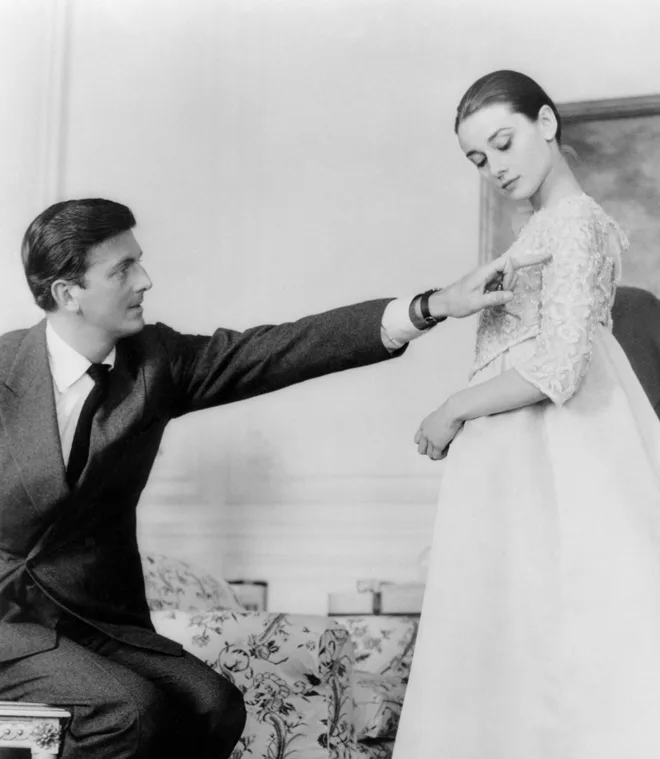
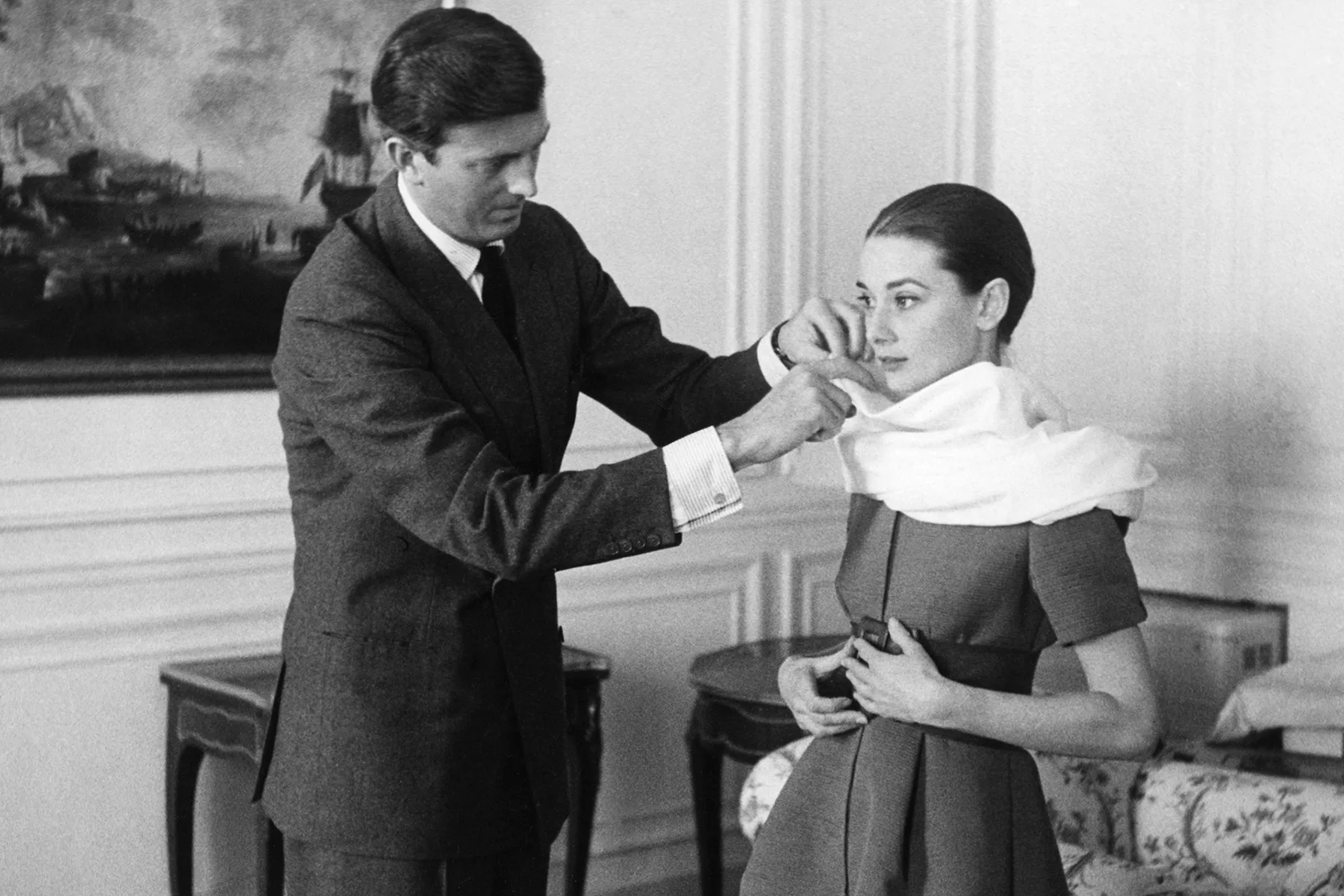
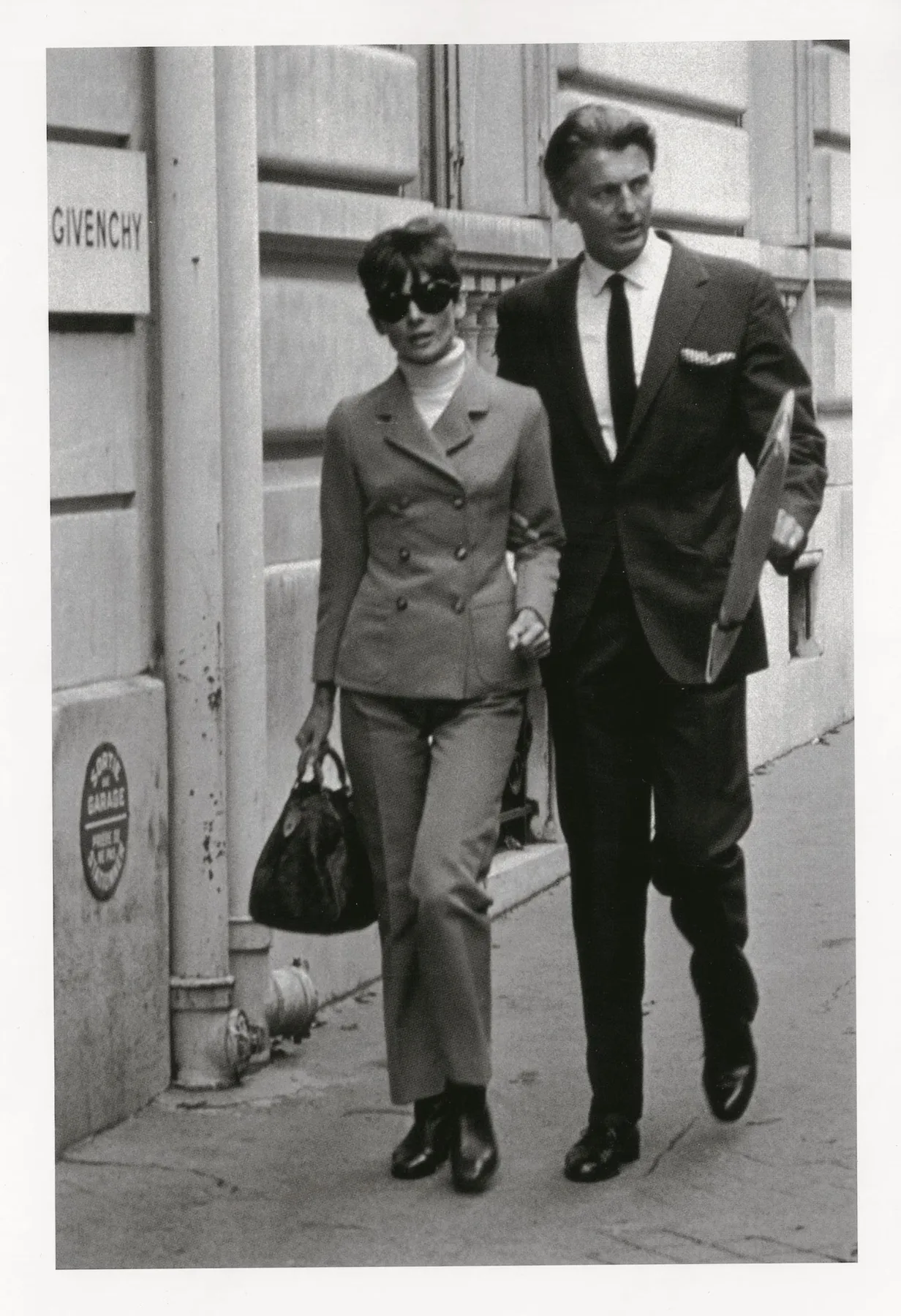
Givenchy also met Jacqueline Bouvier, the future Jacqueline Kennedy, in this same period, well before she became First Lady. It would develop into a professional relationship built on trust that continued through her years in the White House and beyond.
In the mid-1950s, working alongside Balenciaga, Givenchy helped introduce the "sack," a silhouette with no defined waistline. In the summer of 1957 he pushed the idea further with the chemise dress — a design so radical that it initially failed commercially, only to return, within a few seasons, as the shift dress that would come to define much of 1960s fashion.
That same year, Givenchy created his first perfume, L'Interdit, made initially for Audrey Hepburn's personal use alone before its eventual commercial release. It was one of the first instances of a fragrance built specifically around a single film star, years before celebrity fragrance endorsement became a standard industry practice.
Through the following decades, Givenchy dressed an extraordinary roster of women: Grace Kelly, Gloria Guinness, Babe Paley, the Duchess of Windsor, Mona von Bismarck, and Jacqueline Kennedy among them. , As it happened, several of the women on his list of clients were the same who moved in and out of Balenciaga's own client list.
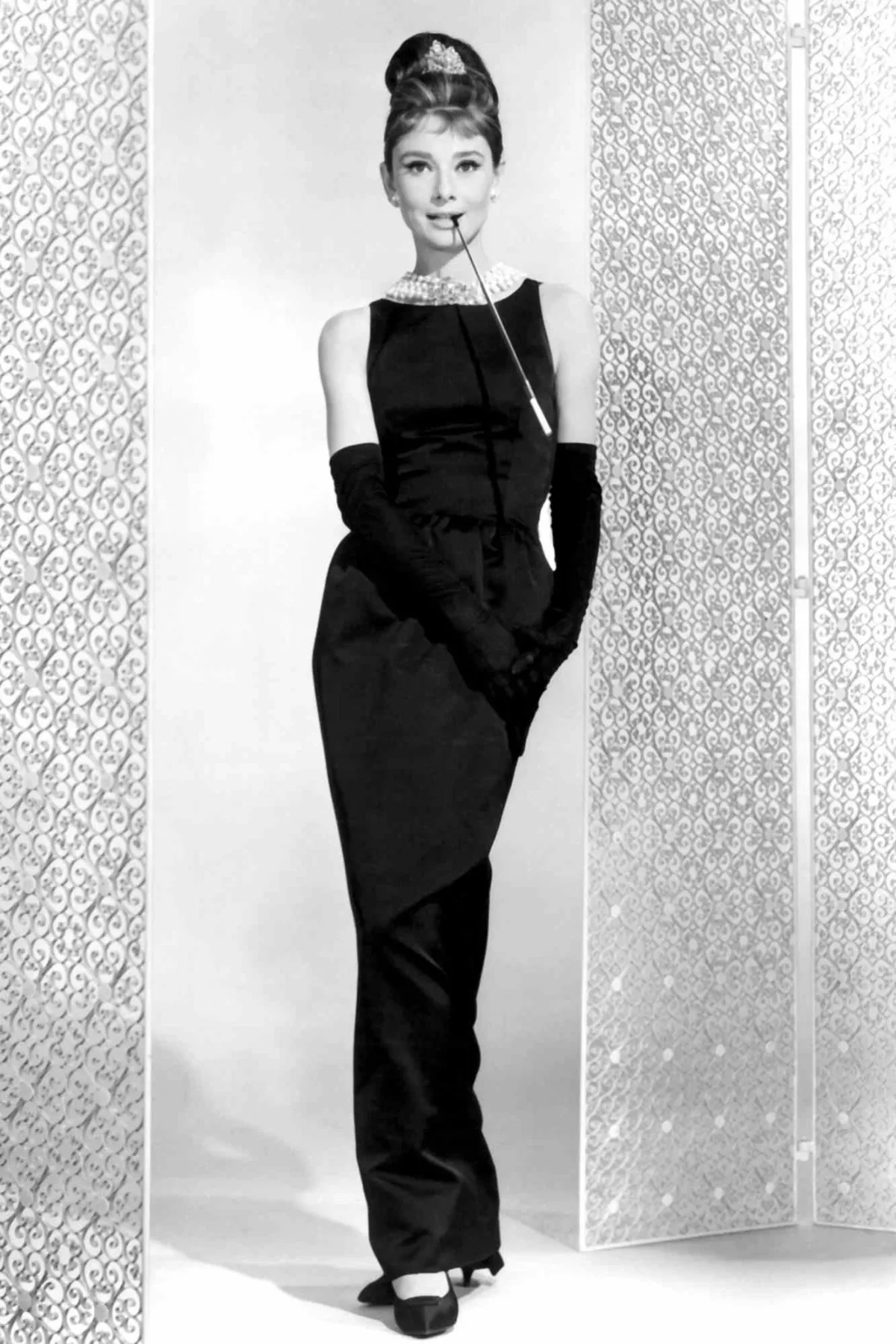
In 1961, Givenchy designed the wardrobe for Audrey Hepburn in Breakfast at Tiffany's, including the black gown she wears in the film's opening scene — a garment that has since become one of the most reproduced and referenced pieces of clothing in cinema history.
In 1968, when Cristóbal Balenciaga abruptly closed his own house, he did something that said as much about their friendship as any of Givenchy's own designs: he personally sent many of his most loyal clients, including Mona von Bismarck, Bunny Mellon, and the Duchess of Windsor, directly to Givenchy, each with a handwritten note of introduction.
Givenchy never married. His defining personal relationship was with the French couturier Philippe Venet, beginning in the 1950s and lasting more than sixty years, until Givenchy's death.
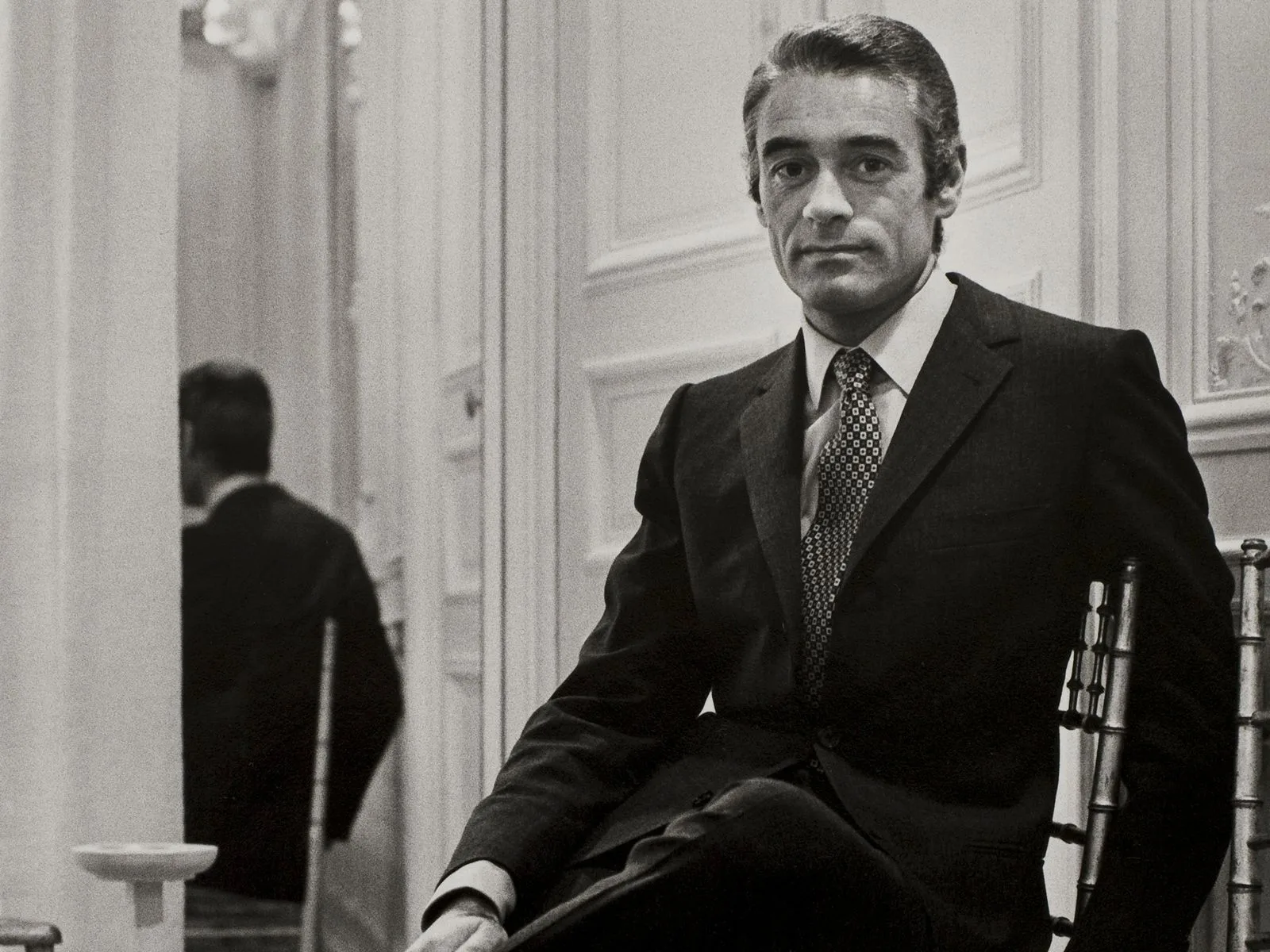
Venet had trained under Schiaparelli and worked for years in Givenchy's own tailoring workshop before launching his own successful couture house in 1962; friends later recalled that the two men "did everything together" while always keeping their professional lines strictly separate.
Givenchy treated his own clients less like customers than like family. He was known to take their calls at midnight, design coats for their funerals, attend their children's christenings, and, on at least one occasion, sketch a wedding dress in pencil on the cardboard lid of a pastry box.
In 1988, after thirty-six years running his house independently, Givenchy sold the Givenchy Couture Group to LVMH for $45 million, remaining as head of creative design for another seven years before retiring in 1995 at sixty-eight, with a retrospective show marking the end of his tenure. John Galliano, Alexander McQueen, Julien Macdonald, and Riccardo Tisci would each, in turn, take over the house he had built.
In retirement, Givenchy split his time between a Paris townhouse and the Château du Jonchet, a restored seventeenth-century estate in the Loire Valley, where he and Philippe Venet devoted themselves to collecting seventeenth- and eighteenth-century sculpture and antiques. A retrospective of ninety-five of his designs was staged at Madrid's Thyssen-Bornemisza Museum in 2014.
Hubert de Givenchy died in his sleep on 10 March 2018, at ninety-one, with Philippe Venet at his side. French President Emmanuel Macron called him a master of French fashion; Bernard Arnault, whose company had owned the house for thirty years by then, said his work had achieved the rare combination of being "innovative and timeless." Venet himself died three years later, in 2021, at the same age Givenchy had been: ninety-one.