People
Madeleine Vionnet (22 June 1876 – 2 March 1975)
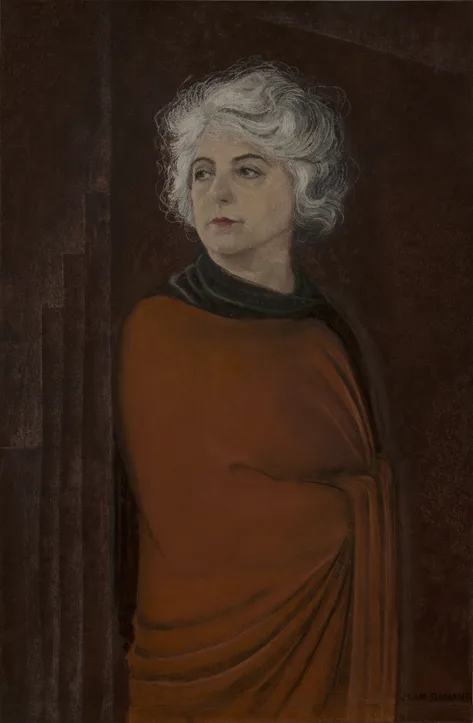
Madeleine Vionnet (22 June 1876 – 2 March 1975) was a French fashion designer, celebrated as the pioneer of the bias cut and known in her own time as "the Queen of the Bias Cut" and "the architect among dressmakers." Working directly on a miniature mannequin rather than sketching, she built flowing, Grecian-inspired gowns that let fabric drape and move with the body rather than shape it, a technical revolution nearly as consequential to twentieth-century fashion as anything her better-remembered contemporary, Coco Chanel, produced.
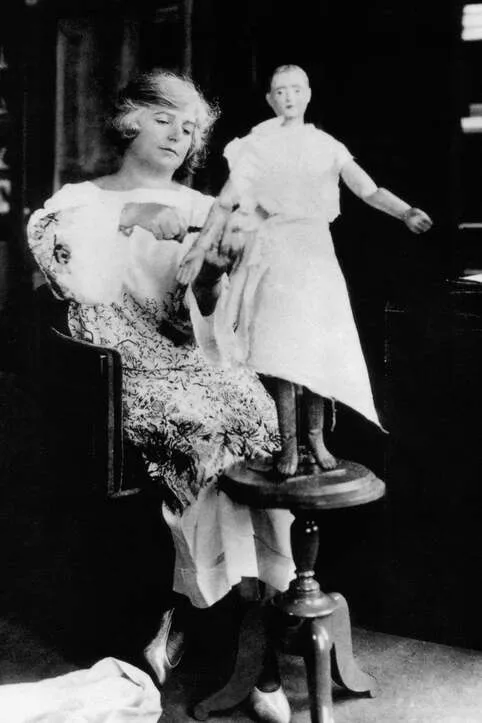
Biography
Madeleine Vionnet was born on 22 June 1876 in Chilleurs-aux-Bois, a village in France's Loiret department, into a poor family. Her parents separated when she was young, and she moved with her father, a toll collector, to the Paris suburb of Aubervilliers at around age five.
She left school at eleven or twelve and apprenticed with a local seamstress. At eighteen, she married briefly; the marriage produced a child who died in infancy, and Vionnet left her husband soon afterward.
She moved to London, working first as a hospital seamstress and later as a fitter for the dressmaker Kate Reily, who imported original French couture designs for her English clientele.
Around 1900, Vionnet returned to Paris and spent six years as a toile-maker (the specialist who translates a design into its first draped, three-dimensional form) at the fashion house Callot Soeurs, before a spell at the house of Jacques Doucet.
It was during these years that her signature approach took shape. Inspired by the free-flowing dance costumes of Isadora Duncan and by the drapery of ancient Greek sculpture, Vionnet began experimenting with bias-cut fabric — cloth cut diagonally against its grain, which let it cling, stretch, and move with the wearer in a way conventional dressmaking never allowed. She worked the ideas out not on paper but directly on a small wooden mannequin, pinning and draping fabric by hand until the shape emerged.
In 1912, with her own savings supplemented by investment from a client, Germaine Lillas, whose family owned the Paris department store Bazar de l'Hôtel de Ville, Vionnet opened her own house at 222 Rue de Rivoli.
The outbreak of the First World War forced her to close it in 1914; she spent part of the war traveling in Rome. The house reopened in 1919, with new investors joining, including, by 1922, Théophile Bader, owner of the Galeries Lafayette.
Through the 1920s, Vionnet rose to the very top of Paris couture alongside Coco Chanel.
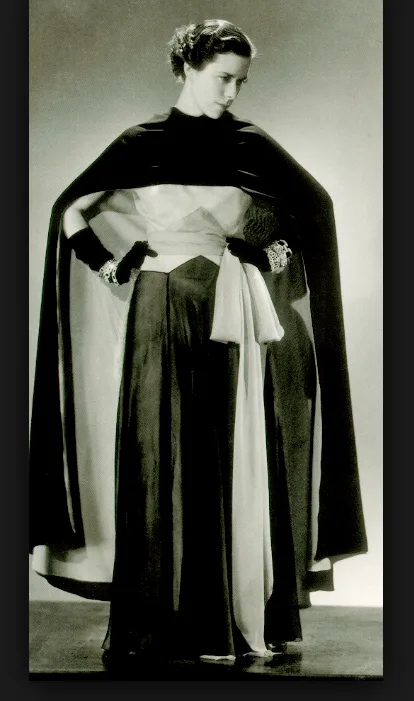
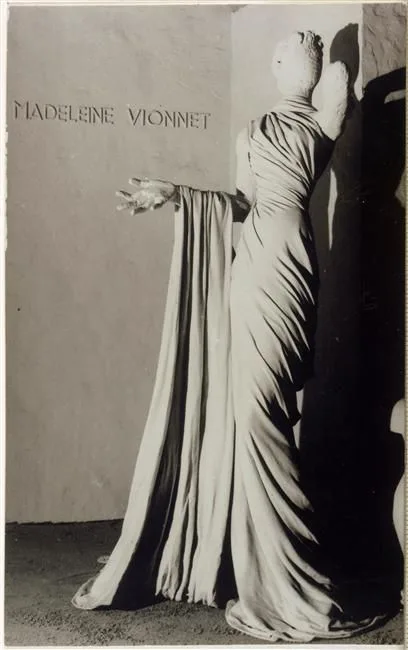
British Vogue called her, in 1925, "perhaps the greatest geometrician among all French couturiers." Her business grew large enough to require new premises at 50 Avenue Montaigne, employing more than a thousand people across twenty-six workshops — though Vionnet herself worked mostly out of sight, receiving her head seamstresses privately in her own study rather than touring the workshop floor.
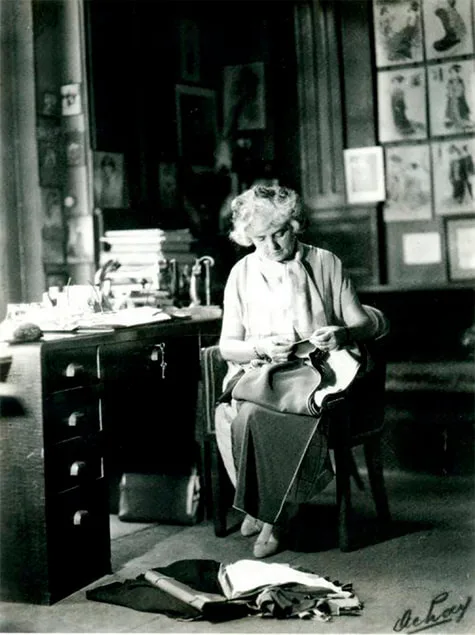
She ran that enormous operation according to principles decades ahead of their time: paid holidays, maternity leave, an on-site nursery, a subsidized dining hall, and a resident doctor and dentist for her staff.
Vionnet was equally uncompromising about protecting her own work. In 1921, alarmed by how quickly manufacturers were copying couture designs and reselling them cheaply within weeks of a show, she founded the Association for the Defence of Fine and Applied Arts to fight fashion piracy. Every garment that left her house was photographed from the front, back, and sides, numbered, signed, and marked with her own fingerprint as proof of authenticity. "Death to copyists!" was, by her own account, close to a personal motto.
Her clients through the 1930s included Greta Garbo, Marlene Dietrich, Katharine Hepburn, and Joan Crawford, and she is estimated to have produced some twelve thousand garments over the course of her career.
Of her own philosophy, Vionnet said simply: "If a woman smiles, her dress must also smile."
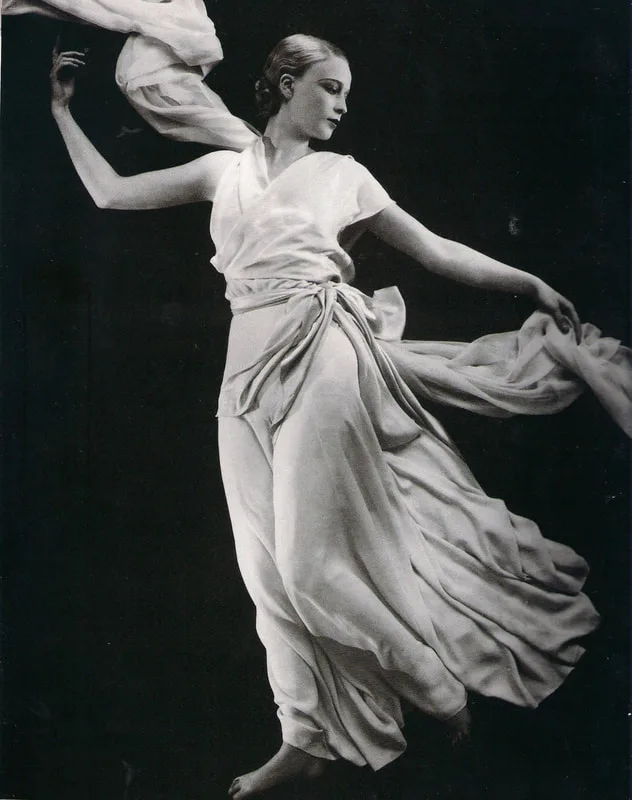
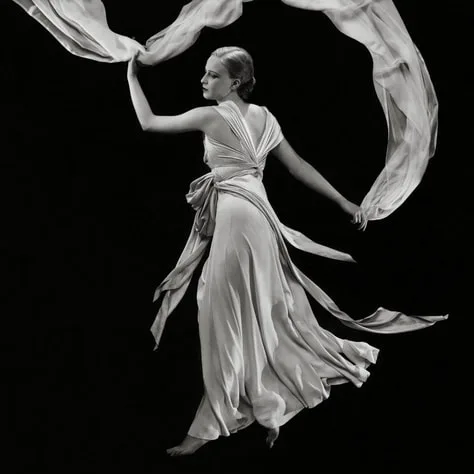
In 1939, France awarded her the Légion d'Honneur. On 2 August that same year, with war against Germany just weeks away, Vionnet showed a farewell collection and closed her house for good.
Unlike Chanel, who returned triumphantly to fashion in 1954, Vionnet never reopened.
She donated a vast trove of her own working materials — designs, photographs, prototypes, finished garments, and records — to what would become the forerunner of Paris's costume museum, a deliberate act of preserving her own techniques for history even as she stepped away from the industry herself.
She lived on in quiet retirement for another thirty-five years, occasionally mentoring younger designers, and died in Paris on 2 March 1975, at ninety-eight.
Because she chose to close her house rather than sell out her name or attempt a comeback, Vionnet has often been remembered less vividly than Chanel, despite being, by most serious historians' accounts, every bit her equal in influence.
Designers who came after her — Azzedine Alaïa, Issey Miyake, Vivienne Westwood among them — have continued to cite her draping techniques as a direct source.
And so did a young Spanish tailor she met when Paris couturiers still showed their collections in San Sebastián: Cristóbal Balenciaga, who became a lifelong friend, and it was Vionnet who encouraged the young Spaniard toward a career of his own.