Film & TV
The Leopard (film, Il Gattopardo, 1963) Starring Burt Lancaster, Alain Delon and Claudia Cardinale
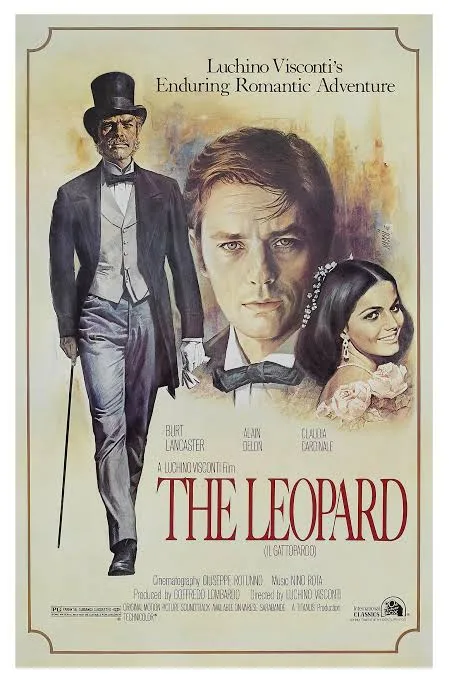
The Leopard (Il Gattopardo, 1963) is an Italian historical drama directed by Luchino Visconti, adapted from the only novel by Giuseppe Tomasi di Lampedusa, published posthumously in 1958. Burt Lancaster plays Don Fabrizio Corbera, Prince of Salina, a Sicilian aristocrat who watches his world dissolve during the unification of Italy and decides to help it dissolve gracefully.
Filmed in Sicilian palaces and dust-white countryside, the film follows a single family through the Risorgimento of 1860 and ends with a ball that lasts nearly an hour of screen time. Its most quoted line belongs to the Prince's nephew: "If things are to stay as they are, everything must change."
Plot
May 1860. The Salina family kneels at the daily rosary in their villa outside Palermo while a servant reports that the body of a Bourbon soldier has been found in the garden.
Giuseppe Garibaldi has landed in Sicily. Don Fabrizio Corbera, Prince of Salina, receives the news with the calm of a man who has already calculated the outcome.
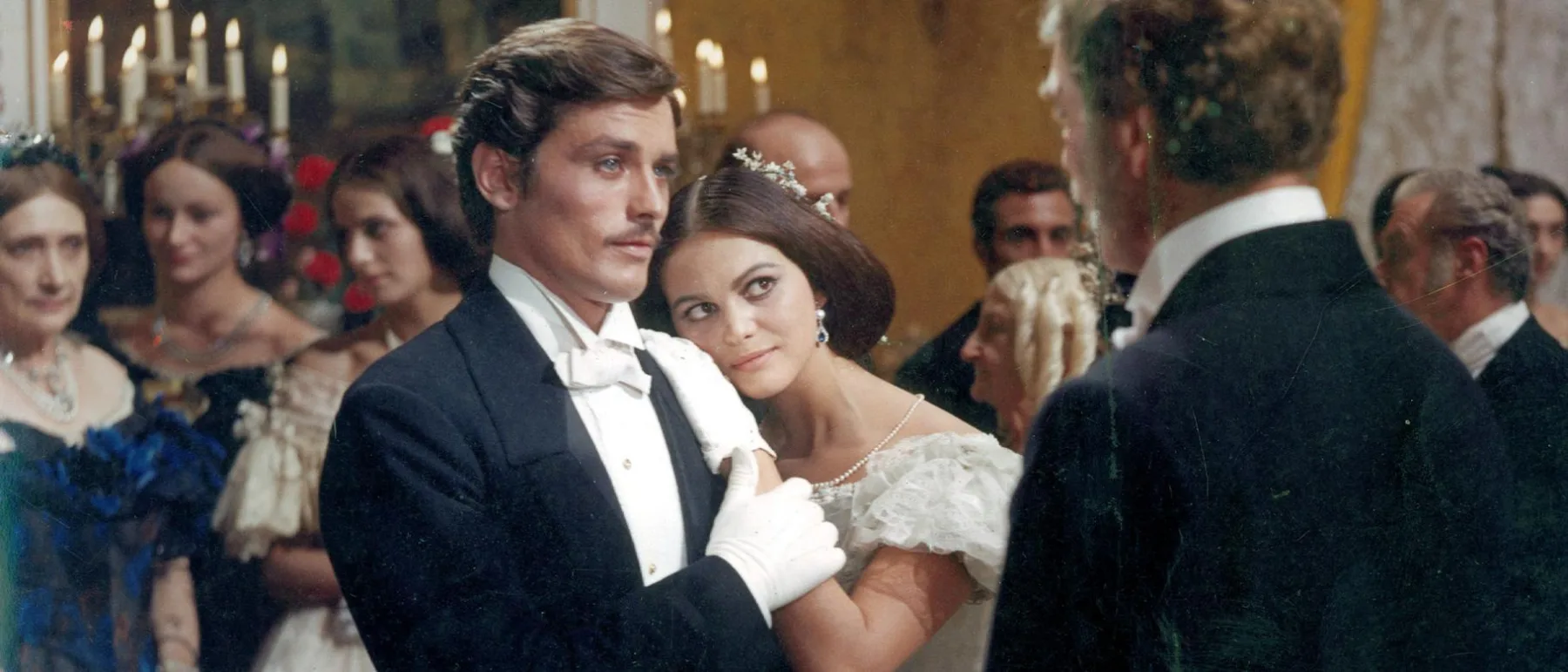
His favorite nephew, Tancredi Falconeri, arrives with a bandage over one eye and leaves to fight with the Garibaldini. The Prince does not stop him. He understands that the old order will survive only through those willing to change sides early.
After the fighting, the family makes its long, thirsty journey to the summer palace at Donnafugata. There the Prince finds the new Italy already installed in the person of Don Calogero Sedàra, the mayor, a coarse, shrewd, spectacularly rich landowner.
Don Calogero Sedàra brings his daughter, Angelica, to dinner. She is beautiful, unembarrassed, and laughs too loudly, and Tancredi Falconeri is lost from the moment she enters the room.
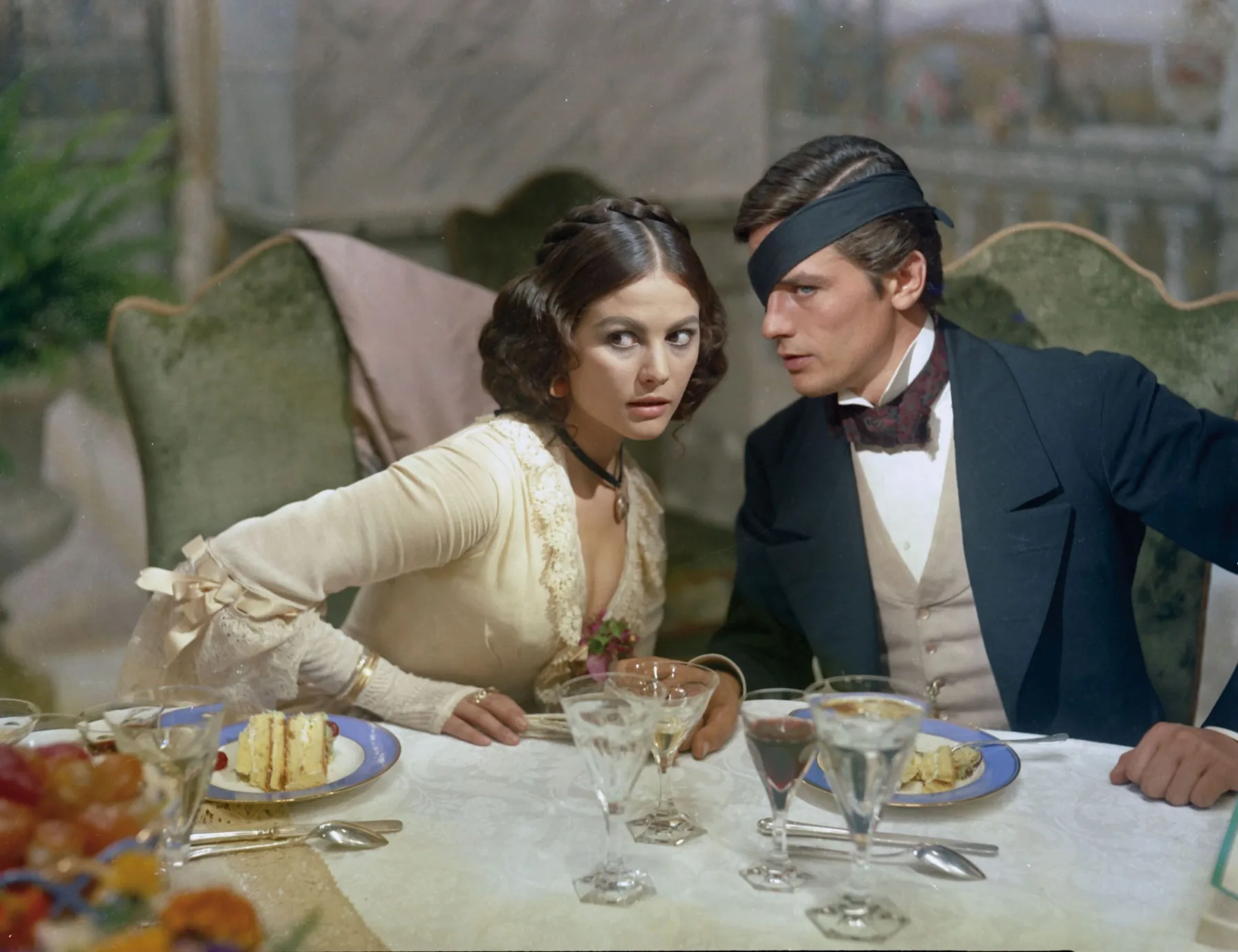
Tancredi Falconeri is understood to be destined for the Prince's own daughter, Concetta Corbera, who loves him quietly. The Prince chooses money and vitality over sentiment and arranges the marriage with Angelica Sedàra himself.
A plebiscite is held on union with the Kingdom of Sardinia. The result is announced as unanimous, though the Prince's loyal organist, Don Ciccio Tumeo, insists privately that he voted no.
An emissary from Turin, the Chevalier Aimone Chevalley di Monterzuolo, offers the Prince a seat in the new senate. He declines, recommending Don Calogero Sedàra instead, and explains that Sicilians do not wish to improve, believing themselves already perfect.
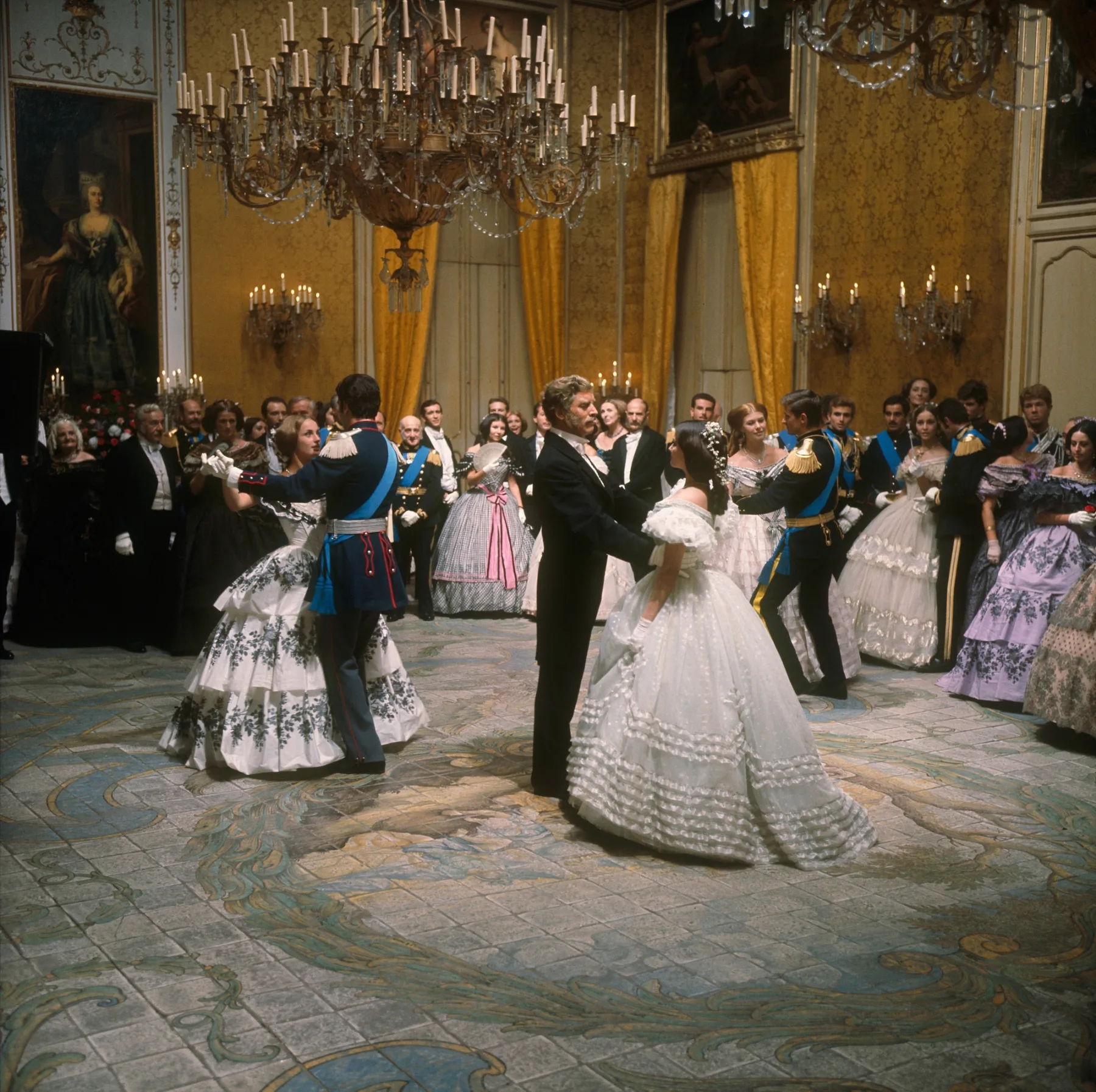
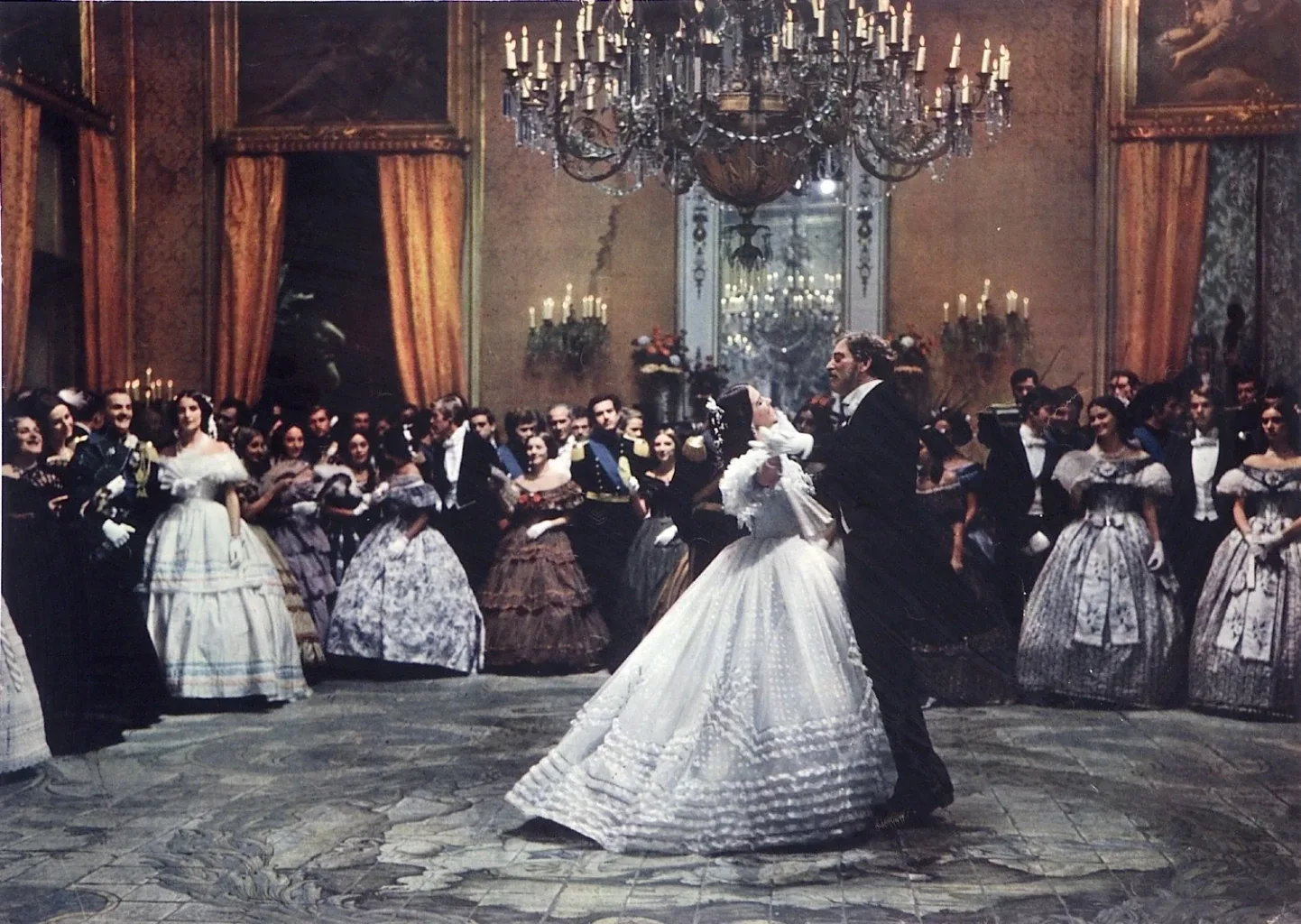
The film closes at a ball in a Palermo palace. The Prince dances a waltz with Angelica Sedàra, refuses an old friend's invitation to cards, and walks home alone through streets where a firing squad is at work at dawn.
Cast
- Burt Lancaster as Don Fabrizio Corbera, Prince of Salina
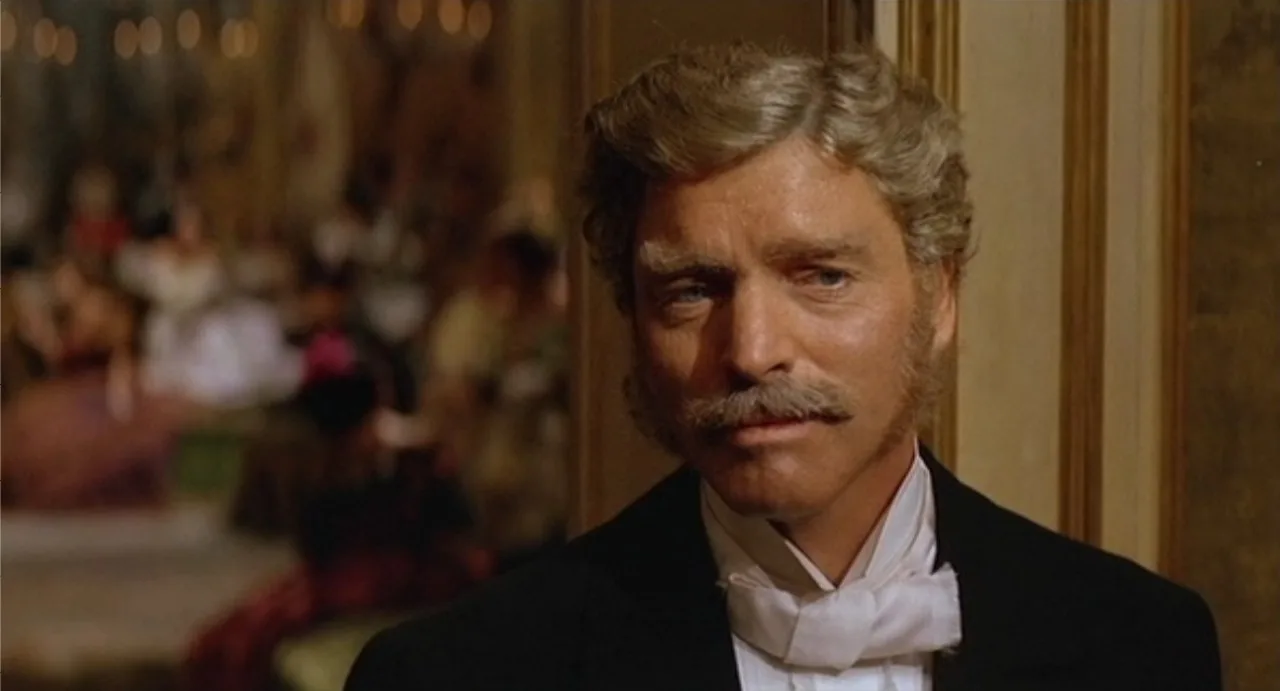
Burt Lancaster as Don Fabrizio Corbera, Prince of Salina in The Leopard (Il Gattopardo, 1963) - Alain Delon as Tancredi Falconeri
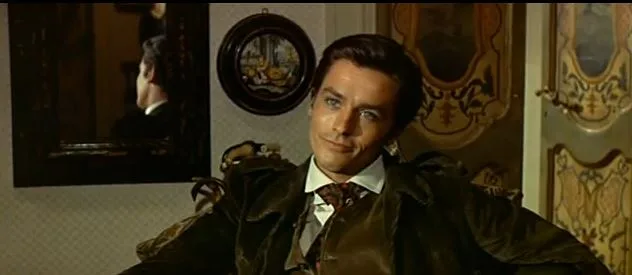
Alain Delon as Tancredi Falconeri in The Leopard (Il Gattopardo, 1963) - Claudia Cardinale as Angelica Sedàra
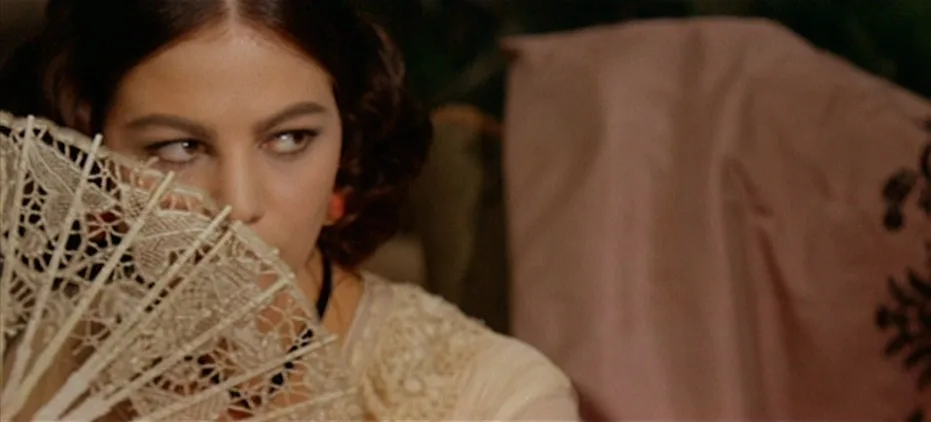
Claudia Cardinale as Angelica Sedàra in The Leopard (Il Gattopardo, 1963) - Paolo Stoppa as Don Calogero Sedàra
- Rina Morelli as Princess Maria Stella Corbera
- Romolo Valli as Father Pirrone
- Serge Reggiani as Don Ciccio Tumeo
- Lucilla Morlacchi as Concetta Corbera
Burt Lancaster plays the Prince with his physical power held almost entirely in reserve. The performance lives in small gestures: the weight of a hand on a banister, an ironic half-smile, the private exhaustion that shows only when no one in the family is watching.
Alain Delon gives Tancredi Falconeri a bright, unbothered opportunism. He is charming enough that his calculations look like high spirits, and his uncle loves him for exactly the qualities that will replace him.
Claudia Cardinale makes Angelica Sedàra a force of nature rather than a prize. Her warmth, appetite, and complete lack of shame are the new century arriving in a ball gown.
Paolo Stoppa's Don Calogero Sedàra is comic and genuinely unsettling, a man who appears at a princely dinner in an ill-judged tailcoat and will still own everything within a generation. Rina Morelli, Romolo Valli, and Lucilla Morlacchi hold the family's older devotions in place, and Serge Reggiani gives the film its one voice of open grief for the vanished kingdom.
Production
Goffredo Lombardo of Titanus secured financing from Twentieth Century-Fox on the condition that an American star lead the film, then hired Burt Lancaster without consulting Luchino Visconti. Visconti, fourth child of the Duke of Modrone, had wanted Nikolai Cherkasov or Laurence Olivier, and privately dismissed the choice as a cowboy.
Burt Lancaster later told the critic Roger Ebert that Visconti's first reaction was "Oh, no! A cowboy!" He arrived in Sicily in May 1962, read and reread the Giuseppe Tomasi di Lampedusa novel, studied the Risorgimento, spent time with the novelist's widow and adopted son, and cultivated the surviving Palermo nobility, only to conclude that the perfect model for Prince Salina was Visconti himself.
The director received him coldly for weeks. The tension broke when Burt Lancaster finally lost his temper in front of the crew, and Visconti was so impressed by the force of it that the two became close for the rest of the production. Lancaster afterward called Visconti the finest director he had ever worked with.
Visconti insisted on shooting in real buildings rather than on sound stages, refurbished as needed to 1860. Location work ran through Palermo and the Sicilian interior, with the Donnafugata interiors filmed in a palace at Ariccia near Rome.
One rehearsal became the story Burt Lancaster told for the rest of his life. Opening a dresser drawer, he found it filled with tailored silk shirts made for him, and asked Giuseppe Rotunno whether the camera would see them. Told that it would not, he asked Visconti why they were there. "You're the prince," the director answered. "Is for you to touch."
Piero Tosi designed the costumes, working with the tailor Umberto Tirelli. Around two thousand garments were made, from crinolined silks and lace headdresses for the aristocracy to peasant frocks and military uniforms.
Piero Tosi faded the red Garibaldian jackets one at a time with tea leaves. The shirts were rinsed in tea, dried in the sun, then buried in the ground to earn their wear.
For Claudia Cardinale's ball gown, Piero Tosi chose a fine organza from Dior over twelve layers of tulle, with a hand-embroidered handkerchief in the pocket that no audience would ever see. The corset beneath it pulled her waist to little more than fifty centimeters. Burt Lancaster could close his hands around it, and Cardinale showed Visconti the bruises the boning left on her skin.
The ball occupies the last forty-five minutes of the film and was shot at the Palazzo Valguarnera-Gangi in Palermo, still in the hands of the original family's descendants. Roughly four hundred costumes were made for the sequence alone, among them fifty liveries, the ball gowns, and two hundred tailcoats and uniforms.
Filming ran at night, from evening until dawn, because the heat made costumes unwearable by day. Flowers arrived daily from San Remo, the buffet was rebuilt each evening with fresh lobster and roasts and cakes, and gold and silver tableware was lent by Palermo families. Many of those families appear on screen as themselves among the guests.
Two thousand candles lit the rooms, but Technicolor stock of the early 1960s was too slow to be exposed by candlelight, so lamps were rigged above the chandeliers. The heat melted the candles and filming stopped every hour while they were replaced. The guests' white gloves stained with sweat, and Visconti had those replaced too, from a laundry set up beside the set.
Mario Garbuglia's sets and Giuseppe Rotunno's photography share the same logic of decay: gilding under dust, shutters closed against glare, mirrors that show the family at a slight remove from itself. Paintings and objects were borrowed from museums and insured at ruinous cost.
Nino Rota composed the score and also supplied the ball with an unpublished waltz he attributed to Giuseppe Verdi, found in manuscript. Burt Lancaster's scenes were shot in English and dubbed for the Italian release, while most of the rest was played in Italian, an arrangement Lancaster himself proposed so that his colleagues could act in their own language.
Luchino Visconti and his screenwriters followed Giuseppe Tomasi di Lampedusa closely, with two large departures. They added Giuseppe Garibaldi's victory at Palermo, and they cut the novel's leap forward in time to the Prince's death and the family's final decline, letting the ball carry that knowledge instead.
Release/reception
Luchino Visconti's first assembly ran 205 minutes. He reduced it to 195 for Cannes, then to 185 minutes for the Italian release, which he considered his preferred version. The film opened in Italy on 28 March 1963 and in France on 14 June.
It won the Palme d'Or at the Cannes Film Festival in May 1963. In Europe it was both a critical and a commercial success, taking $370,000 in ten days across eight Italian cities and becoming one of the year's biggest draws in France, with more than three and a half million admissions.
Twentieth Century-Fox handled Britain and the United States and treated the film badly. The Technicolor prints were abandoned for the inferior DeLuxe process, 70mm was reduced to 35mm, and the running time was cut to about 161 minutes with English dubbing. Most American critics dismissed what they saw.
Piero Tosi received an Academy Award nomination for costume design in 1964. The 185-minute version did not reach American screens until 1983, twenty years late and seven years after Luchino Visconti's death.
Its standing now is close to unassailable, regularly placed among the greatest films ever made. The reason is in the last shot of the Prince, an old lion walking home through a waking city, kneeling in the street at the sound of a bell, while somewhere out of sight the new Italy shoots the men who made it.