People
Karl Lagerfeld (born Karl Otto Lagerfeldt; 10 September 1933 – 19 February 2019)
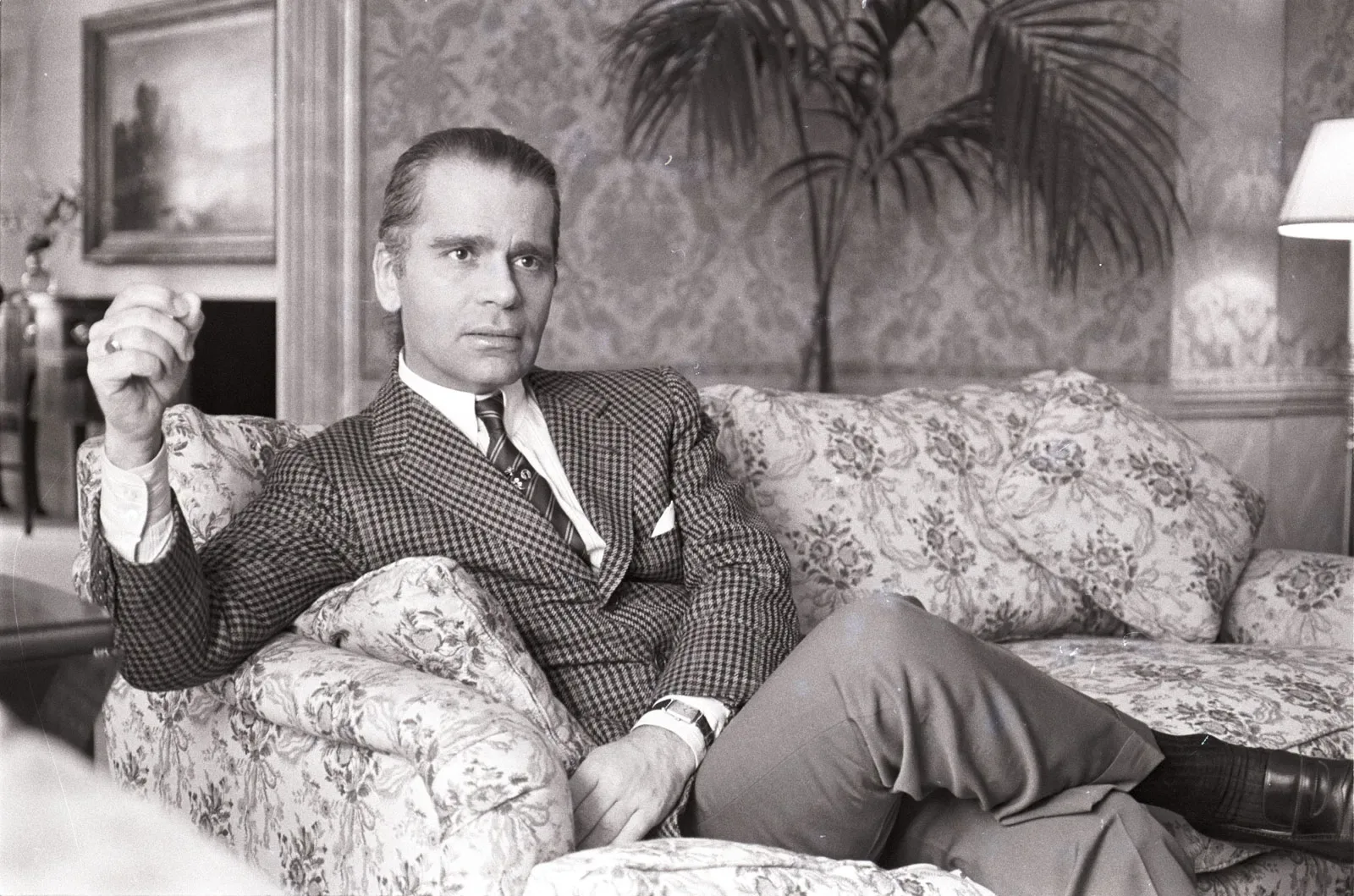
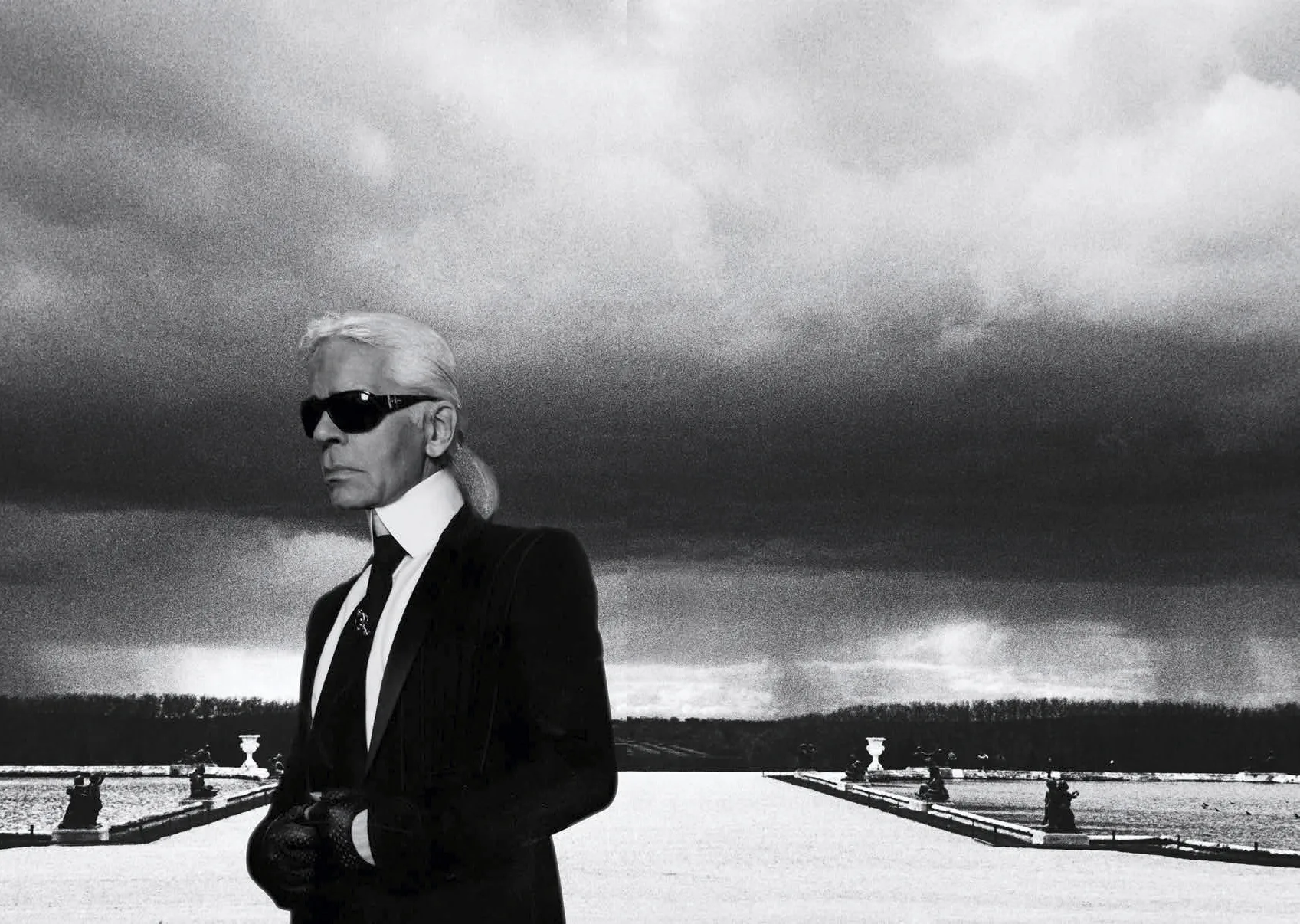
Karl Lagerfeld (born Karl Otto Lagerfeldt; 10 September 1933 – 19 February 2019) was a German fashion designer best known as the creative director who revived the House of Chanel after Coco Chanel's death, a post he held for thirty-six years alongside a fifty-four-year run at Fendi and his own eponymous label. Instantly recognizable by his powdered ponytail, dark glasses, and fingerless gloves, Karl Lagerfeld became as much a character of his own invention as any of the clothes he designed.
Biography
Karl Otto Lagerfeldt was born in Hamburg on 10 September 1933, the son of Otto Lagerfeld, who had built a fortune importing condensed milk into Germany, and Elisabeth Bahlmann, an accomplished violinist.
He grew up in a wealthy, intellectually restless household, with an older sister, Martha, and a half-sister, Thea, and spent part of his early childhood on a large family estate in Bavaria, tutored in French and kept well away from the wartime bombing that devastated Hamburg. Karl later removed the final "t" from his surname, deciding Lagerfeld sounded "more commercial."
He was convinced from an early age that he would be famous, and cut pictures from fashion magazines as a boy. At nineteen, in 1952, Karl moved to Paris to finish his education, studying at the Lycée Montaigne.
In 1954, Karl won the prestigious Woolmark Prize for a coat design, sharing the honor that year with another young entrant: Yves Saint Laurent. The two became friends almost immediately, a friendship that would later curdle into one of fashion's longest professional and romantic rivalries.
Karl went to work as an assistant to Pierre Balmain, staying until around 1962, then moved to the house of Jean Patou.

Karl became artistic director of Chloé in the early 1960s, working initially alongside its founder, Gaby Aghion, before becoming its sole designer in 1974.
His work there, known for its liberal use of flowing crêpe de chine, made him one of the most prominent designers in the world through the 1970s, frequently positioned in the press as Saint Laurent's rival for the title of fashion's most influential figure.
In 1965, Karl also became artistic director of the Roman house Fendi, a post he would keep, remarkably, for the rest of his life.
In 1972, Karl began the defining relationship of his life, with Jacques de Bascher, a nineteen-year-old French dandy and socialite. Karl paid for a small studio for de Bascher on the Rue du Dragon, a few minutes from his own home; the two never lived together, but stayed close for the following seventeen years. Karl always insisted the relationship was platonic. "I infinitely loved that boy," he told de Bascher's biographer, "but I had no physical contact with him. Of course, I was seduced by his physical charm."
The arrangement grew still more complicated when de Bascher also became, briefly, the lover of Yves Saint Laurent, entangling Karl's oldest friendship and fiercest rivalry around the same young man.
On 3 September 1989, Jacques de Bascher died of an AIDS-related illness, at thirty-eight. For Bascher's final days, Karl stayed at his side, then returned almost immediately to a highly disciplined work schedule, attending fittings within days.
He would later insist, when accused of coldness, that he had cared for his friend properly: "The better you live with yourself, the better you can take care of others." Those close to him said he gained considerable weight in the years of grief that followed.
In 1983, ten years after Coco Chanel's own death, Karl was named artistic director of her house, by then widely considered to have grown stale. He described the assignment to himself in characteristically blunt terms: "Chanel is an institution, and you have to treat an institution like a whore. Then you get something out of her."
He reworked the house's existing vocabulary, its tweed suits, camellias, quilted bags on chain straps, and interlocking double-C monogram, into sharper new shapes and bolder color combinations, restoring Chanel to global relevance almost single-handedly.
In 1984, Karl also launched his own label, Karl Lagerfeld.
Around the turn of the millennium, having carried the weight of his grief for a decade, Karl reinvented himself again.
Over thirteen months he lost ninety-two pounds, partly, he said, so he could fit into the razor-slim suits made by the designer Hedi Slimane, then working at Dior Homme, and published a bestselling account of the diet in 2005.
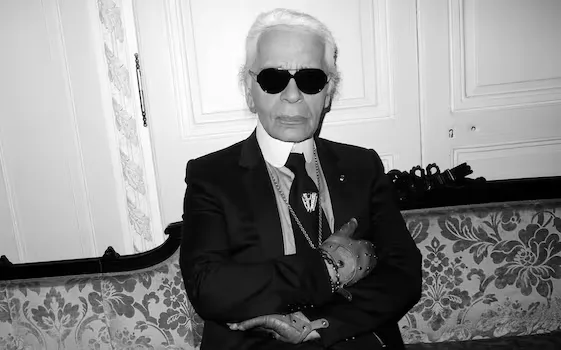
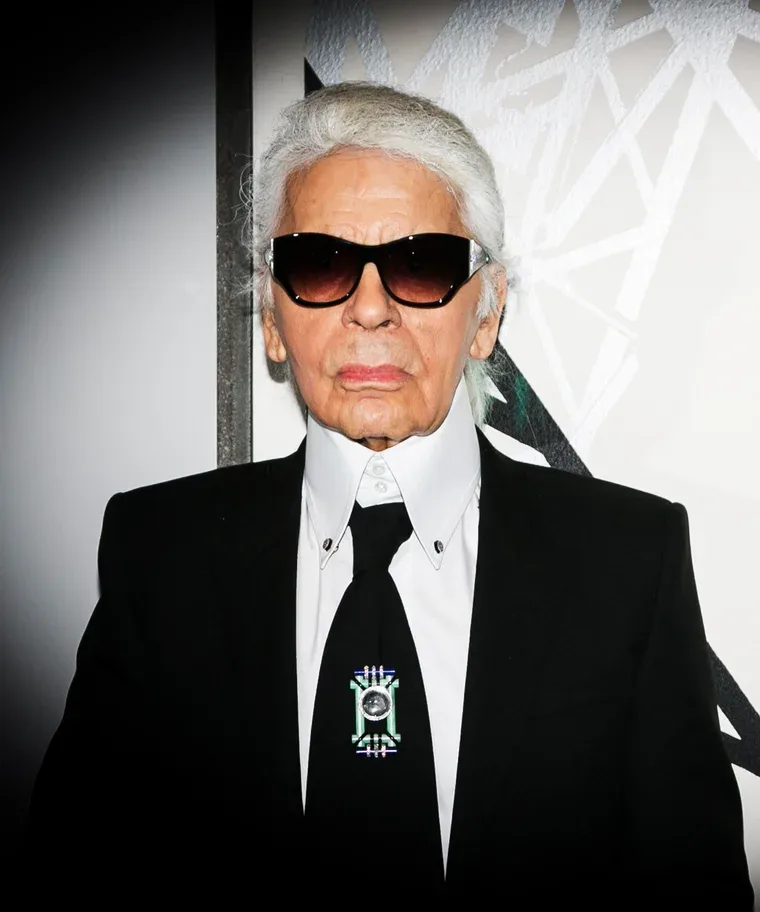
The transformation came with a new, deliberately theatrical image: powdered ponytail, dark sunglasses that rarely came off, fingerless gloves, high starched detachable collars. "I am like a caricature of myself," Karl said, "and I like that. It is like a mask."
He called himself, without much shame, a "cultural bulimic," amassing and periodically liquidating vast collections of eighteenth-century art, furniture, and books, some 300,000 of the last by the end of his life, spread across multiple homes he redesigned again and again.
In 1999, French authorities ordered him to pay 13.3 million euros in back taxes; the following year, he sold his eighteenth-century art collection at auction for more than 21 million euros.
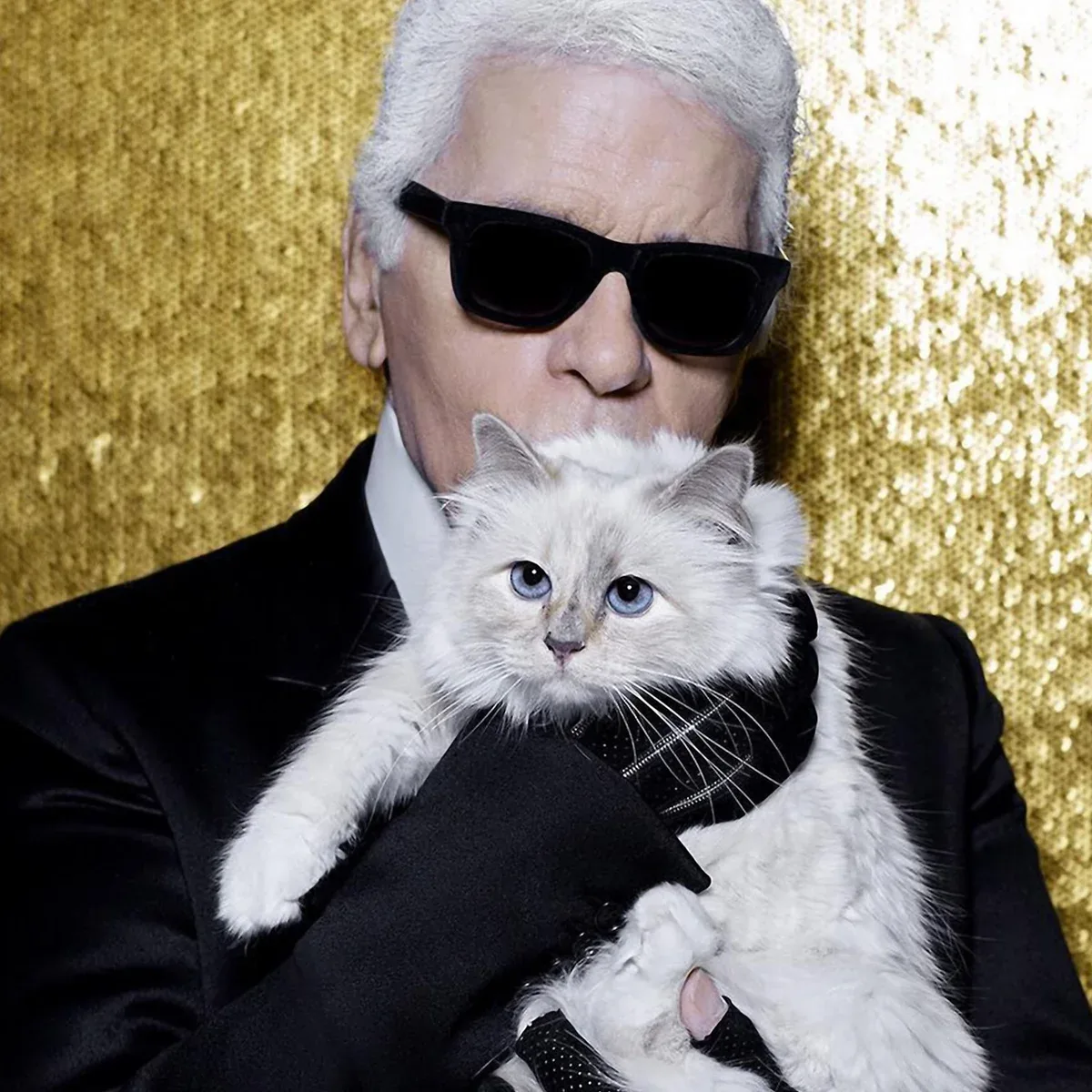
His later years brought new muses, including the model Baptiste Giabiconi, and an unlikely global celebrity in Giabiconi's cat, Choupette, whom Karl adopted, wrote a book about, and reportedly provided with two personal maids of her own. "I never thought that I would fall in love with a little cat like this," he said. "I cannot imagine another life, because I don't want it. I'm envious of nothing."
At the height of his output, Karl was overseeing as many as fifteen collections a year across Chanel, Fendi, and his own label, alongside a fragrance business, photography books, and self-shot advertising campaigns. He kept working nearly to the end, missing the final bow at a Chanel show in Paris in early 2019 due to what the house described only as fatigue.
Karl Lagerfeld died in Neuilly-sur-Seine, near Paris, on 19 February 2019, at eighty-five, though the exact year of his birth had been a subject of his own lifelong, deliberate obscuring.
Lagerfeld had long insisted he would rather die than be buried, and was cremated without ceremony, as he had wished, his ashes meant to be scattered together with his mother's, and eventually his cat's.
After his death, it was revealed that Lagerfeld had also quietly kept half of Jacques de Bascher's ashes hidden away for thirty years, intending all along for the two of them to be joined again at the end. "One day," he had told de Bascher's biographer, "they will be added to mine."
Virginie Viard, his closest collaborator for more than three decades, succeeded him at Chanel.