People
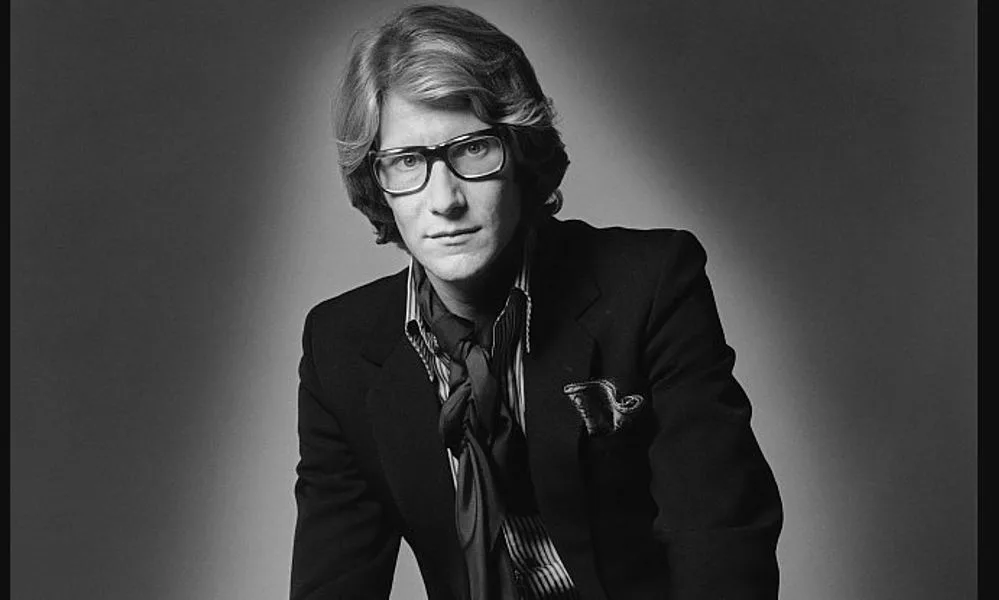
Yves Saint Laurent (born Yves Henri Donat Mathieu-Saint-Laurent; 1 August 1936 – 1 June 2008)
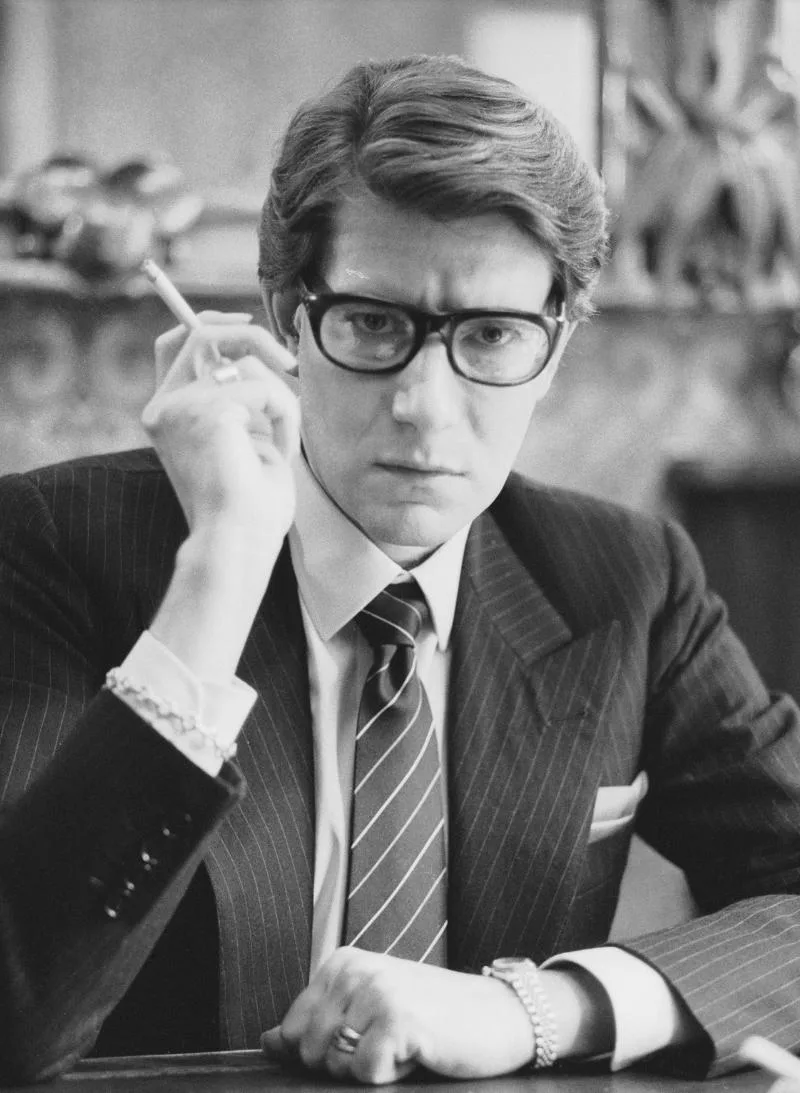
Yves Saint Laurent (born Yves Henri Donat Mathieu-Saint-Laurent; 1 August 1936 – 1 June 2008) was a French fashion designer, and, at twenty-one, the youngest couturier ever to lead a major Paris house when he succeeded Christian Dior in 1957. Over the following four decades he gave women the tuxedo, the safari jacket, and the concept of luxury ready-to-wear, becoming, alongside Dior and Coco Chanel, one of the handful of designers who genuinely reshaped how women dressed.
Biography
Yves Saint Laurent was born on 1 August 1936 in Oran, in French Algeria, to Charles Mathieu-Saint-Laurent, a lawyer and insurance broker who also ran a string of local cinemas, and Lucienne Andrée Mathieu-Saint-Laurent. He had two younger sisters, Michèle Mathieu-Saint-Laurent and Brigitte Mathieu-Saint-Laurent.
He was a quiet, introspective child, uninterested in sports, who built miniature stage sets and costumes for his own amusement and, by his early teens, was already designing dresses for his mother and sisters. His family remembered him as happiest at their second home in Trouville, on the Normandy coast.
In 1954, Yves Saint Laurent , still a seventeen-year-old student in Oran, won first prize in the dress category of an international competition run by the International Wool Secretariat, the same year and the same competition in which a young German entrant named Karl Lagerfeld won for a coat design.
The prize took Yves to Paris the following year, where he enrolled at the École de la Chambre Syndicale de la Couture Parisienne.
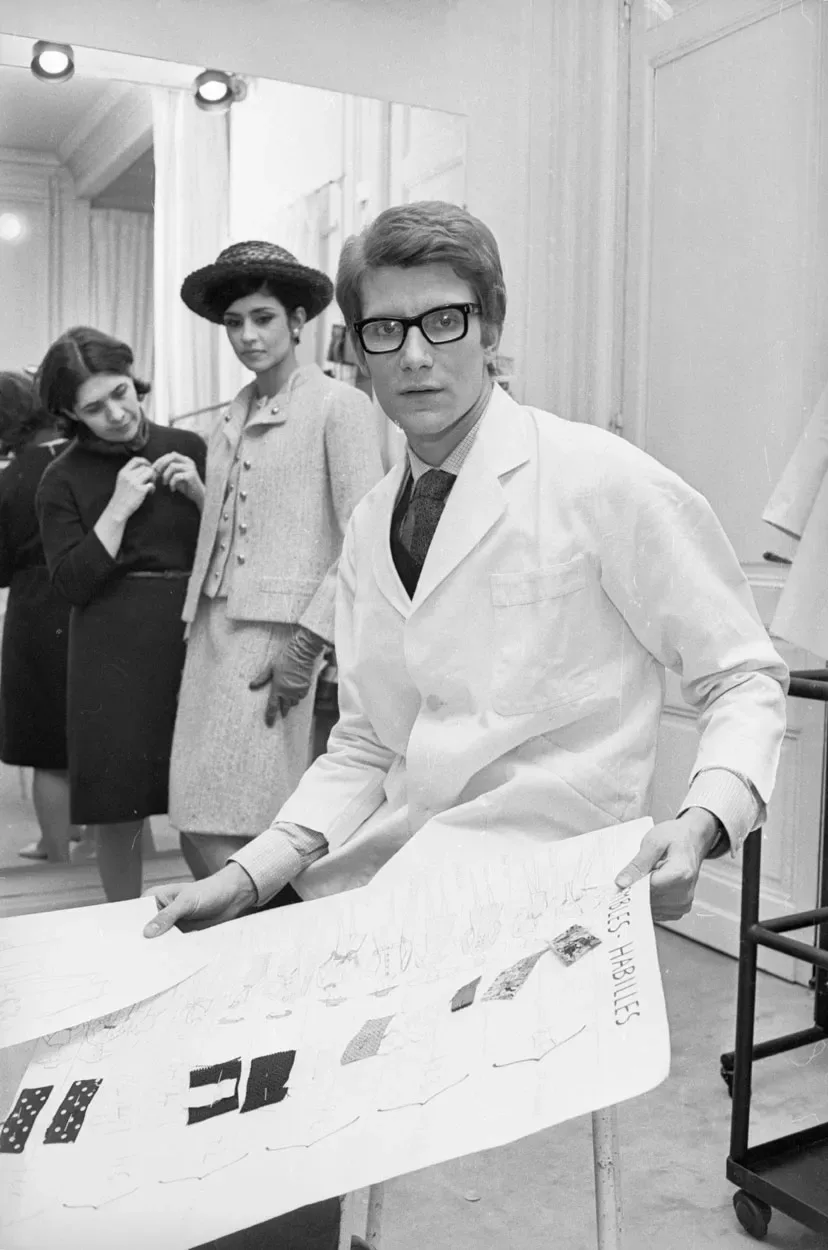
He never finished his first year there. Michel de Brunhoff, editor of French Vogue, saw Yves's sketches and introduced him to Christian Dior, who hired the eighteen-year-old immediately as an assistant. "He taught me the basis of my art," Yves later said of Dior.
When Dior died suddenly of a heart attack in 1957, twenty-one-year-old Yves was named artistic director of the house, the youngest person ever to lead a major Paris couture house.
His first collection for Dior, shown in January 1958, introduced the Trapeze line, a loosely tented silhouette that fell away from the shoulders, and was received as an instant triumph, earning him the Neiman Marcus Award and a wave of international fame few designers his age had ever experienced.
That same year, Yves met Pierre Bergé, who became both his life partner and, from that point on, the business mind behind everything Yves designed.
In 1960, Yves was drafted into the French army during the Algerian War. Marc Bohan replaced him at Dior in his absence. The strain of military service brought on a severe depression; Yves was hospitalized and eventually declared unfit for service, a release Bergé worked hard to secure. Yves went on to sue Dior's parent company for breach of contract and won.
With Bergé managing the finances, Yves opened his own house, presenting his first independent collection on 29 January 1962 at 30bis Rue Spontini in Paris.
In 1965, drawing directly on the color-block canvases of the painter Piet Mondrian, Yves created the geometric shift dress that became one of his most instantly recognizable designs, its clean planes of red, blue, yellow, black, and white translated with remarkable precision from painted canvas into wool jersey.
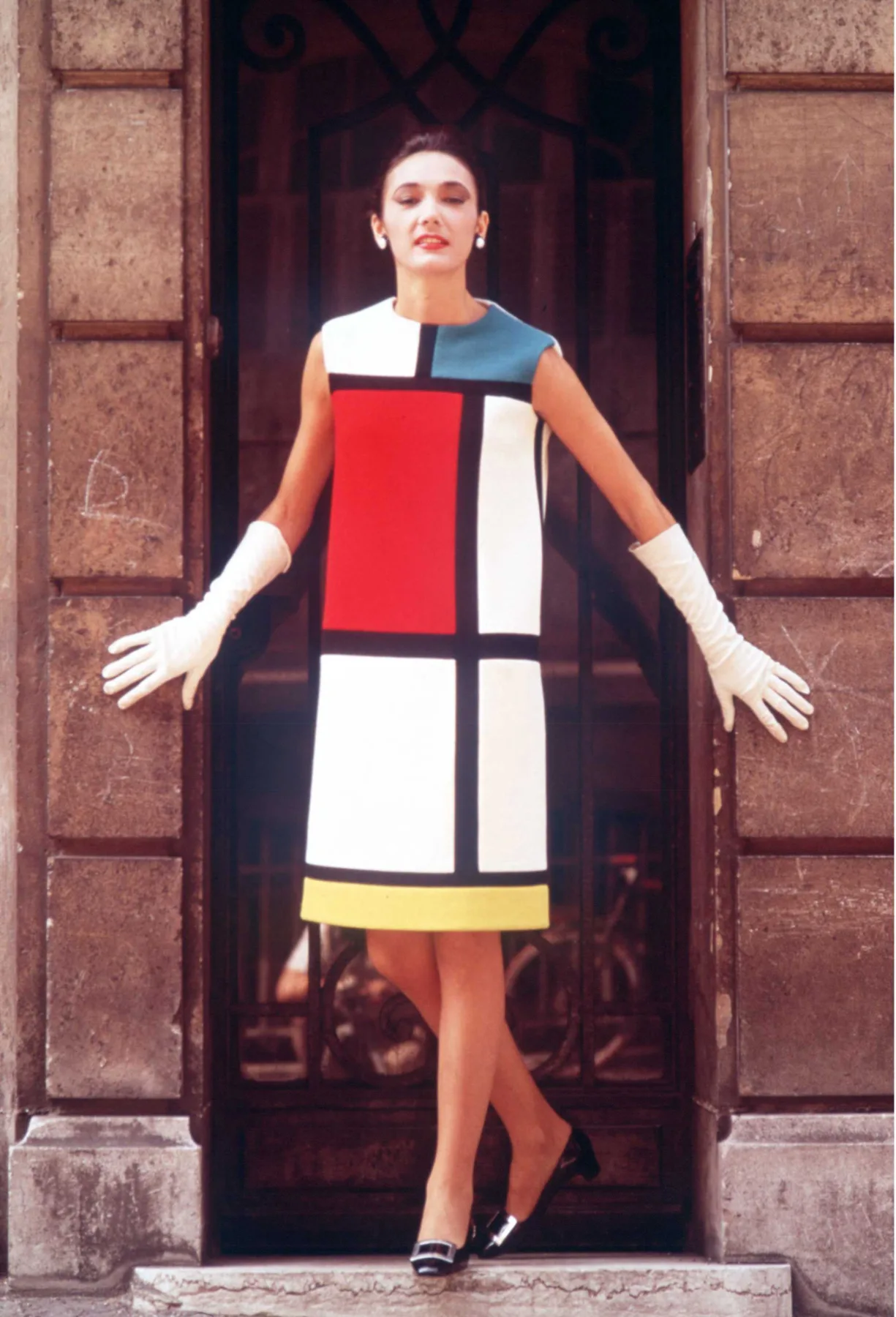
He would return throughout his career to the work of painters and writers he admired, Pablo Picasso, Georges Braque, Henri Matisse, Francisco Goya, Diego Velázquez, Andy Warhol, and the novelist Marcel Proust among them, and later folded in the influence of Morocco, where he and Bergé had fallen in love with Marrakech, along with some of the fashion industry's earliest prominent use of non-white models.
In 1966, Yves opened the first Yves Saint Laurent Rive Gauche boutique in Paris, a deliberately affordable ready-to-wear line sold under his own name rather than treated as a lesser sideline, a genuinely radical move for a couturier of his standing at the time. The actress Catherine Deneuve attended the opening.
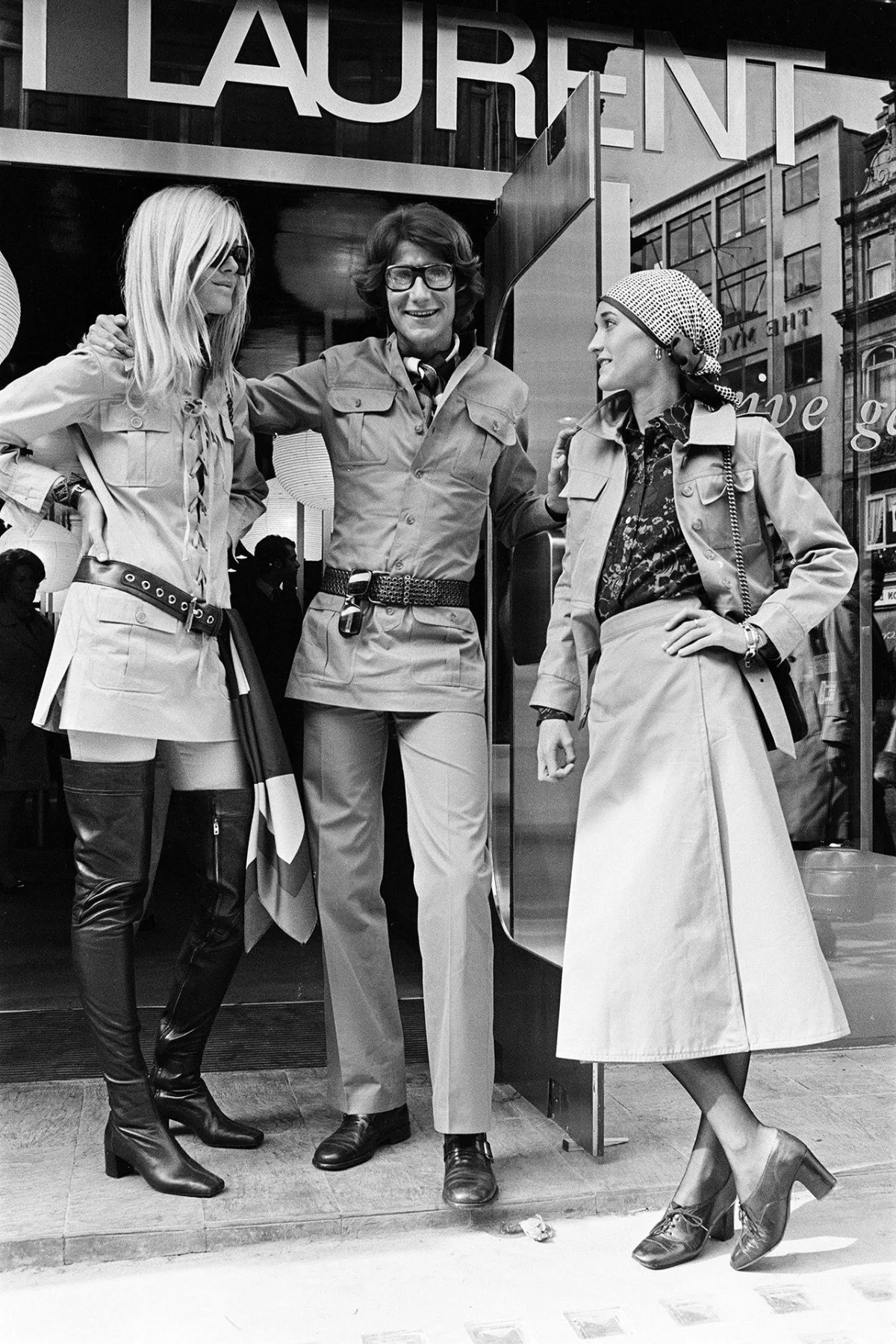
The same year, Yves introduced Le Smoking, a tuxedo suit tailored specifically for a woman's body. Its debut was greeted so coolly that Yves fell into a real depression over it. He kept faith with the design anyway, offering a Rive Gauche version within two months, and returned to some version of Le Smoking in every single collection he showed for the rest of his career.
Further signatures followed through the late 1960s and 1970s: the safari jacket, bomber jackets worn deliberately over delicate chiffon evening gowns, and workmen's smocks reimagined in satin and velvet, a nod to Elsa Schiaparelli's own earlier wit. Bergé later summed up what all of it amounted to for women: "If Gabrielle Chanel brings women to freedom, Yves Saint Laurent gives women freedom. He gives them power."
Behind the acclaim, Yves's health and mental state grew steadily more fragile. Through the 1970s and 1980s his drinking escalated to alcohol by the liter, often combined with amphetamines, worsening the manic-depressive episodes that shadowed him. Friends noted the paradox that he had almost no physical tolerance for any of it, growing intoxicated on half a glass of wine or a single puff of a shared cigarette, and he was hospitalized for depression more than once. Bergé remained his closest anchor throughout, running the business and, increasingly, looking after Yves himself.
In 1983, Yves became the first living fashion designer to be given a solo exhibition at New York's Metropolitan Museum of Art, a rare institutional recognition of fashion as an art form in its own right.
By the late 1990s, younger designers, including Stefano Pilati, had begun taking over more of the ready-to-wear collections as Yves's own health declined.
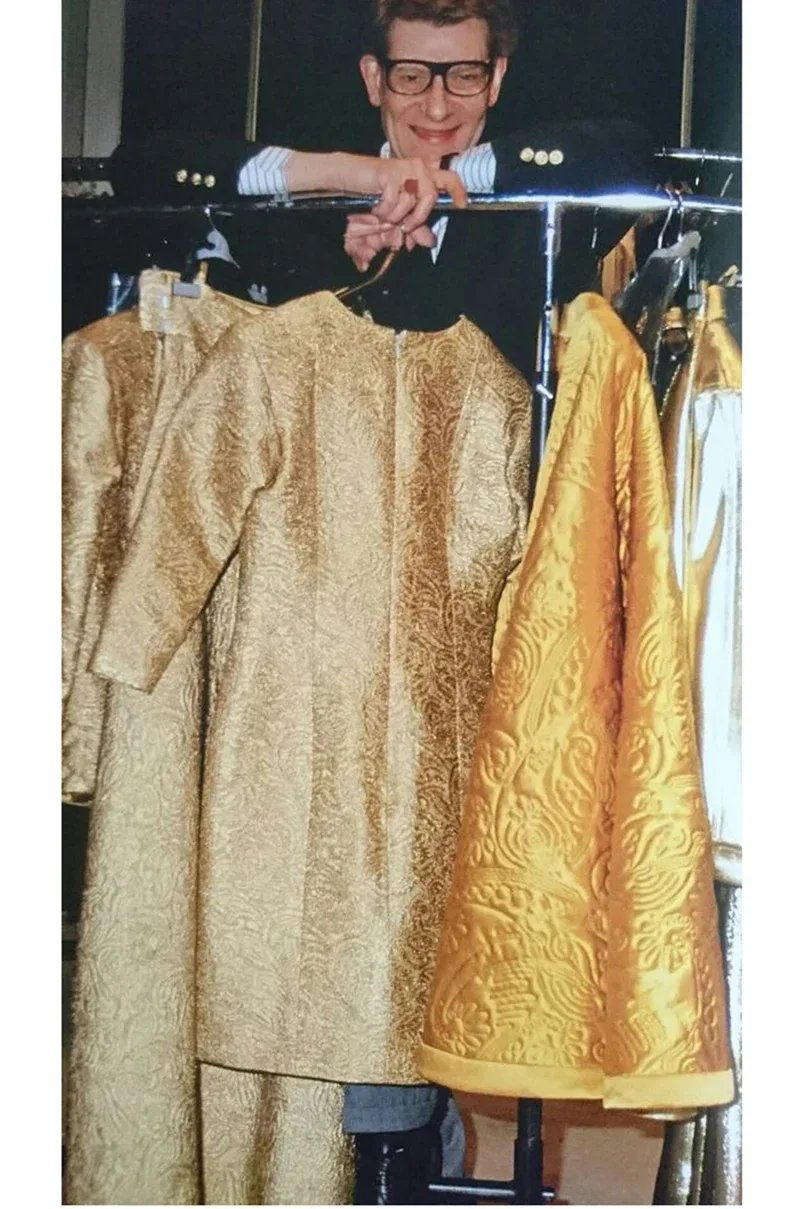
On 7 January 2002, at sixty-five, Yves announced his retirement, and closed his atelier for good on 22 January with a final show at the Centre Pompidou, roughly three hundred looks spanning his entire career, presented to two thousand guests inside the building and thousands more watching on screens outside. Four years earlier, he had already described where his own priorities had settled: "I am no longer concerned with sensation and innovation, but with the perfection of my style."
Yves lived quietly and increasingly privately in his final years, leaning on Bergé and a small trusted staff. In 2008, shortly before his death, he and Bergé entered into a French civil partnership, formalizing a relationship that had already lasted exactly fifty years.
Yves Saint Laurent died at his home in Paris on 1 June 2008, of brain cancer, at seventy-one. His ashes were scattered in the rose garden of the Jardin Majorelle in Marrakech, the Moroccan garden he and Bergé had spent decades restoring together, a final resting place in the one place he had always called his true home.