People
Pierre Cardin
Biography
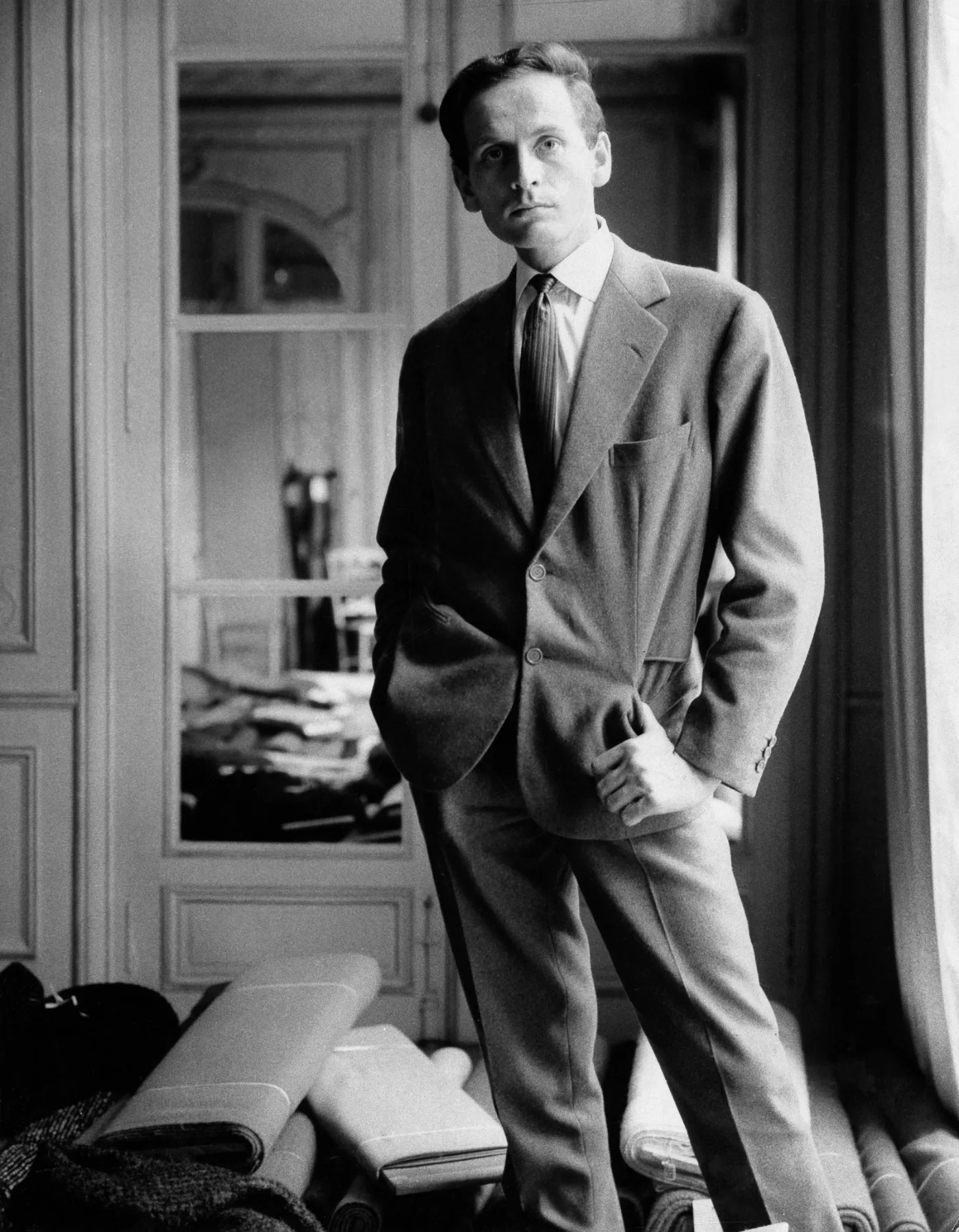
Pietro Costante Cardin was born on 2 July 1922 in San Biagio di Callalta, near Venice, the youngest of eleven children. His parents, Maria Montagner and Alessandro Cardin, were wealthy wine merchants, but lost their fortune in World War I.
In 1924, his family fled Italy's growing fascist regime and settled in Saint-Étienne, France.
By his own account, His father wanted him to study architecture, but Pietro decided at eight years old that he wanted to become a couturier.
At fourteen, he apprenticed with the best tailor in Saint-Étienne, a shop called Chez Bompuis, and at seventeen he left for Vichy to work under a tailor named Manby, making women's suits.
After volunteering with the Red Cross during the Second World War, the young Cardin, now going by the French name Pierre, moved to Paris in 1945 to pursue fashion in earnest. He found work at the house of Jeanne Paquin, and through it was drawn into a project for the director Jean Cocteau, assisting the designers Christian Bérard and Marcel Escoffier on the costumes for Cocteau's 1946 film La Belle et la Bête.
Cardin worked briefly at Elsa Schiaparelli's house as a cutter and applied, unsuccessfully, to join Cristóbal Balenciaga's studio. Bérard and Escoffier introduced him instead to Christian Dior, then still an assistant himself but on the verge of opening his own house.
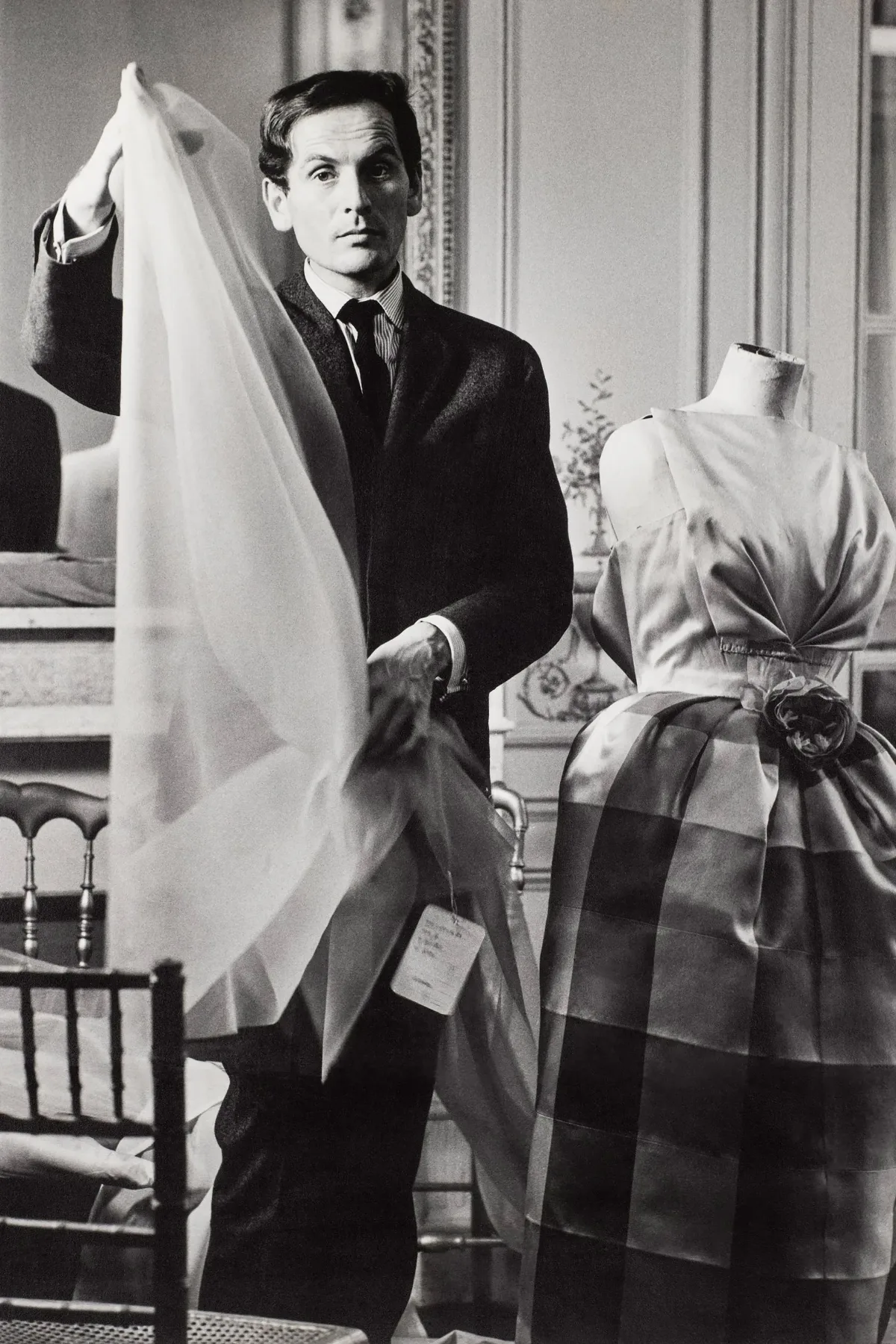
Dior hired Cardin in 1946, and made him head of the tailoring atelier in time for the debut 1947 collection that introduced the world to the Bar Suit and the New Look. Dior later called designers like Cardin "the future of haute couture."
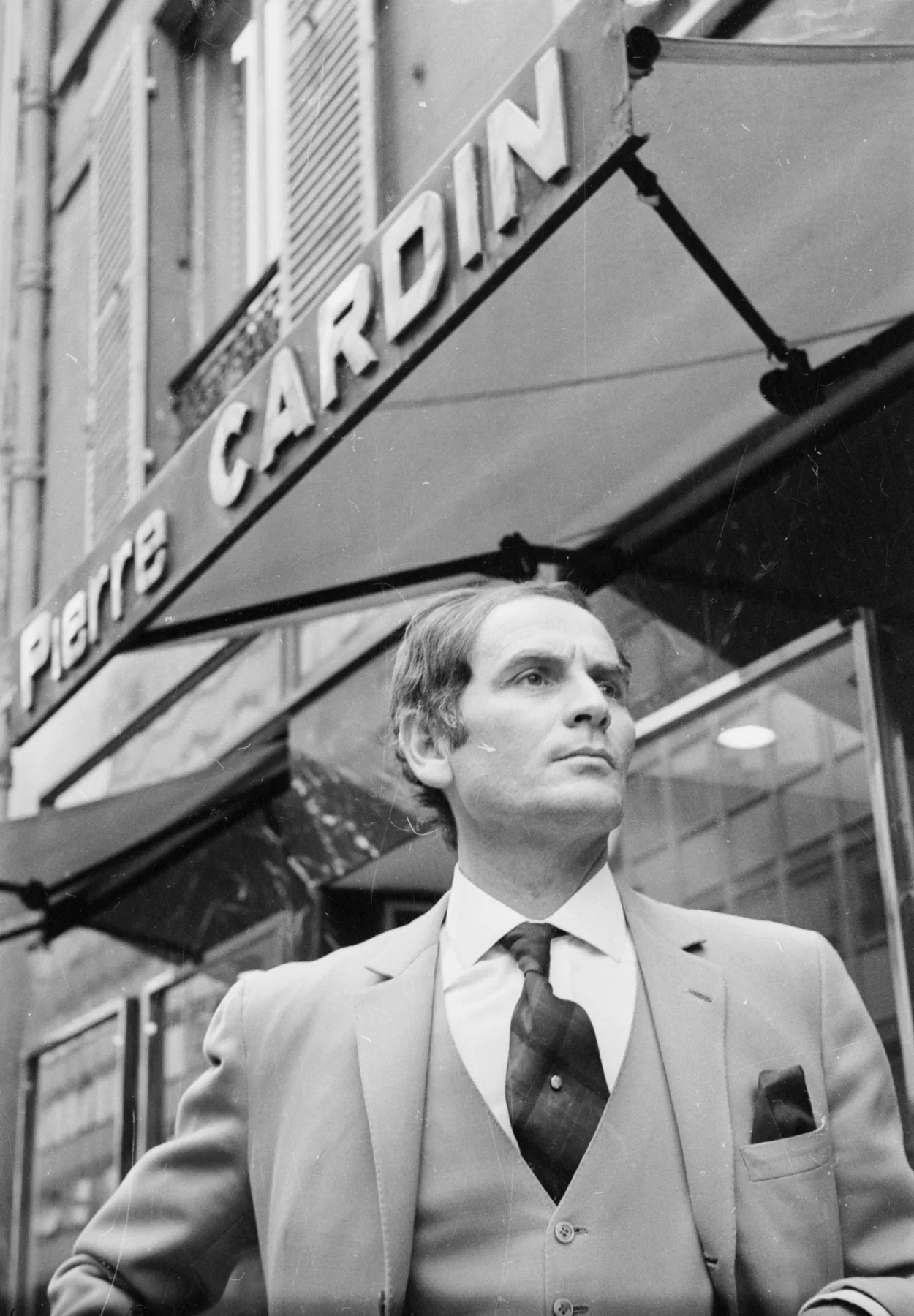
Cardin left Dior in 1950 to open his own fashion house at 10 Rue Richepanse in Paris, working at first mainly on costumes and masks for the theater. In 1951 he designed about 30 of the costumes for a celebrated masked ball in Venice hosted by Carlos de Beistegui, and his career was launched.
He presented his first womenswear collection in 1953 and joined the Chambre Syndicale, a French association of haute couture designers.
In 1954 Cardin introduced the design that made his name, the sculptural "bubble dress,", a short-skirted, bubble-shaped dress made by bias-cutting over a stiffened base. That same year, he opened his first boutique, Eve. A men's boutique, Adam, followed in 1957, the same year Cardin made his first visit to Japan, presenting a fashion show there while still almost entirely unknown in the country.
In 1959, Cardin staged one of the first ready-to-wear presentations ever given by a name couturier, at the Printemps department store in Paris. The Chambre Syndicale considered the move such an affront to haute couture tradition that it temporarily expelled him. He was later readmitted, and ready-to-wear eventually became standard practice across the entire industry he had briefly scandalized.
Cardin identified primarily as gay, and his defining personal relationship was with the French fashion designer André Oliver, his closest collaborator and, by most accounts, his intended heir, for more than forty years.
In the 1960s, Cardin also had a four-year relationship with the actress Jeanne Moreau, who wore his designs both on screen and off.
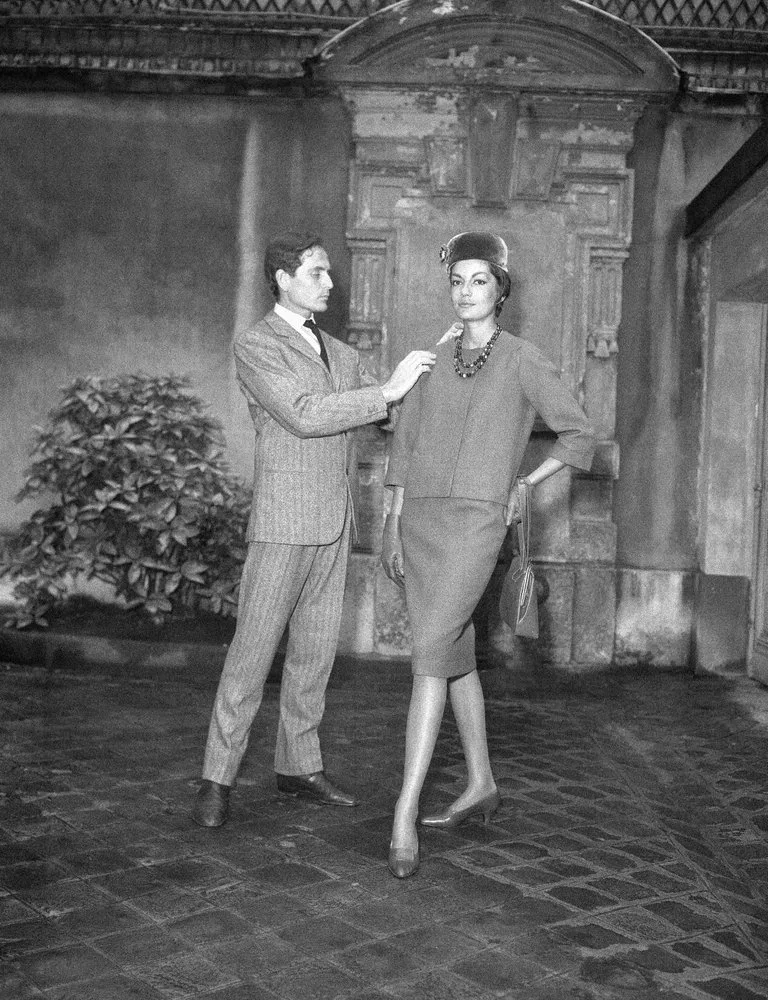
The mid-1960s brought the collections Cardin remains best known for: stark white knitted catsuits, tabards worn over leggings, tubular dresses, and helmets and goggles that announced what came to be called the Space Age look.
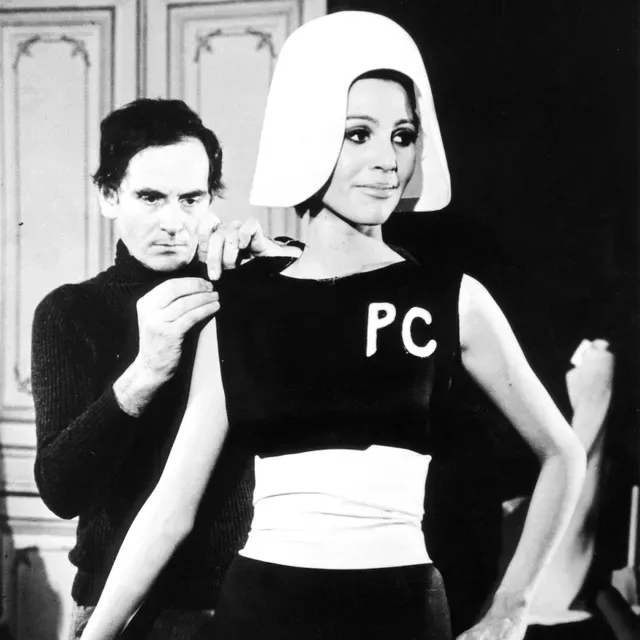
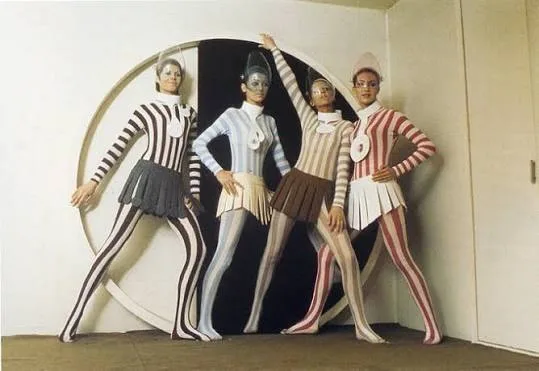
Jacqueline Kennedy, Mia Farrow, and Lauren Bacall all wore his clothes during these years, and his Edwardian-inflected menswear of the early 1960s became fashionable well beyond Paris once The Beatles adopted a version of it.
In 1968, Cardin developed his own synthetic fabric, Cardine, a bonded material heat-molded into raised geometric patterns, used the following year in his celebrated "egg carton dress."
Through the 1970s his materials softened into fluid angora jersey and elaborately pleated chiffon, and he became the first postwar designer to challenge London's Savile Row directly in the production of men's tailoring.
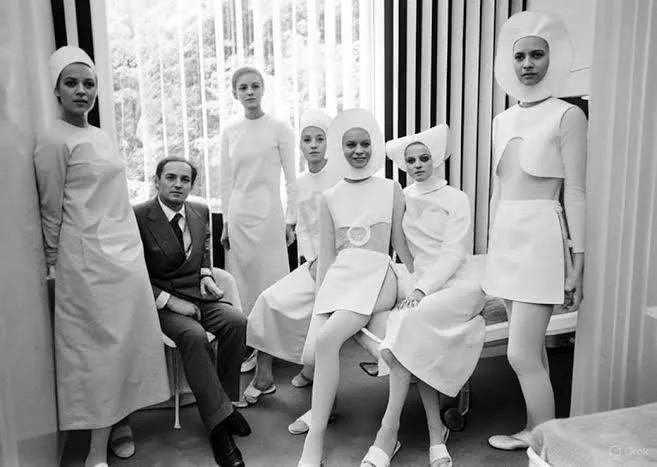
It was licensing, though, that made Cardin genuinely singular in fashion history. He built the industry's first truly extensive licensing operation, eventually striking somewhere between eight hundred and nine hundred separate deals across 120 countries.
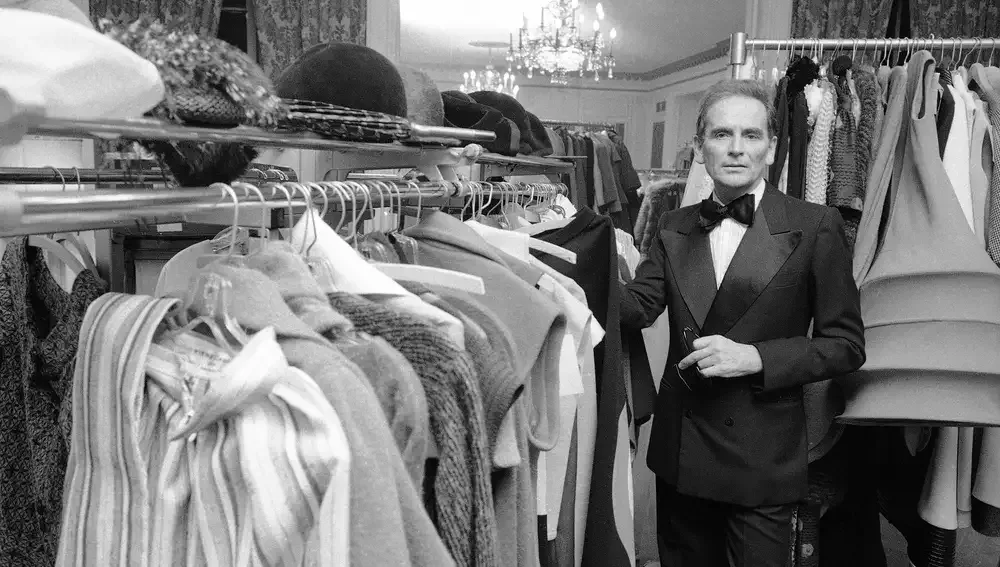
At its 1970s and 1980s peak, goods bearing the Cardin signature, perfume, porcelain, chocolate, cigarette lighters, even orthopedic products, were sold in roughly 100,000 outlets worldwide. In 1986 Women's Wear Daily (WWD) estimated Cardin's annual income at over US$10 million. The sheer scale of the licensing eventually cheapened the name's prestige as more of what carried it came to be seen as poorly made.
Pierre Cardin used the resulting fortune to acquire an unusual personal empire: the storied Paris restaurant Maxim's, bought in 1981; the ruined château of the Marquis de Sade and fourteen other town houses in the French village of Lacoste; the Palais Bulles, an eccentric bubble-shaped residence near Cannes designed by the architect Antti Lovag; and the Ca' Bragadin, a palazzo in Venice.
André Oliver died in 1993, leaving the question of who would eventually run Cardin's empire unresolved for the rest of Cardin's own long life.
Inducted into France's Académie des Beaux-Arts in 1992, and later named a Commander of the Legion of Honour, Cardin kept personal control of his business well into his nineties, reportedly insisting on signing every check himself.
In 2011, Pierre Cardin intended to sell his entire empire, Maxim's included, for a combined asking price above $1.3 billion, and rejected offers from prospective buyers said to include the Sultan of Brunei. Those close to him eventually concluded he had never really intended to sell.
Pierre Cardin died at the American Hospital in Neuilly-sur-Seine, near Paris, on 29 December 2020, at ninety-eight.
His great-nephew, Rodrigo Basilicati Cardin, was named to take over the business. A will discovered more than a year after Cardin's death, naming Rodrigo as sole heir, was later challenged by other family members, and in 2025 France's highest court invalidated it, leaving the fate of the Palais Bulles and the rest of Cardin's empire still unresolved among his descendants.