People
Romy Schneider (born Rosemarie Magdalena Albach-Retty; 23 September 1938 – 29 May 1982)

Rosemarie Magdalena Albach-Retty (23 September 1938 – 29 May 1982), known professionally as Romy Schneider, was a German and French actress who became one of the most celebrated screen stars of postwar European cinema.
Born into a family of Austrian actors, she achieved international fame at seventeen portraying Empress Elisabeth of Austria in the Sissi film trilogy (1955–1957), then reinvented herself as a serious dramatic actress working with directors including Luchino Visconti, Orson Welles, and Claude Sautet. She won the inaugural César Award for Best Actress for That Most Important Thing: Love (1975) and a second César for A Simple Story (1978). Gabrielle Coco Chanel called her "the ultimate incarnation of the ideal woman." She died in Paris at the age of forty-three.

Biography
Romy Schneider was born Rosemarie Magdalena Albach-Retty on 23 September 1938 in Vienna, six months after Austria's annexation into the German Reich.
Her father, Wolf Albach-Retty, was a leading actor at the Vienna Volkstheater. Her mother, Magda Schneider, was a German film actress who had starred in scores of lavish musical comedies during the 1930s, several of which formed part of the Nazi government's propaganda effort.
Her paternal grandmother, Rosa Albach-Retty, was one of the most celebrated actresses of the Austrian stage. Romy was the third generation of her father's family to work in the theater.
Four weeks after her birth, her parents took her to Schönau am Königssee in Bavaria. She and her younger brother, Wolf-Dieter Albach, born in 1941, grew up at the country estate Mariengrund with their maternal grandparents, Franz Xaver Schneider and Maria Schneider.
Her parents were rarely present because of their acting engagements. A governess cared for her during her first year.
Her parents separated in 1943 and divorced in 1945. After the divorce, Her mother Magda Schneider took charge of Romy and Wolf-Dieter.
In September 1944, Romy enrolled in elementary school in Schönau. From July 1949, she attended the girls' boarding school at Castle Goldenstein, a private secondary school run by the Augustinian Canonesses near Salzburg.
She developed a passion for acting, frequently appearing on stage in school theatrical performances. She was also interested in painting and planned to attend art school.
In a diary entry dated 10 June 1952, she wrote: "If it were up to me, I would immediately become an actress. Every time I see a nice movie, my first thoughts are about the idea: I definitely have to become an actress. Yes! I have to!"
She left Castle Goldenstein on 12 July 1953 with her Mittlere Reife, the equivalent of a secondary school certificate. After the summer holidays, she moved to Cologne to join her mother, who lived there with the restaurateur Hans Herbert Blatzheim.

Blatzheim supervised Schneider's career alongside her mother. Schneider later said that Blatzheim had made sexual advances toward her.
Her film career began almost immediately. She made her screen debut at fifteen in When the White Lilacs Bloom Again (1953) alongside her mother.
The film was a box-office success, and she received additional offers, including Fireworks (1954) with Lilli Palmer.
In 1954, she played the young Queen Victoria in Mädchenjahre einer Königin (1954), released in English as The Story of Vickie (1954). The film was written and directed by the veteran Austrian filmmaker Ernst Marischka.
Marischka's success with the film led to Schneider's casting in Sissi (1955), the first of a trilogy about Empress Elisabeth of Austria, wife of Emperor Franz Joseph I of Austria. The film was a huge success in West Germany and Austria.
The trilogy continued with Sissi: The Young Empress (1956) and Sissi: Fateful Years of an Empress (1957), both directed by Marischka. Romy Schneider's mother Magda Schneider appeared in all three films.
The trilogy made her the darling of the German-speaking public and a major new screen star in Europe. But she came to hate the Sissi image. She later said: "Sissi sticks to me just like oatmeal."

She completed filming the final Sissi film reluctantly. She was offered $200,000 for a fourth Sissi film and refused.
In 1958, Schneider appeared in Christine (1958), a remake of Max Ophüls's film Liebelei (1933). Her mother had played the same role in the original.
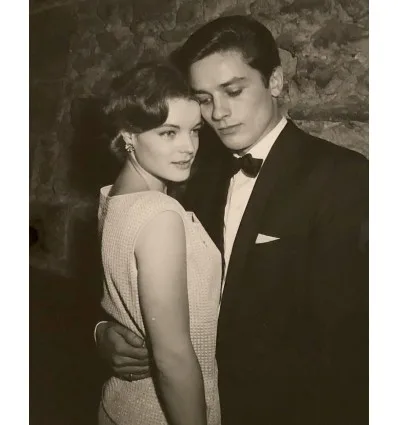
During the filming of Christine, she fell in love with her co-star, the French actor Alain Delon. The German tabloid press was outraged by the romance.
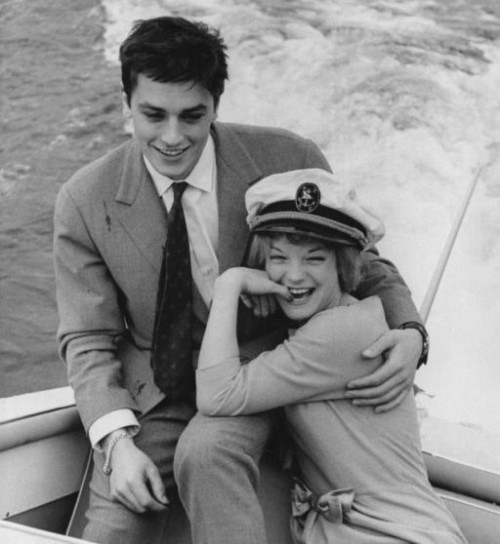
Schneider and Delon announced their engagement in March 1959. She left West Germany and settled in Paris with him.
Her family had largely controlled her early career, selecting scripts and managing her image. In an interview with Life, she described herself as "an orange that must be pressed to the last drop."
She also said: "Nobody ever thought of me, or ever asked me to shout or be a real human being. People thought, 'How sweet, how lovely, how kind she is!' I wanted to be modern and hard, to be a grown-up woman. I had to run away."
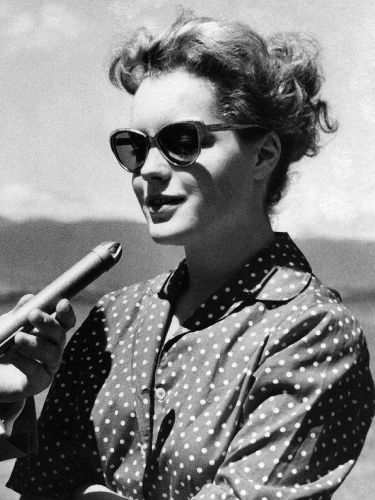
In Paris, she took a break from film, other than an uncredited cameo in Plein Soleil (1960), the first adaptation of Patricia Highsmith's novel The Talented Mr. Ripley (1955).
She was determined to become a serious film actress, despite criticism in Germany that she had sacrificed her career for love.
Her Paris stage debut came in 1961, performing in 'Tis Pity She's a Whore (1961) with Alain Delon at the Théâtre Moderne. The production was directed by Luchino Visconti.
She had to perform in French, a language still unfamiliar to her. The production was a hit with critics and audiences.
Visconti subsequently cast her in Boccaccio '70 (1962), a trilogy of segments directed by Visconti, Federico Fellini, and Vittorio de Sica. The other segments featured Anita Ekberg and Sophia Loren.
In Visconti's segment, "The Job," Schneider played a countess who discovers that her husband regularly hires expensive prostitutes and decides to deceive him once herself. For the first time, she agreed to undress on camera.

It was during the preparation for Boccaccio '70 that Visconti took Schneider to the home of Gabrielle Coco Chanel. Alain Delon had first encouraged Schneider to meet Chanel, but she had been afraid.
She later said: "I didn't dare. I felt too much of an Austrian peasant, not a Parisian for two cents. I was thinking, 'That famous monster Chanel, how is she going to stare at me, criticize me?'"

Visconti arranged the appointment for the fitting of her costume. Chanel dressed Schneider in a chiné tweed suit from her Haute Couture Autumn-Winter 1961 collection, a tailored two-piece with a textured, multicolored weave.
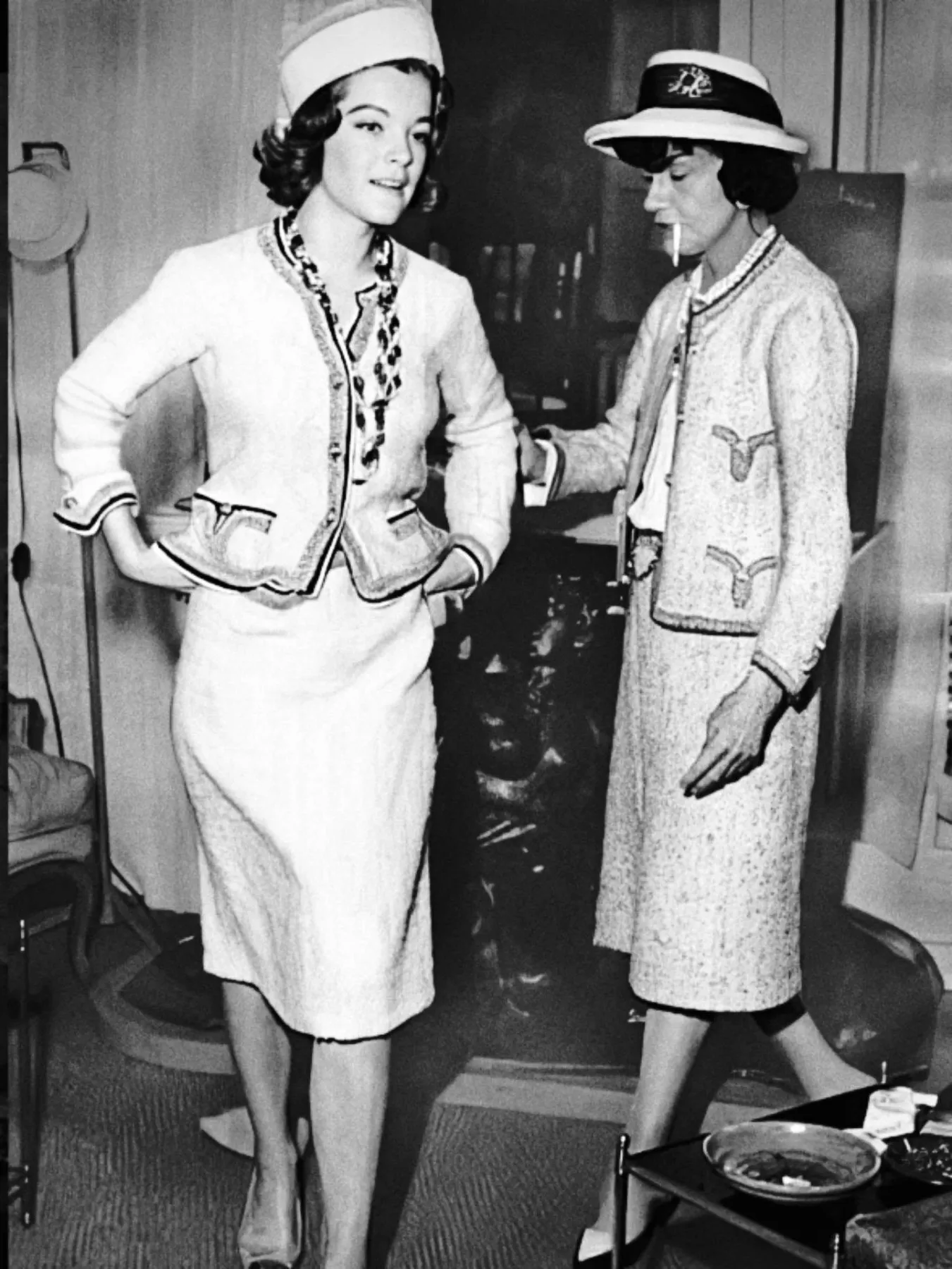
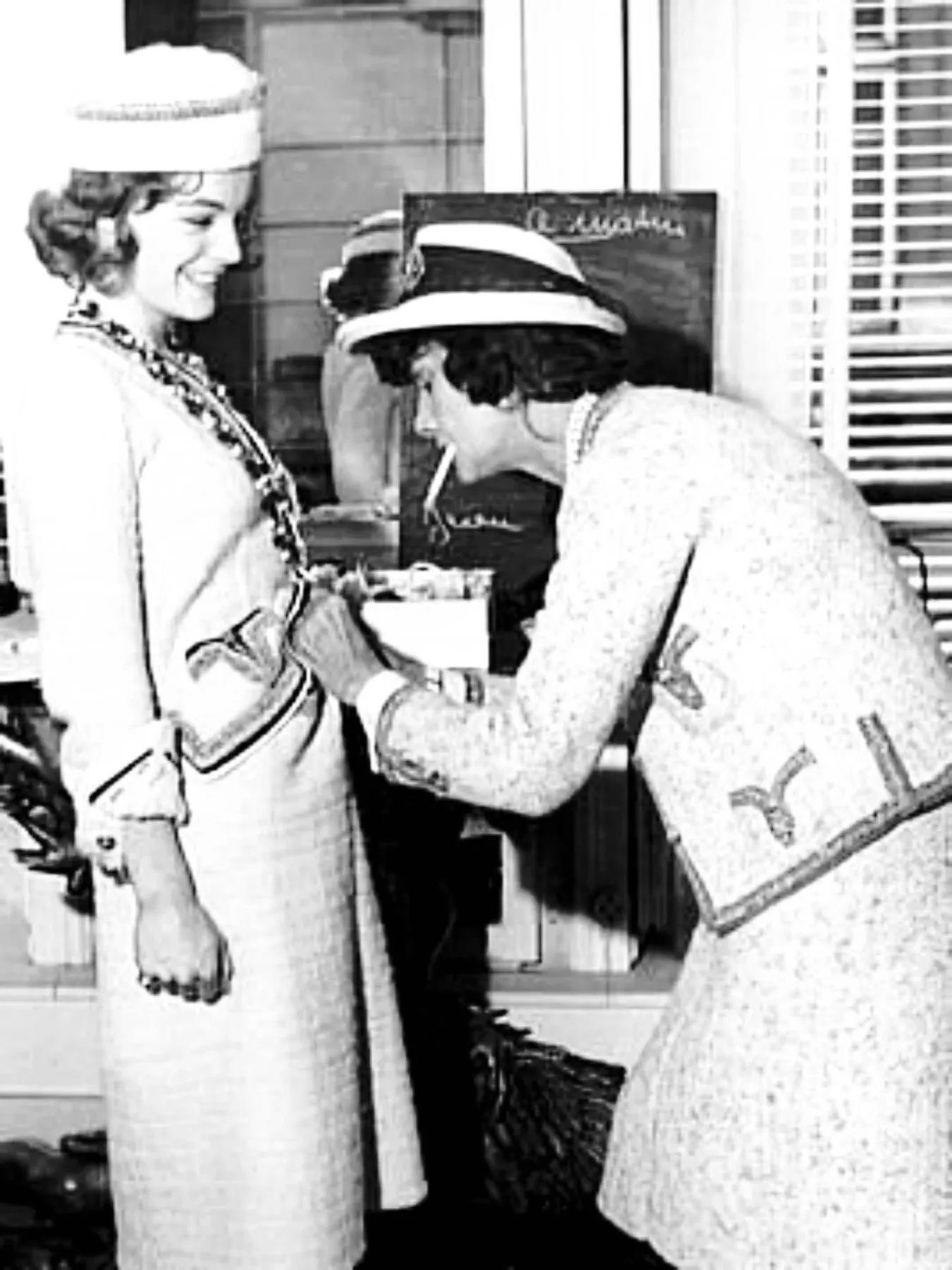
When Schneider put on her first Chanel garment, she said she realized she would "never want anything else again."

Chanel, then seventy-eight, became her mentor. The designer helped Schneider build her style, moving her away from the Sissi image toward a personal elegance based on quality and restraint.


Schneider assembled a personal Chanel collection of about fifteen suits and coats. She accepted being dressed only by Chanel on film and television sets.
She told ELLE magazine in 1963: "The important thing is not fashion, it's elegance. Chanel taught me that."

Schneider appeared in Orson Welles's adaptation of Franz Kafka's The Trial (1962) and received the Étoile de Cristal for Best Foreign Actress for the role. Afterwards, she signed a five-picture contract with Columbia Studios.
In December 1963, Alain Delon ended his relationship with Romy Schneider to marry Nathalie Barthélémy, whom he had made pregnant.
The separation was painful for Schneider and she attempted suicide.
Following the end of her relationship with Delon, Schneider made several films in English. She appeared in Good Neighbor Sam (1964) with Jack Lemmon and What's New Pussycat? (1965) with Peter O'Toole, Peter Sellers, and Woody Allen.
But she disliked working in Hollywood. A 1965 Good Housekeeping profile noted that she "sometimes looks as American as tollhouse cookies; other times, as French as an éclair."
In July 1966, Schneider married the German director and actor Harry Meyen-Haubenstock in Saint-Jean-Cap-Ferrat. Their son, David Christopher Haubenstock, was born on 3 December 1966 in Berlin.
The marriage was difficult.

Delon and Nathalie Barthélémy divorced in 1969. After the divorce, Delon continued pursuing Schneider, but she always refused to resume their relationship. She did, however accepted to work together with Delon again in La Piscine (1969).

Schneider's career received a major boost when the director Claude Sautet began casting her. Her work with Sautet and the actor Michel Piccoli became the most productive period of her career.
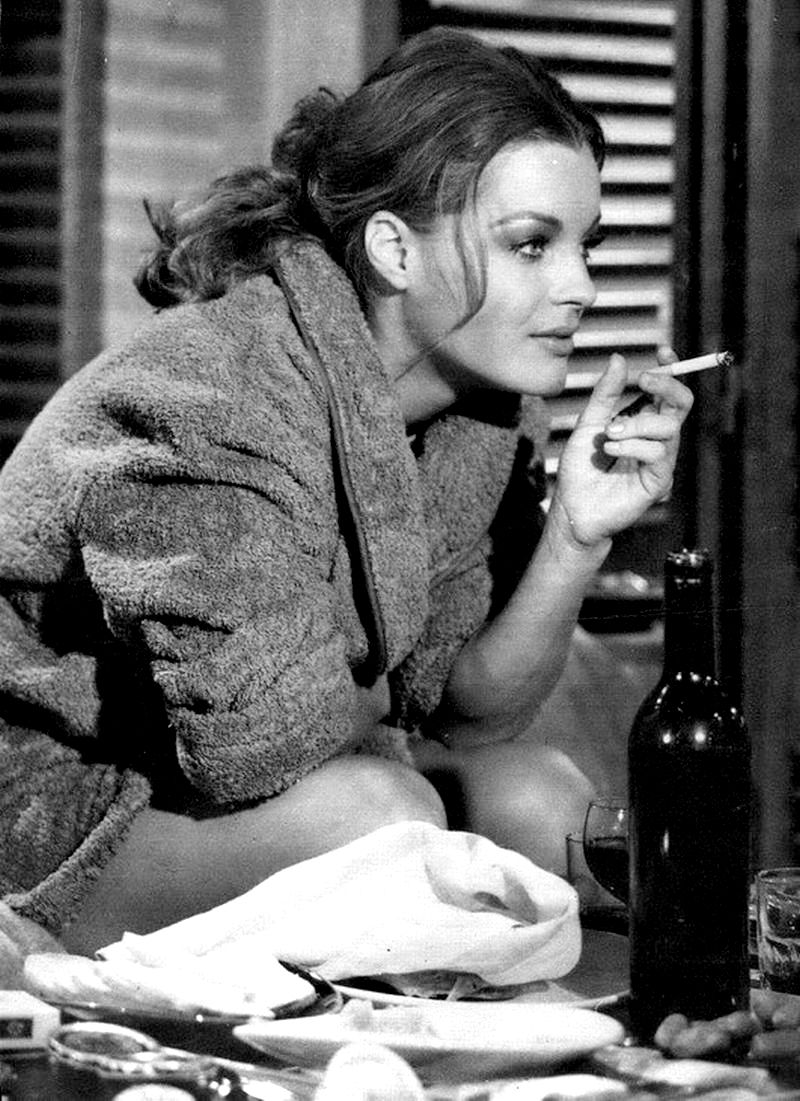
The first Sautet film was Les Choses de La Vie (The Things of Life, 1970). After the film, Sautet cast Schneider in a range of roles depicting modern, sexually liberated women who revolt but ultimately settle for compromise, such as in her another film with Sautet César et Rosalie (Cesar and Rosalie, 1972) opposite Yves Montand.

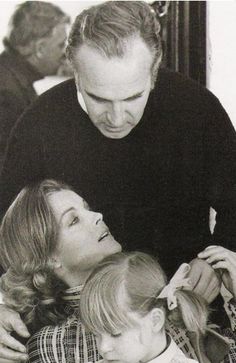
Paris Match wrote in 1971, comparing Schneider to Greta Garbo, Marlene Dietrich, and Marilyn Monroe: "Forty years after Greta and Marlene, fifteen years after Marilyn, the screen again has a great star."

Schneider and Delon worked together again in The Assassination of Trotsky (1972), and the two remained close lifelong friends.
In Visconti's Ludwig (1973), Schneider reprised the role of Empress Elisabeth. This time, her Elisabeth was cold, calculating, and unyielding.
The performance erased the sweet Sissi image.

She deliberately accepted roles that engaged critically with Germany's fascist history. In The Train (1973), she played a Jewish woman during the war.
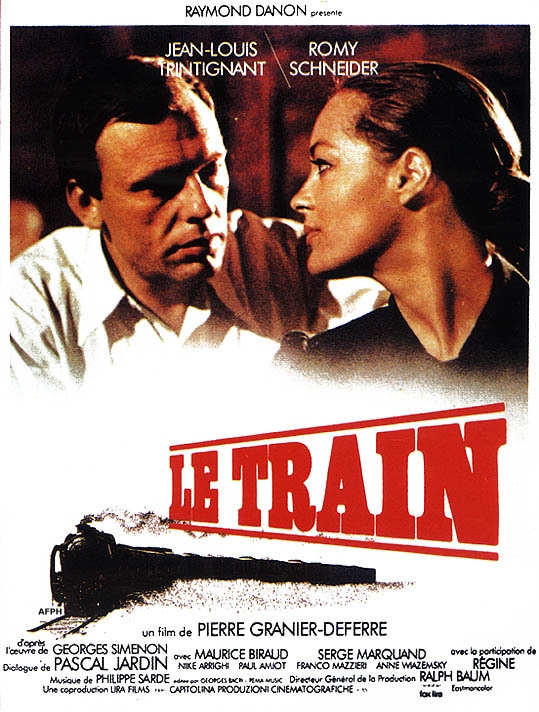
This connection to Jewish identity ran deep, influenced partly by her husband Harry Meyen-Haubenstock's Jewish family background and by guilt over her mother's association with Nazi celebrities. Schneider attended synagogues throughout her adult life.
Schneider won the inaugural César Award for Best Actress for That Most Important Thing: Love (1975), directed by Andrzej Żuławski.
Schneider and Meyen divorced in 1975. Schneider paid Meyen 1.5 million Deutschmarks in the settlement and retained custody of David.
Harry Meyen-Haubenstock committed suicide on 15 April 1979 in Hamburg. He had long suffered from depression.

In December 1975, Schneider married her former private secretary, Daniel Biasini. Their daughter, Sarah Magdalena Biasini, was born on 21 July 1977 in Saint-Tropez.
Schneider had given both David Christopher Haubenstock and Sarah Magdalena Biasini names from the Hebrew tradition.

Schneider's last collaboration with Sautet was A Simple Story (1978). She received her second César Award for Best Actress for the role.
Director Bertrand Tavernier, when talking about Schneider's talent once remarked: "(Claude)Sautet is talking about Mozart with regard to Romy. Me, I want to talk of Verdi, Mahler..."
Schneider's marriage to Biasini ended in divorce in 1981, and her last romantic partner was the film producer Laurent Pétin. They were together from 1981 until her death.
On 5 July 1981, Schneider's son David died at the age of fourteen. David was attempting to climb the spiked iron gate at his stepfather's parents' home in Paris.
He slipped and was impaled, puncturing his femoral artery. He died the same evening at a hospital in Saint-Germain-en-Laye.
Schneider never recovered from the loss. She began drinking heavily and her health deteriorated, and underwent kidney surgery.

Her last film was La Passante du Sans-Souci (1982), directed by Jacques Rouffio, in which she co-starred with Michel Piccoli. She played a woman whose father was shot by the Nazis.
Romy Schneider was found dead in her Paris apartment on 29 May 1982. The examining magistrate Laurent Davenas declared that Schneider had died from cardiac arrest.
Although suicide by sleeping pill overdose was suggested, no definitive conclusion was reached. She was forty-three years old.
She was buried at Boissy-sans-Avoir, near Paris, wearing a necklace with the Star of David. Her tombstone bears her birth name: Rosemarie Albach.
Alain Delon arranged for Romy Schneider's son David to be buried in the same grave.
Delon placed a note on her tomb that read: "Tu n'as jamais été aussi belle, tu vois j'ai appris quelques mots allemands pour toi: Ich liebe dich meine Liebe." (You have never been so beautiful. You see, I learned some words in German for you: I love you, my love.)