People
Jacqueline Kennedy Onassis (born Jacqueline Lee Bouvier; 28 July 1929 – 19 May 1994)
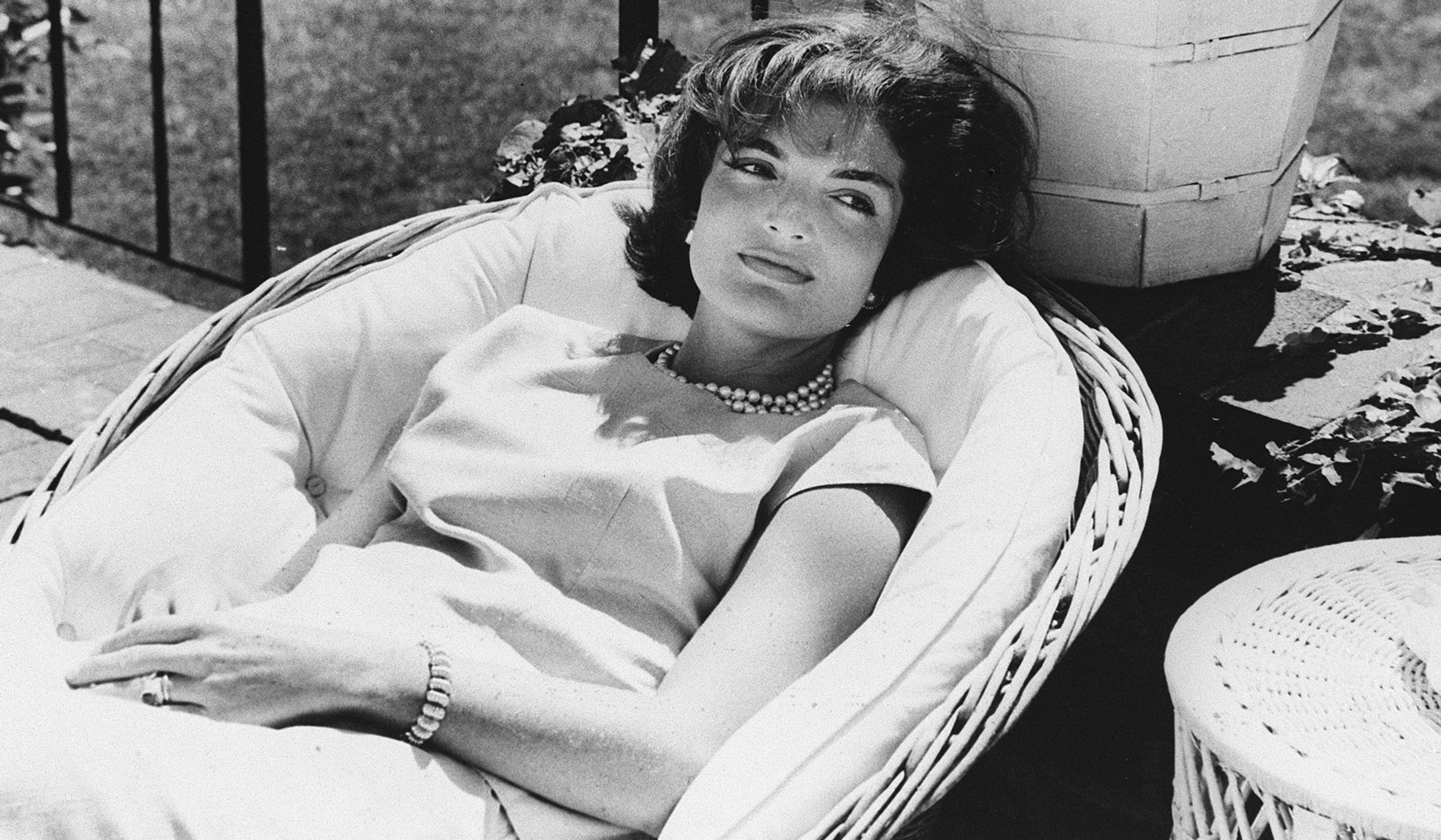
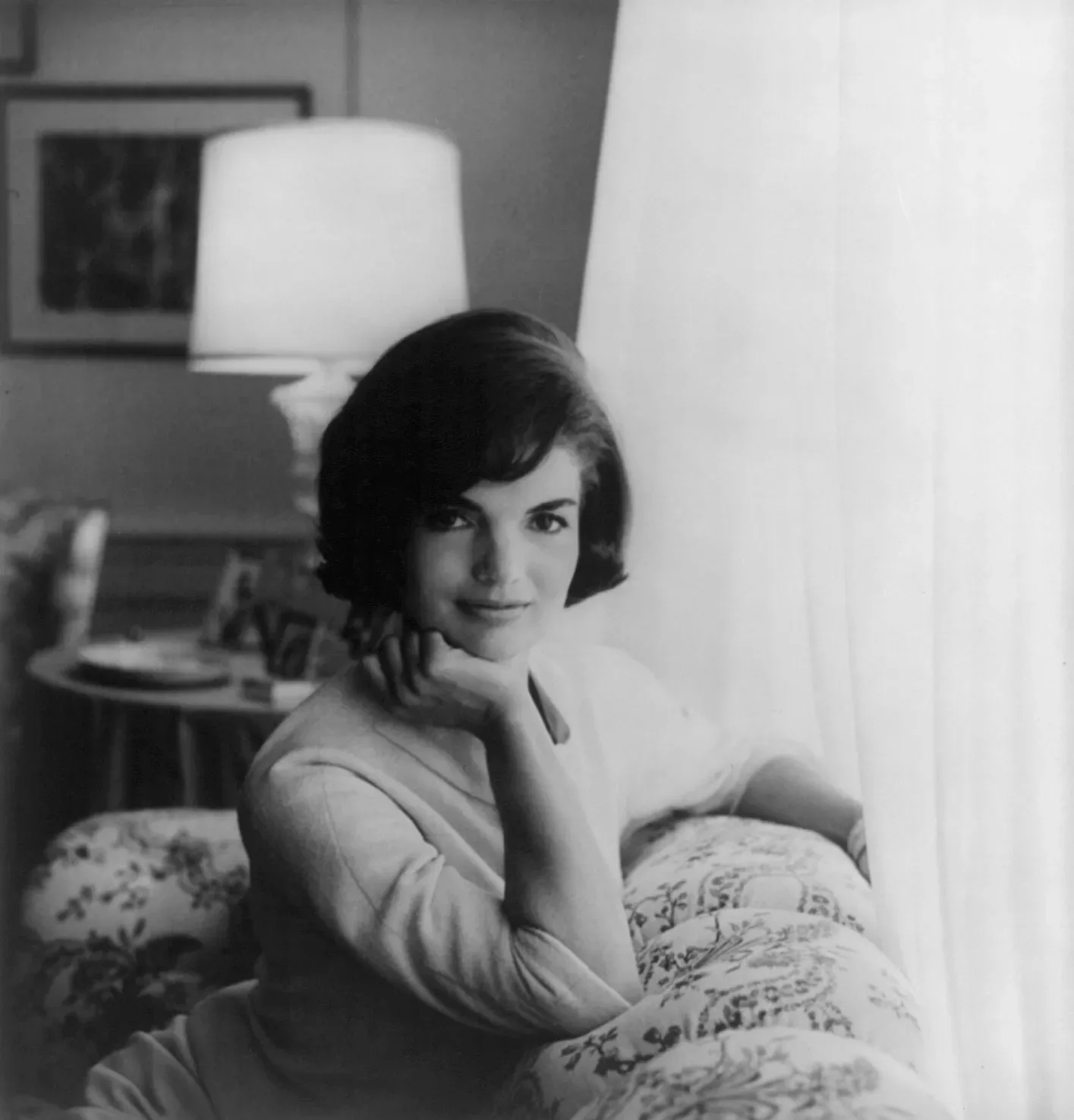
Biography
Jacqueline Lee Bouvier was born on 28 July 1929 at Southampton Hospital in Southampton, New York, on the south shore of Long Island. She was baptized at the Church of St. Ignatius Loyola in Manhattan.
Her father, John Vernou Bouvier III, was a Wall Street stockbroker nicknamed "Black Jack." Her mother, Janet Norton Lee, was a socialite of Irish descent. Jacqueline was named after her father, who called her"the most beautiful daughter a man ever had".
The Bouvier family divided their time between an apartment in Manhattan and Lasata, their country estate in East Hampton. Jacqueline read, learn languages, took ballet riding lessons. Swas an enthusiastic equestrian from an early age and competed successfully in horse-riding, a passion she would retain throughout her life.
Her younger sister, Caroline Lee Bouvier, was born on 3 March 1933. Caroline later became known as Lee Radziwill.
In 1935, Jacqueline Bouvier attended the Chapin School in Manhattan, where one teacher described her as "a darling child, the prettiest little girl, very clever, very artistic, and full of the devil." Jacqueline's mother attributed her misbehavior to her finishing assignments before her classmates and then acting out from boredom.
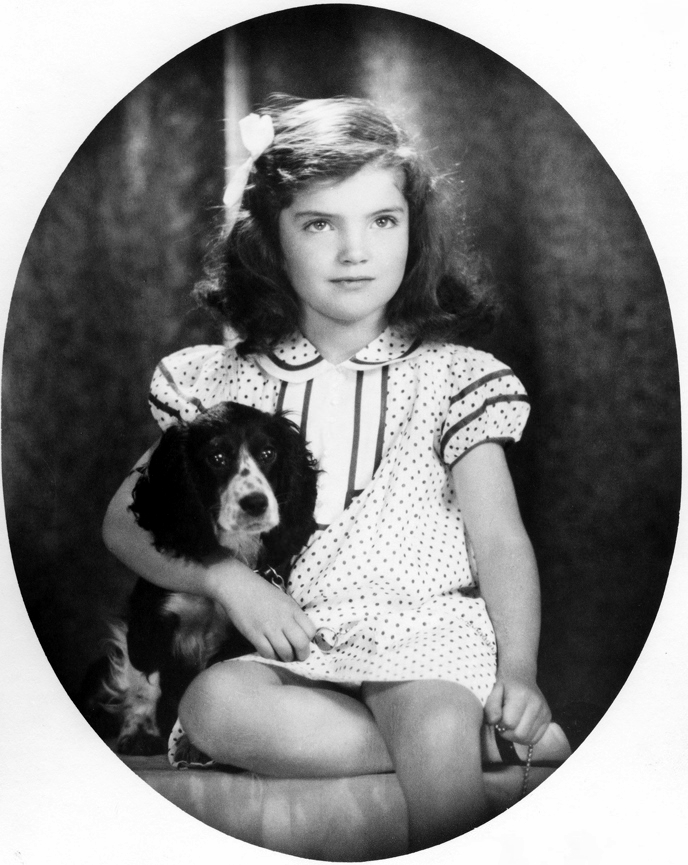
The Bouvier marriage was strained by her father's alcoholism and extramarital affairs. The family also experienced financial difficulties after the Wall Street Crash of 1929. Her parents separated in 1936 and divorced four years later.
Jacqueline's mother married the stockbroker and lawyer Hugh Dudley Auchincloss Jr. The Bouvier sisters did not attend the ceremony because it was arranged quickly and travel was restricted during World War II. The family's primary residence became Auchincloss's Merrywood estate in McLean, Virginia, just outside Washington.
Hugh Dudley Auchincloss Jr. had three children from his previous marriages, Hugh "Yusha" Auchincloss III, Thomas Gore Auchincloss, and Nina Gore Auchincloss.
Jacqueline sometimes felt like an outsider in the WASP social circle of the Auchincloss family because she was raised in the Catholic faith and a child of divorce, but she formed the closest bond with Yusha, who became one of her most trusted confidants.
Jacqueline's mother later had two more children with her second husband: Janet Jennings Auchincloss in 1945 and James Lee Auchincloss in 1947.
In 1944, Jacqueline enrolled at Miss Porter's School in Farmington, Connecticut, chosen because it was a boarding school and emphasized college-preparatory classes. The senior yearbook described her as having "her wit, her accomplishment as a horsewoman, and her unwillingness to become a housewife." She received the Maria McKinney Memorial Award for Excellence in Literature.
In the summer of 1947, Jacqueline Bouvier made her debut to high society before enrolling in Vassar College in Poughkeepsie, New York that fall. Her junior year was spent studying abroad at the University of Grenoble and the Sorbonne in Paris, through a Smith College program. She later transferred to George Washington University in Washington, where she graduated in 1951 with a Bachelor of Arts in French literature.
While at George Washington University, she won a twelve-month junior editorship at Vogue magazine, selected over several hundred women nationwide. The position involved six months in the New York office and six months in Paris.
Before beginning the job, she traveled to Europe with her sister Lee to celebrate their graduations. The trip became the subject of One Special Summer (1974), co-authored by the sisters and the only book to feature her drawings.
On her first day at Vogue, the managing editor advised her to quit and return to Washington. She left the job after one day.
She moved back to Merrywood and was referred by a family friend to the Washington Times-Herald. The editor Frank Waldrop initially hired her as a part-time receptionist. After one week, she requested more challenging work. The city editor Sidney Epstein hired her as an "Inquiring Camera Girl," paying her twenty-five dollars a week. She posed witty questions to randomly selected people on the street, photographed them, and published their pictures alongside selected quotations from their responses.
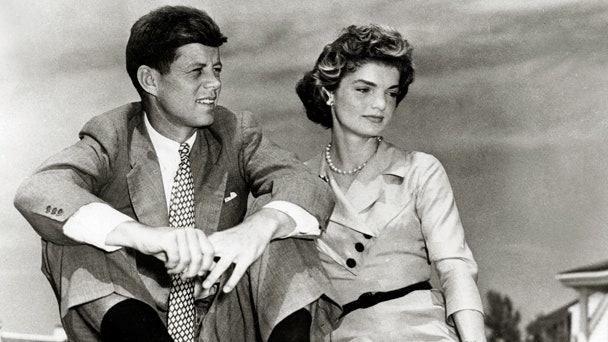
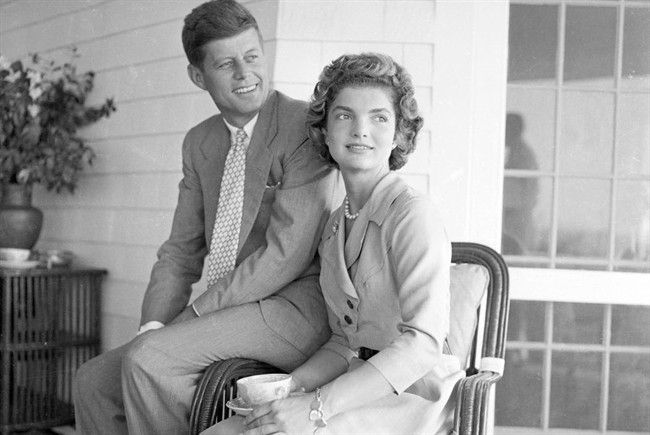
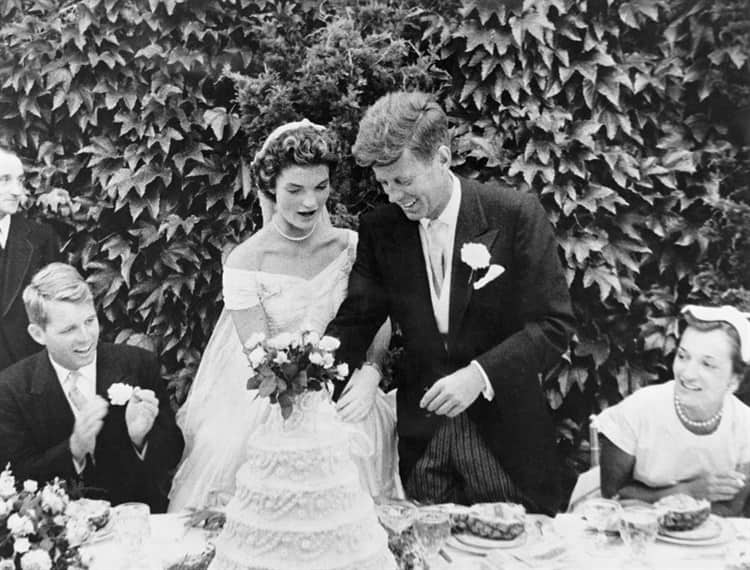
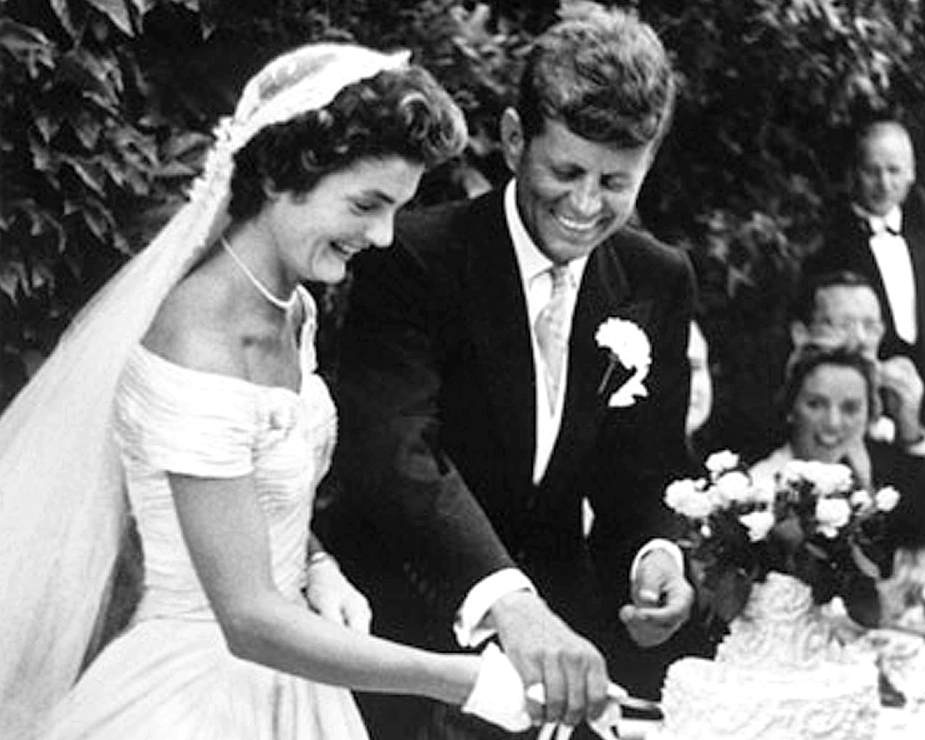
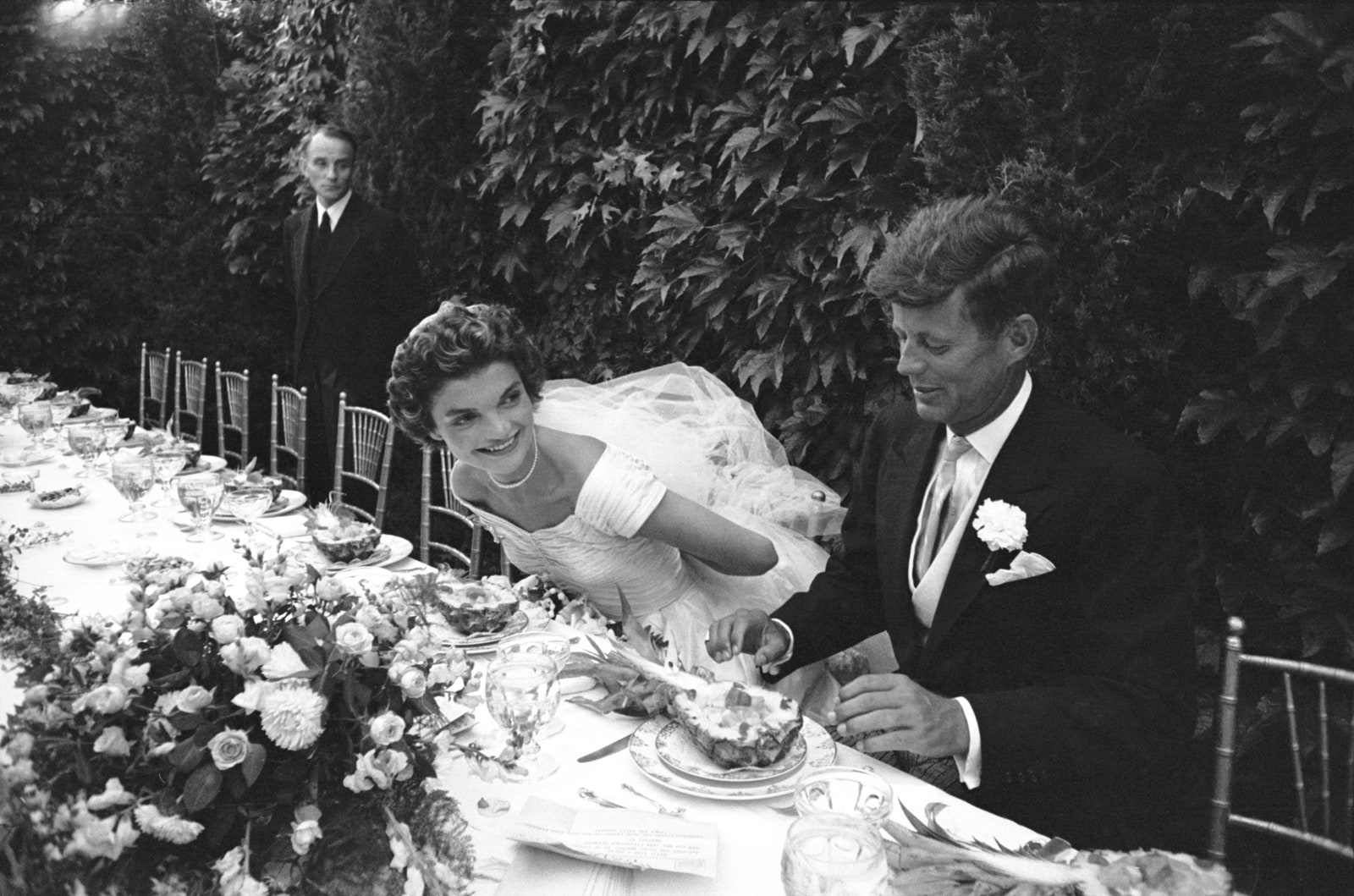
The couple were officially engaged on 25 June 1953 and married on 12 September of the same year at St. Mary's Church in Newport, Rhode Island.
The ceremony was officiated by Boston Archbishop Richard Cushing. An estimated seven hundred guests attended the Mass, with approximately twelve hundred at the reception at Hammersmith Farm. Jacqueline Kennedy's wedding dress was designed by Ann Lowe of New York City, an ivory silk taffeta gown but she did not credit Lowe publicly.
The Kennedys lived at Hickory Hill in McLean, Virginia, and maintained a townhouse on N Street in Georgetown. John Kennedy suffered from Addison's disease and chronic back pain, aggravated by a war injury. He underwent a near-fatal spinal operation in late 1954. Jacqueline suffered a miscarriage in 1955 and the stillbirth of a daughter, Arabella Kennedy, in August 1956.
Their first surviving child, Caroline Bouvier Kennedy, was born on 27 November 1957. Their son, John Fitzgerald Kennedy Jr., was born on 25 November 1960, two weeks after John Kennedy won the 1960 presidential election.
Jacqueline Kennedy became First Lady on 20 January 1961, at the age of thirty-one. She was the third-youngest woman to serve in the role. She insisted that the family maintain a private home away from public view and rented Glen Ora in Middleburg, Virginia.
She hired Oleg Cassini, an American designer and Kennedy family friend, to create her original First Lady wardrobe. For the inauguration, Cassini designed a fawn-colored wool coat and dress, simple and covered-up, with clean lines.
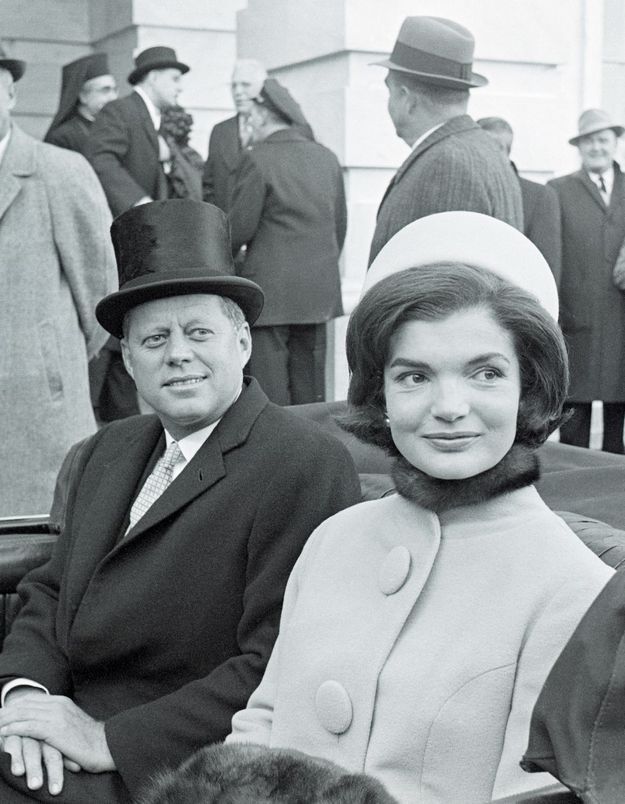
The hat was a pillbox, created by Roy Halston Frowick, professionally known as Halston, then a rising milliner in New York. Halston reportedly spent considerable time between two mirrors, perfecting the shape into a flawless dome. That morning, as she attempted to secure the hat against the gusts, Kennedy inadvertently created a small dent. The imperfection was broadcast globally and captivated America. Halston later joked that "everyone who replicated it added their own dent."
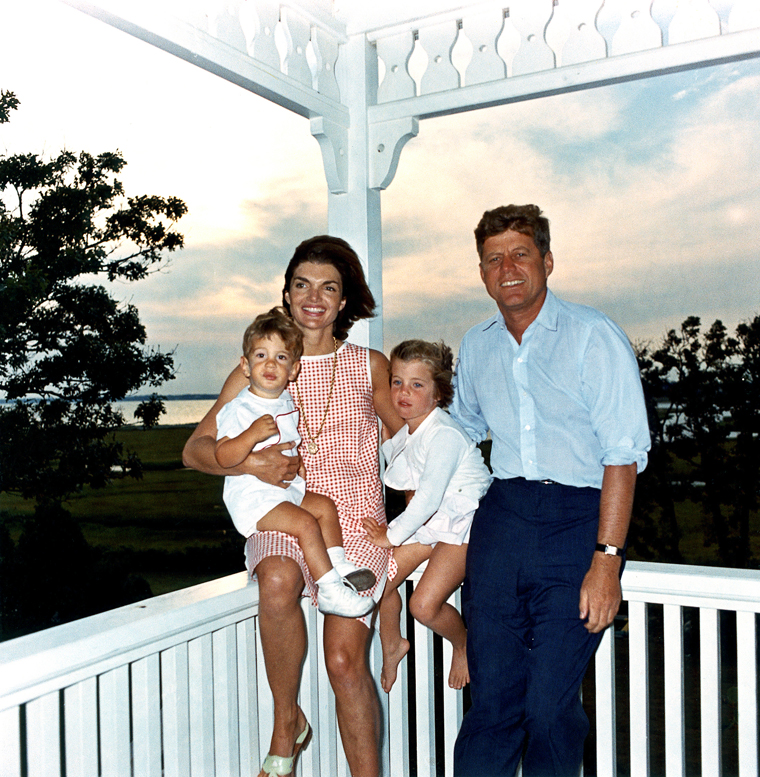
Jacqueline Kennedy dislike prints and preferred simple, covered-up clothing in solid colors. With the help of her selected designers, she had designed for herself a distinct "first lady wardrobe": clean-cut suits with a notch-collar jacket of three-quarter sleeves and a skirt with hem down to middle of the knee, sleeveless A-line dresses, above-the-elbow gloves, low-heel pumps, and pillbox hats. Her triple-strand pearl necklace by Kenneth Jay Lane became her signature First Lady jewelry.
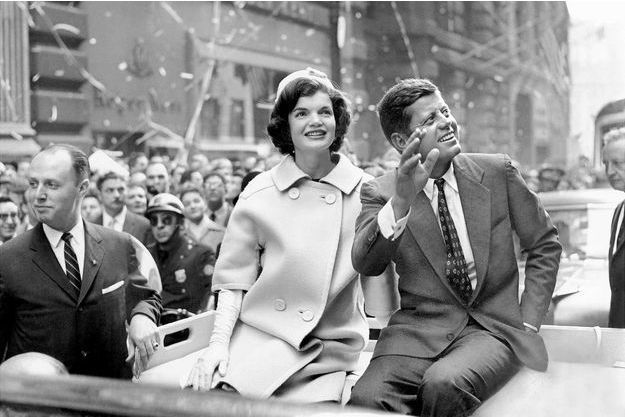
Her personal style became known as the "Jackie Look", which inspired worldwide fashion trends and was copied by commercial manufacturers. Even th gold and enamel bracelets by Jean Schlumberger which she wore frequently in the early and mid-1960s, were called by the press: "Jackie bracelets."
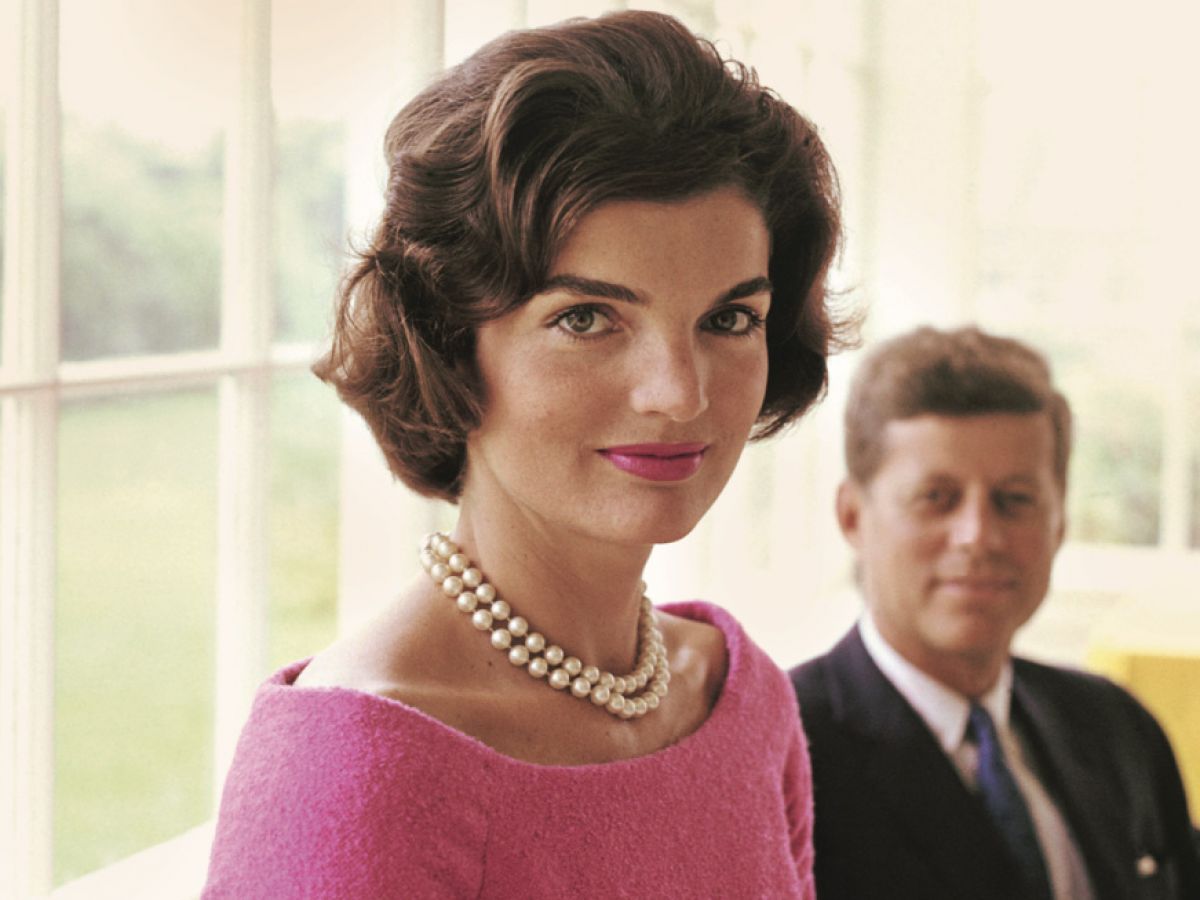
Her bouffant hairstyle was created by Kenneth Battelle, professionally known as Mr. Kenneth, who worked for her from 1954 until 1986. It was described as a "grown-up exaggeration of little girls' hair."
She was dismayed by the lack of historically significant furnishings when she visited as a guest of the outgoing First Lady, Mamie Eisenhower. When she became the first lady herself, she made the restoration of the White House's historical character her first major project. She worked with the interior decorator Sister Parish, the early American furniture expert Henry Francis du Pont, and Rachel Lambert Mellon on the Rose Garden and East Garden. She also founded the White House Historical Association, established the position of permanent White House curator, and created the White House Endowment Trust.
On 14 February 1962, she conducted a televised tour of the restored White House with the CBS News correspondent Charles Collingwood. The tour was watched by fifty-six million viewers in the United States and later distributed to one hundred and six countries. She won a special Academy of Television Arts and Sciences Trustees Award at the 1962 Emmy Awards, the only First Lady to win an Emmy. Lady Bird Johnson accepted it on her behalf.
Jacqueline Kennedy was a polyglot and she was fluent in French, Spanish, and Italian. Her language fluency and knowledge of history made her popular with foreign dignitaries.
During a 1961 visit to France, she spoke in French at the American University in Paris. After the visit, Time magazine wrote: "There was also that fellow who came with her." President Kennedy himself joked: "I am the man who accompanied Jacqueline Kennedy to Paris, and I have enjoyed it."
In Vienna, the Soviet premier Nikita Khrushchev was asked to shake President Kennedy's hand for a photograph. He replied: "I'd like to shake her hand first." Khrushchev later sent her a puppy named Pushinka, whose mother was Strelka, the dog that had gone into space during a Soviet mission.
In 1962, she toured India and Pakistan with her sister Lee Radziwill, at the urging of the U.S. ambassador to India, John Kenneth Galbraith. The Pakistani president Muhammad Ayub Khan gave her a horse named Sardar after learning that they shared an interest in horses.
Their fourth child, Patrick Bouvier Kennedy, was born on 7 August 1963, five weeks before his scheduled due date. He was delivered by emergency Caesarean section at Otis Air Force Base. His lungs were not fully developed. He was transferred to Boston Children's Hospital, where he died two days later.
On 21 November 1963, Jacqueline and President Kennedy began a political trip to Texas, the first such trip she had joined him on. The next morning, they flew from Fort Worth to Dallas. She wore a bright pink wool boucle Chanel suit with a navy collar and cuffs, and a pillbox hat. President Kennedy had personally selected the outfit.
After the motorcade turned onto Elm Street in Dealey Plaza, she heard what she thought was a motorcycle backfiring. She realized it was gunfire only after hearing Governor John Connally scream. One shot struck President Kennedy in the head. She began climbing onto the back of the limousine. The Secret Service agent Clinton J. Hill ran to the car, leapt onto it, and directed her back to her seat.
At Parkland Hospital, she was permitted to be present in the operating room. President Kennedy never regained consciousness. He died shortly afterward at the age of forty-six. She refused to remove her blood-stained clothing. She reportedly regretted washing blood from her face and hands. She told Lady Bird Johnson: "I want them to see what they have done to Jack."
She wore the blood-stained pink suit while standing beside Lyndon Baines Johnson when he took the presidential oath of office aboard Air Force One. The unlaundered suit was donated to the National Archives and Records Administration in 1964. Under an agreement with her daughter Caroline, it would not be publicly displayed before 2103.
Jacqueline Kennedy actively planned her husband's state funeral, modeling it on Abraham Lincoln's funeral service. She walked in the procession and lit the eternal flame at the gravesite at Arlington National Cemetery, which had been created at her request. The journalist Jeanne Campbell wrote: "Jacqueline Kennedy has given the American people one thing they have always lacked: Majesty."
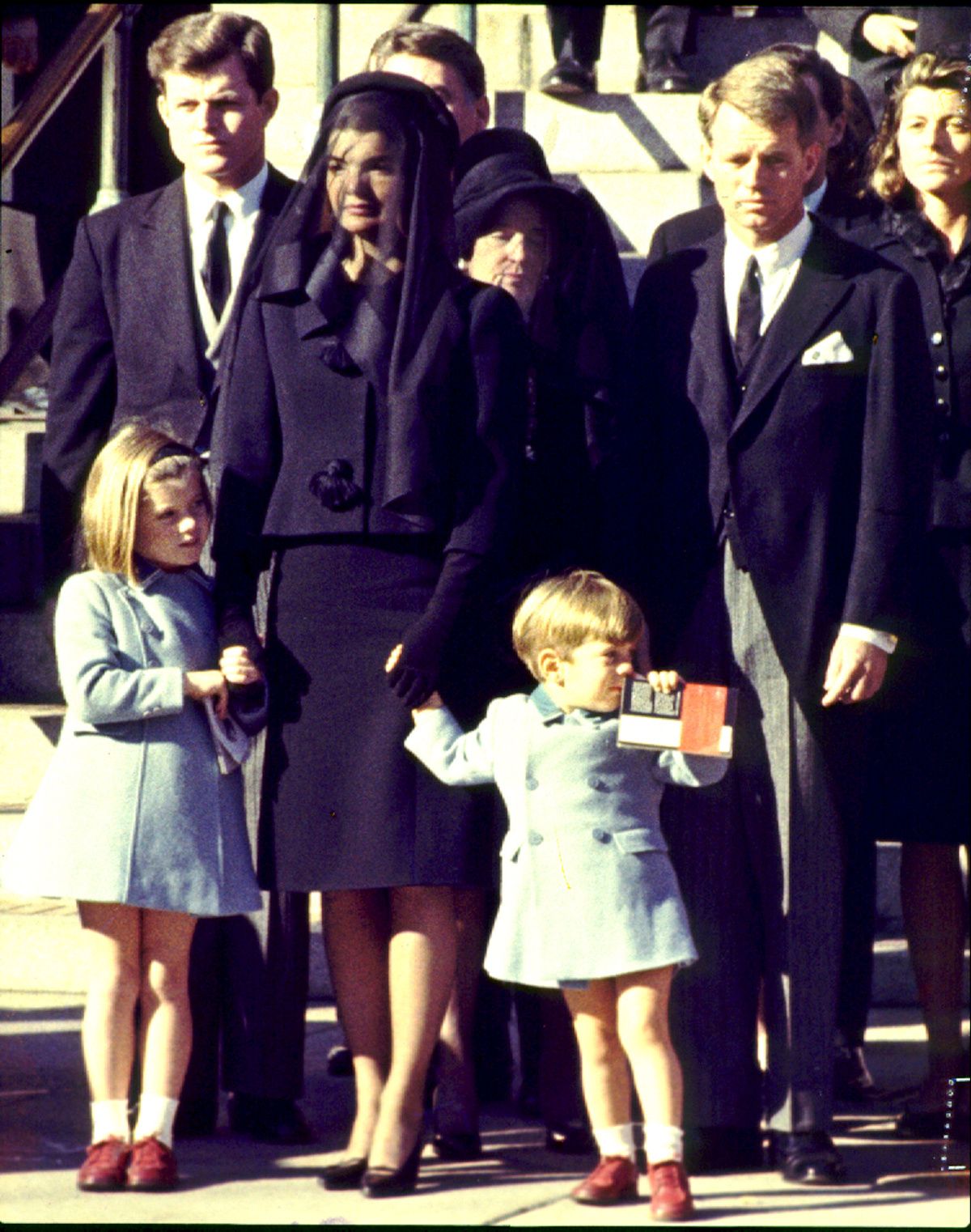
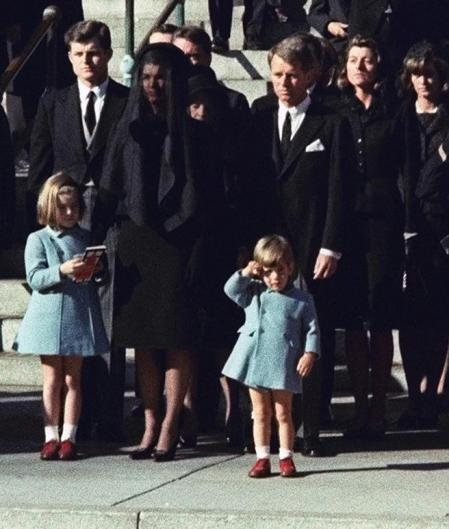
In a 29 November 1963 interview with Theodore H. White of Life magazine, she compared the Kennedy presidency to King Arthur's mythical Camelot. She said: "Don't let it be forgot, that once there was a spot, for one brief, shining moment that was known as Camelot. There'll be great presidents again, but there will never be another Camelot." The term "Camelot" became an epitaph for the Kennedy presidency.
She largely withdrew from public view after the funeral. She purchased a penthouse at 1040 Fifth Avenue in Manhattan for $250,000 and sought greater privacy. She oversaw the creation of the John F. Kennedy Presidential Library and Museum, designed by the architect Ieoh Ming Pei and located beside the University of Massachusetts campus in Boston.
Robert Francis Kennedy became a major source of emotional and practical support after the assassination. He effectively became a surrogate father to her children. She supported his 1964 campaign for U.S. Senator from New York and, in 1968, encouraged him to run for president.
Robert Kennedy was mortally wounded on 5 June 1968 by Sirhan Sirhan, minutes after celebrating his victory in the California Democratic presidential primary. He died the following day at the age of forty-two. Jacqueline reportedly suffered a relapse of the depression that had followed President Kennedy's assassination. She said: "If they're killing Kennedys, then my children are targets. I want to get out of this country."
On 20 October 1968, she married Aristotle Socrates Onassis, a Greek shipping magnate, on his private island of Skorpios in the Ionian Sea.
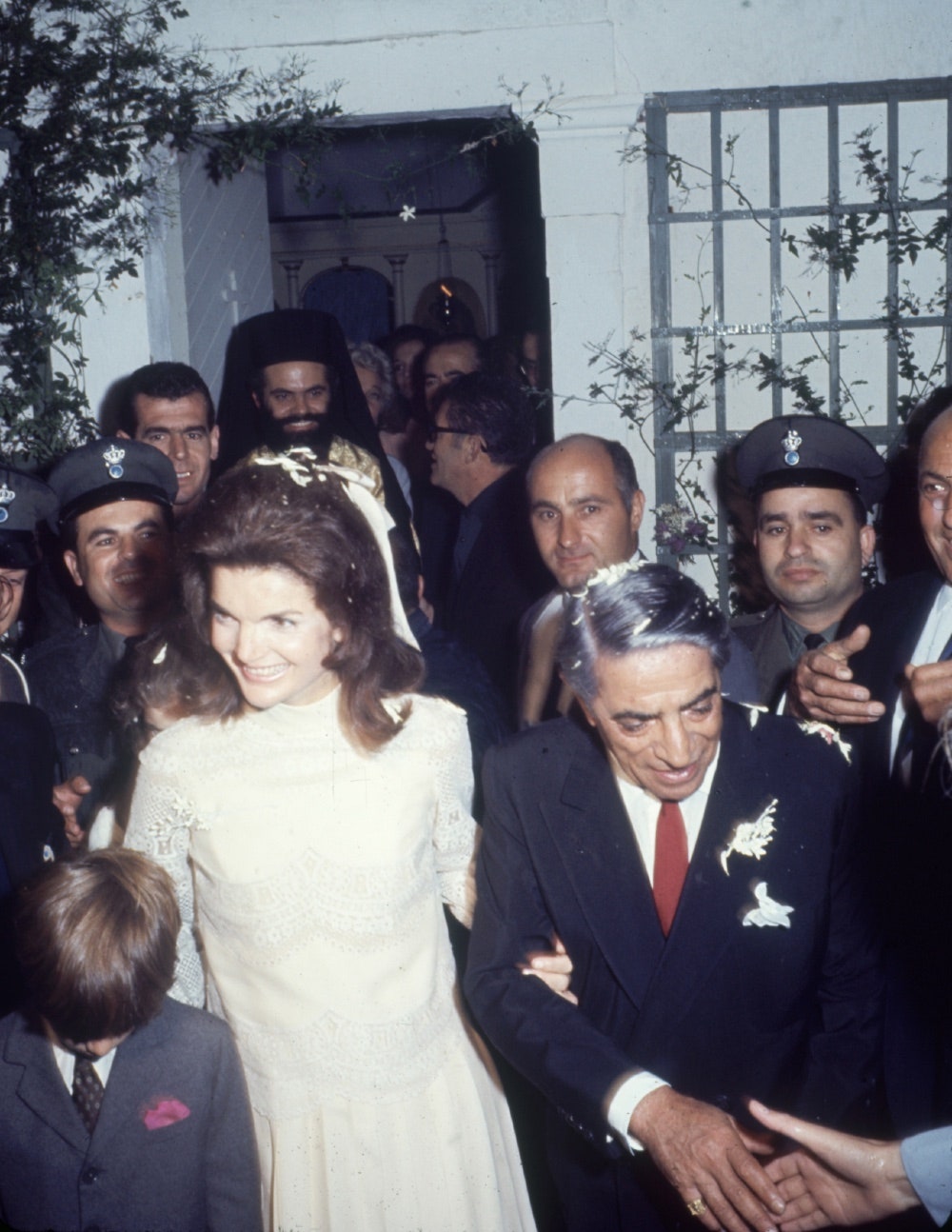
The marriage made Jacqueline Kennedy, now Jacqueline Onassis, loss her Secret Service protection, an entitlement of a widow of a U.S. president, but more significantly, it caused considerable adverse publicity. Her second husband Onassis was divorced, and his former wife, Athina Livanos, was still living. Some critics called Jacqueline a "public sinner." and the paparazzi followed her everywhere and gave her the nickname "Jackie O".
During the marriage, the couple lived among six residences, including her Fifth Avenue apartment in Manhattan, her horse farm in Peapack-Gladstone, New Jersey, and Onassis's yacht, the Christina O.
After leaving the White House, her style changed. The "Jackie Look" gave way to wide-leg pantsuits, silk Hermes headscarves, large round dark sunglasses, and jeans worn in public. The term "Jackie O glasses" remains a term for oversized, oval-lensed sunglasses. The eyewear was designed by Francois Pinton, who created bespoke pairs for her.
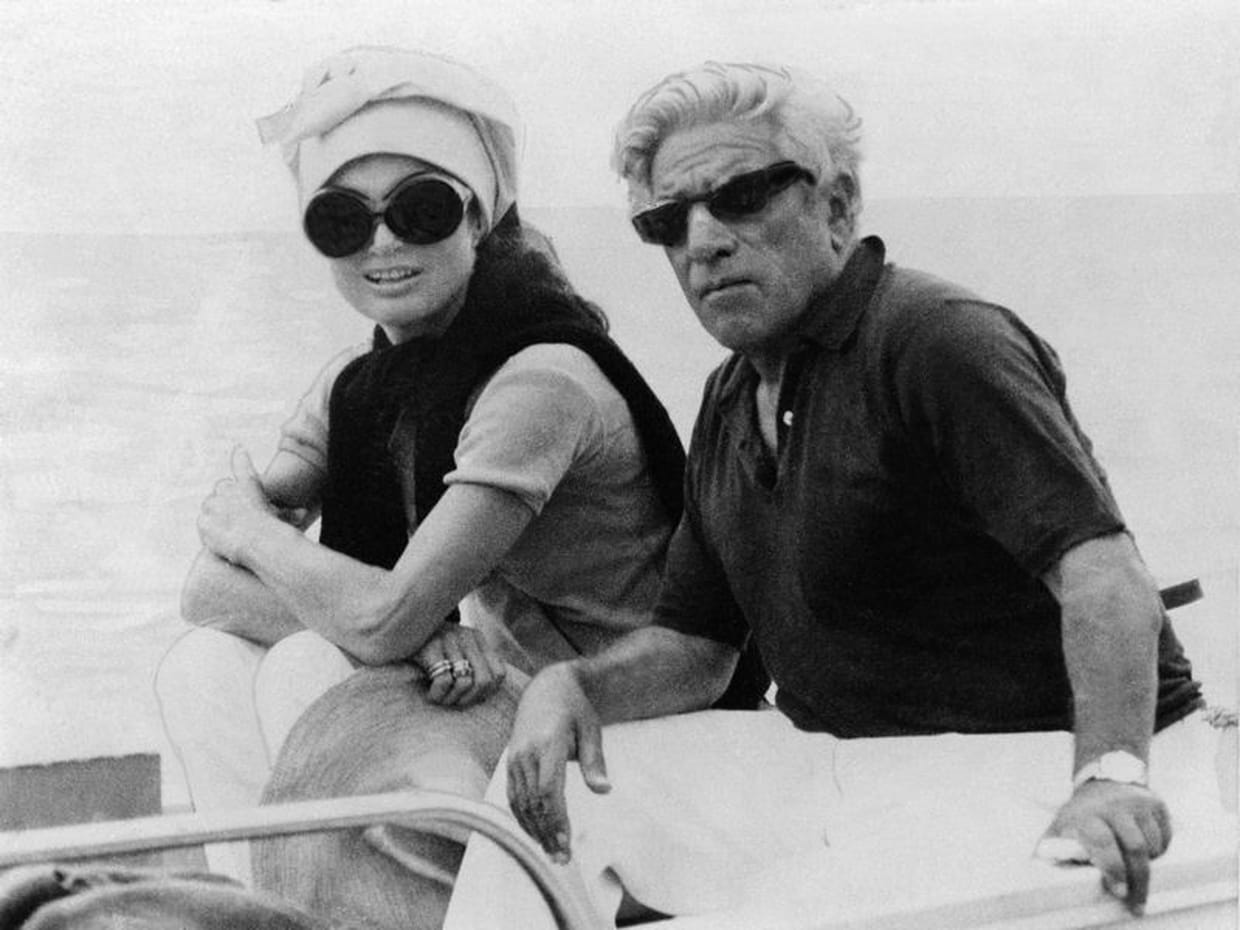
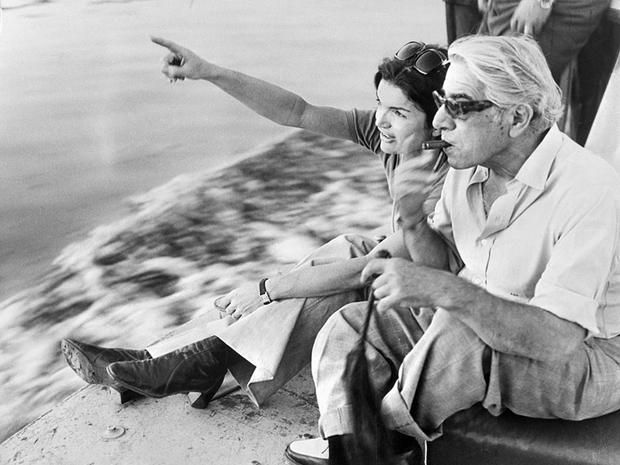
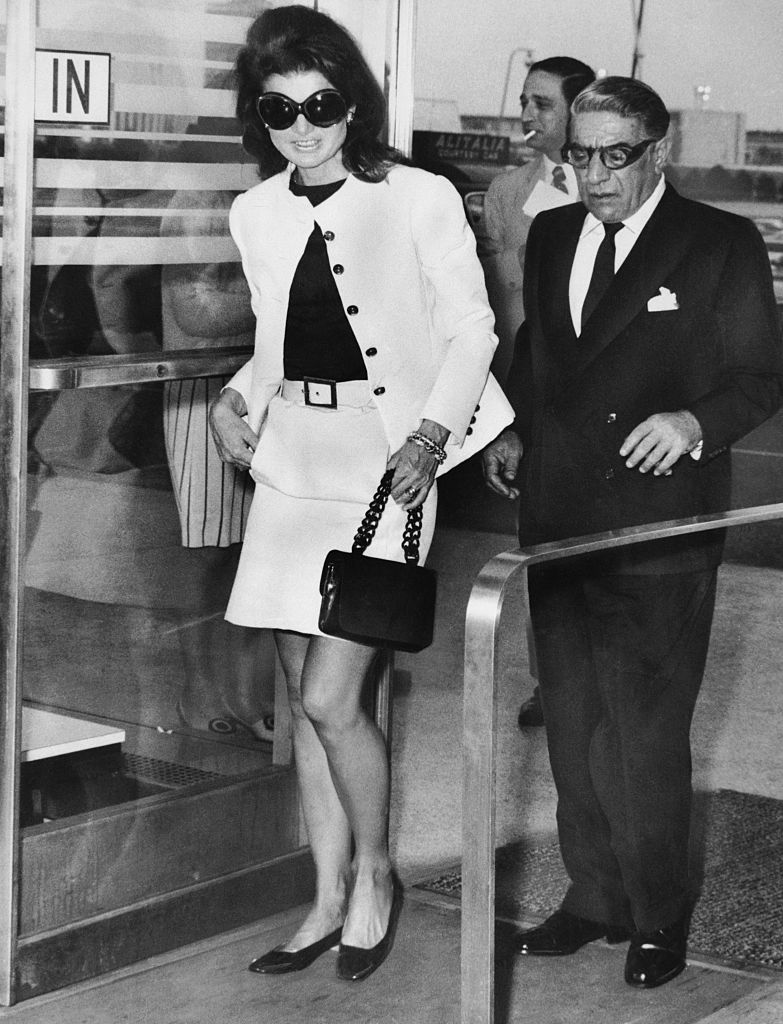
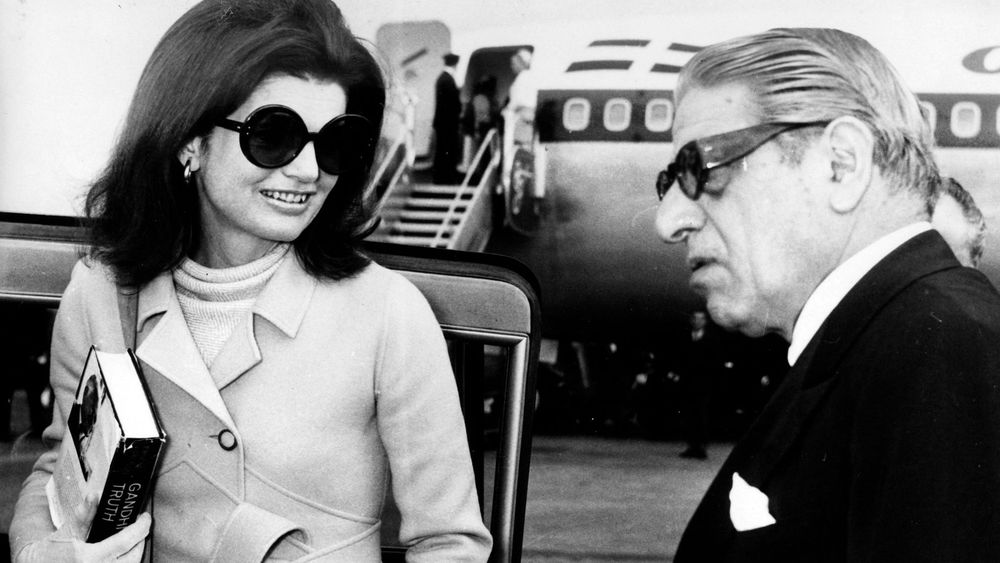
Onassis's health deteriorated after the death of his son Alexander in a plane crash in 1973. Aristotle Onassis died on 15 March 1975 in Paris at the age of sixty-nine.
Greek law limited how much a non-Greek surviving spouse could inherit. After two years of legal disputes, Jacqueline accepted a $26 million settlement from Christina Onassis, Aristotle's daughter and sole heir, and waived all other claims to the estate.
After Onassis's death, she returned permanently to the United States and divided her time among Manhattan, Martha's Vineyard, and the Kennedy compound in Hyannis Port, Massachusetts.
Jacqueline Kennedy Onassis built a second career as a book editor. She worked as a consulting editor at Viking Press from 1975 to 1977, then moved to Doubleday as an associate editor under John Turner Sargent Sr.
It was she who persuaded Michael Jackson to write his 1988 memoir Moonwalk, which reached the top of The New York Times best-seller list and sold one million copies. She also directed the creation of the companion book to Joseph Campbell and Bill Moyers's interviews, The Power of Myth (1988). Later she encouraged Dorothy West, her neighbor on Martha's Vineyard and one of the last surviving members of the Harlem Renaissance, to complete the novel The Wedding (1995), a multi-generational family story.
Jacqueline Kennedy Onassis was devoted to historic preservation in New York City, by leading a campaign in the 1970s to save Grand Central Terminal from demolition, and participating in protests against a proposed skyscraper at Columbus Circle that would have cast large shadows over Central Park. She received the Fine Arts Federation medal for her devotion.
Starting from 1980, Jacqueline Kennedy Onassis maintained a close relationship with Maurice Tempelsman, a Belgian-born industrialist and diamond merchant, who served as her companion and personal financial adviser.
In November 1993, she was thrown from her horse during a fox hunt in Middleburg, Virginia. Doctors discovered a swollen lymph node in her groin, initially diagnosed as an infection. In December, she developed a stomach ache and swollen lymph nodes in her neck. She was diagnosed with non-Hodgkin's lymphoma and began chemotherapy in January 1994.
By March, the cancer had spread to her spinal cord, brain, and liver. By May, the disease was considered terminal. She made her last trip home from New York Hospital-Cornell Medical Center on 18 May 1994.
Jacqueline Kennedy Onassis died in her sleep at 10:15 p.m. on 19 May 1994, at her Manhattan apartment. Her children were by her side. Her son John F. Kennedy Jr. announced her death to the press the following morning. He said she had been "surrounded by her friends and her family and her books, and the people and the things that she loved." and then added: "she did it in her very own way, and on her own terms, and we all feel lucky for that."
Her funeral Mass was held on 23 May 1994 at the Church of St. Ignatius Loyola in Manhattan, a few blocks from her apartment, the Catholic parish where she had been baptized in 1929 and confirmed as a teenager. She was buried at Arlington National Cemetery alongside President Kennedy, their son Patrick Bouvier Kennedy, and their stillborn daughter Arabella Kennedy. President William Jefferson Clinton delivered the eulogy at her graveside service.
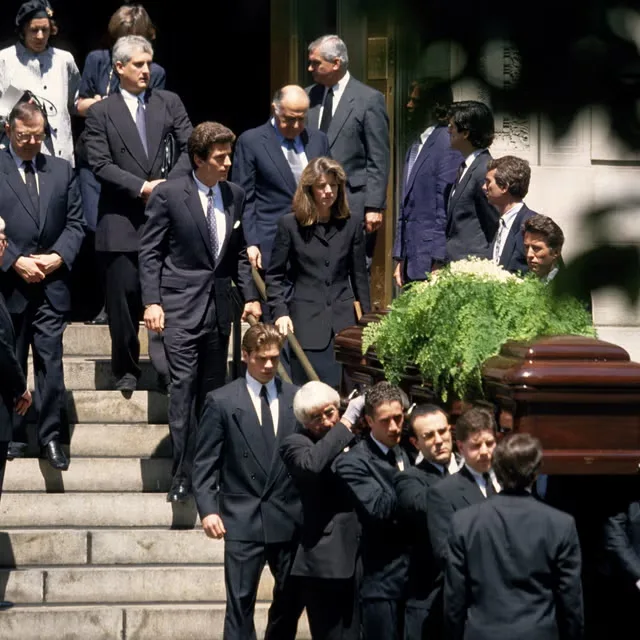
Jacqueline Kennedy Onassis left an estate that its executors valued at $43.7 million including a large collection of jewelry she acquired throughout her lifetime.
Many of her signature clothes are preserved at the John F. Kennedy Library and Museum; pieces from the collection were exhibited at the Metropolitan Museum of Art in New York in 2001 with the title: "Jacqueline Kennedy: The White House Years."